REVIEW · SIEM REAP
Kulen Waterfall and Banteay Srei Off Beaten Track
Book on Viator →Operated by ANGKOR CAB-OFF BEATEN TRUCK · Bookable on Viator
Carvings under the river change your whole viewpoint. This off-the-beaten-track day pairs Phnom Kulen sacred sites (including Kbal Spean’s River of a Thousand Lingas and a waterfall) with Banteay Srei, one of Angkor-era Cambodia’s most delicate temple jewels.
I especially like the plan to go to Kulen early, so you get more breathing room before crowds pile in. I also love the private guide setup, and the way English-speaking guides like Panha help the symbols click as you stand right in front of them.
The only real consideration is walking and climbing on uneven paths. You’ll want moderate fitness, especially around Kbal Spean and the steps/ground around Banteay Srei.
In This Review
- Key highlights from this off-the-beaten-track day
- Why Kulen + Banteay Srei feels like the real Cambodia day
- Getting started: the 8:00 am run from Prince Angkor
- Phnom Kulen National Park: sacred mountain and the Khmer independence story
- Kbal Spean and the River of a Thousand Lingas
- Kulen waterfall: nature stop with spiritual atmosphere
- Banteay Srei: red sandstone craftsmanship with a story behind it
- Your private guide experience: comfort, English, and smart explanations
- Price and value: what $159 per group really buys
- What your day will feel like hour by hour
- Who should book this tour, and who might want something else
- Practical tips so you enjoy every step
- Should you book the Kulen Waterfall and Banteay Srei Off Beaten Track day?
- FAQ
- Where is the meeting point and what time does the tour start?
- How long is the tour?
- Is this a private tour?
- What’s included in the price, and what isn’t?
- How many people can be in the group?
- Is free cancellation available?
Key highlights from this off-the-beaten-track day
- An early 8:00 am start from Prince Angkor Hotel & Spa to reach Kulen before the busiest waves.
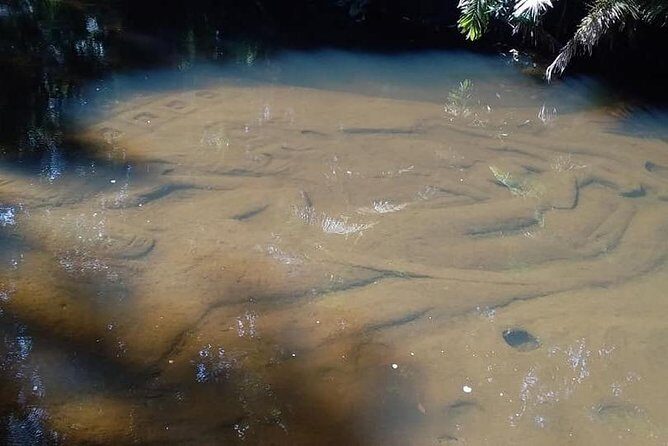
- Kbal Spean’s River of a Thousand Lingas, with explanations that connect stone carvings to ancient Khmer belief.
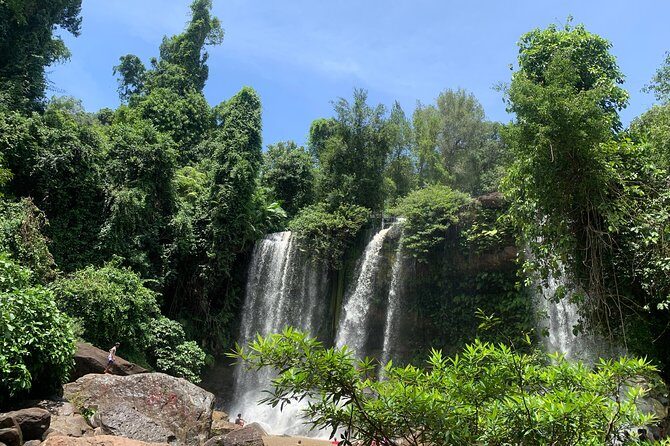
- A real Kulen waterfall stop, plus time in a more natural setting than the main Angkor circuit.
- Banteay Srei’s red sandstone detail, including the temple’s 10th-century background and purpose.
- Private comfort with bottled water and a driver/guide who speaks excellent English (Panha is frequently praised).
- Plan on paying entrance fees separately, plus lunch is not included.
Why Kulen + Banteay Srei feels like the real Cambodia day
If your Angkor days already feel like temple marathons, this one gives you a different angle on Khmer culture. You get the Angkor-era story, but you see it through sacred geography—mountain, river, and water—then you finish with an ornate temple that looks almost too detailed to be real.
I like that the day mixes the spiritual with the practical. Phnom Kulen is not just a viewpoint stop. You’re walking through areas tied to ancient worship, including the carved riverbed at Kbal Spean. Then Banteay Srei brings you back to stonework craft—red sandstone, careful proportions, and lots of little figures where your guide can slow you down.
The overall effect is simple: your brain goes from seeing temples as pretty ruins to understanding them as places with a job to do. And that’s when the day starts to feel personal.
You can also read our reviews of more tours and experiences in Siem Reap.
Getting started: the 8:00 am run from Prince Angkor
This tour begins at 8:00 am, with pickup at Prince Angkor Hotel & Spa on Sivatha Boulevard. The plan is to head to Kulen first, and there’s a practical reason: you’re trying to beat tourist crowds while you’re still fresh.
The drive is about 1.5 hours, and you pass through places that feel more local than the resort strip. You’ll notice small village life along the road and get the kind of views that make you glad you didn’t sleep in. Even if you’re used to tours, starting early helps you travel smarter, not harder.
Why this matters: Banteay Srei is the main show in the afternoon, but Kulen is where the day’s tone gets set. If you arrive later, you’re more likely to feel rushed. Arriving early makes it easier to soak in the setting and take your time with the carvings.
Phnom Kulen National Park: sacred mountain and the Khmer independence story
Your first major block of time is in Phnom Kulen National Park, around 2 hours. This is Cambodia’s symbolic ground for a reason. It’s tied to the birthplace narratives of the Khmer Empire and to the moment King Jayavarman II proclaimed independence from Java in 802 CE.
That political pivot matters because the Khmer world that built Angkor wasn’t just about art and stone. It was about legitimacy, power, and belief—how rulers justified authority through religion. Jayavarman II also initiated the Devaraja cult, linked with a linga cult, around 804 CE. A good guide will translate that from academic history into something you can actually visualize.
On the ground, this stop works best when you let it be more than a scenery break. You’re in a natural area with a route that leads you toward Kbal Spean and a waterfall. Expect some walking and a bit of climbing, plus uneven footing in places.
If you’re the type who likes to understand what you’re seeing, you’ll be glad you have a driver/guide who can connect the dots. In past experiences with this tour style, guides like Panha have been praised for explaining the meaning of symbols connected to the holy river and waterfalls, which turns random stone features into a story you can follow.
Kbal Spean and the River of a Thousand Lingas
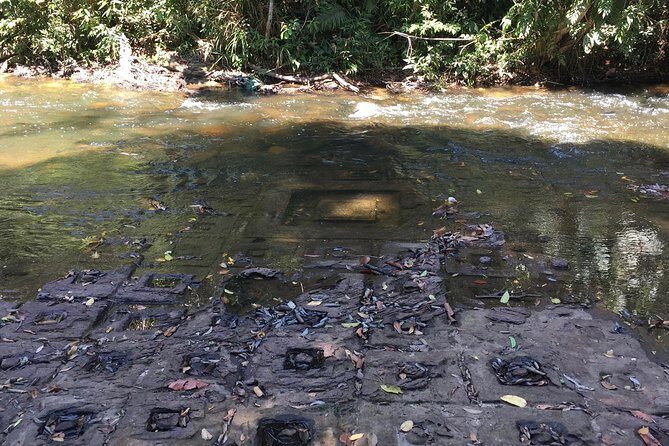
This is the part people remember because it’s so different from typical temple viewing. Kbal Spean is famous for carved figures on the riverbed—often described as the River of a Thousand Lingas. It’s a strong reminder that in Khmer belief, water wasn’t just water. It was part of a sacred system.
When you see carvings in a riverbed, it’s hard not to imagine the ritual logic. The guide’s job here is to slow you down enough to notice patterns: symbols, repeated forms, and the way the carvings relate to the idea of divine presence in nature.
What I like about this stop is how it rewards attention. You don’t get value just by taking photos. You get value by learning what the carvings represent and by looking closely enough to see the craft. It’s also the kind of place where the jungle atmosphere helps—birds, insects, and plants change the feeling from “museum” to “living landscape.”
The unique downside: you’ll likely be on your feet for part of the route, and the ground can be slippery. If your knees don’t love uneven trails, take it slow and use steady footing. The good news is you’re not doing an endless hike; it’s built into a day plan that stays realistic.
Kulen waterfall: nature stop with spiritual atmosphere
Your day also includes a waterfall at/around the Kulen area. This isn’t only a photo stop. The waterfall ties into the sacred-water theme of the whole Kbal Spean experience.
One of the stronger takeaways from prior experiences on this route is that people have been able to spend time around the sacred-water area, including a chance for a bath in the sacred water. I’m not claiming it’s guaranteed or that it’s for everyone—rules and conditions can vary—but it’s clearly part of the attraction for some visitors.
Even if you skip the sacred-water step, you’ll still enjoy the change of pace. Heat, humidity, and walking wear you down, and a waterfall area gives you a reset—cooler air, a different soundscape, and a chance to just watch water move.
Practical note: bring something that can handle damp conditions. If you plan to get close to spray, think about how you’ll keep your day bag secure and your phone protected.
Banteay Srei: red sandstone craftsmanship with a story behind it
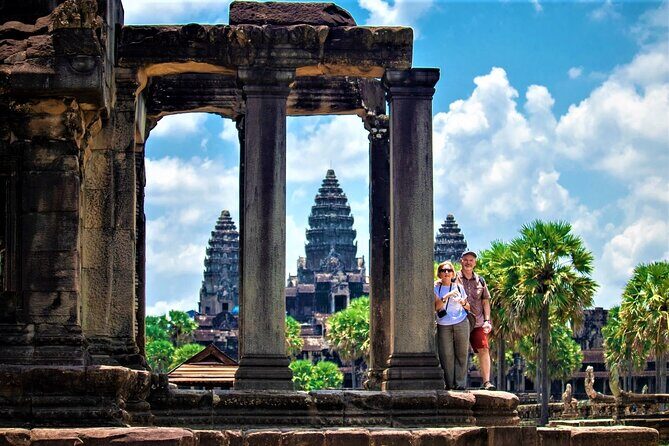
After Phnom Kulen, the tour heads back to see Banteay Srei, described as the best temple in the area. The time here is around 1 hour, which means you’ll want your guide to help you prioritize.
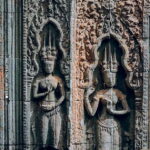
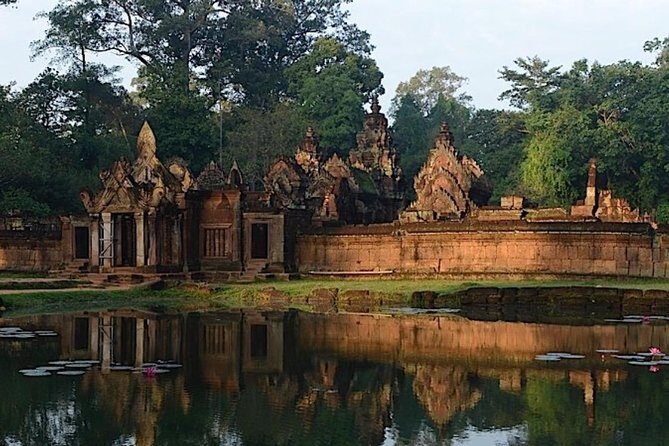
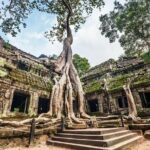
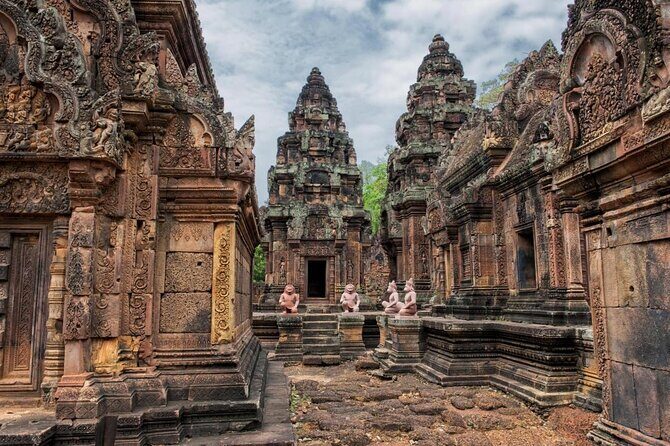
Banteay Srei is consecrated on 22 April 967 AD, and it’s notable for how it was built. Unlike many major temples at Angkor, it wasn’t built by a king. Construction is credited to courtiers Vishnukumara and Yajnavaraha. The background adds depth: Yajnavaraha is connected to scholarship and philanthropy, and the consecrated temple was originally surrounded by a town called Īśvarapura.
Why this matters for your visit: when a guide connects those names and dates to what you’re looking at—figures, ornament, the tone of the sandstone carvings—you understand Banteay Srei as a deliberate act, not random relics in the jungle.
I also like how Banteay Srei feels more intimate than the biggest Angkor-era complexes. The temple’s detail pulls you in. You don’t need to walk miles to feel like you’ve gotten something meaningful.
The consideration: Banteay Srei can involve stairs and uneven terrain, and it’s easy to overestimate how much energy you’ll have after morning walking at Kulen. If you pace yourself and keep water in your system, you’ll be fine. If you rush, the stones can feel like a chore instead of a feast for the eyes.
Your private guide experience: comfort, English, and smart explanations
This tour is private, meaning only your group participates. It includes a driver/guide and bottled water. The car is described as comfortable, and English quality comes up again and again in past experiences with this provider style.
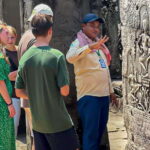
A name you’ll hear often is Panha. People specifically praise him for friendliness, excellent English, and history explanations that make symbols understandable, not confusing.
This is one of the quiet advantages of a private day in Cambodia. You’re not stuck with generic talk or a rushed “look and go” rhythm. Your guide can flex the pace, point out what matters, and help you ask questions—especially at Kbal Spean, where carvings can look like patterns until someone puts them in context.
If you’re traveling with kids or friends who want a slower tempo, this kind of private setup is a big deal. It’s also great if you like photos but hate being treated like a photo machine.
Price and value: what $159 per group really buys
The price is $159.00 per group (up to 7) for about 8 hours. Entrance fees and lunch are not included, so you should budget extra for tickets.
Here’s how the value usually works out in real life:
- If you’re 2 people, your effective cost is about $80 each, and you still get a private driver/guide plus water.
- If you’re 4–6 people, it drops to roughly $26–$40 each, which becomes a strong value for a day that covers two very different sites (Kulen and Banteay Srei).
- If you’re a bigger group up to 7, it’s a cost-efficient way to do a private day without paying per-person rates for a fixed route.
The value isn’t just the price tag. It’s that you’re paying to have the sites interpreted and transported efficiently across Siem Reap’s wider historical area, including the sacred Kulen Mountain region.
What you should consider: entrance fees can add up, and lunch isn’t included. Still, even with added costs, this day often makes sense if you want something more thoughtful than the standard Angkor temple loop.
What your day will feel like hour by hour
This day is designed with a rhythm: early start, sacred nature in the morning, temple focus in the afternoon.
- Morning drive and Kulen: you move fast, then slow down when you reach Phnom Kulen areas.
- Kbal Spean and River of Thousand Lingas: you spend time interpreting stone carvings in a natural setting.
- Waterfall break: you get a change of pace, sometimes including sacred-water moments if conditions and local practice allow.
- Banteay Srei: you switch to temple detail and history, with a shorter time slot that still manages to cover the essentials.
The short version: it’s a full day, but it avoids the feeling of being trapped in a vehicle the whole time. You get multiple “stop and see” moments.
Who should book this tour, and who might want something else
This tour fits you if you:
- Want more than Angkor photos and more than just the big temple names.
- Like history that connects to belief, symbols, and place—not only dates.
- Prefer a private day with room to ask questions.
You might consider another option if:
- You dislike walking on uneven ground, even at a moderate level.
- You need long temple stays. With Banteay Srei at around 1 hour, you’ll be moving through it efficiently, not lingering for a slow day of sketching and wandering.
For most people, this is a smart “one-day special” from Siem Reap. It’s not trying to replace Angkor. It complements it.
Practical tips so you enjoy every step
A few things will make this day smoother:
- Wear shoes with solid grip. There’s natural terrain and a riverbed-type environment at Kbal Spean.
- Bring a light layer. Morning can feel cooler, but the heat returns quickly.
- Plan your water and snacks strategy. Bottle water is included, but lunch isn’t, so you’ll want to handle meals on your own.
- If you’re interested in sacred-water moments at the Kulen area, ask your guide what’s appropriate and comfortable for your situation on the day you go.
- Keep an eye on time for Banteay Srei. With only about an hour, the best use of your energy is letting your guide point out what matters most first.
The biggest tip, though, is attitude: go in ready to look closely. This day rewards attention.
Should you book the Kulen Waterfall and Banteay Srei Off Beaten Track day?
I think you should book this if your ideal Siem Reap day includes sacred nature plus a temple with real craftsmanship, and you want a private guide who can explain what you’re seeing. The early start helps you enjoy Kulen without feeling swallowed by crowds, and the pairing with Banteay Srei keeps the day varied.
Skip it only if you’re mainly chasing long, slow temple wandering or you know you’ll struggle with uneven walking. Otherwise, it’s an excellent way to add depth to your Khmer experience without feeling like you’re stuck doing the same itinerary everyone else does.
FAQ
Where is the meeting point and what time does the tour start?
The tour starts at Prince Angkor Hotel & Spa on Sivatha Boulevard in Siem Reap, with a start time of 8:00 am.
How long is the tour?
The duration is about 8 hours.
Is this a private tour?
Yes. It’s a private tour/activity, and only your group participates.
What’s included in the price, and what isn’t?
Included: private tour, driver/guide, and bottle water. Not included: entrance fees and lunch.
How many people can be in the group?
The price is listed per group for up to 7 people, and the tour is described as private for groups up to six in the overview.
Is free cancellation available?
Yes. You can cancel for a full refund up to 24 hours before the experience’s start time.