REVIEW · PHNOM PENH
Silk Island Tuk Tuk Tour
Book on Viator →Operated by The Killing field and Toul Sleng genocide museum S21 Tour · Bookable on Viator
Silk making starts with tiny moths. On this Silk Island tuk tuk tour, I love how the silk story is shown step-by-step on the river and how the route mixes countryside calm with hands-on craft work. A possible drawback: you’re on tuk tuk roads plus a ferry, so it’s not the best fit if you get motion or bumpy-rides easily.
You’ll be picked up from the G Mekong Hotel / Orussey Market area and returned there after roughly 4 to 5 hours, usually with a small group capped at 20. I also like that the tour includes bottled water, snacks, and entrance tickets, so you can focus on the places instead of budgeting mid-day.
At $80 per person, this isn’t a bargain-basement outing, but it does feel like value because it bundles an English-speaking guide, rides, snacks, and multiple stops for crafts plus a Buddhist temple visit. If you’re only interested in one type of experience, you might feel the schedule is a bit packed—though the timing is built around short, clear visits.
In This Review
- Key highlights worth your time
- Getting to Silk Island: tuk tuk + the Mekong side trip
- Mekong Silk Island workshop: where the silk story starts
- Koh Dach silk farm: traditional crafts beyond weaving
- Koh Dach pagoda + market life: seeing the village rhythm
- Ferry back to Phnom Penh: a calm finish
- Price and value: what $80 buys you
- Timing, weather, and how to dress for comfort
- Who this tour is best for (and who should skip it)
- Should you book Silk Island Tuk Tuk Tour?
- FAQ
- Where does the tour start and end?
- How long is the Silk Island tuk tuk tour?
- What is the price?
- Is there an English-speaking guide?
- What transportation is included?
- What’s included in the ticket?
- Do I need to buy separate entrance tickets?
- Do I receive a ticket on my phone?
- What if the weather is bad?
- Can I cancel for free?
Key highlights worth your time

- Mekong Silk Island process: see silk material made from moth eggs through to finished products
- Tuk tuk countryside ride: get out on the paths and between villages at a slower pace
- Koh Dach artisan crafts: silk weaving alongside pottery, dyeing, and wood carving
- Village + market stop: watch daily work tied to mosquito nets and woven textiles
- Buddhist temple viewing: you’ll get a fuller feel for Cambodian daily life beyond craft stalls
- Ferry back to Phnom Penh: end with a river crossing instead of a long road ride
Getting to Silk Island: tuk tuk + the Mekong side trip
This tour is built for people who want to see more than just a workshop wall full of finished products. You start in Phnom Penh, then head to the river area and cross over to the Silk Island side before you start riding around by tuk tuk. That transfer matters because it helps you shift from city pace to countryside rhythm fast.
Once you’re on the island route, you move along paths that feel like a working countryside, not a theme-park pathway. You’ll have about an hour at the silk stop, which is enough time to understand the basics of how silk is made and to shop if you want a scarf you can see being made the old-fashioned way by hand.
If you’re sensitive to heat or dust, think about your timing inside Cambodia’s hotter months. You’ll be outdoors for portions of the day, and the tour is outdoors before you settle into the workshop-style viewing. Bring sunscreen and something light for the ride.
You can also read our reviews of more tours and experiences in Phnom Penh.


Mekong Silk Island workshop: where the silk story starts
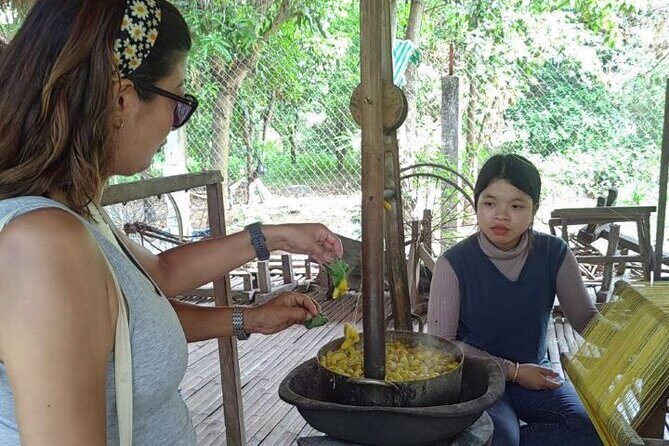
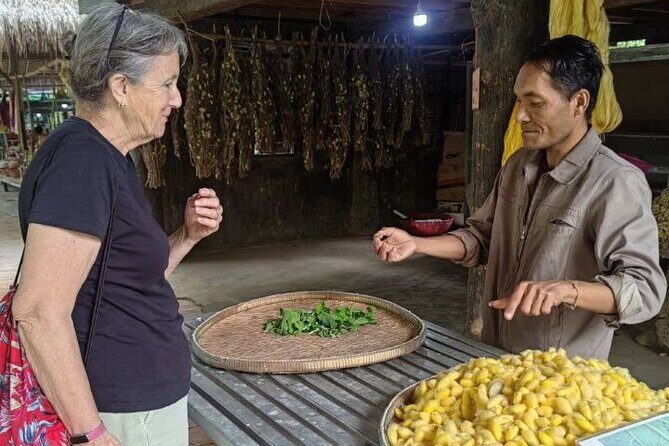
The Silk Island stop is the heart of the experience because it connects the origin of silk to what ends up in your hands. In the silk center portion, you’ll see the material creation process described from the early stage (moths laying eggs) through to finished products. That “from start to finish” flow is what makes this stop more meaningful than just watching someone weave a finished scarf.
I like that the experience is guided. You’re not wandering around guessing what you’re looking at. With an English-speaking guide—one guide named Visal has been singled out for strong explanation—you get the practical context of how the craft fits into daily life. It also helps you ask better questions, like what makes silk quality different or which steps are most time-consuming.
What to watch for:
- The parts of the process that require patience and fine handling, since silk work is slow by nature
- How finished items relate back to the earlier stages, so you can connect the whole system, not just one workshop moment
This is also your main chance to buy a scarf or other silk items during the time you’re at the island. Even if you’re not shopping, it’s worth paying attention to the materials and how the finished products are presented.
Koh Dach silk farm: traditional crafts beyond weaving
After Silk Island, you head to Koh Dach, which is where the tour widens the view from one craft to a whole cluster of work. This is one of the most interesting parts because silk is only one thread in the local craft ecosystem.
You’ll spend around 2 hours at the Koh Dach craft stop, with a focus on traditional processing and multiple crafts. The itinerary specifically points to a stop connected to Chamka Sne silk farm, where visitors can see traditional handicraft work such as silk weaving, pottery, dyeing, and wood carving. The big value here is variety. If you only think of “silk village” as weaving, this part corrects that impression and shows how local skills overlap.
For practical planning, I’d suggest treating this segment like a walking gallery with short, guided moments. Ask how the process differs by item—dyeing is a different world from weaving, and pottery is even more process-heavy.
Possible drawback: if you’re the kind of visitor who wants deep time with only one craft, you might feel pulled in multiple directions during the 2-hour block. But if you enjoy comparing methods and seeing how different crafts share the same working spaces, this is a strong match.
Koh Dach pagoda + market life: seeing the village rhythm
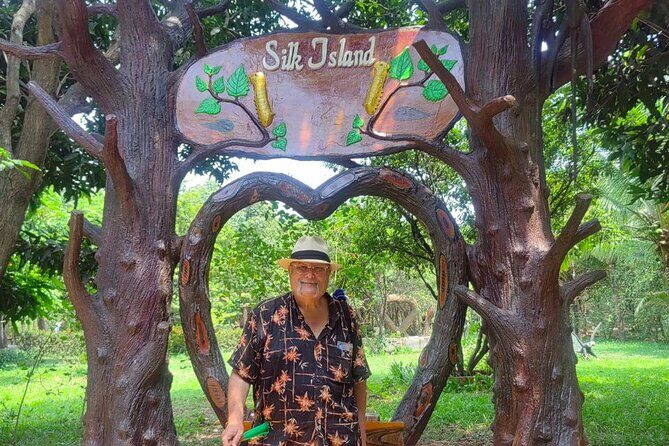
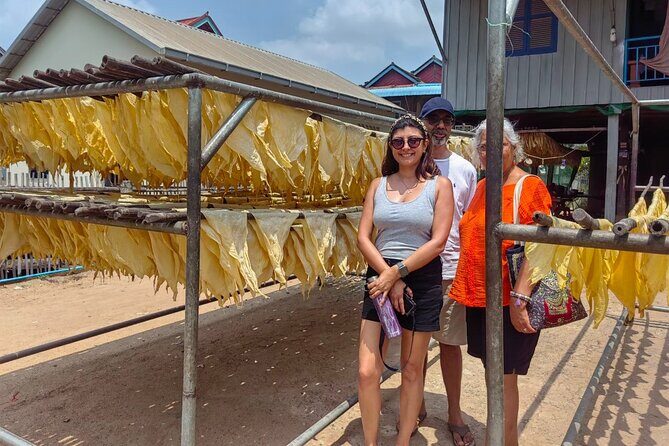
Then the tour shifts again within Koh Dach for about 1 hour, and this is where it stops being only about products. You’ll visit a local pagoda, plus the surrounding village and market areas. The focus is on day-to-day rural life—especially the work connected to producing items like mosquito nets, silk sarongs, phamuong, Hol, and silk krama by traditional ways.
This part is valuable because it shows the context. When you’ve just spent time watching silk making on one side of the river, it’s easier to understand how those crafts become part of normal routines. The textiles aren’t just souvenirs; they’re linked to daily utility and local demand.
What you’ll likely notice here:
- People working in textiles and related crafts close to where they live
- The way a village market functions as more than a shop strip
- The presence of religious life through the pagoda stop, which helps you connect Cambodian craft culture to broader community rhythms
This is also a good moment to look for what’s locally emphasized. If you’re shopping, it’s typically where you can understand what kinds of items are most common and how they’re described.
Ferry back to Phnom Penh: a calm finish
At the end, you return to Phnom Penh by ferry, which adds a nice change of pace from road travel. The final leg is around 1 hour, giving you a buffer to cool down and reset after the workshops and village walking.
I like tour endings that don’t feel rushed or purely logistical. The ferry is both practical and scenic, and it helps you land back in the city with a sense of how the Mekong shapes daily movement here.
If the weather is hot or humid, plan to use this last hour to slow down, hydrate, and be ready for the end point back at your start location.





Price and value: what $80 buys you

$80 per person is a real, mid-range price for a half-day outing. So the question isn’t just what you’re paying—it’s what’s included and how much you get for your time.
From a value standpoint, this tour bundles:
- A professional English-speaking guide
- Tuk tuk transport and a safe driver
- Bottled water and snacks
- Entrance tickets for the silk island and the included craft/temple moments
That matters because craft tours can quietly add costs once you’re on the ground. Here, the structure is designed so you’re paying once and spending that time inside the experience rather than in line with a calculator.
You also get a small group cap of 20, which makes the stops easier to manage. In a group this size, you can typically ask questions without feeling totally rushed.
One more angle: the tour is often booked about 14 days in advance on average. That’s not a guarantee, but it’s a clue that this route is popular. If you’re traveling during peak season, booking earlier is a good idea.
Timing, weather, and how to dress for comfort
The tour runs about 4 to 5 hours, which is long enough to see real variety but short enough that it doesn’t steal a whole day in Phnom Penh.
The itinerary also has a weather dependency. The tour requires good weather, and if it’s canceled due to poor conditions you’ll be offered a different date or a full refund. So I’d plan your Phnom Penh schedule with some flexibility, especially if you’re traveling during rainy or storm-prone periods.
What to wear:
- Comfortable shoes for village and market paths
- Light layers for walking, plus something that protects from sun
- A small bag that you can keep close during the tuk tuk and ferry portions
Who this tour is best for (and who should skip it)

This is a strong fit if you want:
- A craft-forward day that connects silk to local life
- A countryside and village feel without a full-day bus excursion
- Clear English guidance and a structured route with entrance fees handled
It’s also a good choice for people who enjoy shopping, but in a meaningful way. You’re more likely to buy with understanding—because you’ve seen the process, not just the final products.
It may be less satisfying if:
- You only want one craft focus and hate split time
- You get uncomfortable with road bumps or ferry motion
- You’re looking for a long, slow rural day rather than a short circuit
Should you book Silk Island Tuk Tuk Tour?
If your ideal day includes silk making, a traditional craft stop in Koh Dach, and a pagoda visit that adds real local texture, I’d book it. The $80 price feels fair because the tour includes transport, snacks, and entrance fees, not just a guide and a generic ride.
Also, if you’re the type who likes to understand what you’re buying, this one makes that easy. You get a process demonstration on Silk Island plus village-level context on Koh Dach—so your scarf shopping (if you do it) has a story behind it.
Book with confidence, but keep an eye on weather. And if you’re sensitive to movement, take it seriously that part of the route is ferry time and tuk tuk travel.
FAQ
Where does the tour start and end?
It starts at G Mekong Hotel / Orussey Market Area (near the Orussey Market area in Phnom Penh) and ends back at the same meeting point.
How long is the Silk Island tuk tuk tour?
The tour lasts about 4 to 5 hours.
What is the price?
The price is $80.00 per person.
Is there an English-speaking guide?
Yes. The tour includes a professional English-speaking tour guide.
What transportation is included?
You’ll use a tuk tuk with a driver, and you’ll also take a ferry back to Phnom Penh.
What’s included in the ticket?
The tour includes bottled water, snacks, and all entrance fee tickets, plus the guide and the tuk tuk with a safe driver.
Do I need to buy separate entrance tickets?
No. Entrance fees are included in the tour.
Do I receive a ticket on my phone?
Yes. The tour uses a mobile ticket.
What if the weather is bad?
This experience requires good weather. If it’s canceled due to poor weather, you’ll be offered a different date or a full refund.
Can I cancel for free?
Yes. You can cancel up to 24 hours in advance for a full refund. If you cancel less than 24 hours before the start time, you won’t get a refund.