REVIEW · SIEM REAP
Angkor Wat: Sunrise 2.5 Days Temples & Tonle Sap-Small Group
Book on GetYourGuide →Operated by Journey Cambodia · Bookable on GetYourGuide
Sunrise in Angkor feels like a time machine. This Angkor Wat sunrise 2.5 days plan strings together the big sights and a real change of pace with Tonle Sap or a circus night, all with a small group and an English-speaking guide. You’ll get morning temples when the light is best, then shift to the lake-life scenery without feeling rushed.
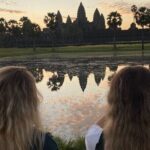
I especially like the small group size (max 15), which keeps the pace human and makes it easier to hear your guide in the crowds. I also love the way Angkor Wat is handled on Day 2: you start in near-darkness and walk the eastern side with torch light, then stop for breakfast right outside the temple area.
One caution: you pay separately for the temples entrance pass (3 days, $62 per person) and breakfast is not included, so the all-in cost is higher than the headline price. Also, it’s not a good fit for people with mobility impairments, and short skirts are not allowed.
Key highlights (what makes this tour worth your time)
- Angkor Wat sunrise with torch-lit exploring of the eastern side, not just a quick photo stop
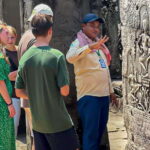
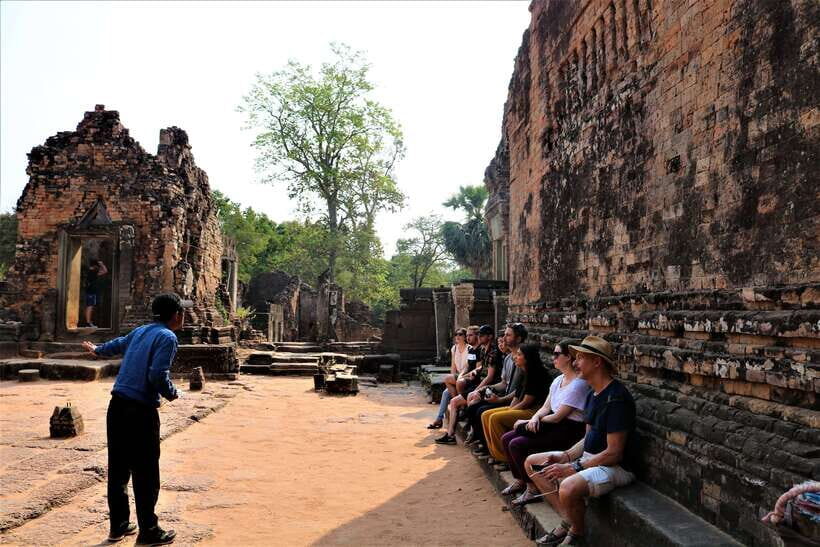
- Expert English guide who explains the bas-reliefs and Khmer Empire stories while you walk
- Day 1 temple circuit outside Angkor Thom: Pre Rup, Banteay Srei, Neak Pean, Preah Khan
- Angkor Thom in a clear sequence: South Gate and the 54 god/demon figures, Bayon faces, Ta Prohm
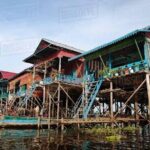
- Tonle Sap boat trip to Kampong Phluk with flooded forest views and stilt houses
- Season swap: Tonle Sap replaced by Cambodia Phare Circus in the dry season (Mar 1–Jun 31), with seat C included
In This Review
- Small-group Angkor Wat Sunrise: why 2.5 days works
- Day 1 outside Angkor Thom: Pre Rup, Banteay Srei, Neak Pean, Preah Khan
- Day 2 Angkor Wat sunrise: torchlight, the eastern side, and real bas-relief focus
- Angkor Thom by daylight: South Gate, Bayon faces, and Ta Prohm’s roots
- Day 3 Tonle Sap at Kampong Phluk: flooded forest, stilt houses, and lake life
- Tonle Sap vs Cambodia Phare Circus: how the season changes your experience
- Price, value, and what you still need to budget
- Practical tips before you go: shoes, dress, pacing, and accessibility
- Who should book this Angkor Wat and Tonle Sap small-group tour
- Should you book this 2.5-day sunrise plus Tonle Sap tour?
- FAQ
- How long is the Angkor Wat sunrise 2.5 days tour?
- How many people are in the small group?
- What’s the Angkor Wat sunrise experience like?
- Which temples are included during the 2.5 days?
- What do you do on Tonle Sap Lake day?
- Is Tonle Sap always included?
- What’s included in the $69 price, and what costs extra?
- What should I bring, and are there dress rules?
- Is the tour suitable for mobility impairments?
- Can I get a refund if I cancel?
Small-group Angkor Wat Sunrise: why 2.5 days works
Angkor can swallow time fast. Too many “temple tours” feel like a conveyor belt: drive, stop, photos, back in the van. This one is built for balance—enough temples to feel you did the core, without trying to hit every ruin on earth.
The group limit of 15 matters more than it sounds. Smaller groups mean less waiting at each gate, easier movement through temple paths, and fewer moments where you lose your guide in the shuffle. You also get a licensed English guide and hotel pickup and drop-off in an air-conditioned vehicle, so you’re not piecing together transport every day.
The other big value is timing. You’re up early for Angkor Wat sunrise, then you get your daytime Angkor Thom and Ta Prohm later when you can see details clearly. Day 3 leaves the temple complex and focuses on Tonle Sap life—boat time, stilt houses, and the flooded forest setting.
If you’re planning your first Siem Reap trip, this is a smart length: 2.5 days is long enough to see major highlights at a good pace, but short enough that you’re not trapped in temples from dawn to bedtime.
Day 1 outside Angkor Thom: Pre Rup, Banteay Srei, Neak Pean, Preah Khan
Day 1 is about variety. Instead of starting at Angkor Wat or inside Angkor Thom right away, you head to temples that feel more like discoveries than checkpoints.
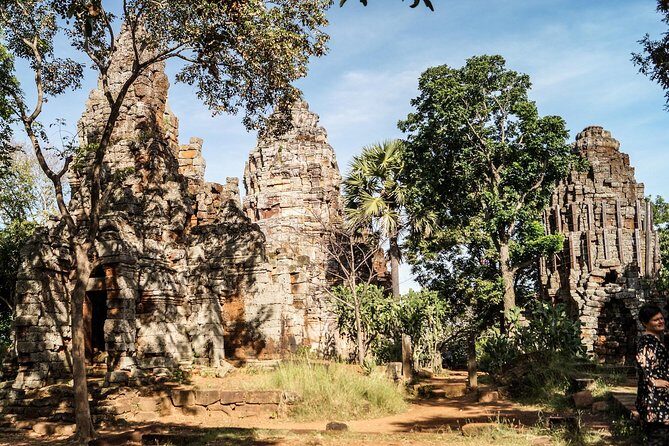
Your first stop is Pre Rup, a mountain-style Hindu temple. It’s made from a mix of brick, laterite, and sandstone, and it’s designed like a layered “temple mountain.” This matters because it gives you a sense of how Khmer temple architecture used elevation and structure as storytelling tools—when you look up, the design makes sense in your mind.
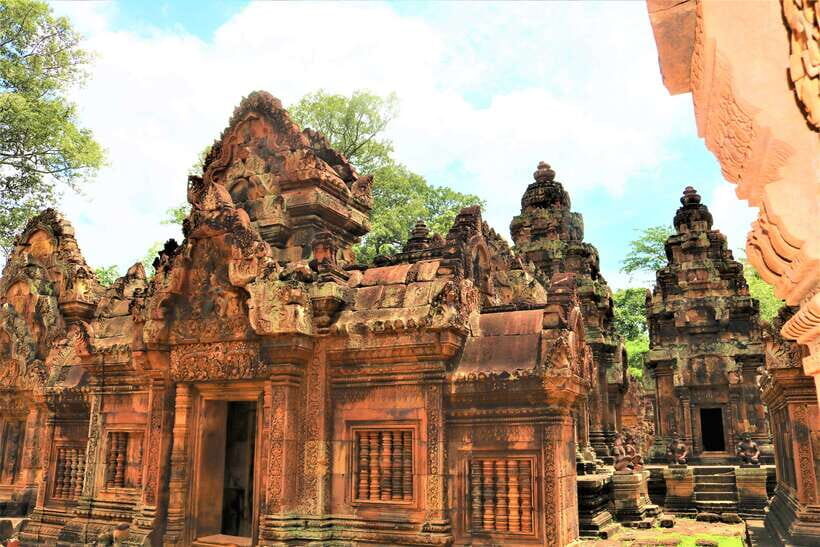
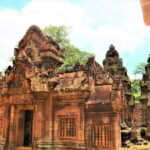
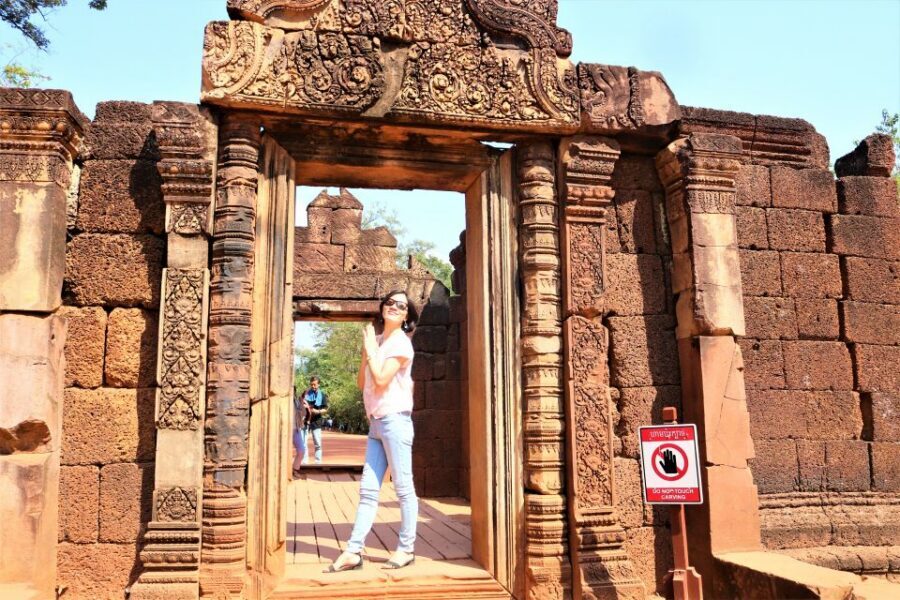
Next comes Banteay Srei, a smaller sandstone temple famed for its carved reliefs. The big reason to care here is craftsmanship: the reliefs are often described as the finest and most skillfully carved in Cambodia. You’ll also be able to experience it with a bit more calm than some of the mega-sites—partly because it has only been accessible since the late 1990s, after the Khmer Rouge period.
Then you visit Neak Pean, an artificial island with a Buddhist temple on a circular island. This stop works as a breather because the setting is different—you’re not just staring at walls; you’re reading the whole island layout and the idea behind it. It also reinforces the way Khmer religious life shifted over centuries.
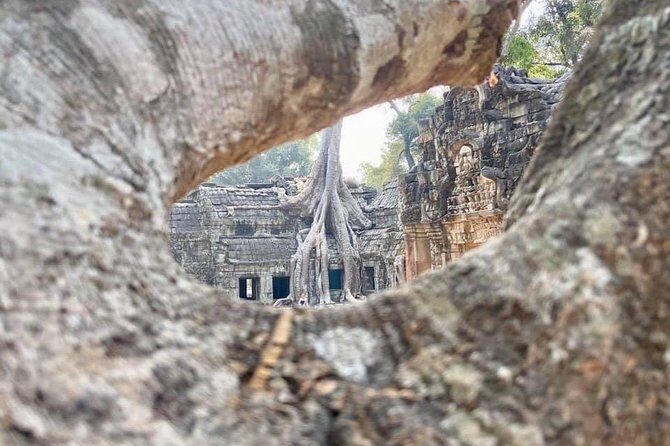
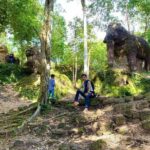
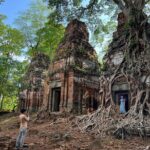
Finally, Day 1 ends at Preah Khan, a ruined temple with a strong “living texture” feel. The mix of crumbling stone and tree roots can look messy at first glance, but your guide’s explanations help you see it as atmosphere with meaning: the temple is half structure, half nature taking back its space. The drawback is practical: ruined sites mean you need to watch your footing.
If Day 2 and 3 are the headline acts, Day 1 is the reason the trip feels full. You get famous temples plus high-impact “lesser-known” stops that add texture to your understanding.
A few more Siem Reap tours and experiences worth a look

Day 2 Angkor Wat sunrise: torchlight, the eastern side, and real bas-relief focus
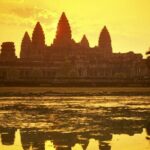
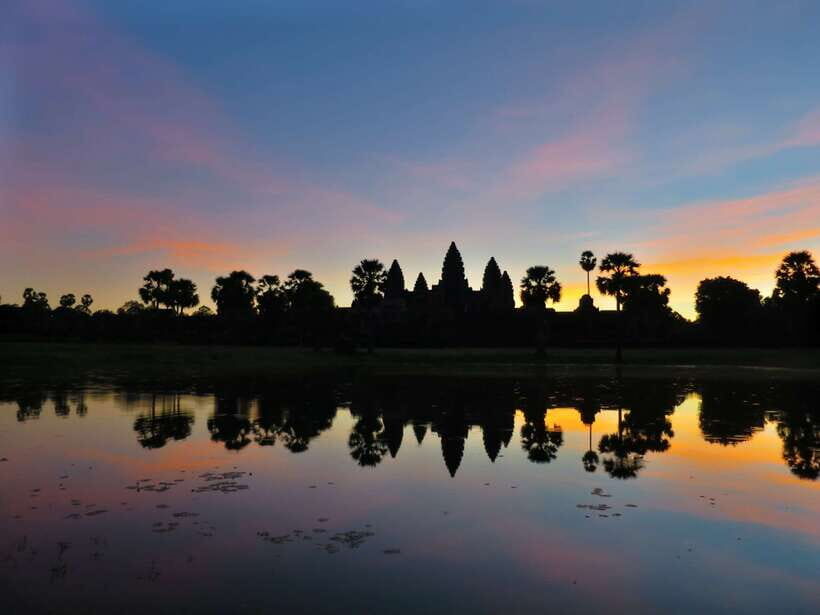
Day 2 starts with a pre-dawn departure from your hotel, then you enter the Angkor Wat complex while it’s still dark. The tour uses torch light so you can navigate before sunrise properly, and you don’t waste the first minutes scrambling for a perfect photo.
The best part of the setup is the direction you’re guided to: you walk the rarely visited eastern side. That means you get a different angle on the temple compared with the standard crowd flow you might expect at sunrise. You’re not just chasing a moment; you’re walking through corridors and cloistered spaces where the carvings matter more than the sky.
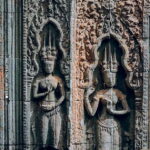
As you move along, you’ll see the longest stretch of bas-relief carvings in the world. Your guide’s job here is huge: they decode the scenes and connect what you’re seeing to life during the height of the Khmer Empire. Without that narration, bas-reliefs can feel like decoration. With it, you start recognizing patterns: story-by-story, character-by-character, theme-by-theme.
After the morning circuit ends, the tour includes breakfast outside the temple and a short rest. That matters because sunrise tours can turn into endurance tests if you don’t refuel. This is the moment where you can reset before the daytime Angkor route.
If you hate feeling herded, this Day 2 pacing helps. You’re out early, guided through deeper temple spaces, then you take a break before continuing the rest of Angkor.
Angkor Thom by daylight: South Gate, Bayon faces, and Ta Prohm’s roots
After sunrise time and breakfast, you continue deeper into Angkor’s city layout with a set daytime sequence.
You head to the southern Gate of Angkor Thom, flanked by a row of 54 stone figures of gods and demons. This is one of those “look up and you get it” moments. The gate isn’t just an entrance; it’s part of a visual story, and your guide can explain what the figures represent and how they fit into Khmer belief.
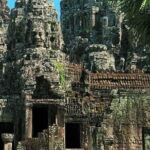
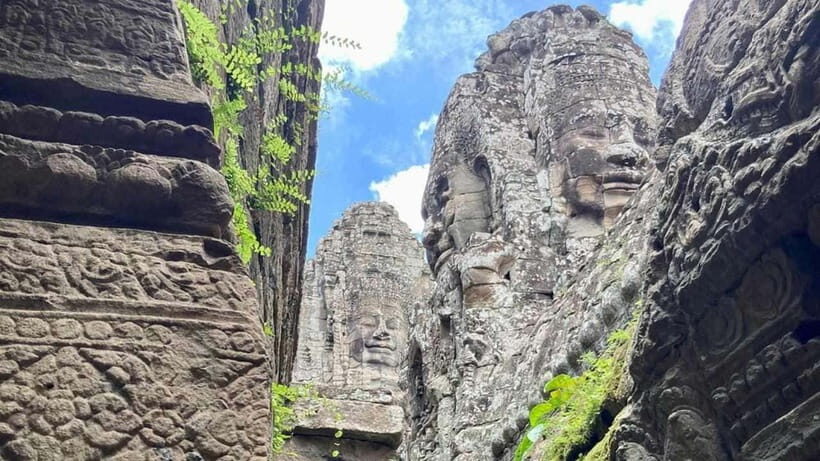
Then you move into Angkor Thom and visit Bayon. Bayon’s central towers are covered with more than 200 enormous faces, and the experience is more than a quick glance. Your guide helps you understand the significance and what to look for as you move around the towers.
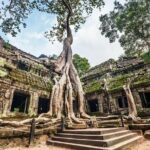
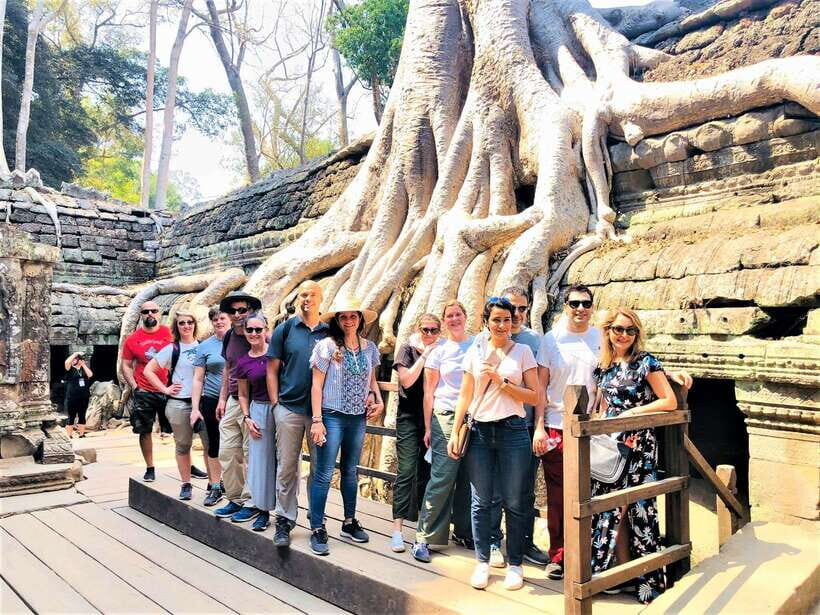
After lunch and a rest break, the tour shifts to the most cinematic of the Angkor set: Ta Prohm. This is the jungle-enveloped temple where tree roots wrap structures and you get that famous “architecture meets nature” look. The advantage of this timing is that you’re not trying to appreciate roots in the dark; you can see textures, shadows, and scale.
The main consideration here is heat and walking time. Daytime temple exploring in Siem Reap can be sweaty, so it helps that the tour includes water (and, in practice, drivers often provide cold water and refreshing towels at stops). Still, you’ll want comfortable shoes and a plan for hydration.
Day 3 Tonle Sap at Kampong Phluk: flooded forest, stilt houses, and lake life
On Day 3, the tour swaps stone temples for something completely different: Tonle Sap Lake, described as the world’s second-largest freshwater. The drive through countryside helps you transition mentally—you’re not stuck in temple mode all the time.
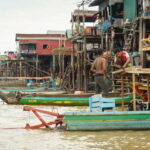
Your boat trip is to Kampong Phluk, a collection of 3 small fishing villages in an atmospheric flooded forest setting. This is where you get the “how do people live here” effect, because the environment is water-first. When you cruise through the village, you see unique homes on stilts, and you’ll spot locals at work in the floating forest.
This part of the trip works best if you treat it as a living community visit, not just a photo shoot. The most meaningful moments tend to come when your guide connects what you’re seeing to daily life—fishing, home structure, and how seasons shape everything.
There’s also a bonus built into the day: the Tonle Sap portion is included with the lake entrance fee and boat cruise. You’re not adding tickets or negotiating boat details on your own.
Tonle Sap vs Cambodia Phare Circus: how the season changes your experience
Tonle Sap doesn’t always make sense year-round. During the dry season (Mar 1 to Jun 31), the tour swaps the lake segment for Cambodia Phare Circus, listed as an alternative.
The key practical detail: Phare Circus seat C is included. That helps your planning because you’re not guessing where you’ll sit or scrambling for tickets on short notice.
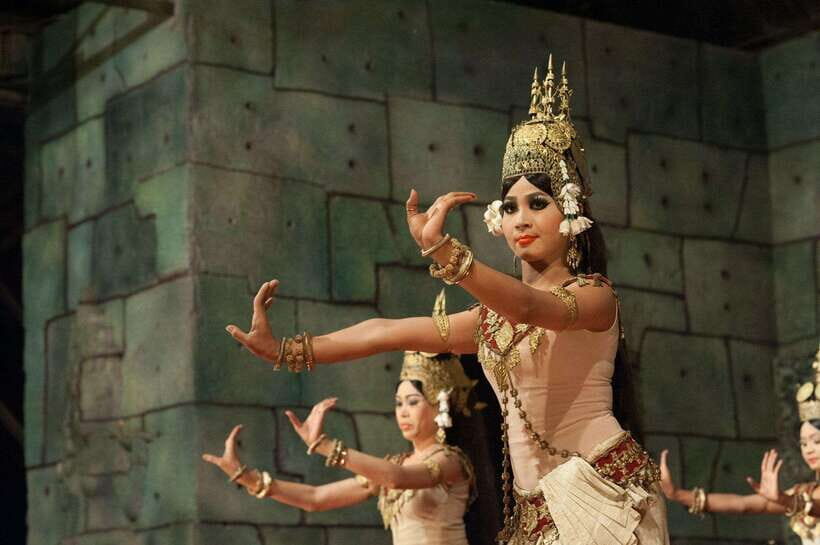
What to expect, practically speaking, is a different kind of immersion. Instead of boat rides and stilt-house village views, you’ll get a performance setting. If you’re a person who likes stories through movement and music, the circus alternative can be a fun way to round out the Khmer-themed day.
The best move is to match your schedule to the season. If you want flooded-forest village life, aim for the months when Tonle Sap runs. If you’re visiting during the dry season window, accept Phare Circus as a full swap rather than a backup plan.
A few more Siem Reap tours and experiences worth a look
Price, value, and what you still need to budget
The tour price is $69 per person for 2.5 days. On paper, it looks affordable, and there’s a real reason: you’re paying for a package that covers a big chunk of logistics and guiding, plus the lake or circus portion.
Included items that add real value:
- A licensed, experienced English-speaking guide
- Hotel pickup and drop-off in an air-conditioned vehicle
- Mineral water
- Tonle Sap lake entrance fee plus boat cruise, or Phare Circus (seat C)
- Temple exploration over the 2.5 days
Not included, and you should plan for it:
- Angkor temple entrance fee: a 3-day pass for $62 per person
- Breakfast
So your practical budgeting is: $69 + $62 for the pass, plus breakfast. That totals about $131 per person before meals. It sounds like a jump, but you’re buying access to the Angkor temple system and guided time through the complex.
The value question becomes: are you paying to reduce hassle and get your money’s worth in time? With small group size, sunrise scheduling, and guide explanations built into the stops, it usually feels worth it—especially if it’s your first serious Angkor visit.
Practical tips before you go: shoes, dress, pacing, and accessibility
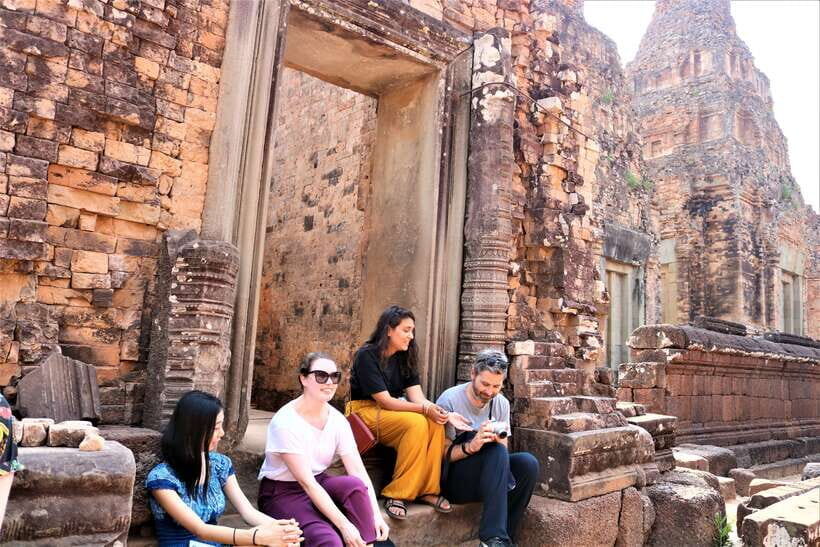
This is an active tour. You’ll be on foot through temples, corridors, and ruined stone areas. Bring comfortable shoes and plan for lots of walking.
Dress rules are straightforward: short skirts are not allowed. If you’re unsure, go with something that covers comfortably. You don’t want clothing to become a decision at the gate.
Heat management matters. Even when your route is efficient, Angkor daytime can wear you down. The tour includes mineral water, and the experience often includes cold water and refreshing towels handed out by drivers at stops, which is a small thing that makes a big difference when you’re sweating.
Accessibility note: it’s not suitable for people with mobility impairments. Temple surfaces and paths can be uneven, and the itinerary involves outdoor walking.
If you want the best results, go into it like an early-morning person. Sunrise day means you’ll trade sleep for light and quieter temple exploring.
Who should book this Angkor Wat and Tonle Sap small-group tour
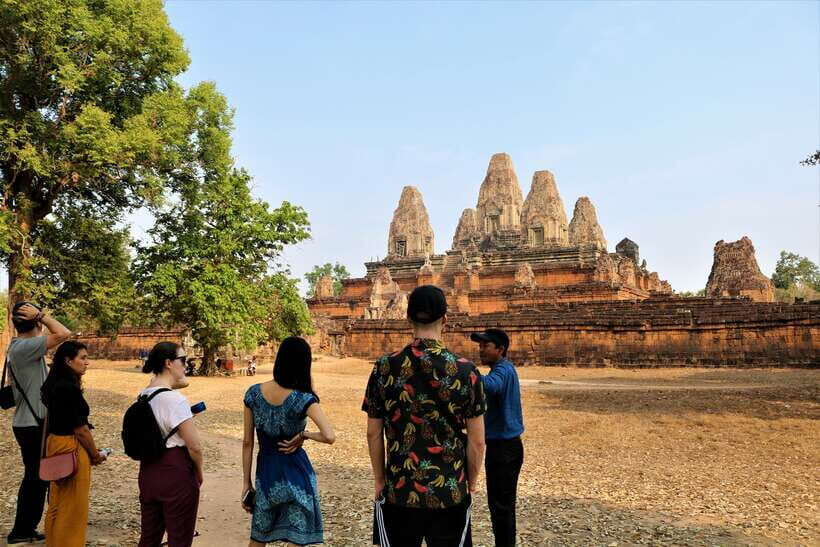
This tour fits you if:
- You want a first-time Angkor experience that covers the major anchors plus strong “supporting cast” temples
- You care about understanding what you’re seeing, not just collecting photos
- You prefer small group pacing over big-bus chaos
- You want Day 3 to feel like a real change of scenery with Tonle Sap floating village life
You might choose something else if:
- You need an itinerary designed for mobility limitations
- You don’t like early departures, especially the pre-dawn Day 2 start
- You hate paying separate ticket fees on top of the tour price
Should you book this 2.5-day sunrise plus Tonle Sap tour?
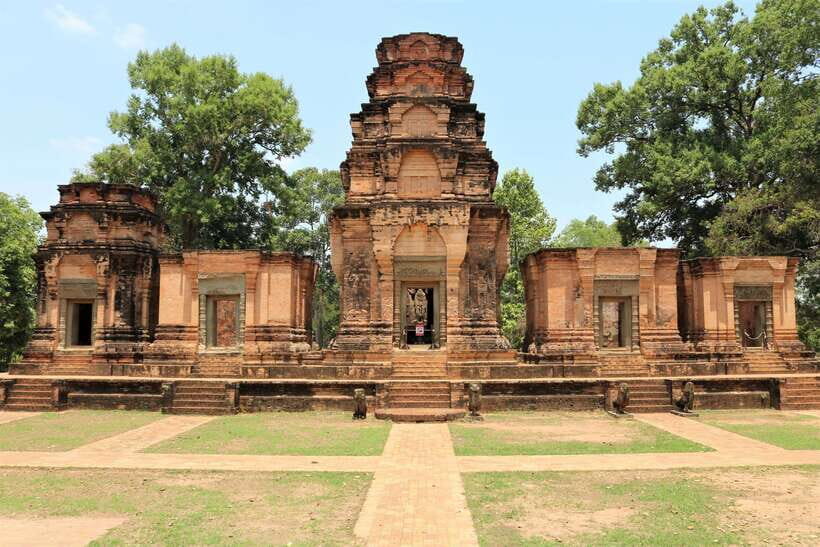
I’d book it if your goal is a smart, well-paced Angkor hit with a guide who explains the stories behind the carvings and figures. The standout for me is the combination of torch-lit sunrise exploring on the eastern side of Angkor Wat plus a full temple day with Angkor Thom and Ta Prohm.
Do it if you’re the type who appreciates context—because your morning bas-relief time is where the experience turns from scenic to memorable. Just budget for the temple pass ($62 for the 3-day ticket) and breakfast, and pack comfortable shoes since you’ll be walking more than you think.
If your timing falls in the dry season window, treat Phare Circus as part of the plan, not a compromise, and you’ll likely feel satisfied with how Day 3 turns out.
FAQ
How long is the Angkor Wat sunrise 2.5 days tour?
The tour runs for 2.5 days. You’ll start with a pre-dawn sunrise experience on Day 2 and finish with the Tonle Sap lake or the seasonal alternative.
How many people are in the small group?
The group is limited to 15 participants.
What’s the Angkor Wat sunrise experience like?
You get a pre-dawn departure, enter Angkor Wat in darkness, and use torch light to walk the eastern side. You’ll also spend time along corridors with long stretches of bas-reliefs.
Which temples are included during the 2.5 days?
You visit major sites including Pre Rup, Banteay Srei, Neak Pean, Preah Khan, Angkor Thom (southern Gate), Bayon, Angkor Wat, and Ta Prohm.
What do you do on Tonle Sap Lake day?
You head to Tonle Sap and take a boat trip to Kampong Phluk, a set of 3 fishing villages in a flooded forest environment. You’ll see houses on stilts and locals working in the floating forest.
Is Tonle Sap always included?
Tonle Sap is included depending on the season. During the dry season (Mar 1 to Jun 31), the alternative is Cambodia Phare Circus, with seat C included.
What’s included in the $69 price, and what costs extra?
Included: an English-speaking licensed guide, hotel pickup/drop-off in an air-conditioned vehicle, mineral water, and Tonle Sap entrance and cruise or Phare Circus seat C, plus the 2.5 days of temple exploration. Extra: the 3-day temple pass ($62 per person) and breakfast.
What should I bring, and are there dress rules?
Bring comfortable shoes. Short skirts are not allowed.
Is the tour suitable for mobility impairments?
No. The tour is listed as not suitable for people with mobility impairments.
Can I get a refund if I cancel?
Yes. Free cancellation is available if you cancel up to 24 hours in advance for a full refund.