REVIEW · SIEM REAP
Angkor Wat Sunrise and Tonle Sap Lake 1.5 Days
Book on Viator →Operated by Journey Cambodia · Bookable on Viator
Sunrise at Angkor starts with a shock of quiet. What makes this tour interesting is the pre-dawn timing and the way it strings together the top Angkor sights with a guide who explains what you’re seeing (including culture, not just stone). I especially like how the pickup is handled for you, so you’re not wrestling tuk-tuks and maps before your first coffee. I also like that you finish the second day on Tonle Sap Lake with a boat cruise, so you’re not only living inside temple walls.
The only real thing to watch is the extra temple pass cost, which you pay on the day (and it’s in addition to the $59 rate). Also, sunrise starts early—so you’ll want to be ready to move fast and walk comfortably.
If you’re short on time in Siem Reap but still want the big-ticket Angkor moments plus a real look at lake life, this 2-day plan is built for that.
In This Review
- Key points at a glance
- Why this 2-day Angkor and Tonle Sap plan fits tight schedules
- 4:20 am to Angkor Wat: sunrise route and what to expect
- Angkor Thom’s South Gate, Bayon, and the classic terraces
- Ta Prohm: the temple where time feels visible
- Ro Lus Market and Kampong Phluk: Tonle Sap’s water-world
- Price and temple pass math: is $59 actually good value?
- The small details that make a big difference
- Who should book this tour, and who should skip it?
- Should you book Angkor Wat Sunrise and Tonle Sap Lake 1.5 Days?
- FAQ
- Is the $59 price the full cost?
- What time does the tour start?
- What’s included on the Tonle Sap day?
- Do I need a special ticket for the temples?
- What should I wear for the temple portion?
- How large is the group?
Key points at a glance
- 4:20 am start to catch Angkor Wat before the crowds thicken
- Eastern-side sunrise approach for a calmer first look at the temple
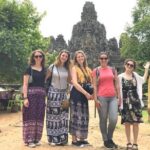
- Small group cap (10 travelers max) for easier pacing around the sites
- Angkor Thom circuit that covers South Gate, Bayon, and classic terraces
- Kampong Phluk boat cruise on Tonle Sap, with entrance included
- Mr Sokpee stands out in reviews for turning temples into clear context
Why this 2-day Angkor and Tonle Sap plan fits tight schedules
In Siem Reap, time vanishes fast. One day slips into “just one more temple,” and suddenly you’ve missed the one sunrise you cared about. This tour is designed to do the heavy lifting for you, with an early departure on Day 1 and a different world on Day 2.
You’ll see the Angkor Archaeological Complex highlights in a single sweep, then switch gears to water life at Tonle Sap. The value isn’t only the attractions—it’s that you don’t have to plan driving routes, figure out timing between sites, or guess what matters most first.
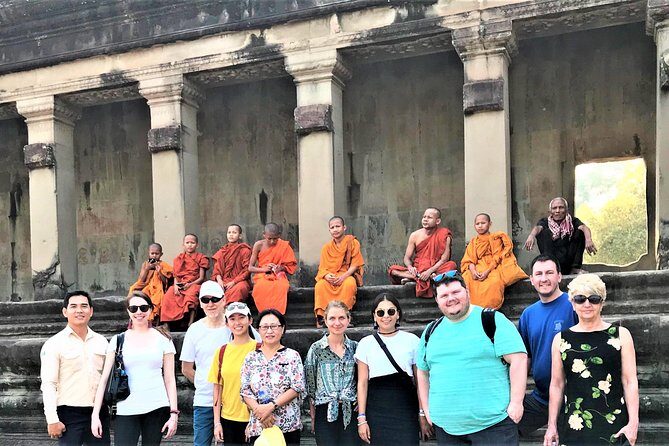
The group setup helps too. This runs with a maximum of 10 travelers, and you’re traveling in an air-conditioned vehicle. That matters because Angkor is spread out, and the heat can turn “quick stops” into slow suffering.
A few more Siem Reap tours and experiences worth a look

4:20 am to Angkor Wat: sunrise route and what to expect
Your day starts before the sun shows up. The tour lists a start time of 4:20 am, and the actual departure is usually in the 4:10 to 4:30 window depending on the season. You’ll get hotel pickup, then head to Angkor Wat while everything is still quiet.
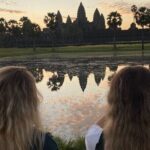
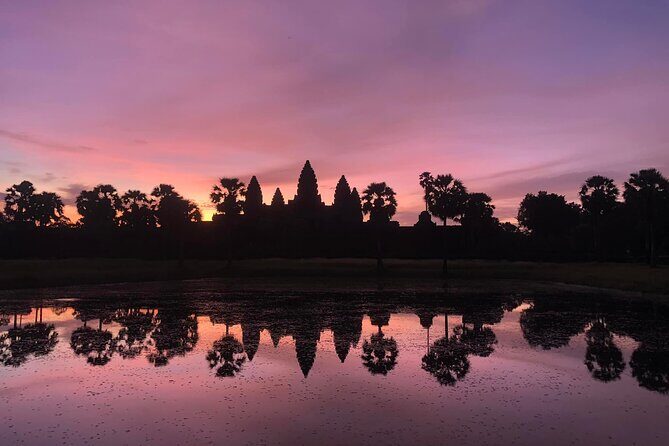
Here’s what I’d call the clever part: you enter Angkor Wat in the dark from the eastern side, described as a less frequently used approach. That means you’re not just chasing light—you’re walking in with the temple mostly unfolding around you. It changes the feel of the whole visit, because you aren’t arriving after the main wave.
Sunrise at Angkor Wat is famous for a reason. Even if you’ve seen photos, the scale hits you in a different way when you’re there at dawn, when the sky is changing and the carvings look crisp. The early timing also gives you a better chance to take in details without fighting for every angle.
Practical note: the temple visit time isn’t listed as a fixed “hours of free wandering,” and there’s a lot to see. Comfortable shoes help, and you’ll want layers. Pre-dawn temps can feel cooler than the afternoon sun you’ll face later.
Angkor Thom’s South Gate, Bayon, and the classic terraces
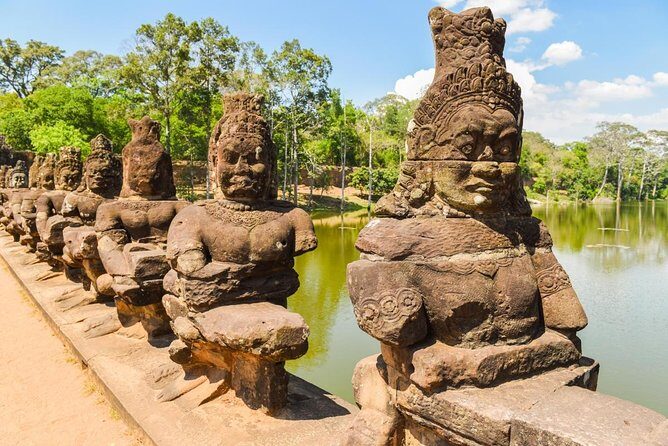
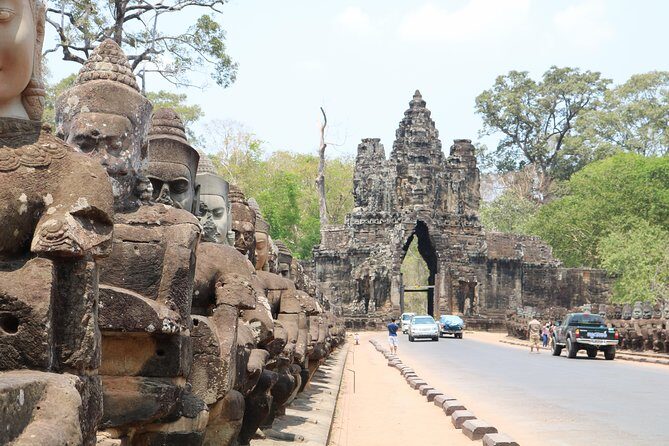
After sunrise, the itinerary moves to Angkor Thom South Gate, then deeper into Angkor Thom toward the Bayon area. This is one of those circuits where the design is the message. South Gate is a dramatic entry point, and taking a breath there helps you understand that Angkor Thom wasn’t just a temple complex—it was the Khmer Empire’s capital city in its day.
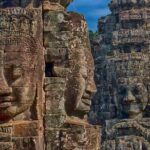
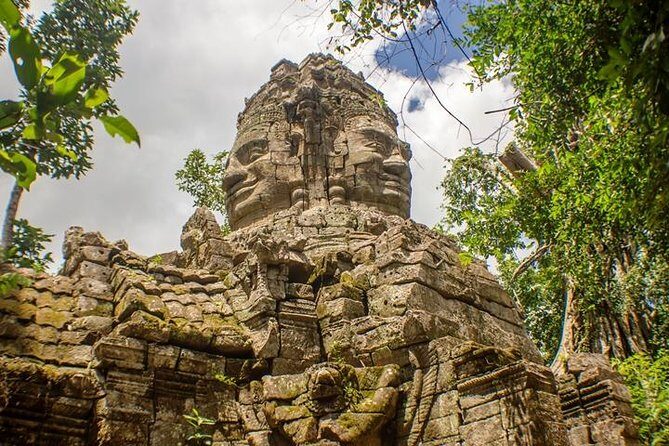
The stop at Angkor Thom includes time around Bayon. Bayon is known for its faces, and seeing it after sunrise makes it feel even more imposing. You’ll have a guide to connect the visual details to what they meant, which is one reason this kind of tour works better than going in totally on your own.
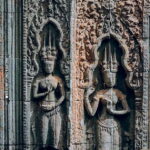
Then comes the Terrace of the Elephants. The tour notes you’ll pass by the Terrace of the Leper King and the Terrace of Elephant. Passing by is important wording here. These terraces are famous, but you’re not being asked to sit and study every carving for hours. You’re getting a curated sweep that keeps the day moving while still hitting the iconic spots.
If you love temple sculpture, you may wish for a bit more time here. But if your goal is to cover the big hits without wasting daylight, the pacing is exactly the point. This tour is built for seeing more, not disappearing into one corner for half the day.
Ta Prohm: the temple where time feels visible
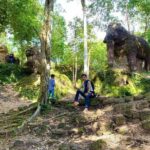
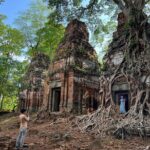
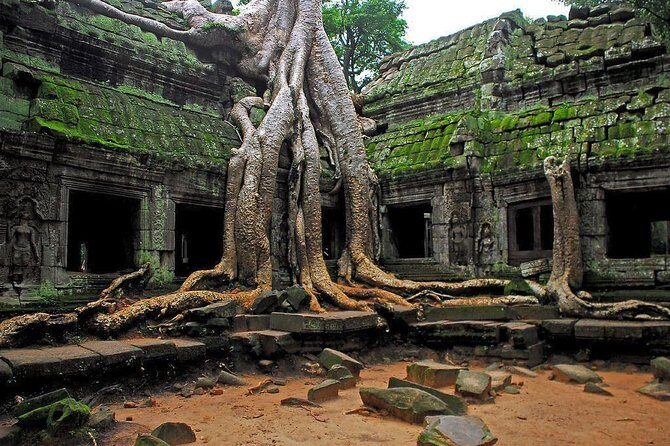
Ta Prohm is the stop that usually makes people slow down. The tour frames it as one of the most atmospheric temples in Angkor, and it’s easy to see why. This is the place associated with the look of crumbling stones and trees wrapped around structures, giving it that “still happening” feeling.
The itinerary allows about 1 hour here. That’s enough time to walk the main paths, take photos, and get a feel for how the layout pulls you through the ruins. You’re also told a key story point: Ta Prohm once housed thousands of monks—this temple complex had a community life, not just a ceremonial one.
A practical reality: Ta Prohm can be busy, and it’s not a smooth stroll. Expect uneven ground and plan to keep your balance. If you’re traveling with someone who has mobility issues, this is the kind of place where pace matters and group movement can feel tight.
But for most people, Ta Prohm is a highlight because it feels less like a museum set and more like an active ruin. It’s the stop where the tour stops talking and you start noticing everything by yourself.
Ro Lus Market and Kampong Phluk: Tonle Sap’s water-world
Day 2 shifts from stone to water. You’ll start with pickup from your hotel and travel through smaller communities. Along the way, there’s a short visit to Ro Lus Market—about 20 minutes—plus time for photos.
Ro Lus Market is a quick snapshot. It’s not a full shopping spree, and it’s not framed that way. What you get is context: you see daily life on the road to the lake, and it helps break the “temple-only” feeling from the day before.
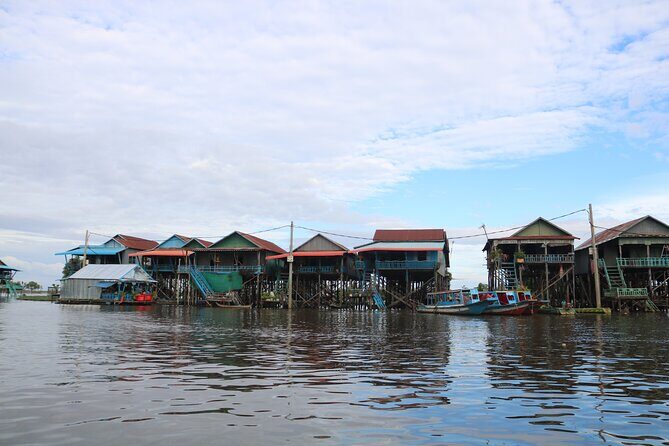
Then it’s on to Kampong Phluk Floating Village on Tonle Sap Lake. The tour explains the seasonal change in a useful way: during the wet season the lake swells to around 12,000 km², and in the dry half of the year it can shrink to as small as 2,500 km². That’s a huge transformation, and it explains why “floating” life is such a big deal here.
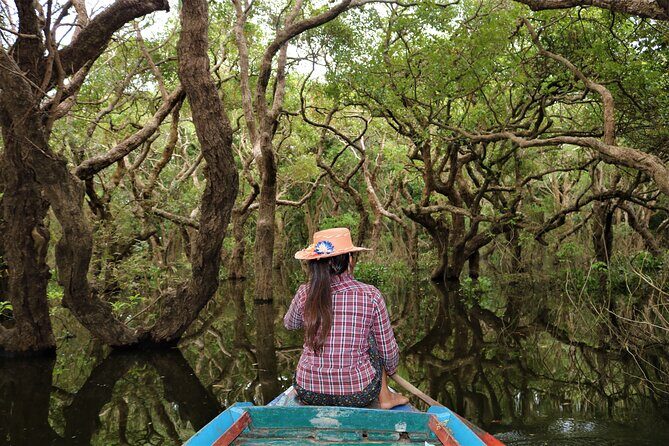
You’ll spend about 3 hours, and the important part is what’s included: Tonle Sap entrance plus a boat cruise. That cruise is where the trip makes sense, because it’s hard to grasp the scale of the village without being on the water. You’ll see how people live and work around the lake, with structures and routines shaped by the changing waterline.
One consideration: this portion depends on weather. The tour notes it requires good weather, and if conditions are poor you’ll be offered a different date or a refund. If you hate schedule changes, keep a bit of flexibility in your Siem Reap plans.
A few more Siem Reap tours and experiences worth a look

Price and temple pass math: is $59 actually good value?
The listed price is $59 per person for roughly 2 days. That rate sounds low for a tour that includes hotel pickup, air-conditioned transport, a licensed English-speaking guide, mineral water, Angkor Wat sunrise timing, and a Tonle Sap boat cruise with entrance.
Here’s the catch: the temple pass isn’t included. You’ll need to pay $37 per person directly to the site on the day of your activity. So your real total cost is closer to $96 before you add meals.
Still, for most people, this is a decent value package. The temple pass is a fixed add-on you’d pay anyway if you visited independently. What you’re buying with the $59 is organization and time: early pickup, route planning between major sites, and a guide who can answer what you’re looking at while you’re there.
Also, the tour is capped at 10 travelers, which often means less chaos at tight spots. And group discounts are mentioned, which can make a difference if you’re traveling with friends.
The small details that make a big difference
A few practical notes can save you stress.
First, the dress code for the temples: you need to cover knees and shoulders. That’s not a suggestion. Bring something light that covers you without roasting in the heat.
Second, walking shoes. The itinerary includes multiple temple sites and uneven ground, especially around the ruins. Sandals can turn into a regret fast.
Third, the tour uses mobile tickets. That usually means less paper, but you’ll still want to ensure your phone battery is healthy, since dawn starts early.
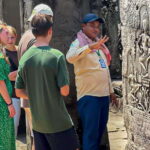
Lastly, the guide quality is a real part of the experience. Reviews highlight Mr Sokpee by name for explaining Cambodian culture along with the temples, and that makes the stops feel less like a checklist. You get the “why” behind the carvings, gates, and layouts instead of only the “what.”
Who should book this tour, and who should skip it?
This is a strong fit if you:
- want a sunrise Angkor Wat experience but don’t want to manage transport at 4am
- prefer a planned route that hits the major Angkor sights plus Tonle Sap in one go
- like small groups and a guide who connects culture to the stones
- want a daytime change from temples to real lake life
You might want a different style of tour if:
- you hate early mornings and early departures
- you’re hoping for lots of unscheduled time at each temple
- you’re traveling with kids under 5, since children younger than 5 aren’t allowed on this activity
- you expect meals to be included (they’re not)
If you’re the type who likes to wander freely, the structured pacing could feel a little “school trip.” But if you’re time-crunched and want the best bang for your days, this hits the sweet spot.
Should you book Angkor Wat Sunrise and Tonle Sap Lake 1.5 Days?
I’d book it if your priority is seeing Angkor Wat at sunrise without logistical headaches. The early schedule, the guided route through Angkor Thom, and the Day 2 switch to Kampong Phluk make this feel like two different trips packed into one.
The extra temple pass cost is the main downside, but it’s standard at Angkor. When you factor in guide-led timing, air-conditioned transport, and the boat cruise with entrance on Tonle Sap, the overall package feels fair.
If you do book, plan smart: cover your shoulders and knees, wear real shoes, and be ready for a very early start. Bring a light layer for pre-dawn, and accept that you’re moving through major sights on a tight but workable schedule.
FAQ
Is the $59 price the full cost?
No. The temple pass is not included and you’ll pay an additional $37 per person directly to the site on the day of the activity.
What time does the tour start?
The meeting/start time is listed as 4:20 am, with the actual pre-dawn departure from your hotel typically between 4:10 and 4:30 am depending on the season.
What’s included on the Tonle Sap day?
You’ll visit Kampong Phluk Floating Village with the Tonle Sap entrance fee and a boat cruise included, plus hotel pickup and drop-off and mineral water.
Do I need a special ticket for the temples?
Yes. A temple pass is required and it must be paid directly on the day of your activity.
What should I wear for the temple portion?
You need to cover your knees and shoulders during the temples tour.
How large is the group?
This tour has a maximum of 10 travelers.