REVIEW · SIEM REAP
5-Day All Major Temples & Kulen Mount Waterfall & Koh Ker & Beng Mealea
Book on Viator →Operated by Happy Angkor Tour · Bookable on Viator
Angkor looks simple on a map. It’s not simple on the ground, and this tour packs the main sights with enough variety to keep it interesting—big famous faces in Angkor Thom, sunrise at Angkor Wat, then rougher, less-crowded temples in the countryside. I like how the day plan mixes must-sees with detours that feel like a real change of scenery.
You also get practical comfort: a private A/C vehicle, plus cool drinking water and wet towels, which matters when you’re bouncing between temple zones all day.
What I really like is the balance of planning and flexibility. You’ll get an English-speaking licensed guide (and good ones can explain the Khmer layers instead of just pointing at stones), and you’re not stuck with someone else choosing where you sleep in Siem Reap. The other big plus: the tour includes remote stops like Koh Ker and Beng Mealea, so your “temple trip” isn’t only the classic circuit.
One consideration: the headline price is $455, but major temple admissions are not included, including Angkor + all temples, Kulen, and Koh Ker. If you’re trying to keep total costs tight, budget for entrance fees up front so nothing surprises you later.
In This Review
- Key highlights worth knowing before you go
- Price and logistics: what $455 really covers
- Day 1 through Angkor Thom: gates, terraces, and the big names before lunch
- Day 2 sunrise at Angkor Wat plus the Small Circle temples
- Day 3: Koh Ker (150km-ish) and Beng Mealea’s Indiana Jones energy
- Day 4: Preah Khan to Ta Prohm, then Phnom Bakheng sunset
- Day 5: Kulen National Park 1000 Lingas plus Artisans Angkor and Psar Chaa
- Comfort and pacing: how this tour keeps you functional
- Guides and the difference good explanations make
- Should you book this 5-day major temples tour?
- FAQ
- What’s the tour price and what extra costs should I expect?
- Does the tour include hotel pickup and drop-off?
- Is there air-conditioning and refreshments during the day?
- Do I need to buy temple tickets myself?
- Is Angkor Wat included, and do you visit it at sunrise?
- Can I skip the sunset part at Phnom Bakheng?
Key highlights worth knowing before you go
- A/C vehicle with cool water and wet towels for long, hot drives between temple zones
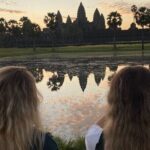
- Sunrise at Angkor Wat with an early 5:00am pickup so you can beat later crowds
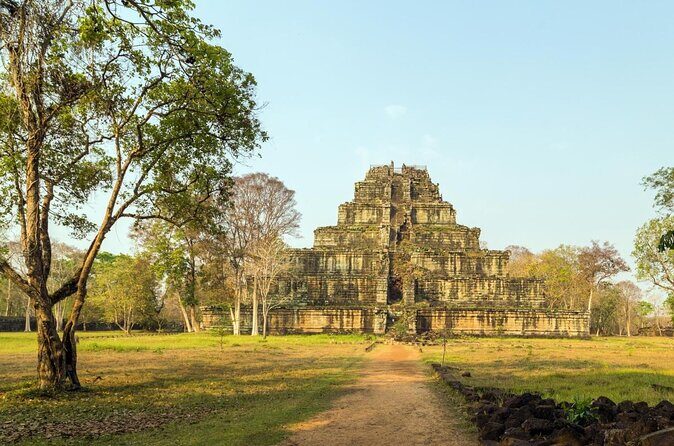
- Remote temple day at Koh Ker (about 150km+ from Siem Reap) plus Beng Mealea
- Guide support for temple passes so you’re not figuring it out on your own
- Sunset option at Phnom Bakheng with a note about limited numbers allowed
Price and logistics: what $455 really covers
At $455 per person, this tour is priced as a guided “temple marathon with transportation.” What you’re paying for is the private A/C vehicle with driver, an English-speaking licensed guide, and the structure that keeps things moving between far-flung sites. For five days, that kind of organization is usually the difference between a smooth trip and one where you constantly re-plan rides and timing.
The part to calculate carefully is temple access. The tour does not include entrance fees for several key areas:
- Angkor + All Temples: $72 per person
- Phnom Kulen National Park / Kulen mountain ticket: $20 per person
- Koh Ker Group: $15 per person
So you’re looking at about $107 in additional entrance fees on top of the tour price, before meals. Meals are also not included as a blanket deal; lunch is listed at about $5 per person depending on the menu.
You’ll also want to plan your own accommodation in Siem Reap. That’s not a flaw—it’s often a good sign. You choose where you stay, then the tour meets you and handles the moving parts.
Finally, the pace is the point here. Temples are spaced out, and some days run long. You’ll want to treat this like a serious sightseeing schedule, not a relaxed “stroll and snack” trip.
A few more Siem Reap tours and experiences worth a look
Day 1 through Angkor Thom: gates, terraces, and the big names before lunch
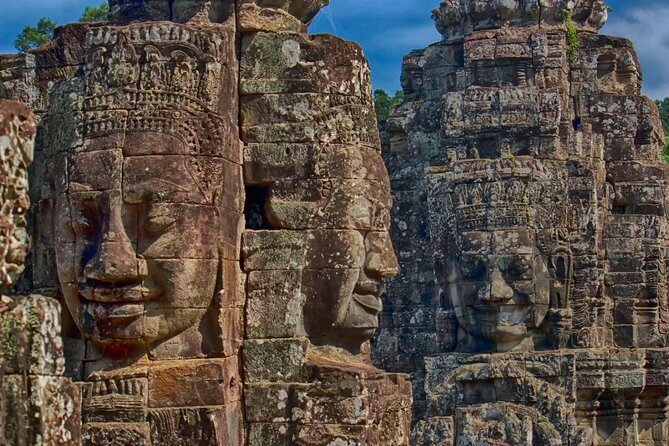
Day 1 focuses on Angkor Thom, the walled city, then connects into Angkor Wat later in the day. It’s a good way to start because you get the “iconic Khmer city” feeling right away: gates, royal spaces, and the famous face towers of Bayon.
You start in the morning with a hotel pickup at 8:00am. A key practical detail: the guide helps you buy the temple pass along the way, so you aren’t wandering around trying to figure out ticket logistics mid-drive.
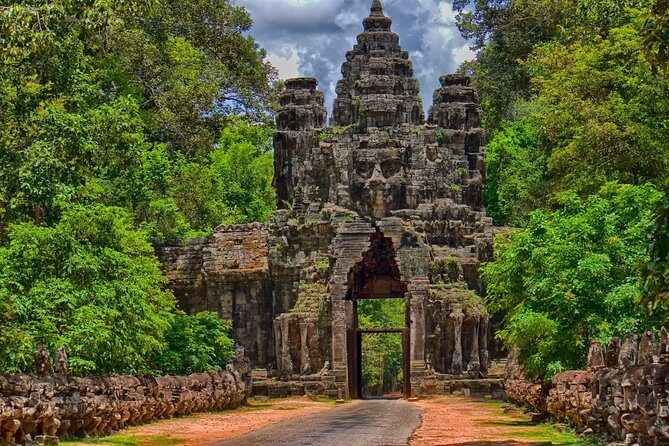
South Gate of Angkor Thom
This is the classic entry point experience. It sets the tone: you’re walking into the scale of the ancient city before you even hit the main monuments.
Bayon Temple
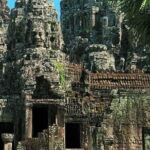
Bayon is the headliner inside Angkor Thom. The description you’ll hear is specific for a reason: 49 towers with four faces each, giving you that total of 196 face views of Avalokiteshvara. Even if you’re not a “details person,” it’s worth slowing down here. The design is made to reward walking around instead of just staring from one spot.
Baphuon, Phimeanakas, and the royal enclosure feel
These stops keep the story moving across Hindu and later layers. Baphuon is tied to an earlier Hindu complex, with a reclining Buddha added later. Phimeanakas is a pyramid temple located at the center of the old royal palace area, paired with the Royal Enclosure Wall. Together, they help you understand that Angkor wasn’t one static religion—it was shifting, rebuilding, and repurposing.
Terrace of the Elephants and Terrace of the Leper King
These are the “human history” stops. The Terrace of the Elephants is remembered for kings watching returning armies, and the stone carvings show elephants in repeated patterns. The Terrace of the Leper King is another platform stop close by, and it’s a reminder that the monumental Khmer world wasn’t only temples—it was also ceremonial spaces.
Victory Gate and Chau Say Tevoda / Thommanon
You end this dense section by moving toward the east side gate area and visiting restored temples near it. Chau Say Tevoda stands out because it’s described as completely restored by the Chinese government, and it keeps the Angkor Wat-like style. Thommanon is smaller, built for Hindu deities, and helps break the visual intensity of the bigger sites.
Then comes the main payoff: Angkor Wat.
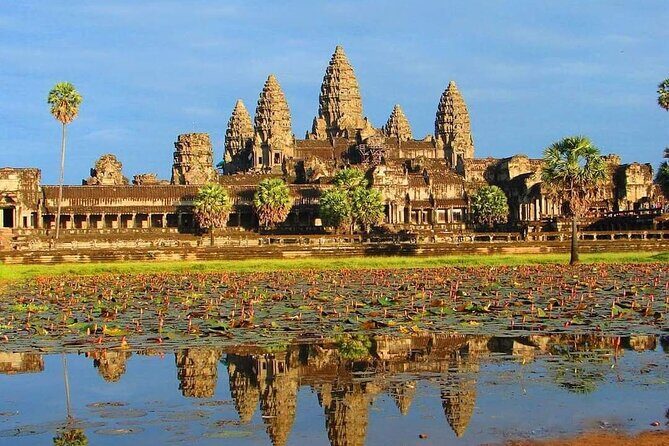
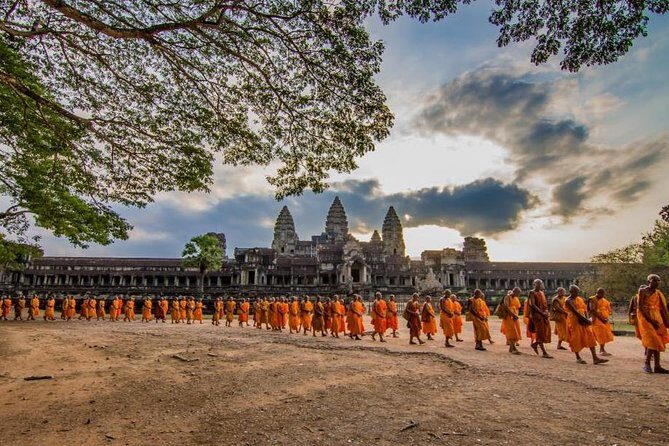
Angkor Wat (3.5 hours) is the big one. You’ll likely spend serious time here, and the religious timeline matters: it was originally built as a Hindu temple dedicated to Vishnu, then became a Buddhist temple later. The longer visit time lets you notice the difference between “seeing the postcard” and actually understanding the layout and carvings.
Possible drawback on Day 1: it’s intense. If you don’t like long walks across large temple grounds, the number of stops can feel like a lot before you’ve even settled into the trip rhythm.
Day 2 sunrise at Angkor Wat plus the Small Circle temples
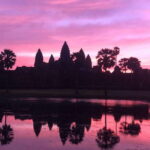
Day 2 starts properly early: pickup is 5:00am so you can watch the sunrise at Angkor Wat. This is one of those moments where you’ll either love it or find it exhausting. Sunrise is often the best time for light and atmosphere, but it does mean you lose a chunk of sleep.
Once you’re done at Angkor Wat sunrise (about 1 hour 45 minutes), the day continues into the Rolous Group cluster: Preah Ko, Bakong, and Lolei. This part is great if you like seeing older layers and temple types that feel less “polished-finished” than the most famous sites.
Preah Ko
A small stop, described as the first temple built in the defunct city of Hariharalaya.
Bakong
Bakong is called out as the first “temple mountain” of sandstone constructed by Khmer rulers and the biggest in the Rolous Group. If you want to understand how Khmer builders shaped sacred space—elevating it like a symbol—you’ll probably enjoy this.
Lolei
A smaller Hindu temple in the 9th-century cluster. At this point in the day, it also serves as a breather compared with the larger sights.
After lunch (there’s a break between visits), the plan shifts into the Banteay Srei area and the surrounding temples.
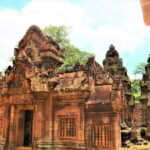
Banteay Srei (Ladies Temple)
This is one of the most memorable stops in the whole itinerary because it’s known for its pink sandstone. It’s described as built in the late 10th century and tied to Shiva and the Hindu trinity concept. It’s also often a favorite because the visual vibe is different from the grey stone of bigger complexes.
Banteay Samre and Pre Rup
Banteay Samre is presented as an Angkor Wat-like model in architecture. Pre Rup is dedicated to Hindu gods, and it ties the temple to funeral beliefs—temples as places tied to major life events, not just worship.
Banteay Kdei and the end of the day’s circuit
Banteay Kdei is another Hindu temple stop and it rounds out the “Small Circle” feel. It’s a good way to close the day without trying to cram in the most remote, hardest terrain.
Possible drawback on Day 2: early start plus a long circuit. If you struggle with mornings, plan to treat this as your “hard day” and keep your evenings easy back in Siem Reap.
Day 3: Koh Ker (150km-ish) and Beng Mealea’s Indiana Jones energy
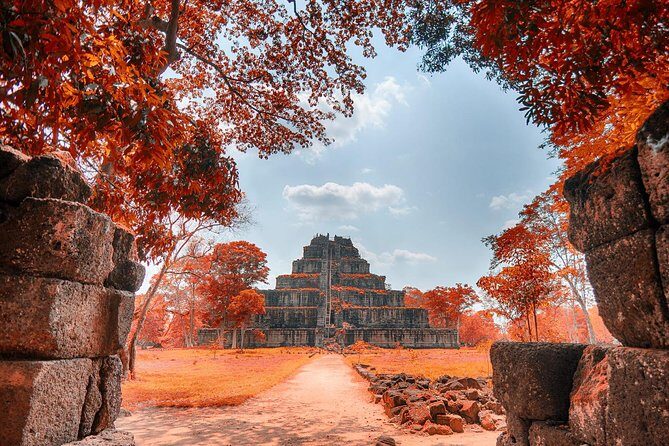
Day 3 is where the trip changes from “major Angkor monuments” into something more rugged.
Koh Ker Group (about 4 hours)
Koh Ker is described as more than 150km northeast of Siem Reap and as the brief Khmer empire capital (between 928 and 944). That capital detail matters because Koh Ker doesn’t feel like a supporting cast—it’s supposed to feel like power in an alternate center.
The itinerary lists the temple group and keeps the focus on Koh Ker as the main block of the day. If your goal is variety—seeing a different style of ruin and temple arrangement beyond the classic Angkor grounds—this is a strong choice.
Prasat Beng Mealea (about 1.5 hours)
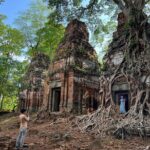
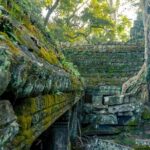
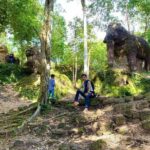
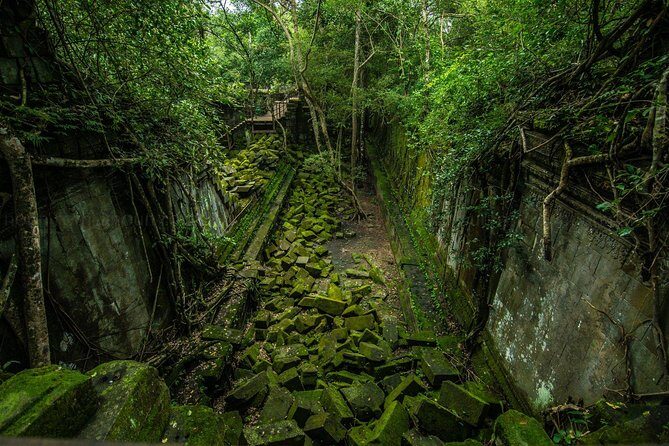
Then you hit Beng Mealea, which is described as “mysterious” and shaped by nature. The best part here is the expectation-setting: it’s framed as an Indiana Jones kind of explore, with nature running through the temple spaces. It’s also noted as being built to the same general plan as Angkor Wat, so it’s a chance to compare layout ideas without the same tourist density.
Possible drawback on Day 3: remote travel days can get hot fast and the sites may feel less controlled than major complexes. Bring sturdy shoes and be ready for more uneven ground.
Day 4: Preah Khan to Ta Prohm, then Phnom Bakheng sunset
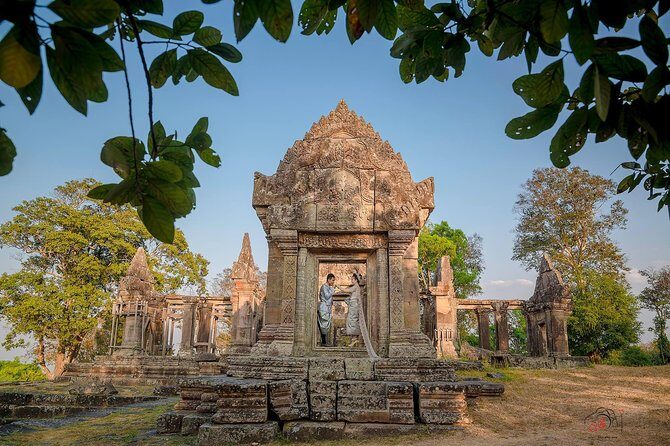
Day 4 follows a “Small Circuit” path through several different temple styles, ending with a sunset viewpoint. This is one of the best days for people who want variety in one day without going all the way off-road like Day 3.
Preah Khan (about 1 hour)
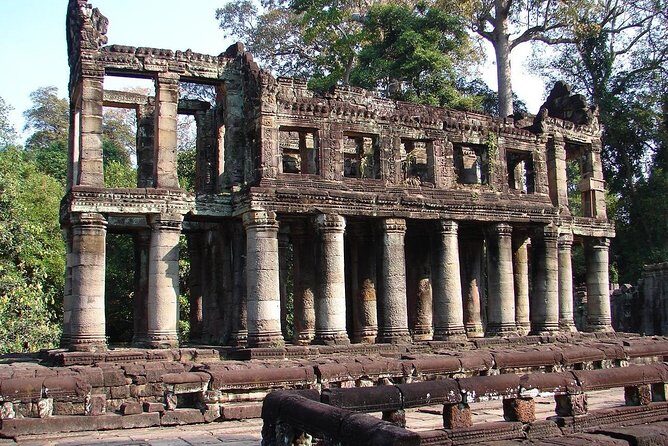
Preah Khan is described as a Buddhist temple built by King Jayavarman VII dedicated to his father. It’s big, highly-exposed in feel, and the stop length suggests you should expect to move through it rather than skim.
Neak Pean, Krol Ko, Ta Som
These are smaller, temple-island style stops. Neak Pean is described as an island temple in the middle of the last Baray, which helps it feel like a “pause moment” in the day. Krol Ko and Ta Som keep the area feeling like a theme rather than random add-ons.
Eastern Mebon
Eastern Mebon is a temple-mountain-like ruin with three levels and five towers. It’s paired with elephant statues at the corners, which gives you a visual anchor.
Ta Keo and Ta Nei
Ta Keo is called a big mountain temple built for Shiva in the 11th century and noted as still in good shape and restored by Chinese authorities. Ta Nei is smaller and less restored, with big trees around it, which is exactly the kind of difference that makes “temple days” more interesting.
Ta Prohm (about 1.5 hours)
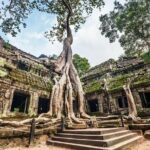
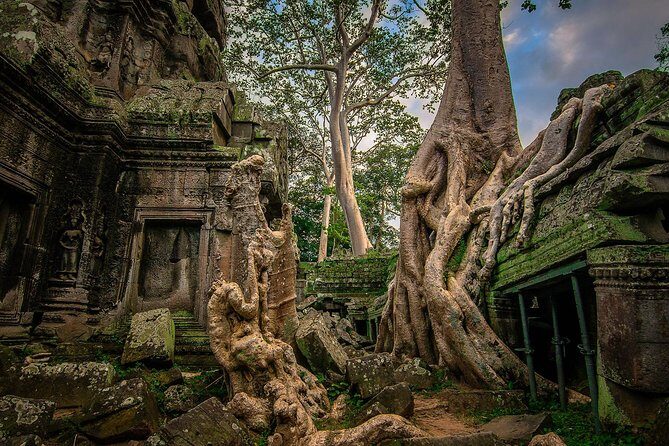
Ta Prohm is framed as amazing, with gigantic tree roots over the structure. The description also points out it was the location for the Hollywood film Tomb Raider. Even if you’re not a movie person, the visual is real and immediate: you’re looking at architecture that looks like it’s been slowly rewritten by trees.
Phnom Bakheng for sunset (optional, about 2 hours)
The day ends with climbing Phnom Bakheng to wait for the sunset view. There’s also an important note: the number of tourists allowed is limited. Practically, that means you should take the climb and timing seriously. If you don’t want to deal with waiting or crowds, you can skip the sunset portion.
Possible drawback on Day 4: the sunset option can stretch the day. If you prefer being done earlier, plan to skip or arrive with the mindset that you’ll be patient.
Day 5: Kulen National Park 1000 Lingas plus Artisans Angkor and Psar Chaa
Day 5 is the cultural-and-nature shift. This is your day outside the main Angkor temple zone.
Phnom Kulen National Park (about 5 hours)
Kulen is described as more than 60km from Angkor Park. It’s not presented as a “temple complex day” but a riverbed covered with sculptures of Lingas, known as the 1000 Lingas, symbolizing Shiva’s supreme essence. That phrasing matters because it explains why you’re not simply sightseeing ruins—you’re looking at a sacred landscape and religious marks carved into it.
Artisans Angkor (about 30 minutes)
Then there’s a craft stop. Artisans Angkor is described as being famous for traditional craft skills, including stone carving, wood carving, lacquering, gilding, and silk processing. It’s short, so it doesn’t dominate your day, but it does add a useful layer: you get to see how the skills that shaped ancient aesthetics continue today.
Psar Chaa – Old Market (about 1 hour)
Finally, you get market time in the center of Siem Reap. You can also skip it, but if you like grabbing snacks, looking at everyday Cambodian life, or picking up small souvenirs, this is the right slot. It’s a change of pace from temple stone.
Possible drawback on Day 5: it’s long enough that you’ll still feel you “sightsee” hard, even though it’s a break from the constant temple circuits.
Comfort and pacing: how this tour keeps you functional
This tour isn’t just about temples—it’s about the daily reality of getting from one site to another in Cambodia heat.
You’ll start at your hotel, with pickup and drop-off handled. You travel in a private A/C vehicle, and you’ll have cool drinking water and wet towels. Those details aren’t fluff. They help you keep energy for the uphill moments, the long walking sections, and the times you might otherwise feel sluggish.
The other pacing trick is timing:
- Sunrise at Angkor Wat gives you a “best light” moment early
- Remote stops (Koh Ker and Beng Mealea) prevent the trip from becoming repetitive
- Sunset at Phnom Bakheng is optional, so you can choose based on energy and tolerance for crowds
If you’re the kind of traveler who plans outfits and hydration, you’ll do well here. If you want to move slowly and linger, you may find the schedule tight—especially on the Angkor-heavy days.
Guides and the difference good explanations make
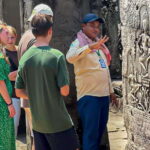
A licensed English-speaking guide can make the stones easier to read. The itinerary gives you specific religious and architectural context, like the Hindu-to-Buddhist shifts, the meaning behind temple placement, and the differences between “temple mountain” layouts and flatter complexes.
One more practical note: if your guide is Thean and your driver is SAN, that combination is specifically called out for deep Khmer Empire knowledge and skilled, polite driving. Even if your exact team differs, it’s worth valuing that kind of guide quality. On a trip like this, the guide isn’t optional entertainment—they’re what turns your photos into understanding.
Should you book this 5-day major temples tour?
Book it if you want:
- A structured 5-day plan that covers Angkor highlights and also reaches Kulen, Koh Ker, and Beng Mealea
- The comfort of private A/C transport with water and wet towels
- A guide-driven experience where you’re not stuck figuring out temple pass logistics
Skip or reconsider if:
- You hate early mornings. Day 2 sunrise means a very early pickup.
- You want a fully self-paced trip. This tour has a set sequence and a serious pace.
- You’re trying to avoid entrance fees. The tour price is only part of the total; you’ll budget for Angkor, Kulen, and Koh Ker tickets.
For most first-time visitors who want “maximum Cambodia temple impact” without turning your trip into a logistics project, this is a strong value format.
FAQ
What’s the tour price and what extra costs should I expect?
The tour costs $455 per person. Entrance fees are not included: Angkor + All Temples ($72 per person), Kulen mountain ticket ($20 per person), and Koh Ker Group ticket ($15 per person). Meals are not included, but lunch is listed at about $5 per person depending on the menu.
Does the tour include hotel pickup and drop-off?
Yes. Pickup starts from your hotel or guest house lobby at the scheduled times, and the tour finishes by dropping you back at your accommodation.
Is there air-conditioning and refreshments during the day?
Yes. You’ll travel in a private A/C vehicle with a driver, and the tour includes cool drinking water plus wet towels.
Do I need to buy temple tickets myself?
The tour does not include entrance fees for Angkor + all temples, Kulen, or Koh Ker. You can expect help with the process, including buying the temple pass along the way, but the listed entrance costs are separate.
Is Angkor Wat included, and do you visit it at sunrise?
Angkor Wat is included, and there is a sunrise visit. The tour includes an early 5:00am pickup for the sunrise at Angkor Wat.
Can I skip the sunset part at Phnom Bakheng?
Yes. The plan notes that you can skip the sunset wait at Phnom Bakheng if you don’t want to wait for sunset.