REVIEW · SIEM REAP
Siem Reap: Angkor Wat Small-Group Sunrise Tour & Breakfast
Book on GetYourGuide →Operated by BREKSA TRAVEL · Bookable on GetYourGuide
Sunrise at Angkor feels like time travel. I love the early access that gives you Angkor Wat before the biggest crowds, and I love how the guides (like Mony, Mr. Kim, and Mr. Ho Samnang) point out details you’d miss on your own. My only real caution is the schedule: pickup is around 4:30–5:00 am and the day runs long, so you need to be ready for early mornings and Cambodian heat.
This tour also wins points for the in-between moments, not just temple photos. The stop in Preah Dak for a real Cambodian breakfast and palm-sugar desserts (plus walking around the village) makes the day feel like more than a checklist. You’ll still be on the move most of the morning, so go in with comfortable expectations, not a slow stroll.
At $23 per person, it’s a strong value for a guided, air-conditioned, hotel-to-hotel day tour. Just remember the Angkor pass is not included ($37 per person), and lunch isn’t included either—so your true day budget is a bit higher once you add those.
In This Review
- Key highlights that make this tour worth your time
- Sunrise timing that actually changes the experience
- Hotel pickup at 4:30–5:00 am: when the day starts
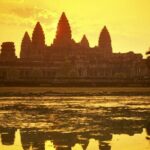
- Angkor Wat at sunrise: guided time before the rush
- Preah Dak village break: Khmer breakfast plus palm-sugar desserts
- Ta Prohm: jungle roots and the temple in the wild
- Angkor Thom in focused chunks: Bayon, Elephants, Leper King, Victory Gate
- Bayon Temple
- Terrace of the Elephants and Terrace of the Leper King
- Victory Gate
- The short follow-ups that close the loop: Baphuon and Tonle Om Gate
- Transportation, comfort, and the heat reality
- Price and value: $23 is good, but plan for the Angkor pass
- Who this sunrise tour is best for (and who should think twice)
- Should you book this Angkor Wat sunrise small-group tour?
- FAQ
- How early is the hotel pickup?
- How long is the tour?
- Is breakfast included, and what is it like?
- Do I need to buy an Angkor pass?
- Is lunch included?
- What kind of guide and group size is this?
- What should I bring and what clothing is not allowed?
Key highlights that make this tour worth your time
- Sunrise timing that helps you catch Angkor Wat in softer light and quieter conditions
- English-speaking guides who actually explain what you’re seeing, including Mr. Ho Samnang and Mr. Kim
- Preah Dak village breakfast with Khmer rice noodle soup and green curry fish soup, plus palm cake and steam rice dumplings
- Jungle temple contrast at Ta Prohm, left in an original, root-and-tree state
- Angkor Thom anchor sights like Bayon and the Terrace of the Elephants and Leper King
- Heat support with cold towels and bottled water during the day
Sunrise timing that actually changes the experience
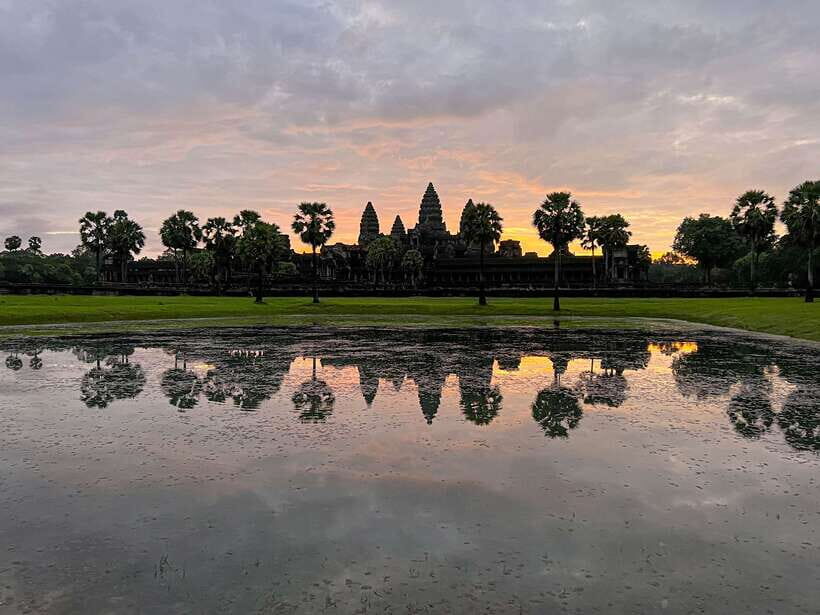
Angkor is famous for big crowds. This is why the sunrise approach matters. Leaving Siem Reap before dawn gives you a head start on the day, so you’re not fighting for angles, spacing, or patience.
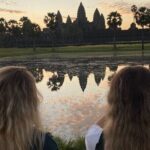
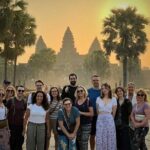
The tour is built around watching the sunrise over Angkor Wat and then getting guided time at Angkor Wat itself before the busiest waves hit. That sequence matters because your photos and your understanding both benefit from the calmer pacing. If you only arrive later, you often end up seeing stone through a haze of movement and noise.
A few more Siem Reap tours and experiences worth a look

Hotel pickup at 4:30–5:00 am: when the day starts
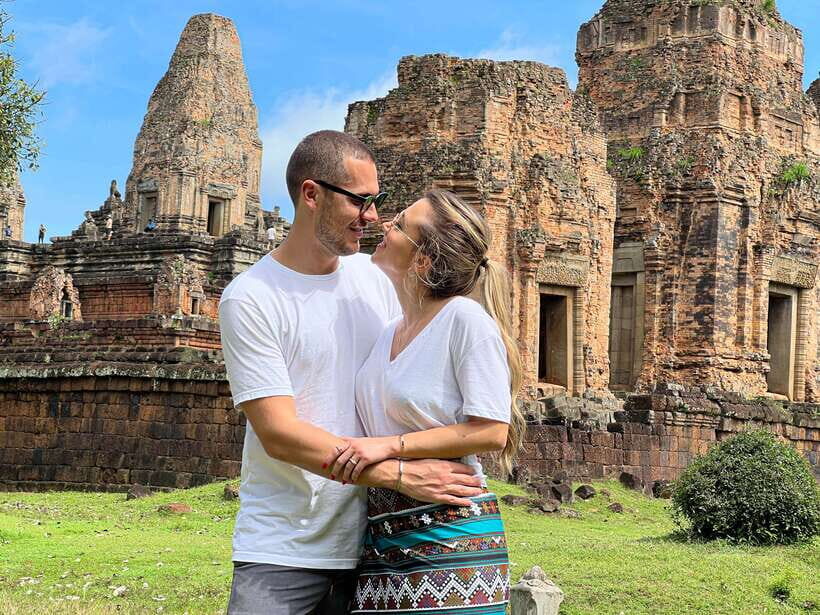
Pickup is typically 4:30 am to 5:00 am, depending on your schedule, and you’ll meet the group in the hotel lobby about 15 minutes before pickup time. From there, you ride in a minivan or minibus for the transfer to the Angkor area.
This part is simple, but it’s also where you’ll feel the tradeoff: you’re giving up sleep for a better temple experience. If you’re visiting with kids or you know you’re cranky before breakfast, plan on going to bed early the night before.
Also, bring what you need for early outdoor time: sunglasses and sunscreen are practical even before the sun is fully up. The tour provides bottled water and towels, but your own protection still makes sense.
Angkor Wat at sunrise: guided time before the rush
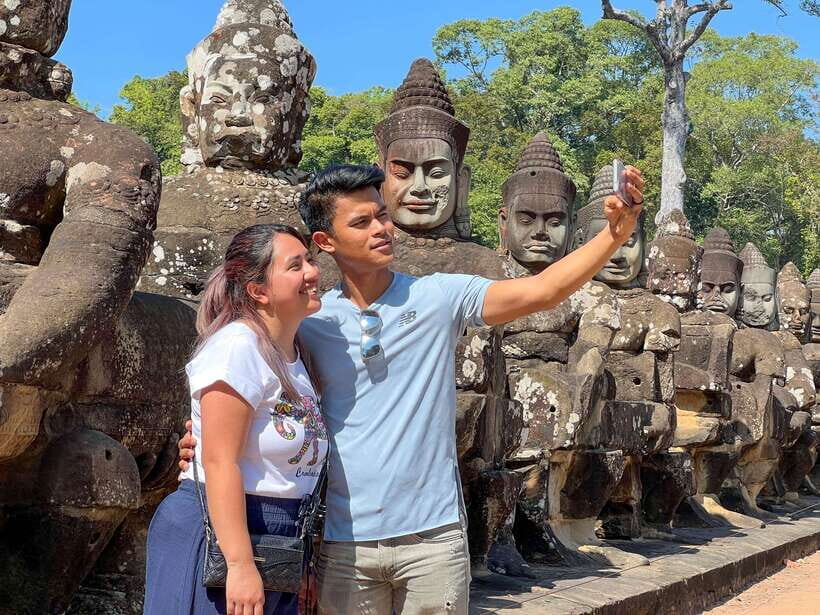
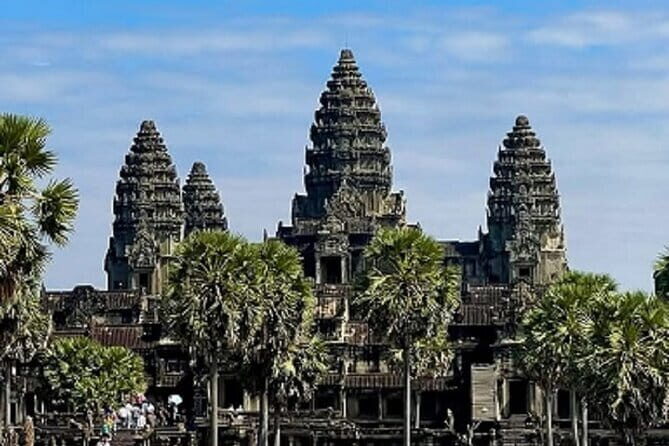
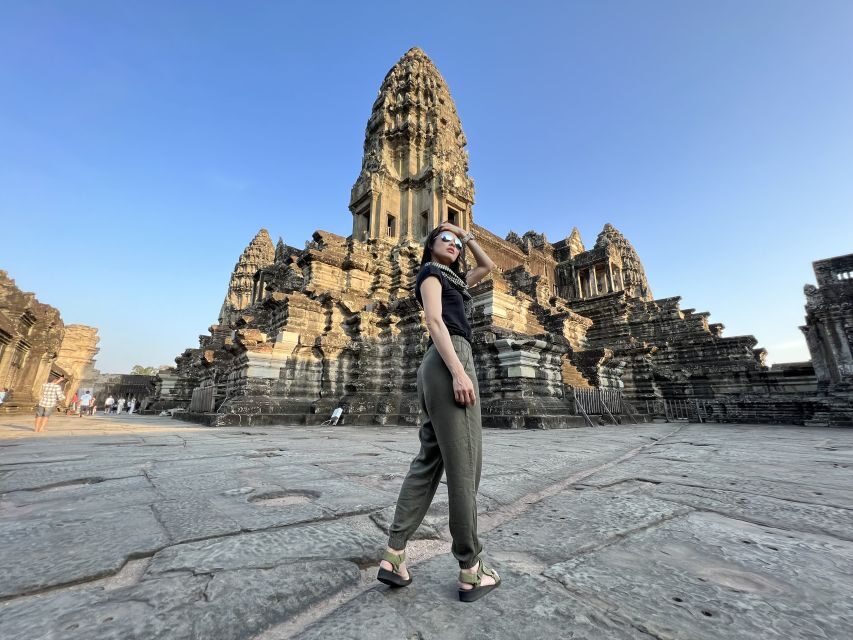
The highlight is watching sunrise at Angkor Wat, then spending around 1 hour and 30 minutes exploring the temple building before the crowds arrive. This is the sweet spot. You get time to look slowly, take pictures, and understand the layout instead of just snapping and running.
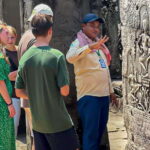
What makes this stop feel different is the guiding style. One guide, Mr. Ho Samnang, is described as someone who answers very specific questions about the temple details—down to things carved into the stone blocks—and ties structures to purpose. Another guide, Mr. Kim, is praised for keeping the group engaged while sharing history and cultural insight.
Even without turning every stone into a trivia question, you’ll likely appreciate how the guide helps you connect what you see: causeways, courtyards, and major temple elements in a way that feels organized instead of overwhelming.
Practical note: the tour is timed for you to get out of the densest crowd flow. Still, Angkor is a working heritage site, so you’ll want patience and a steady pace.
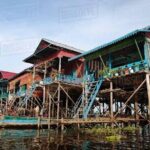
Preah Dak village break: Khmer breakfast plus palm-sugar desserts
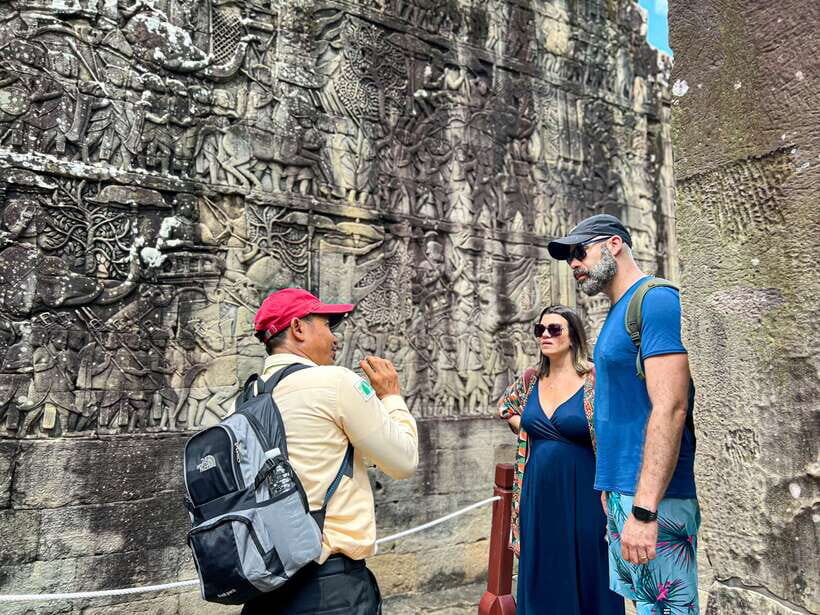
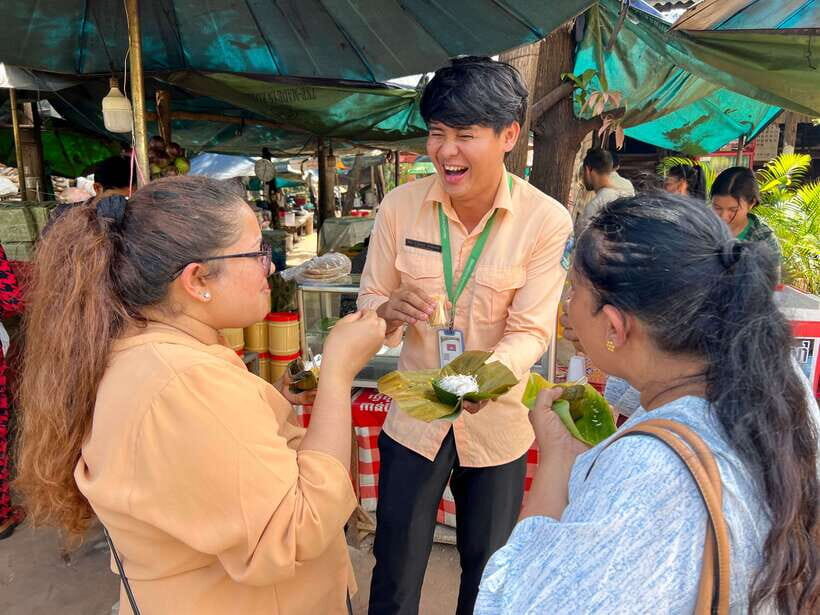
This tour doesn’t treat breakfast like a quick fuel stop. It builds in about 1 hour in the village of Preah Dak for breakfast, local snacks, and dessert—plus walking in the area.
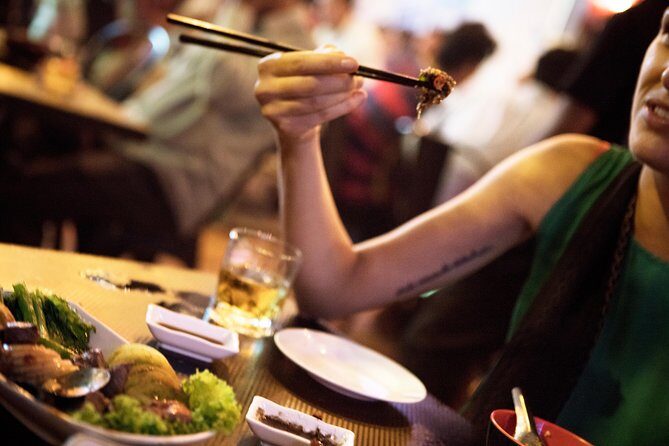
The breakfast is described as authentic Khmer rice noodle with green curry fish soup. That’s a meaningful detail because it’s not just a generic pastry-and-coffee routine. You also get local desserts such as palm cake and steam rice dumplings with palm sugar.
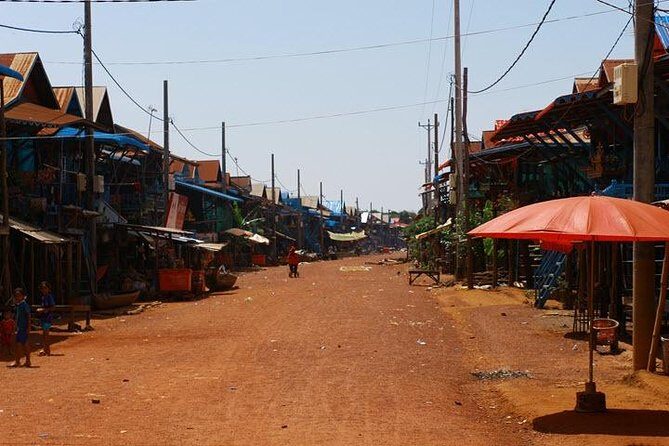
What I like about this village break is that it creates contrast. You go from ancient stone to everyday life, then back to temples. It helps you remember that Angkor isn’t just a theme park; it’s surrounded by real communities with their own food culture and routines.
If you have dietary needs, there’s a vegetarian option for breakfast—just let the operator know in advance.
Ta Prohm: jungle roots and the temple in the wild
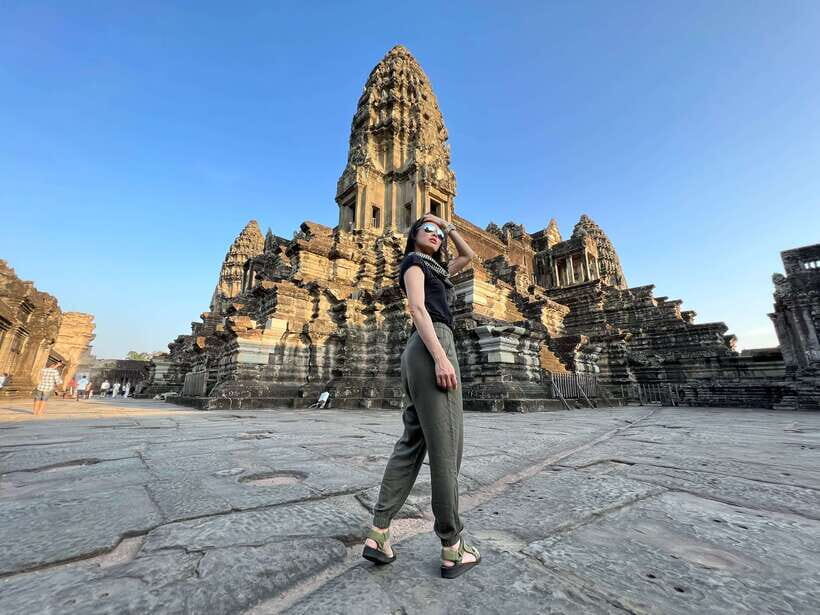
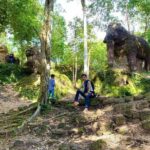
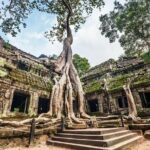
After breakfast, the tour heads to Ta Prohm. Expect about 1 hour here, with time to explore the jungle temple that has been left in its original state—partly overgrown with huge roots and trees.
Ta Prohm is the kind of place where you don’t need a long lecture to “get it.” The visuals do the talking. But the guide helps you read the scene: where structures sit, how the vegetation interacts with the stone, and why the temple feels different from more polished Angkor sites.
This is also one of the best spots to slow down for looking. Even when you’re tired from the early start, Ta Prohm has a natural pull: roots twist through doorways, and the temple feels almost alive.
If you’re the type who loves photos, this is where you’ll likely spend some time framing shots. Just keep an eye on footing and stay aware of uneven surfaces—temple stone isn’t made for sprinting.
Angkor Thom in focused chunks: Bayon, Elephants, Leper King, Victory Gate
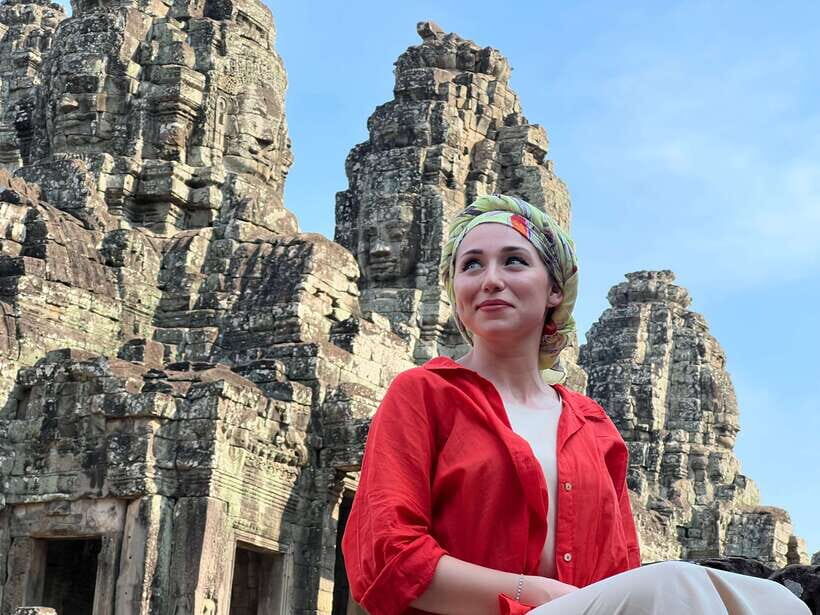
Next comes Angkor Thom, and this is where the day shifts into a more “big landmarks” rhythm. You’ll hit key temple points rather than trying to do everything at once.
Bayon Temple
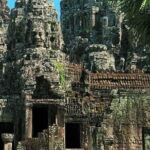
Bayon is scheduled for about 1 hour. It’s a central stop, and it often feels like the heart of the complex. Bayon is also described as the only monastery that survived to this day, used for worship, education, and administration. That context helps you look past the iconic faces and think about what the place was for.
Terrace of the Elephants and Terrace of the Leper King
You also visit the Terrace of the Elephants and the Terrace of the Leper King, but each is about 15 minutes. That short timing is a double-edged sword:
- You’ll get a quick, guided taste without getting stuck for hours.
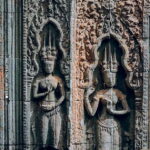
- If you love carvings and want time to study every detail, you may wish for more minutes.
Still, with a good guide, 15 minutes can be enough to understand the meaning of what you’re seeing. This is another reason the guiding quality matters on this tour.
Victory Gate
You’ll also stop at the Victory Gate, built by King Jayavarman VII, associated with Mahayana Buddhism. It’s one of those places where a few minutes can feel like a lot, because it anchors the bigger story of how this part of Angkor functioned.
The short follow-ups that close the loop: Baphuon and Tonle Om Gate
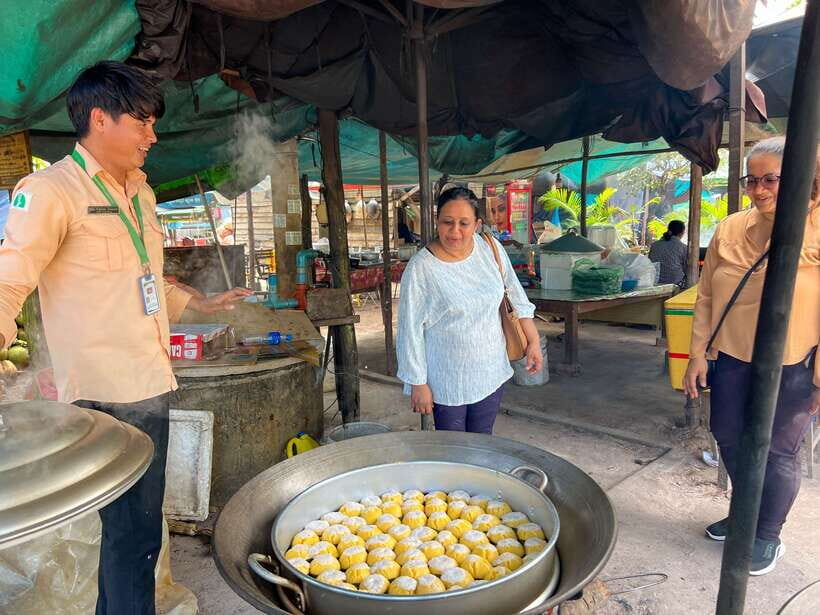
The tour doesn’t end after the main headliners. You’ll also visit Baphuon (about 30 minutes) and the Tonle Om Gate (Southern Gate) (about 15 minutes).
These stops are shorter, but they help you connect the dots. When you’re moving across Angkor Thom, it’s easy to see each site as separate. The guide’s job is to stitch them together, so by the time you reach Baphuon and the gate, the day feels like one coherent walk through the complex rather than disconnected snapshots.
Transportation, comfort, and the heat reality
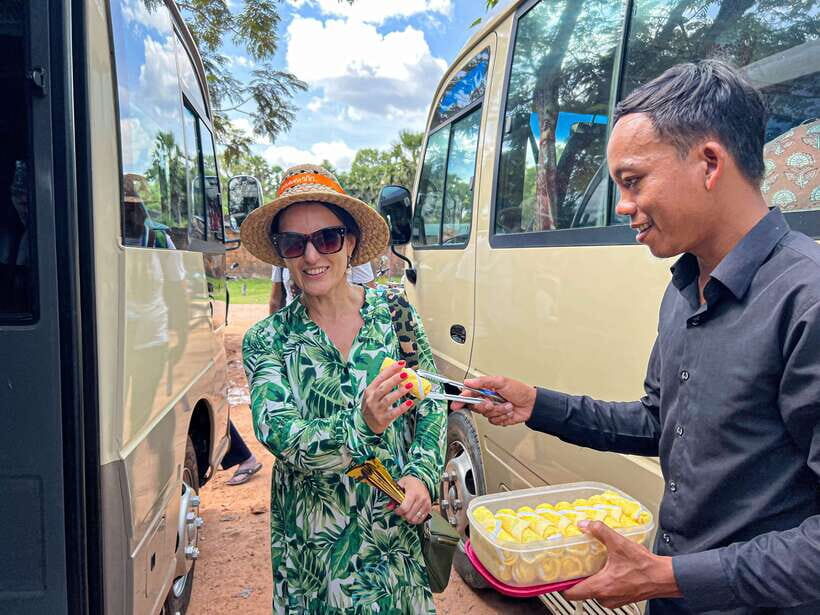
The tour includes air-conditioned transportation, a professional English-speaking guide, and hotel pickup and drop-off. You’ll also have cool bottled water and towels during the day, which is a real help in Siem Reap’s humidity.
One review highlights cold towels and bottled water as a lifesaver in the Cambodian heat. That aligns with what you should expect: the early start doesn’t erase the weather. You’re outside for long enough that comfort details matter.
If you want a smoother day, pack smart:
- Sunglasses
- Insect repellent
- Sunscreen
And wear clothing that fits the rules: no short skirts, no sleeveless shirts, and no skirts. Temple dress codes aren’t about style here; they’re about staying allowed inside key areas.
Price and value: $23 is good, but plan for the Angkor pass
The tour price is listed at $23 per person for a guided, hotel-to-hotel day. That’s a solid deal on its own because you’re paying for early sunrise access, English guiding, and air-conditioned transport.
But you should budget for the two big add-ons:
- Angkor pass (1-day): $37 per person
- Lunch is not included
So the realistic cost is more than $23 once you add the pass. The pass requirement is important because it affects time and logistics. One useful tip from a guide experience: purchase the Angkor Pass ahead of time. Waiting or detouring for tickets costs time when you’d rather be at the best viewing spot early.
Also, since lunch isn’t included, decide now how you want to handle it. You’ll likely want either a nearby meal plan for after the tour or a plan to snack your way through the afternoon. This tour also includes breakfast, so you’re covered for the morning fuel.
Who this sunrise tour is best for (and who should think twice)
This tour is a great match if you want:
- A structured day that covers the major Angkor highlights efficiently
- A guided experience where you can ask questions and get answers, not just follow a map
- Early start sunrise views without spending your whole trip figuring out timing
You might think twice if:
- You hate early mornings and struggle with 4:30–5:00 am pickups
- You want lots of unstructured free time at each site, since some stops are intentionally short (like the terraces)
- You’re hoping lunch is included—it isn’t
If you like history but also want practical flow, this is the type of tour that helps you get both: ancient temples plus a real local village food break.
Should you book this Angkor Wat sunrise small-group tour?
If you’re choosing between a DIY sunrise plan and a guided tour, I’d lean toward booking this one if you want less stress and more clarity. The small-group format plus an English-speaking guide makes the temple experience easier to understand, and the breakfast stop adds something genuinely local.
I’d still make one smart move before you go: sort out your Angkor Pass in advance so you don’t lose access time. And be realistic about the day length—this is a sunrise-first itinerary, not a casual morning.
If you do that, you’ll walk away with a mix that many Angkor days don’t manage: sunrise atmosphere, guided context, and a village breakfast that feels like part of Cambodia, not just a pause between temples.
FAQ
How early is the hotel pickup?
Pickup is typically between 4:30 am and 5:00 am from your hotel lobby.
How long is the tour?
The tour duration is listed as 9 hours.
Is breakfast included, and what is it like?
Yes. Breakfast is included and described as Khmer rice noodle with green curry fish soup, plus local desserts such as palm cake and steam rice dumplings with palm sugar. There is also a vegetarian option if you request it in advance.
Do I need to buy an Angkor pass?
Yes. The Angkor pass of 1-day is not included and costs $37 per person.
Is lunch included?
No. Lunch and soft drinks are not included.
What kind of guide and group size is this?
You’ll have a professional English-speaking guide, and the tour is described as available in private or small-group formats.
What should I bring and what clothing is not allowed?
Bring sunglasses, insect repellent, and sunscreen. Short skirts, sleeveless shirts, and skirts are not allowed.