REVIEW · SIEM REAP
Private 2 Days Angkor Wat Sunrise and Discover all Major Temples
Book on Viator →Operated by About Cambodia Travel & Tours · Bookable on Viator
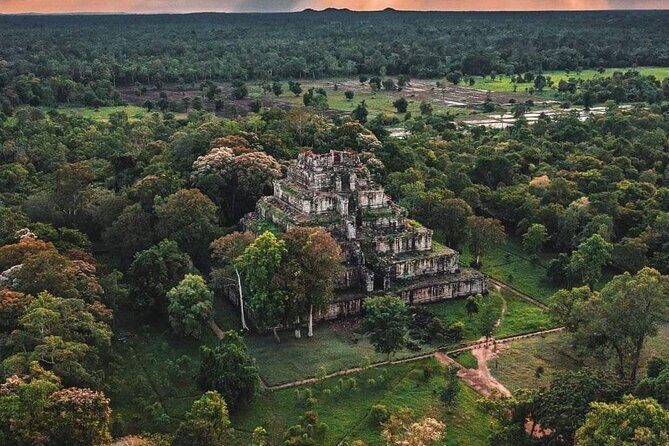
Sunrise at Angkor Wat sets the tone. This private two-day route is built for the big moments—watching light break over Angkor Wat and then working through the most famous temples of the Khmer Empire with an English-speaking licensed guide—without the stress of figuring out transport. I especially like the tight flow from Angkor Wat into Angkor Thom’s heart, and the way the guide turns stone and carvings into something you can actually picture. The only real drawback to keep in mind: you’ll start very early (sunrise), and you’ll still need to budget for the Angkor Pass plus your meals.
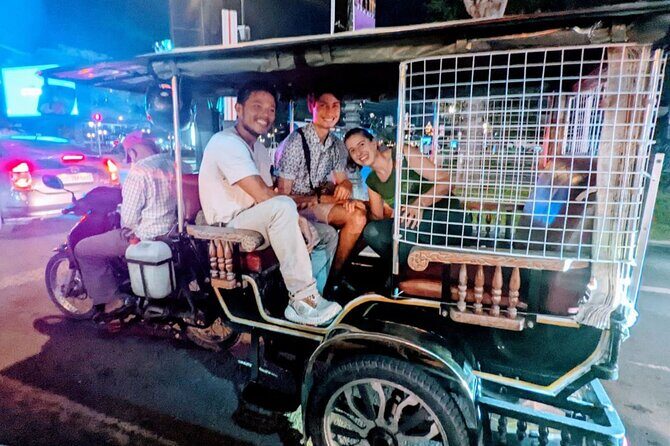
What makes this tour work well is the practical setup. You get hotel pickup and drop-off, a private air-conditioned vehicle, bottled water, and cool towels to reset between temple stops. It’s also structured so you see the classics plus some less-visited sites—so you don’t just repeat the same photo spots in a loop.
One more consideration: the exact order on-the-day can feel fast at times, because Angkor is spread out. If you hate early mornings or prefer slow wandering with lots of downtime, you may want a more relaxed option.
In This Review
- Key Things I’d Prioritize on This 2-Day Angkor Tour
- Why a Private 2-Day Angkor Wat Sunrise Tour Makes Sense
- Day 1: From Angkor Wat Sunrise to Angkor Thom’s Royal Heart
- Angkor Wat sunrise (early start)
- Angkor Thom South Gate and the moat causeway
- Angkor Thom, Bayon, and Baphuon
- Phimeanakas and the Royal Square terraces
- Ta Nei and Banteay Kdei to end the day
- Day 2: Banteay Srei’s Detail, Preah Khan’s Scale, and Pre Rup’s Views
- Banteay Srei
- Banteay Samre and the East Baray area
- Preah Dak Village for souvenirs and crafts
- Preah Khan and its Jayavarman VII family story
- Neak Pean: the unusual layout stop
- Ta Som, Eastern Mebon, and Pre Rup
- Sunrise, Sunset, and the Real Job: Getting the Timing Right
- Your Guide and Driver: What Makes This Feel Smooth
- Price, the Angkor Pass, and the Real Value Check
- What to Expect Between Stops (So You Don’t Feel Rushed)
- Who This Tour Is Best For
- Should You Book This 2-Day Angkor Temples Tour?
- FAQ
- Is hotel pickup and drop-off included?
- What does the tour price include?
- Do I need to buy temple tickets separately?
- Are meals included during the tour?
- Will there be a private guide and private transportation?
- Is tipping included?
- What is the cancellation policy?
Key Things I’d Prioritize on This 2-Day Angkor Tour
- Angkor Wat at sunrise: early start for the best light, including the iconic viewpoint experience.
- Angkor Thom in depth: South Gate causeway, Bayon’s stone faces, Baphuon, and royal terraces.
- Classic + quieter temples: stops like Ta Nei, Banteay Kdei, Neak Pean, and Preah Khan add variety beyond the postcard list.
- Licensed guide with strong English: the history and meaning of carvings becomes easier to follow on a guided route.
- Private AC transport: you’re not stuck shuffling between vans in the heat.
- Good value if you want a full hit: the package covers guiding, transport, water, and transfers, so you’re mainly paying for what you’d do anyway—temps, time, and a smart plan.
Why a Private 2-Day Angkor Wat Sunrise Tour Makes Sense
Angkor is not a “grab a tuk-tuk and see what happens” kind of place. It’s huge, the sites are far apart, and the light changes fast. That’s why I like tours that treat timing like part of the experience, not an afterthought.
With this private setup, the morning starts early so you can be at Angkor Wat before the crowd energy spikes. Then the day moves in a logical geographic pattern, so you’re not constantly crossing the entire park just to reach the next temple. The AC vehicle plus cool towels matter more than you’d think. In Siem Reap heat, small comfort upgrades keep the day enjoyable instead of exhausting.
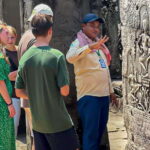
You’ll also get a real guide here, not a handoff. The tour uses a professional official license tour guide with excellent English-speaking skills. That’s huge for Angkor, because the temples are packed with symbolism. Without context, you mostly see pretty ruins. With context, you start noticing why the layouts, faces, and terraces are placed where they are.
You can also read our reviews of more private tours in Siem Reap
Day 1: From Angkor Wat Sunrise to Angkor Thom’s Royal Heart
Your first morning focuses on Angkor Wat and then pushes into Angkor Thom—basically, the core story of the site.
Angkor Wat sunrise (early start)
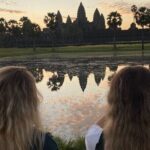
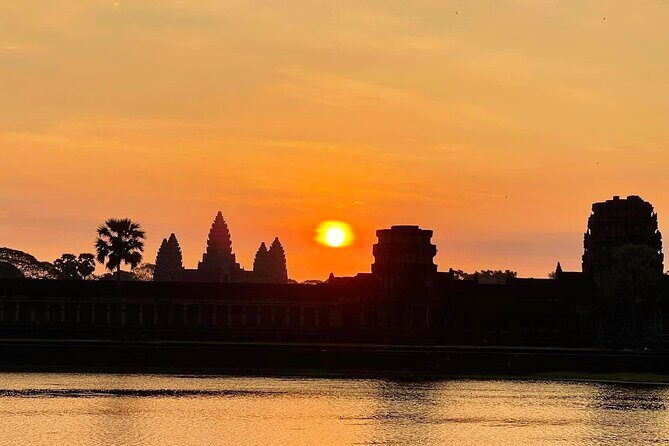
You’ll head out around 4:30 AM to catch sunrise. Angkor Wat is the national emblem of Cambodia, and the guide’s explanations here usually make the architecture easier to read: the silhouette with five towers, and the way you can see only three from a frontal perspective. Even if you’ve seen photos, being there in low light changes the feel. The carvings and long lines of stone read better, and the temple seems more purposeful than “just ancient.”
Important: this stop is listed as 2 hours and the entrance ticket isn’t included. Your guide will help you buy the Angkor Pass at the entrance of the park before you start.
Angkor Thom South Gate and the moat causeway
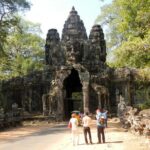
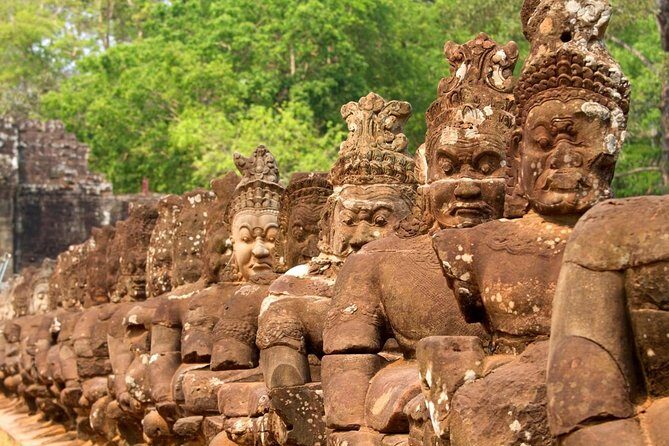
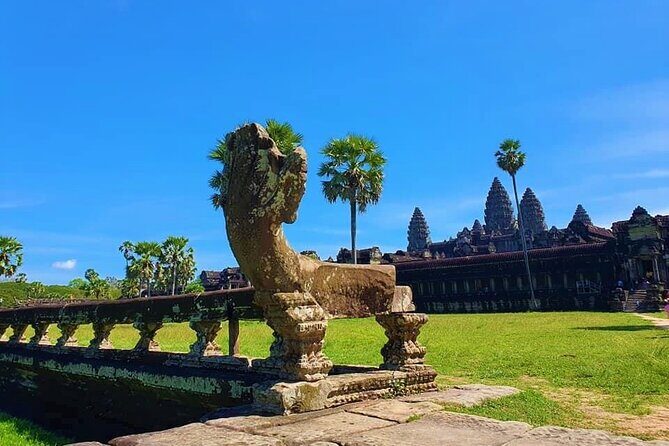
After sunrise, the route moves to Angkor Thom South Gate. This is the spot with one of the best-preserved, restored stone causeways spanning a 100 m broad moat. The railings are lined with giant sculptures—an image you’ll recognize quickly once you’re there. This section is worth it because it sets the tone of the royal city: ceremonial entry, controlled movement, and myth made into stone.
Angkor Thom, Bayon, and Baphuon
Then you step deeper into Angkor Thom itself. Angkor Thom is sometimes spelled Angkor Tom, and the name reflects the later period after Angkor stopped being the Khmer capital. You’ll often hear the meaning around the site—big capital or great city—and it fits the scale.
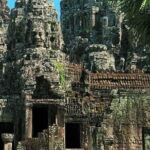
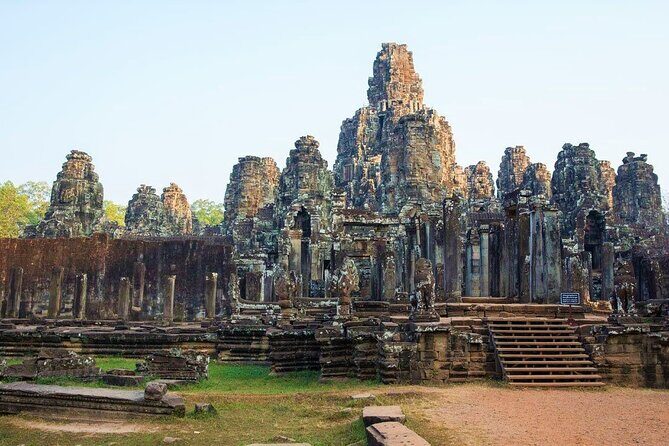
Next is Bayon Temple. Built in the center of Angkor Thom around 1200 A.D., it’s the second most popular monument in Angkor (after Angkor Wat). This is where the famous “stone faces” show up in a serious way. The guide’s job here is to help you connect the faces to the temple’s function and to the period’s Khmer beliefs, so you’re not just walking around trying to “find the coolest face photo.”
Baphuon Temple follows nearby, about 300 meters northwest of Bayon’s central area. It’s described as 150 years younger, which matters because you’ll start spotting how temple styles evolve across reigns. Even without a deep archaeology degree, it’s easier to notice shifts when someone points them out in context.
A few more Siem Reap tours and experiences worth a look
Phimeanakas and the Royal Square terraces
After the main cluster, the route slows slightly for smaller-but-meaningful pieces.
- Phimeanakas (meaning Aerial Palace / Celestial temple) is a quick stop, about 20 minutes. It’s the kind of temple detail that’s easy to miss when you’re rushing. When you know what the name implies, you pay attention to the way the structures are arranged.
- Terrace of the Elephants: a long wall and platform marking the western edge of the Royal Square. It’s a viewing-and-studying stop more than a climb.
- Terrace of the Leper King: just north of the Elephants terrace. It’s especially worth slowing down here if you like reading the stonework carefully, because this terrace is known for its standout carvings.
Ta Nei and Banteay Kdei to end the day
You finish Day 1 with two temples that help broaden the view.
- Ta Nei is a late 12th-century stone temple near the northwest corner of the East Baray. It’s dedicated to the Buddha, which is a helpful reminder that Angkor wasn’t frozen in one religious story.
- Banteay Kdei sits near the junction where the Small Circuit and Grand Circuit meet. It’s close to Srah Srang reservoir, which gives you a sense of how water features were woven into sacred design.
Day 1 is long and active, but it gives you the core “wow” moments without leaving you only with the most obvious sites.
Day 2: Banteay Srei’s Detail, Preah Khan’s Scale, and Pre Rup’s Views
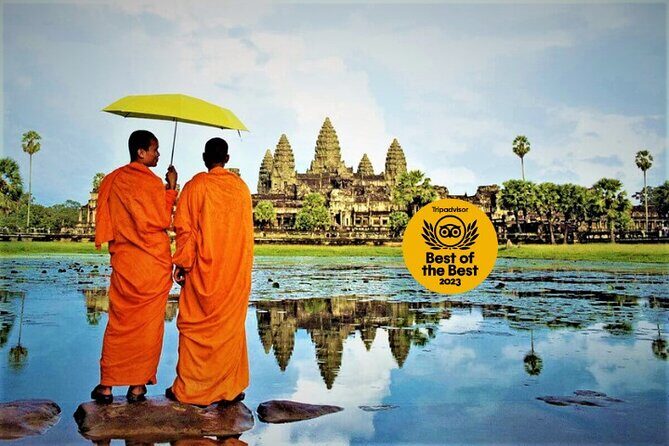
Day 2 covers more territory but keeps building momentum. You’ll likely feel the “temple day” vibe—lots of stone, lots of angles, and a need for hydration.
Banteay Srei
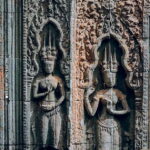
Banteay Srei starts the day. People often talk about it as the most beautiful temple in Cambodia, and Cambodians place a strong emphasis on it as a must-see. It’s famous for the kind of precision carving that feels smaller-scale but more delicate than the biggest structures. This is also the best time to appreciate details, because you’re still fresh enough to look closely.
Banteay Samre and the East Baray area
Next is Banteay Samre, about 400 meters east of the East Baray. Built in the early 12th century under Suryavarman II and Yasovarman II, it’s a Hindu temple in the Angkor region. If you want to connect what you saw yesterday (Bayon era and royal city) with earlier layers of Khmer temple practice, this kind of stop helps.
Preah Dak Village for souvenirs and crafts
There’s also a stop at Preah Dak Village, noted for souvenirs like objects and arts. This isn’t a temple stop, but it’s a practical break. If you want to do a bit of shopping, this is where you’ll find that most directly.
Preah Khan and its Jayavarman VII family story
Then you head to Preah Khan. The key detail here is the dedication in 1191 to Jayavarman VII’s father, with the central statue called Jayavarmeshvara. That name matters, because it’s how the guide ties religious meaning to political family lines. Preah Khan is a larger-feeling stop than many of the smaller terraces and shrines, and it rewards you for staying present instead of sprinting through.
Neak Pean: the unusual layout stop
Neak Pean is called out as exceptional for a reason: its layout differs from the rest. It’s a temple on an artificial island with a diameter of 350 meters in a huge Baray. If the earlier sites felt like “temple city planning,” Neak Pean leans more toward “purpose built around water and symbolism,” which makes it a great mid-day change of pace.
Ta Som, Eastern Mebon, and Pre Rup
You then move through three more temples that build toward sunset-like viewpoints and strong stone silhouettes (even if you don’t get a named sunset stop, the route is set up around light across the park).
- Ta Som: late 12th century, built by Jayavarman VII. The purpose isn’t fully clear, which is honest and helps you focus on what’s physically there rather than forcing a story.
- Eastern Mebon: a mountain temple built in the middle of the 10th century, dedicated to Shiva. It’s another stop where the guide’s context helps you see it as part of the broader temple “timeline.”
- Pre Rup: founded in 961, tied to Rajendravarman II. It’s described as one of the most significant legacies after the earlier founders, so it often feels like a milestone temple.
This is the kind of day where your eyes start noticing patterns: tower placement, orientation, and how each reign leaves its fingerprint in stone.
Sunrise, Sunset, and the Real Job: Getting the Timing Right
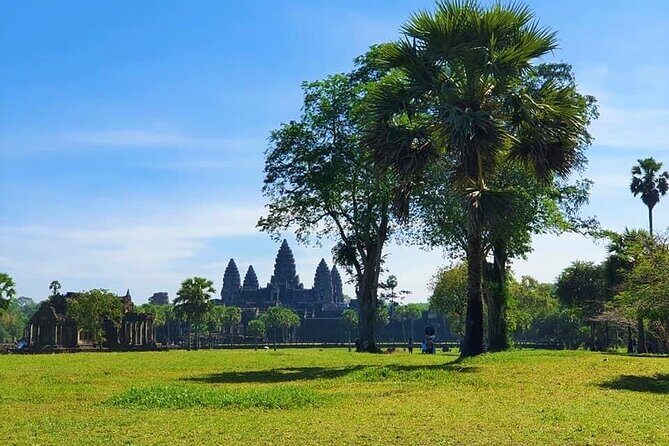
The tour is designed around sunrise and sunset from the best viewpoints in Angkor. Sunrise at Angkor Wat is the headline moment, and it’s where you benefit most from leaving early. Sunset is about catching the temples as the day cools, when shadows pull out the reliefs and carvings you might miss at noon.
If you’ve never done sunrise temple viewing, here’s the practical approach I’d use: keep your expectations simple. Don’t chase one perfect photo. Instead, enjoy how the light changes across towers and gates while the guide explains what you’re seeing. That’s how the experience becomes more than “a timed sightseeing stop.”
Also, wear something you can move in and plan to stay hydrated. With bottled water and cool towels provided, you’re already ahead—but your body still needs water and shade breaks between sites.
Your Guide and Driver: What Makes This Feel Smooth

This tour is private, and it shows in the details: hotel pickup and drop-off, a private air-conditioned vehicle, and a guide who stays with your group across both days.
The review names you’ll hear echoed in this kind of tour are guides like Sara and Leap, and drivers such as Ry, La, Pheap, and Mr Paul. What matters isn’t celebrity status—it’s that the guide’s English is strong and the driver keeps things moving safely and politely. One of the most common compliments in the feedback is that the team is friendly, careful, and flexible when preferences come up.
If you’re a first-timer to Cambodia or you’re traveling with kids, this kind of support matters. Temple days can get tiring fast. A good driver and an attentive guide help you keep the day from turning into a stressful checklist.
Price, the Angkor Pass, and the Real Value Check
The tour price is listed at $149.46 per person for about two days. That’s not just “entry tickets in a package.” What you’re paying for is the human and logistics side:
- hotel pickup and drop-off
- private AC transport
- bottled water and cool towels
- a professional official license guide
- services charge and current government VAT
That value becomes clearer when you look at what’s not included. Entrance fees are not included for the temples. You’ll need the Angkor Pass that covers the temples on the itinerary, and your guide assists you in purchasing it at the entrance before starting.
Meals are also on your own expense, with lunch options at local restaurants and typical dish prices in the $3–$10 range.
So the smart value question is: do you want a guided, private, two-day “cover the major plus some remote” plan? If yes, this pricing structure often makes sense because you’re buying time and coordination, not just a seat in a car. If you prefer self-guided wandering, you’d likely spend more time solving logistics yourself.
What to Expect Between Stops (So You Don’t Feel Rushed)

Because the itinerary is packed with named temples and specific time slots, you should expect a rhythm: arrive, walk, look, listen, move on. That’s not a bad thing. It’s the only way to see all these sites in two days without doubling back constantly.
The tour includes fresh cool towels and bottled water, which I’d treat as part of the pacing strategy: use them, don’t ignore them. Also, keep an eye on sun exposure and plan for heat. Even if the schedule is well-run, Angkor is still outdoors.
If you like to linger, you’ll need to do it in short bursts. When the guide points out a feature—faces at Bayon, carvings at terraces, the meaning behind Phimeanakas—you get more value by staying attentive rather than forcing long stop times in every location.
Who This Tour Is Best For
This works especially well if you:
- want a first-timer-friendly Angkor plan that hits major temples and adds variety
- like history explained in plain English while you stand in front of the stone
- value private transport and comfort during a very full schedule
- want sunrise as a highlight without dealing with taxis and timing yourself
It may not be ideal if you:
- hate early mornings
- want lots of free time with no schedule pressure
- prefer purely off-the-beaten-path temples over the famous core sites
Should You Book This 2-Day Angkor Temples Tour?
I’d book it if your goal is to see Angkor Wat at sunrise and cover the major temples of Angkor Thom and beyond in two action-packed days. The combination of private AC transport, licensed English-speaking guides, and a route that includes both famous and lesser-visited temples makes it a strong “time-efficient, meaning-rich” option.
I’d think twice if you’re sensitive to early starts or you want a slow, flexible pace. In that case, a more relaxed multi-day plan might suit you better.
FAQ
Is hotel pickup and drop-off included?
Yes. The tour includes pickup and drop-off at your hotel in Siem Reap.
What does the tour price include?
It includes a private air-conditioned vehicle, an official licensed guide with excellent English skills, bottled water and cool towels, and services charge and government VAT.
Do I need to buy temple tickets separately?
Yes. Entrance fees are not included. You’ll buy the Angkor Pass at the park entrance, and the guide assists you with that.
Are meals included during the tour?
No. Lunches are available at local restaurants, but meals are at your own expense with dish prices typically ranging from $3–$10.
Will there be a private guide and private transportation?
Yes. This is a private tour/activity, meaning only your group participates, with private transfer by AC vehicle.
Is tipping included?
No. Tipping for the guide and driver is not included.
What is the cancellation policy?
Free cancellation is available up to 24 hours in advance for a full refund.