REVIEW · PHNOM PENH
From Phnom Penh: Angkor Wat, Bayon, and Ta Prohm Day Trip
Book on GetYourGuide →Operated by Cambodia Taxi Driver · Bookable on GetYourGuide
Angkor Wat, packed into one long day. This Phnom Penh to Siem Reap trip is built for people who want the big hits—Angkor Wat plus Bayon and Ta Prohm—without arranging anything on the ground.
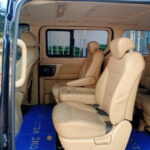
I like the private driver setup: hotel pickup, an air-conditioned car, and cold bottled water for the road. I also like that you get a live English guide right at the temples, so you’re not wandering through stonework that looks like “just another ruin.”
One drawback is the day itself: you’re in motion for roughly 14 hours, with 5.5-hour drives each way, and you’ll still pay entrance fees (and lunch is extra). It’s a hot, long schedule, so plan for stamina.
In This Review
- Key things I’d zero in on before you go
- Phnom Penh to Siem Reap: why the drive is part of the experience
- Angkor Wat: from Hindu cosmic mountain to a Buddhist temple you can actually read
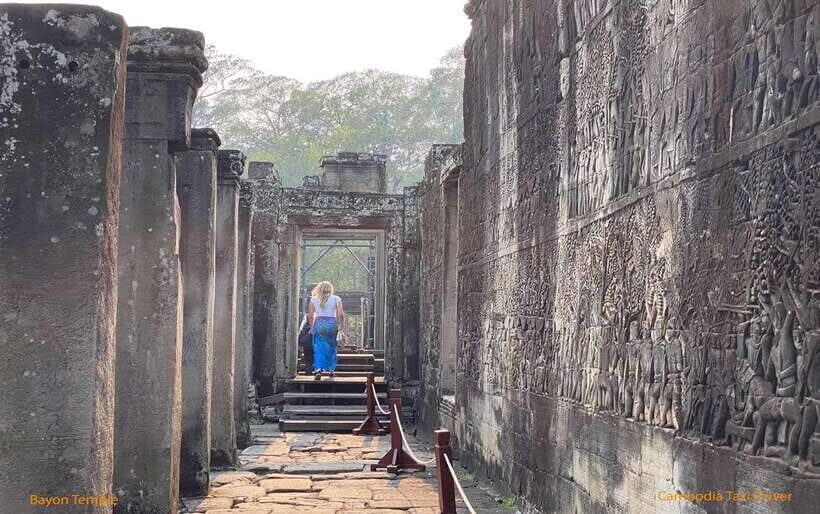
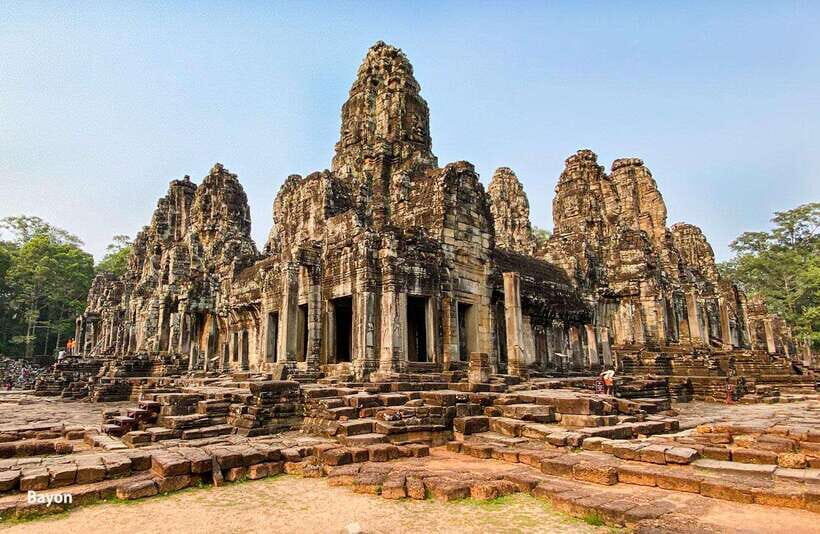
- Bayon Temple: the smiling faces and the meaning behind the corridors
- Ta Prohm: the Tomb Raider temple, jungle shadows, and the reality of unrestored ruins
- Angkor Archaeological Park outer grounds: a quieter way to end the day
- Price and value: what $179 covers, and what can add up
- Comfort tips that actually help at Angkor
- Who this Phnom Penh day trip suits best
- Should you book this Angkor Wat, Bayon, and Ta Prohm day trip?
- FAQ
- Are Angkor Archaeological Park entrance fees included in the price?
- Is lunch included?
- How long is the trip from Phnom Penh?
- Do I get pickup from my hotel?
- What language is the live guide?
- Is there any photography restriction?
- Is this tour suitable for children or wheelchair users?
Key things I’d zero in on before you go
- One-day Angkor hits: Angkor Wat, Bayon, and Ta Prohm without needing an overnight.
- A guide who points out meaning: five towers, 216 faces, and why Ta Prohm looks the way it does.
- Early start benefits: less heat and fewer crowd crush moments at key spots.
- Photo-friendly guidance: guides are set up to help you find solid angles and lighting.
- Road-comfort matters: a private, air-conditioned ride with water and frequent stop planning.
Phnom Penh to Siem Reap: why the drive is part of the experience
This is a full-day commitment: about 5.5 hours from Phnom Penh to Siem Reap, then roughly the same back near the end of the day. That means your comfort choices matter. You’re in a vehicle for most of the time before the first temple.
The good news is that the tour is designed around not making you “figure it out.” Your driver meets you in the hotel lobby with a nameplate, and you ride in an air-conditioned car. Many departures happen early enough that you can rest on the way and arrive in time to start temple time while conditions are still better than mid-day.
I also like that the route includes planned breaks. You don’t have to choose between hydration and getting back on schedule. Cold bottled water is included, and the vibe stays practical: see temples, learn what you’re looking at, then get back safely.
If you’re the type who gets cranky after long road days, give yourself a buffer. Wear comfortable clothes and plan to walk steadily. Angkor is incredible, but it does not do “effort-free.”
A few more Phnom Penh tours and experiences worth a look

Angkor Wat: from Hindu cosmic mountain to a Buddhist temple you can actually read
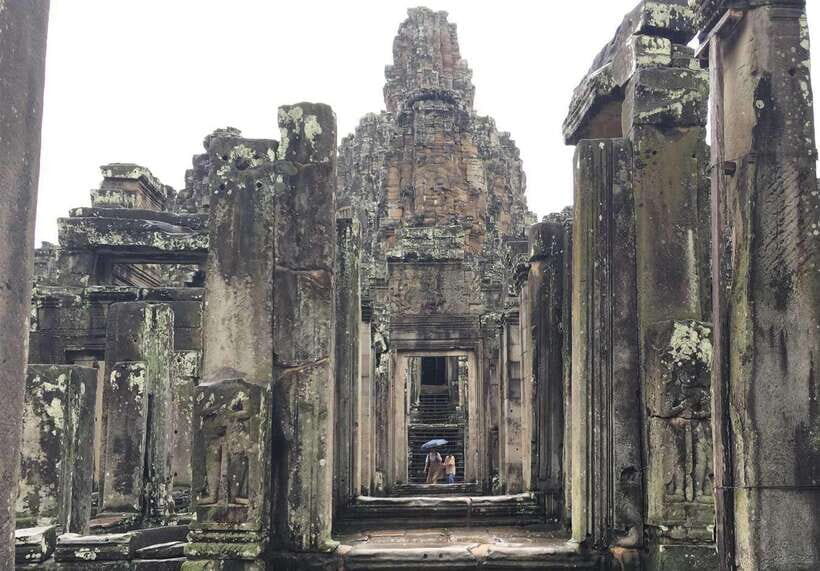
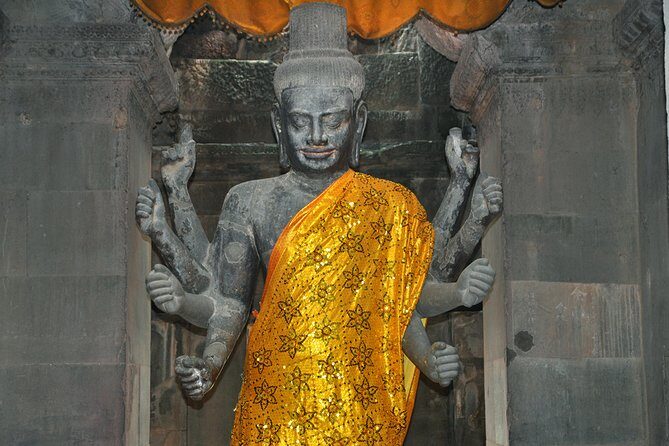
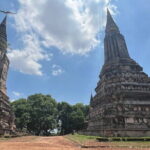
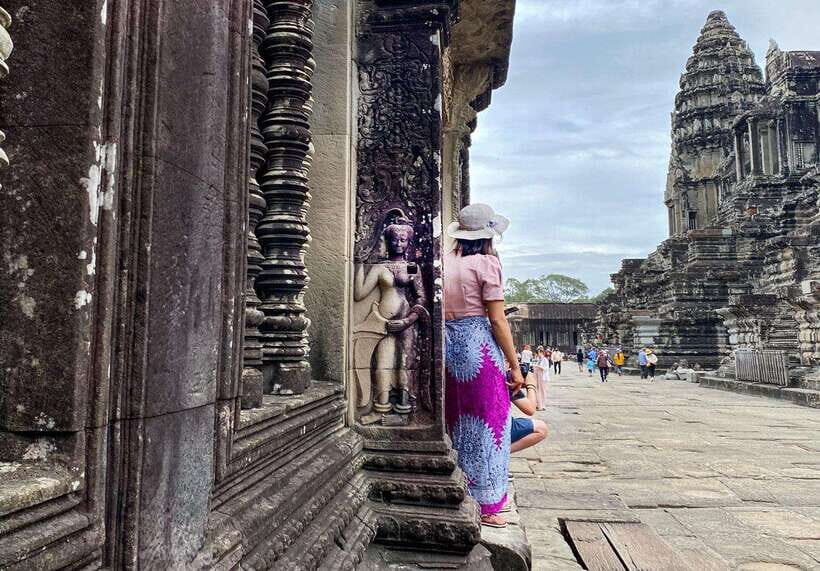
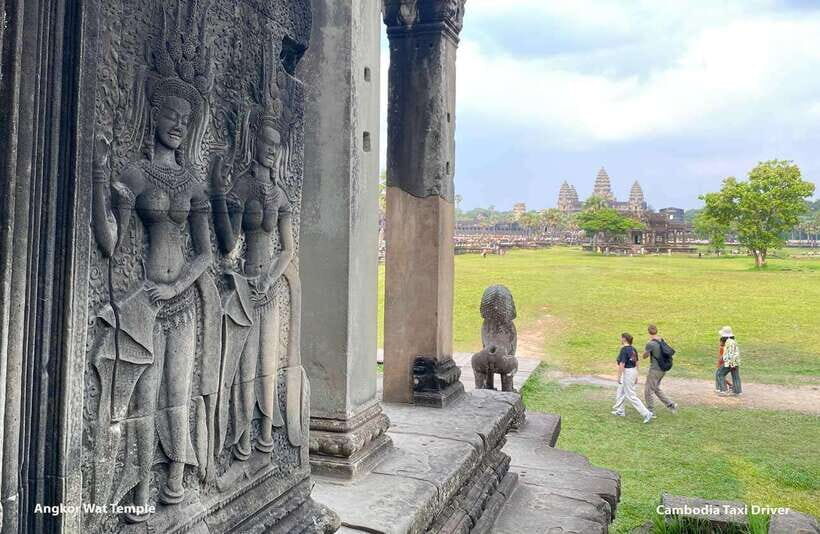
Angkor Wat is the anchor stop for a reason. It’s the largest religious monument in Cambodia, and the building itself tells a story if your guide helps you read it.
Here’s what matters when you’re standing there:
- It was originally constructed in the 12th century as a Hindu temple.
- Later, it became a Buddhist temple, so the same complex carries layered meanings.
- The famous architectural design includes five towers, representing the Hindu cosmic mountain.
This tour’s value is that you’re not just taking photos of perfect symmetry. You’re learning how the layout connects to belief—so when you look up at those towers, you understand what the design is trying to communicate.
Angkor Wat also gives you that “wow, I didn’t expect this much detail” feeling. Weather changes the stone color as you move, and early arrival helps you experience the scale before the hottest part of the day.
One small practical note: the rules inside the complex include no flash photography, so plan your camera settings and rely on natural light. If you’re hoping for night-style shots, adjust expectations. You’ll get better results by shooting when light hits the carvings and faces.
Bayon Temple: the smiling faces and the meaning behind the corridors
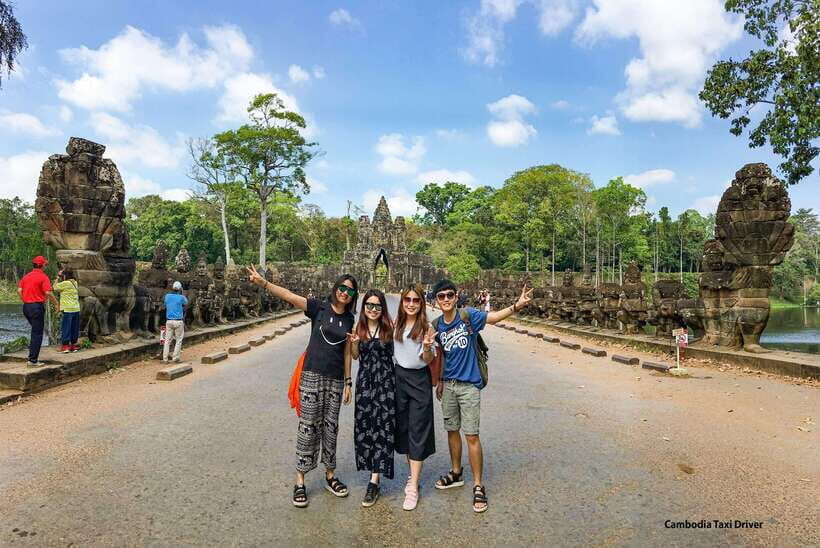
After Angkor Wat, you head to Bayon Temple, known for its serene, smiling stone faces. This is where you slow down a bit and start noticing how the temple feels in motion.
The headline details are strong:
- Bayon was completed in the late 12th or early 13th century.
- It’s considered the last state temple built at Angkor.
- You’ll see 216 faces, often linked to Avalokiteshvara or possibly the king himself.
On the ground, the faces do something simple and powerful: they give you orientation. When you’re in narrow corridors and up stairways, those expressions act like “guideposts” for where you are and what you’re looking at.
I like that you don’t just get thrown into Bayon like a checklist item. A good guide helps connect the symbolism to what you can see—how the faces appear in different sightlines, and why the temple is so famous for that emotional calm.
Also, bring your patience. Bayon is famous, and you’ll share space with plenty of people. Early timing helps, but you’ll still want to step aside when you can and let the view settle for a moment.
Ta Prohm: the Tomb Raider temple, jungle shadows, and the reality of unrestored ruins
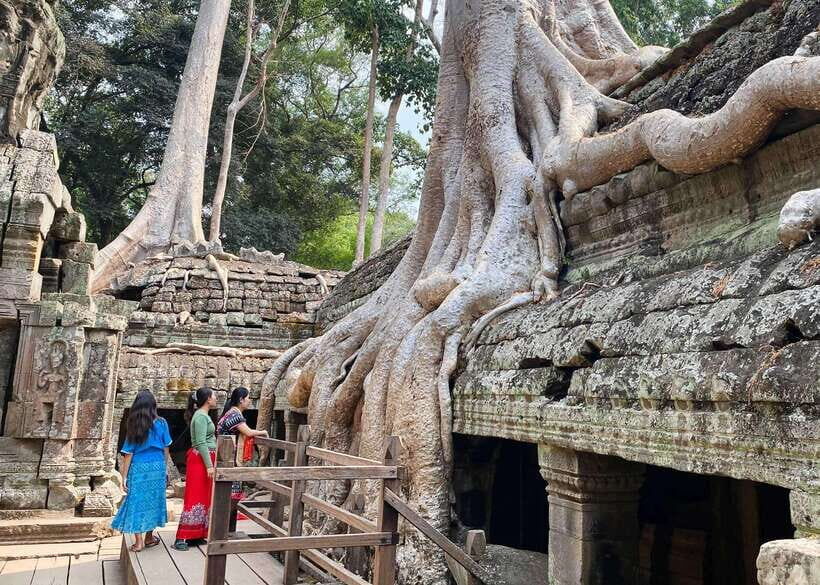
Then comes Ta Prohm, often called the Tomb Raider temple, and for good reason: it looks like the jungle is actively taking it back.
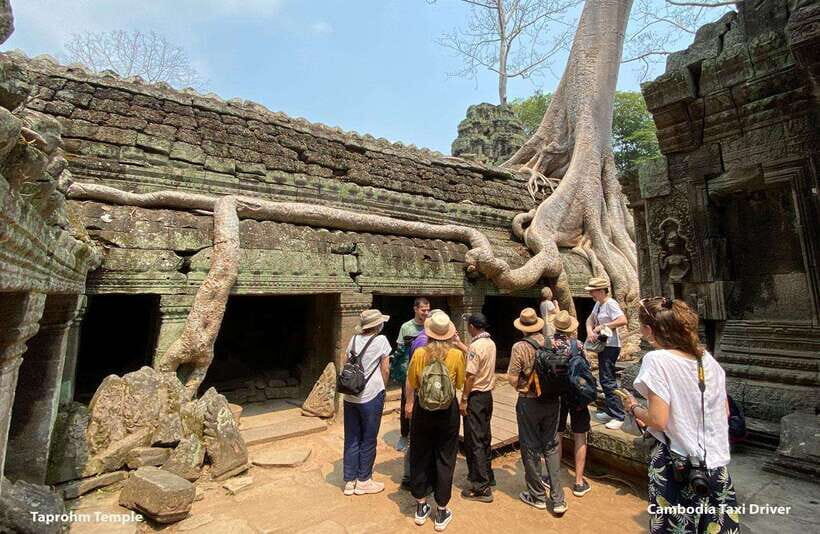
Ta Prohm was built in the late 12th century as a Buddhist monastery and university. The key feature on this tour is that it’s left largely unrestored, so the atmosphere is not “museum clean.” Trees and roots work through the stone in a way that makes the complex feel alive—like the place is still mid-story.
Here’s why this stop is worth your time even if you’re tired:
- The contrast between carved stone and wild growth creates depth you can’t fake with photos.
- The building’s layout becomes easier to understand when you’re told what parts were meant for daily monastic life versus what you’re seeing now after centuries of weathering.
You might also spot wildlife around the forest paths—one of the memorable surprises people mention is the chance to see monkeys in the area. It’s not something you can count on, but Ta Prohm is the kind of site where nature is part of what you experience.
The main challenge is heat and uneven footing. Wear shoes you can trust on roots and stone edges. And if you have camera gear, keep it ready, but don’t rush. Ta Prohm rewards slow wandering.
Angkor Archaeological Park outer grounds: a quieter way to end the day
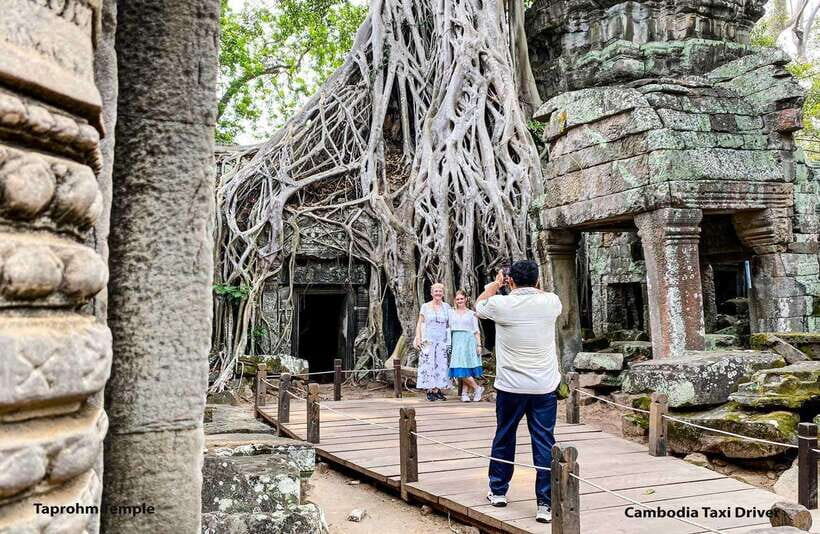
Before the return drive, you’ll spend time exploring the outer temples and grounds of the Angkor Archaeological Park. This matters because the three “big headline” temples can dominate your memory.
Those outer areas help you reset. You see different angles, different levels of ornament, and a sense of how huge the overall Angkor world is beyond the postcard spots.
It’s also an easier pace than the main temple interiors and can be a good moment to regroup if you’re feeling the day’s length. You’ll often find yourself looking at stone details you missed earlier, especially when your guide has already given you the big meanings.
This is also a practical transition toward the exit. You don’t want to end the day mentally scattered, and outer grounds time keeps you grounded before the long ride back to Phnom Penh.




Price and value: what $179 covers, and what can add up

At $179 per person, this is not a cheap way to do Angkor. But it’s built to protect you from the most expensive kind of travel problem: time lost.
Here’s what’s included:
- Private driver from Phnom Penh
- Round-trip transportation
- Cold bottled water
- A live tour guide, plus a local guide at the Angkor temples
That private, guided structure is what you’re paying for. Instead of spending hours coordinating transport, tickets, and meeting points across two cities, you get a driver handling the road and guides handling interpretation at the sites.
What’s not included:
- Angkor Archaeological Park entrance fees: $37 per person
- Lunch at a local restaurant
- Personal expenses
So your “real day budget” is more than the headline price. Still, the math can work if:
- you’re short on time in Cambodia,
- you don’t want the hassle of arranging a driver in Siem Reap,
- you value guided context over going solo.
If you’re optimizing for value, the best move is to plan lunch spending in advance, and arrive ready for a long day on the feet.
Comfort tips that actually help at Angkor
This tour gives you the essentials, but you’ll still want to dress for real temple conditions. The basics:
- Comfortable shoes (not fashion shoes)
- Hat for sun
- Sunscreen
- Camera
- Water
Bring a bit of mental flexibility too. The day moves fast by design: start early, walk temple zones, then get back on the road. You’ll feel it most at Ta Prohm and in any stair-and-corridor moments at Bayon.
Also, remember the rule: no flash photography inside the temples. So if you like night-style shots, don’t assume you can recreate them here.
For heat, I’d treat this like any Southeast Asia temple day: hydrate, shade when you can, and don’t chase perfect photos at the cost of your energy. If your guide points out photo angles, take the shot and move. Waiting too long in the open can drain you.
Who this Phnom Penh day trip suits best
This day trip is a strong match if you:
- want Angkor Wat + Bayon + Ta Prohm in one shot,
- are staying in Phnom Penh and don’t want to fly or manage connections,
- appreciate a guide who explains what you’re seeing so it sticks.
It’s also a good fit if you like a “team” approach: driver handles road flow, the guide handles story flow. People often come away praising how smoothly teams keep things on time and how helpful guide guidance is when the complex feels overwhelming.
On the other hand, it’s not suitable if you:
- have heart problems (you’ll be walking and dealing with heat),
- use a wheelchair,
- are traveling with children under 8.
And if you’re the type who only wants one or two temples and lots of downtime, consider staying in the Siem Reap area instead. This tour is efficient, not relaxed.
Should you book this Angkor Wat, Bayon, and Ta Prohm day trip?
I’d book it if you’re in Phnom Penh and Angkor is on your must-do list but you don’t want to add flights or an overnight plan. The biggest value isn’t just seeing three temples. It’s having interpretation built into the walking, plus private transport that keeps your day from unraveling.
I’d hesitate only if you know you’ll struggle with long drives and heat. It’s a full-day effort, and the payoff is best when you’re ready to walk, watch, and learn in the moment.
If you’re trying to stay flexible, this experience offers free cancellation up to 24 hours in advance and lets you reserve and pay later. That can make planning easier when Cambodia weather or schedules shift.
If you book, do it with one mindset: early start, good shoes, and let the guide’s explanations turn the stonework into something you understand.
FAQ
Are Angkor Archaeological Park entrance fees included in the price?
No. Entrance fees are not included and are listed as $37 per person.
Is lunch included?
Lunch is not included. You’ll need to budget for a local restaurant meal.
How long is the trip from Phnom Penh?
The total duration is listed as 14 hours.
Do I get pickup from my hotel?
Yes. Pickup is included from your Phnom Penh hotel, with the driver meeting you with a nameplate in the hotel lobby.
What language is the live guide?
The live tour guide is listed as English.
Is there any photography restriction?
Yes. Flash photography is not allowed.
Is this tour suitable for children or wheelchair users?
No. It’s not suitable for children under 8, wheelchair users, or people with heart problems.