REVIEW · PHNOM PENH
Visit 11 Places in One Day including S21 & Killing Field
Book on Viator →Operated by PP Explorer Tuk-Tuk and Taxi · Bookable on Viator
Phnom Penh in a single day is intense and focused. This 8–9 hour route hits 11 stops—temples, monuments, and the hardest sites—while your guide (often people like Sophoarn or Pum) explains what you’re seeing as you go. I like the mix of quick photo-worthy landmarks with real historical context, and I especially like that S21 & Killing Fields are built into the schedule instead of being an optional detour.
The one real thing to plan for is the intensity and logistics of a full day: it moves on a tight clock, and cash-only entrance fees can catch you off guard if you show up unprepared. You’ll also want to bring mental space for two emotionally heavy stops.
In This Review
- Key Highlights (What You’ll Notice Fast)
- A 8–9 Hour Phnom Penh Hit List
- Setting Off at 8:00: Pickup, Tuk-Tuk or Van, and Group Pacing
- Stops 1–3: Wat Phnom, Wat Ounalom, and the National Museum Outside-Only Rule
- Wat Phnom (Lady Penh and the steps view)
- Wat Ounalom (built after the capital was founded)
- National Museum (photo outside only)
- Stops 4–6: Royal Palace Area, Cambodia-Vietnam Friendship Monument, and Koh Pich City Hall
- Royal Palace area (park life and palace photos)
- Cambodia–Vietnam Friendship Monument (Botum Park setting)
- Koh Pich City Hall (Diamond Island and the skyline shift)
- Stops 7–8: Sihanouk Statue and Independence Monument for City Orientation
- Statue of King Father Norodom Sihanouk
- Independence Monument (1958 to 1962)
- Stop 9: Tuol Sleng (S21) Genocide Museum and How to Pace Your Emotions
- Stop 10: Choeung Ek Killing Fields—Documentary First, Then Audio Guide Time
- Stop 11: Russian Market (Central Market) for Khmer Products and a Breather
- Price and Real Costs: Why $30 Can Become $47
- What Makes the Best Guides Work Here (Sophoarn, Pum, and Lee)
- Who Should Book This One-Day Phnom Penh Tour
- Should You Book This Phnom Penh 1-Day Tour?
- FAQ
- What time does the tour start?
- How long is the full experience?
- Is hotel pickup included?
- How many people are in the group?
- What transport do I ride in?
- Are entrance fees included in the price?
- Is the tour ticket mobile?
- What payments are accepted for entrance fees?
- How does cancellation work?
Key Highlights (What You’ll Notice Fast)
- 11 places in one day so you can get your bearings fast
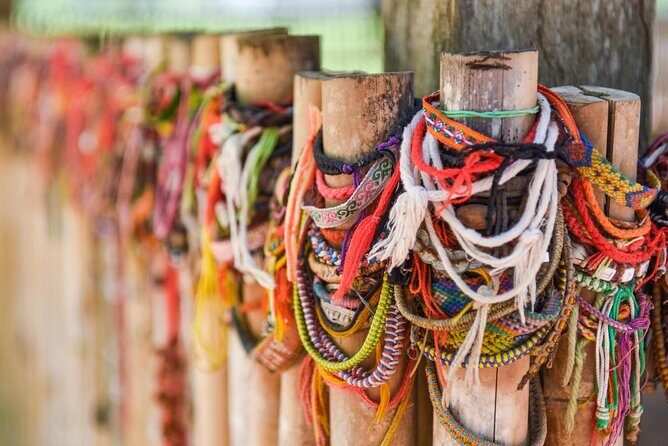
- S21 (Tuol Sleng) and the Killing Fields on the same itinerary
- Guide + driver setup means fewer “where do we go next?” moments
- Cold drinks and beer after 12 o’clock to keep the day manageable
- Small group limit (max 7) for a more relaxed pace
- Russian/Central Market finish for easy last-minute shopping
A 8–9 Hour Phnom Penh Hit List

This is the kind of tour that makes sense when you only have one day in Phnom Penh and you don’t want to play transport chess. You’re out from around 8:00am, and you’ll cover a long stretch of the city, hopping between temples, parks, monuments, major museums, and markets.
The big value is not just the number of stops. It’s the sequencing. The route starts with classic city sights that help you understand layout and old power centers, then moves toward Cambodia’s modern heartbreak, and finally lands on a casual market area where you can decompress and do light shopping.
The tour is also designed for a group size of up to 7 travelers, and it runs on schedule. That matters because Phnom Penh traffic and heat can turn a flexible plan into a stressful one. Having a leader keeping timing tight is the difference between seeing “lots” and feeling tired and behind.
A few more Phnom Penh tours and experiences worth a look
Setting Off at 8:00: Pickup, Tuk-Tuk or Van, and Group Pacing
You can get hotel pickup and drop-off in the city center. If you’re staying outside that zone, you’ll likely need to meet at a nearby point, since the tour is described as near public transportation.
Transport comes in two flavors: private tuk-tuk or a small-group van. In practice, that changes the feel of the day. A tuk-tuk can be fun and slow-moving, but a van usually feels more comfortable for long stretches and heat breaks. Either way, the driver is also your guide, so you get context while you travel—not just at stops.
A final pacing note: the itinerary uses fixed time blocks at each site. You’re expected to follow the leader’s schedule because it’s a group tour. That’s not a dealbreaker, but it does mean you should expect less “wander time” than you’d have on your own.
Stops 1–3: Wat Phnom, Wat Ounalom, and the National Museum Outside-Only Rule
Wat Phnom (Lady Penh and the steps view)
Your first stop is Wat Phnom, one of Phnom Penh’s signature historic sites. The guide explains the story of Lady Penh before you climb the steps. There’s a small entry fee here—$1 cash—so keep some USD or riel handy.
The value of starting at Wat Phnom is simple: it gives you an early landmark and a sense of how Phnom Penh’s identity is tied to temple history and legends.
Wat Ounalom (built after the capital was founded)
Next is Wat Ounalom, a major monastery built in 1442, after the capital was founded in 1434 by King Ponhea Yarth. Entrance is free, and you get about 20 minutes here.
This stop is great if you like context. The guide’s explanation matters because the site is more than a pretty building—it’s a timeline point for Phnom Penh’s religious and political roots.




National Museum (photo outside only)
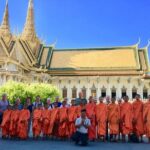
Then you reach the National Museum. The building is traditional Cambodian style, built in 1920 during the French colonial period. Here’s the important rule: you only take photos from outside. Time is short—about 10 minutes—and entrance is free.
If you expected indoor museum time, plan your expectations. The tradeoff is that you gain time for more stops later, including the big two you’ll remember.
Stops 4–6: Royal Palace Area, Cambodia-Vietnam Friendship Monument, and Koh Pich City Hall
Royal Palace area (park life and palace photos)
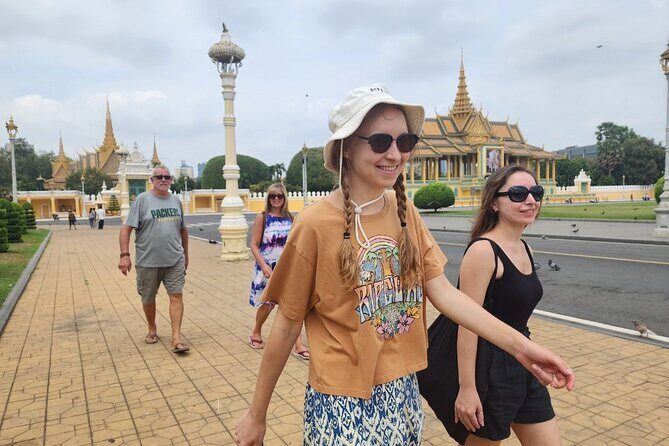
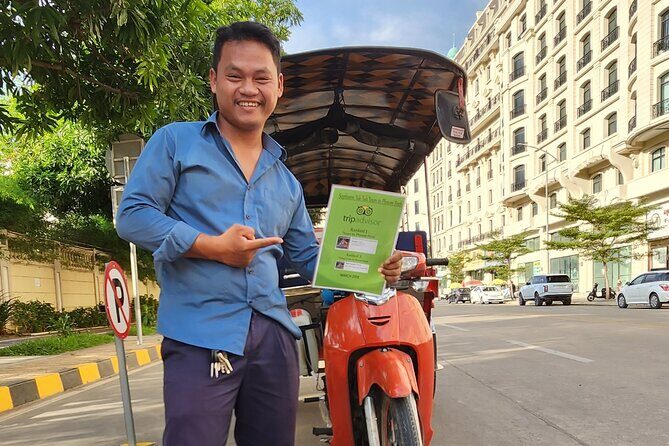
The Royal Palace stop is structured around the area in front of the palace and the public space nearby, where local people spend time with friends and families. The goal is to get the sight and the atmosphere, with time for photos of the palace building. Entrance is free, and the visit is about 10 minutes.
A quick check: this is likely not a long, in-depth palace exploration. It’s a viewing and orientation stop. If palace interior access is important to you, you might want extra time on another day.
Cambodia–Vietnam Friendship Monument (Botum Park setting)
Next comes the Cambodia–Vietnam Friendship Monument, a large concrete monument commemorating the former alliance between the two countries. It’s located at Botum Park. Time is short—about 10 minutes—and entrance is free.
This is a useful photo stop, but it also helps you read the city’s layers. Phnom Penh doesn’t just show ancient Cambodia. It also shows how modern alliances and politics have shaped the landscape.
Koh Pich City Hall (Diamond Island and the skyline shift)
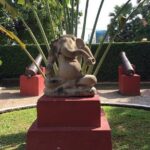
Your next move is to Koh Pich City Hall on Diamond Island. It’s described as about 5 minutes from the previous stop. You’ll also see several things along the way: a monk statue, a Buddhist institute near the casino area, and new skyscrapers near the parliament.
Time here is about 30 minutes and entrance is free. This portion works because it shows a different Phnom Penh than the older temple and monument spots. The city’s growth is visible, and your guide’s commentary helps connect that change to what you’ve already seen.
Stops 7–8: Sihanouk Statue and Independence Monument for City Orientation
Statue of King Father Norodom Sihanouk
You’ll stop at the bronze Statue of King Father Norodom Sihanouk, located in one of Phnom Penh’s larger parks. The statue was built in 2013, after his death in 2012 October. Entrance is free, with about 10 minutes.
If you’ve been reading about modern Cambodian leadership, this stop helps you place the figures you’ll see in history books into the actual geography of the city.
Independence Monument (1958 to 1962)
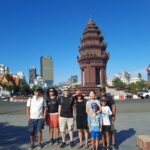
Then comes the Independence Monument, at a major intersection where important roads meet. It was built in 1958 and finished in 1962, representing independence from French colonial rule. Entrance is free, and the stop is about 10 minutes.
This is a fast orientation point. Think of it as a visual landmark that teaches you how Phnom Penh organizes major roads and public space.
Stop 9: Tuol Sleng (S21) Genocide Museum and How to Pace Your Emotions
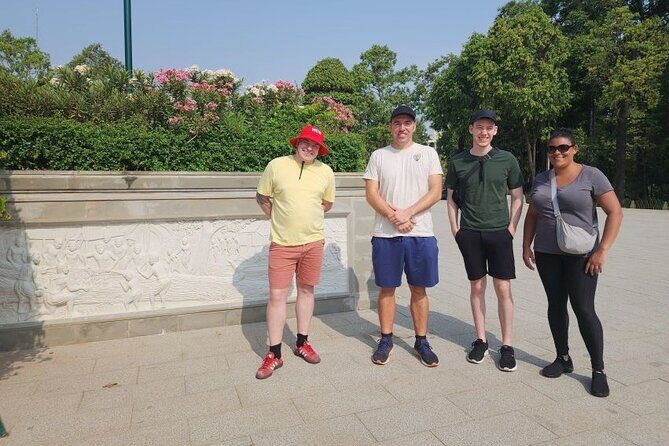
Now you hit the day’s hardest site: Tuol Sleng Genocide Museum, known as S21.
The buildings used to be a high school, built in 1960. In 1975, the Khmer Rouge converted it into a detention center, and it became known as S21 prison. This stop takes about 2 hours (with the itinerary describing around 90 minutes on site). Entrance is not included, listed at $10 cash.
This isn’t a “quick look” kind of place. You’ll want time to read and process. The guide’s role here is important because the site can feel overwhelming, and your context helps the information land. The best part of a guided format is that you’re not just looking at rooms—you’re understanding what the place was designed for and what it meant.
Practical tip: bring water and take breaks if you need them. Your brain will thank you later at the Killing Fields.
Stop 10: Choeung Ek Killing Fields—Documentary First, Then Audio Guide Time
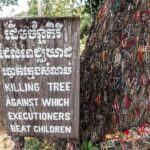
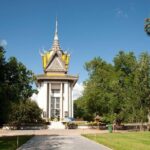
After S21, the tour moves to Choeung Ek Genocidal Center, often called the Killing Fields. It’s about 15 km from Phnom Penh.
You’ll hear that the Khmer Rouge sent around 20,000 people here to kill after detaining them at S21. Entrance is not included, listed at $6 cash, and the visit runs about 2 hours.
One specific detail matters: before the audio guide portion starts, the leader escorts you to see a documentary. Then you do an audio guide tour.
That structure is practical. The documentary gives your mind a baseline, and the audio guide helps you control your pace—how quickly you move, when you stop, and how long you stay with specific areas. It’s also a good way to keep the visit guided without turning it into a rushed lecture.
Emotionally, this stop can feel heavier than expected. That’s not a criticism of the tour; it’s just how the subject works. The upside of doing it with a guide is respect and clarity, instead of confusion and guesswork.
Stop 11: Russian Market (Central Market) for Khmer Products and a Breather
You finish at the Russian Market (also known as Central Market). This stop is about 30 minutes, entrance is free, and it’s focused on browsing Khmer products—including items brought by local businesses and organizations.
This part is a reset. After S21 and the Killing Fields, you need a place where the day can gently shift toward normal life. Markets do that well: you can shop slowly, people-watch, and pick up small gifts without needing a long plan.
If you want one practical strategy: set a small budget for this stop. That keeps you from spending your entire last hour bargaining when you should still be enjoying the market atmosphere.
Price and Real Costs: Why $30 Can Become $47
The headline price is $30.00 per person, and it includes a lot of moving parts: driver-as-guide, hotel pickup and drop-off in the city center, bottled cold water plus Coke, and Cambodian beer after 12 o’clock. You also get explanations at each stop, and you receive a mobile ticket.
But don’t ignore the entrance fees that are not included. Based on the itinerary:
- Wat Phnom: $1 cash
- Tuol Sleng (S21): $10 cash
- Killing Fields (Choeung Ek): $6 cash
That’s $17 in add-ons. So your realistic total is around $47 per person, before any optional lunch.
Is it good value? For Phnom Penh, yes—because the biggest cost drivers here are not time alone. It’s the guide-led context for many sites, plus transport across a wide swath of the city, plus inclusion of both S21 and Killing Fields in a single day. If you’d hire separate transport or try to self-plan, the friction alone can cost you time and energy.
Two more money notes:
- Entrance fees are accepted only in cash (riel and USD), not card.
- Lunch is optional, so you’ll either self-arrange or follow a recommended lunch stop.
What Makes the Best Guides Work Here (Sophoarn, Pum, and Lee)
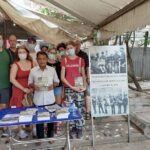
A huge reason this tour scores high is how the guides handle the day. Names you may run into include Sophoarn, Pum, and Lee. What stands out is the blend of humor and clarity with serious material.
On the lighter stops, you’ll get explanations that make monuments and temple areas easier to read. On the heavy stops, your guide’s role shifts to pacing and respectful interpretation, so you don’t feel lost in the facts.
I also like the practical extras that show up with strong guide teams: cold drinks between stops, photo help, and keeping the day moving without making you feel rushed. One guide even used a tool like an iPad to explain things before entering certain museums or sites. That kind of prep helps you connect what you see to what you just heard.
Who Should Book This One-Day Phnom Penh Tour
This tour is best for you if:
- You want to cover major Phnom Penh sights in one day without building an itinerary from scratch
- You’re okay with a long schedule and following timing from a group leader
- You want S21 and the Killing Fields included, with structure and audio guide time
It may be less ideal if:
- You want lots of unstructured wandering and slow temple time
- You don’t want two heavy visits back-to-back
- You dislike paying cash-only entrance fees
In the heat of the afternoon, a tight schedule can feel like a lot. Still, the included cold drinks and the guided context help make it feel manageable rather than chaotic.
Should You Book This Phnom Penh 1-Day Tour?
If you’re trying to maximize a limited Phnom Penh stay, I think this one is a strong choice. The route makes sense, the day is structured, and the inclusion of S21 and the Killing Fields means you won’t have to decide later or risk running out of time.
Book it if you can handle intensity and you’re willing to keep up with a group pace. Skip it only if you prefer to spread this kind of content across multiple days, or if you’re the type who needs long pauses and no timeline.
FAQ
What time does the tour start?
The tour starts at 8:00am.
How long is the full experience?
It runs about 8 to 9 hours.
Is hotel pickup included?
Yes, hotel pickup and drop-off are included for city center locations only.
How many people are in the group?
The tour has a maximum of 7 travelers.
What transport do I ride in?
You can choose private tuk-tuk or a small-group van option.
Are entrance fees included in the price?
Not all of them. Wat Phnom ($1), Tuol Sleng / S21 ($10), and the Killing Fields ($6) are listed as not included.
Is the tour ticket mobile?
Yes, the experience includes a mobile ticket.
What payments are accepted for entrance fees?
Entrance fees are accepted only in cash (riel and USD), not by card.
How does cancellation work?
Free cancellation is available. If you cancel up to 24 hours in advance, you get a full refund. If you cancel within 24 hours, the amount you paid is not refunded.