REVIEW · PHNOM PENH
Mekong Silk Island Cruise – Unlimited Beer, Soft Drinks & Fresh Fruit Platter
Book on Viator →Operated by Memorable Cambodia Cruise · Bookable on Viator
A short boat ride, then you’re in silk country. This 4-hour outing from Phnom Penh takes you by Mekong River views to a weaving community on Silk Island, where you’ll see daily life up close. I like that the pace is relaxed for a hot day, and that the tour packages practical sightseeing with hands-on culture stops like the silk farm and a school visit.
Two big wins for me: first, the included unlimited beer and soft drinks make the cruise portion feel like a real treat, not just transport. Second, the silk process and weaving-focused stops give you a clear look at how local craft turns from life cycle to cloth, plus you get a tuk tuk loop past mango and banana plantations.
One thing to consider: hotel drop-off is not included, so you’ll end back near the start point and may need your own ride home. Also, like any small island tour, parts of the walk and timing can vary with conditions such as the water level and the day’s school schedule.
In This Review
- Key things worth knowing before you go
- A half-day escape from Phnom Penh that actually changes your perspective
- Getting to the dock: pickup is one way, and your return is on you
- The one-hour Mekong ride: what you’ll notice beyond the water views
- Tuk tuk around the island: crops, villages, and why it works better than walking
- Silk Island weaving at the farm: where the craft story becomes real
- Buddhist monastery and the school visit: respectful cultural time, not a rushed photo line
- Drinks and fresh fruit: how the included extras change the mood
- Price and logistics: what $35 really buys you here
- Small-group pacing: when it feels personal, and when it can feel rushed
- Who this tour suits best (and who may want a different plan)
- Should you book the Mekong Silk Island Cruise?
- FAQ
- How long is the Mekong Silk Island Cruise?
- What does the tour cost?
- Is hotel pickup included?
- Is hotel drop-off included?
- Where is the meeting point?
- How long is the boat ride to the island?
- What’s included with the ticket?
- Do we visit a school on the island?
- What group size should I expect?
Key things worth knowing before you go
- Small group feel (max 15 travelers) makes it easier to ask questions and move at a steady pace
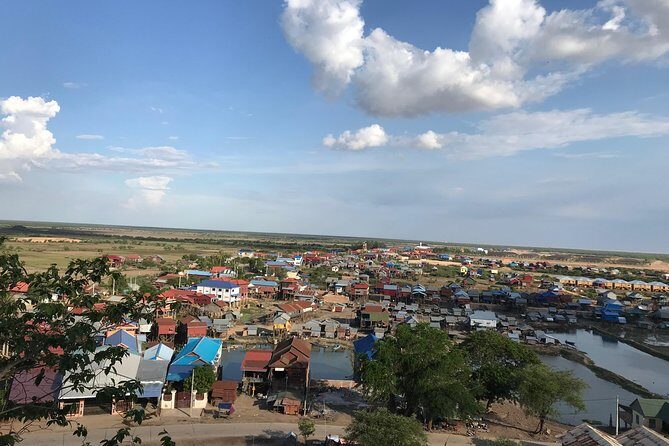
- One-hour boat ride gives you real river scenery, including stilted houses and fishing areas
- Tuk tuk island loop means you see crops like mango and banana without trekking everywhere
- Silk farm stop is where you can follow the process from silkworm life cycle to weaving
- School visit depends on schedule, so expect a change in how long or how it’s run
- Unlimited drinks plus fresh fruit platter add real value for the cruise portion
A half-day escape from Phnom Penh that actually changes your perspective
Phnom Penh can be a lot in one day. This cruise gives you a clean break: you leave the city by boat, ride out along the river scenery, and spend your time where people work, weave, grow crops, and live with the river all around them. It’s not just a photo stop. The goal is to show you how the island community runs—right down to the craft.
What I appreciate most is the balance. You’re still sightseeing—river views, stilted houses, a Buddhist monastery—but the core experience centers on how silk weaving fits into everyday life. You also get the chance to see the children at a local school (when schedules allow), which shifts the day from tourist mode into something more human.
The time window matters too. About 4 hours is long enough to feel like an outing, but short enough that you won’t spend your whole afternoon boiling in the sun. If you want something meaningful without committing to a full day, this hits that sweet spot.
You can also read our reviews of more food & drink experiences in Phnom Penh


Getting to the dock: pickup is one way, and your return is on you
The tour is set up around a simple rhythm. You start near Preah Sisowath Quay at Memorable Cambodia Cruise, in front of street 90. The experience offers one way hotel pickup, then you head to the meeting point area and board.
At the end, the tour returns you back to the meeting point, and hotel drop-off is not included. That’s the key logistics point people overlook. Before you book, make sure you’re comfortable getting yourself back to your hotel from the quay. Phnom Penh is busy, and short rides can be easy, but plan for it rather than assuming the operator will handle transport all the way.
If you’re choosing this tour as part of a day plan, I’d also give yourself a buffer. A few real-world issues show up in feedback for other timing-related problems with pickups on this kind of shared-service excursion. So I’d treat this like a “be early and confirm the plan” day—especially if you’re relying on pickup rather than meeting the group directly.
The one-hour Mekong ride: what you’ll notice beyond the water views
The boat to Silk Island takes about one hour. That’s enough time to settle in and actually look around, not just endure a transfer. On the way, you’ll pass stilted houses and fishing village life, and you’ll also view the Mekong along with the Four Faces River area.
This is one of the reasons the tour feels more complete than a basic island visit. River travel in Cambodia is a different way of reading the city and countryside at once. You’re seeing how people live with water as a highway, not as a backdrop.
It also changes how the day feels. By the time you arrive, you’re not walking into a “show.” You’re stepping into a working community that looks shaped by its geography. If you’re the type who likes small moments—people in boats, houses on stilts, shoreline routines—this ride delivers that without extra cost.
Tuk tuk around the island: crops, villages, and why it works better than walking
Once you reach Silk Island, the tour switches modes. You’ll take a tuk tuk trip around the village so you can cover ground without spending the afternoon crossing dusty lanes on foot.
This loop is where you see agriculture in motion: mango and banana plantations and other crops grown on the island. Even if you don’t know the names of every plant, you’ll quickly understand what the landscape supports and why the island’s craft and farming fit together. Craft needs steady work and local materials; farming shapes daily schedules and the rhythms of the community.
One practical note: parts of rural island paths can be dusty, and depending on river and ground conditions, you might face uneven surfaces. Wear shoes you’re fine getting a little dirty, and keep water handy even though drinks are included on the boat.
Also, the order of stops matters. A lot of people expect the day to be only silk and temples. The tuk tuk component helps correct that expectation. It’s there to show you the broader context before you go into the farm and weaving work.
Silk Island weaving at the farm: where the craft story becomes real
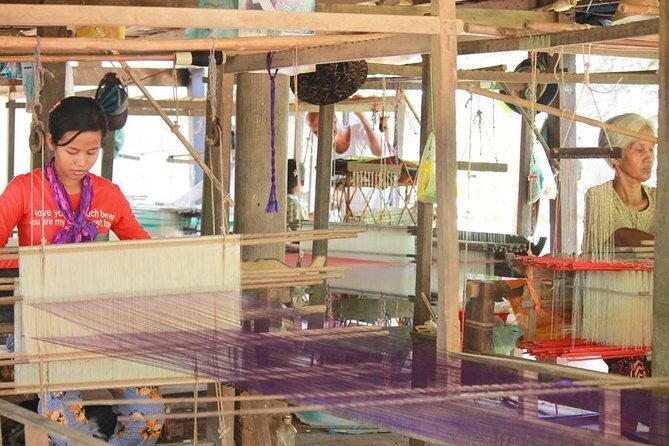
The standout cultural segment is the silk farm and weaving-focused visit. This is where you should expect to see the full chain of production rather than just finished products behind glass. In particular, you can find demonstrations connected to the silkworm life cycle—things like eggs, worms or larval stages, cocoons, and then the next steps turning cocoons into silk thread.
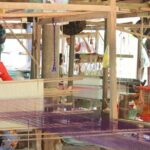
Then you’ll move into weaving: women working at looms with intricate patterns, and you get a clearer sense of why silk cloth is time-intensive. That labor piece is what makes the visit stick. Silk isn’t just a fabric here. It’s a process, done carefully, and often done by people whose livelihoods depend on repeat work.
Some feedback notes that the silk shop angle can feel a bit sales-forward depending on timing and how long you’re given to view looms. If you’d rather keep it simple, treat the shopping stop as optional. Look, ask questions about materials and process, then decide later. The earlier explanations about the stages of production help you shop smarter, even if you don’t plan to buy.
If you care most about technique, don’t be shy about asking your guide what you’re seeing. In feedback, guides with strong English have been praised for explaining the history of the island and what Buddhism means locally, not only the mechanics of weaving. So if your English level is good enough for conversation, you can usually get more out of the farm stop by asking practical questions.
You can also read our reviews of more boat tours in Phnom Penh



Buddhist monastery and the school visit: respectful cultural time, not a rushed photo line
After the silk farm segment, the day includes a Buddhist monastery stop. Think of this as a chance to connect the weaving community to its spiritual framework. Even when temples themselves are small, the purpose is to show how belief and daily life overlap on the island.
Then there’s the school visit. The children visit is subject to the school schedule that day, so you can’t treat it like a guaranteed classroom walk at a specific time. When it does happen, it’s often the part that people remember most—meeting kids, seeing the educational energy, and witnessing how visitors are welcomed.
This is also where your behavior matters most. Keep your interaction respectful, follow the guide’s lead, and avoid turning it into a performance. If you’re bringing any small gifts, only bring what’s appropriate and again follow the guide’s instructions; the tour is set up around community interaction, not a random giveaway situation.
The best tours here are the ones where you leave with a clearer sense of the island’s human side. The school stop is designed for that. Even if you’re not a big museum person, it tends to land emotionally because it’s real classroom life rather than staged storytelling.
Drinks and fresh fruit: how the included extras change the mood
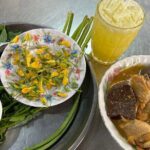
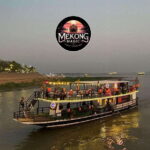
You’re not just paying for transport and entry fees. The cruise includes unlimited beer and soft drinks, plus a fresh fruit platter. On a hot afternoon in Phnom Penh, that matters. It turns the boat ride into a social break and keeps the day from feeling like “sightseeing without comfort.”
In feedback, people highlight that refreshments don’t feel stingy. You can also find mentions of snack add-ons served during the outing, with examples like fried bananas and other local fruit-style treats. Even if your day’s menu varies, the core package—unlimited beer, soft drinks, and fruit—gives you a consistent baseline.
A small practical tip: if you plan to go to the island and then do more walking after drinking, keep pace moderate. Drink what you enjoy, but remember you’ll be moving around the village and seeing multiple stops. Hydration is a bigger deal than people expect on this part of Cambodia.
Price and logistics: what $35 really buys you here
At $35 per person, this tour is positioned as value-packed rather than premium. Here’s what you get in the box:
- one way hotel pickup
- a one-hour boat ride to the island
- tuk tuk around the village
- entrance fees included
- an English-speaking guide
- unlimited beer and soft drinks
- fresh fruit platter
If you tried to recreate that on your own, the cost would likely climb quickly once you price out: boat transport, a guide for storytelling and interpretation, and entry fees for the silk and monastery sites. The drink and fruit inclusion also pushes it into a different category than many half-day cultural tours where you have to pay for everything separately.
The main “cost” isn’t the price; it’s the return logistics. Since hotel drop-off isn’t included, you’ll need to plan a ride back to your hotel. If your hotel is close to Preah Sisowath Quay, it’s a non-issue. If it’s farther out, it’s worth budgeting a short transport cost.
Group size stays small, with a maximum of 15 travelers, which helps you feel like you’re part of a guided day rather than riding in a big churn machine.
Small-group pacing: when it feels personal, and when it can feel rushed
The best version of this tour is when the guide has time to connect the dots. In feedback, guides such as Davuth and Vuthy are praised for strong English and clear explanations of island history and cultural context. In those cases, the silk farm and monastery stops don’t feel like quick checkmarks; they feel like a story you can follow.
But the day can shift depending on factors you can’t fully control:
- school schedules change
- boat timing and water levels can affect how you move around the island
- English levels can vary slightly between guides
- some stops can feel like they move you along faster than you’d like, especially around purchasing items
So I’d treat this as a “good structure, ask questions” kind of tour. If you want deeper weaving detail, ask at the farm. If you want more history, ask during the boat ride when the guide is free to talk.
Also, if you’re sensitive to sales pressure, keep your focus on process and learning. You can look at silk products without committing on the spot. The knowledge you gain about labor and stages makes you a more confident buyer—or an easier person to say no to pitches.
Who this tour suits best (and who may want a different plan)
This is ideal for you if:
- you want a short cultural break from the city
- you like crafts with real process behind them
- you enjoy river scenery and small-group guided storytelling
- you appreciate included refreshments on a half day
It may be less ideal if:
- you want a long, slow walk through one site (this is structured and time-managed)
- you dislike shopping moments, even if they’re optional
- you have tight mobility limits, since island movement can involve uneven or dusty paths and, at times, metal gangways when conditions require it
If you’re traveling with friends who want different things—one person craft, one person history, one person river views—this tour has enough variety to satisfy all three in a single afternoon.
Should you book the Mekong Silk Island Cruise?
If you’re choosing between “another city tour” and “a half-day river-and-craft escape,” this one leans strongly toward the escape side. For $35, you get transport, guide interpretation, key cultural stops, and included drinks and fruit that make the day feel like it has a proper onboard rhythm.
I recommend booking if you want:
- a small-group outing
- silk weaving learning with a real-life context
- an island look at farming and community life
- the convenience of pickup plus a guided day plan
Before you go, do two simple things: plan your ride back since drop-off isn’t included, and confirm pickup timing if you’re relying on it. Then go in with the right expectations—this tour shows you how people live and work, not just what looks pretty on a postcard.
FAQ
How long is the Mekong Silk Island Cruise?
The tour runs about 4 hours.
What does the tour cost?
The price is $35.00 per person.
Is hotel pickup included?
Yes, one-way hotel pickup is included.
Is hotel drop-off included?
No, hotel drop-off is not included. The tour ends back at the meeting point.
Where is the meeting point?
You meet at Memorable Cambodia Cruise by Preah Sisowath Quay, in front of street 90, Phnom Penh 12110, Cambodia.
How long is the boat ride to the island?
The boat trip to the island takes one hour.
What’s included with the ticket?
Included items are an entrance ticket/fee, a tuk tuk trip around the island, an English-speaking guide, unlimited beer and soft drinks, a fresh fruit platter, and one-way hotel pickup.
Do we visit a school on the island?
Yes, children in a local school are included, but it’s subject to the school schedule that day.
What group size should I expect?
The tour has a maximum of 15 travelers.