REVIEW · PHNOM PENH
Full-Day Discover Oudong Mountain-Former Capital City & Phnom Penh City Tours
Book on Viator →Operated by Royal Phnom Penh Tours · Bookable on Viator
A mountain with answers, a city with relics. This full-day private tour links Cambodia’s former royal center at Oudong Mountain with the big-name sights in Phnom Penh, all in one smooth day. You start in the countryside, climb your way up for history and views, then return to town for temples and royal buildings.
I especially like two things: you visit Oudong early, when the light and temperatures are usually more manageable, and your private English-speaking guide makes the religious details make sense, not just sound impressive. One thing to plan around is the day’s heat and stair climbing—Oudong involves climbing, and you’ll spend meaningful time outdoors even with AC on the drive.
In This Review
- Key highlights at a glance
- Oudong + Phnom Penh in one day: how this tour really feels
- Oudong Mountain: stupa details and the view from Phnom Udong
- Preah Sakyamoni Chedi and the hill shrines you can’t skip
- Oudong Temple at the base: where the hill meets everyday life
- Wat Phnom: the 27-meter hill and why it’s the symbol
- Independence Monument and the Norodom Sihanouk statue: modern Cambodia, same thread
- Royal Palace and Silver Pagoda: the heart of Phnom Penh’s royal compound
- How timing works: pacing, guides, and what to watch for
- Price and value: what $100.52 buys you, and what it doesn’t
- Who this tour suits best (and who might want another option)
- Should you book this Oudong Mountain + Phnom Penh day trip?
- FAQ
- How long is the full-day Oudong Mountain and Phnom Penh tour?
- Is hotel pickup and drop-off included?
- Do I need to pay entrance fees at the sights?
- Is the guide English-speaking?
- Is lunch included?
- Is this tour private?
- What happens if the weather is poor?
Key highlights at a glance
- Oudong Mountain first: a morning-style route that keeps the day moving
- Relics and rebuilt stupas: stops tied to major eras, including a stupa built in 2002
- Phnom Penh royal compound time: Royal Palace and Silver Pagoda within the same walled complex
- Built-in guidance for the climb: some guides route you along easier paths and adjust for hot weather
- Entrance fees included: so you’re not surprised by add-on tickets at each stop
- Practical extras: cold bottle water and a cold hand towel during the day
Oudong + Phnom Penh in one day: how this tour really feels
This is a classic “time-travel” format: you leave Phnom Penh and head to Oudong Mountain, Cambodia’s former royal capital area, then come back for a concentrated tour of Phnom Penh’s most important monuments. It’s designed for people who want both the countryside and the city highlights without hiring separate drivers for each.
The tour runs about 7 to 8 hours, with hotel pickup and drop-off and private AC transport. Since it’s private, you’re not stuck waiting for other groups to finish photos, and your guide can adjust the pace when it’s hot.
My practical take: this is a good choice when you’re only in Phnom Penh for a short time. Oudong gives you context for the kingdom’s religious and political life, and Phnom Penh then shows how that same story is reflected in the royal district and the city’s major shrines.
You can also read our reviews of more city tours in Phnom Penh
Oudong Mountain: stupa details and the view from Phnom Udong
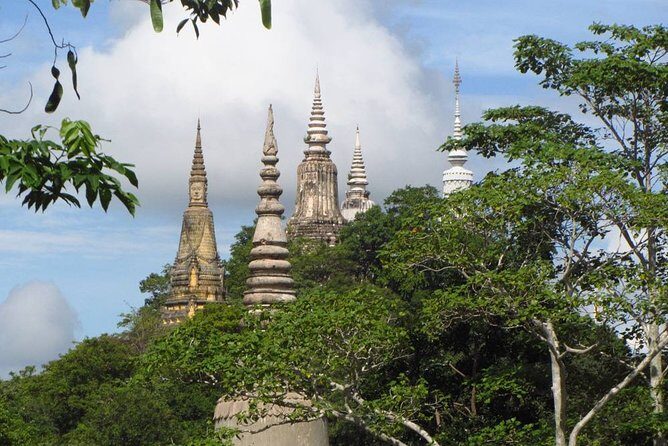
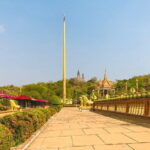
Oudong Mountain is the core of the day. You’ll visit key structures on the hill, including a prominent stupa associated with King Norodom Sihanouk. The tour includes time at Udong Mountain, where you’ll see the stupa built in 2002 and another major structure called the New Preah Sakyamoni Chedi, described as housing a relic of Buddha.
Why this matters in plain terms: Cambodia’s temples and stupas aren’t just pretty monuments. They are built to mark beliefs, royal patronage, and generations of rebuilding after destruction. Seeing these in the Oudong setting—on an elevated sacred hill—makes the spiritual purpose feel more direct.
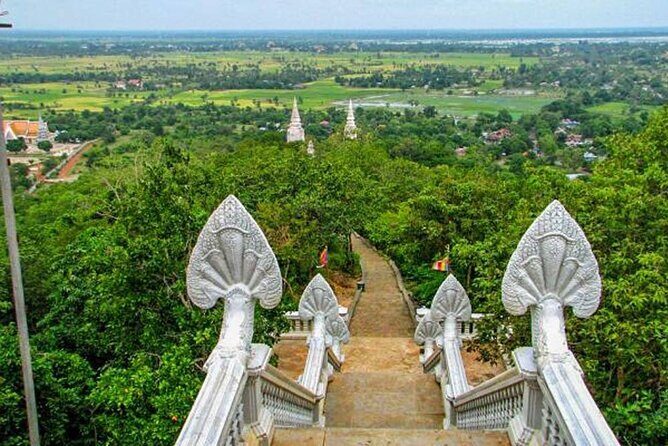
Next comes Phnom Udong, where you climb stairs for views over the plains. This is one of those moments where your guide’s timing affects everything. If you go earlier in the day, you’re more likely to enjoy the panorama before the heat becomes a full-contact sport. The guide also explains the area’s history and religious culture as you move through the complex.
If you get a guide like Sam Ang (one of the names connected to excellent experiences), the climbing route may feel more manageable than what you’d expect from a standard “go straight up” plan. In at least one shared experience, the guide led along an easier-to-climb path and kept the pace comfortable.
Preah Sakyamoni Chedi and the hill shrines you can’t skip
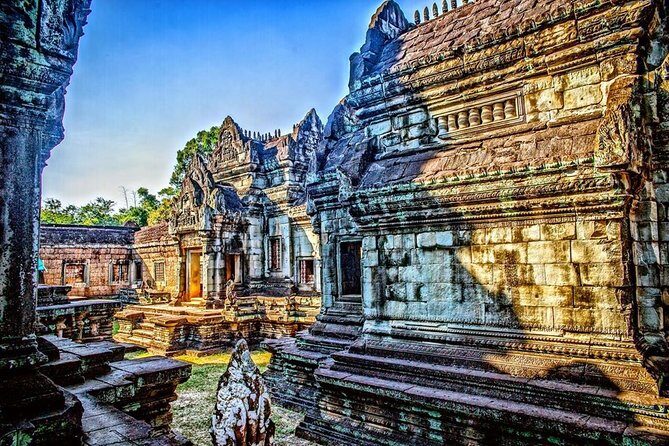
On the slopes of the sacred hill, you’ll spend time at Preah Sakyamoni Chedi. This stop includes shrines and Buddha statues, and the tour also frames what happened to them during the Khmer Rouge period in 1977, when many were severely damaged or destroyed, followed by later restoration work.
This is not a stop meant for fast photos. It’s where the story gets heavier, but also more meaningful. You’ll be walking among structures that reflect destruction, rebuilding, and devotion. Even if you’re not a temple expert, a good guide can connect what you see to why these sites matter to Cambodians today.
Practical tip: wear shoes you trust on stone steps and take your time. The hill isn’t long, but it’s still a real climb. Your guide and your group pace make a big difference here—especially if it’s warm when you arrive.
Oudong Temple at the base: where the hill meets everyday life
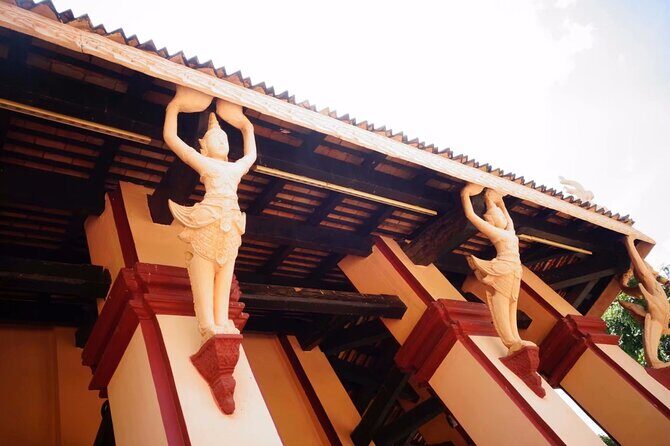
After the top, the tour comes back down toward Oudong Temple. This is a good moment to cool your legs and reset your brain after all the climbing and shrine viewing.
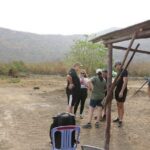
At the base, the area can include small roadside scenes like picnic huts and local weekend activity (the kind of everyday village texture that makes the whole day feel grounded). It’s also a natural place for your guide to point out what’s nearby and explain how sacred sites fit into daily routines, not just sightseeing checklists.
Time here is relatively short compared to the hill stops—around 20 minutes is typical in the schedule. Think of it as a transition stop: you’ve got your views and your temple time up top, and now you’re ready to head back to Phnom Penh for the royal district.
Wat Phnom: the 27-meter hill and why it’s the symbol
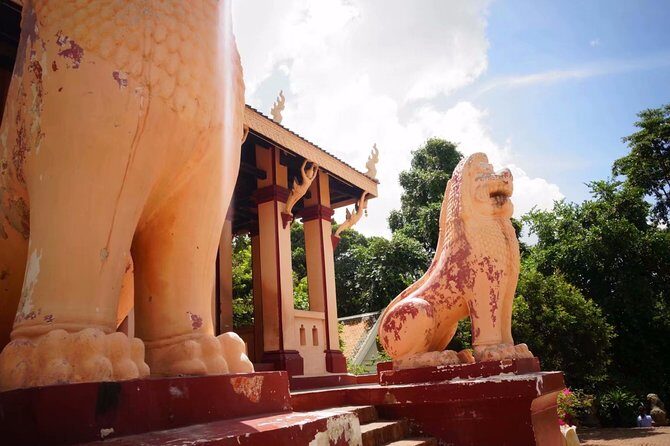
Back in Phnom Penh, you’ll visit Wat Phnom, the namesake and major symbol of the city. This temple sits atop an artificial 88.5 ft / 27-meter hill near the Tonle Sap River area.
What I like about doing Wat Phnom on the same day as Oudong is that you can feel the shift from hill-based sacred meaning to city-centered devotion. The height at Wat Phnom is dramatic, but it’s also a quick way to understand how Phnom Penh’s spiritual identity is tied to a focal landmark.
In this tour, Wat Phnom is scheduled for about 40 minutes. That’s enough time to take it in without feeling rushed, as long as you manage the sun and stay hydrated. Your tour includes cold bottle water, which is handy here.
A few more Phnom Penh tours and experiences worth a look

Independence Monument and the Norodom Sihanouk statue: modern Cambodia, same thread
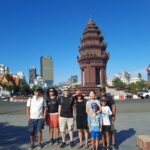
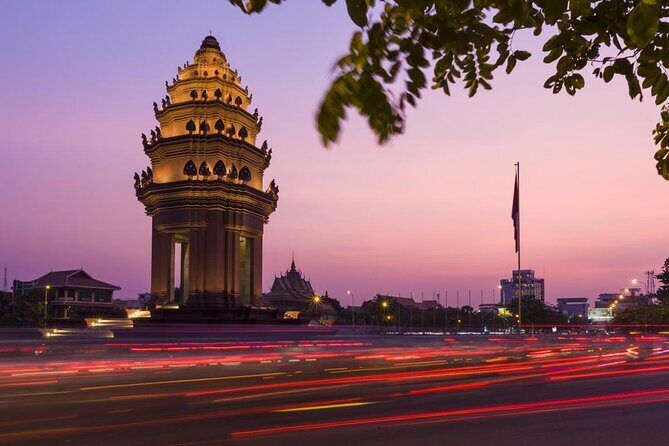
You’ll also stop at the Independence Monument, described as an Angkorian-style tower built in 1958 to mark Cambodia’s independence day. It’s a central Phnom Penh landmark, so it’s useful for orientation too—you get a sense of where major civic memory sits in the city grid.
Next is a stop for the Statue of King Father Norodom Sihanouk, completed in 2013 and inaugurated on October 11. This part of the day adds a layer beyond temples: it’s Cambodia’s modern national narrative in public space.
Why these stops are worth the time: they connect the royal and religious themes you saw at Oudong with how national identity is expressed in the capital. Even if you’re not into monuments, these two help you understand that Cambodia’s story is not only written in stone temples. It’s also written into streets and memorial structures.
Royal Palace and Silver Pagoda: the heart of Phnom Penh’s royal compound
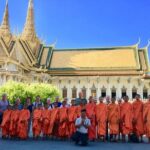
The day finishes with two of Phnom Penh’s most important sights: the Royal Palace and the Silver Pagoda.
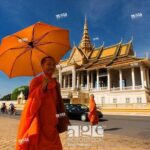
The Royal Palace is described as being built over a century ago, originally serving as the residence of the King of Cambodia, his family, and foreign dignitaries, and also used for court ceremonies. In other words, it’s not just a pretty building. It’s a place meant for rule, ritual, and state presence.
Then you move to the Silver Pagoda, also called Wat Preah Keo Morokat, located next to the Royal Palace inside the larger walled compound and separated by a walkway. This stop is scheduled for about 30 minutes, which works well because you’re already seeing important buildings back-to-back—too much time can start to feel repetitive, too little and you miss the flow of the complex.
If you want one takeaway: this pair of stops shows how Cambodia’s royal world blends ceremony, sacred space, and state power. Oudong gives you the deep-time spiritual setting; the palace compound shows how that same reverence and structure gets expressed in the capital.
How timing works: pacing, guides, and what to watch for
The schedule is built around a “morning mountain, then city” pattern. That’s smart because it concentrates the more physically active part of the day—Oudong Mountain—when conditions are often better.
In at least one excellent experience, the route even included a small stop at the Silversmiths’ village on the way. That’s not something you should assume will happen every time, but it’s a good sign that your guide may look for meaningful side stops rather than turning the day into pure driving and monuments.
Guide style matters here. When the guide is patient, you don’t feel rushed on stairs or in hot sun. One shared experience highlighted how the guide was gracious and accommodating in very hot weather, which is exactly what you want on a full-day tour.
Practical note: lunch isn’t clearly covered in the provided details. You may want to plan for it—either eat beforehand or be ready to find something later, depending on what your guide suggests on the day. This doesn’t ruin the tour, but it can affect your comfort if you’re the kind of person who needs food on a schedule.
Price and value: what $100.52 buys you, and what it doesn’t
At about $100.52 per person, this tour sits in the mid-range for a private full-day day trip in Phnom Penh. The value comes from how the inclusions stack up:
Included:
- Hotel pickup and drop-off
- Private English-speaking tour guide
- Private comfortable/AC transportation
- Cold bottle of water and a cold hand towel
- Entrance fees for the listed sites
That entrance-fee part is a big deal. Temples and palaces can add up fast, and it’s nice when your day is priced so you’re not doing mental math at each stop.
Not included (or not clearly stated):
- Lunch and drinks aren’t clearly mentioned, so budget extra if you need a sit-down meal
- Personal shopping
- Any added requests for drinks and meals
My value verdict: if you prefer a private guide and want entrance fees handled, the price feels fair. If you’re cost-cutting and don’t mind catching public transport and skipping a guide, you could DIY. But for most visitors who want fewer hassles and better explanations, this is the kind of “pay once, go smoothly” day that earns its keep.
Who this tour suits best (and who might want another option)
This tour is a strong fit if you want:
- A single day that connects Oudong’s sacred royal setting with Phnom Penh’s core monuments
- A private English-speaking guide for clearer context
- Entrance fees covered so your day stays predictable
It’s also well-suited to people who want to keep it flexible. Since it’s private, you can often pace according to comfort.
One caution: if stairs are a serious issue for you, Oudong Mountain may be challenging. The tour does say most travelers can participate, but the hill includes climbing. Also, plan for sun exposure. Even with AC on the drive, outdoor time adds up.
Should you book this Oudong Mountain + Phnom Penh day trip?
I’d book it if you want your Phnom Penh time to feel purposeful, not just busy. The combination is smart: Oudong gives you the meaning behind royal and religious Cambodia, then Phnom Penh’s Wat Phnom, Royal Palace, and Silver Pagoda translate those themes into the capital’s most iconic spaces.
Skip it or consider alternatives if:
- You know you won’t enjoy temple/hill walking in heat
- You want a more leisurely multi-day approach rather than a 7 to 8 hour sweep
- You strongly depend on lunch being provided as part of the package
If you do book, I’d go in with the right mindset: wear comfortable shoes, expect meaningful outdoor walking at Oudong, and let the guide do the heavy lifting on explanations—this day works best when you slow down enough to understand what you’re seeing.
FAQ
How long is the full-day Oudong Mountain and Phnom Penh tour?
The tour typically runs about 7 to 8 hours.
Is hotel pickup and drop-off included?
Yes. Hotel pickup and drop-off are included in the package.
Do I need to pay entrance fees at the sights?
No. Entrance fees are included for the stops in the program.
Is the guide English-speaking?
Yes. The tour includes a private English-speaking tour guide.
Is lunch included?
Lunch and drinks are not clearly listed as included, so you should plan for that separately.
Is this tour private?
Yes. It’s a private tour/activity, and only your group participates.
What happens if the weather is poor?
This experience requires good weather. If it’s canceled due to poor weather, you’ll be offered a different date or a full refund.