REVIEW · PHNOM PENH
Learn about a dark period of Cambodian history by expert guide
Book on Viator →Operated by Phnom Penh Tours · Bookable on Viator
Cambodia’s history hurts, but it makes sense. This guided morning strings together the Royal Palace and Silver Pagoda with S-21 and Choeung Ek, led by an English-speaking expert guide.
What I love most is the way you get context first, then the facts hit hard. I also liked the max 15-person group size, because the guide can slow down or speed up to match your questions.
One consideration: this is heavy, emotionally draining history. If you want a relaxed day of sights and photos, this itinerary may feel like too much.
In This Review
- Key things to know before you go
- Royal Palace and Silver Pagoda: Setting the stage in Phnom Penh
- Silver Pagoda: the Emerald-Crystal Buddha and the feel of the grounds
- Why this first half of the tour is worth it
- Tuol Sleng Genocide Museum (S-21): When a school becomes evidence
- What to expect in your body and your mood
- Choeung Ek Killing Fields: Tuk-tuk, then the scale hits
- A practical tip: how to handle photos and questions
- Price and value: Does $29 really cover your day?
- Morning logistics in Phnom Penh: transport, timing, and comfort
- Who should book this tour—and who should pause
- Who might want a different plan
- Should you book this Phnom Penh dark history tour?
- FAQ
- What is the tour duration?
- What time does the tour start?
- How many people are in the group?
- Where does the tour take place?
- Does the tour include hotel pickup and drop-off?
- What transportation is used during the tour?
- What entrance fees are not included?
- Is the Silver Pagoda entrance included?
- What language is the tour guide?
- What is the cancellation policy?
Key things to know before you go
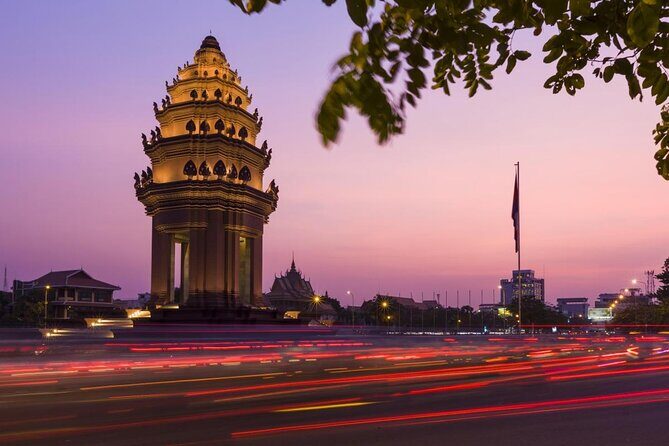
- Royal Palace built in the late 1800s (1866–1870) gives you the Cambodian setting before Khmer Rouge atrocity sites.
- Tuol Sleng (S-21) is a former school turned interrogation center, so you’re seeing a place designed for suffering.
- Choeung Ek Killing Fields began as an orchard and Chinese cemetery before it became an execution and burial site.
- Tuk-tuk ride is part of the route, helping the day feel like classic Phnom Penh travel instead of a bus-only checklist.
- Admissions are extra, so budget for the Royal Palace, Tuol Sleng, and Choeung Ek ticket fees on top of the $29 tour.
Royal Palace and Silver Pagoda: Setting the stage in Phnom Penh

The day starts with hotel pickup around 8:15 am, which matters in Phnom Penh. You waste less time hunting for meeting points, and you get moving while the city is still waking up.
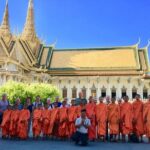
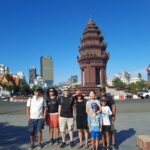
Before you go anywhere near the Khmer Rouge sites, you’ll visit two of the big monuments: the Royal Palace and the Silver Pagoda. That order is smart. It helps you see Cambodia’s identity in real places—architecture, symbolism, and royal history—so the later history doesn’t feel like random horror. It feels like a country with a past that was actively damaged.
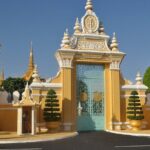
The Royal Palace was built between 1866 and 1870, when King Norodom moved the royal capital from Oudong to Phnom Penh. The palace sits on top of an older citadel called Banteay Keo, and it faces roughly east at Chaktomuk, where the Tonle Sap and Mekong waters meet. Even if you only skim the details, the setting gives you something solid to hold onto.
A good practical note: the Palace entrance fee isn’t included. So you’ll want ready cash or a payment method you can use on-site, since this is one of the first paid entries you’ll hit.
You can also read our reviews of more guided tours in Phnom Penh
Silver Pagoda: the Emerald-Crystal Buddha and the feel of the grounds
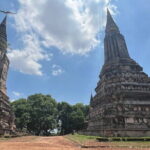
Next up is the Silver Pagoda, officially Wat Ubaosoth Ratanaram, and also known as Wat Preah Keo Morakot. The name people use most often ties to the Temple of the Emerald-Crystal Buddha, shortened to Wat Preah Keo.
This stop is usually where your guide can shift tone from architecture to meaning. The palace complex is about state power and tradition, while the Silver Pagoda adds a layer of religious and cultural purpose. It’s still part of Phnom Penh’s “everyday” Cambodia, even though the day that follows is far from everyday.
Silver Pagoda entrance is also not included. So again, plan a little extra budget beyond the tour price.
Why this first half of the tour is worth it
Here’s the value: you get bearings before impact. If you go straight to Tuol Sleng and the Killing Fields without any context, the history can feel like a set of separate stops. With the Royal Palace and Silver Pagoda first, you understand you’re visiting a country whose culture and power centers existed before they were fractured by genocide.
And because the group is kept small (up to 15 people), your guide can keep track of your pace and your focus. In my experience of how An guided, the best part was the way the tour felt responsive—rather than a scripted lecture that ignores what you care about.
Tuol Sleng Genocide Museum (S-21): When a school becomes evidence
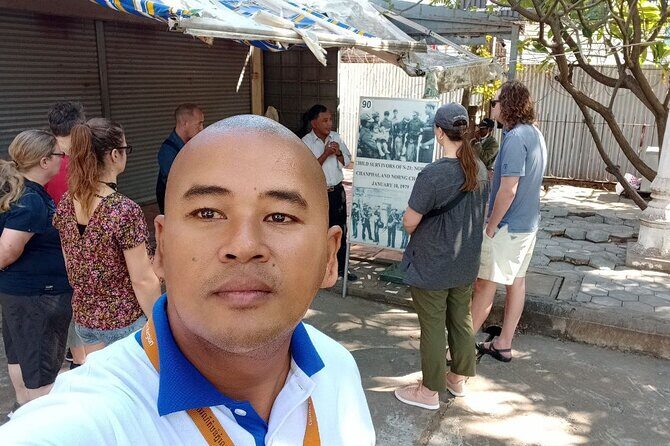
After the palace grounds, the tour moves to Tuol Sleng Genocide Museum, also known as S-21. This is often the hardest stop of the day. It’s not just a memorial site; it’s also where people were detained and tortured.
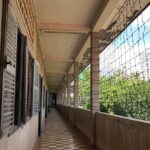
Tuol Sleng sits in what used to be a school. During Khmer Rouge rule, it became one of the infamous interrogation centers. The numbers given for S-21 are stark: between 14,000 and 17,000 prisoners were detained there, then tortured in what had been classroom spaces.
You’ll have about 1 hour 30 minutes here, which is a good amount. Too short and you rush through rooms that demand patience. Too long and it becomes repetitive in a way that doesn’t help understanding.
The key thing your guide does at S-21 is connect layout to purpose. You’re not just looking at exhibits—you’re seeing how a normal place was repurposed into an instrument of violence. Those cell-like areas in former classrooms carry their own message without needing dramatic extras.
What to expect in your body and your mood
You might notice you start moving slower. That’s normal. Your brain is trying to process what you’re reading with what you’re seeing, in one location.
Bring a little emotional self-care to the day. Drink water, pause when you need to, and don’t force yourself to keep up with the group pace. If you’re traveling with people who want fast answers, you can still take your time here.
Also: the Tuol Sleng entrance fee isn’t included. The listed ticket price is $5 per person, so this is one of the “pay-on-top” items you’ll want to cover.
You can also read our reviews of more historical tours in Phnom Penh
Choeung Ek Killing Fields: Tuk-tuk, then the scale hits
From Tuol Sleng, you’ll travel to Choeung Ek, about 9 miles south of Phnom Penh. This is where the tour uses a tuk-tuk ride as part of the experience, and it helps break the day into distinct emotional chapters: first the interrogation system, then the mass executions and burial grounds.
Choeung Ek Genocidal Center is estimated to connect to around 20,000 victims executed there between 1975 and 1978. The broader context is even more horrifying: it’s described as part of a national pattern where millions were killed, and many were buried at killing fields around the country.
Before it became a killing field, the site was once an orchard and a Chinese cemetery. That detail is not filler. It’s a reminder that ordinary land became a machine for atrocity.
You’ll spend about 1 hour 30 minutes at Choeung Ek. That timing matters. The main memorial areas require attention, and you also need a few minutes to simply absorb the scale. If you rush, you miss what the guide is trying to show you: how systems of terror worked, how communities were erased, and how the aftermath still shapes Cambodia.
The Killing Fields ticket fee is $3 per person, and it isn’t included in the base tour price. Plan on that extra charge.
A practical tip: how to handle photos and questions
This is one of those places where you might want to lower the urge to take lots of pictures. If you do take photos, aim for clarity, not volume. You’ll get more out of watching and listening than firing off a burst of shots.
Questions also come up naturally here. Ask your guide how they explain the timeline and the system without turning it into a checklist. The goal is understanding, not just remembering facts.
Price and value: Does $29 really cover your day?
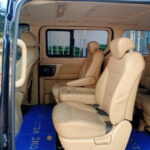
The listed tour price is $29.00 per person, and it lasts about 5 hours 15 minutes. That base price includes hotel pickup and drop-off, plus a mix of transport—a tuk-tuk and an air-conditioned min van—and an English-speaking licensed guide. You also get cold water.
But the big thing for your budget is admissions. Not included are:
- Royal Palace entrance: $10 per person
- Tuol Sleng entrance: $5 per person
- Killing Fields: $3 per person
Silver Pagoda entrance is listed as not included as well, but no specific fee is given in the info you provided. So you should expect an additional payment there at the site.
If you add only the admissions with stated prices, you’re looking at about $47 total for the tour plus the Royal Palace, Tuol Sleng, and Choeung Ek tickets (before considering the Silver Pagoda fee). That’s not a bargain price in the way a free walking tour is, but it’s still decent considering you’re getting:
- multiple major sites in a single morning
- a licensed guide in English
- transport that uses tuk-tuks (not just one bus the whole time)
- small-group management (max 15 people)
- pickup and drop-off
For value, the question is simple: Do you want a guided explanation through some very heavy history? If yes, the guide time is what you’re paying for, and you’ll feel it.
Morning logistics in Phnom Penh: transport, timing, and comfort
This tour starts at 8:15 am and runs roughly 5 hours 15 minutes. That early start helps you cover four major stops before the heat and crowds get too intense.
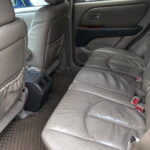
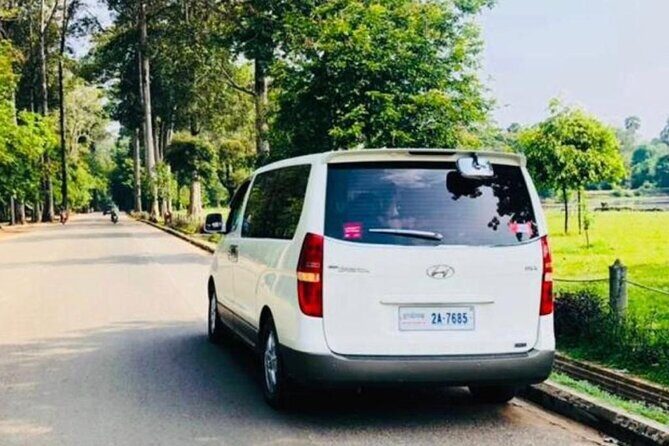
Transportation is mixed on purpose. You’ll use a min van with air-conditioning, then hop into a tuk-tuk for the Choeung Ek leg. That keeps the day moving without making you sweat through every transfer. You also get cold water, which sounds small until you’re halfway through a long day in Phnom Penh humidity.
The tour includes hotel pickup and drop-off, which is useful if you don’t want to figure out routes and meeting points on your own. It’s also helpful if you’re traveling solo, because it reduces the number of moments you’re negotiating on the street. One of the most reassuring details from a solo-female perspective is that having respectful, professional handling from pickup onward can take the edge off.
The only thing you’ll need to watch is the context: this tour requires good weather. If rain disrupts plans, the operator will either switch dates or offer a full refund.
Also, there’s a confirmation step after booking, and the info notes you’ll receive confirmation at time of booking. So you can plan around that with less uncertainty.
Who should book this tour—and who should pause
This experience fits best if you want history explained by a guide who can connect architecture, timeline, and human stories without turning it into soundbites. The stop order matters, and the guide matters even more.
If you’re the type of person who prefers:
- guided context over reading alone
- a small group size
- English explanations
- a route that uses tuk-tuk travel as part of the experience
…then this is a strong pick.
Who might want a different plan
If you’re very sensitive to trauma or you’re already overwhelmed by heavy history during the trip, you might consider splitting your day. You could do a more relaxed palace or city tour one day, then handle Tuol Sleng and Choeung Ek another day when you have more emotional space.
This tour’s strength is also its challenge: it’s not a light sightseeing loop. It’s a structured visit to sites directly tied to genocide.
Should you book this Phnom Penh dark history tour?
Yes, if you want one morning that ties Cambodia’s identity to its most brutal chapter, with an English guide and careful pacing across four key sites. I’d book it if you value context and want the day to feel guided rather than frantic.
No, if you’re looking for a purely scenic day, or if you know your comfort level with intense material is low. In that case, it’s kinder to choose a lighter itinerary and come back only when you’re ready.
If you do book, come early, budget for the extra entrances, and give yourself permission to slow down at Tuol Sleng and Choeung Ek. That’s where the tour does its real work.
FAQ
What is the tour duration?
The tour lasts about 5 hours 15 minutes (approx.).
What time does the tour start?
The start time is 8:15 am.
How many people are in the group?
The tour has a maximum of 15 travelers for a more intimate experience.
Where does the tour take place?
The tour is in Phnom Penh, Cambodia, with visits to major sites in and around the city.
Does the tour include hotel pickup and drop-off?
Yes, hotel pick up and drop off are included.
What transportation is used during the tour?
You’ll use a min van with air-conditioning and a tuk-tuk during the experience.
What entrance fees are not included?
Royal Palace tickets, Tuol Sleng Genocide Museum tickets, and the Killing Fields admission are not included. The listed amounts are $10 for the Royal Palace, $5 for Tuol Sleng, and $3 for the Killing Fields.
Is the Silver Pagoda entrance included?
No. The Silver Pagoda admission ticket is listed as not included.
What language is the tour guide?
The tour includes an English-speaking licensed tour guide.
What is the cancellation policy?
You can cancel for a full refund up to 24 hours before the experience starts. If canceled due to poor weather, you’ll be offered a different date or a full refund.