REVIEW · SIEM REAP
City Tour & Cooking Class
Book on Viator →Operated by Easy Angkor Trip · Bookable on Viator
History and supper in one tight circuit. This Siem Reap tour threads together Wat Thmey (Killing Fields), the Old Market, and a museum stop, then ends with a hands-on Khmer cooking class where the flavors feel personal from the first herb you pick. You’ll also hear strong stories from guides such as Kosorl and Mr. K, who connect what you see on the street to what ends up on your plate.
I love the way this day balances weight and joy: you get context for Cambodia’s past, then you transition to practical, fragrant cooking. I also like that the cooking part is hands-on and chef-led, with a real focus on choosing ingredients at a local market and then eating what you cook, including classics like fish amok—no passive watching required.
One drawback to plan for: some major sights have extra entrance fees not included (the National Museum and Wat Thmey). Also, the Killing Fields stop is emotionally heavy, so if you prefer lighter sightseeing, you may want to pace yourself or skip that portion.
In This Review
- Key things I’d note before you go
- A smart 3–5 hour plan through Siem Reap and Khmer kitchens
- Wat Thmey Killing Fields: where your day turns serious
- Psar Chaa Old Market: shop like a local, not a museum
- Angkor National Museum and Wat Preah Prom Rath: context between stops
- The Khmer cooking class: market-to-kitchen, then eat what you made
- Price and logistics: what $40 really buys you
- Who should book this tour, and who might hesitate
- FAQ
- FAQ
- What is the duration of this City Tour & Cooking Class?
- How much does the tour cost?
- Does the tour include pickup and drop-off?
- Is the cooking class and meal included in the price?
- Are admission fees included for the museum and Killing Fields?
- Do I need to pay for the Old Market or Wat Preah Prom Rath?
- What is the cancellation policy?
- Should you book this combo tour?
Key things I’d note before you go
- Wat Thmey time counts: plan for about an hour and expect the mood to be serious
- Psar Chaa is your texture test: a lively old market stop with fruits, herbs, and local treats
- Museum + temple context: Angkor National Museum adds background before you look at Khmer sites
- Cooking starts at the market: you select ingredients and get instruction you can use later
- Small-group energy: reviews point to attentive guides and a class format that keeps things interactive
A smart 3–5 hour plan through Siem Reap and Khmer kitchens
This experience is built for people who want more than one box checked. In roughly 3 to 5 hours, you cover several key stops in central Siem Reap and then shift into food mode with a guided cooking class and meal included.
That timing matters. Siem Reap can be a lot—heat, traffic, and long days around Angkor. This tour keeps moving, but it doesn’t try to cram everything into the whole day. You’re also not stuck figuring out where to go next because pickup and drop-off are included, and the tour runs as a private experience for your group.
The value angle is also clear. For a single price, you get an English-speaking guide, cold drinking water, and the cooking class plus the meal. Then you add what you want from two optional-fee sights (more on those below). If you’re the type who likes a guided arc—history first, then hands-on culture—this format fits well.
You can also read our reviews of more city tours in Siem Reap
Wat Thmey Killing Fields: where your day turns serious
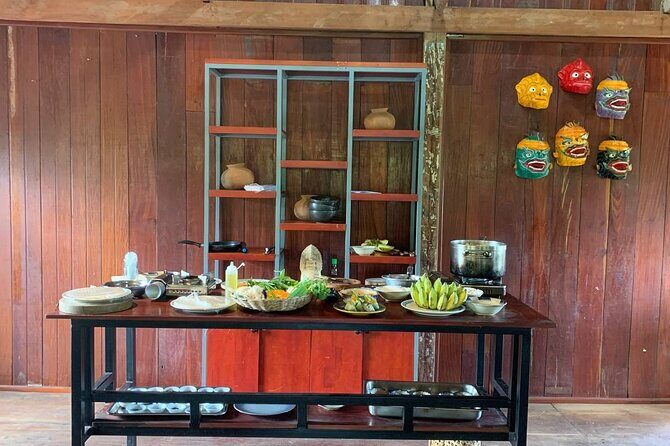
Your first major stop is Wat Thmey (Killing Fields), tied to the Khmer Rouge period from 1975 to 1979. The tone here is not a casual sightseeing stop. It’s a place for remembering, learning, and understanding.
What to expect:
- About 1 hour at the site
- An admission fee applies, but it’s not included in the base price
This is the moment when you’ll feel the contrast of the whole day. Reviews and the itinerary framing point to a guide who doesn’t treat this as a quick photo stop. If your guide is Kosorl or Mr. K, that storytelling style tends to show up as more than just facts; it’s conversation, context, and connections to Cambodia’s modern reality.
A practical consideration: wear comfortable clothes and be ready for a calm, reflective pace. If you’re easily overwhelmed by dark history, consider whether you want to spend your limited time here. On the other hand, if you’ve come to Cambodia to understand what shaped the country, this stop does real work.
Psar Chaa Old Market: shop like a local, not a museum
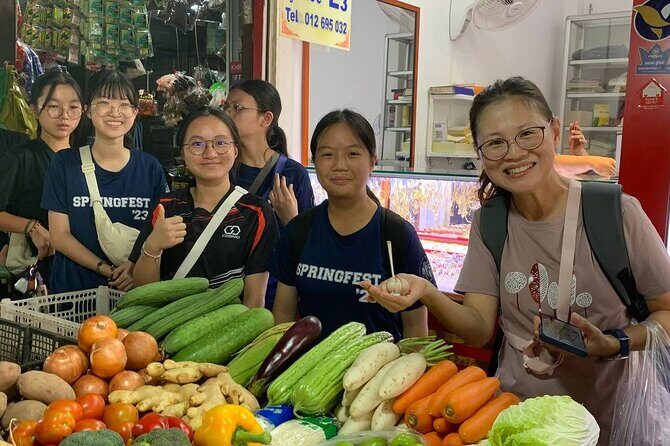
After the Killing Fields, the tour softens—just enough—to let your brain reset. Psar Chaa (Old Market) is a stop for everyday life: fruits, vegetables, flowers, and lots of Khmer sweets and cakes.
Why this market stop fits the cooking class:
- Your later meal depends on ingredients.
- The day’s rhythm nudges you to think about flavors before you start cooking.
The market time is listed at about 1 hour, and admission there is free. That makes it one of the best “bang for time” stops on the route. You get color, smells, and a sense of what people actually buy and snack on.
What to do during the visit:
- Taste if you’re offered something you recognize.
- Watch how stalls handle herbs and produce—you’re building a mental map for what your chef will likely point out later.
- Ask questions, especially about herbs, spices, and how Cambodians use them. In the reviews, guides are praised for connecting food with history and daily family life, and that’s exactly the kind of question that earns good answers.
Angkor National Museum and Wat Preah Prom Rath: context between stops
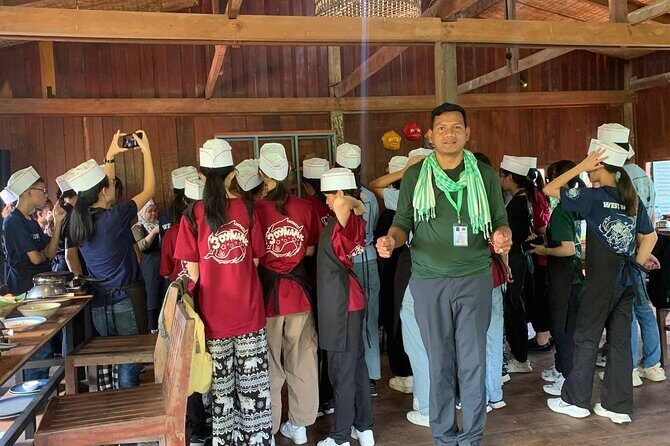
Then the tour shifts back to structured learning with Angkor National Museum. This museum covers periods before the Khmer Empire, during the empire, and after it, with a large collection of artefacts. It’s positioned along the way to Angkor Wat, so it works as a “set the lens” stop if you’re heading toward Angkor sites later.
Key point for your budget: the National Museum is not included. The fee listed is $12.00 per person.
What I like about pairing a museum with a temple stop:
- You learn the background in a controlled setting, then you can look for that story on the walls and in the layout of later religious sites.
- It prevents you from treating everything as random stonework.
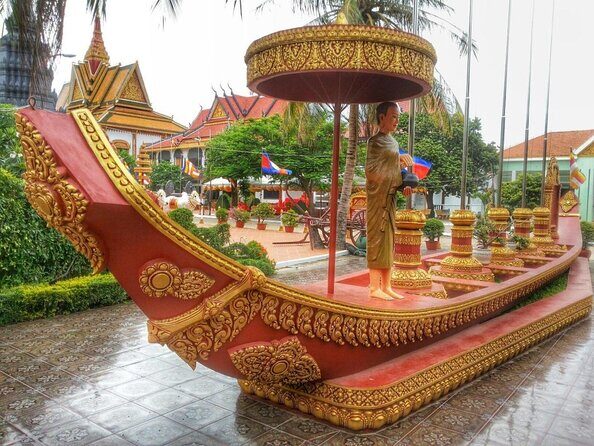
Next up is Wat Preah Prom Rath, centrally located just north of the Old Market and Pub Street. Here you can see Buddha-related artwork—specifically, a story painted on the walls, explained in the Buddha Hall by your guide.
This stop is listed at about 1 hour, and admission is free.
A fair consideration: if you’re already museum’d out (or you’ve been inside Angkor sites for days), you might skim this portion faster than you like. Still, it’s one of the most efficient ways to get meaning out of temple decorations without needing to study on your own.
The Khmer cooking class: market-to-kitchen, then eat what you made
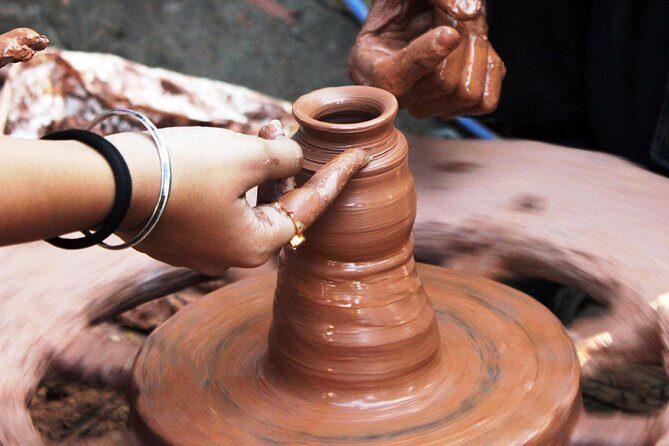
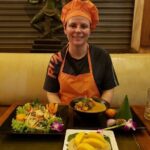
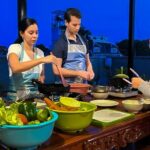
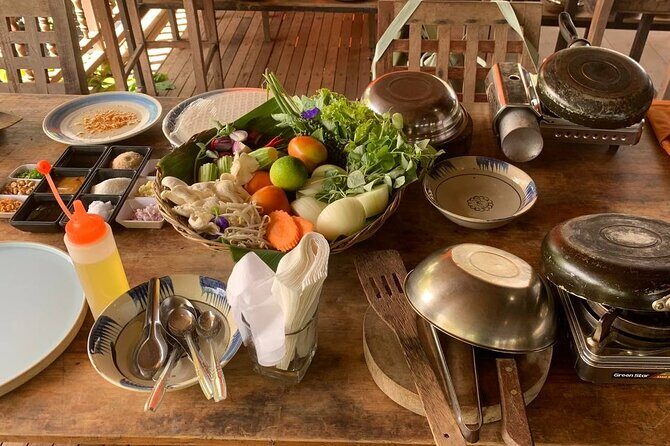
This is the real heart of the experience. The tour finishes with cooking instruction focused on traditional Khmer food, guided by a chef. Reviews highlight that the chef explains clearly and that you actually eat what you cook, not just plate it and move on.
One of the most distinctive elements here is the food flow:
- Before class, you visit a local market to pick ingredients.
- Then you cook with hands-on guidance.
That market-to-kitchen sequence matters because Khmer cooking is built on aroma and balance. When you choose herbs and spices yourself, you’re more likely to remember what you’re tasting later. Also, you get to ask questions while the ingredients are right there.
What you might prepare:
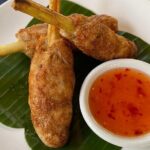
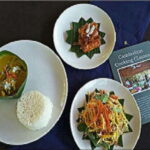
- Reviews specifically mention fish amok, which is a great clue that the class includes Khmer dishes that rely on spice, aromatics, and proper mixing/steaming techniques.
How the class feels:
- Reviews call out the guides’ friendliness and attentiveness.
- Conversation isn’t just recipe talk. One review notes the day ranging from food to history and even politics and family life, which tells you the guide and chef likely treat this as cultural storytelling, not just cooking.
Practical tips for the cooking portion:
- Bring a change of mind: you’ll be learning by doing, including tasting and adjusting.
- Wear sleeves or something that can take getting a bit warm or messy.
- If you have dietary restrictions, you should ask before the class starts, but the provided info doesn’t list specifics—so plan to communicate clearly when you book.
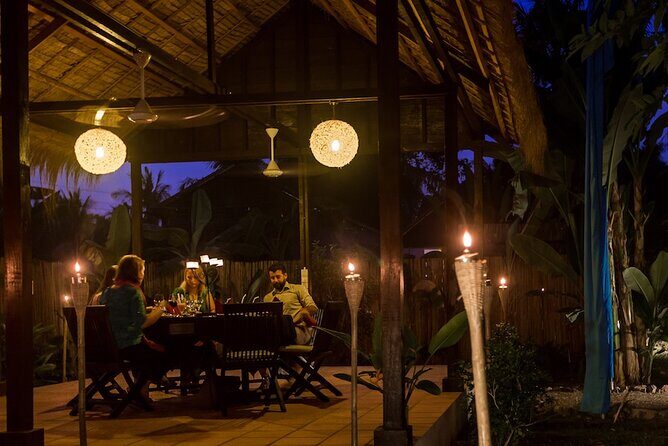
At the end, you’ll get a meal included as part of the experience. That turns the class into real value because you’re paying for both instruction and food you can’t easily replicate on your own the first time.
You can also read our reviews of more cooking classes in Siem Reap

Price and logistics: what $40 really buys you
The base price is $40.00 per person for a 3 to 5 hour tour. Pickup and drop-off are included, along with an English-speaking tour guide, cooking class and meal, and cold drinking water. There’s also mention of group discounts and a mobile ticket.
Where your money goes:
- You’re not just buying a cooking lesson. You’re paying for guided movement between major sights plus a chef-led meal experience.
- The pickup makes it easier to fit into a short stay without worrying about transportation.
Where it can cost extra:
- Angkor National Museum: $12.00 per person
- Wat Thmey Killing Field: $4.00 per person
These entrance fees aren’t included in the base price, so your real total depends on whether you go into both paid stops (the itinerary includes both).
Simple value math:
- If you pay both listed admissions, add $16 to the $40 base, for $56 total per person.
- You’re still getting a guided day plus a market-to-kitchen cooking class and meal. In Siem Reap, that combination is often the best value compared to doing separate sightseeing taxis and separate food activities.
Group size and privacy:
- The info says this is a private tour/activity, meaning only your group participates.
- Reviews praise attentive guides, and that usually pairs well with a smaller group setting where questions don’t get lost.
Who should book this tour, and who might hesitate
I’d say this fits best if you:
- Want history + food in one outing
- Like guided conversation and explanation, not just seeing sights
- Enjoy hands-on learning and want to eat what you make
- Prefer not to stitch together separate experiences on your own
You might hesitate if:
- You know you’re uncomfortable with heavy historical sites, since Wat Thmey is part of the itinerary
- You’re strictly trying to keep costs to the $40 figure, because two stops have extra entrance fees
One more practical note: the day is active. Even though it’s not a full-day marathon, you’ll be walking and shifting locations. If you’re tired from Angkor early mornings, bring water (you’re provided cold drinking water) and plan to rest afterward.
FAQ
FAQ
What is the duration of this City Tour & Cooking Class?
It’s listed as 3 to 5 hours (approx.).
How much does the tour cost?
The price is $40.00 per person.
Does the tour include pickup and drop-off?
Yes. Pick Up & Drop Off are included.
Is the cooking class and meal included in the price?
Yes. Cooking Class & Meal are included, along with cold drinking water.
Are admission fees included for the museum and Killing Fields?
No. The National Museum admission is $12.00 per person, and Wat Thmei Killing Field admission is $4.00 per person.
Do I need to pay for the Old Market or Wat Preah Prom Rath?
The Old Market and Wat Preah Prom Rath are listed as free in the itinerary.
What is the cancellation policy?
You can cancel for a full refund if you cancel up to 24 hours in advance of the experience start time. If you cancel less than 24 hours before, there’s no refund.
Should you book this combo tour?
If your ideal Siem Reap day includes a serious history stop, a classic old market, and then a chef-led cooking class where you eat what you make, I think this is an easy yes. The best part is the chain: you don’t just read about Khmer culture—you see sites, then work with ingredients, then taste the result.
Just budget for the two entrance fees, and decide ahead of time how you want to handle the mood at Wat Thmey. If that’s okay with you, you’ll get a day that feels both practical and genuinely memorable.