REVIEW · SIEM REAP
Siem Reap: Tonle Sap and Kampong Phluk Tour with Street Food
Book on GetYourGuide →Operated by ASEAN ANGKOR GUIDE · Bookable on GetYourGuide
Two worlds in one Siem Reap afternoon. You’ll see Tonle Sap life from the water, then switch gears to a guided street-food evening that pushes you past the usual tourist bites.
I especially like the long, real-feeling boat time at Kampong Phluk, with stilt houses, fishing routines, and mangrove wildlife. I also like that the food stop is guided, so you learn what you’re eating and how local combos work. One thing to consider: the ride and scenery depend on water levels, and the dry-season months can mean browner water and smaller boats may not go where you might expect.
In This Review
- Key highlights to look for
- Kampong Phluk after 2 pm: why timing makes the countryside feel real
- Wooden boats, stilt houses, and mangrove wildlife on Tonle Sap
- One important seasonal reality (dry months change the vibe)
- A Buddhist monastery on an artificial island: a quieter pause
- Street food tasting that teaches you what you’re eating (and why)
- The guide makes the difference: food + story + technique
- Insects are on the menu, but your choice matters
- Siem Reap’s night market for local snacks, fruit, and everyday shopping
- Price and value for $55: what’s included (and what can change your day)
- Practical tips: what to pack for sun, bugs, and fried-food momentum
- Who this tour fits best (and who should skip it)
- Should you book this Siem Reap Tonle Sap and Kampong Phluk street food tour?
Key highlights to look for
- A 4-hour wooden-boat cruise to Kampong Phluk from the lake port, plus ferry transfer
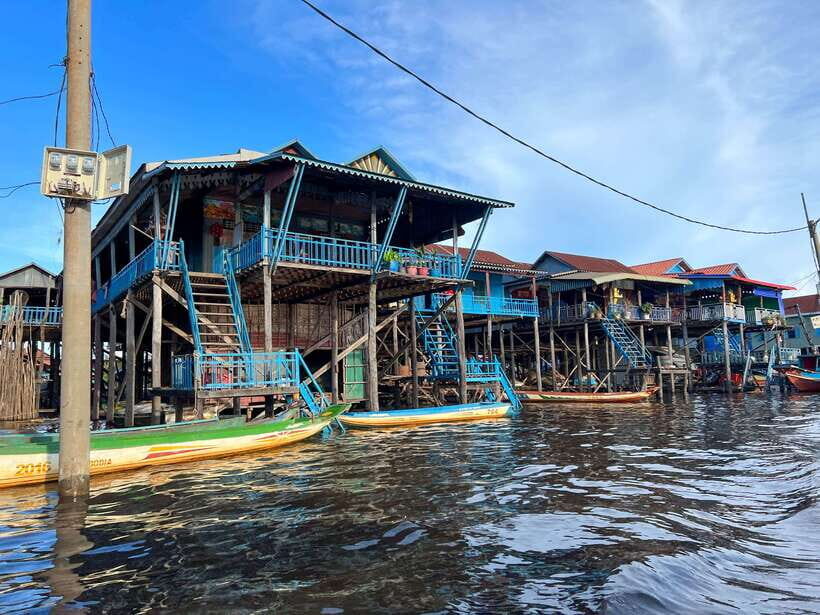
- Stilt houses and fishing livelihoods you can see up close from the water
- Mangrove ecosystem spotting, including crab-eating macaques, with a guide explaining what you’re seeing
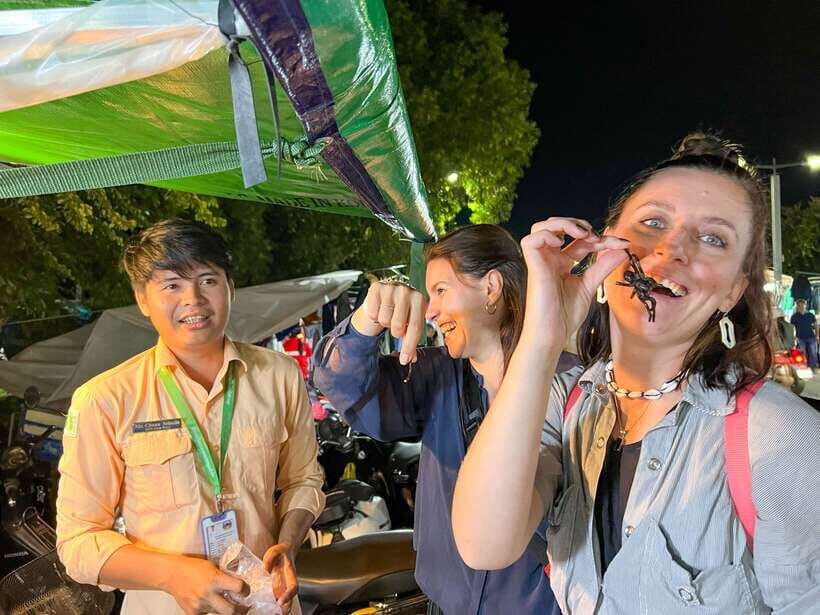
- Street-food tasting with “learn as you eat” guidance, including insects if you’re game
- Siem Reap’s popular night market for local snacks, fruit, and everyday shopping
Kampong Phluk after 2 pm: why timing makes the countryside feel real
This tour is set up for that mid-to-late afternoon rhythm that Siem Reap does well. You’re picked up from Krong Siem Reap between 2:00 pm and 2:20 pm, then head straight toward Tonle Sap. The drive matters because you’re not just stacking attractions back-to-back; you’re moving into a different pace—countryside, then lake life.
Once you reach the lake area, you don’t just “arrive” and start sightseeing. You go through the lake-port staging and then switch to a local boat experience. That difference is what makes Kampong Phluk feel less like a photo stop and more like a working community.
You can also read our reviews of more food & drink experiences in Siem Reap
Wooden boats, stilt houses, and mangrove wildlife on Tonle Sap
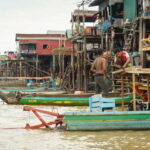
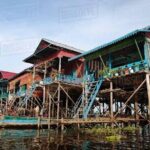
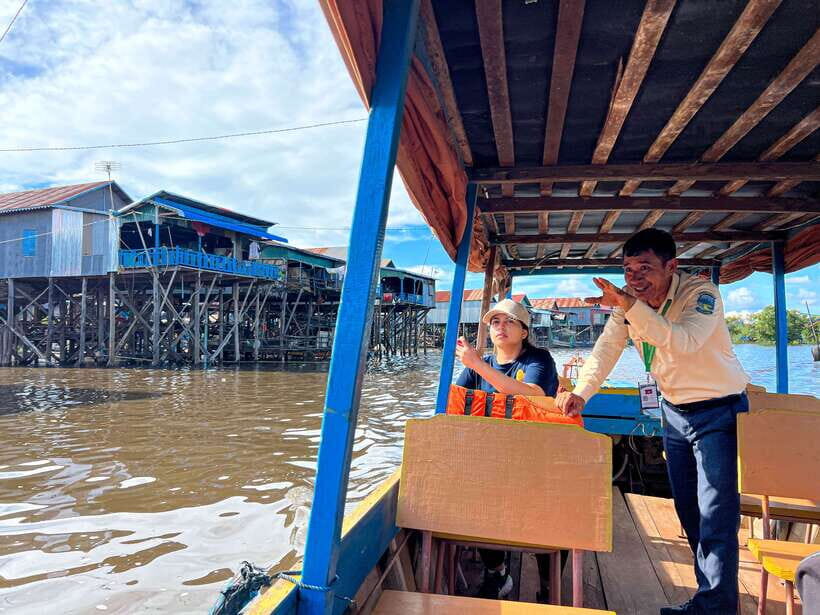
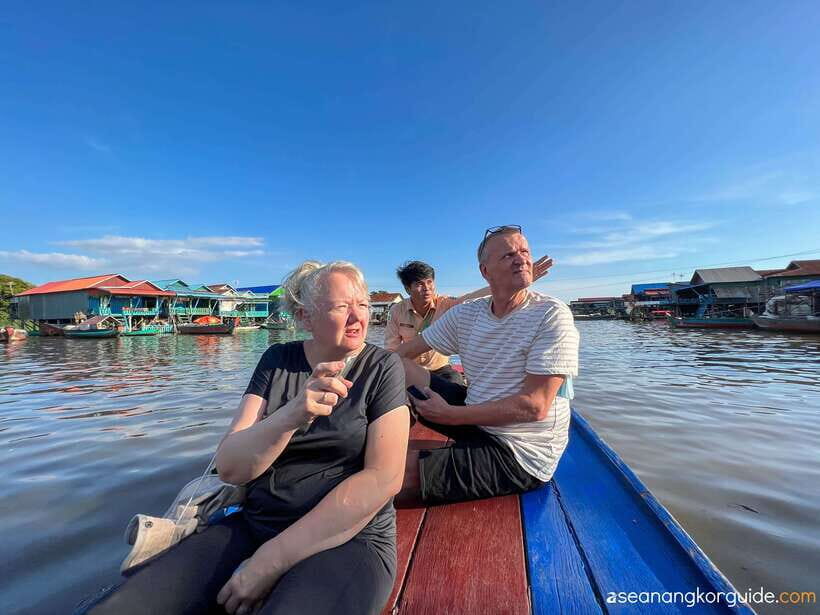
The heart of the day is the boat cruise at Kampong Phluk, with a local boat ride from the ferry area. Kampong Phluk is the kind of place where you quickly understand how the water level shapes daily life. Families live along the shore in brightly colored houses on long poles, so when the rainy season brings higher water, the homes are built to handle it.
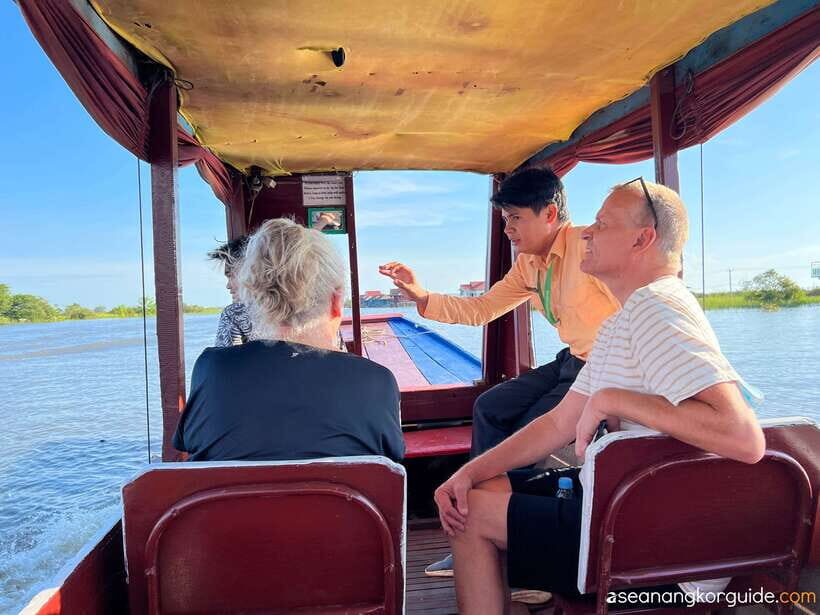
Your guide frames what you’re seeing in practical terms: who the families are, what they do for a living, and how fishing ties into everything around you. It’s not just “look at the village.” It’s “this is how people make income and food on the lake.”
You’ll also spend time around the flooded mangrove forest, which is where wildlife becomes part of the story. The tour info calls out crab-eating macaques, and the overall area supports a lot of life. There are about 3,000 inhabitants in the village community—big enough that you’ll see routine, small enough that it doesn’t feel like an amusement park.
One important seasonal reality (dry months change the vibe)
If you’re going from the end of March through the end of July, this is one of the most crucial seasonal windows. Water levels start to recede, and that gives you a different perspective. The trade-off is that some of the postcard charm can fade because the village is no longer fully “floating” in the same dramatic way.
Practically, there can be bumps too. Some boats may get stuck, and smaller canoes may not be able to travel through parts of the jungle forest. One review also mentioned that in March the water could look quite brown. So if your goal is crisp, bright reflections and perfect still-water photos, plan for the possibility that the water conditions won’t cooperate.
But if you’re okay with a more real-world look—what life looks like when the lake is changing—you’ll likely find that the dry-season view is more human and less staged. Think of it as seeing the village adjust, not just posing at it.
A Buddhist monastery on an artificial island: a quieter pause
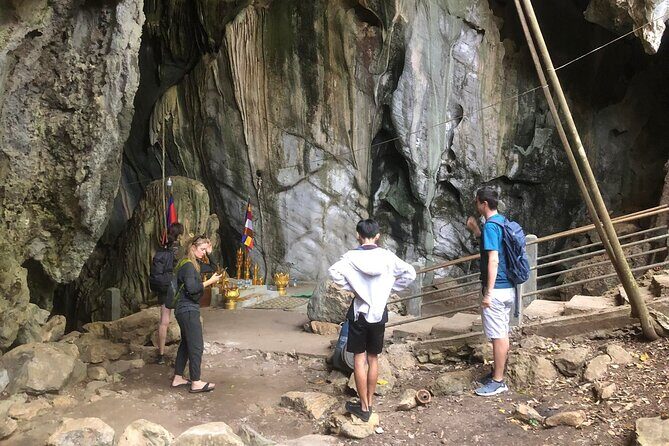
After the boat cruise, the tour includes a visit to a Buddhist monastery built on an artificial island. This matters because it shifts the focus away from the lake “show” and toward local spirituality and daily routine.
Even if you’re not a temple person, it’s a good palate cleanser. You get a few minutes to reset your eyes and your brain after being surrounded by water and activity. Also, a monastery on an artificial island is a reminder that communities here aren’t only shaped by nature—they’re shaped by engineering, belief, and practical needs.
Street food tasting that teaches you what you’re eating (and why)
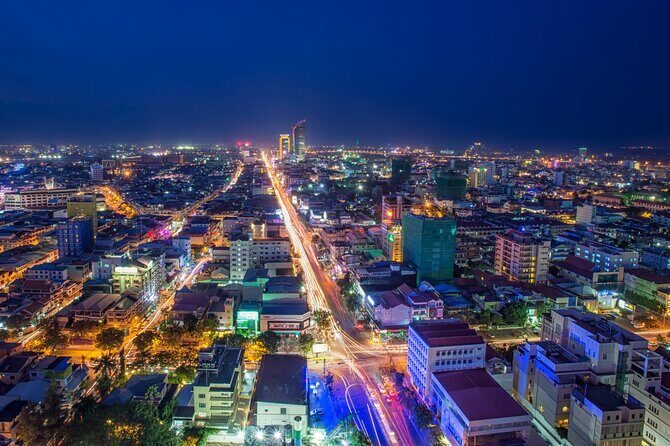
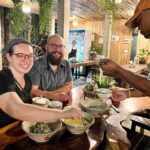
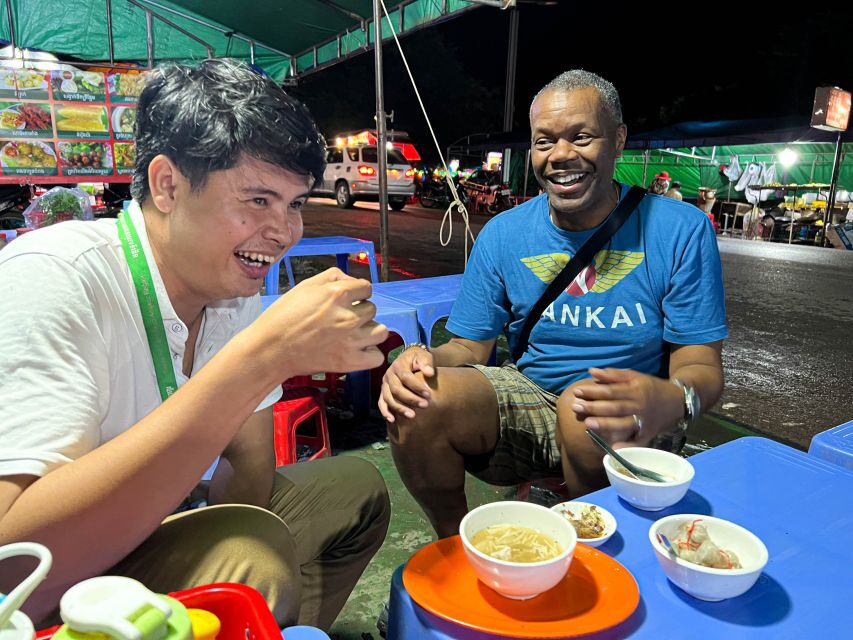
After the lake portion, you head back toward Siem Reap for food tasting in the evening. This is one of the strongest parts of the experience because it’s not just “try some bites.” You move through stops designed around what locals actually eat.
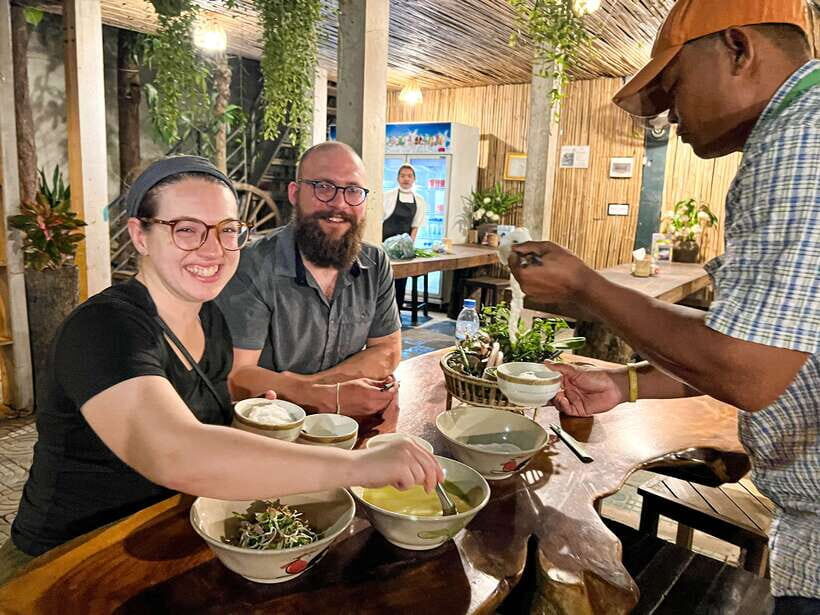
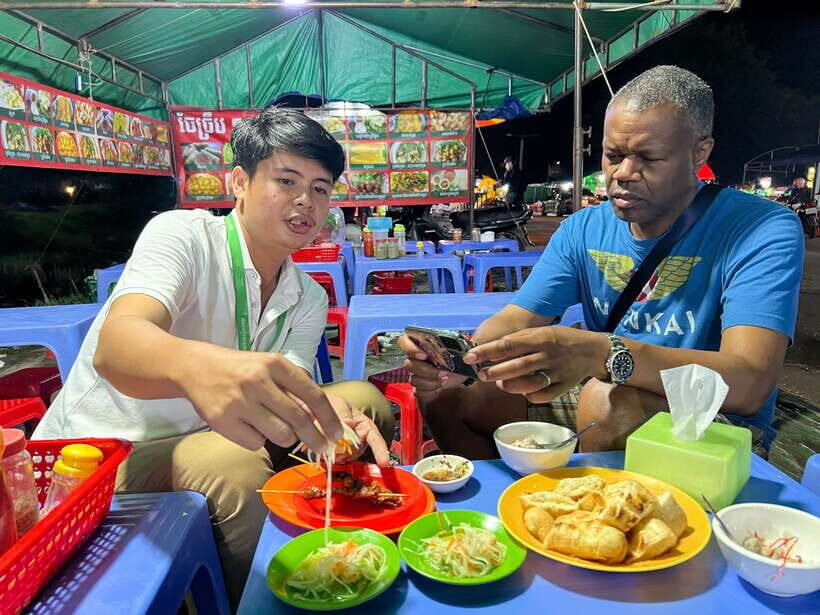
The tour info highlights classics like fresh and fried spring rolls, crispy rice pancake, and Khmer jasmine rice noodle with green curry soup. There are also sweet desserts, plus skewered meat. This is the kind of lineup that gives you a baseline first—then lets the bolder options make sense.
A few more Siem Reap tours and experiences worth a look
The guide makes the difference: food + story + technique
A good food tour is basically teaching you how to taste. Here, the guide explains dishes clearly and helps you understand combinations so you’re not just swallowing mystery samples.
In particular, the provided reviews mention English-speaking guides such as Yen, David, and Seila who talk through the food with real confidence. One review specifically said the guide encouraged participants to try the insects and explained each dish in detail. That’s the key: if you’re nervous about trying something unusual, having someone explain it first changes the whole experience.
Insects are on the menu, but your choice matters
The tour includes the kind of food you either love or hesitate at—fried cricket, fried tarantula, fried grasshopper, fried water beetle, fried frog, and more. You’ll get a chance to try them, and the guide may push you a little (the friendly kind).
If you’re adventurous, this is where the tour earns its reputation. If you’re not, treat the insects as optional. You’ll still get plenty of Cambodian favorites, and the guided explanations help you enjoy the more familiar dishes fully too.
Also note the comfort side: you’ll be provided cool water and towels during the tour. That helps because street food doesn’t pause for your thirst.
Siem Reap’s night market for local snacks, fruit, and everyday shopping
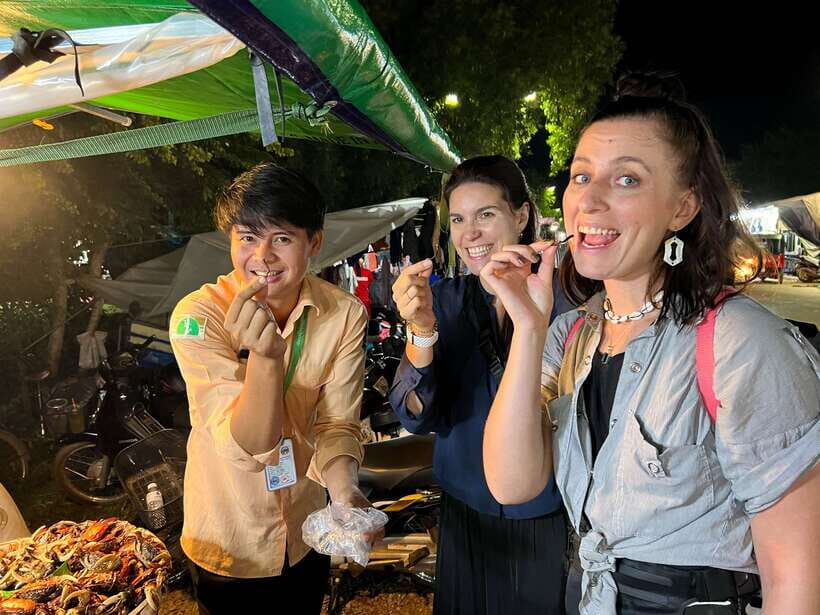
Before the tour wraps and you’re transferred back to your accommodation, you’ll stop at the most popular Siem Reap night market for local people. This isn’t only about food stalls—your time there can include fruit stores and mobile clothes stores.
That matters if you want something more grounded than “souvenir street.” Night markets in Cambodia can be noisy and busy in a way that’s part of the charm, but this stop is framed as everyday shopping and everyday snacking. You get to watch how locals move through the evening—what they buy, what they eat, and what they treat as normal.
The practical downside: night markets are crowded. If you prefer quiet sightseeing, you may feel rushed. But if you enjoy energy, this is a good send-off after the lake and the food crawl.
Price and value for $55: what’s included (and what can change your day)
At $55 per person for about 6.5 hours, the value is in the combination: transportation, a guided lake cruise experience, entry/boat costs, and a guided food evening.
Here’s what’s included:
- Hotel pick-up and drop-off in Siem Reap (driver waits no longer than 5 minutes after the scheduled time)
- Transport with A/C in a minivan/minibus
- English-speaking, fully vaccinated guide
- Entrance fee + boat ride
- Cool water and towels
- Food tour with Cambodian snacks, 1 beer, and dinner
What you don’t get:
- Personal expenses and wine
So does $55 feel fair? For Cambodia, it’s reasonable because you’re paying for more than a single activity. You’re buying:
1) the boat experience at Tonle Sap,
2) guided interpretation (especially on the food side),
3) and an evening food plan that keeps you from wandering hungry and confused.
The biggest thing that can affect your “expected day” is water level. In dry months, the village experience may look less dramatic, and logistics inside the waterways can change. That isn’t a flaw—it’s reality on Tonle Sap. Just know it’s not always guaranteed to look exactly like the glossy travel photos.
Practical tips: what to pack for sun, bugs, and fried-food momentum
The tour info is simple about what to bring, and it’s worth listening:
- Sunglasses
- Sunscreen
- Insect repellent
You’ll be outside on a lake environment and around mangrove areas, so bugs and sun are the usual enemies. Repellent is especially smart if you’re the type to stay curious and close to wildlife.
Also, the tour provides cool water and towels, which helps you power through multiple tasting stops without feeling miserable. Still, pace yourself. Even if you’re excited about trying everything, spread your tastings across stops so you don’t overload right before the night market.
Who this tour fits best (and who should skip it)
This tour suits you if you want two things in one afternoon/evening:
- Local life on Tonle Sap without rushing, using a real boat ride to Kampong Phluk
- A guided street-food evening where someone explains what you’re eating
It’s also a good match for small-group travelers—this tour limits the group to 10 participants, which usually means you get more attention from the guide and less feeling like you’re in a conveyor belt.
You might consider skipping if:
- you’re only interested in immaculate, postcard-perfect photos (dry-season conditions can be less dramatic),
- you’re strongly against trying insects (the guide may encourage it),
- or you dislike busy night market crowds.
Should you book this Siem Reap Tonle Sap and Kampong Phluk street food tour?
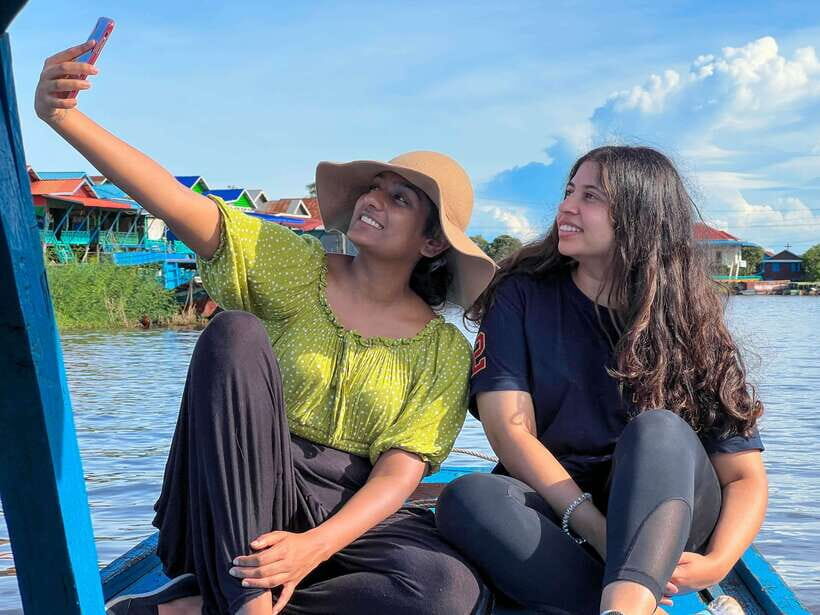
I’d book it if you want a day that blends nature, community, and food into one clear plan. The best part is the pairing: the boat ride gives you context for how people live on the water, and then the food tour gives you context for how people eat on land in Siem Reap.
I’d especially recommend it if you like guided explanations. Names like Yen, David, and Seila show up in the experience, and the consistent theme is clear: the guide talks through both the village and the dishes, so you leave understanding more than you started with.
One last deciding point: check your comfort with seasonal variability. If you’re going in the end-March to end-July window, accept that water levels can shift the route and the look of the village. If you’re okay with that trade-off, this is exactly the kind of trip that feels more real than rehearsed.
If that sounds like your style, reserve a spot and plan to bring sunscreen and courage for the food.