REVIEW · SIEM REAP
1 Day sunrise & temples Tour
Book on Viator →Operated by Angkor Guide Team · Bookable on Viator
Four-thirty starts change everything in Siem Reap. This 1-day sunrise and temples tour gets you up for Angkor Wat at dawn, then keeps the momentum through Angkor Thom and the jungle temples that people come to Cambodia for. I like the way the schedule is built around early light and efficient temple timing, and I like how the guides connect what you see to what it meant—Hindu symbols, Buddhist faces, and the stories carved into stone.
The main drawback is simple: there’s no breakfast included, and you’re moving very early (pickup is at 4:30 AM), so plan for a quick snack or a coffee stop before you hit the temples.
In This Review
- Key highlights I’d budget time for
- Angkor Wat sunrise at 4:30 AM: why this schedule matters
- Angkor Wat sunrise: best viewing angles and what to notice on the walk
- Angkor Thom city stops: South Gate, terraces, and the Bayon setup
- Bayon temple faces: the Buddhist center of the Angkor story
- Ta Nei and Ta Prohm: jungle temples that feel like a movie set
- Banteay Kdei: the quieter finish after the jungle drama
- Price and value for a private up-to-9 group in Siem Reap
- Transport, tickets, and what to pack for heat and walking
- Who this Angkor sunrise + temples tour is for
- Should you book? My honest recommendation
- FAQ
- What time do you get picked up for Angkor Wat sunrise?
- How long is the sunrise and temples tour?
- Which temples and stops are included?
- Is Bayon included on this tour?
- Can you add additional temples from the Small Tour?
- Does the tour offer hotel pickup?
- What’s included in the price?
- What’s not included?
- Is this a private tour, and what group size is allowed?
- What happens if the weather is bad or I need to cancel?
Key highlights I’d budget time for
- 4:30 AM pickup for sunrise at Angkor Wat, so you’re not scrambling when the sky turns
- Licensed, English-speaking guides (official and recognized by the Ministry of Tourism)
- Angkor Thom circuit + Bayon on the same loop for one smooth storyline
- Ta Nei and Ta Prohm jungle temples, including the famous giant-tree atmosphere
- Private transportation for your group (up to 9) plus cold water and cold towels
Angkor Wat sunrise at 4:30 AM: why this schedule matters
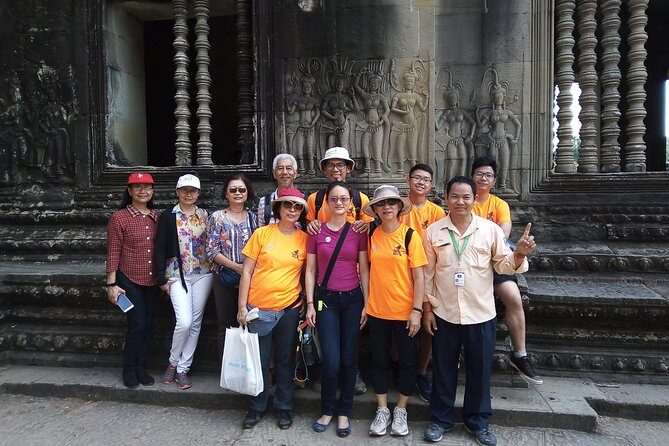
Siem Reap mornings have a different rhythm. This tour’s big strength is that you’re out at 4:30 AM, before the heat and before most of the day turns into a slow shuffle. The guide and driver pick you up from your hotel/guesthouse (or an agreed meeting place), then you go for your ticket and start walking while the light is still doing something special.
I also like that the tour isn’t just sunrise and then goodbye. The itinerary stacks temples in a logical order after you’ve seen the first glow at Angkor Wat. That matters because Angkor sites can be tiring just by walking between areas—being methodical saves your energy for the moments you came for.
One more thing: this is a private experience, “only your group will participate.” That’s helpful if your group includes kids, if you want more photo time, or if you hate being stuck behind strangers while you’re trying to line up shots.
A few more Siem Reap tours and experiences worth a look

Angkor Wat sunrise: best viewing angles and what to notice on the walk
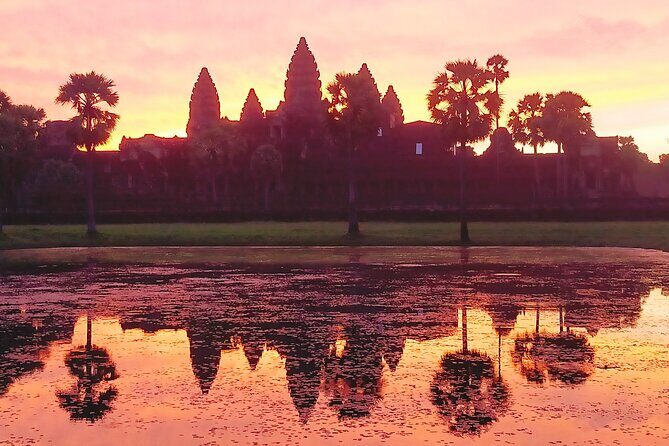
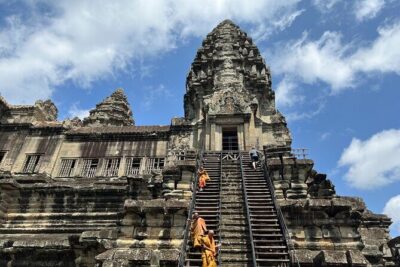
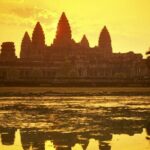
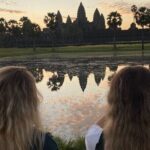
Angkor Wat at sunrise is the headline, and the tour treats it like one. You arrive specifically for the sunrise at Angkor Wat, then you continue with the monument itself—described as the biggest Hindu and Buddhism religious temple in the world and one of the world’s major wonders.
When I’m picking a sunrise tour, I care less about the promise of views and more about how you use the short window. This route is built to help you do exactly that. The guides in this team are known for finding good spots for sunrise photos, and several of the names that show up in the guides’ stories are clearly focused on the same thing: timing, angles, and understanding what you’re looking at.
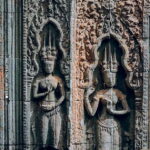
If you go in expecting only postcard moments, you’ll miss a lot. At Angkor Wat, pay attention to the stone carvings and the way the architecture guides your eye. The guides I read about—especially people like Moeun Thearith (John)—are praised for turning the carvings into understandable stories, not just random decoration. You’ll also get the connection between the Hindu and Buddhist layers that show up in the site’s symbolism.
Photo tip that’s actually practical: sunrise is when light and shadow make the reliefs pop. After the sun climbs, carvings can become harder to read, so use the early window for the detailed-looking walls, not only for the wide views.
Angkor Thom city stops: South Gate, terraces, and the Bayon setup
After sunrise, the tour shifts into the Angkor Thom story. You’ll pass through South Gate and the broader Angkor Thom area, then hit a set of points that help you understand how the city was organized—more than just isolated temples.
The itinerary lists stops including Baphuon, Phimeanakas, and the Elephant & Leper King terraces, and then it leads into Bayon. That order helps because it builds a mental map. You’re not just jumping from one “wow” photo to the next; you’re seeing how the royal/temple city functioned around these ceremonial spaces.
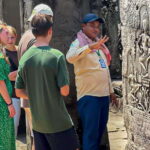
This part is also where a good guide earns their keep. Reviews associated with this team highlight that guides keep explanations clear and tied to what’s physically in front of you. If you like learning how symbols connect across Hindu and Buddhist traditions, this segment is a strong fit.
Possible consideration: if your group prefers only the most famous facades and hates walking between multiple small points, Angkor Thom can feel like a lot. Still, it’s worth it if you want the temple city to feel like a place, not a checklist.
Bayon temple faces: the Buddhist center of the Angkor story
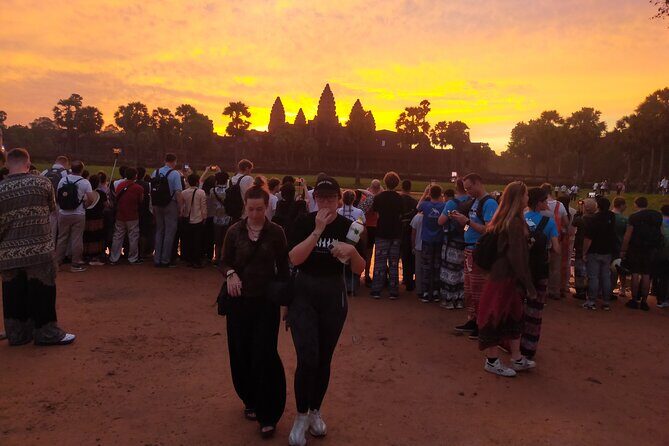
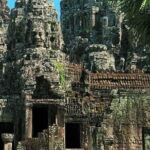
Bayon is the one the itinerary calls out clearly: it’s described as the only one of its kind for the Buddha, and it’s placed right after your Angkor Thom stops. This is a key moment because Bayon’s stone faces make the site feel personal and watchful, like the temple is looking back at you.
What I like about having Bayon on this tour is the contrast. You’ve just seen Angkor Wat’s huge religious complex at dawn, and then you move into Bayon’s distinct Buddhist identity. Even if you don’t know the theological details, the site’s different mood comes through fast once you’re standing in front of those faces.
Guides in this team are also praised for explaining cultural context in an easy, question-friendly way. Some guests mention their guides staying playful and funny while still giving meaningful facts. That combination is great for Bayon, because it’s easy to get “templed out” if explanations are dry—or easy to wander without really noticing what you’re looking at.
Ta Nei and Ta Prohm: jungle temples that feel like a movie set
This is where the tour gets cinematic.
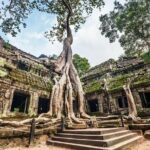
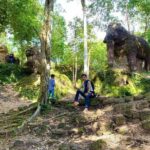
First comes Ta Nei, described as a jungle temple. Then the day moves into Ta Prohm, the jungle temple known for huge trees growing around the structure and famously associated with the Tomb Raider film.
Here’s why this segment is so valuable: these temples aren’t just “old stone.” The jungle setting changes the way you experience the ruins. You see how nature and architecture collide, and you get those dramatic frames with roots, branches, and beams that feel impossible until you’re there.
Several guide names show up in the praise for photo help. Moeun Thearith (John) is repeatedly mentioned for being especially good at sunrise angles and photography. Other guides like Saroeun and Davy are praised for answering questions clearly and keeping explanations grounded in what people saw and how society lived around these monuments.
That matters because Ta Prohm can be visually overwhelming. If you don’t have context, you might only notice the “big trees” and miss the carvings and layout. A guide who knows where to stand and what to point out helps you slow down at the right moments.
Practical reality check: these stops are outdoors and in uneven stone areas. Wear shoes you actually trust for walking on old surfaces, and keep your expectations flexible. The best photos often mean taking a few extra seconds to find safe footing.
A few more Siem Reap tours and experiences worth a look


Banteay Kdei: the quieter finish after the jungle drama
After the high-impact jungle temples, the itinerary ends with Banteay Kdei. This stop works as a palate cleanser. You still get more Angkor stonework to interpret, but the energy shifts from giant-tree spectacle to a more grounded temple experience.
I like finishing here because it’s a natural “wrap” for the day. You’ve seen the dawn, the city, the Buddhist center, and the jungle atmosphere. By the time you reach Banteay Kdei, you’re usually ready to focus on details again—smaller carvings, different angles, and the sense of how the complex fits together.
If your group wants maximum photos, you’ll get plenty of material at every stop. But if you’re tired, Banteay Kdei is the kind of temple you can enjoy without needing to chase every dramatic viewpoint.
Price and value for a private up-to-9 group in Siem Reap
The price is listed as $120.44 per group (up to 9), with pickup included. That phrasing matters. Instead of pricing per person like some tours do, you’re paying per group for private transportation and a guide.
For value, I focus on three things:
- Early timing at 4:30 AM (real commitment, not a late “sunrise-ish” start)
- A licensed, English-speaking guide who helps you understand what you see
- Private transport plus comfort extras like cool water and cold towels
Food isn’t included—so if you assume you’ll get breakfast and lunch, you’ll be surprised. But the guides do seem willing to help with meal logistics during the day. In one account, the guide brought the group to a comfortable restaurant for lunch. Still, because meals aren’t included, it’s smart to plan a budget for coffee, breakfast, and lunch/snacks yourself.
Is $120.44 cheap? For a private tour that covers major temples across Angkor Wat, Angkor Thom, Bayon, Ta Nei, Ta Prohm, and Banteay Kdei, it’s positioned as reasonable—especially when split across up to nine people. If you’re solo, it can still be worth it if you value the guide time and don’t want to join a larger group.
Transport, tickets, and what to pack for heat and walking
This is a full early-to-midday-style day, listed as 6 to 9 hours (approx.) and also described as about 8 hours. Expect a schedule that moves. That’s not bad; it’s efficient. It just means you should prepare like you’re doing a mini trek, not a relaxed stroll.
What’s provided:
- private transportation
- an English-speaking licensed guide
- a driver
- cool water and cold towels
What’s not provided:
- coffee/tea
- breakfast
- lunch
- dinner
- snacks
So what should you pack?
- Water (even with the included water, you’ll often appreciate extra)
- Sun protection (hat/sunscreen)
- A small snack for the early hours (since breakfast isn’t included)
- Comfortable shoes for uneven stone
- A light layer for early mornings
One more logistics note: the meeting/ticket redemption info shown includes an address in Baden, Austria, which doesn’t match Siem Reap. Don’t let that spook you—but do double-check your confirmation message for the correct pickup details in Cambodia. The itinerary itself clearly says you’ll be picked up from your hotel/guesthouse around 4:30 AM, which is what you should rely on.
Who this Angkor sunrise + temples tour is for
This tour is a great fit if:
- you want the Angkor Wat sunrise without guessing your timing
- you like guides who can explain Hindu and Buddhist symbolism while you walk
- you want the “big hits” plus the jungle temples in one day: Bayon, Ta Nei, Ta Prohm, and Banteay Kdei
- you’re traveling as a family or small group (up to 9) and want private transportation
It may be less ideal if:
- you hate very early starts and don’t want to manage meals on your own
- you only want one or two temples and dislike a packed route
Should you book? My honest recommendation
If you’re coming to Siem Reap for the famous temples and you want a guide who can turn stone and symbolism into something you actually understand, this is an easy “yes.” The combination of 4:30 AM sunrise, a structured Angkor Thom + Bayon arc, and the Ta Nei/Ta Prohm jungle contrast is exactly the kind of day that makes Angkor feel real instead of just photographed.
Book it if you’re the type who enjoys learning while walking, and you’ll appreciate practical help for sunrise photo spots. I’d also recommend it if your group includes kids or mixed ages, because private transport and guided pacing can reduce stress.
Skip it only if you’re relying on the tour to handle your meals from start to finish. Since breakfast and lunch aren’t included, you’ll need to plan ahead—and that early start is non-negotiable.
FAQ
What time do you get picked up for Angkor Wat sunrise?
The tour description says pickup happens at 4:30 AM for the Angkor Wat sunrise portion.
How long is the sunrise and temples tour?
The tour is listed as 6 to 9 hours (approx.), and one itinerary section describes it as around 8 hours.
Which temples and stops are included?
The itinerary lists Angkor Wat, Angkor Thom City (including South Gate, Baphuon, Phimeanakas, Elephant & Leper King terraces), Bayon, Ta Nei, Ta Prohm, and Banteay Kdei.
Is Bayon included on this tour?
Yes. Bayon is included as part of the Angkor Thom area in the itinerary.
Can you add additional temples from the Small Tour?
Yes. The description says you can visit all the temples in the Small Tour for free of charge if you tell the guide and driver.
Does the tour offer hotel pickup?
Yes. The itinerary states the guide and driver will pick you up from your hotel, guesthouse, or an appointment place.
What’s included in the price?
Included items listed are private transportation, a licensed English-speaking tour guide, an experienced driver, and free cool water and cold towels during the tour.
What’s not included?
The tour does not include coffee and/or tea, breakfast, lunch, dinner, or snacks.
Is this a private tour, and what group size is allowed?
It’s described as private, meaning only your group participates. The price is per group up to 9 people.
What happens if the weather is bad or I need to cancel?
The experience requires good weather. If it’s canceled due to poor weather, you’re offered a different date or a full refund. Free cancellation is available up to 24 hours in advance for a full refund.