REVIEW · SIEM REAP
1-Day Amazing Angkor Wat Tour with Sunset & All Interesting Major Temples
Book on Viator →Operated by Happy Angkor Tour · Bookable on Viator
One day can feel like a vanished empire. This private Angkor Wat day tour strings together the big icons and several major stops inside the Angkor World Heritage Site, with hotel pickup, AC rides, and a guide who helps you read what you’re seeing.
I love the heat-smart comfort details: bottled water plus cool wet towels between temple walks, which matters a lot in Siem Reap humidity. I also like that your guide turns ruins into something you can understand, from layout to carvings, instead of you just doing a rush-and-guess circuit.
The main drawback to plan for is stamina and budget: you pay the Angkor + All Temples pass separately, and it’s still a long 8 to 9 hours full of walking.
In This Review
- Key takeaways before you go
- Why a private one-day Angkor route beats DIY
- Price and value: what $67.50 really buys you
- Morning start at 8:00 AM and the ticket plan
- Angkor Wat at first: the guide makes the difference
- Ta Prohm: trees, roots, and movie-level atmosphere
- Ta Nei for a quieter palette cleanser
- Angkor Thom: Victory Gate, Bayon’s 196 faces, and Baphuon
- Bayon Temple
- Baphuon and the Royal Enclosure Wall
- Phimeanakas: the pyramid inside the royal center
- Terraces of the Elephants and the Leper King: where details reward you
- Preah Palilay: a quiet Buddhis temple break
- Phnom Bakheng at sunset: the climb, the rules, and your best approach
- AC transport, cool towels, and photo-friendly guidance
- Who this tour suits best
- The verdict: should you book this one-day Angkor circuit?
- FAQ
- What’s included in the $67.50 tour price?
- Do I need to pay for temple admissions separately?
- What about lunch—does the tour include meals?
- What time does the tour start?
- How long is the day trip?
- Is this tour private?
- Which major temples are part of the route?
- What’s the cancellation policy?
Key takeaways before you go
- 8:00 AM hotel pickup keeps you from losing time before temples even start.
- Cool water and cool wet towels help you keep going in the heat.
- Licensed English-speaking guide turns sculpture and symbols into something you can follow.
- Major temples plus key extras: Ta Nei, Bayon’s faces, and the terraces in Angkor Thom.
- Phnom Bakheng sunset with crowd reality: peak access is limited, so timing can shift.
- Private group format means you’re not stuck with the pace of other people.
Why a private one-day Angkor route beats DIY
Angkor is one of those places where doing it “your way” can work—until heat, crowds, and transport eat your day. If you’re relying on taxis or tuk-tuks, you’ll spend more time syncing schedules than actually seeing temples. And once you get to the complex, the flow of people can make you feel like you’re only photographing shoulders.
This private format is built for one thing: getting you from the temples that most people come for to the ones that most people miss, without wasting your limited daylight on logistics. You get hotel pickup and drop-off, plus an air-conditioned vehicle that becomes your reset button after each stop. That’s not just comfort; it changes how much you can actually enjoy. When you’re not wiped out from transit, you can slow down to look at details instead of rushing past them.
And the “major temples + more” idea matters. Angkor Wat alone is a day for many visitors. But a one-day itinerary only works if it also gives you meaningful variety—different styles, different eras, and different ways the Khmer kings wanted the world to remember them.
You can also read our reviews of more evening experiences in Siem Reap

Price and value: what $67.50 really buys you
The tour price is $67.50 per person, but Angkor admission is separate. You’ll add $37.00 per person for the Angkor + All Temples pass. Lunch is extra—often around $5.00 per person depending on the menu.
So your realistic baseline is about $104.50 per person, plus what you choose to eat. For many people, that’s still good value because the included price covers the parts that usually cost time (and sometimes money) when you DIY: hotel pickup/drop-off, an AC vehicle with driver, and a licensed English-speaking guide who can explain what you’re looking at.
You’re also not paying for “transport-only sightseeing.” The schedule is temple-focused, and the stops are arranged so you see more than just Angkor Wat and a quick stop or two. In other words: you’re paying to protect your one day from turning into a sweaty commute.
Morning start at 8:00 AM and the ticket plan
Your day begins with pickup from your hotel or guest house—around 8:00 AM, where the guide meets you in the lobby. From there, you head toward the ticket area to handle the pass before temple time really begins, then you move into the circuit.
That structure helps in two ways. First, it reduces your stress. You’re not trying to figure out lines and timing while everyone else is scrambling. Second, it makes the schedule more workable for a full 8 to 9 hours. With Angkor, a slow start can shrink your best light and your best moments.
You’ll also feel the “heat management” approach right away: bottled water and cool wet towels are part of the tour’s rhythm, not an afterthought. That turns the day from exhausting to doable.
Angkor Wat at first: the guide makes the difference
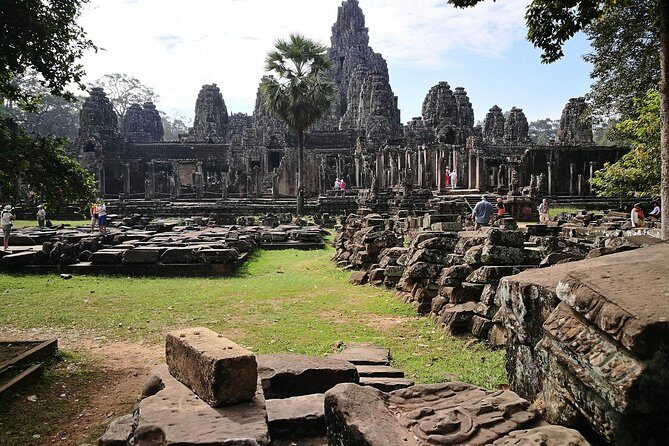
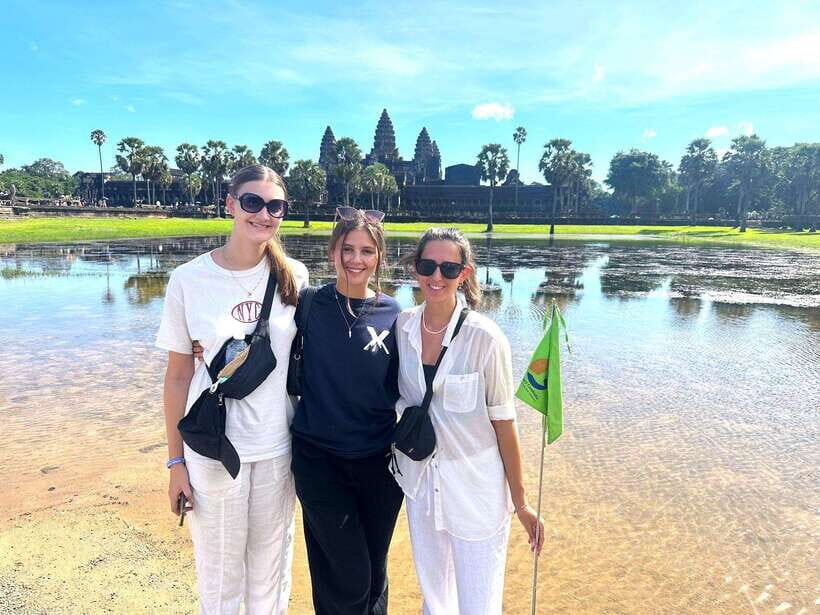
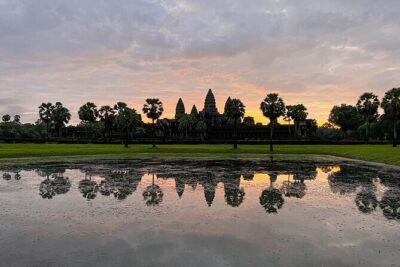
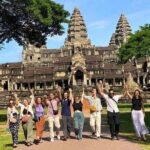
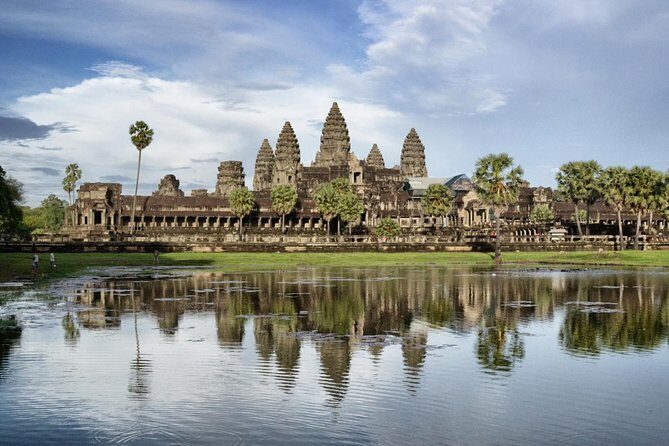
Angkor Wat is the anchor stop, and it gets about two hours on the schedule. If you’ve only seen Angkor Wat from photos, this first visit can be a reality check—in the best way. The scale is bigger than you expect, and the layout makes more sense when you understand how the Khmer designers guided your walk.
This is where the guide earns their keep. Instead of just reading plaques, you get explanations tied to the art and architecture—what different elements are meant to show, and how the temple’s design connects to its religious purpose. Guides on this route have also been praised for taking strong photos of guests and helping with group shots, so you’re not stuck asking strangers or setting up awkward self-timers.
Practical takeaway: give yourself a little patience. Angkor Wat rewards a slow look. If you try to sprint through it, you’ll miss the carvings that are the whole reason to be here.
Ta Prohm: trees, roots, and movie-level atmosphere
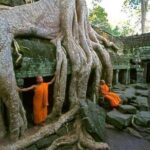
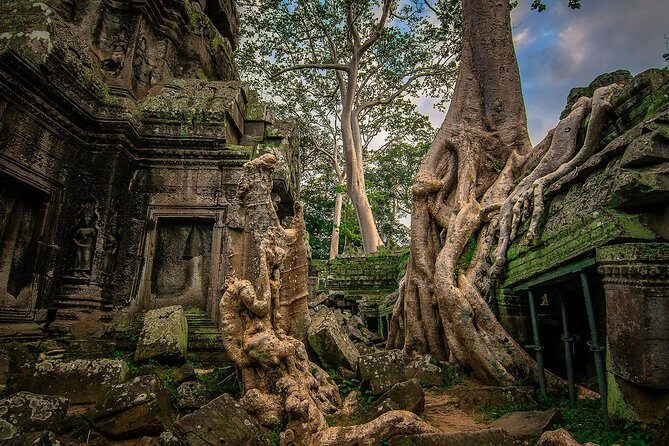
Next comes Ta Prohm, also allotted around two hours. This is the temple most people recognize instantly—big tree roots wrapping through stone. It’s dramatic in a way that’s hard to fake with a screen, and it’s one of the best stops for photos because the “layers” are constant: stone, roots, shadows, and sky all at once.
The benefit of having a guide here is context. You’re not just seeing ruins that look cinematic; you’re learning how the temple’s history connects to what you’re seeing today—without turning it into a lecture.
One pacing note: Ta Prohm can feel crowded because it’s a “star” stop. The private format won’t remove crowds completely, but it helps you avoid the worst dead time. You’re also coming from Angkor Wat, so take a moment to reset before you step into Ta Prohm’s more chaotic visual field.
A few more Siem Reap tours and experiences worth a look


Ta Nei for a quieter palette cleanser
After the big drama, Ta Nei gives you a smaller, calmer pause—about 15 minutes. This temple is described as quieter, with less restoration and big trees around it.
What I like about this stop is the break in tone. The day’s rhythm shifts from “tourist magnet” to “still beautiful but slower.” If you tend to burn out at landmark after landmark, Ta Nei can help you recharge your eyes.
Just be honest with your expectations: it’s short. If you want longer time here, this is the kind of place where a private setting can make a difference—ask for a little extra time if the day still feels strong.
Angkor Thom: Victory Gate, Bayon’s 196 faces, and Baphuon
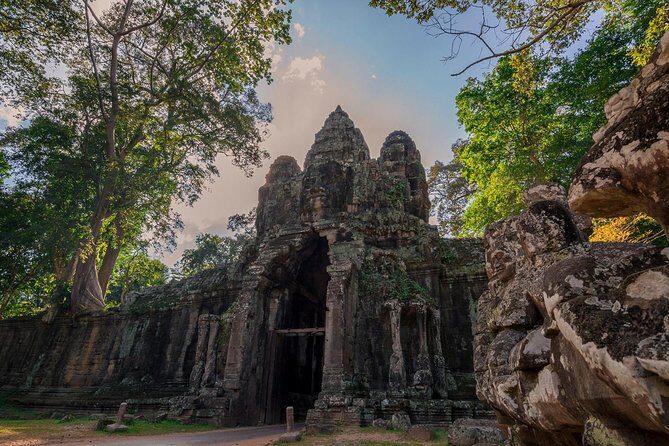
Angkor Thom is where the day grows more complex—and more interesting. You start with the Victory Gate (about 10 minutes), then you move into the center of the old city.
Bayon Temple
Bayon gets about 45 minutes, and it’s the centerpiece: 49 towers, each with four faces, for a total of 196 faces. Even if you’re not a symbolism expert, it’s the kind of design that grabs you instantly. You’ll look up. Then you’ll look again, because the faces feel like they’re following you depending on where you stand.
A guide’s job here is to help you connect what you’re seeing to what the carvings and religious references mean—so Bayon isn’t just “cool architecture,” but a story you can actually follow.
Baphuon and the Royal Enclosure Wall
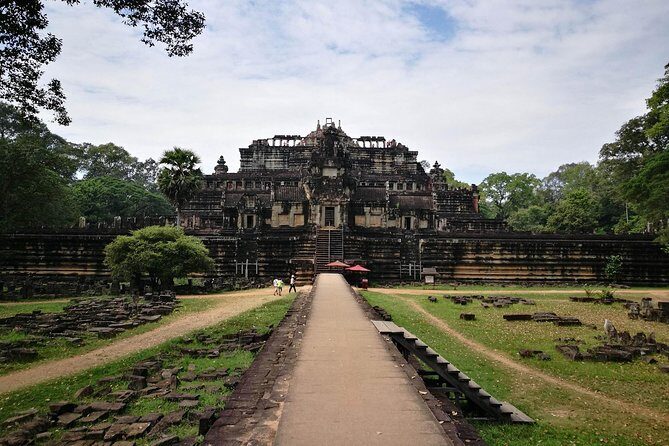
Then you head to Baphuon (about 1 hour). This Hindu temple dates to the 11th century. The reclining Buddha behind it is from the 16th century—so it’s a temple where time layers are visible.
You’ll also continue to the Royal Enclosure Wall. This matters because it’s easy to treat Angkor Thom like a list of individual buildings. The wall and surrounding areas help show the “city” feeling—this wasn’t a single monument; it was a whole royal setting.
Phimeanakas: the pyramid inside the royal center
Phimeanakas is a quick stop at about 15 minutes, but it’s a meaningful one. It’s a pyramid Hindu temple built in the 10th century, located in the center of the old royal palace area of Angkor Thom.
What makes it worth the stop is how it shifts your attention back to the grand, planned layout of Angkor Thom. You’re not just chasing the most famous carvings; you’re seeing how power was staged in stone—literally in the temple form and placement.
If you’re short on time, this is the type of stop where a guide can give you a lot with a little. Even 15 minutes can feel “full” when you know what you’re looking at.
Terraces of the Elephants and the Leper King: where details reward you
Angkor Thom also gives you two terrace stops that many people rush through because they’re not as famous as Bayon or Angkor Wat.
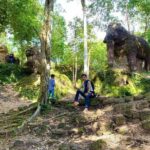
You visit the Terrace of the Elephants (about 30 minutes) and then the Terrace of the Leper King (about 10 minutes). The tour keeps these within the broader Angkor Thom complex, so you’re still moving with the story of the city rather than hopping far away.
These terraces are ideal for close watching. If you slow down, you’ll start to see the carvings as scenes, not just decorative texture. The time here is long enough to notice patterns, and short enough that you don’t feel trapped in one spot while the heat builds.
Preah Palilay: a quiet Buddhis temple break
Behind the Royal Palace inside Angkor Thom is Preah Palilay, a quieter Buddhist temple stop of about 15 minutes. This is a good palate cleanser late in the day when you may feel museum fatigue.
Even a short visit can help you balance the earlier Hindu-focused temple moments with a calmer Buddhist presence. And since it’s described as quiet, it’s a nice break from the main flow.
Phnom Bakheng at sunset: the climb, the rules, and your best approach
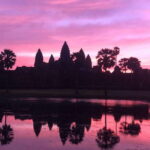
Your last stop is Phnom Bakheng, built for the big payoff: sunset views. The schedule gives about two hours, and it includes climbing the hill.
Here’s the key reality: access to the peak is limited. If it’s busy, the tour will adjust and take you to another close viewpoint (the itinerary notes a backup plan, though the exact wording is cut off). That means your “sunset plan” is strong, but it’s not guaranteed in the exact same way as a viewpoint with unlimited access.
My advice is simple: treat this as a shared scheduling window, not a guaranteed prime seat. The heat and the flow of people can affect how fast you reach the top and how long you can stay. If you’re flexible and ready to enjoy the view from the best accessible spot, you’ll come away happy.
AC transport, cool towels, and photo-friendly guidance
One thing shows up again and again in feedback: the comfort details. The air-conditioned vehicle helps you recover between temple walks. The driver arrives ready with cold water and cool wet towels at multiple points during the day, which makes a huge difference when you’re visiting at midday heat.
Guides also tend to help with photos in a practical way. You’ll likely get help with group photos and taking pictures with your phone—some guides are noted for being good photographers and helping guests capture memorable shots without turning the day into a stop-and-start mess.
It adds up to a bigger benefit than convenience. When you feel comfortable, you pay attention. And when you pay attention, Angkor stops feeling like a checklist and starts feeling like a real place.
Who this tour suits best
This full-day Angkor Wat and major temples route is a strong fit if:
- You have only one day in Siem Reap and want the “major hits” plus meaningful extras.
- You care about understanding the temples instead of doing a rapid walk-through.
- You don’t want the hassle of planning transport across the complex.
- You want a guide who can explain art, architecture, and religious context in a way that makes the carvings click.
It may feel less ideal if:
- You’re very sensitive to heat and prefer shorter outings.
- You want a slower day with more time in fewer temples.
- You’re hoping for sunset at the exact peak viewpoint no matter what crowd rules say.
The verdict: should you book this one-day Angkor circuit?
If you’re weighing a DIY day against guided time, I’d lean toward booking this type of tour—especially if your goal is to hit Angkor Wat, then still see Ta Prohm and Angkor Thom without turning the trip into a logistics grind.
You’ll pay extra for the Angkor + All Temples pass, and you’ll do a lot of walking in warm weather. But in exchange, you get a guided structure, AC comfort, and a schedule that covers more than the obvious two or three sites. Add in the repeated praise for guides like Jimmy, Vanna, Chandra, Thean, and Lonn Thou, plus drivers who keep cold water and towels ready, and you have a day that feels built for real human energy.
If you only have a single day, this is the kind of plan that helps you see Angkor as more than a postcard.
FAQ
What’s included in the $67.50 tour price?
The tour price includes an English-speaking licensed guide, hotel pickup and drop-off, an air-conditioned vehicle with a driver, and bottled water plus cool wet towels during the day.
Do I need to pay for temple admissions separately?
Yes. Admission is not included. The Angkor + All Temples pass is listed as $37.00 per person.
What about lunch—does the tour include meals?
Lunch is not included. The data notes that lunch costs depend on the menu, listed at around USD $5.00 per person.
What time does the tour start?
Pickup is arranged at 8:00 AM, with the guide meeting you in the lobby at your accommodation.
How long is the day trip?
The tour runs about 8 to 9 hours.
Is this tour private?
Yes. It’s listed as a private tour/activity, with only your group participating.
Which major temples are part of the route?
The day includes Angkor Wat, Ta Prohm, Ta Nei, Angkor Thom (Victory Gate and Bayon), Baphuon, Phimeanakas, Terrace of the Elephants, Terrace of the Leper King, Preah Palilay, and Phnom Bakheng for sunset.
What’s the cancellation policy?
Cancellation is free up to 24 hours in advance for a full refund. If you cancel less than 24 hours before the start time, the amount paid is not refunded.