Angkor feels quieter on this route. This Grand Circuit style day aims you at the calmer, more remote temples, then caps it with Banteay Srei, known for delicate pink-sandstone carving detail.
I like two things most. First, you’re guided in a way that actually helps you see what matters on each site, and the guide connection to Mr. K is a big part of why people feel looked after. Second, the practical comforts are real: pickup and drop-off, an air-conditioned vehicle, and cold drinking water keep the day from turning into a sweaty blur.
One drawback to plan for: the tour price is $50, but Angkor admissions are not included. You’ll need an Angkor Pass (listed at $37 per person), and that’s a key line item to factor into your total.
In This Review
- Key highlights to know before you go
- Why the Grand Circuit Works Better Than the Usual Angkor Sprint
- Your 6–8 Hour Plan: What the Route Feels Like in Real Life
- Stop 1: Preah Khan and the Sense of a Temple Built for a Purpose
- Neak Pean: The Island Temple Moment at Jayatataka Baray
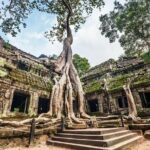
- Ta Som: The Tree-Entwined Gate You Came to See
- Eastern Mebon: Die-Shaped Towers and the Myth Behind the Layout
- Banteay Samre: A Hindu Temple Near the East Baray
- Banteay Srei: Pink Sandstone Carving and the Citadel-of-the-Women Reputation
- Getting Around from Siem Reap: Comfort Matters More Than You Think
- Price and Value: How $50 Fits with the Angkor Pass Reality
- Who Should Book This Tour—and Who Might Prefer Another Day
- Should You Book the Angkor Grand Circuit & Banteay Srei Tour?
- FAQ
- How much does the Angkor Grand Circuit & Banteay Srei tour cost?
- How long is the tour?
- Does the tour include pickup and drop-off?
- Is an English-speaking guide included?
- What’s included in the tour price?
- What is not included?
- Which temples are visited on the itinerary?
- Is this tour private or shared?
- What are the cancellation terms?
- Can I cancel if it’s less than 24 hours before the start time?
Key highlights to know before you go
- Grand Circuit pacing for fewer crowds: more time in lesser-visited parts of Angkor Park than the main temple circuits
- A tight mix of temple types: island temple, tree-wrapped gateway, and tower-based Hindu monuments in one day
- Banteay Srei’s carving focus: intricate 3D detail in pinkish sandstone, plus its smaller, more intimate scale
- Built for comfort: pickup, drop-off, and an air-conditioned vehicle with cold drinking water
- Private for your group: only your group participates, with an English-speaking tour guide
- A realistic budget setup: $50 tour price plus an Angkor Pass admission fee
Why the Grand Circuit Works Better Than the Usual Angkor Sprint
If you’ve already done the headline temples, this kind of day is a smart follow-up. The Grand Circuit idea is simple: you spend time in less-visited, more remote temples, which usually feels calmer and more relaxed than the most famous core route.
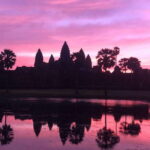
I also like that the itinerary doesn’t just repeat the same look. You get different settings and temple moods: water and causeways at Neak Pean, a dramatic tree-entwined entry at Ta Som, then the tower geometry of Eastern Mebon. Finally, you end with Banteay Srei, where the whole point is close-looking at carving and craftsmanship.
The practical payoff is less “bus-and-bag-check” stress. With a longer circuit-style route (about 6 to 8 hours), you have time to slow down without wasting the day waiting in a lineup for the next photo stop.
You can also read our reviews of more tours and experiences in Siem Reap.

Your 6–8 Hour Plan: What the Route Feels Like in Real Life
This tour is designed around a full temple day from Siem Reap with pickup and drop-off, transport by air-conditioned vehicle, and a clear stop order. It’s private in the sense that only your group participates, and you’ll be traveling as a group rather than jumping between unrelated cars.
In terms of rhythm, think of it like this:
- You start with Preah Khan (about 1 hour)
- Then you move through Neak Pean and Ta Som (about 1 hour each)
- After that, you shift to Eastern Mebon and Banteay Samre (1–2 hours each)
- You finish at Banteay Srei (about 2 hours), where time can feel both short and worth it
A small timing note: Banteay Srei is near Phnom Dei hill, about 25 km northeast of the main group. That distance usually adds travel time, which is part of why this isn’t a quick half-day. The upside is you get that out-of-the-way feel.
Stop 1: Preah Khan and the Sense of a Temple Built for a Purpose
Preah Khan is a 12th-century Angkor temple built for King Jayavarman VII to honor his father. It sits northeast of Angkor Thom and just west of the Jayatataka baray.
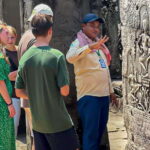
What I like about opening the route here is that it gives you a strong “big-circuit” start without jumping immediately into the most crowded icons. The guide context matters on a site like this, because the history (a temple made to honor a person) helps you read the layout with more meaning than just stone walls and doorways.
The drawback? Preah Khan is listed as having admission ticket not included on the stop list. In plain terms: have your pass ready so you don’t lose time at the entrance.
Neak Pean: The Island Temple Moment at Jayatataka Baray
Neak Pean is one of those stops that changes your mood fast. It’s an artificial island with a Buddhist temple on a circular island in the Jayatataka Baray, and it’s associated with Preah Khan from the reign of Jayavarman VII.
This stop is especially valuable because it isn’t just “another temple.” It’s a water-and-island setting, so you tend to get a quieter, more reflective feel. You’re also more likely to notice the site’s design logic: the temple and the island are meant to create a specific kind of scene.
It’s listed as free in the stop details, so it can be a nice break from the more ticket-heavy moments—though you still need your Angkor Pass overall, since the tour doesn’t include admissions.
Tip for your visit: take a minute before you enter anything to look at how the circular setting sits in the water. This is the kind of place where your first glance helps your later observations click.
Ta Som: The Tree-Entwined Gate You Came to See
Ta Som is a small end-of-12th-century temple built for King Jayavarman VII, located northeast of Angkor Thom, just east of Neak Pean.
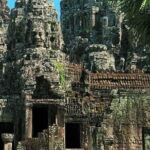
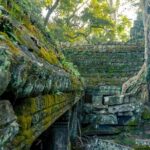
Here’s why this stop matters: it’s famous for its striking tree-entwined gate. Even if you’ve seen photos before, the gate’s “tree versus stone” tension is one of those things that hits harder in person. It feels like the temple is half-remembered by nature, and you start noticing the way different angles reveal different amounts of growth.
It’s listed as free in the stop details, which is a small win. The bigger win is pacing: because Ta Som sits near Neak Pean, you get variety without lots of long jumps.
Possible consideration: depending on daylight and heat, that gate area can feel bright and busy for photography. If you want calmer looking, go slowly, take one wide establishing photo, then step aside and really look at the gate detail.
Eastern Mebon: Die-Shaped Towers and the Myth Behind the Layout
Eastern Mebon gives you a different kind of temple experience. It’s known for five towers arranged like the numbers on a die, sitting on a base with three tiers. The whole thing is surrounded by three enclosures.
One of the most helpful ways to appreciate this site is to understand that those five towers are meant to represent peaks of a mythical mountain. That idea changes the experience from “stand in front of a monument” to “read a symbolic layout.”
It’s listed as free in the stop details, and you have about 1 hour here. That’s plenty if you move at a steady pace and don’t get stuck in one angle. If you do get stuck, you’ll start feeling like you’re waiting for the “perfect” shot instead of learning the site.
So I’d suggest: choose two viewing angles, one for the overall geometry and one for closer detail, then move on.
Banteay Samre: A Hindu Temple Near the East Baray
Banteay Samre is a Hindu temple located 400 meters east of the East Baray. It was built during the reigns of Suryavarman II and Yasovarman II in the early 12th century.
This stop is a good contrast to Ta Som. Instead of the drama of nature overtaking the entrance, Banteay Samre’s value is more about the temple form and its placement near the baray (water reservoir). You’ll often feel a “temple and landscape” relationship here: it’s not only the carvings or the gateway, it’s the whole arrangement.
It’s listed for about 2 hours, and the stop details mark it as free. That longer time window matters. Sites like this reward a slower look because you can keep walking and notice changes in how the enclosures and tower structure read from different points.
Banteay Srei: Pink Sandstone Carving and the Citadel-of-the-Women Reputation
Banteay Srei is the headline finish for many people, and it’s easy to see why once you know what you’re looking for. It’s a 10th-century temple dedicated to Shiva, located near Phnom Dei hill, about 25 km northeast of the main group.
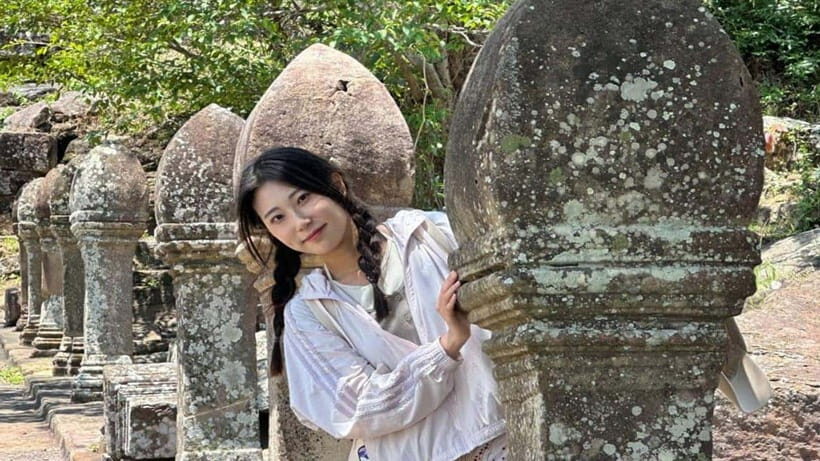
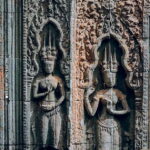
What makes it special isn’t just that it’s old. It’s the quality of the work: the temple is famous for highly intricate, 3D carvings in a soft pinkish sandstone. It’s also relatively miniature compared to other Angkor temples, which means the experience can feel more intimate and more about detail than scale.
A big historical note adds meaning to your visit: Banteay Srei was not commissioned by a king, but by a Brahman courtier. And people often call it the jewel of Khmer art or the Citadel of the Women, due to the delicate craftsmanship.
In a day full of different temple types, this final stop gives you the best reason to pause. You’re not just walking through; you’re studying carvings for longer than you’d expect.
Practical consideration: since it’s detail-heavy, it can be harder to rush. If you’re the type who likes one quick look and a photo, you may feel tempted to speed up. That’s when you miss the whole point. Plan to slow down here and let your eyes adjust.
Getting Around from Siem Reap: Comfort Matters More Than You Think
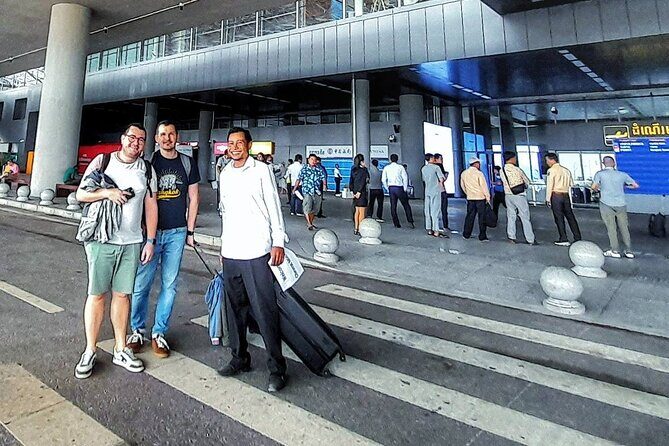
This tour includes pickup and drop-off, plus an air-conditioned vehicle and cold drinking water. That’s not just nice-to-have in Cambodia heat; it affects how much energy you have for each temple.
I also like the “private for your group” setup. You’re not stuck coordinating with strangers who are taking ten-minute breaks or who want to sprint ahead for photos. Your guide can keep the flow logical.
One more small detail: the tour uses a mobile ticket. That can save time and reduce the chances of fumbling paperwork at the start, especially if you’re using phone maps and guides and just want the day to move.
If you’re sensitive to heat or you want to reduce stress on a long temple day, those practical points add up fast.
Price and Value: How $50 Fits with the Angkor Pass Reality
The tour price is $50 per person, and the listed duration is about 6 to 8 hours. That’s positioned as good value because you’re getting:
- An English-speaking tour guide
- Pickup and drop-off
- An air-conditioned vehicle
- Cold drinking water
- A full circuit-style route across several temple sites
- A private setup where only your group participates
The big “yes, but” is admissions. The tour does not include the Angkor admission fee, and the Angkor Pass is listed at $37 per person. So a realistic starting budget is $50 + $37, before any extra you might choose to buy on-site.
What I consider good value here is that Banteay Srei is included as a dedicated, longer finish. If a tour cuts that time short, the “why come here” factor disappears. This one keeps Banteay Srei at about 2 hours, which is exactly what you need for an attention-to-detail temple.
Who Should Book This Tour—and Who Might Prefer Another Day
This itinerary is a strong match if:
- You’ve already seen the main temple icons and want a calmer, more remote-feeling day
- You enjoy variety: water setting, tree-entwined entrances, tower geometry, and carving detail
- You want English guidance that helps you read sites instead of just visiting them as stops
It might not be ideal if:
- You only want a quick hit at Angkor and don’t have the time for a full 6–8 hour circuit
- You’d rather spend your budget on one giant flagship temple and skip the extra pass planning that comes with multiple stops
- You hate detail-focused visits (Banteay Srei rewards slow looking)
Should You Book the Angkor Grand Circuit & Banteay Srei Tour?
Yes, if your priority is temples with less crowd pressure and more “look closer” moments. The Grand Circuit concept sets you up for a quieter day, and Banteay Srei is the kind of temple that rewards your attention.
I’d book this version when you’re:
- Comfortable budgeting for the Angkor Pass since admissions are not included
- Interested in a guided day that connects sites into a coherent route
- In Siem Reap with at least a half-day’s worth of patience for travel between temple zones
If you want, tell me what you’ve already visited at Angkor (and what time of day you’d like to start). I can help you decide if this fits your pace or if a more focused plan would suit you better.
FAQ
How much does the Angkor Grand Circuit & Banteay Srei tour cost?
The price is listed as $50.00 per person.
How long is the tour?
It runs about 6 to 8 hours.
Does the tour include pickup and drop-off?
Yes. Pickup and drop-off are included.
Is an English-speaking guide included?
Yes. The tour includes an English speaking tour guide.
What’s included in the tour price?
Included items are the English speaking tour guide, pickup & drop-off, an air-conditioned vehicle, and cold drinking water.
What is not included?
Admission fees are not included, and the Angkor Pass is listed at $37.00 per person.
Which temples are visited on the itinerary?
The stops listed are Preah Khan, Neak Pean, Ta Som, Eastern Mebon, Banteay Samre, and Banteay Srei.
Is this tour private or shared?
It’s private in the sense that only your group will participate.
What are the cancellation terms?
Free cancellation is available. You can cancel up to 24 hours in advance for a full refund.
Can I cancel if it’s less than 24 hours before the start time?
No. If you cancel less than 24 hours before the experience’s start time, the amount you paid will not be refunded.