REVIEW · SIEM REAP
Angkor Wat & Banteay Srey Tour
Book on Viator →Operated by Easy Angkor Trip · Bookable on Viator
Five temples, one organized day in Siem Reap. This Angkor Wat and Banteay Srei tour is built for an easy run between sites, with hotel pickup, A/C transport, and cool towels and drinking water along the way. You get a friendly speaking guide to connect the carvings to the Khmer story, from Angkor Wat all the way to the pink-stone Lady Temple.
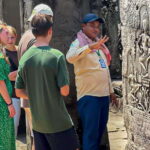
What I like most is the guide power. I especially enjoy how guides such as Oun Kosorl (and sometimes Sinann when needed) explain what you are seeing in plain language, and even help with photo moments. The vibe stays relaxed, and when something unexpected happens, the day still runs smoothly.
One drawback to plan for: entrance fees are not included, and Angkor Wat requires the ticket/temples pass on the day. Add to that a long 7 to 10 hour schedule, plus walking and climbing on uneven stone, and you’ll want to bring energy and comfortable shoes.
In This Review
- Key highlights worth planning around
- How Pickup and the Temples Pass Work in Siem Reap
- Angkor Wat: Getting More Than a Quick Look in 3 Hours
- Bayon Temple and Angkor Thom: Smiling Faces and a Faster 2-Stop
- Ta Prohm: Where Spung Trees Take Over the Stone
- Banteay Srei: Pink Sandstone, Lady Temple Detail, and Sugar Palm Stops
- Banteay Samré: A Short Stop That Adds Another Temple Style
- Transport Comfort, Timing, and What to Expect for a 7 to 10 Hour Day
- Price and Value: What $50 Covers, and What You Still Pay
- Who This Tour Fits Best
- Should You Book the Angkor Wat and Banteay Srei Tour?
- FAQ
- How long is the Angkor Wat & Banteay Srey tour?
- Do you get pickup from your hotel?
- Is the tour price $50 per person all-inclusive?
- Which temple admissions are free on this tour?
- Does the tour include sunrise?
- What’s included during the day?
- Is this a private tour?
- Can I cancel and get a full refund?
- Do I need to buy tickets in advance?
Key highlights worth planning around
- Hotel lobby pickup plus A/C and water keeps the day from feeling like a nonstop heat slog
- Ticket office stop for the temples pass means you’re not stuck figuring it out on your own
- Angkor Wat’s scale and carvings (65 meters tall, moat around the complex, huge bas-relief walls)
- Bayon’s 54 towers and smiling faces tied to the provinces of the Khmer empire
- Ta Prohm’s spung trees climbing over sandstone blocks creates a different kind of temple photo
- Banteay Srei’s pink sandstone detail plus a mid-way local sugar palm stop makes the route more than just famous ruins
How Pickup and the Temples Pass Work in Siem Reap
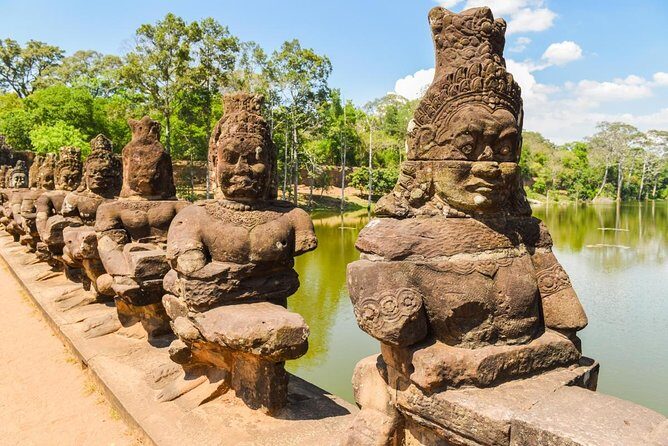
The day starts with hotel pickup at the time you selected when you booked. You meet in the hotel lobby, then your driver and guide get you moving toward the ticket office to buy your temples pass.
That stop matters more than it sounds. It removes the stress of figuring out where to go and what to buy before you step into the biggest sites. It also keeps your group from losing prime visiting time to logistics.
You’ll also get A/C transportation, plus cool towels and cool drinking water. In Siem Reap, that comfort changes the whole mood of the trip. You can focus on the temples instead of spending the day fighting fatigue.
You can also read our reviews of more tours and experiences in Siem Reap.

Angkor Wat: Getting More Than a Quick Look in 3 Hours
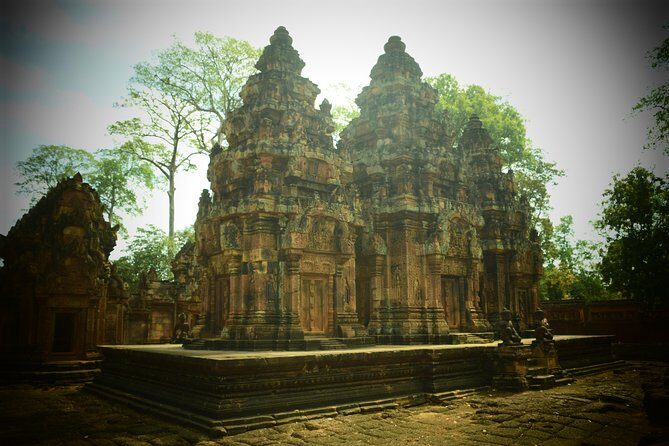
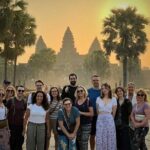
Angkor Wat is the headliner, and the tour gives it real time: about 3 hours. This is the largest and most famous Khmer temple, built in the 12th century between 1113 and 1150 during the reign of Suryavarman II. The complex sits around a large moat, often identified as Ko Tek, and the main structures rise roughly 65 meters.
Inside and outside, the walls are covered in bas-reliefs. With a guide, those carvings stop being random stone decoration and start reading like a story. You’ll also get help timing your viewing so you can see the key areas without constantly backtracking.
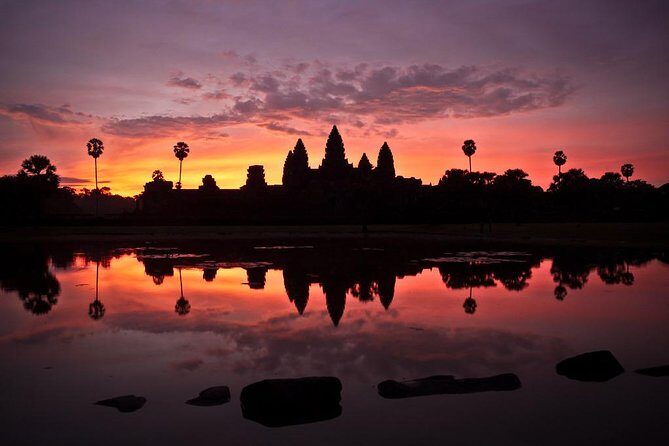
A practical consideration: Angkor Wat is the site where you’ll pay the admission ticket (the tour’s Angkor Wat stop specifically notes admission ticket not included). That means you should expect a small payment step before you start exploring the complex. If you want the iconic early-morning silhouette look, note that sunrise is not included and has an extra charge.
Bayon Temple and Angkor Thom: Smiling Faces and a Faster 2-Stop
After Angkor Wat, you move into Angkor Thom territory for Bayon Temple. This one is Buddhist in style, built in the late 12th or early 13th century by Jayavarman VII. Bayon is known for its 54 towers, which represent the 54 provinces before and during the Khmer empire, and it features over 200 carved smiling faces across those towers.
You get about 2 hours here, which feels right. It’s not only about walking through the space—it’s about pausing long enough for the faces to make sense. The repeating expressions also create a fun photo challenge. From one angle you see calm faces; from another, the carvings look almost different.
One nice detail in this tour: Bayon’s admission is listed as free. That helps your overall value, because you’re spending your paid temple budget where it matters most.
Bayon also has scars from history. It was damaged in 1811 by Cham invaders, so you can literally see how the site survived conflict and time. With a good guide, that kind of context makes the ruins feel less like a museum and more like a living timeline.
Ta Prohm: Where Spung Trees Take Over the Stone
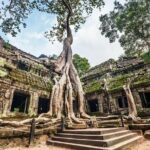
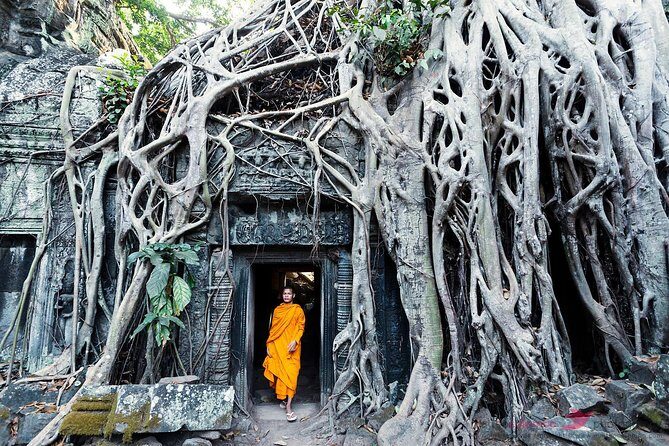
Ta Prohm is the temple that most people recognize instantly, thanks to the trees growing right into and over the sandstone blocks. The tour schedules about 2 hours here, and it fits perfectly after Bayon because the vibe shifts from stone-dominant to nature-dominant.
Ta Prohm was built in the late 12th century by Jayavarman VII and dedicated in 1186 to his mother. The site’s religious layers are part of the story too. It started with a Buddhist background, then later became Hindu, which led to changes: some Buddhist galleries were destroyed and replaced by Hindu symbols such as yoni and lingam.
The signature feature is the spung—trees that grow strongly up, on, and over the sandstone walls. This creates photos with depth: you’re capturing a temple frame plus the wild geometry of roots and branches. It also makes shade useful in hot weather, though you should still expect humidity and uneven ground.
Admission here is listed as free on this tour. That makes Ta Prohm a great use of your time, because you don’t lose budget to entry fees while still getting one of the most dramatic visual experiences in the Angkor area.
Banteay Srei: Pink Sandstone, Lady Temple Detail, and Sugar Palm Stops
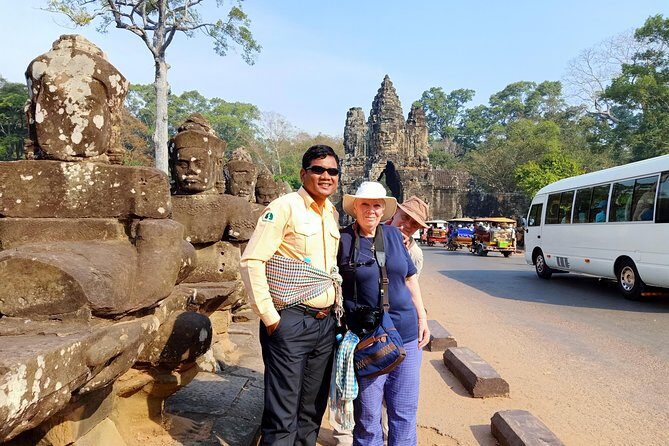
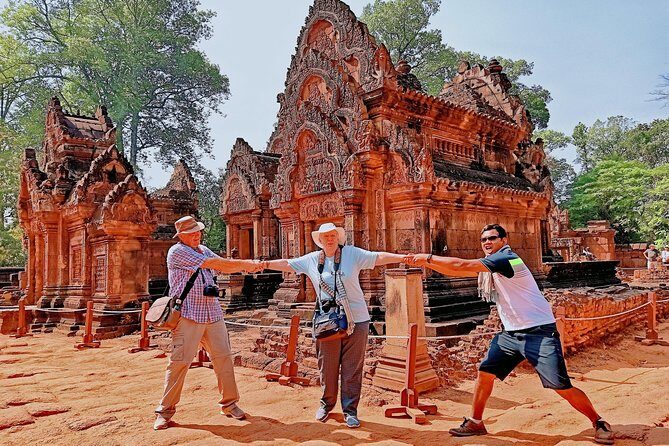
Then you go to Banteay Srei, the so-called Lady Temple. This is where the tour earns its name in a way many Angkor-only routes don’t. Banteay Srei is famous for its pink sandstone and extremely delicate carvings. It’s also specifically described as having detailed caving (carving) and is considered one of the most beautiful temples in the region.
Here, the tour gives about 2 hours. The bigger practical point: Banteay Srei is 35 kilometers away from the Grand tour site, so you’ll spend more time traveling than at the inner-city cluster. That extra drive is worth it if you like temples with intricate detail instead of only big, iconic silhouettes.
Because the carvings are so delicate, it’s also a temple where your guide’s pacing matters. Slow down, point out what to look for, and you’ll see more. Rush it, and you’ll miss the fine work.
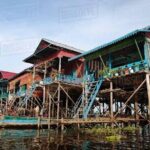
There’s also a mid-way stop option. You can stop to see locals making natural sugar products from the sugar palm. If you’ve never seen sugar palm processing up close, this is one of those small moments that makes the day feel more like Cambodia and less like a photo checklist.
Admission for Banteay Srei is listed as free. Like Ta Prohm and Bayon, it adds value by letting you spend more energy on viewing instead of entry costs.
Banteay Samré: A Short Stop That Adds Another Temple Style
Banteay Samré is shorter on the schedule—about 1 hour—but it’s a smart addition. This temple is located around 400 meters east of the East Baray. It was built during the reign of Suryavarman II and Yasovarman II in the early 12th century, and it’s a Hindu temple in the Angkor Wat style.
That “style” tag matters because it gives you a different design language than you’ve seen so far. Angkor Wat fans often like that continuity. If you’re the type who enjoys comparing how rulers expressed power through architecture, you’ll probably appreciate this stop more than you expect.
Admission for Banteay Samré is listed as free. So even though it’s a quick stop, it doesn’t cost extra entry time in the way some optional add-ons do.
Transport Comfort, Timing, and What to Expect for a 7 to 10 Hour Day
The route is a full day. Plan on 7 to 10 hours total, depending on how the schedule moves that day. A/C transportation helps, and cool towels plus cool water are included, so you can handle the long stretches between stops.
Still, temple time has its own pace. You’ll be on your feet, and some places involve climbing and navigating steps. In past experiences with guides from this company, I’ve seen them handle real physical concerns with patience—for example, helping someone who had doubts about steep temple steps due to arthritic knees. That doesn’t mean the day is effortless, but it does suggest your guide will think about your needs.
One small, practical tip: keep track of hats and sunglasses. In one story from a similar group, a guide quietly lent his own hat when someone lost theirs. It’s a reminder that sunlight is intense, and small items can vanish in the chaos of a busy day.
If you prefer calm photos, your best friend is time. This tour spreads your time across major sites and then adds Banteay Srei. It’s not only about cramming the most famous temples—it’s about getting enough minutes at each place to actually notice what makes it different.
Price and Value: What $50 Covers, and What You Still Pay
The price is listed at $50 per person for the tour experience. That amount is not the entire temple bill, though. The tour includes A/C transportation, cool towels, cool drinking water, and a speaking guide and driver.
Entrance fees are not included. Angkor Wat specifically notes admission ticket not included, and the tour heads to the ticket office to buy the temples pass. The good news is that several other stops are listed as free on this tour: Bayon, Ta Prohm, Banteay Srei, and Banteay Samré.
So where does the value land? You’re paying mainly for the heavy lifting: pickup, transport, guide support, and the day’s structure. Your cash outlay for temples will be concentrated around Angkor Wat, because that’s the paid admission stop on the schedule.
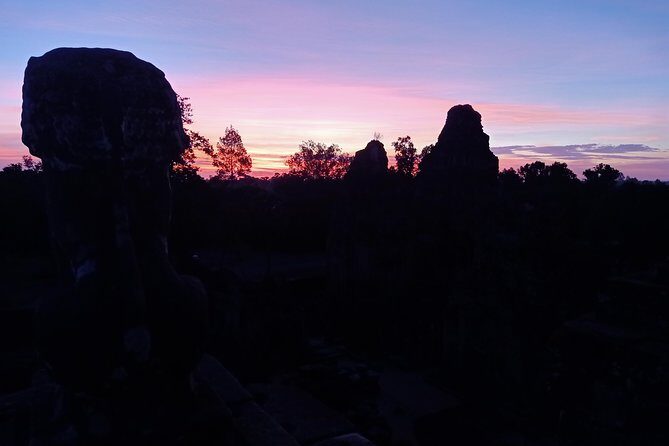
Also remember the sunrise note. Sunrise extra charge is listed as not included. If seeing Angkor Wat in early light is a top priority for you, budget for that add-on. The payoff is real, because Angkor Wat silhouettes are famous for a reason.
Who This Tour Fits Best
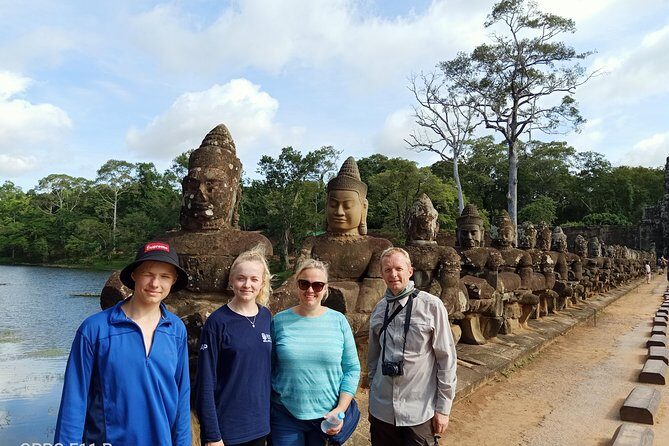
This tour is a strong match if you want a structured Angkor day without arranging every step yourself. The hotel pickup and ticket office stop make it easier for you to show up ready to explore.
It’s also a good choice if you like guides who add context while you’re walking. In multiple experiences with this company, guides like Oun Kosorl and Sinann were described as enthusiastic, attentive, and helpful with photography. That matters because Angkor sites can feel overwhelming without someone pointing out what to notice first.
The route also suits people who want more than the usual Angkor Wat plus one or two temples. Adding Banteay Srei and Banteay Samré gives you variety—pink carved sandstone detail and a different Hindu temple feel—so the day doesn’t blur into a single “big ruins” experience.
If your travel style is super slow, or you’re sensitive to heat and stairs, you may want to plan your pace carefully. It’s still doable for many people, but the day is full.
Should You Book the Angkor Wat and Banteay Srei Tour?
Yes, you should book it if you want a day that balances the must-see power of Angkor Wat with the carving-heavy beauty of Banteay Srei, and you’d rather spend your attention on temples than logistics. The included A/C comfort, cool towels, water, and a speaking guide make the schedule feel manageable.
Skip it or reconsider if you only want one or two sites, or if you strongly dislike paying entrance fees on the day. Also, if sunrise is non-negotiable, plan on the sunrise extra charge since it’s not included.
If you do book, bring comfortable shoes, a hat you can keep track of, and a bit of patience for a long day. With the right guide—often Oun Kosorl or Sinann—the temples become more than photos. They start to read like a map of Khmer ideas, power, and belief.
FAQ
How long is the Angkor Wat & Banteay Srey tour?
It runs about 7 to 10 hours, depending on how the day moves.
Do you get pickup from your hotel?
Yes. Pickup is offered from your hotel, and you meet in the hotel lobby at the time you selected during booking.
Is the tour price $50 per person all-inclusive?
No. The $50 price covers the tour experience (transport, guide/driver, and included comforts), but entrance fees are not included.
Which temple admissions are free on this tour?
Bayon Temple, Ta Prohm, Banteay Srei, and Banteay Samré are listed as free. Angkor Wat admission ticket is not included.
Does the tour include sunrise?
Sunrise is not included, and it has an extra charge.
What’s included during the day?
Included items are A/C transportation, cool towels, cool drinking water, and a speaking guide and driver.
Is this a private tour?
Yes. It’s private, and only your group participates.
Can I cancel and get a full refund?
Yes for free cancellation up to 24 hours in advance. If you cancel within 24 hours of the start time, the amount paid is not refunded.
Do I need to buy tickets in advance?
You’ll receive confirmation at booking and there is mention of a mobile ticket. The tour also goes to the ticket office to buy your temples pass on the day.