REVIEW · SIEM REAP
Banteay Srei, Kulen Waterfall & Beng Mealea Small-Group Tour
Book on GetYourGuide →Operated by Angkor Day Trip · Bookable on GetYourGuide
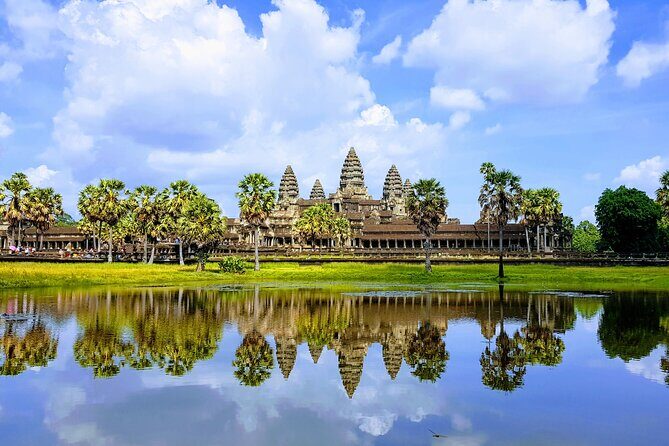
Kulen Mountain throws variety at you fast: cliffs, a reclining Buddha, carved riverbeds, then a jungle temple day. I love how the route mixes temple art with real nature time, and I especially like that Beng Mealea feels half-discovered, not polished for tourists. The only real catch is logistics: you’ll need an Angkor Pass for some stops and cash for the Kulen National Park entry.
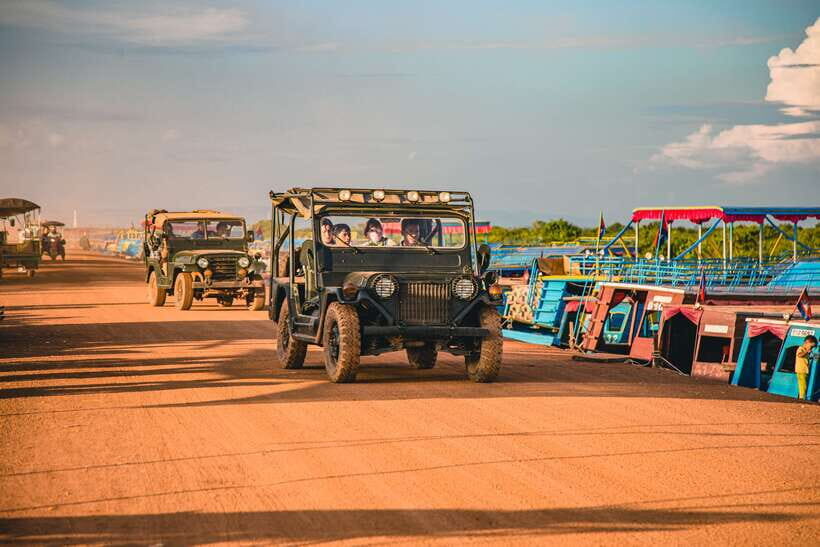
This is the kind of day that works because the pace stays sensible. You get a small group (max 12), air-conditioned driving, bottled water and a towel, plus a guide who helps you time photo stops and understand what you’re looking at. For anyone who hates walking on uneven ground or needs a very low-effort day, the temples and terrain can feel demanding, so consider a private option.
In This Review
- Key highlights you’ll feel in the moment
- A small-group day that actually moves at human speed
- Pickup timing and the pace of the 10-hour loop
- Banteay Srei: red sandstone Shiva carvings 15 miles north of Angkor Wat
- Peng Takhu (Amazing Cliff): a short stop with big payoff
- Preah Ang Thom: the reclining Buddha carved from a natural boulder
- Kulen Waterfall swim time and the River of 1,000 Lingas
- Lunch at a local restaurant and the snack culture you’ll notice on the drive
- Beng Mealea: a 12th-century jungle temple you walk through
- Guide and driver make the day: Tann, Nat, Sopheaprath, and Pan
- Price and value: what $51 covers, and what costs extra
- Who should book this tour, and who should choose private instead
- Should you book Banteay Srei, Kulen Waterfall & Beng Mealea?
- FAQ
- Do I need an Angkor Pass for all stops?
- How do I pay the Kulen Mountain National Park entrance fee?
- Is lunch included in the tour price?
- Can I swim at the Kulen Waterfall?
- What time is pickup in Siem Reap?
- How big is the small-group tour?
Key highlights you’ll feel in the moment
- Banteay Srei’s red sandstone carvings: among the finest Khmer work, focused on Shiva
- Peng Takhu / Poeng Chrunh Amazing Cliff: a quick ridge viewpoint that’s more “local secret” than classic postcard
- Preah Ang Thom reclining Buddha: an 8-meter statue carved into a natural boulder, still sacred and still busy
- Kulen Waterfall swim time: bring swimwear if you want to cool off after the climb
- River of 1,000 Lingas (Anlong Pong Phkay): linga and yoni carvings along a roughly 500-meter stretch
- Beng Mealea’s jungle-overgrown ruin: early-12th-century temple with collapsed galleries and vine-covered stones
A small-group day that actually moves at human speed
This tour is built for one thing: variety without chaos. In 10 hours, you’ll cover three major “moods” of Cambodia—finely carved red-stone temple detail, sacred religious spaces that locals use every day, and then jungle adventure at Beng Mealea.
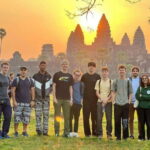
The small-group limit (up to 12) matters more than it sounds. It usually means less waiting, more flexibility for quick photo stops, and better odds of getting guidance on where to stand for the best angles. You’ll also ride in an air-conditioned vehicle, which is a real quality-of-life upgrade when Siem Reap heat starts stacking up.
You’ll also notice the way the day is managed. Cold towels and bottled water are part of the experience, and the guide typically points out photo-friendly moments rather than just naming sites. That makes the difference between “I saw a temple” and “I understood what I was looking at.”
You can also read our reviews of more tours and experiences in Siem Reap.
Pickup timing and the pace of the 10-hour loop
You’re picked up from your Siem Reap hotel between 7:30 and 8:00 AM, with the exact timing confirmed the day before. If you’re the type who enjoys mornings (and not sharing your photos with everyone else), this early start helps.
Expect long drives broken into workable segments. There’s about an hour of coach time before Banteay Srei, then shorter stretches between Kulen-area stops, lunch, and the drive out to Beng Mealea. The day is paced so you’re not stuck forever at any single location, but you also aren’t rushed through everything.
Here’s the rhythm I’d plan around:
- Morning temple craftsmanship first (Banteay Srei)
- Quick ridge viewpoint on Kulen Mountain (Amazing Cliff)
- Waterfall and carved riverbed time (with optional swimming)
- Lunch, then jungle-ruin exploration at Beng Mealea
- Return to Siem Reap by late day
If your legs feel fragile on day trips, remember that temple grounds can mean steps, uneven stones, and some walking between photo points. The tour provider notes it’s not recommended for lower physical fitness levels, and that warning is worth taking seriously.
Banteay Srei: red sandstone Shiva carvings 15 miles north of Angkor Wat
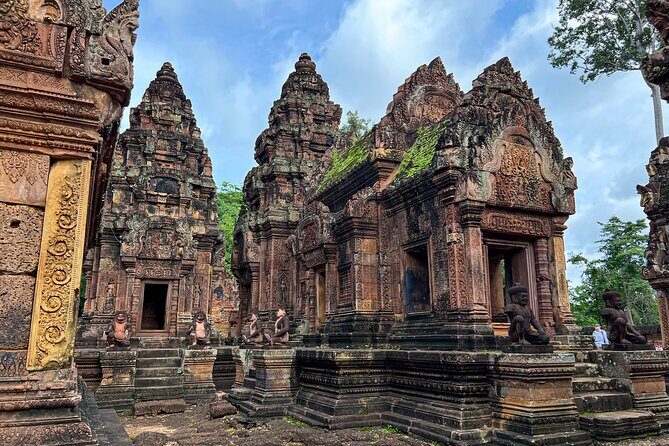
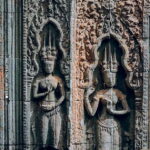
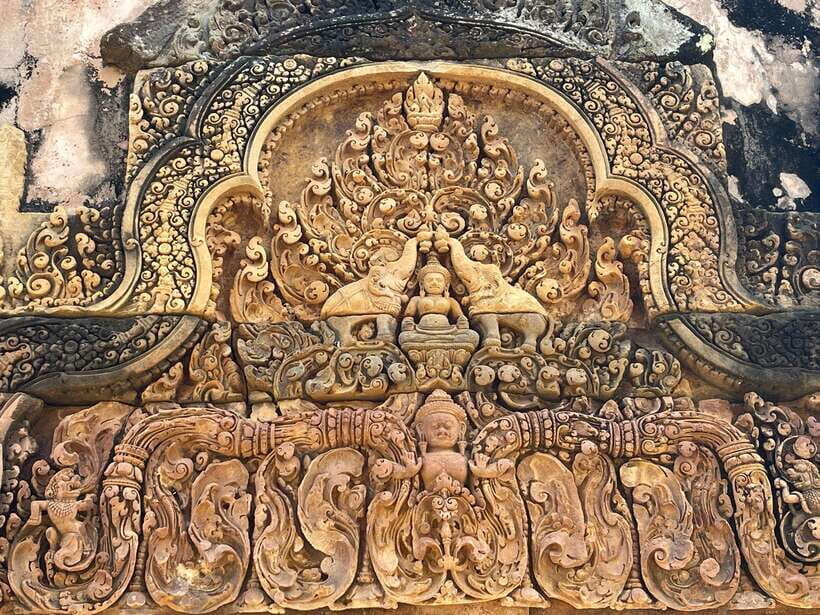
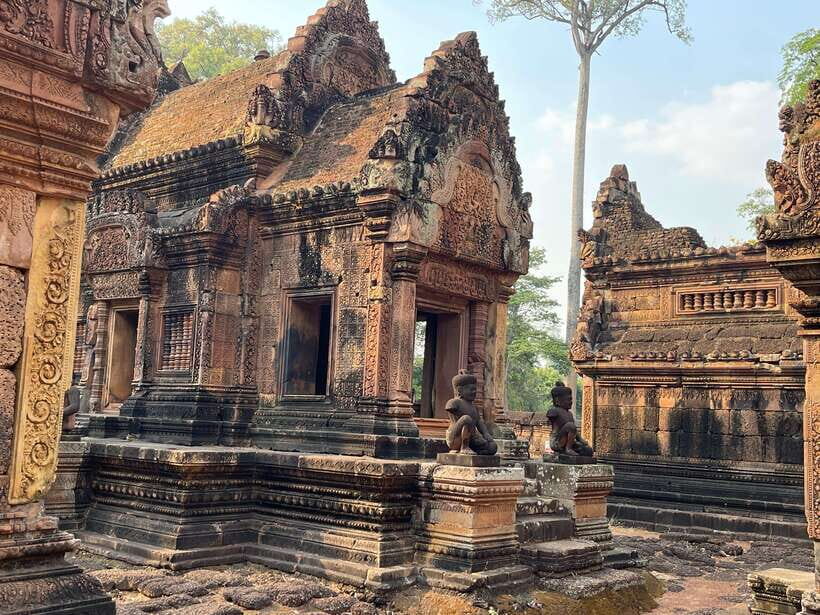
Banteay Srei is one of those places you can’t fake with a quick glance. Dedicated to Shiva and dated to the 10th century, it’s known for intricate carvings that many people consider some of the finest Khmer work.
What I like about Banteay Srei is the visual material. The temple is built from red sandstone, and that color makes the detail pop. It’s not just “pretty carvings”—you’ll see scenes carved into the stone, including Hindu themes.
This stop also feels different from the huge Angkor-area sites. It’s still culturally important, but it’s not the same scale and it often feels more intimate. That’s useful if you’re temple-fatigued but still want to understand what Khmer builders were capable of.
A practical note: Banteay Srei requires an Angkor Pass, so make sure you have it sorted before you go. Also, arrive ready for some heat, even early. The stone detail keeps you looking longer, and that’s a good thing.
Peng Takhu (Amazing Cliff): a short stop with big payoff
After Banteay Srei, you’ll head toward Kulen Mountain for a viewpoint stop at Peng Takhu / Poeng Chrunh, often called the Amazing Cliff. Even though it’s scheduled for around 20 minutes, it’s the kind of stop that can change the whole mood of the day—from close-up temple detail to wide-open perspective.
This is described as a hidden tourist site on the ridge of Kulen Mountain. That “ridge” part matters: you’re there for the panorama, and you’ll want to take a minute to absorb it rather than treat it like a quick checkbox.
If you’re doing this tour during a busy season, the earlier timing can help, but public holidays can still bring crowds. The cliff is still worth it, but I’d keep your expectations flexible if the view is packed with other photo hunters.
Preah Ang Thom: the reclining Buddha carved from a natural boulder
Kulen Mountain also includes the reclining Buddha at Preah Ang Thom, a statue about 8 meters tall. What makes this stop special is the carving itself: the Buddha is carved into a huge natural sandstone boulder, and a modern staircase and shelter were added to make access possible.
This place is sacred and actively used. You’ll often see Cambodians making offerings and visiting, and at times it can get busy. That’s not a flaw—it’s the point. You’re not just touring a monument; you’re sharing space with a living religious site.
You may find plenty of contemporary elements around the pagoda, including souvenir stalls and updated features near the stairs. But the Buddha itself stays the centerpiece, and the scale (natural boulder plus the 8-meter figure) is impressive.
Practical tips that usually matter here:
- Wear footwear you can easily take on and off, because you can remove shoes before entering the pagoda area.
- Expect a small crowd flow, especially if locals arrive while you’re there.
Kulen Waterfall swim time and the River of 1,000 Lingas
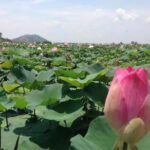
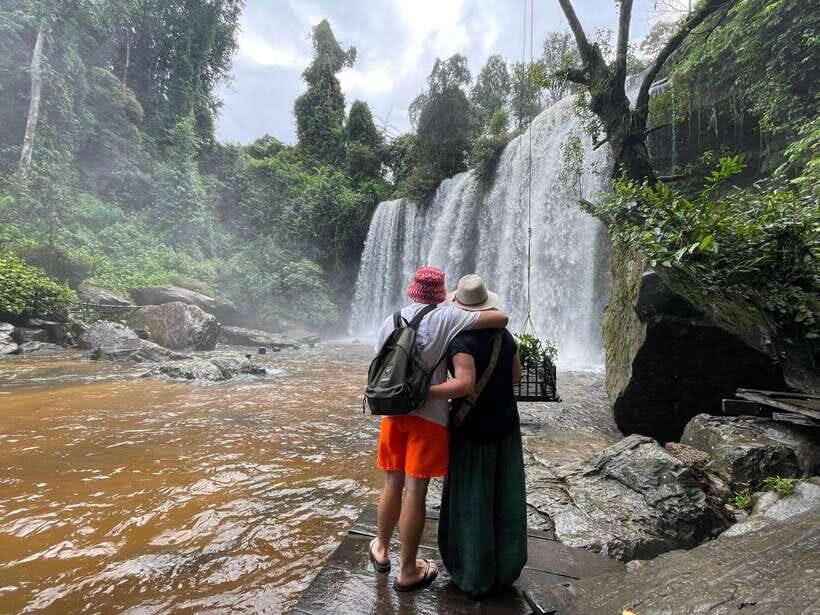
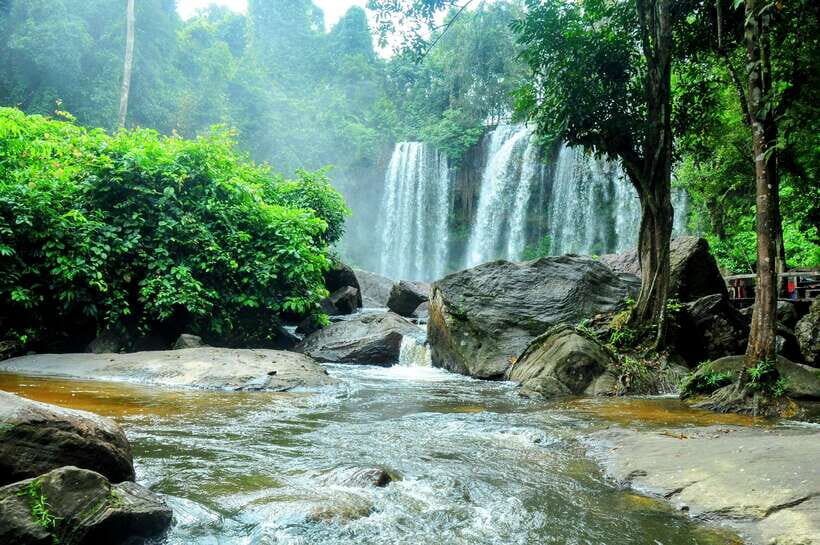
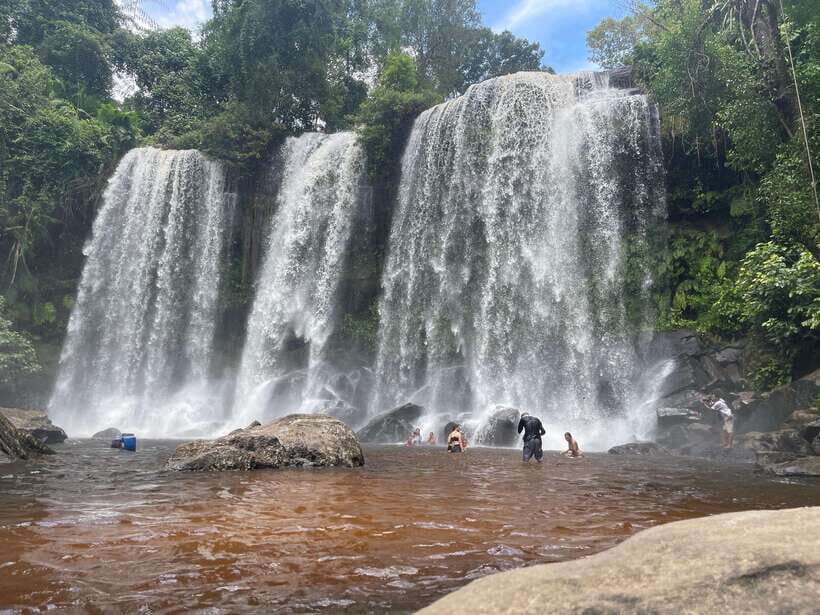
Kulen Waterfall is one of the day’s physical highlights. During the rainy season there are two main waterfalls in Phnom Kulen National Park—one around 4–5 meters tall and another that can reach 15–20 meters, depending on rainfall and season.
Because the size varies so much by time of year, you should treat the waterfall like a mood, not a guarantee. Some seasons bring a big dramatic splash. Others bring a smaller but more walkable and swim-friendly scene. Either way, the experience is about cooling off and resetting after temple time.
If you want to swim, bring a swimsuit and a towel. Changing rooms are available on-site, which helps you avoid improvising. The day includes about an hour at the waterfall area, giving you time to watch the water, take photos, and go for a quick dip if conditions allow.
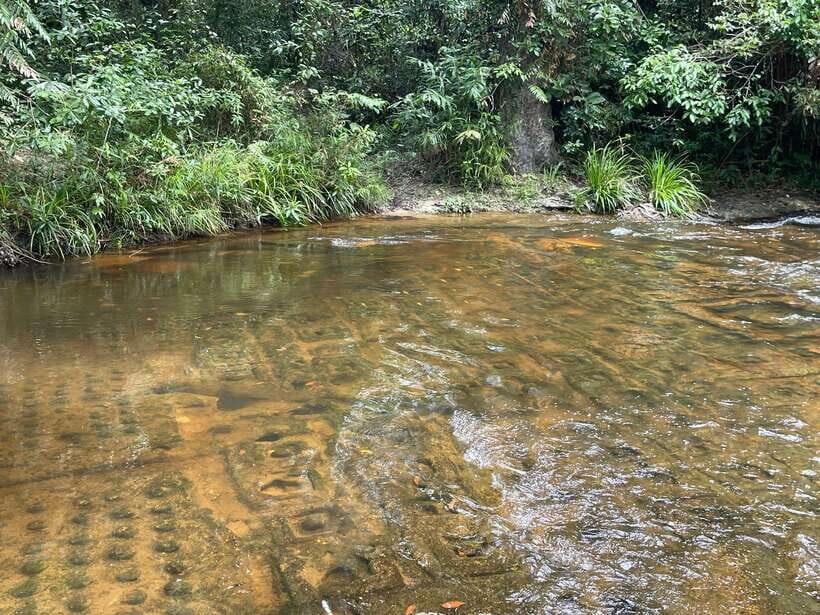
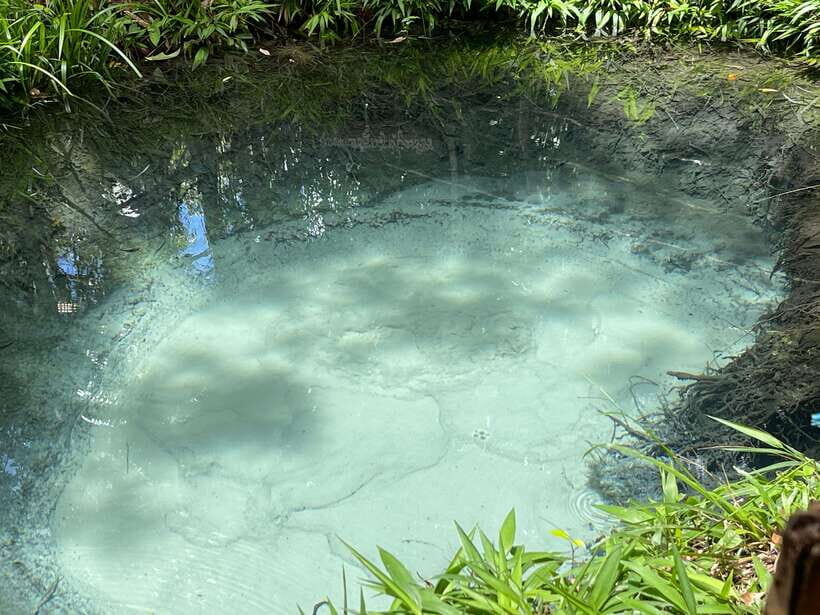
Then comes the River of 1,000 Lingas (Anlong Pong Phkay). Look for carvings along a riverbed stretch of about 500 meters. You’ll see linga forms, yoni carvings of different sizes, and a large Vishnu carving. There are also smaller carvings in the bedrock.
This part rewards curiosity. If you only glance, it can feel like random stone markings. If you pause and let the guide explain the shapes, it becomes a whole religious landscape in miniature—stone symbols placed into a living natural setting.
One more logistics point: Kulen Mountain National Park entry is $20 per person, and it’s cash only. Credit cards aren’t accepted, so bring enough bills before you arrive.
Lunch at a local restaurant and the snack culture you’ll notice on the drive
Lunch is built into the middle of the day. You’ll stop at a local restaurant for about an hour. Food and drinks aren’t included, so you’ll be paying your own way here, but the timing is convenient—long enough to eat, not so long that you lose the afternoon momentum.
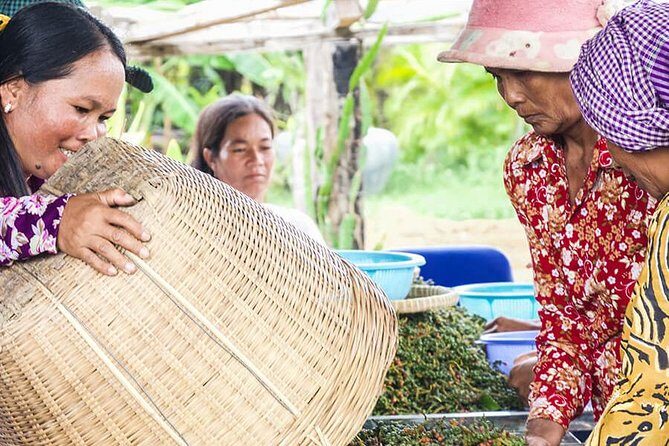
One extra detail I like: there’s often seasonal fruit tasting during the trip. And in multiple guides’ experiences shared from past days, the group has also been offered local treats like sweets made with banana in rice, red bananas, and palm cakes. Those small bites can be a fun way to taste Cambodia between major stops.
If you’re picky about spicy food, I’d keep that in mind when ordering lunch. It’s Cambodia, and local menus may lean into flavors without a lot of compromise for Western palates.
Beng Mealea: a 12th-century jungle temple you walk through
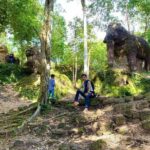
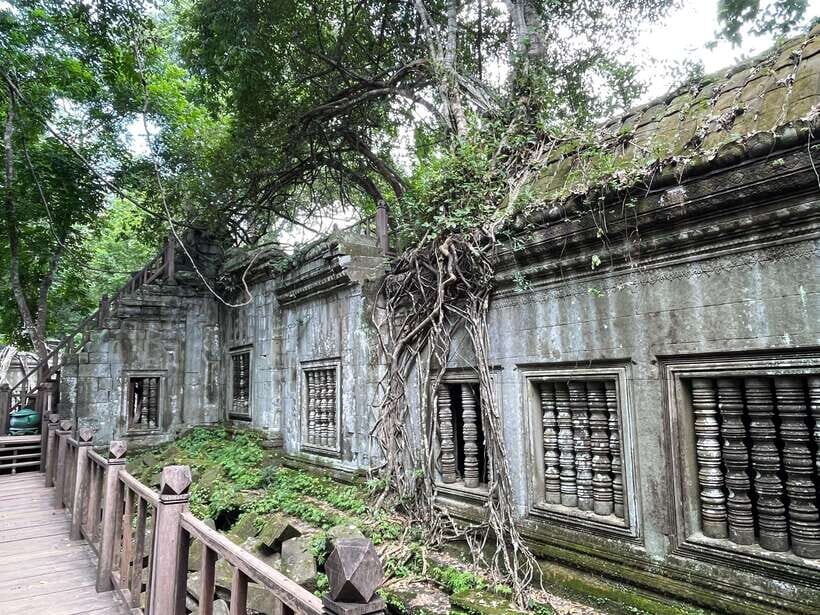
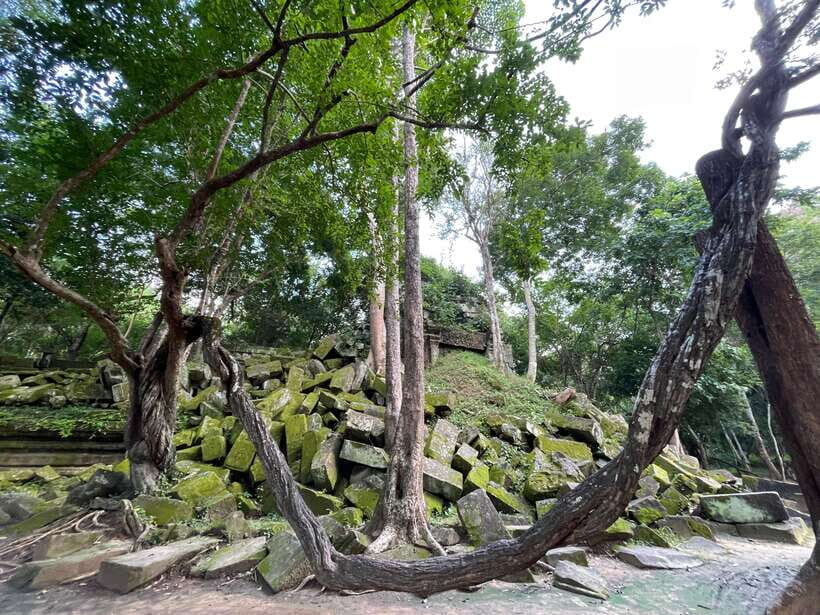
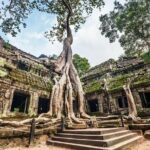
Beng Mealea is where the day gets adventurous. This is a 12th-century temple, built in the early 12th century, and it remains largely unrestored. That matters because you’re not walking in a carefully restored museum setting—you’re moving through collapsed galleries, overgrown areas, and vine-covered stone.
The temple is surrounded by thick jungle, and roots and trees intertwine with the stones. That creates a sense of mystery and exploration that you don’t get at temples that are fully leveled and polished.
You’ll also feel the scale. It takes longer to navigate than you might expect because the paths aren’t straight and the stonework is partially swallowed by nature. The best moments are when you stop and look up—vines, carved edges, and beams of daylight filter through.
Beng Mealea also requires an Angkor Pass, so double-check you have yours ready. The ground can be uneven, so wear shoes with grip and expect that you’ll be walking a fair bit on imperfect terrain.
Guide and driver make the day: Tann, Nat, Sopheaprath, and Pan
A tour like this rises or falls on the guide’s ability to keep the day understandable and comfortable. In the best experiences with this route, guides have been praised for being kind, attentive, and detail-oriented—showing you good photo spots and helping you avoid time-wasters.
In past runs, guides named Tann (and drivers like Nat) have been recognized for providing water and cold towels throughout the day, plus taking extra effort with photos. Some days include the guide taking pictures on their own camera and sharing them afterward, which is a nice bonus if you’re traveling with a phone-only setup.
Other guide-driver pairings have been praised too, including a guide named Mr Sopheaprath and a driver named Mr Pan. The common thread: you get more than directions. You get pacing, comfort, and context.
What this means for you: if photos matter, ask your guide where to stand and when to take shots. If you care about meaning, pause and let them explain symbols—especially at the carved riverbed.
Price and value: what $51 covers, and what costs extra
At $51 per person, this tour is a solid value for a full 10-hour day across multiple sites. You’re paying for transport (air-conditioned vehicle), a professional English-speaking guide, bottled water and a towel, and seasonal fruit tasting. You also get free pickup and drop-off at city hotels, which saves you time and taxi hassle.
But there are important add-ons you must budget for:
- Angkor Pass is required for Banteay Srei and Beng Mealea
- Kulen National Park entry is $20 per person and is cash only
- Tips for the guide and driver aren’t included
So the “real” cost depends on whether you already have the Angkor Pass and whether you’re prepared with cash for the park fee. If you’re doing this trip as a way to hit multiple major sites in one day, the structure still makes sense. You’re not paying premium rates for fewer stops.
My advice: treat the $51 as the base for a guided route with comfort included, and plan extra cash for the park fee and an estimated lunch budget.
Who should book this tour, and who should choose private instead
This is a great fit if you want:
- A full day that blends temple detail + nature without DIY navigation
- Small-group energy (max 12) so the day feels managed
- Waterfall time with the option to swim
- A move beyond the classic Angkor highlights into Beng Mealea’s jungle atmosphere
It’s less ideal if:
- You have lower physical fitness. Uneven temple grounds and walking on rough surfaces can add up, especially when the route stacks multiple sites.
- You hate crowds during busy Cambodian public holidays. Some stops can get busy, including sacred pagoda areas where locals visit.
- You dislike carrying cash. The Kulen National Park entrance is cash-only, and credit cards aren’t accepted.
If your needs are more specific—mobility limits, very slow walking pace, or private photo time—ask about a private option. The route is strong; the only question is whether the group pace matches you.
Should you book Banteay Srei, Kulen Waterfall & Beng Mealea?
I’d book this tour if you want a day that feels like you traveled across different sides of Cambodia: carved red-stone spirituality, mountain viewpoints, a real waterfall break, and a jungle ruin that rewards walking slow and looking up.
I’d hesitate if you’re arriving without an Angkor Pass, or if you can’t handle cash for the Kulen entry fee, or if your legs need a gentler day. Also, if you’re visiting during a drier season, the waterfall and some carvings may look less dramatic than peak-rain months—but that variation is part of the place.
If you go in expecting a mix of stone symbols and outdoor time, you’ll likely leave with photos you like and memories that don’t feel templated.
FAQ
Do I need an Angkor Pass for all stops?
No. An Angkor Pass is required for Banteay Srei Temple and for Beng Mealea.
How do I pay the Kulen Mountain National Park entrance fee?
The fee is $20 per person and is cash only. Credit cards are not accepted.
Is lunch included in the tour price?
Food and drinks are not included. You’ll have time for lunch at a local restaurant, but you’ll pay for your own meal.
Can I swim at the Kulen Waterfall?
Yes, swimming is possible during the waterfall stop. If you plan to swim, bring a swimsuit and a towel. Changing rooms are available on-site.
What time is pickup in Siem Reap?
Pickup is scheduled between 7:30 and 8:00 AM from your hotel, and the exact details are confirmed the day before.
How big is the small-group tour?
The small-group tour is limited to a maximum of 12 participants, and it runs with an English-speaking guide.