REVIEW · BATTAMBANG
Morning Tour,Ak Phnom temple,Rice wine,Rice Paper, killing Field
Book on Viator →Operated by Mr. Pov Battambang Amazing Tour · Bookable on Viator
Ek Phnom and food workshops in Battambang feel like a straight shot into real daily life. You start with Ak Phnom (Ek Phnom), then shift to hands-on rice culture with stops for rice wine and rice products, before finishing with the serious tone of Wat Samrong Killing Field. I love that the day mixes something scenic with something local to taste and do.
My favorite part is the way the guide connects the dots. When you have a guide like Mr. Yi Yong or Pao, the explanations can link Buddhism and Hinduism in plain, human terms, not just dates and stone. I also like the practical flow: a tuk tuk pick-up, a small group (up to 10), and enough structure that you won’t waste time guessing where to go next.
One drawback: temple/site tickets and fees are not included, so you should expect a little extra cash on top of the $20. Also, the killing field stop is emotionally heavy. It’s brief, but it will land.
In This Review
- Key highlights
- Battambang for $20: what you’re really paying for
- Tuk tuk pickup and small-group sanity
- Ak Phnom (Ek Phnom): an Angkor-feel ruin with less stress
- Rice wine and bamboo sticky rice: the village food part that actually teaches
- Rice paper, dried banana, and fish market: snacks with a story
- Wat Samrong Killing Field: respectful, not casual
- Timing: why a morning start is a smart move
- What to bring (and what to plan for)
- Guide matters: Mr. Pov, Pao, and Mr. Yi Yong as a clue
- Price and tickets: the one cost surprise to budget for
- Should you book this Battambang morning temple and food tour?
- FAQ
- FAQ
- How much does the Battambang morning tour cost?
- How long is the tour?
- Is pickup included?
- What’s included in the price?
- Are temple or site entrance fees included?
- Is breakfast included?
- What group size should I expect?
- Is the tour suitable for people with service animals?
Key highlights

- Ak Phnom (Ek Phnom) temple: An Angkor-type ruin vibe, but close enough for a focused morning circuit.
- Rice wine + rice paper: Real production steps, not just a photo stop.
- Bamboo sticky rice: You get a peek at how a regional staple is made.
- Local snack stops: Dried banana and banana chips show up as part of the rural food economy.
- Wat Samrong Killing Field: A sombre, respectful stop that changes the mood of the day.
Battambang for $20: what you’re really paying for
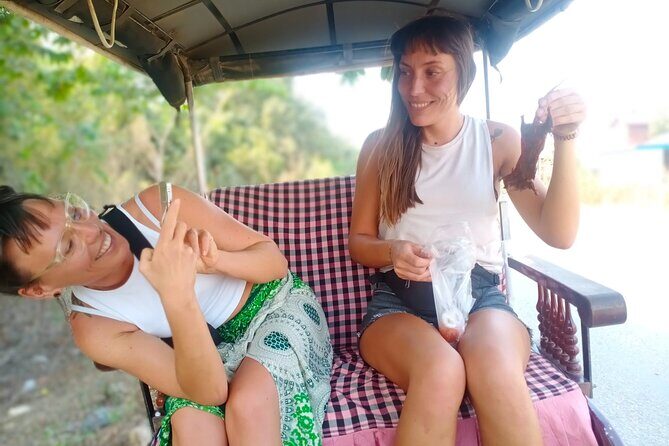
At $20, this is one of those Battambang values that doesn’t feel like a rushed checklist. You’re paying for transport (tuk tuk), a guide, shared-group logistics, and time in places you’d likely miss if you were trying to DIY it. Waters are included, which is a small thing that matters when you’re out in the heat.
The key to understanding the price is what’s not included. Entrance/ticket fees and breakfast are not included, so the final cost may tick up depending on what sites require a ticket on the day you go. Still, you’re not paying “full-day tour price” for a full production schedule. You’re buying a smart, compact route.
Also note the tone. This isn’t only pretty temples and snacks. It’s temple + village food + a serious historical site. That mix is exactly why I think this tour works.
You can also read our reviews of more wine tours in Battambang
Tuk tuk pickup and small-group sanity
This tour comes with tuk tuk transport and pickup offered, so you don’t have to figure out your own route before you’ve even had coffee. A small maximum group of 10 keeps things calmer. You can hear your guide, and you’re less likely to feel like you’re herded from one stop to the next.
From the reviews, it’s clear that the driver-guide style matters here. Guides such as Pao are described as fun and engaging, with English that makes the religious and cultural context actually stick. Another guide mentioned is Mr. Yi Yong, praised for very good English and strong background explanations. That matters because the stops (temple carvings, village food process, and the killing field site) aren’t the kind of places where you can rely on “guessing” what you’re looking at.
Ak Phnom (Ek Phnom): an Angkor-feel ruin with less stress
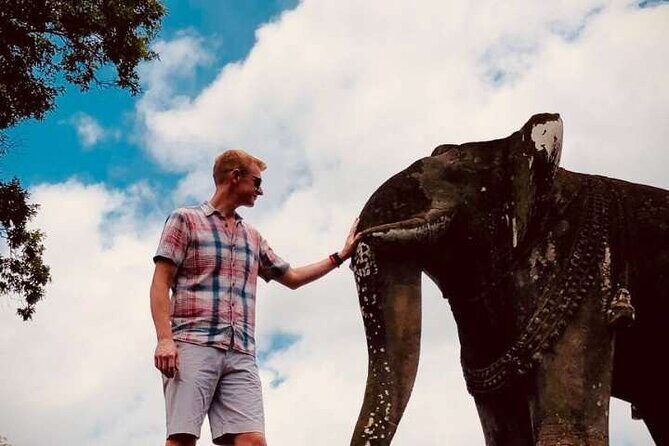
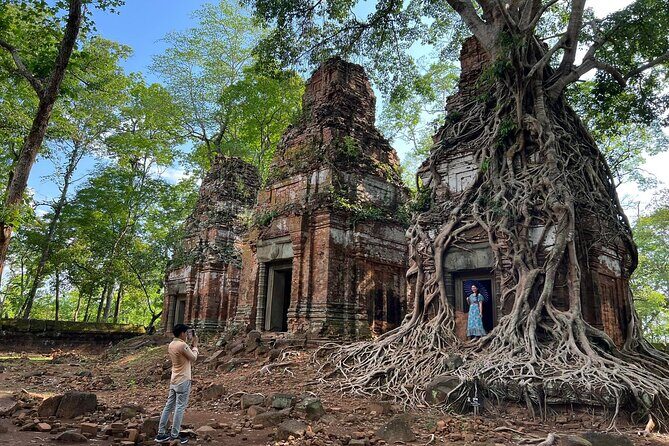
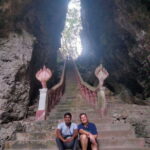
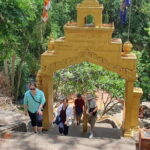
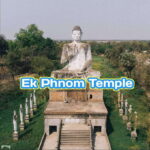
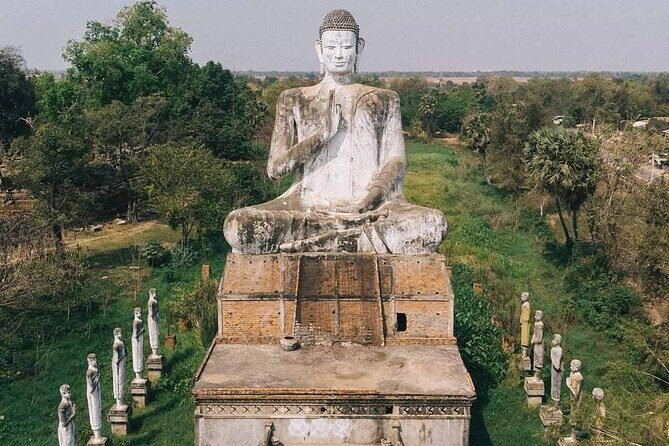
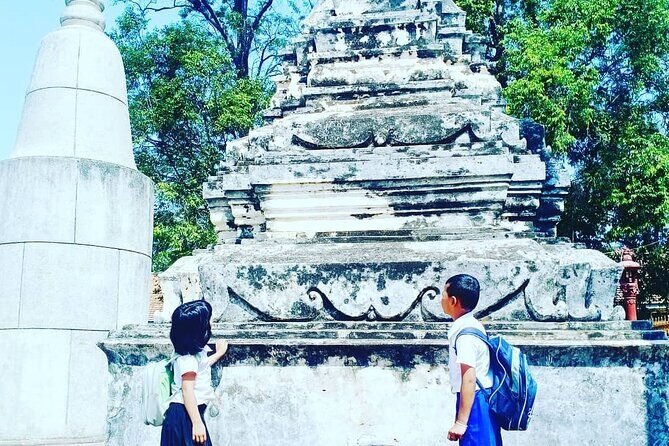
Ek Phnom (also written as Ak Phnom) is an 11th-century Buddhist temple ruin, about 15 km northwest of Battambang. If you’ve ever seen Angkor-era structures and wanted that same atmosphere without the same scale and crowds, this is your lane.
What I like about this stop is the pacing. In a short circuit, the guide can point out details you might overlook. One of the reviews highlights explanations about Buddhism and Hinduism and how they relate here. That kind of context turns “stone and trees” into something you can actually read.
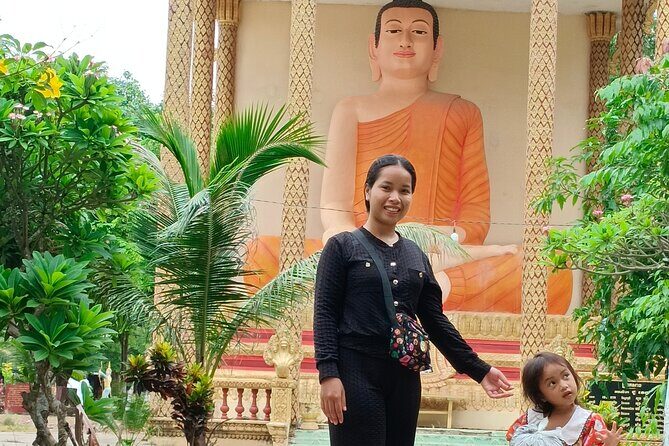
You may also see a giant Buddha statue connected to the temple area. Even if you don’t go in expecting a museum-level experience, a statue at that scale shifts your perception instantly. It’s also a good place to take a breath. After the drive and before you start dealing with food and villages, the temple gives you a visual anchor.
Practical tip: go with a little patience. You’re on a morning schedule in Cambodia, and you’ll likely be outside more than you expect. Lightweight layers and sunscreen help you stay comfortable while your guide does the talking.
Rice wine and bamboo sticky rice: the village food part that actually teaches
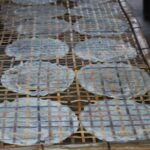
This tour doesn’t treat food like a souvenir. It treats it like a process. You’ll visit local village stops where you can learn how bamboo sticky rice is made, and you’ll also get a shot of rice wine. Then you move into rice paper making, which is a fun one because it’s simple to understand but hard to recreate after you leave.
Why this part is worth your time: Battambang’s rural life is built around grains, drying, grinding, pressing, and waiting for things to reach the right stage. A guide can show you what changes with time and heat. That’s the difference between “watching” and actually learning how a staple becomes a product.
Rice wine also adds a human moment. It’s not just a taste; it’s a chance to understand why rice isn’t only food here. It’s a base ingredient for social life and small-scale production. One of the reviews calls out the experience as real Cambodia, and the food stops are a big part of why that phrase fits.
A quick heads-up: if you’re sensitive to alcohol, go easy. You’re there to understand a tradition, not to win a drinking contest.
Rice paper, dried banana, and fish market: snacks with a story

After the temple, the tour leans into everyday production and trade.
You’ll have time around rice paper, plus a stop that includes dried banana and banana chips. These are exactly the kind of rural products that sound plain until you see them as part of a supply chain. Drying turns something seasonal into something portable. Chips turn that into a snack economy.
Then there’s mention of a fish market stop. Even if you’re not shopping, markets are where you see the rhythm of a place: who buys, who sells, and what people treat as normal. With a guide present, you can ask basic questions and get answers that make the scene feel less random.
This is also a good part of the tour for photos. Just don’t treat people as props. Ask first if you want to take close photos at stalls. A polite pause goes a long way.
A few more Battambang tours and experiences worth a look


Wat Samrong Killing Field: respectful, not casual
One of the most important stops is Wat Samrong Killing Field. This is a somber, serious place, and it changes the emotional temperature of the day. The practical advice here is simple: keep your expectations respectful. Don’t rush. Don’t treat it as a “quick photo + move on” stop.
I like that this tour includes it in the same overall route. It forces balance. Temple ruins and food workshops tell you about culture and daily life. A site like this reminds you that history shapes what people survived and how they remember. Even if your group only spends a short time there, you’ll feel the shift.
If you’re prone to getting overwhelmed easily, consider mentally preparing before you go in. A guide can help you understand what you’re seeing and why the place matters, but the weight of the subject is real either way.
Timing: why a morning start is a smart move

The tour is framed as a morning tour, and that’s more than marketing. One review specifically suggests doing it in the morning when it’s hot, which is a good reality check. Cambodia’s sun can drain your energy fast, especially when you’re walking around temples and outdoor food areas.
A morning start helps you:
- see more before midday heat,
- keep your focus on details your guide points out,
- and avoid feeling cooked by the time you reach the more emotionally heavy stop.
Also, plan for the fact that you’ll be outdoors at multiple points. Bring a hat and water (waters are included, but having your own small bottle helps too).
What to bring (and what to plan for)
This is a practical tour, so keep your packing simple.
Bring:
- sun protection (hat, sunscreen),
- comfortable walking shoes,
- a light layer for shade breaks,
- cash for any tickets/fees that aren’t included.
Plan for:
- modest walking at temple and village sites,
- time for tasting (rice wine) and short demonstrations (rice paper, bamboo sticky rice),
- a shift in mood when you reach the killing field stop.
If you have dietary restrictions, the data you provided doesn’t spell them out. So I can’t promise options. What I can say is: ask your guide early on what foods are involved and whether there are alternatives.
Guide matters: Mr. Pov, Pao, and Mr. Yi Yong as a clue
The guide experience seems like a major reason people recommend this tour. Mr. Pov is the named provider for this experience, and multiple reviews mention standout guides with excellent English.
Two names show up strongly:
- Pao, described as funny, engaging, and passionate, with strong English.
- Mr. Yi Yong, praised for very good English and a lot of knowledge connecting Buddhism and Hinduism.
Even if you don’t get those exact guides, it’s a sign of the standard. You want someone who can explain what you’re looking at, especially at a temple and a memorial site. This tour’s value rises a lot when the guide can translate the setting into something you understand quickly.
Price and tickets: the one cost surprise to budget for
The headline price is $20, and the included items are practical: waters, guide, tuk tuk, sharing tour. What you should budget extra for is ticket & fee, because it’s not included. Breakfast is also not included.
So how do you judge value? You do it this way:
- If you would otherwise pay for a driver + guide for a half-day and still need help connecting the stops, $20 starts to look fair.
- If you already have a scooter and you’re confident navigating rural village routes, the value drops a bit because transport and guiding are the money makers.
For most people, you’re buying convenience and context. And at a small-group size, you’re also buying a lower-stress experience.
Should you book this Battambang morning temple and food tour?
Yes, if you want a Battambang day that’s not only scenic, but also hands-on and honest. I’d book it if you like:
- temple ruins with a guide who explains the meaning,
- food culture that includes rice wine and rice products,
- and you’re willing to handle the emotional weight of Wat Samrong Killing Field.
I would skip it or choose another option if:
- you hate alcohol tastings (you can still participate, but go in with a plan),
- you’re easily overwhelmed by heavy historical topics,
- or you don’t want to pay extra for tickets/fees and want breakfast included.
If you’re on a tight schedule and you want one morning that covers a lot of real Battambang life, this tour makes sense. It’s compact, small-group, and thoughtfully mixed in tone.
FAQ
FAQ
How much does the Battambang morning tour cost?
The tour price is $20.
How long is the tour?
The duration is listed as approximately 2 days.
Is pickup included?
Pickup is offered, and transportation is provided by tuk tuk.
What’s included in the price?
Waters, a sharing tour format, the guide, and tuk tuk transport are included.
Are temple or site entrance fees included?
No. Ticket and fee are not included.
Is breakfast included?
No. Breakfast is not included.
What group size should I expect?
The tour has a maximum of 10 travelers.
Is the tour suitable for people with service animals?
Yes. Service animals are allowed, and most travelers can participate.