REVIEW · BATTAMBANG
half day morning tour by Tuk-Tuk
Book on Viator →Operated by Battambang tours by bun · Bookable on Viator
Four wheels and a morning plan. That’s the feel. This half-day tuk-tuk tour in Battambang mixes city sights with countryside Khmer life, plus real temple stops and tasty snack sampling. I love the convenience of hotel pickup and drop-off and the way the route includes quick, practical chances to try local food. One thing to factor in: the bamboo train ticket costs extra and isn’t included in the main price.
You’ll go with a small group (max 8), which keeps the pace relaxed and questions easy. The guide also sets context as you move—so temples and local crafts don’t feel like stop-and-go photo ops. A possible drawback: it runs best in good weather, so plan for schedule flexibility if conditions are rough.
In This Review
- Key Points at a Glance
- A Tuk-Tuk Morning That Feels Local, Not Touristy
- Hotel Pickup, Small-Group Pace, and the 4–5 Hour Rhythm
- Battambang City Start: France-Colonial Buildings and a Real Market
- Wat Samrong Knong: 300+ Years Old Temple and a Brutal Chapter
- Prasat Ek Phnom: Ancient Temple Feel Before Angkor, Plus a Big Buddha
- Bamboo Train Battambang: The $5 Ride That May Not Last Long
- Food Samples and Donations: Where This Tour Keeps It Local
- Timing, Comfort, and What to Bring for a Tuk-Tuk Half Day
- Who Should Book This Tuk-Tuk Tour (and Who Might Not)
- Should You Book Battambang Tours by Bun’s Tuk-Tuk Morning?
- FAQ
- What time does the morning tour start?
- How long is the tour?
- How much does the tour cost?
- Is hotel pickup and drop-off included?
- What’s included in the price?
- How much is the bamboo train ticket?
- Is lunch included?
- Does the tour depend on weather?
- FAQ
- Is there a limit on group size?
Key Points at a Glance
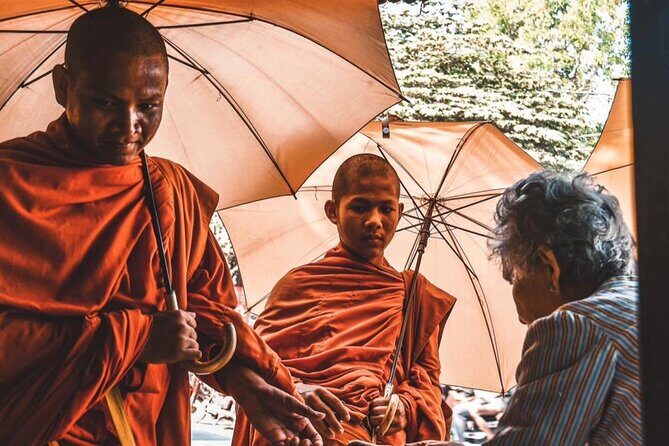
- Hotel pickup and drop-off keeps the morning low-stress
- Small group size (max 8) makes the tour feel personal
- Temple stops with deep context turn sightseeing into learning
- Snack sampling is part of the experience (not just an afterthought)
- Bamboo train ride is time-sensitive and costs $5 extra
A Tuk-Tuk Morning That Feels Local, Not Touristy
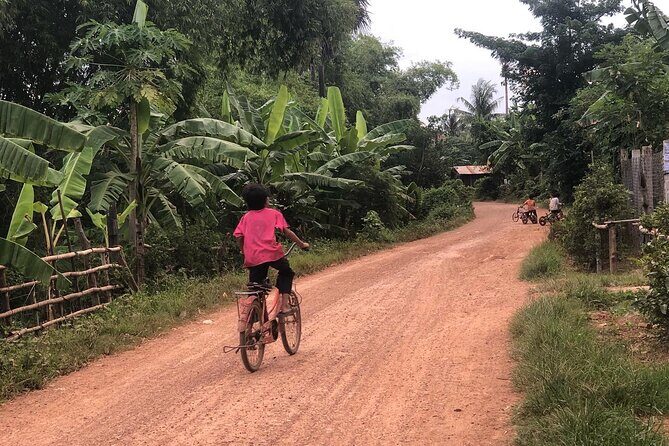
Battambang is a great place for a “half day, big impact” plan, and this tour fits that perfectly. You start in the morning at 8:30am and spend roughly 4 to 5 hours moving at a comfortable pace. The route is designed so you see how people live—then you end back at your hotel before your day gets complicated.
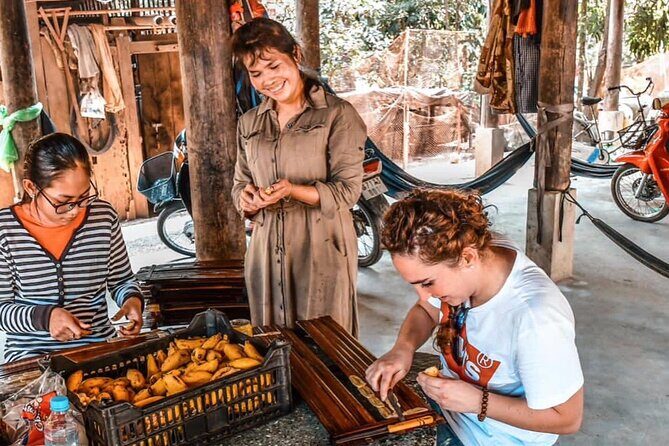
Two parts are especially strong for me: the practical logistics and the food-and-life angle. Hotel pickup and drop-off means you don’t waste time negotiating tuk-tuk rides or figuring out where to start. Then, along the way, you’ll get sample foods like spring rolls, bamboo sticky rice, and other treats (dry banana and more). It’s the kind of inclusion that makes the tour feel like you’re being welcomed, not just shuffled around.
The trade-off is simple: the bamboo train is a separate $5 per person add-on. Still, I think it’s worth budgeting for if it’s on your Battambang must-do list.
A few more Battambang tours and experiences worth a look


Hotel Pickup, Small-Group Pace, and the 4–5 Hour Rhythm
This is a morning tour, which is a big deal in Cambodia. You’re out while the day is cooler and before everything gets busier. The pickup and drop-off also matters more than it sounds. If you’re traveling with kids, seniors, or anyone who doesn’t want to hunt for transport, this kind of convenience pays off fast.
The group limit is 8 travelers, which helps on a tuk-tuk route. You’ll spend less time waiting and more time actually seeing things. The tour also uses a local guide and a tuk-tuk or motorbike setup, depending on the day and route flow.
What you should plan for: you’ll be outside moving between stops. Bring a hat and water-sipping habits. The tour includes bottled water, so you won’t show up worrying about that part—but you’ll still want to dress for the morning sun and any humidity.
Battambang City Start: France-Colonial Buildings and a Real Market
Your first stop is around Battambang Province, starting with a quick briefing. Then the tour takes you through the city to see France colonial buildings. Even if you don’t care about architecture, it’s a useful contrast point. You get a sense of the city’s layered past before you move to Buddhist sites and older temples.
After the colonial-style streets, you’ll visit a real local market. This is one of the best “reset” moments in the tour. Markets are where you see daily rhythm—how people shop, what they snack on, and what’s actually priced and available. It’s also a good place to ask questions, because the guide can explain what you’re looking at in plain, practical terms.
One small note: you’ll likely spend about 1 hour here. It’s enough time to orient yourself and enjoy the market energy without turning the day into a slow crawl.
Wat Samrong Knong: 300+ Years Old Temple and a Brutal Chapter
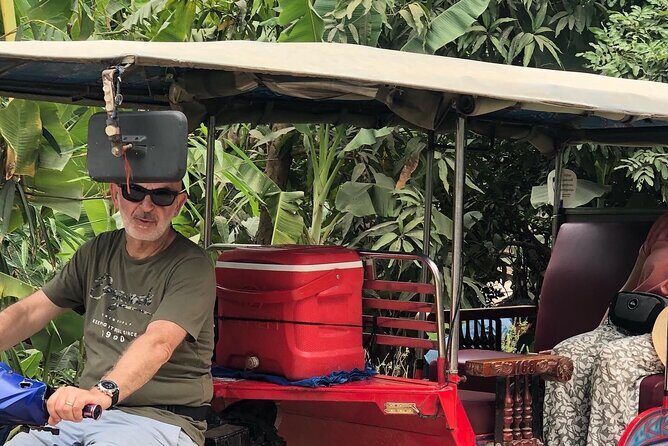
The next major stop is Wat Samrong Knong, and this is where the tour earns its depth. You’ll spend roughly 3 hours here, with admission included.
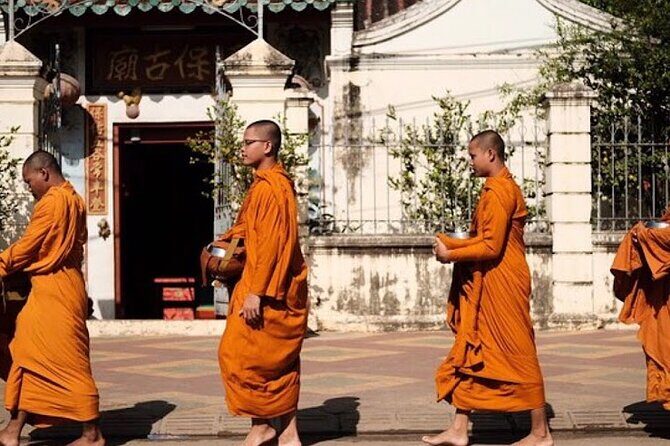
This old Buddhist temple is said to be built more than 300 years ago. That age alone gives the site weight, but the tour’s framing is the real value: this temple also has a history connected to the Pol Pot regime, when it was used as a prison. Your guide spends time on both the spiritual side and the harder historical side.
If you’re looking for purely light and scenic, this stop may feel heavier than the rest. But if you want to understand Battambang as more than photos, it’s one of the most meaningful moments on the itinerary. It also gives you context for why certain places look the way they do—how a single location can carry multiple eras of meaning.
Dress respectfully. Even in the morning, temples expect shoulders and knees to be covered in a way that keeps things comfortable for walking and lingering.
Prasat Ek Phnom: Ancient Temple Feel Before Angkor, Plus a Big Buddha

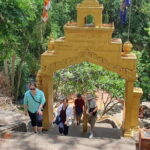
After Wat Samrong Knong, the tour moves to Prasat Ek Phnom for about 1 hour, with admission included. This is an older temple site with roots going back thousands of years, described as predating Angkor Wat.
What you’ll likely notice first is the temple setting and the presence of a large Buddha statue. This stop works well because it’s a change in pace from Wat Samrong Knong. You still get the temple atmosphere, but the mood can shift toward awe and architecture instead of difficult historical context.
It’s also a solid “stop-and-breathe” moment. With only about an hour, you can walk, look, and absorb without feeling like you’re rushing through a checklist.
And then, once you’re done, you’ll be dropped back at your hotel to close the loop on the morning schedule.




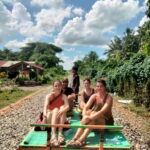
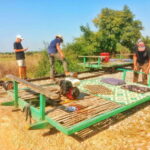
Bamboo Train Battambang: The $5 Ride That May Not Last Long
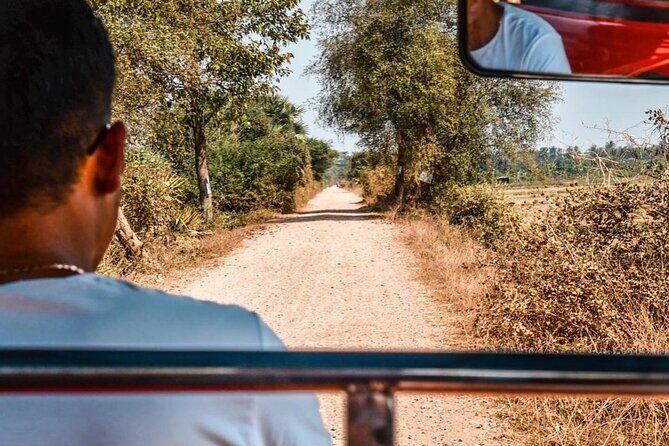
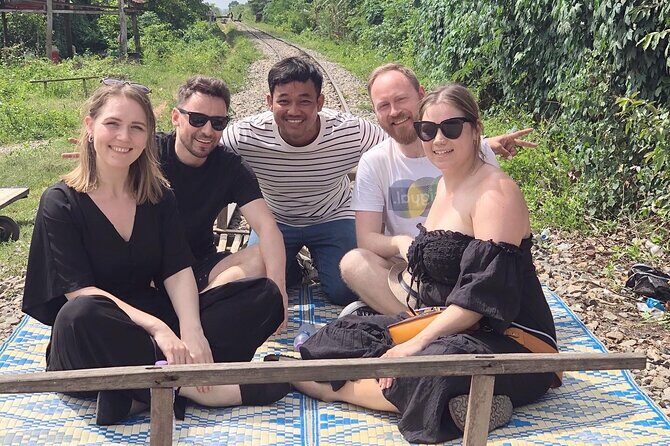
Now for the part most people argue about: the Bamboo Train Battambang ride. You’ll visit for around 1 hour, but the bamboo ticket costs $5 per person, so budget that extra amount.
The important context is this: the ride you get here is described as the original bamboo train, and the government is planning to close it soon. That’s why many guides frame it as something you should consider sooner rather than later.
Is it worth the add-on? For me, yes—if bamboo train rides are on your list. The ride is short, but it’s one of those Battambang specifics that’s hard to replicate elsewhere. Also, the cost is modest compared to the main tour price, so you’re not signing up for a huge surcharge.
Practical tip: wear shoes that can handle uneven ground near where you board and move around. Take a quick look at your footing before getting on. And keep your phone secure so it doesn’t become a springboard.
Food Samples and Donations: Where This Tour Keeps It Local
The tour isn’t only temples and transport. You’ll also get snacks and small sampling breaks built into the day. Included items can include foods you can test along the way such as bamboo sticky rice, spring rolls, and other small bites like dry banana. There are also snacks provided to test samples, plus bottled water throughout.
That might sound minor, but it matters. This kind of “try before you buy” approach helps you understand what’s typical rather than just what’s marketed to tourists. It’s a better way to learn taste and ingredients than asking questions from a distance.
There’s also a donation to the local family included. I always treat donations as optional-looking in spirit but included in practice here, and it can be meaningful when it supports the community directly tied to what you’re seeing.
If you have dietary needs, the tour data doesn’t list specific alternatives. So it’s smart to ask your guide beforehand about what’s available during the sampling moments. That’s the only responsible way to handle allergies.
Timing, Comfort, and What to Bring for a Tuk-Tuk Half Day
This tour is built for a half-day morning window. It starts at 8:30am and typically runs 4 to 5 hours. That means you don’t need a full-day commitment, but you also won’t be able to roll in whenever you feel like it. Show up on time. You’ll get the most out of it.
Bring:
- Light layers (temples and shade can vary)
- A hat and sunscreen
- Shoes that handle walking steps and uneven surfaces
- A small bag for water and snacks
The tour includes bottled water and snacks, so you’re not starting from nothing.
Also keep in mind: the experience requires good weather. If conditions aren’t right, you’ll be offered a different date or a full refund.
Who Should Book This Tuk-Tuk Tour (and Who Might Not)
This tour is a strong fit if you:
- Want a structured morning plan without planning every turn yourself
- Like history but also want it explained in a practical way
- Prefer a small group to avoid constant waiting
- Enjoy food sampling as part of cultural learning
- Need hotel pickup/drop-off for comfort and time-saving
It’s also great for families, and there are discounts offered for seniors, youths, and children. If you’re traveling with a mix of ages, the short duration helps keep energy levels more manageable.
Who might hesitate:
- If you dislike heavier historical context, the Pol Pot-era connection at Wat Samrong Knong may feel emotionally intense.
- If you hate extra ticket add-ons, you’ll need to budget the $5 bamboo train entry.
Should You Book Battambang Tours by Bun’s Tuk-Tuk Morning?
I’d book this tour if you want Battambang in a single morning: colonial city hints, a meaningful temple stop, an ancient temple with a big Buddha presence, and the option to ride the bamboo train while it’s still the original style.
It’s also good value for the structure you get. For $16 per person, you’re not just paying for a ride—you’re getting a guide, included admissions for key temple stops, snacks, bottled water, and hotel pickup/drop-off. Then you top it off with the bamboo train ticket if you want the most famous Battambang element.
The only real decision point is the emotional temperature of Wat Samrong Knong and whether you want to add the bamboo train. If both are a yes for you, this is a very sensible way to use your morning.
FAQ
What time does the morning tour start?
The tour starts at 8:30am with hotel pickup.
How long is the tour?
It runs about 4 to 5 hours.
How much does the tour cost?
The price is $16.00 per person.
Is hotel pickup and drop-off included?
Yes. Hotel pickup and drop-off are included.
What’s included in the price?
Included items are the tuk-tuk/driver/local guide, snacks, bottled water, snacks for sampling, and a donation to a local family. Entrance for Wat Samrong Knong and Prasat Ek Phnom is also included.
How much is the bamboo train ticket?
The Bamboo Train Battambang ticket costs $5 per person and is not included.
Is lunch included?
No. Lunch is not included.
Does the tour depend on weather?
Yes. The experience requires good weather. If it’s canceled due to poor weather, you’ll be offered a different date or a full refund.
FAQ
Is there a limit on group size?
Yes. The tour has a maximum of 8 travelers.