REVIEW · SIEM REAP
Sacred Siem Reap Tours
Book on Viator →Operated by Van Express Tours · Bookable on Viator
Jungle temples make time feel elastic. This Sacred Siem Reap Tours experience strings together the big-name Angkor sights with stops that feel more off the main drag, and you get a guide to connect the dots on the ground. I especially like how the route balances famous faces like Angkor Wat with moodier, more ruin-like temples that reward slower wandering.
I also like that pickup and cold water are included, so an 8:00am start feels manageable rather than rushed. The guide and driver run the timing and the in-between driving, which matters when you’re juggling multiple temples and different ticket rules. One drawback: entrance fees and meals aren’t included, so you’ll want to budget extra for admissions you pay on the spot.
In This Review
- Key Highlights You’ll Actually Feel
- Price and Logistics: What $100 Buys in Real Life
- Starting at 8:00am: How the Day Stays Organized
- Day One: Angkor Wat, Bayon, and Ta Prohm’s Jungle Drama
- Angkor Wat (About 2 Hours)
- Bayon Temple (About 1 Hour)
- Ta Prohm Temple (About 1 Hour)
- Day Two: Banteay Srei and Kbal Spean’s Vishnu Waterfall Path
- Banteay Srei (About 1 Hour, Admission Listed as Free)
- Kbal Spean (About 1 Hour)
- Cambodia Landmine Museum (About 30 Minutes)
- Day Three: Beng Mealea, Bakong, Preah Ko, and Lolei
- Prasat Beng Mealea (About 2 Hours)
- Bakong (About 30 Minutes)
- Preah Ko (About 30 Minutes)
- Lolei (About 30 Minutes)
- Koh Ker: The Jungle Prang That Turns You into a Explorer
- Price Reality Check: Value vs. Entrance Fees
- What to Bring (Because Temples Do Not Care About Your Outfit)
- Who This Tour Fits Best
- Should You Book Sacred Siem Reap Tours?
- FAQ
- How long is the tour?
- What time does the tour start?
- What does the $100 price include?
- Are entrance tickets included?
- Is this tour private?
- Do I need meals or accommodation included?
- What is the cancellation policy?
- Is the tour suitable for all fitness levels?
Key Highlights You’ll Actually Feel
- Private tour format means your group sets the pace, not a cattle-line schedule
- 8:00am start helps you beat harsher heat and keep temple time calmer
- Guide + driver included, plus cold water to make the day easier
- A strong mix of well-known and quieter ruins (Angkor Wat and Ta Prohm, plus Beng Mealea)
- Banteay Srei is listed as free admission in this plan, which helps your budget
- A meaningful cultural stop with the Cambodia Landmine Museum
Price and Logistics: What $100 Buys in Real Life
Sacred Siem Reap Tours costs $100 per person for about 3 days, and that price mostly covers the machine behind the scenes: a guide and driver, pickup, and cold water. That’s good value if you’d rather spend your energy looking at temples than figuring out transport, timing, and which gate to use.
What’s not included is the expensive part that people often forget: accommodation, meals, and entrance fees. The tour description also notes that tickets for several major stops are not included, so you should plan to pay those separately. The upside is that you’re not locked into a single all-in package price that may be higher than what you need.
You’ll also get a mobile ticket, which is handy. Instead of fishing around on paper, you can show your ticket on your phone and move with the flow.
Finally, this is a private tour, so it’s only your group. That typically means fewer interruptions, easier questions, and less time wasted waiting for the slowest person in a big group.
You can also read our reviews of more tours and experiences in Siem Reap.
Starting at 8:00am: How the Day Stays Organized
A temple day in Siem Reap can fall apart fast if you’re walking from one site to the next without a plan. The biggest practical benefit here is that a guide and driver handle the “between” moments, so your headspace stays on what you’re seeing.
You start at 8:00am, which helps with comfort and timing. Early morning light also does something real for photography and for your own eyes—you’re less likely to feel like you’re staring at stone through a hot haze.
The tour also states a moderate physical fitness level is ideal. That doesn’t mean you need to be an athlete, but it does mean you should be comfortable with walking around temple grounds and uneven surfaces.
Day One: Angkor Wat, Bayon, and Ta Prohm’s Jungle Drama
Day one hits the Angkor classics in a clean sequence, and I like that the order builds from monumental to more emotional.
Angkor Wat (About 2 Hours)
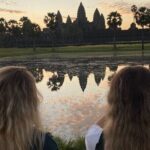
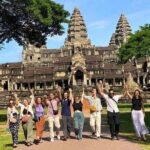
Angkor Wat is described as the biggest Hindu temple in the world, and even if you’ve seen photos, being there in person is still a shock of scale. It’s also a temple that rewards time spent slowly: you can’t really “rush” it without missing the geometry and the way the pathways pull your gaze.
Plan for sun and walking even if the ground looks flat from a distance. In real life, you’re moving between spaces, climbing small areas, and adjusting to crowds at peak times.
Bayon Temple (About 1 Hour)
Then you shift to Bayon Temple inside Angkor Thom city. The defining feature is the smiling faces, and the short time slot makes sense: you’ll get the main viewpoint energy without turning the visit into a marathon.
One thing I appreciate about having a guide is context. Those faces aren’t just decoration. Your guide can explain what you’re looking at and why different spots feel different, especially as you circle from one angle to the next.
Ta Prohm Temple (About 1 Hour)
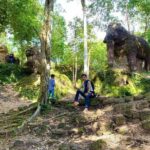
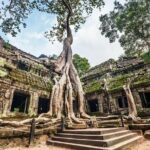
Ta Prohm is the jungle temple people talk about for a reason. It’s described as Buddhist and hidden in the jungle, with big trees taking over parts of the stone.
This stop tends to be more hands-on emotionally. The trees feel alive, and the roots make the ruins feel less like a museum and more like a living place that refuses to stay “finished.” It’s also where you’ll notice how the surrounding nature changes the mood of the whole structure.
A practical note: if you’re sensitive to uneven, rooty paths, be ready to move carefully. You won’t be climbing like a mountain, but you will be stepping around nature that has grown right into the ruins.
Day Two: Banteay Srei and Kbal Spean’s Vishnu Waterfall Path
Day two brings you into a more varied mix: a temple known for color and craft, then a river-and-carving stop with a more natural setting.
Banteay Srei (About 1 Hour, Admission Listed as Free)
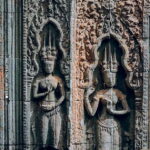
Banteay Srei is often called the pink sand stone or Lady temple, and that description matters. The stone tone makes the carvings pop in a way that can feel different from the darker, older stone at some of the bigger Angkor sites.
This plan lists admission as free, which is a big budget win. It also makes the day feel less like you’re constantly paying to access every step.
The other benefit of this timing is that Banteay Srei is a chance to slow down and look for detail. A guide can point out carvings and design choices so you don’t just see a pretty facade—you actually read the temple.
Kbal Spean (About 1 Hour)
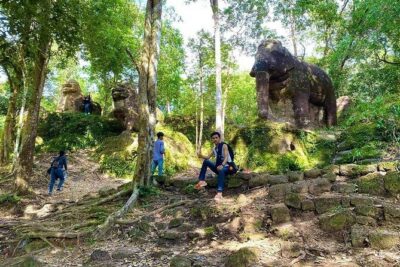
Kbal Spean is described as a sacred pathway with a waterfall and caves connected to Hindu god Vishnu. This is the kind of stop where you’ll likely remember the feeling of being in a quieter area, more tied to water and stone carvings than big temple courtyards.
Your time is about an hour, so don’t expect endless wandering. Go with a checklist mindset: find the carvings, understand what the site represents, and take in the setting while you still have energy.
As always in Cambodia, plan for humidity and uneven footing. If the path looks slippery, take your time. This is one of those places where you’ll enjoy it more if you don’t rush.
Cambodia Landmine Museum (About 30 Minutes)
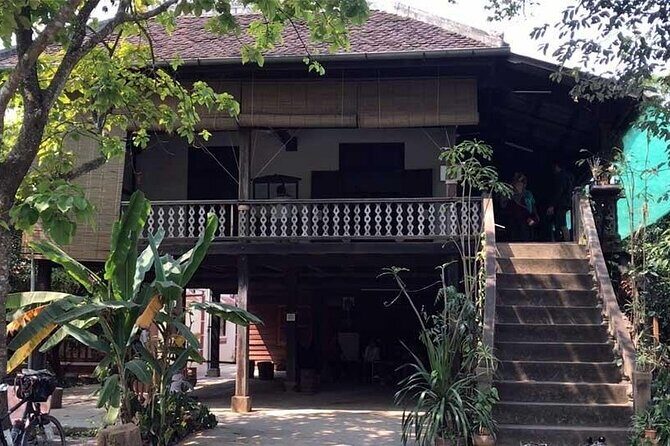
Then you get a very different stop: the Cambodia Landmine Museum. The tour description frames it through Cambodia’s wars, including the Vietnam War period when American bombing targeted areas linked to supplies and movements.
This is a short visit, but it’s heavy. I like that it’s not treated as a long detour. You get a meaningful pause in the middle of a temple-focused schedule without turning the whole day into sadness.
If you want your itinerary to make emotional sense, this is one of the stops that gives you context for why Cambodia’s present matters so much.
Day Three: Beng Mealea, Bakong, Preah Ko, and Lolei
Day three leans into a more “ruins with atmosphere” feel. You’re still seeing important temple sites, but the energy shifts away from polished spectacle and toward places where nature has taken its turn.
Prasat Beng Mealea (About 2 Hours)
Beng Mealea is built in the early 12th century and is described as an example temple to build Angkor Wat. It’s about 75km from Siem Reap, so this is where the logistics of the day start to matter. Long drive time usually means you’ll be glad the tour keeps things organized.
What makes Beng Mealea special is that it’s ruined and overgrown by big trees and plants. The description notes there wasn’t renovation due to road access, and you feel that in the site’s texture. It’s more “wild” than the big restored temples, and that’s the point.
You’ll likely enjoy Beng Mealea most if you like exploration and you don’t need everything to be symmetrical. This is a place for slow walking, looking upward, and letting the setting do the storytelling.
Bakong (About 30 Minutes)
Bakong is one of the oldest temples in the region and is dedicated to Shiva. With only about 30 minutes here, think of it as a focused look rather than a long study.
Even in a short slot, a guide can help you orient quickly: where to stand, what to notice, and how the temple design relates to the larger tradition.
Preah Ko (About 30 Minutes)
Preah Ko has 6 towers and is built to dedicate to a king ancestor. It’s a quick stop, so you’ll get more from it if you show up mentally ready to scan for details: tower shapes, layout, and how the structure signals its purpose.
A shorter temple slot can be a good thing. It keeps the day from dragging and makes it easier to save energy for Beng Mealea’s longer walk.
Lolei (About 30 Minutes)
Lolei is described as a temple built on the island of Indratataka Baray. That detail is important because it changes how the temple feels. Even without a long visit, the setting can make the place feel separated from the rest of the grounds.
If you’ve been seeing temple after temple all morning, Lolei works like a visual breather, especially because the baray island setting gives you a different kind of composition.
Koh Ker: The Jungle Prang That Turns You into a Explorer
The tour description’s real “wow” factor leans toward Koh Ker, described as one of the oldest cities in the Khmer Empire. It’s said to have been built between 928 AD and 944 AD and home to over 10,000 people.
The standout feature is the 7-tiered Prang pyramid, about 36 metres high, set in the jungle. When you’re at the highest point, the description says what you see is mostly forest, which is exactly the mental shift you want if you’ve been temple-crowded. This is the kind of place where you can feel far from everything, even while standing in a historically important site.
Another highlight mentioned is Prasat Bram, also known as the Five Temples. Two of the brick towers are described as completely overgrown with strangled figs. That image is so specific it’s hard to forget, and it’s the kind of natural takeover that makes ruins feel alive rather than preserved.
The description also notes there are small food and drink stalls around the main Koh Ker car park. That matters because Koh Ker-type stops are often more than a quick photo. If your day includes it, you’ll likely appreciate having a simple place to pause and reset.
I’ll add a reality check: Koh Ker isn’t listed in the short stop-by-stop schedule, so you should confirm your exact route for your dates. Still, it’s clearly part of the appeal this tour leans on, and it’s the reason this whole region tour feels less like repeating the same Angkor photo stops.
Price Reality Check: Value vs. Entrance Fees
At $100 per person, you’re paying for private transport, a guide, pickup, and cold water. That’s a solid deal when you consider how much time you save by not coordinating vehicles and route timing yourself.
But you need to price in entrances. The plan says admission tickets aren’t included for several stops, which can change your total cost depending on what you visit and what ticket rules apply on your day.
The good news is there is at least one clear break: Banteay Srei is listed as free admission in this plan. That won’t cover everything, but it helps your math.
If you want the most value, bring extra cash for admissions and small meals (the day includes time around temple areas where snacks can help you avoid getting hungry at the worst possible moment).
What to Bring (Because Temples Do Not Care About Your Outfit)
This is a practical temple circuit, so pack like you’re expecting sun and stone.
- A hat and sunscreen. Morning helps, but you’re still outdoors for hours.
- Comfortable shoes. Expect dirt, roots, and uneven ground at jungle temples and ruins.
- Light layer. Morning can feel different than midday in Siem Reap.
- A small refillable water bottle. You’ll get cold water during the tour, but having extra helps.
Also, plan mentally for heat. Even with a driver and scheduled stops, you’ll feel the walking. The tour’s “moderate physical fitness” note is there for a reason.
Who This Tour Fits Best
This experience fits best if you want three things in one package:
You want Angkor Wat and Bayon, but you also want Ta Prohm’s jungle atmosphere and time in more ruin-like temples. You want a guide for context, not just a driver who drops you at a gate. And you prefer a private schedule that keeps the day moving while still letting you linger where it matters.
If you’re the type who gets cranky when a day turns into a bus swarm, this kind of private format is a relief. If you hate surprises, you should budget for entrances since meals and ticket costs aren’t included.
Should You Book Sacred Siem Reap Tours?
Yes, I’d book it if you want a guided, private 3-day temple plan that mixes major Angkor icons with places that feel more like you’re wandering a Khmer ruin than walking through a theme park. The guide/driver setup, pickup, and cold water are real comfort wins.
I’d hesitate only if you’re trying to keep your total cost strictly at the $100 figure, because entrance fees will add on. Also, if you dislike walking on uneven temple ground, you’ll want to take your time and bring solid footwear.
FAQ
How long is the tour?
It runs for about 3 days.
What time does the tour start?
The start time is 8:00 am.
What does the $100 price include?
It includes a guide and driver, and cold water. Pickup is offered, and you receive a mobile ticket.
Are entrance tickets included?
No. Entrance fees are not included, except Banteay Srei is listed as free in this plan.
Is this tour private?
Yes. It’s a private tour/activity, and only your group participates.
Do I need meals or accommodation included?
No. Accommodations and meals are not included.
What is the cancellation policy?
You can cancel for free up to 24 hours in advance of the experience start time for a full refund.
Is the tour suitable for all fitness levels?
The tour notes a moderate physical fitness level is recommended.