REVIEW · SIEM REAP
Siem Reap Angkor 4 best of the best temples tour
Book on Viator →Operated by Angkor Guide Team · Bookable on Viator
Sunrise at Angkor Wat changes everything. This focused Siem Reap day trip is built around sunrise timing, then rolls into three more top sights by car, so you get the big Angkor moments without losing your whole day to logistics.
I like two things right away: the small-group private setup (up to 15 people) and the way the day is structured to move efficiently between sites. The other big plus is the guide team behind it, often led by John Thearith, who explains what you’re seeing and helps you with practical moments like photo angles. The only drawback to weigh is that it starts very early and keeps a brisk pace, and lunch is on you.
In This Review
- Key highlights worth clocking
- Why the four-temple plan works in Siem Reap
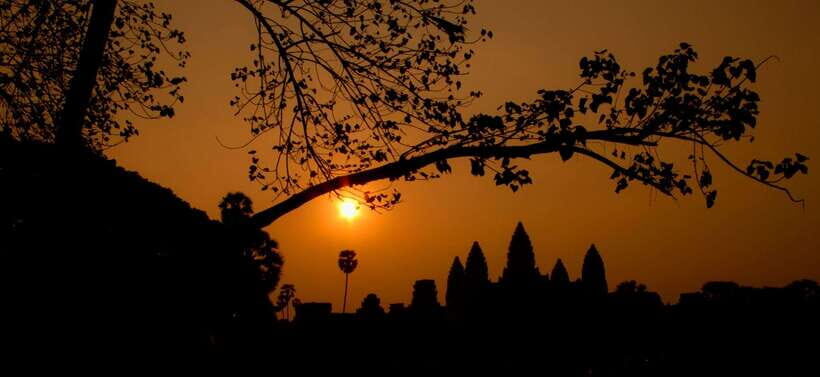
- Angkor Wat at sunrise: the 4:45am start and what you’ll be chasing
- Ta Prohm: the Tomb Raider look, timed for a calmer feel
- Banteay Kdei: the teacher temple of Jayavarman VII
- Bayon at Angkor Thom: faces, geometry, and photo timing
- Price and logistics: what $115 buys you in real convenience
- Your guide and driver: the service factor that makes it worth it
- Timing, what to wear, and how to plan your day
- Who this tour suits best
- Should you book this 4 Best of the Best Temples tour
- FAQ
- How long is the Siem Reap Angkor 4 best of the best temples tour?
- Does the tour include pickup?
- Which temples are included?
- Is temple admission included?
- Is lunch included?
- What time does the sunrise start at Angkor Wat?
- What happens if weather is poor?
Key highlights worth clocking
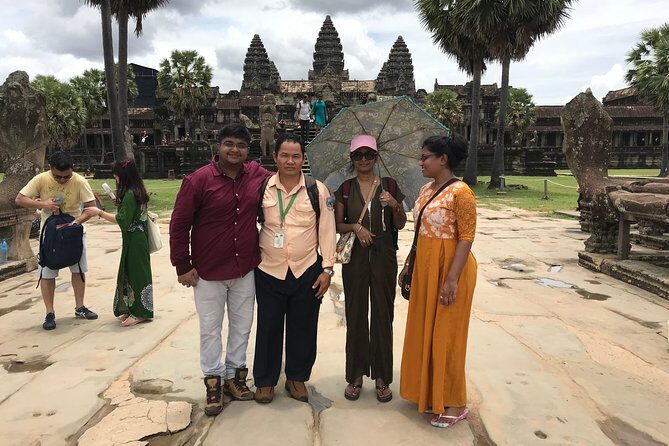
- 4:45am Angkor Wat start for the sunrise window people actually want
- John Thearith guidance with answers and photo-friendly stopping points
- All four major temples in one day: Angkor Wat, Ta Prohm, Banteay Kdei, Bayon
- Avoiding crowds when possible through timing and spot choices
- Air-conditioned vehicle pickup so you can focus on temples, not transport
Why the four-temple plan works in Siem Reap
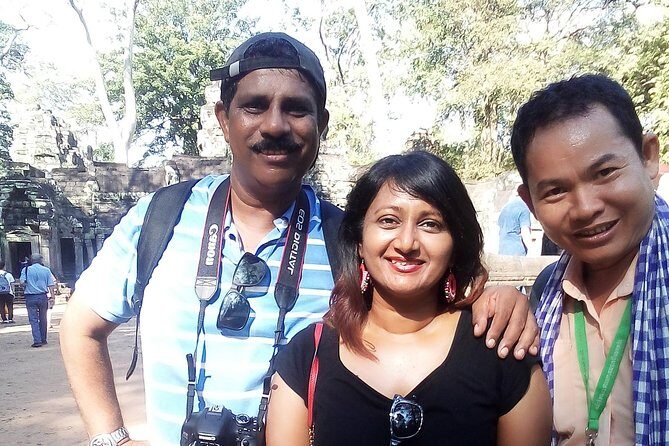
Angkor is huge. You can burn days there and still feel like you barely scratched the surface. This tour is for the opposite approach: you want the strongest, most recognizable highlights in one day, without turning your trip into a spreadsheet.
I like that it’s built for real-world timing. You start at Angkor Wat before many tour groups are fully in gear, then you move to Ta Prohm later in the day, and you finish with two stops that sit in the Angkor Thom area. That sequencing matters because it helps you avoid the worst crowd crush at the exact place people line up for first.
It’s also private in the sense that it’s only your group, not a random merge with strangers. With group sizes listed from 1 person up to 15, you’ll generally get a calmer feel than the biggest bus-style tours. That can make a difference when you have questions.
One more value note: admission is included for the main temples you visit, and you get an air-conditioned vehicle. Those are the kinds of costs and hassles that add up fast when you try to self-drive or piece together multiple tuk-tuk rides.
You can also read our reviews of more tours and experiences in Siem Reap.

Angkor Wat at sunrise: the 4:45am start and what you’ll be chasing
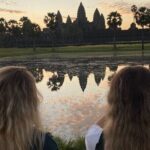
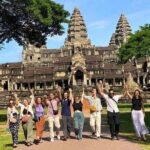
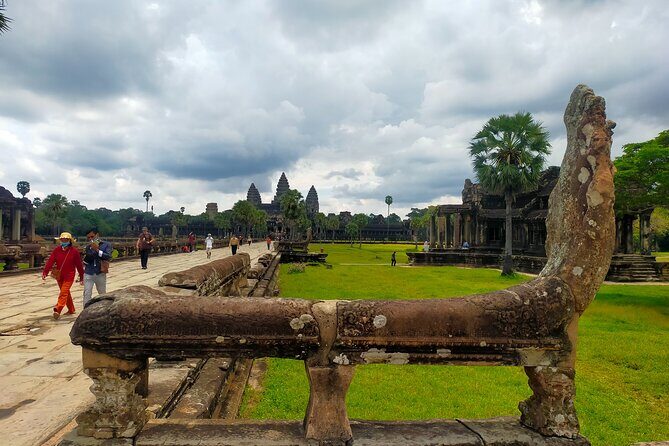
Angkor Wat is the reason most people come to Siem Reap, and sunrise is when it feels most alive. Your morning begins with pickup from your hotel/guesthouse or another meeting place, then you go through ticket handling with the plan set around an early departure.
The sunrise start is scheduled for 4:45am at Angkor Wat. After the sunrise viewing, there’s breakfast nearby the temple, which is a smart move because you’re already up and moving, so you don’t lose time hunting for food. Then you shift into a proper visit of Angkor Wat with about 3 hours allocated.
What you should expect at this stop:
- You’ll walk through the temple complex while light and shadows change quickly.
- The guide will help connect what you’re seeing to the bigger Angkor story, so it doesn’t feel like you’re just photographing stone.
- You’ll have photo opportunities, including advice on where to stand for better angles and less shoulder-to-shoulder crowding.
A practical thing I’d take seriously: this is early. If you’re the type who needs a slow morning, build in some extra sleep the night before. The upside is you get the best atmosphere with fewer people crowding the exact same foreground.
Ta Prohm: the Tomb Raider look, timed for a calmer feel
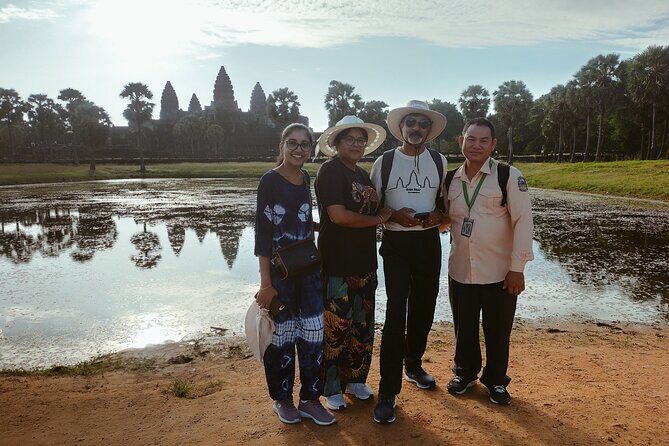
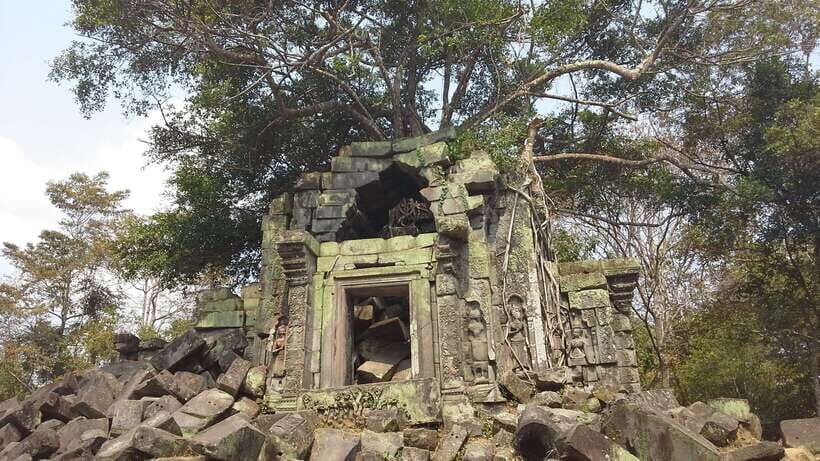
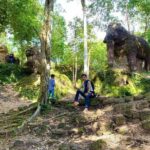
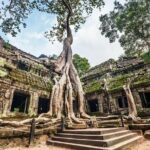
After Angkor Wat, the next stop is Ta Prohm. If you’ve seen the Tomb Raider imagery, this is the temple that’s burned into your brain: tree roots hugging stone, an almost surreal mix of ruin and jungle.
Ta Prohm is scheduled after the morning drive, and you’ll have a lunch stop nearby the temple around 12:30pm (lunch itself is not included). Then you get roughly 1 hour 30 minutes at Ta Prohm with admission included.
Here’s why this stop is worth the time:
- Ta Prohm rewards slower looking. Roots, carvings, and collapsed structures are all part of the scene.
- The chaos can spike here, so timing matters. This tour’s structure aims to avoid the worst overlap by not keeping you at the same place at the same moment as every other group.
- A strong guide can help you find the best photo spots without wasting your time wandering blindly.
One thing I like in this style of tour is that you’re not stuck rushing through the dramatic parts. If you’re with a guide like John Thearith, the focus tends to be on letting you understand what you’re seeing, not just pointing and moving on. In the car and at the temples, the emphasis is often on answering questions and helping you get the shot you actually want.
Banteay Kdei: the teacher temple of Jayavarman VII

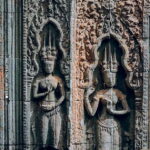
After lunch, you head toward Banteay Kdei. This site is described as the teacher temple, built by King Jayavarman 7. That detail matters because Banteay Kdei isn’t just another ruin. The carvings and layout are part of how Jayavarman 7 expressed devotion and kingship through architecture.
The schedule places this stop after lunch, starting around 1:30pm or 2:00pm depending on how the morning flows. The time shown for the stop is brief (listed as 2 minutes), which likely means you get a quick orientation and photo/spot check rather than a long sit-down walk. Treat it as a stop where your guide steers you to the most important views.
What you’ll get if you keep your expectations practical:
- A fast look at key temple features and key points your guide wants you to notice.
- A chance to break up the day before the final major stop.
- Context so the stone doesn’t become background noise.
If you’re the kind of person who wants to linger for long, deep reading and lots of solo wandering, you might find the pacing tight here. But if you’re balancing multiple famous temples in one day, Banteay Kdei works as a smart add-on that still connects to Angkor Thom’s broader story.
Bayon at Angkor Thom: faces, geometry, and photo timing
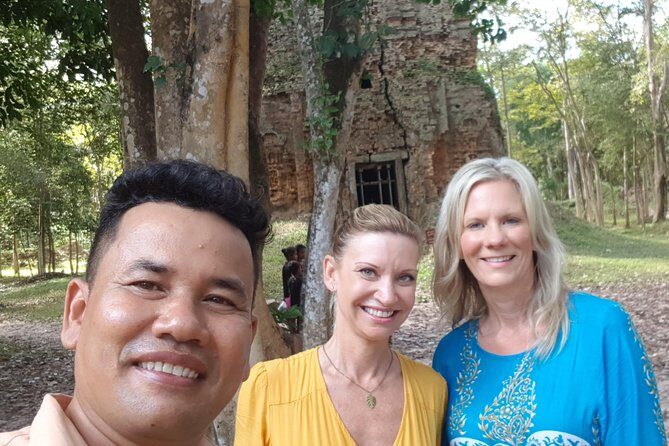
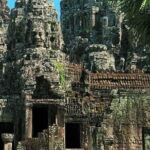
Bayon Temple sits in the middle of Angkor Thom. It’s famous for the iconic face towers, and it’s the kind of place that feels different depending on the angle you choose—one moment it looks symmetrical and calm, and the next it feels like the faces are watching you move.
This tour has you heading to Bayon after Banteay Kdei, again with a short time window shown (also listed as 2 minutes). Like Banteay Kdei, plan on a focused visit: you’ll likely hit the most important views quickly, and your guide will help you choose where to stand so you get the best perspective without getting trapped behind a cluster of people.
Why I think Bayon is a strong finish:
- By the time you reach it, the day’s rhythm is set. You’re not scrambling—you’re collecting the last major impressions.
- The face towers are naturally photo-friendly, but you still need the right positions to avoid the worst crowd stacking.
- The guide can explain what you’re seeing in plain terms, so the carvings and temple layout feel purposeful, not random.
If you care about photos, this is where your guide’s timing help matters. Several guides associated with this operation are praised for steering people to photography spots and helping with the practical side of getting the shot. If that’s a priority for you, Bayon tends to reward it fast.
Price and logistics: what $115 buys you in real convenience
At $115 per person for a 5 to 8 hour private temple tour with pickup, the value depends on how you’d do it on your own.
Doing Angkor efficiently isn’t just about tickets. The biggest pain points are:
- getting to sunrise on time without stress,
- coordinating entry and transport between sites,
- and avoiding time-wasting detours.
This tour includes air-conditioned vehicle transport and temple admission for the four included temples. It also offers pickup, which saves you the hassle of organizing multiple rides for a route that’s spread across the park.
Is it cheap? It’s not a bargain-basement option. But if you’re trying to cover Angkor Wat + Ta Prohm + Bayon + Banteay Kdei in one day with minimal friction, it can be a good trade.
The one cost you should mentally reserve is lunch, since it’s not included. The schedule does build in lunch stops nearby Ta Prohm, but you pay for your meal.
Also consider your tolerance for an early start. You’re buying time and convenience, not sleeping in. If you’re okay with that, the package feels more like a smart day of highlights than a rushed checklist.
Your guide and driver: the service factor that makes it worth it
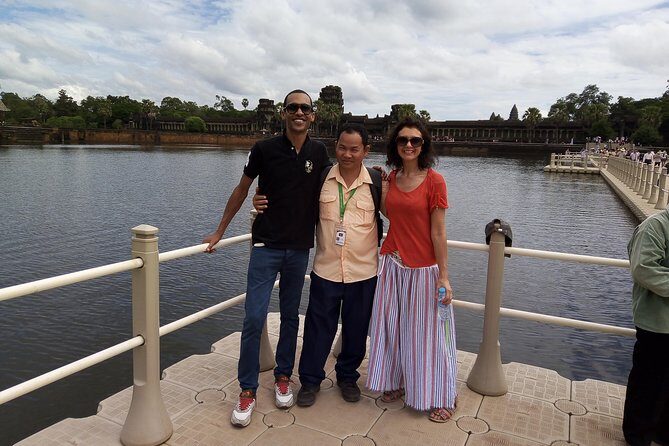
This tour is operated by Angkor Guide Team, and the guide is often John Thearith. The service style described for this team is consistent: official licensing recognized by the Ministry of Tourism, and a focus on being honest, informative, and responsible.
From what’s shared, the strongest praises cluster around guide behavior:
- friendly communication and answering questions,
- helping with photography through good stopping points and advice,
- and trying to avoid crowds when possible.
That matters more than people think. In Angkor, the difference between a mediocre day and a memorable day isn’t the temple’s existence. It’s how you experience it: where you stand, how you time your arrival, and whether you understand what you’re looking at while you’re looking at it.
There’s also mention of the driver experience, including a driver named Bonna in one account. You’ll be in the air-conditioned vehicle during the transfers, which helps if you’ve had a hot day already or you’re simply trying to conserve energy for walking.
Timing, what to wear, and how to plan your day
Even though this is a temple tour, it’s still an all-day human logistics exercise. Here’s how I’d plan it so you’re comfortable and not cranky.
Start smart: since the sunrise begins at 4:45am, you need to treat the night before as part of the plan. Aim for an early bedtime and have your basics ready so you’re not digging around when pickup time is close.
Dress for heat and walking: lightweight clothes help, but temples also involve covering appropriately. Bring something you can manage for sun and humidity. Comfortable shoes are non-negotiable; Angkor floors can be uneven and busy.
Bring a small strategy for photos: if photography is a priority, your best move is to lean into your guide’s cues—when they tell you where to stand, do it. The tour’s praise for photography sense suggests the guide actively helps with positioning rather than just saying take a picture and go.
Plan for meals you pay for: breakfast is provided after sunrise at a nearby restaurant, but lunch is not included. You’ll stop for lunch around midday near Ta Prohm, so keep some cash or a card ready for whatever you choose.
Who this tour suits best
This is a great match if:
- you want the famous Angkor anchors in one day without getting overwhelmed,
- you’re short on time and prefer a structured plan,
- you care about having a guide explain what you see (instead of only snapping photos),
- and you want a private-group feel rather than a chaotic big-bus squeeze.
It may be less ideal if:
- you hate early mornings,
- you want to linger for long at every stop,
- or you dislike moving quickly between locations.
Should you book this 4 Best of the Best Temples tour
If you’re visiting Siem Reap for a short stretch and you want the classic Angkor hits, I’d consider booking. The combination of sunrise timing, included admissions, pickup, and a guide known for helpful explanations and photo support adds up to practical value—especially when your time is limited.
The decision hinges on one factor: pace. This tour is designed to get you through four major temples in one day, so expect a structured rhythm and brief windows at some stops. If that fits how you like to travel, it’s an efficient way to get real Angkor highlights without turning your trip into a full-week project.
If you want, tell me your travel dates and whether you prefer sunrise to be calm or high-energy for photos, and I’ll help you decide if the early start is your kind of thing.
FAQ
How long is the Siem Reap Angkor 4 best of the best temples tour?
It’s scheduled for about 5 to 8 hours.
Does the tour include pickup?
Yes. Pickup is offered from hotels, guesthouses, or other appointment places.
Which temples are included?
You visit Angkor Wat, Ta Prohm, Banteay Kdei, and Bayon.
Is temple admission included?
Yes. Admission tickets are included for the four included temple visits.
Is lunch included?
No. Lunch is not included, though the plan includes a lunch stop near Ta Prohm around midday.
What time does the sunrise start at Angkor Wat?
Sunrise at Angkor Wat is scheduled for 4:45am.
What happens if weather is poor?
If the experience is canceled due to poor weather, you’ll be offered a different date or a full refund. There is also free cancellation up to 24 hours in advance for a full refund.