REVIEW · SIEM REAP
1 Day | Angkor Wat Sunrise with Small Tour
Book on Viator →Operated by Hok Cambodia Journeys · Bookable on Viator
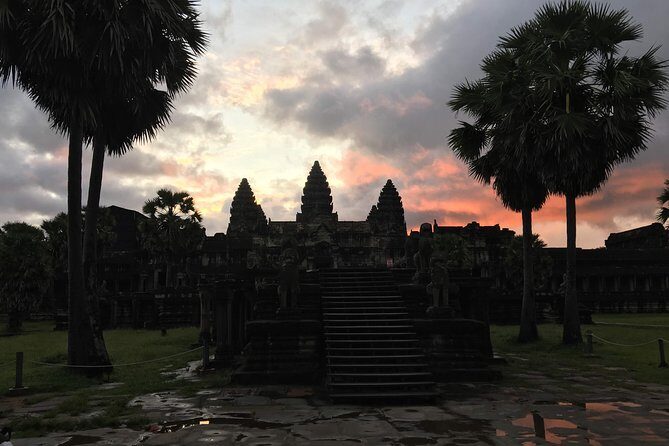
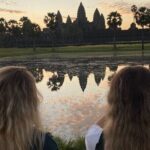
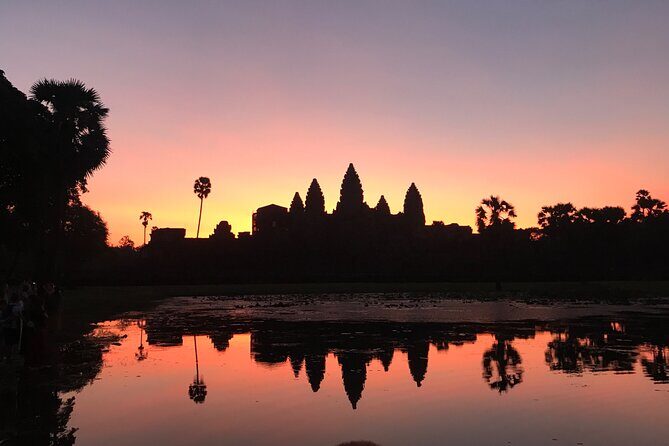
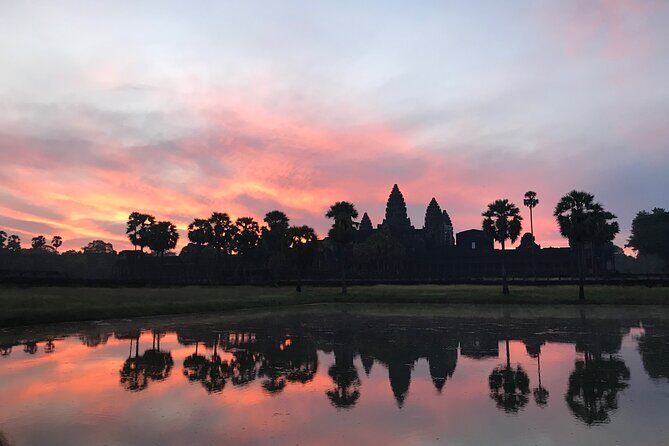
Sunrise in Angkor starts before dawn. This Angkor Wat morning tour times it right for that magical glow behind the towers and pairs it with three major sights afterward, all in one smooth half-day. You’ll start at 4:30 AM and aim for the best viewing angle near the reflection pool, when the sky can turn dramatic.
What I like most is the way the schedule supports the temples without turning it into a sprint. You get a senior English-speaking guide (Hok) who’s calm, careful, and built for explaining what you’re looking at, not just walking past it. I also appreciate the basics covered for comfort: a private air-con vehicle, cool water and towels, and local snacks for the early start.
One thing to factor in: the Angkor Temple Pass is not included (it’s listed as $37 per person), so your real temple budget is higher than the headline tour price. Also, since sunrise plans depend on conditions, it’s tied to good weather.
In This Review
- Key things that make this sunrise tour work
- Why the 4:30 AM Angkor Wat Start Changes Everything
- Angkor Wat: Cardinal Alignment, Best-Preserved Status, and What to Watch
- Angkor Thom and Bayon Temple: Gates, Demons, and the King Behind the Smiling Faces
- Ta Prohm’s Roots and That Tomb Raider Look
- Price and Logistics: What $66 Covers and What It Doesn’t
- Comfort on the Road: Air-Con, Towels, and Early-Morning Fuel
- Guide Hok’s Style: Clear Explanations and Safety-First Attention
- Timing, Weather, and How to Protect Your Sunrise Chances
- Who This Small Sunrise Tour Fits Best
- Should You Book This Angkor Sunrise Tour with Hok Cambodia Journeys?
- FAQ
- What time does the Angkor Wat sunrise tour start?
- How long is the whole experience?
- Do I need to buy the Angkor Temple Pass?
- Is pickup included?
- Is this a private tour?
- What happens if weather is poor?
Key things that make this sunrise tour work
- 4:30 AM departure so you’re at Angkor Wat while the day is still forming
- Reflection pool positioning for that classic temple-and-sky look
- Small private group with Hok for clear explanations and steady pacing
- Air-con vehicle + water, towels, and snacks so you’re not just surviving the morning
- Four major sites in ~6 hours without feeling like you’re skipping everything
- Angkor Temple Pass not included (so budget for it up front)
Why the 4:30 AM Angkor Wat Start Changes Everything
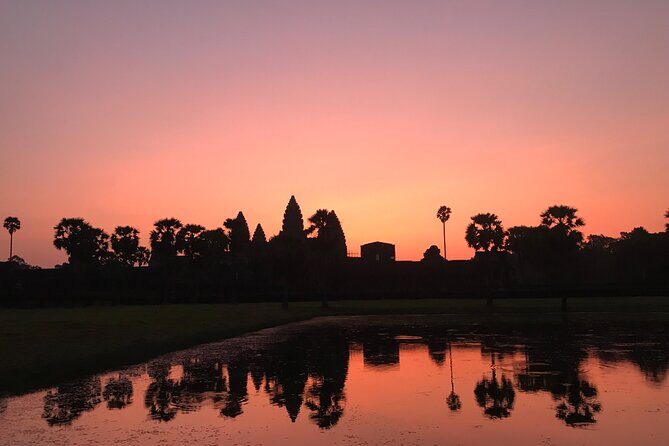
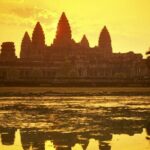
This tour begins at 4:30 AM, which is early enough to feel like a mission and late enough that you’re not going to miss the sunrise. Angkor Wat’s timing matters because the temple is famous for a specific kind of morning drama—especially around the equinoxes, when the sunrise glow is tied to astronomical alignments.
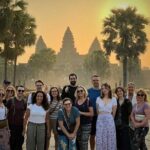
You’ll head from your hotel to get into position, and the goal is to see Angkor Wat facing the morning light in a way most people only catch in photos. The tour focuses on being in front of the reflection pool, which is a smart move because that’s where the scene can look extra iconic if the sky cooperates.
And yes, it can feel intense at first. But the flip side is that you’re doing the one thing Siem Reap visitors usually regret missing: the first light hitting the towers.
A few more Siem Reap tours and experiences worth a look

Angkor Wat: Cardinal Alignment, Best-Preserved Status, and What to Watch
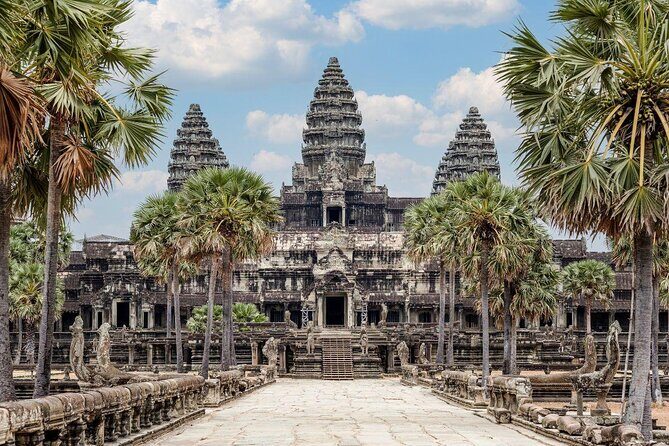
Angkor Wat is the largest religious monument in the world, and it’s also one of the best-preserved. That combination is why it hits harder than most ruins—you can actually read the building instead of just admiring it from a distance.
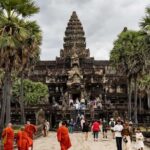
Your time here is about 2 hours, and the guide’s role is front and center. You’ll get taken through the main building and around the complex, with explanations built around what makes Angkor Wat special: its alignment with the cardinal points and its engineering that reflects Khmer skill and Hindu influence.
If you want practical advice, focus on three things during those first minutes:
- Watch how the light interacts with the temple’s towers as the sky brightens
- Look for how the layout feels intentional, not random
- Pay attention to what the guide highlights, because details are easier to spot with context
This is also where a good guide makes a real difference. Hok’s style (based on how people describe him) is patient and attentive, which matters early in the morning when your brain is still loading.
Angkor Thom and Bayon Temple: Gates, Demons, and the King Behind the Smiling Faces
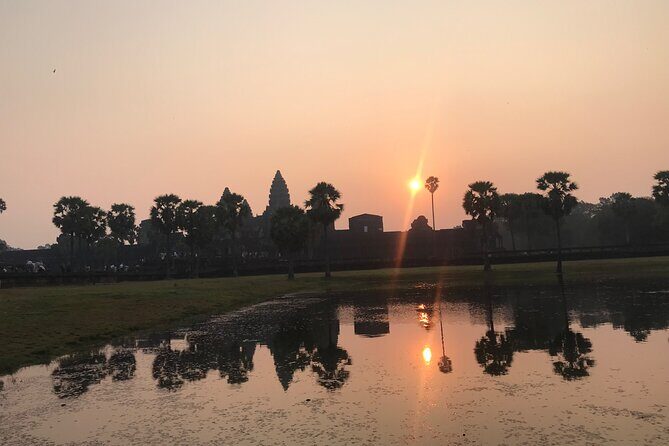
After Angkor Wat, you shift to Angkor Thom, the fortified capital city of the Khmer Empire. It was founded by King Yasovarman I, and the name means Great City—an instant hint that this was meant to feel huge and powerful.
You’ll spend about 30 minutes here. The layout includes major Hindu and Buddhist sanctuaries, including the royal palace area and the famed Bayon Temple. What makes Angkor Thom especially interesting is the design of its gates: they correspond to the cardinal directions and feature towering statues of demons and gods. That symbolism is tied to a cosmic struggle between good and evil, so it’s not just decoration—it’s meaning built into stone.
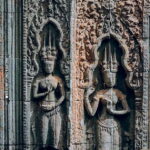
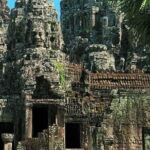
Then comes Bayon Temple for about 45 minutes. Bayon is set in the heart of Angkor Thom and is known for the smiling faces that many people recognize instantly. The bigger story is the blend of Hindu and Buddhist art, which reflects the religious tolerance of the period when King Jayavarman VII helped end conflicts and encouraged peace.
This stop is a good one for slowing down. If you’ve been rushing through sightseeing before, here’s where pacing pays off: the faces and the carvings make more sense when you’re not constantly switching contexts.
Ta Prohm’s Roots and That Tomb Raider Look
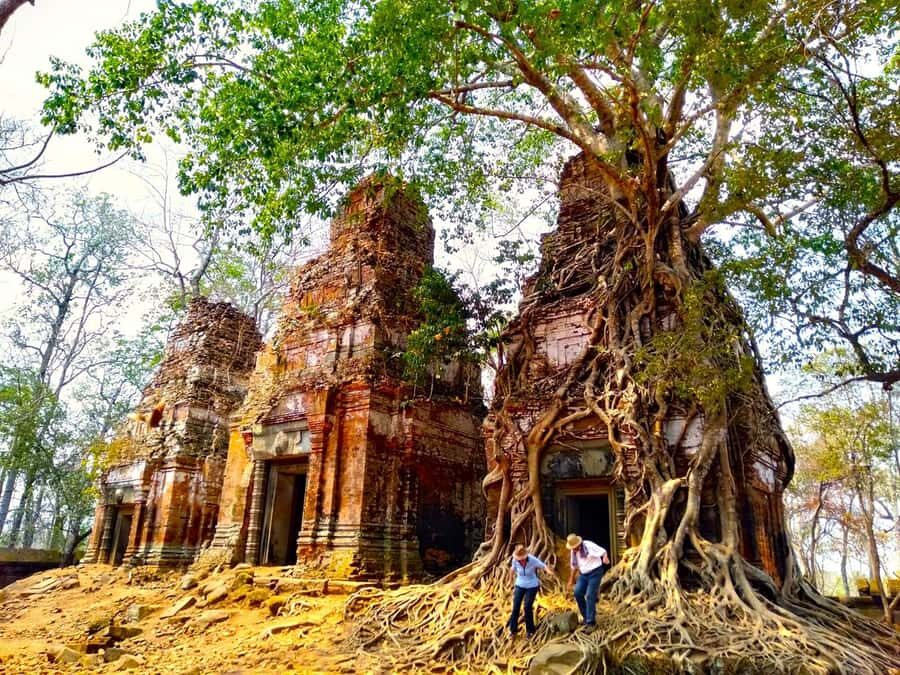
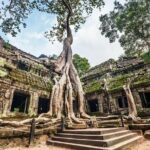
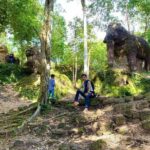
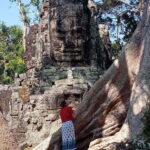
Next is Ta Prohm, the temple famous for the way trees and roots grow around the ruins. It’s often associated with the Hollywood blockbuster Tomb Raider, but even if you know it from movies, the real thing is still startling in person.
You’ll have about 1 hour at Ta Prohm. The temple was built by King Jayavarman VII in 1186 and dedicated to his mother, represented through Prachnabaramita, the goddess of mercy and wisdom in Mahayana Buddhism. That’s a useful detail because it changes how you see the scene: it’s not just nature swallowing stone; it’s a sacred structure with specific religious intent.
Ta Prohm is also a great place to notice textures—stone worn smooth by time, roots squeezing through openings, and the way the structure frames the greenery. If you’re taking photos, this is the stop where the guide’s presence can help you choose angles and keep you moving safely around uneven ground.
Price and Logistics: What $66 Covers and What It Doesn’t
The tour price is $66 per person, and it’s sold as a small private experience with pickup offered. The included items are actually a solid chunk of value for a morning schedule: a private air-con vehicle, a senior English-speaking guide (Hok), cool water and towels, and local snacks.
But the biggest budget item is the Angkor Temple Pass, listed as $37 per person and not included in the tour price. So you should think of your total as tour price plus the temple pass per person. If you’re planning as a group, calculate it early so you’re not doing math at 4 AM with a headlamp of stress.
There’s also a note that the tour offers mobile tickets and group discounts, which can help if you’re booking more than one seat. And since it’s popular enough to be commonly booked about 15 days in advance, waiting until the last minute can limit your options for the exact date.
A few more Siem Reap tours and experiences worth a look

Comfort on the Road: Air-Con, Towels, and Early-Morning Fuel
This tour is designed around an early start, so comfort isn’t a luxury—it’s part of whether you enjoy it. You’ll ride in a private air-con vehicle, which is a big deal in Cambodia mornings when the day can heat up quickly after sunrise.
You’ll also get cool water and towels plus local snacks. That matters because the timing doesn’t leave much room to slow down and find refreshments. In practice, this helps you stay focused on the temples instead of worrying about basic needs halfway through the morning.
And because it’s private, you’re not stuck with a random mixed pace. It’s your group only, which usually means fewer awkward stops and less time spent playing catch-up.
Guide Hok’s Style: Clear Explanations and Safety-First Attention
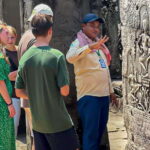
A sunrise tour is only as good as the guide who controls the flow. People describe Hok as very informative, and his approach is patient and kind. That kind of calm is useful when you’re working in the dark or moving through crowds at major temples.
One theme that comes through strongly is safety and care. The way he’s described includes checking on your well-being, which I think is key for families and mixed-age groups—especially when you’re up early and walking more than you expected.
There’s also a practical bonus: Hok is described as a professional photographer. That doesn’t mean you’ll get a studio session, but it does suggest he understands light and angles at places like Angkor Wat and Ta Prohm, where timing is everything.
Timing, Weather, and How to Protect Your Sunrise Chances
This experience requires good weather. That’s not a minor line—it’s central to why the tour starts so early and why the reflection pool plan is part of the plan.
If the tour is canceled due to poor weather, you’ll be offered a different date or a full refund. So the best strategy is to book when you have flexibility built in, rather than treating this like a once-only stop on a perfectly locked itinerary.
If you’re traveling around the equinoxes, you’re in the season where Angkor Wat’s equinox sunrise phenomenon is especially noted. Even outside those windows, sunrise at Angkor still works because the temple and the sky are made for each other—you’re just betting on the exact color and clarity of that morning.
Who This Small Sunrise Tour Fits Best
This is a good fit for first-timers who want the major hits without having to plan every turn of the day. It’s also a smart choice if you prefer structure: you get a timed route through Angkor Wat, Angkor Thom, Bayon, and Ta Prohm, with context for what you’re seeing.
Because the tour says most travelers can participate, it also works for families and older visitors who want help pacing. If you have kids, an early start can be rough, but a calm guide and provided snacks can make it far more manageable.
On the other hand, if you love long, independent wandering and you hate being tied to a set schedule, you might feel constrained. This tour is built for seeing a lot clearly, not for drifting for hours.
Should You Book This Angkor Sunrise Tour with Hok Cambodia Journeys?
If you want one strong morning in Siem Reap that hits the world-famous sunrise and then delivers the core temples in a sensible order, I’d say this is an easy yes. The value isn’t just the low-sounding tour price—it’s the included guide time, the private air-conditioned ride, and the morning support (water, towels, snacks) that helps you enjoy rather than endure the early hours.
Just go in with two budgeting realities:
- Plan for the $37 Angkor Temple Pass per person
- Know that good weather matters for the sunrise experience
If those fit your trip style, booking this small tour is a practical way to see Angkor the way it’s meant to be seen: early light, clear explanations, and four iconic temple stops without the usual chaos.
FAQ
What time does the Angkor Wat sunrise tour start?
The tour starts with departure from your hotel at 4:30 AM.
How long is the whole experience?
It lasts about 6 hours.
Do I need to buy the Angkor Temple Pass?
Yes. The Angkor Temple Pass is not included and is listed as $37 per person.
Is pickup included?
Yes. Pickup is offered, and you travel in a private air-conditioned vehicle.
Is this a private tour?
Yes. It’s listed as a private tour/activity, so only your group participates.
What happens if weather is poor?
This experience requires good weather. If it’s canceled due to poor weather, you’ll be offered a different date or a full refund.