REVIEW · SIEM REAP
3-Hour Tour of Floating Village
Book on Viator →Operated by Khmer Detours · Bookable on Viator
Floating villages change with the water.
This 3-hour Tonle Sap Lake trip from Siem Reap lets you see Chong Khneas up close, with a guide who keeps things organized and focused on everyday life on the lake. Two things I like a lot are the private boat time on the water and the quick, easy half-day structure that works well if you want something memorable but not exhausting.
The main trade-off: depending on conditions and timing, you may not spend as much time in the most famous-feeling stretches of the village as you expect, and there can be a stop at a floating village market instead.
In This Review
- Key Highlights Before You Go
- Air-Conditioned Pickup, Lotus Fields, and the Road to Tonle Sap
- Arriving at the Checkpoint: How the Tour Avoids the Usual Stress
- The Boat Ride on Tonle Sap: What You’re Really Seeing
- Tonle Sap in Plain Language: Why the Village Moves
- The School Visit: The Part That Makes It Feel Human
- Time, Weather, and Comfort: A 3-Hour Tour That Still Works
- Price and Value: Is $38 a Fair Deal?
- Best-Fit Travelers: Who Will Enjoy Chong Khneas Most
- Tips to Get More From Your 3 Hours
- Should You Book This Floating Village Tour?
- FAQ
- How long is the floating village tour?
- What time does the tour start?
- What does the $38 price include?
- Do I get picked up from my hotel?
- Is there an entry fee when you arrive at Tonle Sap?
- How many people are in a group?
- Does the tour run in bad weather?
- Can I cancel for free?
Key Highlights Before You Go
- Hotel pickup and drop-off included, so you start and finish without hassles
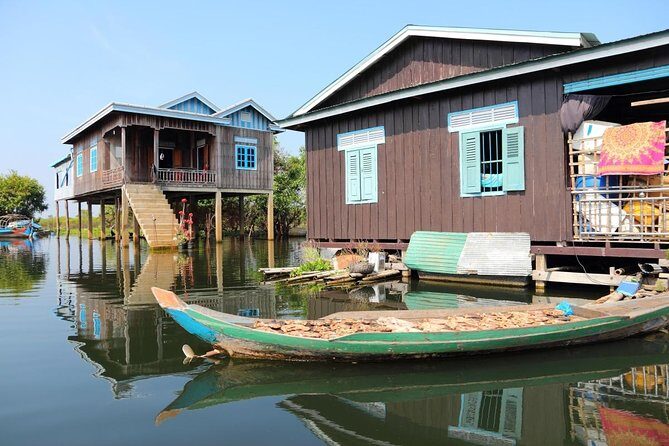
- Private boat ride on Tonle Sap Lake for an up-close look at lakeside neighborhoods
- Checkpoint entry and boat fees are covered in the price, with no hidden extras
- Lotus photo stop en route, tied to Buddhism and local culture
- School visit gives you a real sense of how education fits into floating life
- Small group size (max 20) keeps things easier for first-timers and families
Air-Conditioned Pickup, Lotus Fields, and the Road to Tonle Sap
You start at 9:00 am, with pickup arranged from your hotel reception area (or guesthouse pickup, depending on where you’re staying). The ride begins in an air-conditioned mini van, and you’re looking at about 30 minutes to cover roughly 14 km from Siem Reap to the lake area.
This stretch matters more than it sounds, because it sets the tone for what you’re about to experience. You’ll pass rice paddies and lotus farms, and your guide will pause for photos of lotus flowers. The flowers are closely linked with Buddhism, which helps you understand why people treat them as more than just pretty scenery. If you’re the type who likes photos but also wants context, this is a nice balance.
One practical tip: bring a light layer even if it’s warm. The van ride is comfortable, but once you’re at the lake checkpoint and on the water, the temperature and breeze can feel different. Also, have your camera or phone ready before the lotus stop so you’re not fumbling when the boat later makes you commit to timing.
A few more Siem Reap tours and experiences worth a look



Arriving at the Checkpoint: How the Tour Avoids the Usual Stress
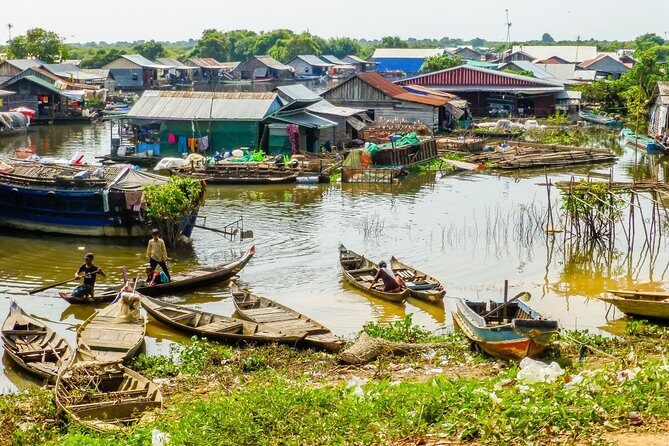
When you reach Tonle Sap, you go to the checkpoint area first. Your guide takes care of the entry fee, and that’s part of what makes this tour feel smooth. You’re not left negotiating logistics while everyone stands around.
Another big plus here is that your guide helps you avoid the scams that can happen in the area. You don’t need a long explanation to understand why that matters. When a tour promises one price and then you get surprise asks for money later, the experience tends to sour fast. This one is built to prevent that.
From there, you move onto the lake by private boat for your group. That transition—from the road into the water—feels like the whole point of the day. In a short 3 hours, you’re not wasting time on backtracking or long waiting periods.
The Boat Ride on Tonle Sap: What You’re Really Seeing
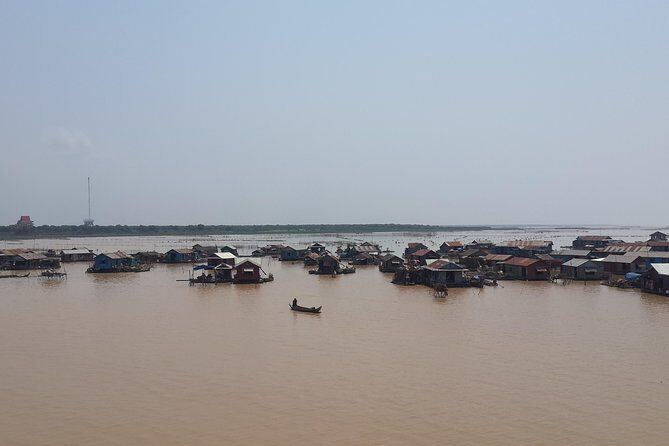
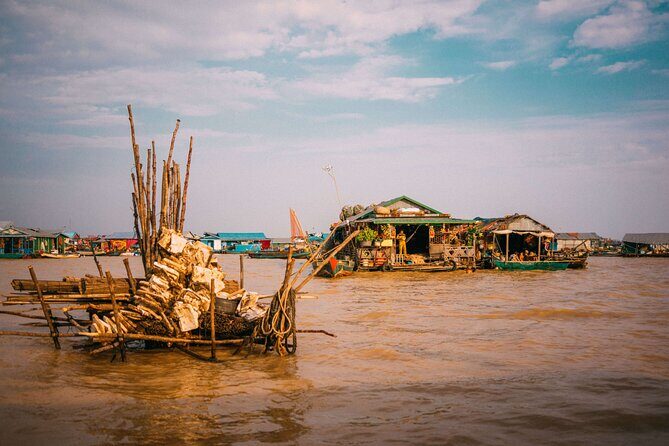
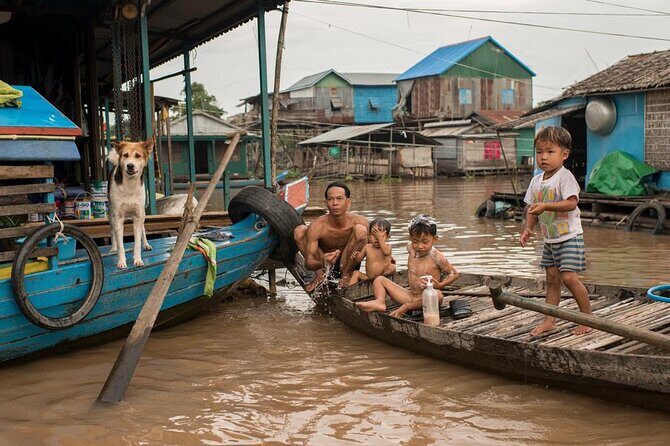
The heart of the tour is the boat ride around the floating village area. Tonle Sap is not like a normal lake, because it behaves more like a seasonal system than a fixed body of water. Your guide will use that reality to explain daily life on the lake, and the boat time is where it starts to make sense.
You’re cruising through markets and neighborhoods on the water. That’s one of the most useful contrasts for first-timers: you can look at the homes and streets, but you can also see commerce—small boats, sales points, and the rhythm of people working where the shoreline shifts.
Here’s what you should keep in mind if you’re expecting a single, dramatic, postcard-style part of the village. One review experience noted the tour felt more like a look through a smaller community than the main hub areas they expected, and the group also stopped at a floating village market. That doesn’t automatically mean it’s bad—it just means your experience may be shaped by how the day unfolds. If your priority is seeing the busiest commercial stretch, ask your guide what the plan is for that specific day once you’re on the water.
Still, even when the route isn’t exactly what you pictured, you’ll learn what matters: how people build life around the lake’s changes. A good guide can make that difference obvious, and one review highlighted Mony as a standout guide who helped turn a short trip into something packed with meaning. If your tour includes Mony, that’s a strong sign you’ll get more than just sightseeing.
Tonle Sap in Plain Language: Why the Village Moves
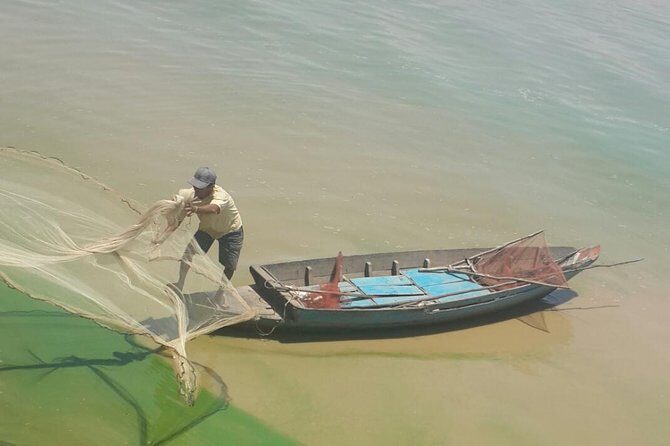
Tonle Sap is famous for changing size and direction through the year. Here’s the simple version that actually helps you understand what you see.
Twice per year, the lake’s flow direction changes. In the dry season, water empties south into the Vietnam Delta. In the wet season, the Delta swells and pushes water north into Tonle Sap. This changes everything for residents.
Depth changes dramatically. Early in the wet season, depth can be around 1.5 metres, but during the wet season’s peak it rises to over 10 metres. That’s why the floating villages shift position and why forest areas fill in quickly as water rises. It’s also why the area expands from about 2,700 sq km to more than 12,000 sq km.
If you want a practical takeaway for your camera and your expectations: when the water is higher, the village and daily routines can feel more “connected” to wider water routes. When it’s lower, you may notice different patterns in how people operate around the shoreline. Your boat ride is basically happening inside that seasonal math.
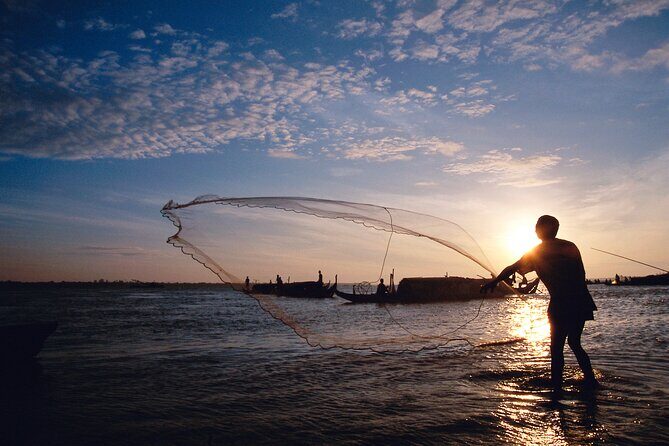
And Tonle Sap is also described as the largest fresh water lake in Asia, and the richest fishing lake, with fish per square km cited as world-leading. You don’t need to memorize those numbers, but it helps explain why daily life, food, and work revolve so tightly around the water.
The School Visit: The Part That Makes It Feel Human
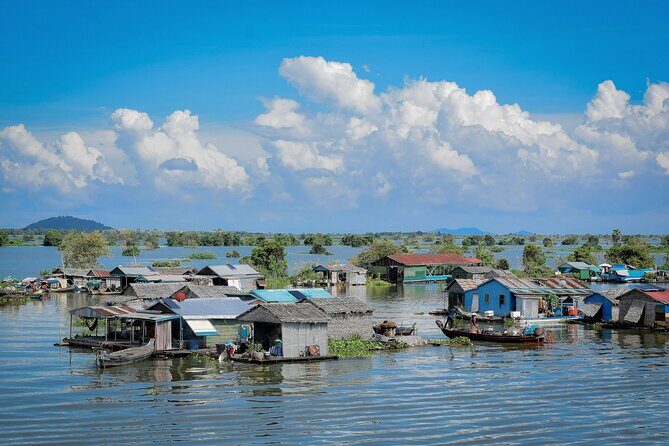
A standout part of this tour is the stop at a school, where you’ll see how education fits into the floating village setting. This isn’t just a sightseeing stop. It’s the piece that turns the trip from scenery into a human story.
For families, this is often the moment that kids remember, because school represents routine: lessons, learning, and a future beyond the lake. For adults, it’s also a reminder that communities adjust their structure around water levels, but they don’t stop planning for what comes next.
One more thing: when you’re in a place like this for only a few hours, a school stop can be one of the best ways to avoid the day becoming only about boats and photos. It gives the guide a chance to explain daily life in a grounded way.




Time, Weather, and Comfort: A 3-Hour Tour That Still Works
This is a 3-hour tour (approx.), designed to be doable even if you’re juggling temple days and heat. The short timing is a big deal. In Siem Reap, it’s easy to burn an entire morning and still feel like you saw nothing worth remembering. This one is built to give you a lakeside experience without eating your whole schedule.
Weather is another reality. The tour operates in all weather conditions, and you’re told to dress appropriately. That means you shouldn’t assume you’ll get perfect skies. One review described rain at the start and still having a fabulous time. If you go into it expecting possible showers, you’ll be much less likely to feel annoyed if the sky decides to open up.
Practical comfort notes:
- Wear shoes you don’t mind getting a bit dirty.
- Bring a light rain layer or poncho so you can enjoy the boat ride without rushing.
- Keep valuables sealed. A mobile phone is great until the air is damp and your hands are busy.
Group size is capped at 20 travelers, and that matters. Smaller groups tend to move smoothly, especially when you’re on a boat and everyone needs to listen at the same time.
Price and Value: Is $38 a Fair Deal?
At $38 per person, this tour is positioned as mid-range for Siem Reap activities—but the value depends on what’s included, and this one is clear about it.
Your price covers:
- Pickup and drop-off from your hotel
- An English-speaking guide
- All boat fees, checkpoint entry, and taxes
- All fees and all transportation
- A mobile ticket (with confirmation received at booking)
Food and drinks are not included, so you’ll want to plan a snack or meal separately.
Here’s how I think about value for this specific kind of experience: floating villages are easy to accidentally turn into a sales stop plus transport with vague storytelling. This tour is priced so the day isn’t interrupted by constant add-ons. Also, the tour includes the key time sink—getting from the city to Tonle Sap and back—so you’re paying for an organized route, not just a boat ride.
Is it worth it if you’re only after a few photos? Maybe not. But if you care about learning how the lake works and how communities adapt, then the included guide time, boat access, and school stop all push this into good value territory.
Best-Fit Travelers: Who Will Enjoy Chong Khneas Most
This is ideal for families and first-time visitors. The structure is simple: pickup, short ride, checkpoint entry handled for you, private boat time, and then back to the hotel. You don’t need to be a hardcore traveler to enjoy it.
You’ll probably love it if:
- You want a half-day plan that still feels meaningful
- You like learning even when time is short
- You prefer a guide who helps keep the day organized and avoids sketchy detours
- You’re traveling with kids who might do better with a structured 3 hours than a long day
You might feel less thrilled if your priority is a long, deep walk through the most famous parts of the village. One experience was disappointing for exactly that reason, with the route feeling more like a small community plus a market stop. In that case, consider whether you want a quick overview or a more expansive floating-village route.
Tips to Get More From Your 3 Hours
A few small choices can make the experience smoother.
- Go into it with flexible expectations. Floating villages change with water levels, and your guide’s route may vary based on what’s practical that day.
- Ask the guide what you’ll focus on during the boat ride. If you care most about the neighborhoods vs. the markets, say so early.
- Pack for water and weather. The tour runs in all conditions, so treat it like you might get wet.
- Bring cash for snacks only. Food and drinks aren’t included, so plan to buy or bring something outside the tour.
- Be ready with one good question. If you ask about how the lake’s depth changes with seasons, you’ll likely get a clearer mental picture fast.
Finally, be polite and observant when you’re around locals, especially at the school stop. This kind of visit lands best when you’re there to learn, not just to take.
Should You Book This Floating Village Tour?
If you’re in Siem Reap and want a clear, organized way to see Tonle Sap and Chong Khneas in about three hours, I’d say it’s a strong booking choice. You get hotel transport, a private boat, all the key fees handled, and a guide who aims to protect you from common scam setups.
Book it if you want a first look that also teaches you how the lake’s wet and dry seasons shape daily life. The combination of boat time, market/neighborhood views, and a school visit is a smart mix for families and time-limited visitors.
Skip it or adjust your expectations if your main goal is a long, uninterrupted walkthrough of the most central, high-energy part of the village. This tour can include a floating village market stop and may feel more like an overview than an all-day immersion.
FAQ
How long is the floating village tour?
The tour is about 3 hours.
What time does the tour start?
It starts at 9:00 am.
What does the $38 price include?
It includes hotel pickup and drop-off, an English-speaking guide, all boat fees, checkpoint entry, taxes, transportation, and all fees. Food and drinks are not included.
Do I get picked up from my hotel?
Yes. Pickup is offered from your hotel/guesthouse reception area.
Is there an entry fee when you arrive at Tonle Sap?
The checkpoint entry fee is covered in the tour price, and your guide will handle it.
How many people are in a group?
The maximum group size is 20 travelers.
Does the tour run in bad weather?
Yes. It operates in all weather conditions, so dress appropriately.
Can I cancel for free?
Free cancellation is available. You can cancel up to 24 hours in advance for a full refund.