REVIEW · SIEM REAP
Angkor Grand Circuit Temples Tour
Book on Viator →Operated by Angkor Doors · Bookable on Viator
A quiet temple circuit beats the rush. This private Angkor Grand Circuit in Siem Reap strings together major Angkor Thom landmarks, from Preah Khan through Srah Srang, in a tight, guided day.
What makes it especially interesting is the way you’re not just hopping between ruins—you’re getting the temple story, plus practical guidance on where to go next.
I really like the private guide plus vehicle setup, because it keeps the day moving without the loose ends that come with self-guided plans. I also like the hotel pickup style logistics and the fact that you get bottled water along the way, which matters when you’re walking in Cambodian heat.
One possible drawback: the tour cost does not include the Angkor Pass entrance fee (a One Day Pass is listed separately), so you’ll want to budget for that upfront.
In This Review
- Key things to know before you go
- The Angkor Grand Circuit is the smart “big-picture” day
- Price and value: $52 plus the pass you must plan for
- Morning logistics: 8:00am pickup, tickets, and what to wear
- How a great guide changes Angkor (and why Bunpheng and Pal Chen matter)
- Angkor Thom to Srah Srang: stop by stop
- Preah Khan (Stop 1)
- Banteay Prei (Stop 2)
- Neak Pean (Stop 3)
- Ta Som (Stop 4)
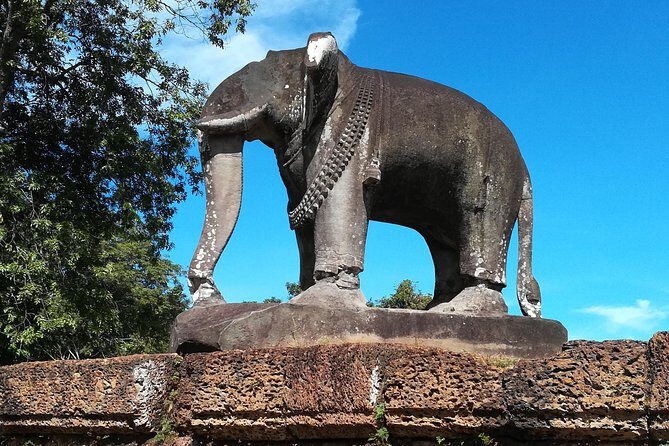
- East Mebon (Stop 5)
- Banteay Samre (Stop 6)
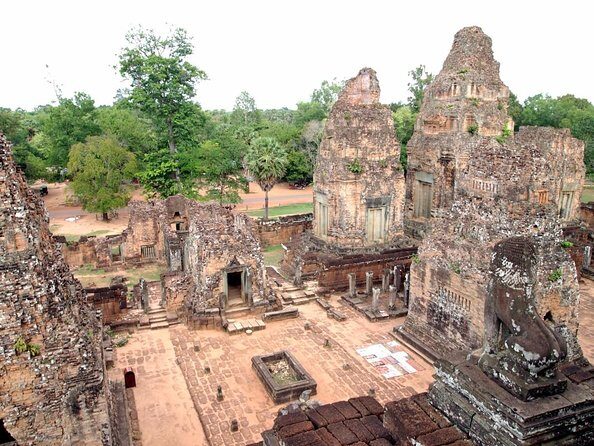
- Pre Rup (Stop 7)
- Srah Srang (Stop 8)
- Crowds and timing: how to keep the day comfortable
- Who this private Angkor Grand Circuit tour is best for
- Should you book this Angkor Grand Circuit tour?
- FAQ
- FAQ
- What temples are included in the Angkor Grand Circuit route?
- How long is the tour?
- What time does the tour start?
- Is hotel pickup and drop-off included?
- Is the Angkor entrance fee included in the tour price?
- What is included in the tour price besides the guide?
- Does the tour include food or drinks?
- What should I wear to visit the temples?
- Is this tour private?
- What is the cancellation policy?
Key things to know before you go
- Private guide focus that helps you understand what you’re seeing at each site
- Hotel pickup plus AC transport to make the long day feel manageable
- Angkor Thom routing that covers major stops like Neak Pean, Ta Som, and Pre Rup
- Lower-crowd chances at some temples on the route, like Banteay Prei
- Practical comfort with bottled water included
- Dress code matters (shoulders and knees covered) for temple access
The Angkor Grand Circuit is the smart “big-picture” day
If Angkor feels like a lot of names and stone faces, this is the kind of day that makes it click. The Angkor Grand Circuit focuses on a cluster of famous (and related) temples around the Angkor Thom area, which means you’re not constantly resetting your bearings.
What you get is a clear chain: you start with a major temple, move through smaller but meaningful sites, and end with a more relaxed stop with scenic views. That structure helps you connect symbols and layout choices across different monuments—especially when your guide is explaining what you’re looking at as you walk.
You’ll be out about 7 to 8 hours total, starting at 8:00am. That’s a full day, but it’s also a strong way to make progress quickly if this is your first visit to Siem Reap or your only chance to see a lot.
You can also read our reviews of more tours and experiences in Siem Reap.
Price and value: $52 plus the pass you must plan for
The tour price is $52.00 per person, and it’s positioned as a private experience with an English-speaking guide and transportation (AC car/minivan/minibus). On paper, $52 for a full guided day can sound almost too easy to say yes to. The catch is that the temple entrance fee is not included.
The listing says you need a One Day Angkor Pass for $37.00 per person. So a realistic “all-in” baseline (before food) is about $89 per person. That still tends to be good value when you compare it to the cost of getting reliable transport + an English guide for a long, structured route.
Also, the tour includes bottled water throughout the day, which is a small detail that actually saves you time and effort. You don’t want to spend your temple energy bargaining for drinks during the hottest hours.
One more practical note: it’s listed as booked about 72 days in advance on average. That’s a hint that demand is steady. If your dates are tight, it’s smart to plan ahead rather than waiting for the last week.
Morning logistics: 8:00am pickup, tickets, and what to wear
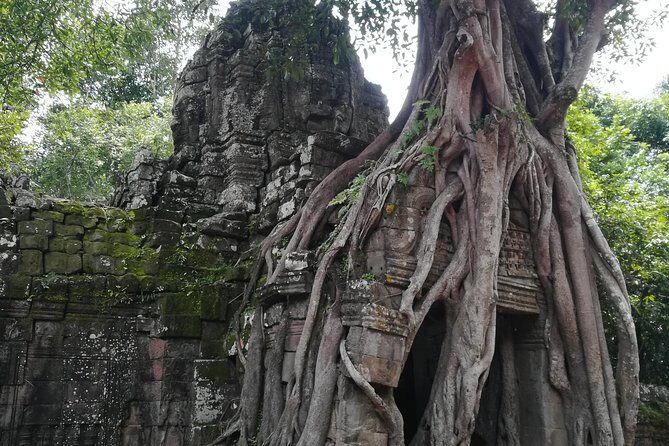
Your day starts with an 8:00am hotel pickup from the lobby after breakfast. The route also includes a stop at the ticket office so you can pick up your pass before you head deeper into the circuit.
That matters because Angkor visits go smoother when you handle tickets early, not at the end of the day when you’re tired and the sun is higher. If you’re traveling with a group, the private setup also helps keep the schedule clean.
Dress code is strict: you need clothes that keep shoulders and knees covered, or you may be refused entry at temples. This is one of those rules that’s easy to underestimate when you’re packing lightly, so plan ahead.
How a great guide changes Angkor (and why Bunpheng and Pal Chen matter)
Angkor isn’t just about seeing temples. It’s about understanding what you’re seeing and when you’re seeing it.
One of the most praised parts of this tour is the guide. For example, reviewers highlighted Bunpheng as exceptionally strong: on time, excellent route sense, and able to find “best photo stops” and site-specific details. Another review called out Mr Pal Chen for strong English and deep experience, plus the smart move of doing some temples in a way that left them with more space.
Even if your guide isn’t named in your confirmation, this is the core value to look for: someone who knows the angles, the flow, and the little context clues that turn a pile of stones into a place with meaning.
Angkor Thom to Srah Srang: stop by stop
Here’s what your 7 to 8 hours look like in real terms, along with what each stop is good for and what to watch out for.
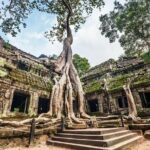
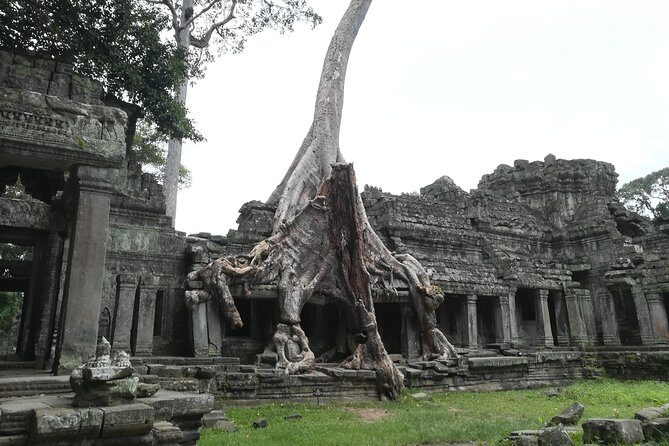
Preah Khan (Stop 1)
You start with Preah Khan, with about 2 hours allocated. The plan is to pick you up at 8:00am, then go to the ticket office to get your pass, before heading north of Angkor’s ancient city area.
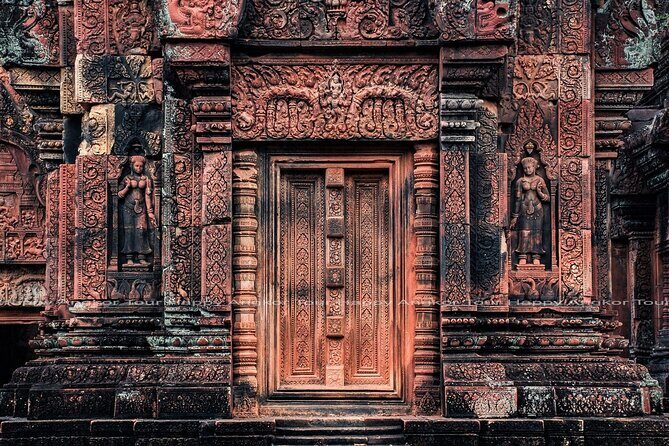
Preah Khan is a strong first stop because it gives you a “big temple” start right away. That early placement is useful: you’re fresh, and you can learn the kinds of carvings, layout rhythms, and symbolic patterns that show up again later in the circuit.
Practical note: admission is not included, so your timing really depends on having your pass handled at the ticket office as the schedule intends.
Banteay Prei (Stop 2)
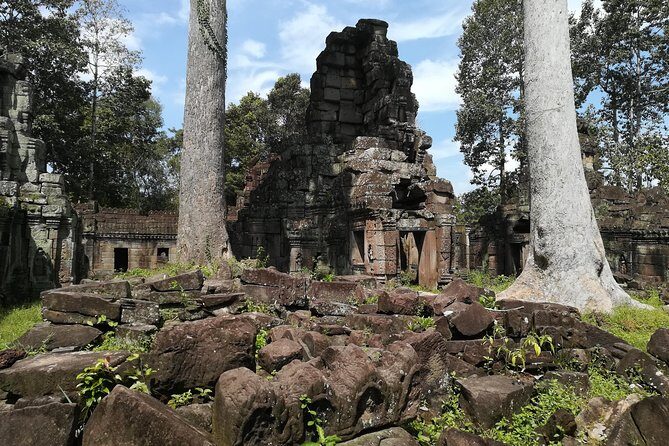
Next is Banteay Prei, with about 30 minutes. The itinerary notes that when they’ve been there, there often aren’t many tourists.
That’s the kind of stop that can feel pleasantly different. When crowds are thin, you can slow down, look at details, and actually read the temple surfaces without constantly weaving around people. It’s also a good chance to re-center yourself after the first larger site.
Because the time is shorter here, don’t treat it as a quick photo stop only. Use the time to connect: what parts of the structure feel similar to Preah Khan, and what feels different?
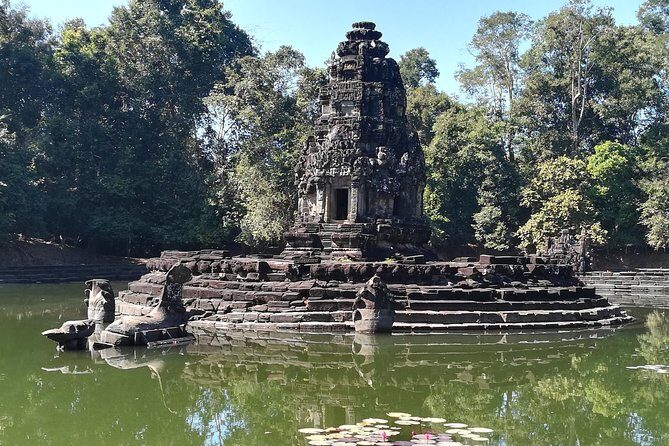
Neak Pean (Stop 3)
Then you’ll head to Neak Pean for about 1 hour.
Neak Pean is the sort of temple where the setting and layout matter as much as the stones. You’ll have time to walk through slowly and take in the design, rather than just moving past on foot. This stop also helps you break up the day so you’re not grinding through temples in one continuous stretch.
Admission isn’t included here either, so if you’re using cash or a mobile ticket for the pass, have it ready before you arrive.
Ta Som (Stop 4)
Your fourth stop is Ta Som, also about 1 hour.
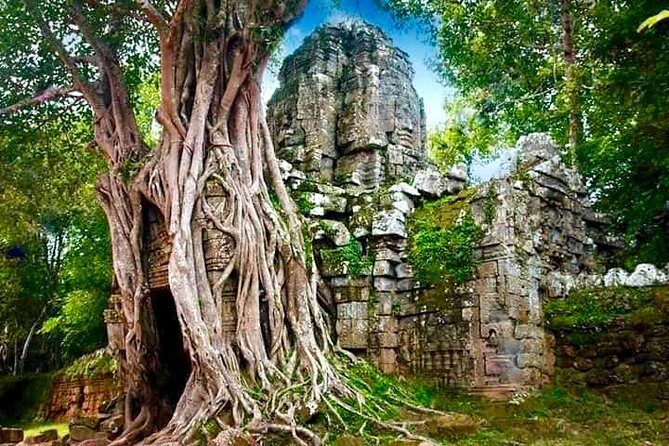
Ta Som is a popular name in the Angkor circle, and it works well in a grand circuit route because it offers recognizable Angkor style while still letting your guide keep the story moving. Expect walking, looking, and a steady rhythm of short breaks between viewpoints.
What I’d watch for: this is exactly the time when heat and sun can start to push your pace. Use the guide’s suggested pauses. If you’re offered a better photo spot, it’s usually worth taking five extra seconds—because the route often gets better results when you stop for the right angle, not just the first one you see.
East Mebon (Stop 5)
Next is East Mebon with about 1 hour.
This is another “meaningful in context” stop. When you’ve already seen other Angkor Thom-adjacent temples earlier, East Mebon becomes easier to place. You’re no longer looking at ruins one by one—you’re comparing how the temple style and setting shift across the circuit.
Drawback to consider: like many Angkor stops, East Mebon can feel more open than enclosed, so shade can be limited. If you’re sensitive to sun, plan your water use and take cover when you can.
Banteay Samre (Stop 6)
Then you’ll visit Banteay Samre for about 1 hour.
This is a good mid-to-late-day temple because it keeps the visual variety going without rushing you too hard. By now, you’ve got a feel for the “language” of Angkor—doorways, terraces, carvings, and the way temples are arranged.
Admission is still not included, so keep your pass handy and follow your guide’s pace. The value of a private tour is that you don’t have to constantly ask where to go next; your guide is running the flow.
Pre Rup (Stop 7)
After Banteay Samre, you’ll reach Pre Rup with about 1 hour.
Pre Rup is often the kind of stop where the viewpoint matters. The route timing also makes it practical: it’s later enough in the day that you can feel the light changing, which can make the stonework look different as you move around.
If you want photos, this is the type of stop where you’ll be grateful for someone who knows which side gives you the best angle. Based on what people praised about guides on this tour, route knowledge and photo routing are a real strength.
Srah Srang (Stop 8)
You finish at Srah Srang for about 20 minutes. This last stop is described as a relaxing view from a sandstone terrace decorated with Naga and Shimha statues.
That ending is practical. You don’t have to fight through another long temple block right at the end. Instead, you get a more scenic, calmer conclusion where you can gather yourself, walk around at an easy pace, and take in details you might’ve missed earlier.
Also, because this stop is short, you can treat it as a final “slow look” rather than a final sprint.
Crowds and timing: how to keep the day comfortable
Even with a private guide, Angkor is Angkor, which means you’ll still share popular spaces with other visitors at times. The best way to reduce stress is to trust the route and timing your guide uses.
The reviews for this tour emphasize two crowd-friendly strengths:
- guides know the routes that improve your experience
- guides find photo stops and site details that can make a busy area still feel manageable
You can also use the itinerary structure to your advantage. Starting at 8:00am gives you earlier temple time, and the route’s mix of larger and smaller sites helps prevent the day from feeling like one long line.
Comfort tips that actually help:
- wear temple-friendly clothes (shoulders and knees covered) so you don’t spend time improvising at the gate
- treat water as part of the plan; it’s included, so use it
- wear shoes that handle uneven stone and museum-dust style paths
Who this private Angkor Grand Circuit tour is best for
This tour fits best when you want structure. If you’re the type who likes to move efficiently, learn as you go, and avoid spending the whole day asking directions, you’ll probably appreciate the private vehicle + private guide format.
It’s especially strong for:
- first-timers who want a big Angkor Thom-focused sweep in one day
- travelers who don’t want to buy tickets on the fly or puzzle out the order of sites
- people who care about photo angles and want a guide to route you for better results
- anyone who would rather understand the temples than just photograph them
It may be less ideal if you only want one or two super-famous stops. This route is about seeing a connected circuit, not doing a single temple in depth.
Should you book this Angkor Grand Circuit tour?
If you’re choosing between a vague plan and a clear, guided route, I’d lean toward booking it. The core reasons are simple: private guide attention, smooth pickup and transport, and the kind of guiding that can turn temples into a story rather than a checklist.
Just be sure you budget for the One Day Angkor Pass ($37 per person) on top of the $52 tour price. Also, make sure you’re ready with temple-appropriate clothing for shoulders and knees, or you’ll waste time at entry points.
If you want Angkor Thom coverage that feels organized and guided, this is a solid choice.
FAQ
FAQ
What temples are included in the Angkor Grand Circuit route?
The itinerary includes Preah Khan, Banteay Prei, Neak Pean, Ta Som, East Mebon, Banteay Samre, Pre Rup, and Srah Srang.
How long is the tour?
The duration is listed as approximately 7 to 8 hours.
What time does the tour start?
Pickup is scheduled for 8:00am.
Is hotel pickup and drop-off included?
Yes, hotel pickup and drop-off from your Siem Reap hotel are included.
Is the Angkor entrance fee included in the tour price?
No. The entrance fee is not included. A One Day Angkor Pass is listed separately at $37.00 per person.
What is included in the tour price besides the guide?
You get an English-speaking tour guide, transportation in an AC vehicle (car/minivan/minibus), and complimentary bottled cold drinking water.
Does the tour include food or drinks?
Food is not included. Drinks beyond the bottled water are not listed as included.
What should I wear to visit the temples?
You should wear clothes that cover your shoulders and knees, or you won’t be allowed access to the temples.
Is this tour private?
Yes. It is described as a private tour/activity, meaning only your group participates.
What is the cancellation policy?
You can cancel for free up to 24 hours in advance for a full refund. If you cancel less than 24 hours before the start time, the amount paid will not be refunded.