REVIEW · SIEM REAP
Angkor Wat 1Day Tour With Sunrise
Book on Viator →Operated by Cambodia Golden Tours · Bookable on Viator
Sunrise at Angkor Wat hits different. This Angkor Wat sunrise tour pairs a super-early start with a tight, rewarding day in the Angkor Archaeological Park by tuk tuk.
I love the practical touch of cold water and cold towels on a morning that starts before you’re fully human. I also like that you get an English tour guide, and the day’s highlights connect clearly from one temple to the next.
One thing to plan for: temple tickets are not included, so you’ll need to budget for entry separately. Also, the start time is early enough that you’ll want a good night’s sleep.
In This Review
- Key Things That Make This Tour Worth Your Time
- How a 4:45am Start Changes the Whole Day
- Tuk Tuk Comfort and What You’re Actually Buying
- Angkor Wat at Sunrise: What You’ll See and Why It’s Special
- Angkor Thom South Gate: The 3km-by-3km Entry You Can’t Ignore
- Bayon Temple: 54 Towers and 216 Smiling Faces
- Baphuon Temple: Pyramid Layers and Shiva-Linked Power
- The Terrace of Elephants and Leper King: Royal Stages and Jaw-Dropping Carvings
- Ta Prohm: The Tomb Raider Temple Moment
- Banteay Kdei and Srah Srang: Quiet Forest Feel and Baray Views
- Price and Value: $130.39 for Up to 3, Plus Tickets
- Who This Tour Fits Best (and Who Should Rethink It)
- Should You Book This Angkor Wat Sunrise 1-Day Tour?
- FAQ
- What time does the Angkor Wat sunrise tour start?
- How long is the tour?
- What does the tour include?
- Are temple tickets included?
- Does the tour use a mobile ticket?
- Is this a private tour?
- Is there a dress code?
- Can I cancel for a full refund?
Key Things That Make This Tour Worth Your Time
- 4:45am start in Siem Reap: Designed around morning light at Angkor Wat.
- Tuk tuk transport with a driver: Easy, straightforward movement between major sites.
- English tour guide: You get context as you walk, not just photos.
- Cold water and cold towels included: Small comfort, big difference in real heat.
- A classic mix of Angkor Thom and beyond: South Gate, Bayon, terraces, Ta Prohm, and more.
- Temples dress code matters: You’ll need temple-appropriate clothing to avoid hassle.
How a 4:45am Start Changes the Whole Day
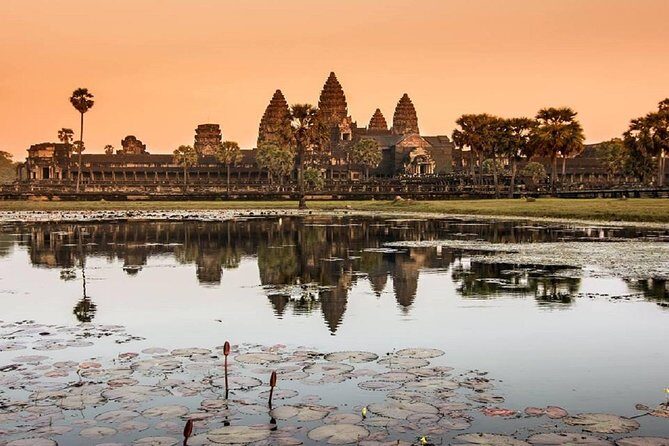
This tour starts around 4:45am in Siem Reap, with pickup taking you toward Angkor Wat for sunrise. The big win here is simple: you’re not arriving later when the light has shifted and the crowds (in general) are more noticeable.
That early hour also shapes your pace. You’ll be moving in stages through the day, with the schedule built so the most iconic moment (sunrise at Angkor Wat) happens first. Then you gradually shift into the deeper Angkor universe: Angkor Thom, its royal-era temples, and the more dramatic jungle-temple feel of places like Ta Prohm.
The tradeoff is obvious. You’ll be up very early, and temple visits involve walking—often on uneven stone. If you’re the type who hates early alarms, this is your warning sign.
A few more Siem Reap tours and experiences worth a look

Tuk Tuk Comfort and What You’re Actually Buying
You’re paying for more than a ride. The tour includes a tuk tuk driver, an English tour guide, and the kinds of comfort items that matter when you’re outside for hours: cold water and cold towels.
A private setup helps too. The tour is described as a private activity, meaning it’s just your group (up to 3 people). For a day like this, that’s a real value because you’re not stuck waiting for a big crowd to decide when to move on.
One more detail that affects your planning: the tour has mobile ticket features. That’s convenient for keeping everything organized before you head out for the earliest start of your trip.
Angkor Wat at Sunrise: What You’ll See and Why It’s Special
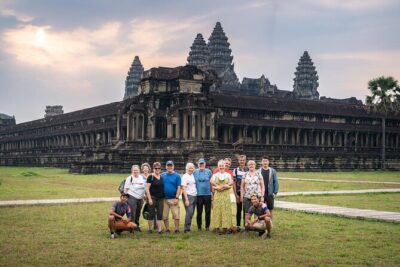
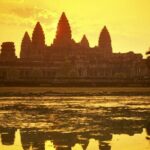
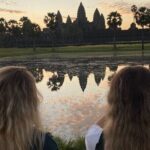
The tour’s first anchor is Angkor Wat at sunrise. You’ll be taken to the temple early enough to catch the moment when the sky changes and the main silhouette of Angkor Wat starts to glow.
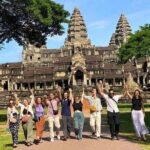
Angkor Wat is described in the tour overview as a mega-religious structure full of “amazing things,” and that matches what you’ll feel when you get there: it’s not a quick stop. You’re meant to slow down and actually look. Sunrise lighting makes stone textures and carvings easier to notice, and it helps you orient yourself quickly before you move into Angkor Thom later.
Practical note: because the day begins before normal daylight, plan to be ready for standing and walking in low light. Wear something comfortable and breathable, and follow the temple dress code rules so you don’t have to scramble at the last minute.
Angkor Thom South Gate: The 3km-by-3km Entry You Can’t Ignore
After Angkor Wat, the route turns toward Angkor Thom, beginning with the South Gate. The tour description calls it a 3km by 3km gate, built to protect the capital of Angkor Thom.
This is one of those stops where the scale does the talking. Even if you only spend a short time here, you’ll understand the logic: this wasn’t a city gate for a casual visit. It was built for defense, movement, and ceremony all at once.
Then there’s the myth detail. At the front of the causeway, you’ll see decorative elements tied to the Hindu story of the Churning of the Sea of Milk—featuring devas and asuras. Having an English guide helps here because it turns a visual moment into a story you can remember.
Bayon Temple: 54 Towers and 216 Smiling Faces
From the South Gate, you’ll head about 1km to Bayon Temple, described as being at the heart of Angkor Thom. The tour notes that Bayon was the state temple of King Jayavarman VII.
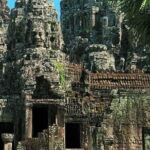
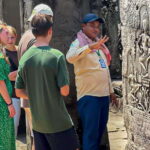
The standout feature is the one you’ve probably heard about: the 54 towers and 216 of Avalokiteshvara’s smiling faces. This is where “I recognize that from photos” becomes “Oh wow, this is actually overwhelming in person.”
The faces can make the place feel alien, almost supernatural. That effect isn’t just aesthetic; it fits the idea that Bayon was meant to project power and presence. When you’re there in person, you’ll feel that the architecture is doing more than honoring a deity—it’s shaping how visitors move and look.

Baphuon Temple: Pyramid Layers and Shiva-Linked Power
Next is Baphuon Temple, described as the second biggest temple in Angkor Thom. It was built in the mid-11th century as a state temple for King Udayadityavarman II, dedicated to Shiva.
The tour highlights its pyramid shape and its three tiers, which makes Baphuon easier to understand visually. You can see the structure’s logic quickly: layered levels leading the eye upward.
This stop is especially good if you like architecture that you can parse. Bayon is face-focused and surreal; Baphuon is more about form and mass. Together, they balance your day and keep it from turning into one long blur of stone.
The Terrace of Elephants and Leper King: Royal Stages and Jaw-Dropping Carvings
Now you’re moving into the area of the royal palace precinct: the Terrace of Elephants and the Terrace of the Leper King.
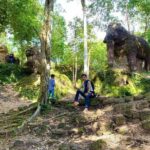
The Terrace of Elephants is described as a 350m-long terrace used as a viewing stage for public ceremonies and as a base for the king to watch military training. If you keep that purpose in mind as you walk, you’ll stop seeing it as just a long wall. It becomes a platform built for authority and spectacle.
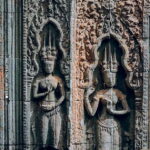
Right next door is the Terrace of the Leper King. The tour overview notes the terrace sits north of the elephants and is famous for carved details that can make you drop your jaw. This is the kind of place where your guide’s pacing really helps—you don’t want to rush past the carving zones, because the details are the point.
Ta Prohm: The Tomb Raider Temple Moment
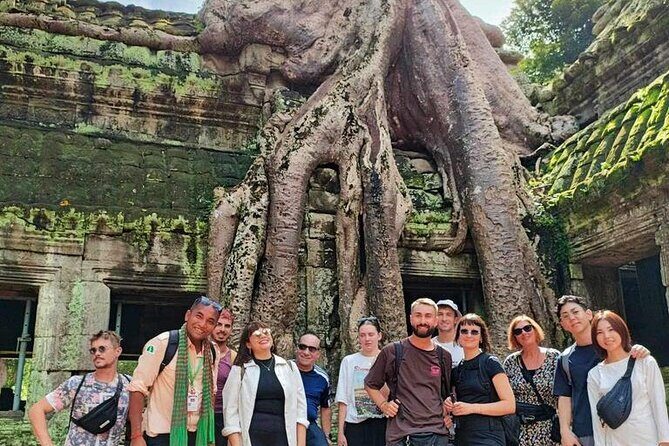
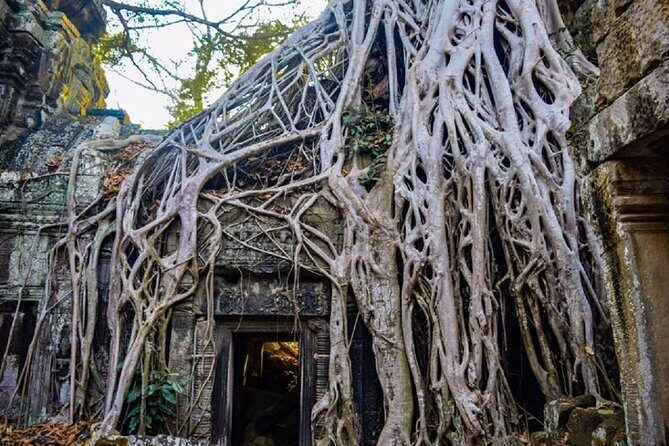
Then comes Ta Prohm, described as once used as a Buddhist monastery and university during the Angkor period. It’s famously called the Tomb Raider temple because a movie was filmed there.
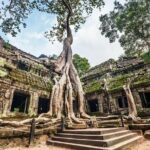
But even without that pop-culture hook, Ta Prohm delivers. The tour description points out the big tree growing on the temple and notes it’s a popular photo spot. In practice, that’s what you’ll feel: nature and stone in competition, with the scene designed by time.
This is also one of your best “slow down” stops. You’ll want a minute to step back and take in how the roots and architecture frame corridors and doorways. If you’re traveling with anyone who loves photos, this tends to make the whole group happy.
Banteay Kdei and Srah Srang: Quiet Forest Feel and Baray Views
From Ta Prohm, the route includes Banteay Kdei, described as recently restored but still open to tourists. The surrounding forest is called out as making it feel mysterious and quiet—exactly the kind of change of mood that keeps Angkor from being only grand and loud.
Then you’ll reach Srah Srang, described as the baray (reservoir) of Banteay Kdei. The tour notes stunning views, especially at sunrise and sunset.
Here’s the practical angle: if your timing lines up with the lighter parts of the day, water views can be a real reset. Even when you’re tired, standing near a reflective pool gives you a chance to breathe and regroup before the last stretch of the route.
Price and Value: $130.39 for Up to 3, Plus Tickets
The price is $130.39 per group (up to 3) for about 1 day. For value math, that’s roughly:
- Up to 3 people sharing the same cost = about $43 per person for the guided tuk tuk day, before temple entry.
What you’re paying for, based on the included items:
- Tuk tuk driver
- English tour guide
- Cold water and cold towels
- A full, structured day in the Angkor area with a sunrise anchor
What you’ll still pay separately:
- Temples tickets (not included)
- Lunch near temple (not included)
- Personal expenses
So if you’re traveling solo, this can feel pricier per person than a shared group tour. But if you’re 2 or 3 people traveling together, it often becomes a smart way to buy comfort and guidance for a long day.
Also, the private format matters. It reduces waiting and makes it easier to keep a steady pace through multiple major sites.
Who This Tour Fits Best (and Who Should Rethink It)
This tour is a great fit if:
- You want the sunrise moment at Angkor Wat without building the logistics yourself.
- You like a route that covers both Angkor Wat and a strong chunk of Angkor Thom.
- Your group values a dedicated English guide plus small comfort basics like cold towels.
It might be less ideal if:
- Your group hates extremely early mornings.
- You don’t want to deal with dress code rules at temples.
- You’d rather control every stop timing on your own.
Families can work well, especially with a private group and an organized driver-guide pairing, but you still need to plan for walking and early timing.
Should You Book This Angkor Wat Sunrise 1-Day Tour?
If you want a ready-made Angkor day that starts with the big sunrise payoff and then moves through iconic temples in a logical sequence, this booking makes sense. The inclusion list is practical—tuk tuk, English guide, cold water, and cold towels—and those small items add up on a day that runs long.
I’d book it if you’re traveling with 2-3 people and you appreciate someone else handling the timing from Siem Reap to the temples. I’d think twice if temple tickets or an early start will stress your group.
If you do book, do one simple thing: plan your clothing ahead for the temple dress code, and budget for the temples tickets so the day stays smooth.
FAQ
What time does the Angkor Wat sunrise tour start?
The start time is listed as 4:45am, beginning from Siem Reap.
How long is the tour?
The duration is listed as 1 day (approx.).
What does the tour include?
It includes a tuk tuk driver, an English tour guide, cold water, and cold towels.
Are temple tickets included?
No. Temples tickets are not included, and you’ll need to arrange entry separately.
Does the tour use a mobile ticket?
Yes, the tour is described as having mobile ticket features.
Is this a private tour?
Yes. It’s listed as a private tour/activity, and only your group participates.
Is there a dress code?
Yes. You need to follow the temple dress code rules when visiting the temples.
Can I cancel for a full refund?
Yes. Free cancellation is offered if you cancel at least 24 hours in advance for a full refund.