Angkor, minus the chaos. This premium day is built for speed and variety, using a Vespa-style route with a personal driver so you can move between major temples and quieter countryside corners.
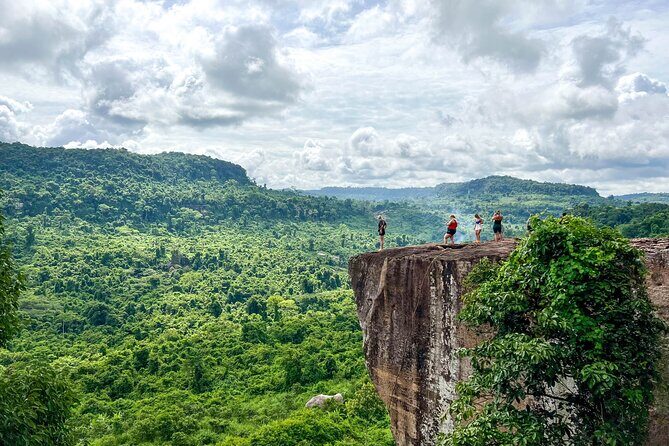
What I like most is the way the route feels less staged. I love the off-the-beaten-track paths through forest or jungle areas, and I also love the small group cap of 8, which keeps the day calm and easier to manage.
One drawback to plan for: temple admission is not included, and you’ll need the 1-day pass (listed at $37/person) to cover all the temples.
In This Review
- Key highlights worth your time
- Why this premium Angkor Wat tour feels different from the usual day trip
- The route in plain English: what you’ll actually do from 8:00 am
- Stop 1: Angkor Wat (2 hours 30 minutes) — the big moment, handled with breathing room
- South Gate of Angkor Thom (15 minutes) — a quick entry you shouldn’t skip
- Bayon Temple (1 hour) — the faces, the bas-reliefs, and the feeling of daily life
- Terrace of the Elephants (30 minutes) — where power watched power
- Ta Prohm (2 hours) — trees-in-ruins, the Tomb Raider fame, and the patience it takes
- Srah Srang (30 minutes) — the calm stop that breaks up the stone overload
- Gate of the Dead (15 minutes) — the “last page” feeling
- Food, drinks, and why that small detail matters at Angkor
- Price and value: $94 plus the temple pass, and what you get for it
- Who this tour suits best (and who might prefer something else)
- Tips to get the most out of your day
- Should you book the Angkor Wat Premium Tour?
- FAQ
- What is the price of the Angkor Wat Premium Tour?
- How long is the tour and what time does it start?
- Is pickup included?
- Is the temple entrance ticket included?
- What’s included in the tour besides the guide?
- How many people are in the group?
- What is the cancellation policy?
Key highlights worth your time
- Small group maximum of 8 makes the pacing feel more human and less rushed
- Personal driver + Vespa-style touring means quicker transfers between sights
- Secret forest/jungle paths help you escape the worst crowds
- Classic Angkor hits, plus village time (Srah Srang) so it’s not only stone monuments
- Bayon’s 216 faces and the Terrace of the Elephants get dedicated time, not just quick photo stops
Why this premium Angkor Wat tour feels different from the usual day trip
Angkor Wat can feel like one giant line—lines of people, lines of buses, lines of phones held at arm’s length. This premium tour is designed to cut that stress. The plan is simple: you’re not sitting around while groups shuffle forward. You’re riding with a driver, moving through the park area efficiently, and getting to see temples plus countryside-related stops that most standard schedules skip.
The premium part isn’t fancy in the way people sometimes mean. It’s premium in the way that matters on a hot day: less waiting, tighter timing, and a route that includes less predictable paths. That matters at Angkor because the temples don’t just look great; they feel better when you aren’t constantly trying to dodge crowds.
Also, the day is built around a small group experience. With a maximum of 8 travelers, you get a better chance for your guide to slow down when something needs explaining—or speed up when crowds spike.
You can also read our reviews of more tours and experiences in Siem Reap.

The route in plain English: what you’ll actually do from 8:00 am
The tour starts at 8:00 am and runs about 7 hours 30 minutes. There’s pickup offered, and you’ll also use a mobile ticket, which can save time at the start of the day.
Food and drinks are included, which is a real comfort factor when you’re bouncing between temple areas. You won’t have to time your meal hunt during the busiest hours.
Just remember: temple entrance is not included. The tour lists a 1-day temple admission pass for $37/person that covers entry to the temples. So when you compare prices, you’re really looking at about $94 for the tour plus the temple pass on top.
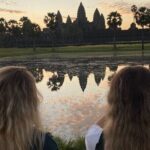
Stop 1: Angkor Wat (2 hours 30 minutes) — the big moment, handled with breathing room
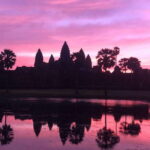
Angkor Wat is the headline. You’ll spend about 2 hours 30 minutes here, and the day is organized so you’re not stuck in a single long slog without context. You’ll also visit other major temples later, including Bayon, Ta Prohm, and Preah Khan, plus “hidden gems” reached through forest or jungle routes.
What makes this feel smart is the pacing. Angkor Wat alone can swallow half a day if you’re wandering without a plan. Here, you get time to see what people come for—while still having the rest of the Angkor Thom complex and surrounding temple sites on your schedule.
If you care about understanding what you’re looking at, this is also where your guide’s explanations matter most. Angkor isn’t just architecture; it’s symbolism. Taking the time at the start helps the rest of the day click into place.
South Gate of Angkor Thom (15 minutes) — a quick entry you shouldn’t skip
Next comes Angkor Thom’s South Gate, a small but iconic stop at about 15 minutes. This is the classic “you are entering the ancient city” moment—stonework built for grandeur.
Even though it’s short, it works as a reset. It gets you from the Angkor Wat mood into the Angkor Thom story, so by the time you hit Bayon you’re not just reacting to cool carvings. You’re seeing the layout as part of a larger Khmer capital.
Bayon Temple (1 hour) — the faces, the bas-reliefs, and the feeling of daily life
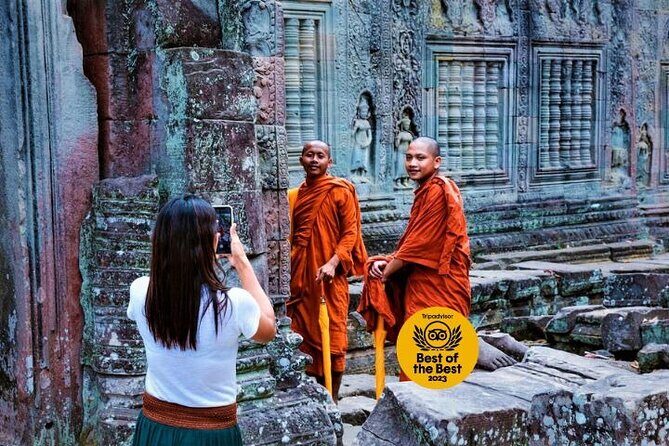
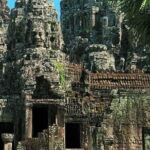
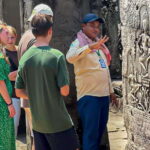
You’ll get about 1 hour at Bayon, the center of Angkor Thom. Bayon is famous for its 216 serene stone faces and for the bas-reliefs that show history, mythology, and scenes of daily life.
This stop is one of the best proof points for why a guided premium route is worth it. Bayon can feel overwhelming if you’re only taking photos. With time and an explanation, you start noticing patterns: recurring themes, storytelling panels, and how the temple visually frames the spiritual and civic world of the Khmer kings.
Practical note: one hour is enough for the main highlights, but it’s not enough for full-on slow browsing. If you’re the type who could spend an entire afternoon at one temple wall, you’ll want to treat this as a “great hits” day rather than a single-temple deep dive.
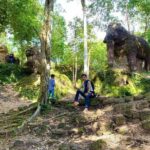
Terrace of the Elephants (30 minutes) — where power watched power
After Bayon, you’ll stop at the Terrace of the Elephants for around 30 minutes. This is tied to Khmer royal processions, and the carvings are the point—this isn’t a place to rush.
In a typical crowded tour, people stand, snap, and move on. Here, the time slot lets you take in the details and connect the location to what it was used for. The Terrace of the Elephants is also a good breather between the denser, face-heavy sections of Bayon and the more tree-shaped spectacle that comes later.
Ta Prohm (2 hours) — trees-in-ruins, the Tomb Raider fame, and the patience it takes
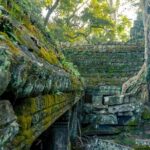
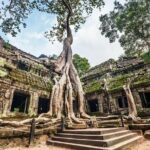
Ta Prohm gets about 2 hours. It’s the famous “trees growing out of ruins” temple, and it’s known as the Tomb Raider Temple.
This is where the day becomes more sensory. The stone feels older because it’s literally intertwined with living growth. And because Ta Prohm is so recognizable from photos, it’s also easy to mentally switch off. Two hours gives you enough time to re-engage—especially if you let the guide point out how the trees interact with the structure rather than only chasing the most photographed angles.
One reality check: Ta Prohm is busy. Even with a premium approach, the site is a magnet. The value here is that you’re not dealing with the entire day being nothing but crowds at every turn.
Srah Srang (30 minutes) — the calm stop that breaks up the stone overload
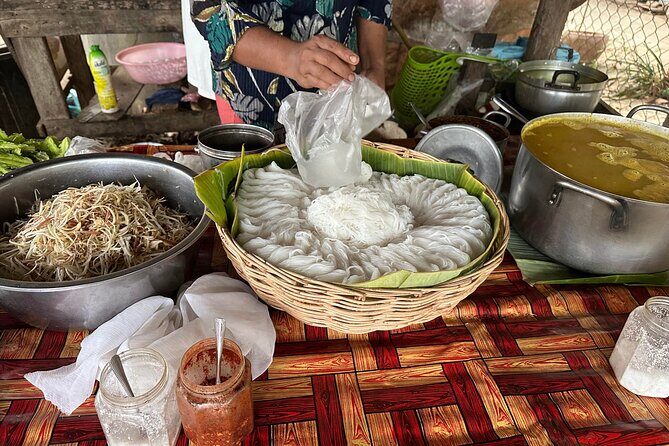
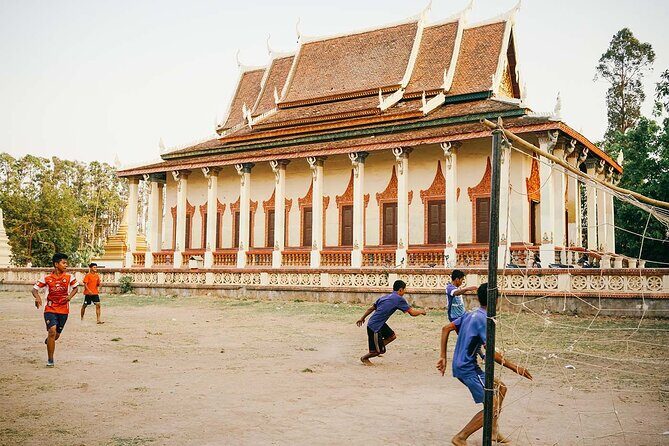
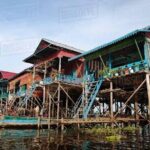
Then you’ll head to Srah Srang, spending about 30 minutes. This is described as a peaceful settlement near the Sra Srang reservoir area, and it’s tied to a nearby village setting.
This is a smart inclusion for anyone who feels like Angkor days become nothing but nonstop monument viewing. A reservoir area and village stop give you context for how the modern landscape relates to the ancient one. It also offers a calmer rhythm before the final gate stop.
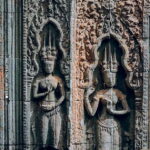
Gate of the Dead (15 minutes) — the “last page” feeling
You’ll finish with the Gate of the Dead, part of Angkor Thom. It’s listed at about 15 minutes, and it features stone carvings of divine beings.
This is a good ending because it’s visually different from the other stops. Earlier you’ve seen major temple masses and elaborate faces; here you shift to a more symbolic gateway. The short time is part of the plan: it lets you end neatly without running late, so you’re not stuck in long transport delays at the end of a full day.
Food, drinks, and why that small detail matters at Angkor
Food and drinks are included. That seems minor until you’re standing in the heat, trying to decide between paying more than you want or losing the schedule.
For an Angkor day that runs 7.5 hours, this inclusion is practical value. It reduces stress and gives you one less decision to make mid-tour. You stay focused on the sites instead of hunting for a meal at the worst possible time.
Price and value: $94 plus the temple pass, and what you get for it
The tour price is $94.00 per person for about 7.5 hours, with pickup offered, food and drinks included, and a maximum of 8 travelers.
Temple admission is the catch: it’s not included. The listing states a 1-day temple pass for $37/person that covers admission to all the temples. So your rough all-in total becomes about $131 per person (tour + pass), before any personal extras.
Here’s how I think about value:
- You’re paying for a tight guided route with premium handling (personal driver and small group).
- You’re paying for time efficiency across multiple major sites.
- You’re getting food and drinks included, which offsets some day-trip costs.
- You’re also paying for crowd avoidance tactics, including quieter forest/jungle paths and less predictable angles through the temple areas.
If you already know Angkor well and plan to DIY with your own driver, you might feel the cost. If you want a smoother day with fewer hassles and a route that feels more local than cookie-cutter, the structure makes sense.
Who this tour suits best (and who might prefer something else)
This experience fits best when you want:
- A guided Angkor day with a small group
- A plan that includes both temple icons and at least one non-temple village/reservoir stop
- Fewer crowd headaches through secret paths and a driver-led flow
- Clear structure so you don’t spend hours figuring out timing and connections between sites
It may not be ideal if:
- You want to spend the entire day at Angkor Wat with zero schedule pressure
- You prefer fully unguided exploring where you can drift without meeting points
- You dislike riding and switching locations throughout the day (because this is a multi-stop format)
Good news: the listing states that most travelers can participate, so it’s not framed as extreme adventure travel. It’s more “move intelligently through Angkor” than “climb a mountain.”
Tips to get the most out of your day
- Bring your temple pass strategy early: the tour notes that admission isn’t included, so plan for the 1-day $37 pass covering all temples.
- Time matters. Starting at 8:00 am helps you get leverage from earlier hours.
- If you care about photos, treat Bayon and Ta Prohm as your main photo anchors. The rest of the stops are shorter, so don’t spend your full time there waiting for the perfect angle.
Should you book the Angkor Wat Premium Tour?
I’d book it if you want the classic Angkor temples—Angkor Wat, Bayon, Ta Prohm—plus a more thoughtful route that includes forest/jungle paths and a village stop at Srah Srang. The small group size and included food/drinks push this into practical value, not just “nice extras.”
I’d think twice if you’re mainly chasing one temple experience and you’d rather wander freely all day. In that case, a more open-ended plan could suit you better.
If you’re balancing time, want fewer crowds, and like the idea of seeing Angkor as more than a photo checklist, this premium setup is a strong match.
FAQ
What is the price of the Angkor Wat Premium Tour?
The tour costs $94.00 per person.
How long is the tour and what time does it start?
It lasts about 7 hours 30 minutes and starts at 8:00 am.
Is pickup included?
Yes, pickup is offered.
Is the temple entrance ticket included?
No. Temple entrance is not included. The listing shows a 1-day pass for $37/person that covers admission to all temples.
What’s included in the tour besides the guide?
Food and drinks are included.
How many people are in the group?
The maximum group size is 8 travelers.
What is the cancellation policy?
You can cancel for free up to 24 hours before the experience’s start time for a full refund. Changes made less than 24 hours before start time are not accepted.