REVIEW · SIEM REAP
Angkor Wat & Small Tour with Bonteay Srei Temples
Book on Viator →Operated by Angkor Visit Tour · Bookable on Viator
Big stone temples, small-tour comfort. This private day tour is a smart way to see Angkor Wat plus key stops around Angkor Thom and then finish with Banteay Srei, without feeling like you’re stuck on a crowded bus schedule. You get professional guidance and a pace that can flex to your day, including an option to time the visit for sunrise or sunset.
What I like most is the mix of famous sites with the kind of details that make the carvings and layout actually make sense. I also appreciate the practical inclusions: pickup, air-conditioned transport, and cold water—so you spend less time wrangling logistics and more time paying attention to what’s in front of you.
One possible drawback: the big temple experience is not the same thing as the entrance-fee cost. Entrance fees and food aren’t included, so you’ll want to budget extra and plan for the heat on a long day.
In This Review
- Key highlights to look for
- The value: $38 feels low until you add entrances
- Sunrise at Angkor Wat: the route starts with light and layout
- Bayon Temple and Angkor Thom: the “city” feeling turns temples into drama
- Ta Prohm: when trees and stone share the frame
- Phnom Bakheng: a Shiva temple-mountain and a good pacing change
- Banteay Srei: the delicate stop that feels built for close reading
- What your guide actually adds (and why it matters on Angkor days)
- Mobile ticket and pickup: small logistics that reduce stress
- The itinerary as a strategy: why these temples in this order
- What to budget beyond the tour price
- Who this tour fits best
- Should you book it?
- FAQ
- What’s included in the Angkor Wat & Banteay Srei tour price?
- Are temple entrance fees included?
- Is food included?
- How long is the tour?
- Is this tour private?
- Can I cancel for a full refund?
Key highlights to look for
- Private guide you can actually ask questions to, including background on how the Khmer kings shaped what you see
- Sunrise/sunset timing option, with early starts planned for the Angkor Wat viewing area
- A tight route that still includes “story temples” like Ta Prohm and Banteay Srei, not only the headline crowd-pleasers
- Air-conditioned private transport, which matters a lot once the morning cool turns into full-on sun
- Cold water included, so you’re not immediately paying for basic hydration
- Guides can help with tickets in practice, with at least one example of a guide arranging entrance tickets on the way
The value: $38 feels low until you add entrances
At $38 per person, this tour is priced for travelers who want the guide and the logistics handled, without paying for a premium full-day package. For that price, you get pickup and drop-off, air-conditioned private transport, a professional guide, and cold water. That’s a real savings if you’d otherwise be hunting down a driver, negotiating routes, or piecing together timing across multiple temple areas.
But here’s the part you should account for: entrance fees aren’t included, and food isn’t included either. That doesn’t make the tour “bad value,” it just changes what you’re buying. You’re buying guided time and transportation, not the total temple budget. If you like structure—knowing which temple to hit first, and why—this price can be a great deal.
Also keep in mind that the tour runs about 8.5 hours. That’s a full day, so the best value usually comes when you’re ready to move at a steady pace and you’re not trying to stretch it into a slow, wandering afternoon.
You can also read our reviews of more tours and experiences in Siem Reap.

Sunrise at Angkor Wat: the route starts with light and layout
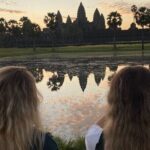
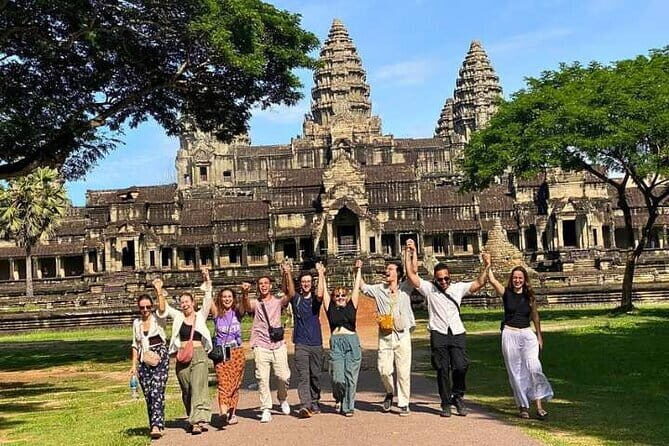
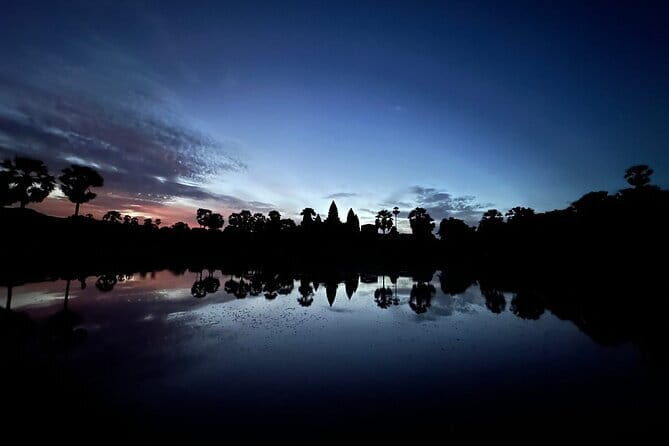
Angkor Wat is the kind of place where timing matters as much as the stones. This tour is set up so you can start early morning and aim for the sunrise view. The idea is simple: fewer crowds, better light for photos, and a more peaceful mood before the heat and the day’s energy kick in.
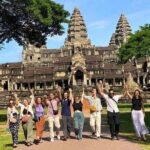
You’ll spend about 3 hours here, which is a good length for Angkor Wat’s scale. Even if you’re only focused on the main areas, that time window helps you avoid the common mistake of rushing through and missing the details that make the temple feel intentional rather than just impressive.
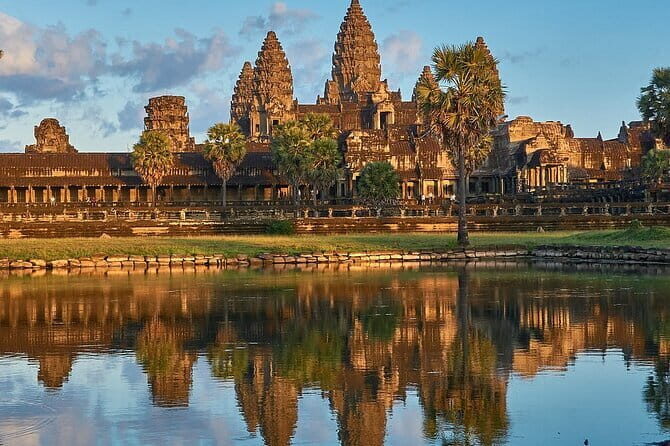
A practical note: Angkor Wat is described as the largest religious monument in the world, and it was originally constructed as a Hindu temple. Having that religious and architectural context from your guide helps you look beyond the postcard angles. You start seeing why specific spaces, carvings, and alignments were made the way they were.
Trade-off? Sunrise days require you to start early—physically and mentally. If you’re the type who sleeps like a bear and doesn’t wake easily, plan to go to bed on time. Also, when it’s early, it can feel cooler; later, it can swing hot fast. Wear layers you can shed without losing your sun protection.
Bayon Temple and Angkor Thom: the “city” feeling turns temples into drama
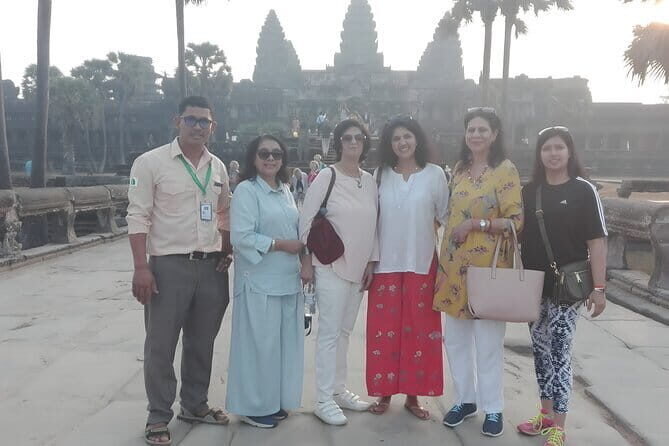
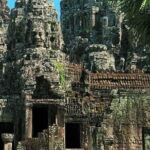
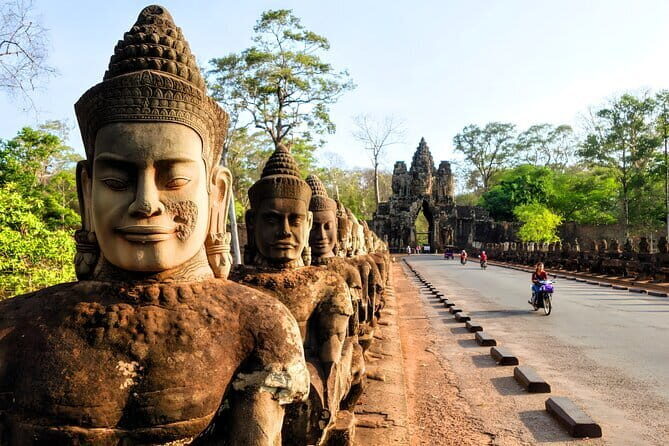
After Angkor Wat, you head into Bayon Temple, spending about 1.5 hours. Bayon is set in Angkor Thom, which is the fortified capital city area built between the late 12th and early 13th century.
Your guide’s explanation matters here. Bayon connects the temple to the broader Khmer story: it was built by Jayavarman VII, and Angkor Thom is described as a fortified city covering about 9 square kilometers. When you understand that you’re not just looking at a temple—you’re looking at a political and urban project—you tend to notice different things, like the way the structures feel like they’re built to control space.
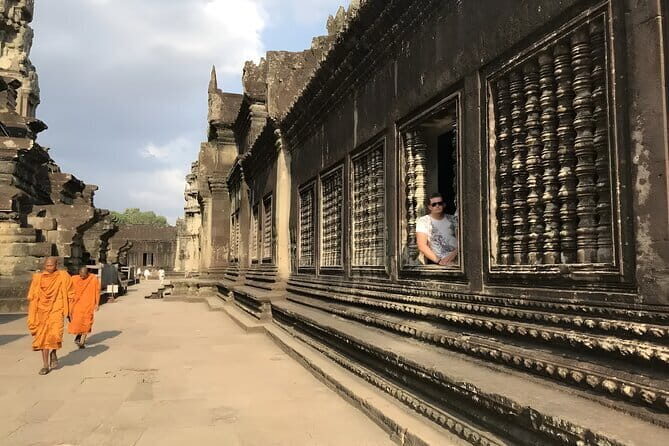
Bayon is especially good for people who like “readable” symbolism. It’s the kind of place where, with some guidance, you can move past simply staring and instead understand why the visual style looks the way it does. That’s where a private guide pays off: you can linger on one detail instead of losing it to a group schedule.
Possible drawback: Bayon is one of the stops where you’ll want to stay flexible. If the light is changing quickly or you’re taking time for photos, it can feel like the time is just a little short. Still, 90 minutes is usually enough for a solid circuit and a thoughtful look at the carvings and layout.
Ta Prohm: when trees and stone share the frame
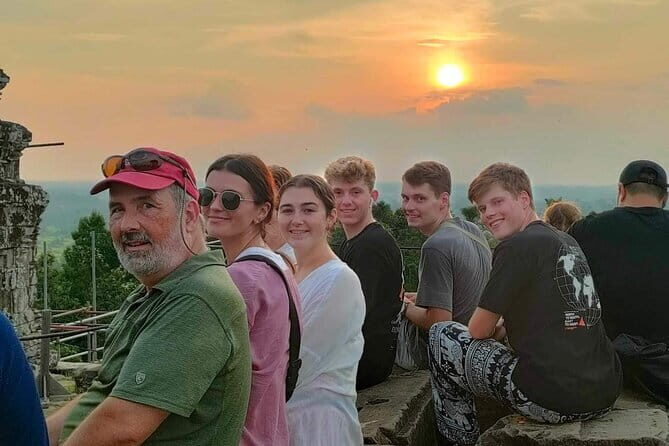
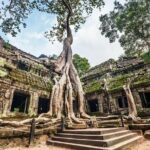
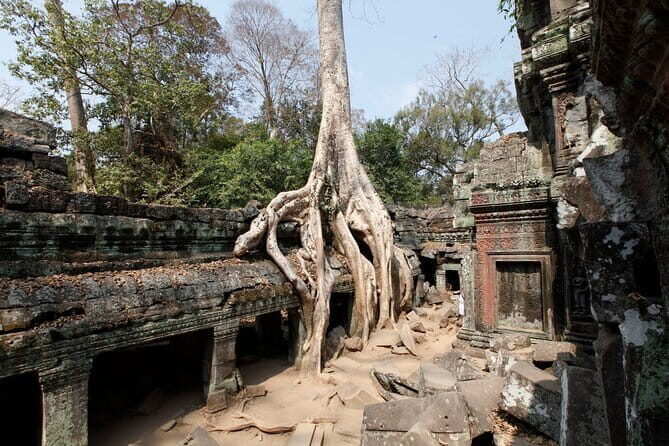
Next up is Ta Prohm, also about 1.5 hours. This is the temple many people recognize by reputation, but the real magic is seeing how the “jungle temple” atmosphere works in real life—especially the huge trees and the massive roots growing out of the walls.
Your guide helps translate that scene. Ta Prohm is described as being built in the late twelfth and early thirteenth centuries. Once you know the timeline and the idea behind the temple’s setting, it stops being just dramatic scenery. It becomes a snapshot of how humans built with the world around them, and how nature can take the scene back over time.
A big reason I’d choose Ta Prohm on a small route: it’s physically immersive. You don’t need a lecture to enjoy it, but having one makes your eyes work smarter. With guidance, you’ll spend time on stone details instead of just photographing roots and shadows.
Trade-off: this stop can be a little damp-feeling under trees, and it can get slippery. Comfortable shoes are a must. Also, since it’s so iconic, you can still get busy even on private schedules—so don’t expect “empty temple” vibes forever.
Phnom Bakheng: a Shiva temple-mountain and a good pacing change
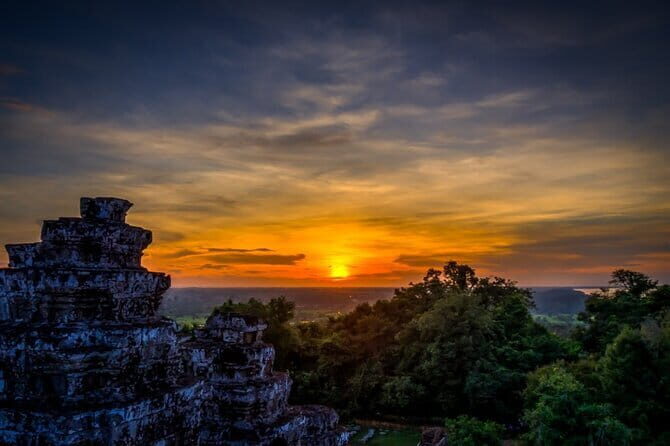
You’ll then visit Phnom Bakheng, set up as a temple mountain dedicated to Shiva. It was built by King Yasovarman at the end of the 9th century, and the site description makes it clear why it’s called a hill or mountain: Phnom means hill or mountain.
This is a shorter stop at about 1 hour, but it works well as a pacing break after the heavier walking and viewing at earlier temples. Temple-mountain layouts naturally change your perspective. You tend to notice routes, sight lines, and how the terrain helps define the experience.
Why it’s valuable on this exact route: the day isn’t only about the “most famous” temples. It’s also about variety—different design choices, different time periods, and a different kind of visual experience. Phnom Bakheng gives you a more “stepped” sense of how a temple can function like a destination rather than just a building.
Possible drawback: because it’s only around an hour, you’re more likely to feel rushed if you’re the kind of person who wants to slow-crawl every angle. If that’s you, focus on the few spots your guide highlights and plan to take photos quickly, not contemplatively.
Banteay Srei: the delicate stop that feels built for close reading
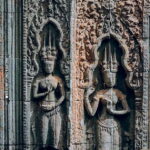
The final major highlight is Banteay Srei, about 1.5 hours. This is one of those temple stops where a private guide can change your whole experience. The site is described as officially completed on 22 April 967 AD, and it was dedicated to Shiva, like many temples from that period.
Here’s the special part: Banteay Srei’s reputation often rests on the fine carving and the temple’s overall feel. Even in the brief overview, the important point is that this temple is older and completed in a specific timeframe. Knowing it was finished on a particular date makes it feel less like a random pile of ruins and more like a finished statement someone worked to complete.
Your guide can also connect Banteay Srei to the broader Khmer pattern of building and dedicating temples, including how kings supported religious architecture. That’s exactly the kind of information that helps you understand what you’re seeing rather than just admiring it.
Trade-off: Banteay Srei can take more mental energy than you expect. It’s not just big-scale architecture; it’s detail-focused. If you’re tired, you might miss some carvings. The solution is simple: when you arrive, take one quick walk to get your bearings, then choose 2–3 carvings or architectural features to study with your guide.
What your guide actually adds (and why it matters on Angkor days)
This tour is built around commentary from a professional private guide. That doesn’t sound flashy, but it’s what makes Angkor feel understandable instead of overwhelming.
In practice, I like guides who do three things well:
- Explain how Khmer kings fit into temple building (so your brain gets a timeline)
- Point out the carvings in a way that turns them from decoration into meaning
- Help you manage the day’s rhythm—so you don’t waste time deciding what matters
One example from this tour’s past experience includes a guide named Phally, described as interesting and very informed. The highlights included learning about different kings linked to what you were visiting and spending time on the stone carvings rather than rushing through.
Also, there’s a practical communications advantage. In one case, the guide messaged on WhatsApp early after booking, so contact felt easy and the day started smoothly. That’s not a small detail when you’re arriving in a new city and you want the plan to feel solid.
Mobile ticket and pickup: small logistics that reduce stress
This experience includes pickup and drop-off and uses a mobile ticket. That combination usually means less time spent figuring out where to meet and fewer chances of missing the start time.
Air-conditioned private transport is a big deal in Siem Reap. Angkor-area days can be long, and heat gets real. When you’re not sharing a cramped ride with strangers, you can often cool down between stops instead of feeling like you’re waiting while everyone else drains the day out of you.
Also, cold water being included helps with basic comfort. It’s not a luxury; it’s the kind of inclusion that keeps you from spending the first half of the day solving dehydration.
The itinerary as a strategy: why these temples in this order
Even without thinking about it too hard, the order works like a strategy:
- Angkor Wat early for light and atmosphere
- Bayon and Angkor Thom after, when your understanding of Khmer power structures is fresh
- Ta Prohm next, so you’re still in a “surprise and drama” mood
- Phnom Bakheng as a change of pace with a shorter, mountain-style stop
- Banteay Srei at the end to finish on detail, craft, and a different kind of feel
This also helps you manage mental energy. If you do too many heavy temples back-to-back, the day starts to blur. This route gives you variety: scale, symbolism, nature-and-stone atmosphere, a temple-mountain, and then a detail-driven site.
What to budget beyond the tour price
The tour price covers guiding and transport, but you should plan for:
- Temple entrance fees (not included)
- Food during the day (not included)
- Tips for your guide (not included)
If you’re the type who likes to control spending, plan your entrance-fee budget before you show up. If you’re unsure, ask your guide what they expect for tickets on the day of the visit. In one example, a guide handled buying tickets on the way, which suggests you won’t always be left totally on your own—but don’t assume that’s guaranteed.
Who this tour fits best
This is a great match if you want:
- A private day with a guide doing the talking you’d otherwise have to research yourself
- A route that covers main temples and meaningful smaller stops like Banteay Srei
- A flexible setup that can work around sunrise or sunset timing
It’s also a good option if you like structure. Angkor is huge, and free-for-all days can turn into wasted time. A tight route with a human guide can help you see more with less stress.
Should you book it?
Yes—if you value guided context, want pickup and air-conditioned transport, and you’re okay adding extra budget for entrance fees and food. The price is low enough that you’re basically paying for the “how” (transport, timing, guide), and then you cover the “tickets and meals” part separately.
If your travel style is purely wander-at-your-own-speed and you don’t care about historical context or carvings, you might feel like you’re paying for structure you don’t need. But if you want Angkor to feel readable—temple to temple to king to meaning—this private route is a smart way to do it.
FAQ
What’s included in the Angkor Wat & Banteay Srei tour price?
The tour includes a professional tour guide, pickup and drop-off, air-conditioned private transport, and cold water.
Are temple entrance fees included?
No. Entrance fees are not included, so you’ll need to pay them separately.
Is food included?
No. Food isn’t included.
How long is the tour?
The duration is about 8 hours 30 minutes.
Is this tour private?
Yes. It’s a private tour/activity, so only your group participates.
Can I cancel for a full refund?
Yes. You can cancel up to 24 hours in advance for a full refund. If you cancel less than 24 hours before the experience starts, the amount paid won’t be refunded.