REVIEW · SIEM REAP
Angkor Wat Sunrise, Banteay Srei, Bayon & Ta Prohm Temple
Book on GetYourGuide →Operated by Euro Khmer Voyages · Bookable on GetYourGuide
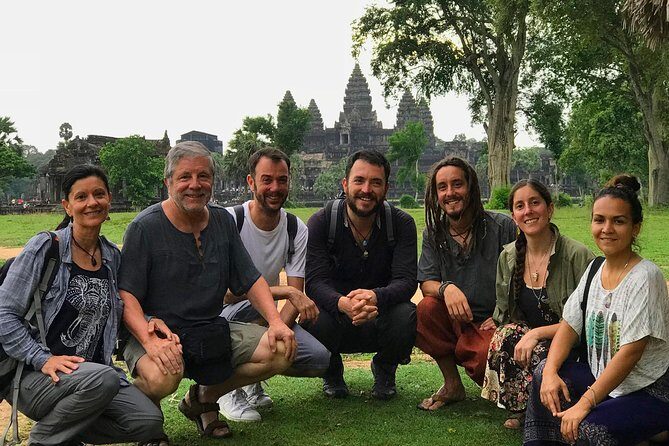
Angkor Wat at sunrise hits different. This tour strings together Angkor Wat at first light and Banteay Srei’s pink-stone carvings in one clean 8-hour run, so you spend less time figuring things out. The only real drawback is heat and walking time, so bring comfortable shoes and be ready for a long, active morning.
What makes this day tour feel smart is the rhythm: you get a calm start before crowds, then you move temple to temple with air-conditioned transport. I also like the little comfort extras that matter in Siem Reap heat, like fresh coconut juice and cool towels after each temple stop.
In This Review
- Key highlights at a glance
- Sunrise at Angkor Wat: the early start that actually pays off
- Banteay Srei: pink sandstone walls and carvings that reward patience
- The Pre Rup area: six towers and a more “mountain temple” mood
- Ta Prohm: when jungle growth becomes part of the architecture
- Bayon Temple: the smiling faces that follow you around
- How the day flows: ride times, heat management, and your comfort plan
- Price and value: what the $80 covers and what you must plan for
- Who should book this tour (and who should skip it)
- Should you book this Angkor Wat sunrise + four-temple day?
- FAQ
- Is Angkor Wat Sunrise included in the tour?
- What temples are included on this day tour?
- How long is the tour?
- What is included in the price?
- Do I need an Angkor pass?
- Are meals included?
- What should I bring and wear?
- Is pickup from my hotel included?
Key highlights at a glance
- Angkor Wat sunrise: early timing to see the world’s largest religious monument before the day fills up
- Banteay Srei pink limestone: intricate carvings and a chance to pause for shopping and sightseeing
- Pre Rup’s mountain-temple vibe: 6 large towers in a standout temple-area stop
- Ta Prohm’s tree takeover: massive fig and silk-cotton trees growing through towers and corridors
- Bayon’s faces: 54 towers covered with 200 Buddha smiling faces
Sunrise at Angkor Wat: the early start that actually pays off
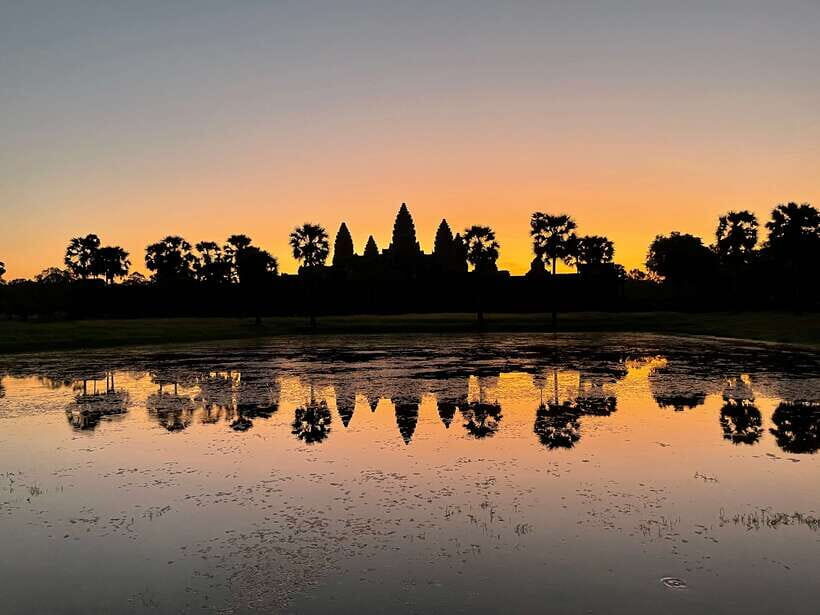
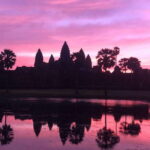
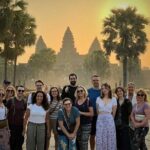
Angkor Wat is one of those places where time matters more than anything else. This tour is designed to take you there for sunrise, before the bulk of the day-trippers show up. You’ll spend around 2 hours at Angkor Wat, which is enough time to find your bearings, watch the light shift on the stone, and take in the big picture without feeling rushed.
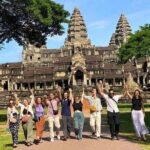
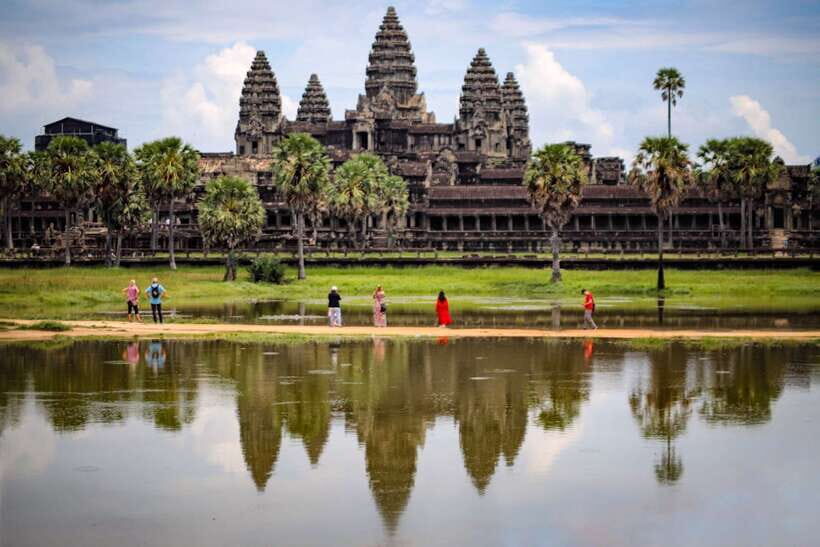
Angkor Wat is also the world’s largest religious monument. That sounds like a “headline fact,” but it’s more than marketing when you’re standing there. The scale makes everything feel more deliberate: the layout, the courtyards, the way your eye keeps traveling across terraces and towers.
Practical tip: the tour includes drinking water, and you’ll be switching between walking and travel in short bursts. Still, the day can be hot. One review notes it was a very hot day, and the cooled towels after returning to the car made a noticeable difference. Translation for you: don’t treat comfort items like an afterthought.
A few more Siem Reap tours and experiences worth a look

Banteay Srei: pink sandstone walls and carvings that reward patience

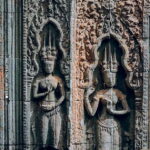
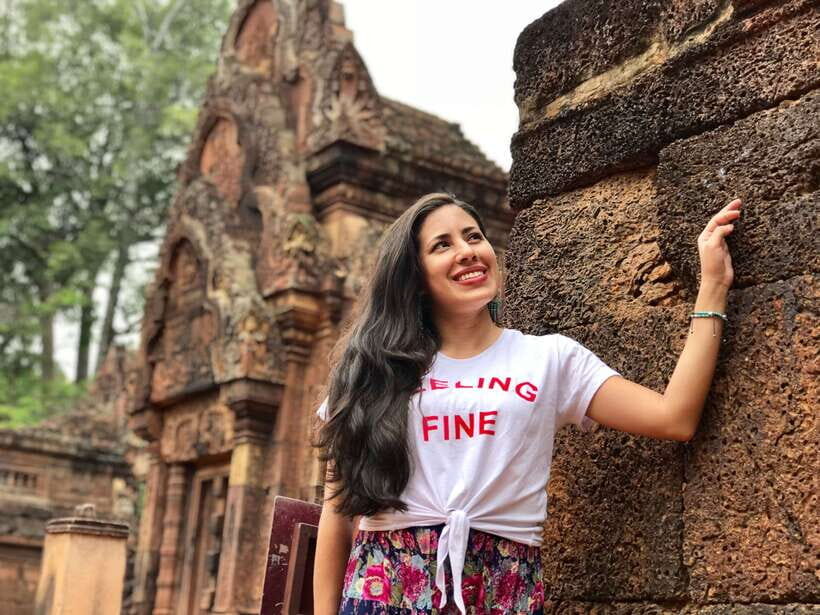
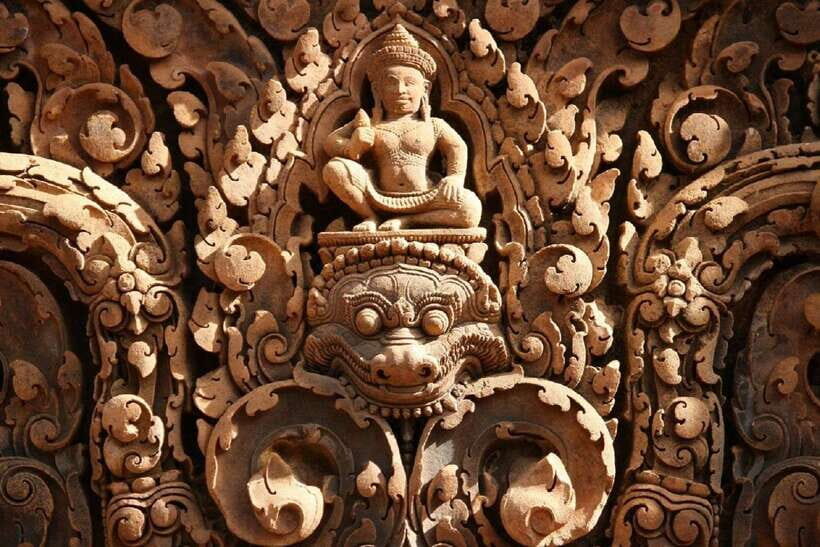
After Angkor Wat, you head to Banteay Srei, built by King Rajendravarman V in the 10th century. This is where the Angkor experience shifts from grand and monumental to detailed and intimate. Expect pink limestone walls covered with some of the deepest, most intricate carvings in the Angkor temple complex.
If you like art, craftsmanship, and close-up storytelling, Banteay Srei is the stop that makes you slow down. The carvings have a different feeling than the broader stone structures you might see elsewhere. You’re not just observing the temple’s shape—you’re reading the stone like a picture book, panel by panel.
You also get a break here, plus time for shopping and sightseeing. That’s useful because it breaks up the day before the next temple stretches into more walking. And on the way, you’ll get glimpses of real life for local people, which helps the temples feel less like isolated museum objects and more like part of an ongoing landscape.
The Pre Rup area: six towers and a more “mountain temple” mood
This tour also includes a stop at the Pre Rup temple area, where you can admire the mountain-temple feel—especially the 6 large towers. Even if your main love is the big names like Angkor Wat, stops like this are valuable because they add variety. You’re seeing how temple builders used towers and elevation to create meaning and drama.
What you’ll likely notice here is contrast. Angkor Wat sets the standard for scale. Banteay Srei leans into fine detail. Pre Rup’s layout pulls you toward a different kind of appreciation: a temple complex that feels built to feel higher, more ceremonial, and more commanding in its setting.
It’s a shorter moment compared with the major hubs, but it helps you connect the dots across different temple styles in a single day—without turning your morning into a marathon.
Ta Prohm: when jungle growth becomes part of the architecture
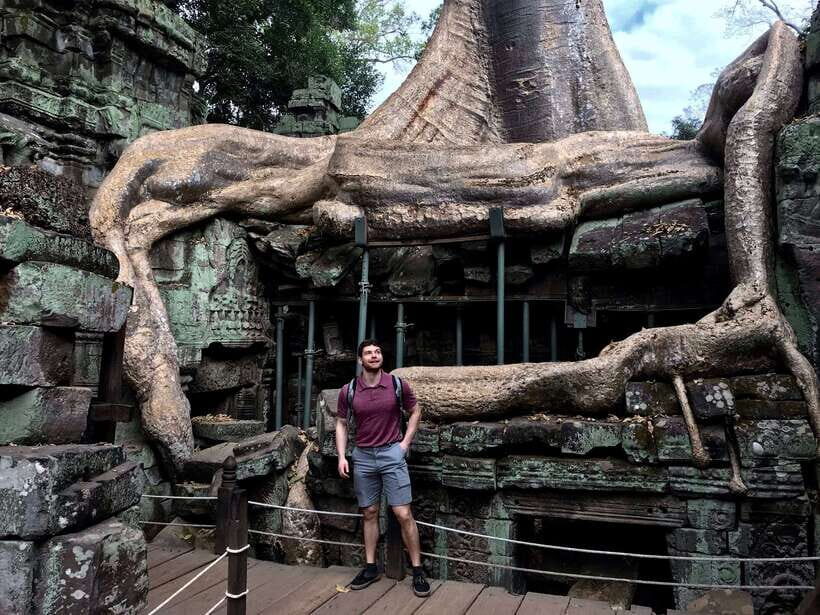
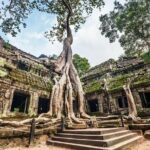
Then comes Ta Prohm, the temple best known for its dramatic “nature taking over” look. You’ll see how the jungle has overtaken the monastic complex, including the iconic massive trees. Look for the fig and silk-cotton trees that grow from inside towers and corridors.
This stop is special because Ta Prohm doesn’t feel cleaned up. The temple reads like a meeting point between human design and living growth. And because the tour keeps the visit time focused (about 1 hour), you can enjoy the atmosphere without feeling like you’re trapped walking the same paths too long.
You’ll have time to explore and do some walking here, so pack for comfort. This is where bad shoes can turn a great temple into a painful one. The good news: you’ll be back in the car soon after, and you’ll likely get another cool towel moment to reset you for the next site.
Bayon Temple: the smiling faces that follow you around
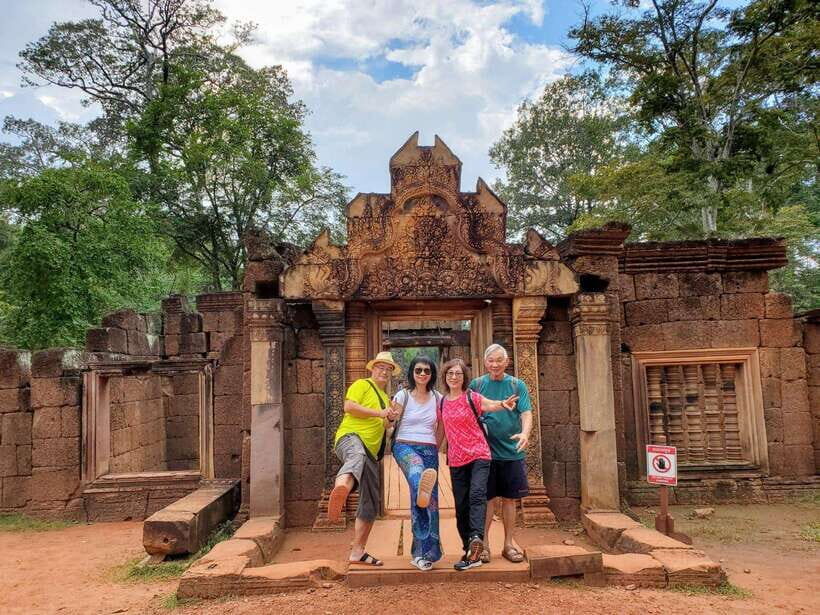
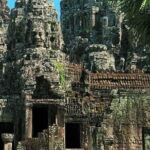
After Ta Prohm, you go to Bayon Temple. This is where the day hits you visually. Bayon is famous for its 54 towers, decorated with 200 Buddha smiling faces. It’s the kind of scene where you keep looking up, then down, then back up again because the faces feel like they’re watching your angle.
You’ll spend about 1 hour at Bayon with time to explore and enjoy a bit of free space. That matters because Bayon works best when you can wander slowly and choose your view points. If you’re with a group, a structured stop can sometimes feel limiting. Here, the free time balance helps you “catch” the temple from multiple angles without losing the thread of the story.
Also, the shift from Ta Prohm’s tree-filled corridors to Bayon’s composed stone faces is a great mental break. It’s like switching from a moody film scene to a composed portrait.

How the day flows: ride times, heat management, and your comfort plan
This is an 8-hour tour that moves in a logical loop, with air-conditioned transport between temples. The schedule includes segments like a short van ride, then sunrise time at Angkor Wat, then transfers through the Banteay Srei and Pre Rup area, followed by Ta Prohm and Bayon.
Here’s why that structure helps you: you’re not stuck doing long back-and-forth drives at random hours. You get a steady pace with enough downtime to cool off and enough walking time to actually feel like you visited the places.
Comfort-wise, you’re set up better than many budget temple tours. You’ll have:
- Air-conditioned car/minivan
- Fresh coconut juice on tour
- Drinking water
- Cool towel each time you return to the vehicle
One review specifically called out how towels refreshed them after a hot day. That’s the kind of detail that makes the difference between “I saw temples” and “I had a day that didn’t wear me down.”
Your tour guide is English-speaking, and the guide is described as fully vaccinated. You’ll also be picked up from your accommodation, and you should wait at the hotel lobby about 5 minutes before the start time.
Price and value: what the $80 covers and what you must plan for
The price is $80 per person for the day. On its face, that sounds like a typical half-day tour price. What you’re actually paying for is the convenience stack: transport, a guide, and the small heat-fighting comforts that are included.
What’s not included is the entry cost through an Angkor pass. A 1-day Angkor pass is listed as $37 per person. So if you add that on top, your baseline becomes about $117 before meals.
Meals are also not included. Budget around $8–$12 per person per meal, depending on what you choose. I like knowing this up front because it helps you avoid the common trap: arriving hungry, then paying more simply because you’re tired.
So is it value? For me, it leans yes if you want:
- a smooth route across major temples
- early sunrise timing
- included A/C and included comfort items
If you’re the type who prefers roaming on your own schedule, you might find cheaper options. But for a first-timer day when you want the biggest sights in a single run, the included extras do real work.
Who should book this tour (and who should skip it)

This tour is best for you if you want a well-paced day that hits the big temple lineup: Angkor Wat sunrise, Banteay Srei, Ta Prohm, and Bayon. It’s also a good fit if you appreciate explanations from an English guide—one review highlighted how the guide’s explanations helped them a lot, and another praised a guide (Makara) for explaining Cambodia history and culture in a way that felt interesting.
Guide styles can vary. If you end up with someone like Sinan (mentioned in one review), you’re likely to get clear highlights and temple context. If your guide is Makara, you may get a more story-driven culture angle. Either way, you’re getting an English-speaking guide and the route is planned so you don’t waste your day figuring out logistics.
Skip it if you’re pregnant. Also note that sportswear is not allowed, so plan for normal comfortable clothing rather than workout gear.
Should you book this Angkor Wat sunrise + four-temple day?
If your goal is maximum temple time with minimal stress, I’d book this. The early start at Angkor Wat plus the curated sequence through Banteay Srei → Pre Rup area → Ta Prohm → Bayon is a strong way to experience multiple temple moods in one day. Add in A/C transport and included coconut juice, water, and cool towels, and you get a day that feels built for real human comfort—not just sightseeing boxes.
The only reason to hesitate is if you hate early mornings or you know you’ll struggle with walking in heat. If that’s you, a slower-paced multi-day plan might feel better. Otherwise, this is a practical, high-impact Angkor day that gives you the major sights without turning the day into a chaotic scramble.
FAQ
Is Angkor Wat Sunrise included in the tour?
Yes. The tour is arranged to visit Angkor Wat for sunrise, before the day crowds arrive.
What temples are included on this day tour?
The tour includes Angkor Wat (sunrise), Banteay Srei, the Pre Rup temple area, Ta Prohm, and Bayon Temple.
How long is the tour?
The duration is listed as 8 hours.
What is included in the price?
Included are air-conditioned transportation, a fully vaccinated English-speaking tour guide, fresh coconut juice, drinking water, and cool towels.
Do I need an Angkor pass?
Yes. A 1-day Angkor pass is not included and is listed as $37 per person per day.
Are meals included?
No. Meals are not included, and each meal costs around $8–$12 per person.
What should I bring and wear?
Bring comfortable shoes and comfortable clothes. Sportswear is not allowed.
Is pickup from my hotel included?
Yes. Pickup is included. You should provide your hotel name and wait in the hotel lobby about 5 minutes before the tour start.