REVIEW · SIEM REAP
Angkor Wat Tour with Sun Rise Small Group Day Tour
Book on Viator →Bookable on Viator
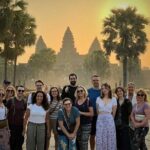
Sunrise at Angkor Wat feels unreal. This small-group morning tour in Siem Reap lines up the big wow-moments: sunrise at Angkor Wat, then Ta Prohm, Bayon, and the Angkor Thom South Gate. It’s built for people who want more than a quick checklist stop.
I especially like the human scale: max 10 travelers, plus an air-conditioned vehicle, bottled water, and an English-speaking guide who explains what you’re looking at. I also like the routing choice—entering Angkor Wat from the eastern side and walking parts of the site on foot, instead of treating everything like a drive-by.
One thing to keep in mind: Angkor Wat admission fees are not included, so your total cost will be a bit higher than the headline price.
In This Review
- Key things that make this tour work
- Why an Angkor Wat Sunrise Start Changes Everything
- Pickup, AC Vehicle, and a Small-Group Pace You Can Actually Enjoy
- Entering Angkor Wat From the Eastern Side and Finding the Main Stories in the Bas-Reliefs
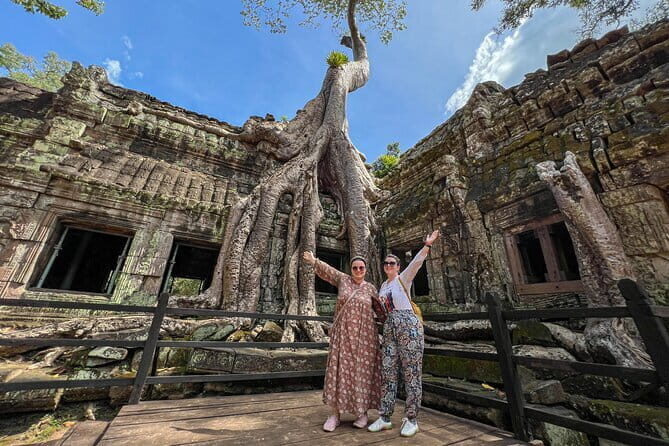
- Ta Prohm: The Tree-Tangled Ruins That Always Look Like a Movie Set
- Bayon Temple: 200+ Smiling Faces With Enough Context to Feel Personal
- Angkor Thom South Gate: The Big Ancient Capital Feeling in 30 Minutes
- Price and Tickets: What the $18 Covers, and What You Still Need
- What This Tour Feels Like Day-To-Day (Sunrise to South Gate)
- Who This Sunrise Circuit Suits Best
- Should You Book This Angkor Wat Sunrise Tour?
- FAQ
- How long is the Angkor Wat sunrise small-group tour?
- Do I get hotel pickup and drop-off?
- Is there an English-speaking guide?
- What group size should I expect?
- Is sunrise included at Angkor Wat?
- Are temple admission fees included?
- What temples and sites are visited?
- Is transportation comfortable?
- What is the cancellation policy?
Key things that make this tour work

- Real sunrise timing at Angkor Wat, so you see the temple when the light is most forgiving
- Max 10 people for a calmer pace and easier photos around the main sights
- Eastern-side entry and a jungle-path walk that adds atmosphere before the main chambers
- Ta Prohm’s tree-wrapped ruins (the Tomb Raider temple look) without rushing you through
- Bayon’s 200+ smiling faces with bas-relief context so it’s not just scenery
- Angkor Thom South Gate in a short stop that still lands a big “ancient capital” feeling
Why an Angkor Wat Sunrise Start Changes Everything
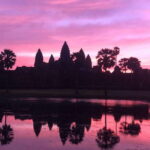
Angkor Wat in the early morning is a totally different experience than mid-day. The stone looks warmer, shadows stretch out, and the crowds tend to feel less aggressive. Sunrise also helps you get your bearings fast—after that first dramatic view, the rest of the carvings and temple geometry make more sense.
This tour starts with a hotel pickup and gets you to Angkor Wat in time to watch the sun come up. That timing matters because you’re not just traveling to temples—you’re traveling to light, and sunrise light is the cheapest upgrade you’ll ever buy in Siem Reap.
You can also read our reviews of more tours and experiences in Siem Reap.

Pickup, AC Vehicle, and a Small-Group Pace You Can Actually Enjoy
Logistics can make or break a temple day. Here, you get returned transfers and an air-conditioned vehicle, which is a big deal when Cambodia mornings turn hot fast. You also get bottled water along the way, which keeps you from spending your time hunting for drinks instead of seeing the temples.
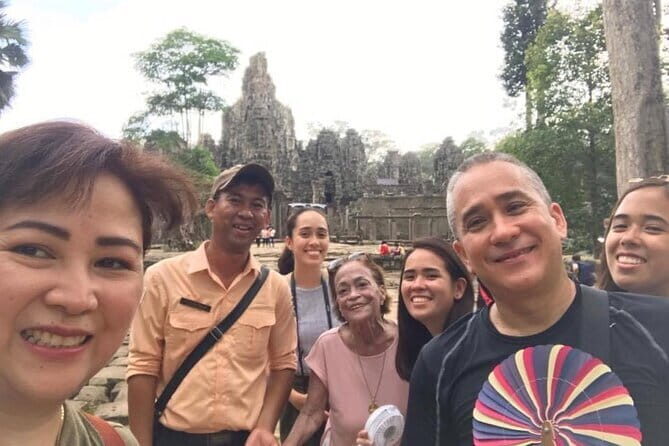
The group size is capped at 10 travelers. In practical terms, that means fewer bottlenecks at doorways and more breathing room around key spots like Bayon’s faces and Angkor Thom’s gates. It’s also a nice match if you like asking questions; you’re not stuck shouting over a busload.
Entering Angkor Wat From the Eastern Side and Finding the Main Stories in the Bas-Reliefs
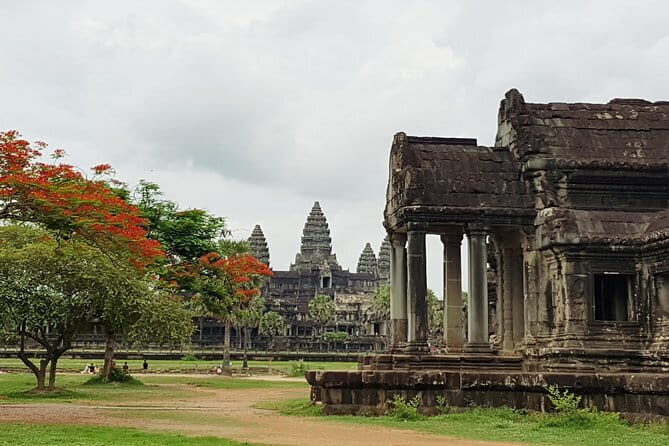
At Angkor Wat, this tour doesn’t just march you through the most famous postcard spots. You enter from the eastern side, which is described as the less-visited approach. That choice can help you ease in before the busiest central areas swallow your time.
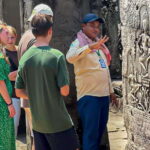
From there, you’ll do a walking route on foot and move through a jungle path toward the North ancient library pool. It’s not just a scenic detour—this part sets the mood. The explanations you get from your guide help connect the physical space to the stories carved into the stone, so you’re not staring at figures without context.
The best part is time inside the central chambers. This is where the guide’s storytelling matters most: you’ll hear myths and histories shown on the bas-reliefs, including the fact that this is the longest stretch of bas-relief carvings in the world. When someone points out patterns—who’s doing what, and why that scene matters—it turns “wow” into “I get it,” which makes the photos look better later because you’re paying attention.
One practical note: Angkor sites involve uneven ground and plenty of steps. The tour is listed as suitable for most travelers, but you’ll still want comfortable shoes and a light layer for early morning.
Ta Prohm: The Tree-Tangled Ruins That Always Look Like a Movie Set
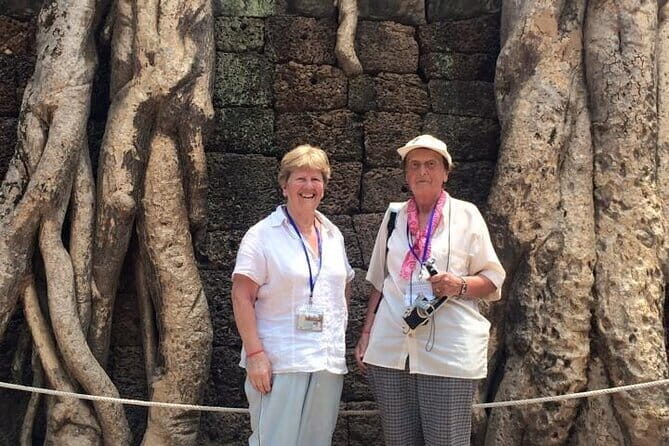
Next comes Ta Prohm, famous for its dramatic mix of ruins and jungle growth—the classic Tomb Raider temple vibe. Ta Prohm was built in the 13th century, and unlike some other Angkor temples that were heavily restored or cleared, it’s kept in a condition that matches how it was found. That’s why the trees feel like they’re in a permanent standoff with the stone.
You’ll spend about one hour here. That’s long enough to walk the main paths without feeling like you’re being herded. You can also pause and take in the most photogenic angles where roots wrap columns and doorways, making the temple feel alive rather than frozen.
Ta Prohm is also part of the UNESCO-recognized Angkor heritage story (inscribed in 1992). The guide’s framing helps here too—this wasn’t only a religious site. It also connects to the Ancient Khmer University, which makes the ruins feel less random and more purposeful.
Bayon Temple: 200+ Smiling Faces With Enough Context to Feel Personal
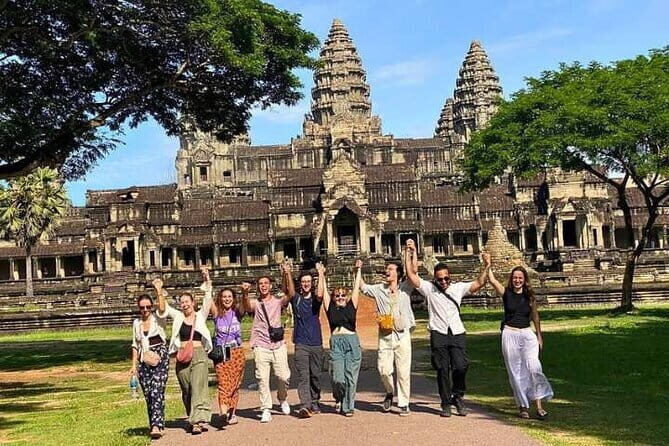
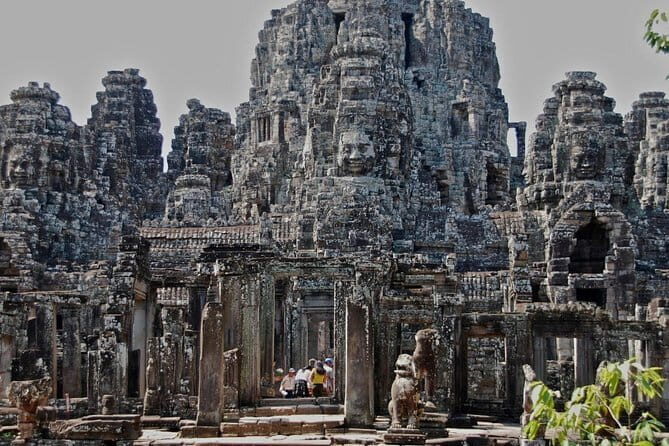
Bayon is the temple most people remember, and for a good reason. It’s the state temple of King Jayavarman VII (13th century), and its signature feature is the many towers covered in more than 200 enormous smiling stone faces. Standing there, you realize it’s not a single face photo moment—it’s a whole mood. Faces seem to follow you as you move around the terraces.
You’ll get about one hour at Bayon. That’s a smart amount of time for a place like this, because you want enough minutes to rotate your viewing angles and also read the bas-reliefs around the galleries. Bayon has two sets of bas-reliefs, mixing mythological, historical, and everyday scenes. With a guide explaining what you’re seeing, those carvings stop being just texture and start feeling like a visual narrative.
There’s a big payoff if you’re the type who likes details—Bayon rewards attention. But even if you’re not, the faces alone land the wow.


Angkor Thom South Gate: The Big Ancient Capital Feeling in 30 Minutes
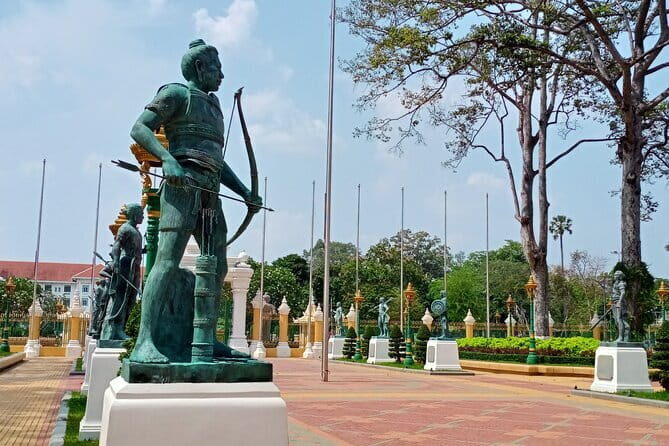
After Bayon, you’ll head to the South Gate of Angkor Thom, one of the five gates of the ancient capital city. The gate is flanked by rows of 54 stone figures on each side, which gives it that fortress-like entrance feel. It’s also one of the most popular spots in the Angkor area, so having a guide helps you move efficiently and understand the symbolism instead of just taking photos.
This stop is about 30 minutes, which sounds short until you realize the South Gate is best enjoyed as a quick reset between temples. It’s like looking up from a book you’ve been reading all morning, taking a breath, and then continuing with your day.
The scale story is wild: Angkor Thom at its peak had a population of more than one million people and was bigger than London at the time. You feel that scale in the gate design—the stone figures and the entry layout suggest a place built to move crowds, not just worshippers.
Price and Tickets: What the $18 Covers, and What You Still Need
At $18 per person, this tour is positioned as a value option, especially because it includes several things that add up on their own. You get a live English-speaking tour guide, air-conditioned vehicle transport, bottled water, and returned transfers.
The key catch is that Angkor Wat admission is not included. So your total cost will depend on the current entry fee you pay on the day. On the bright side, the other temple stops listed—Ta Prohm, Bayon Temple, and Angkor Thom South Gate—are marked as free in the tour info you’re working from. That means you’re mainly budgeting for the Angkor Wat ticket.
In value terms, the $18 price makes the day feel affordable even if you’re watching your Cambodia budget. But if you’re hoping for a strictly all-inclusive cost with no surprises at the ticket window, you’ll want to plan for that Angkor Wat admission.
What This Tour Feels Like Day-To-Day (Sunrise to South Gate)
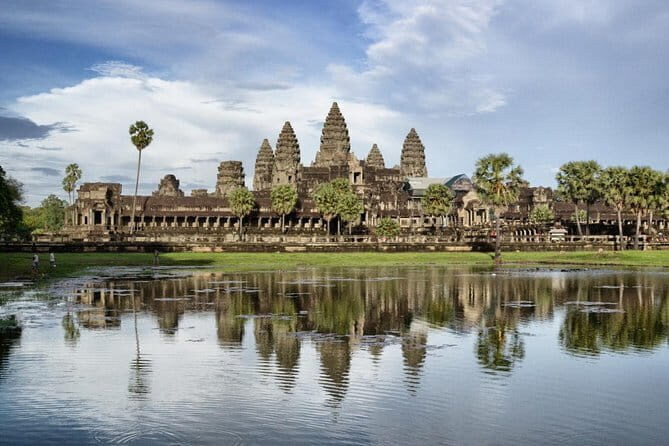
A day like this has a simple rhythm: early light, temple time, then a walk-and-look loop through major Angkor highlights. You start at Angkor Wat with sunrise and a structured exploration. After that, the pace stays active—there’s a stop for breakfast before you move on to Ta Prohm and the rest of the Angkor Thom area.
Because the day stays focused on a tight circuit, it’s easier to mentally “hold” what you’re seeing. Bayon’s faces make more sense after Angkor Wat’s bas-reliefs. Ta Prohm’s jungle atmosphere adds variety so the morning doesn’t turn into the same kind of stone hall over and over.
Who This Sunrise Circuit Suits Best
This is a strong fit if you’re:
- An early riser who wants the softer light at Angkor Wat
- Traveling as a solo traveler, couple, or small group and want a calm group size
- Curious about symbolism and story details, not only architecture photos
- Short on time but still want a meaningful mix: Angkor Wat + Ta Prohm + Bayon + Angkor Thom gate
If you dislike mornings or you prefer slow, unstructured wandering, you might find the pace too packed. But if you like having a guide set the scene and keep the day efficient, this kind of small-group sunrise tour is exactly what you came for.
Should You Book This Angkor Wat Sunrise Tour?
I’d book it if you want sunrise at Angkor Wat and a morning plan that hits the biggest visual anchors without wasting time. The small group size, English guide, and included transportation do a lot of work for you. And once you factor in that Angkor Wat admission is the only clearly listed ticket expense, the pricing starts to look fair.
I’d skip or reconsider only if paying for Angkor Wat entry on top of the tour price would stress your budget, or if you don’t like early starts. Otherwise, this tour is a solid way to see the classics in the best light, with enough context to make the stone stories feel real.
FAQ
How long is the Angkor Wat sunrise small-group tour?
It runs about 7 hours (approx.).
Do I get hotel pickup and drop-off?
Yes. Pickup is offered, and you also get returned transfers.
Is there an English-speaking guide?
Yes. The tour includes a live English-speaking tour guide.
What group size should I expect?
The tour has a maximum of 10 travelers.
Is sunrise included at Angkor Wat?
Yes. The experience includes watching the sun rise in Angkor Wat.
Are temple admission fees included?
Angkor Wat admission fees are not included. Ta Prohm, Bayon Temple, and Angkor Thom South Gate are listed as free in the tour information.
What temples and sites are visited?
You’ll visit Angkor Wat, Ta Prohm, Bayon Temple, and the Angkor Thom South Gate.
Is transportation comfortable?
Yes. You ride in an air-conditioned vehicle, and you’re provided bottled water.
What is the cancellation policy?
There is free cancellation. You can cancel up to 24 hours in advance for a full refund.