REVIEW · SIEM REAP
Angkor Zipline and Temple Tour with Sunset
Book on GetYourGuide →Operated by Angkor Dynasty Travel · Bookable on GetYourGuide
Angkor from the treetops is a real wow. I love the bird’s-eye zipline views over the jungle that sits inside a UNESCO World Heritage setting, and I also really liked how the day is paced so you’re not just rushing from stone to stone. You’ll get a guided walk through Angkor highlights like Bayon, then finish with the sunset climb at Phnom Bakheng. One drawback to plan for: the Angkor pass is not included, and zipline packages can be confusing if you’re expecting a fully private setup all day.
The experience runs as a full, guided 8-hour circuit with early pickup at 07:30am in an air-conditioned vehicle, plus an on-site safety briefing before you fly. In a couple of the accounts I looked at while learning what to expect, the driver guidance mattered—one name that came through was Dabann, who was described as funny and informative, and that kind of easy comfort helps on a long day of heat and steps.
In This Review
- Key highlights to know before you go
- The full day at a glance: an early start, then temple to sunset
- Ziplining from Orchid House: the jungle flight part
- A small but important caution
- Angkor Thom from the South Gate approach
- Bayon, terraces, and why the “weird” names still matter
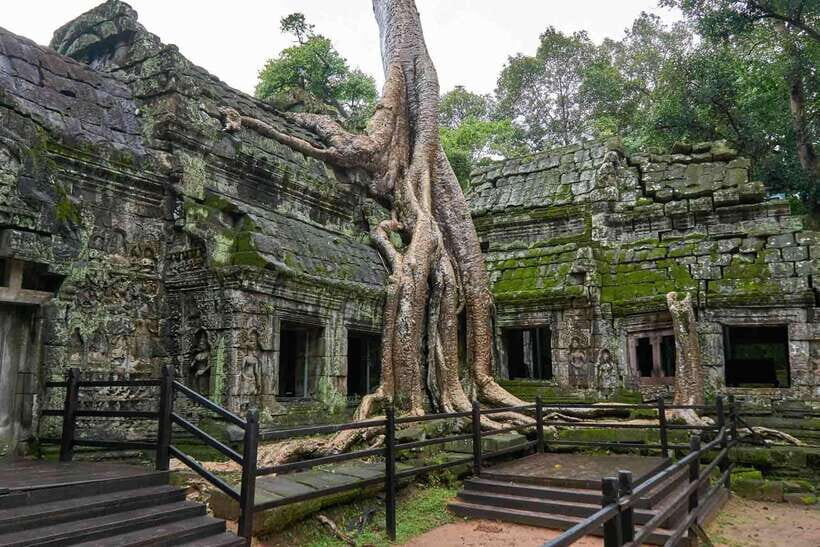
- Ta Prohm: the rooted-in-stone stop that changes how you see everything
- Angkor Wat: the bas-relief storytelling you can actually follow
- The big practical issue: the Angkor pass
- Phnom Bakheng at sunset: temple-mountain effort, good payoff
- Price and value: what $104 really covers
- Who this tour fits best (and who should skip it)
- Quick booking check before you commit
- Should you book the Angkor Zipline and Temple Tour with Sunset?
- FAQ
- How long is the Angkor Zipline and Temple Tour with Sunset?
- What time is hotel pickup?
- Where is the pickup location?
- Is the Angkor pass included in the price?
- What zipline course package is included?
- Can I upgrade to the Gold zipline course?
- Is lunch or a meal included?
- What language is the tour guide?
- Are large bags or luggage allowed?
- Is this tour suitable for everyone?
Key highlights to know before you go

- Orchid House safety briefing first so you’re ready to ride before you’re clipped in
- Angkor Thom on foot with Bayon Temple and the terraces like Elephants and Leper King
- Ta Prohm’s roots-and-stone look plus the big-picture context before Angkor Wat
- Sunset from Phnom Bakheng with a temple-mountain viewpoint built for late-day photos
- Silver zipline package is the default (described as 4 zip lines and 3 suspension bridges)
- Ask about what you mean by private since one account noted being put with others on the zipline
The full day at a glance: an early start, then temple to sunset
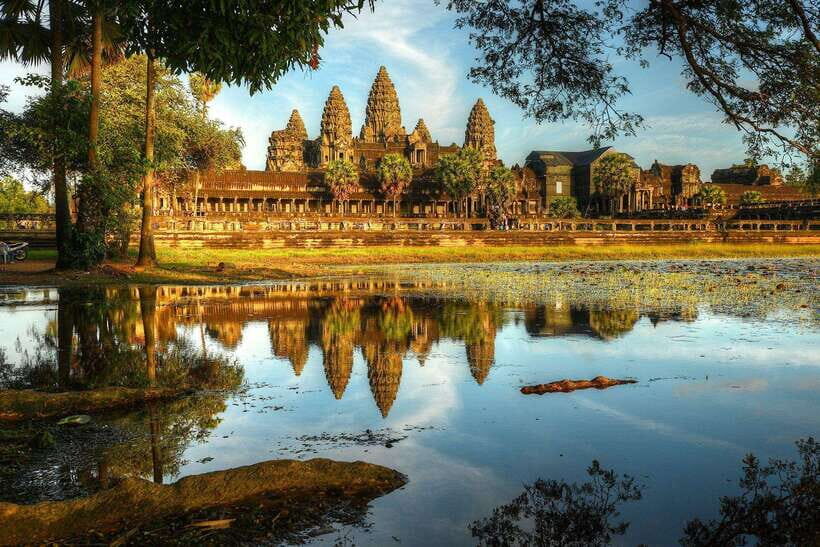
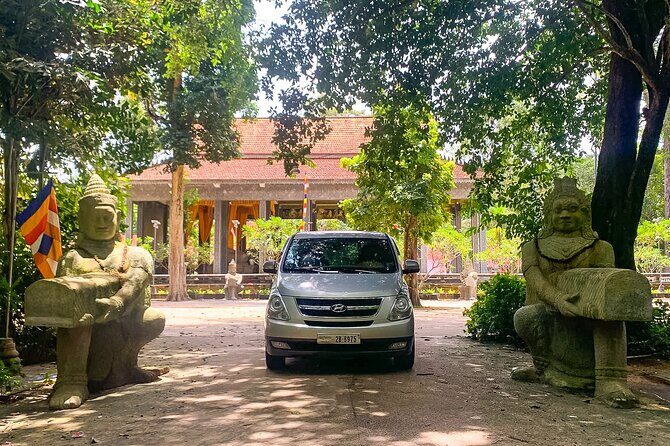
This is one of those Siem Reap days that starts early, not because it’s trying to be fancy, but because Angkor is better when you beat the biggest crowds and heat. Pickup begins at 07:30am from Krong Siem Reap, and you ride in an air-conditioned minivan or minibus with a driver and English-speaking tour guide.
Once you’re at Angkor’s area, the day turns into a loop: zipline first, then guided temple walking, then Angkor Wat, and finally the sunset climb. You’ll also have chilled water and towels along the way, which sounds small until you’re carrying your own bottle-less misery in the heat.
You can also read our reviews of more evening experiences in Siem Reap

Ziplining from Orchid House: the jungle flight part
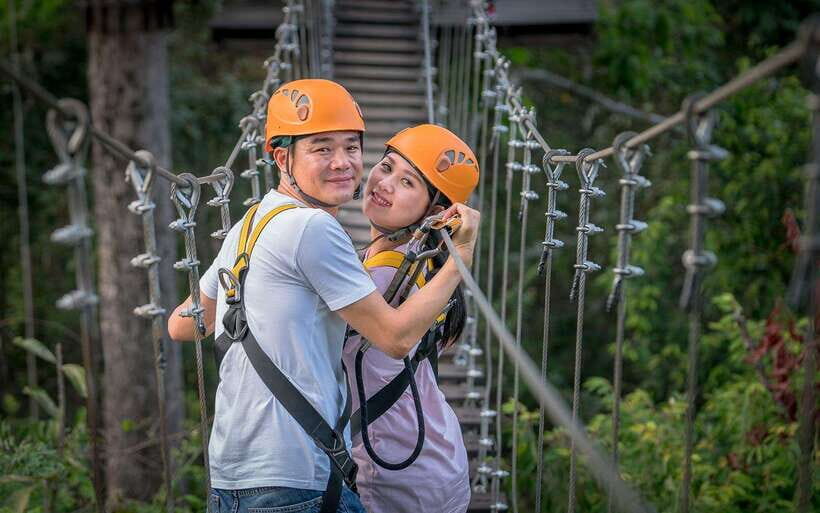
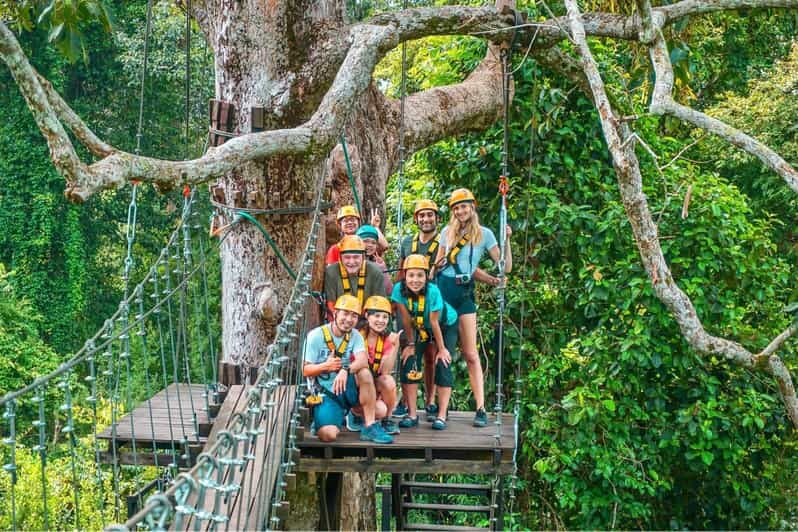
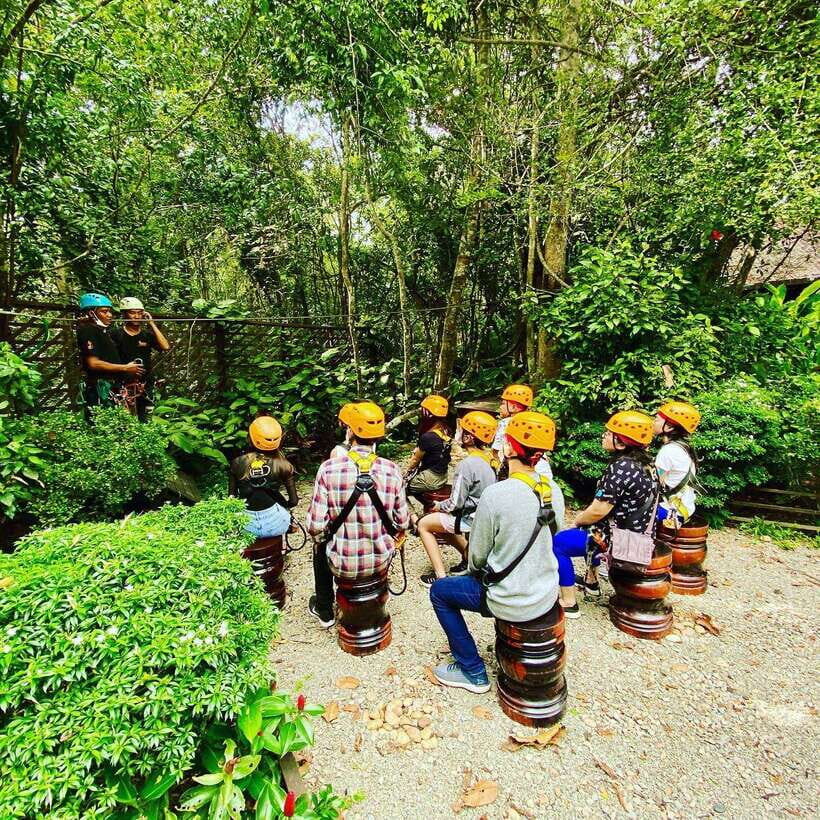
Your day pivots at the Orchid House base. That’s where you’re greeted by the team, you register, and you go through a comprehensive safety instruction session before you start. I like that order—when you’re about to launch into open air over a jungle, you want clarity before excitement.
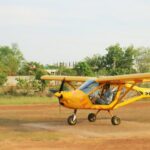
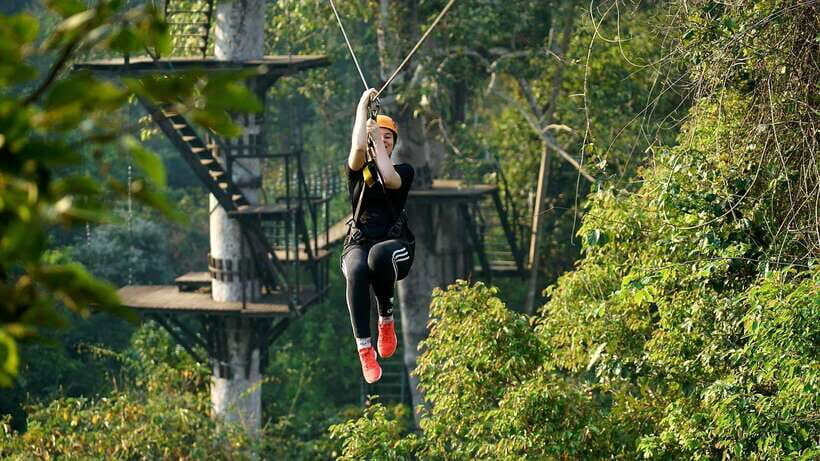
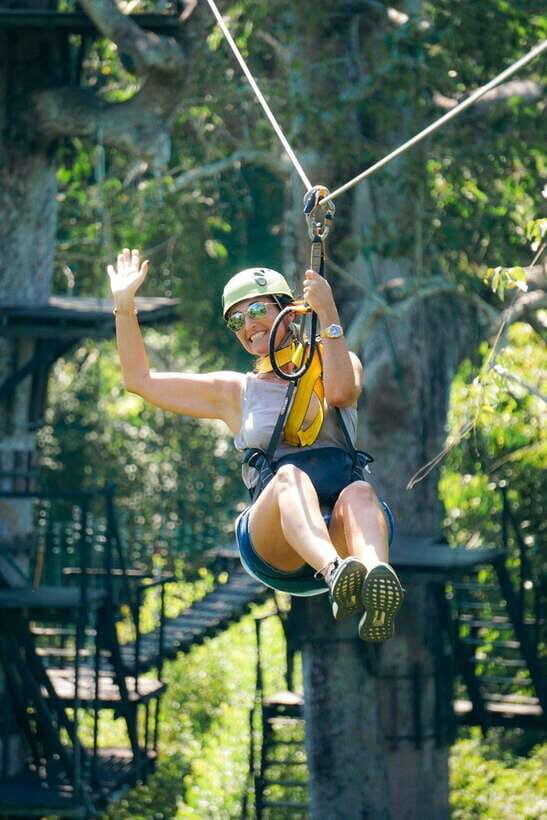
The zipline time is about 1.5 hours, and the setting is a big part of the appeal. You’re flying over jungle scenery in a UNESCO World Heritage area, which is a different kind of thrill than standard zipline parks you might find elsewhere. It’s not just movement. It’s perspective.
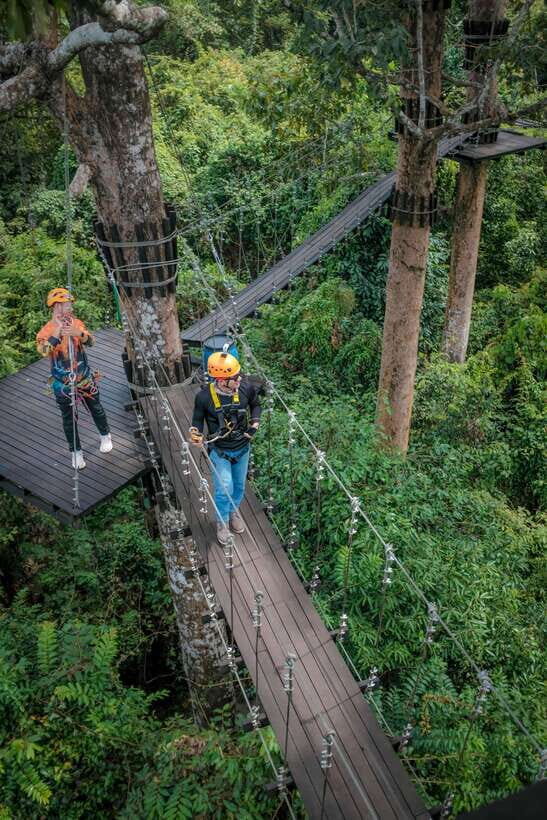
About the course: you’re included in the Silver Course Package. One account gave specific detail about what that means on the ground—4 zip lines and 3 suspension bridges—with the Gold course offered as an upgrade for an extra $35 per person. If you care about how many elements you get to do, check what the package includes before you arrive, because that’s where expectations can drift.
A small but important caution
Even though this experience is described as a private group, one account noted that the zipline portion didn’t feel fully private because they were placed with other people and given a limited set within the silver package. That doesn’t mean every day is like that, but it is a good reminder: if “private” is a must for you, ask the provider to confirm the zipline course arrangement for your specific booking.
Angkor Thom from the South Gate approach
Before you get deep into temples, you start with a drive to the main entrance area of the complex at the south gate. It’s a quick moment, but it helps you get your bearings fast because Angkor is spread out, and the scale is hard to grasp when you arrive without context.
Then you move into Angkor Thom, the “Great City,” with a guided walking route that lasts about 2.5 hours. This is the part of the day where your guide’s explanations matter most, because the stone details can look similar if you’re just staring at carvings. The tour focuses on major stops that make the layout easier to understand.
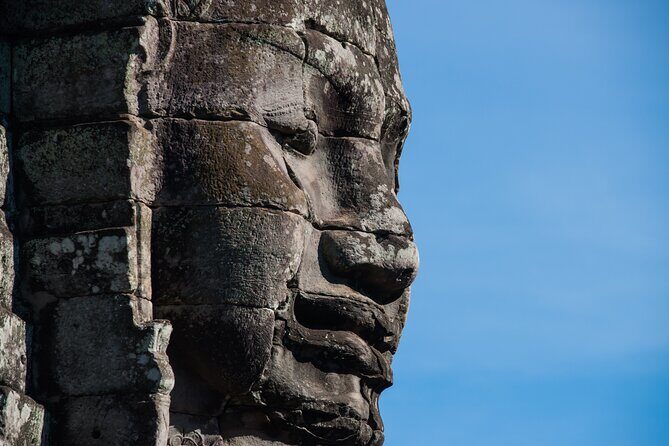
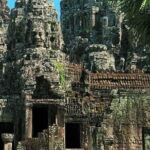
You’ll visit Bayon Temple, and this is one of the emotional anchors of many Angkor days. The famous stone faces are not just decoration; they’re a strong visual symbol that shows up all over the city’s central area. You’ll also stop at Phimeanakas Temple within the Royal Palace enclosure, which helps you connect the temples to the sense of Khmer royal space.
Bayon, terraces, and why the “weird” names still matter
Angkor Thom includes more than the obvious face temple. You’ll also see Baphuon, plus two terraces that tend to catch people off guard because of their names and imagery: the Terrace of the Elephants and the Terrace of the Leper King.
Even if you don’t know the exact symbolism before you arrive, this is still valuable because your guide can give you a framework for what you’re seeing. The terraces are a reminder that Angkor was built for ritual, ceremony, and power—stone works meant to be walked through and looked at from specific angles.
The walking is part of the deal, and it’s worth wearing sensible shoes. Phnom Bakheng later means more steps, so don’t spend the morning with your feet already mad at you.
Ta Prohm: the rooted-in-stone stop that changes how you see everything
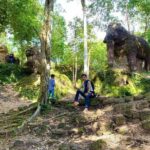
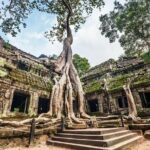
After lunch break time (the tour does not list a meal as included, so plan on buying your own), you head toward Ta Prohm. This is the temple people picture when they think Angkor “in movies,” largely because the huge fig tree roots wrap the architecture.
The tour time for the Ta Prohm stop is framed as part of the day’s journey through the jungle path, and that’s exactly how it plays—Ta Prohm doesn’t feel like a museum room. It feels like something alive that learned how to grow around stone.
The best part here is the sequencing. After you’ve already been through Angkor Thom’s political and ceremonial feel, Ta Prohm adds another layer: how nature takes back space, and how Khmer structures can look like they’re negotiating with time.
Angkor Wat: the bas-relief storytelling you can actually follow
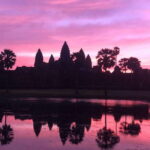
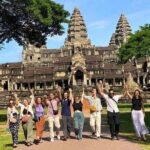
Then comes Angkor Wat, with about 2.5 hours for visit, guided tour, sightseeing, and walking. This is where you’ll understand why Angkor Wat gets singled out again and again.
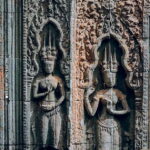
One of the facts your guide can point out is that Angkor Wat has the longest continuous bas-relief in the world, running along the outer gallery walls and telling stories from Hindu mythology. When you hear that before you start walking the galleries, you’re more likely to notice the “story line” instead of just spotting random panels.
Also, Angkor Wat is a World Heritage Site dating back to 1992, and your guided time here is designed to help you absorb the scale without getting lost. Angkor Wat can feel endless if you go without a route, so this part is where a guide earns their keep.
The big practical issue: the Angkor pass
Angkor Wat entry requires an Angkor pass, and it is not included in the tour price. The pass is listed separately at $37 per person. Because of that, you should factor it into your total budget before you book, especially if you’re doing multiple Angkor sites in one day.
One account I reviewed mentioned unexpected extra cost tied to entry. You can avoid that stress by getting your pass sorted ahead of time so you’re not doing budget math when you’re already on temple time.
Phnom Bakheng at sunset: temple-mountain effort, good payoff
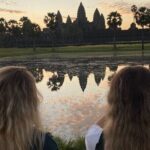
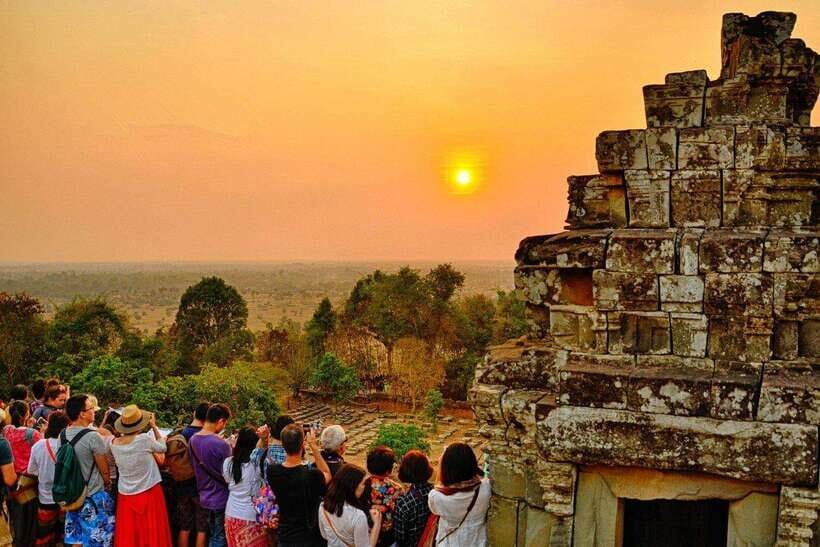
The final act is Phnom Bakheng, which is a state temple of the first Khmer capital in the region. You’re there for about 1.5 hours for sightseeing, walking, and sunset.
This is the part that turns a guided day into a memory. The temple-mountain viewpoint is built for late-day light, and the climb—yes, it’s a climb—makes the payoff feel earned. Even if sunset doesn’t turn into a postcard every time, the atmosphere changes. The stones cool down, and the views from the height help you read Angkor’s layout in a new way.
It’s also a good place to slow down. After hours of temple watching, this is where you can step back and let the whole place make sense.
Price and value: what $104 really covers
The listed price is $104 per person for an 8-hour tour. Included basics that help the day run smoothly: air-conditioned transportation, hotel pickup and drop-off, a tour guide and driver, chilled water and towels, and the Silver Course Package for ziplining.
But two cost items can change the total you’ll spend:
- Angkor pass is extra: $37 per person
- Gold zipline course upgrade is extra: $35 per person
And it’s also clear that a meal is not included, as well as soft drinks and optional add-ons like GoPro rental and photographer services. So you should treat the $104 as covering the guided structure and zipline course you choose, not as an all-in “no other spending” deal.
Is it good value? It can be, especially if you care about getting through Angkor Thom and Angkor Wat with an English-speaking guide rather than DIY-ing everything. The bigger question is whether the zipline portion meets your personal expectations for length and “private” feel—because that’s where at least one account flagged confusion.
Who this tour fits best (and who should skip it)
This is a solid choice if you want one day that mixes outdoor adrenaline with major Angkor sites, without planning in detail. The zipline is time-boxed, the temple route is structured, and the day ends with sunset at Phnom Bakheng.
That said, this tour is not suitable for:
- pregnant women
- people with heart problems
- people under 3 ft 3 in (100 cm)
- people over 275 lbs (125 kg)
Also, luggage or large bags are not allowed. If you like to travel with a big daypack, keep it small and light for this one—temple days and zipline days don’t mix well with bulky bags.
Quick booking check before you commit
Before you pay, I’d do three checks that protect you from the most common surprises:
- Confirm your Angkor pass plan since it is not included
- Confirm whether you want Silver or you’re thinking Gold (+$35)
- Ask what “private group” means for the zipline timing and course arrangement
If those align, you’ll get what this tour is aiming for: a guided Angkor highlights day with a very different viewpoint from above the jungle canopy.
Should you book the Angkor Zipline and Temple Tour with Sunset?
If you want a structured, guided Angkor day that includes ziplining and a sunset finish, this is worth considering. The strong parts are the guided flow through Angkor Thom and Angkor Wat, the chance to see Ta Prohm through the roots-and-stone lens, and the sense of achievement that comes with ending at Phnom Bakheng for sunset.
I would book it if you’re comfortable paying separately for the Angkor pass and you’re okay with the included zipline being the Silver course. I would be cautious if you’re counting on a fully private zipline experience in terms of course access or the number of elements, because one account reported being grouped during the zipline portion.
If you match those conditions, you’ll likely come away with a rare mix: Khmer temples at eye level, then the jungle from above, then the whole scene in late-day light.
FAQ
How long is the Angkor Zipline and Temple Tour with Sunset?
The duration is 8 hours.
What time is hotel pickup?
Pickup starts at 07:30am.
Where is the pickup location?
Pickup is from Krong Siem Reap.
Is the Angkor pass included in the price?
No. The Angkor pass costs $37 per person and is not included.
What zipline course package is included?
The Silver Course Package is included.
Can I upgrade to the Gold zipline course?
Yes. The Gold course costs an extra $35 per person.
Is lunch or a meal included?
No meal is included.
What language is the tour guide?
The live tour guide is English.
Are large bags or luggage allowed?
No. Luggage or large bags are not allowed.
Is this tour suitable for everyone?
No. It is not suitable for pregnant women or people with heart problems, and there are height and weight limits (under 100 cm and over 125 kg are not suitable).