REVIEW · SIEM REAP
Angkor’s Finest Examples in Brief
Book on Viator →Operated by Asian Trails LTD · Bookable on Viator
Some temples look grand. These look alive.
This full-day Angkor tour is built around two things I like a lot: a tight, guided route that hits the major UNESCO highlights in one day, and round-trip hotel transport in an air-conditioned vehicle. I also appreciate that you’re not left guessing what you’re seeing—your guide brings the meaning of the carvings and layouts into focus. One thing to plan for: the Angkor Archaeological site entrance pass isn’t included, and the Bayon’s top levels are under reconstruction, so you’ll only see the faces on the first and second levels.
The pacing also feels smart for a full day—long enough to appreciate details, not so long you melt in the heat. I’ve seen how guides can make a difference here, and in this operator’s orbit, names like Pitt and Mr. Pising have stood out for attentive, clear explanations. Still, this is real walking on temple stone, plus a strict dress code (shoulders covered and knees below) or entry can be refused.
In This Review
- Key highlights worth your attention
- A private Angkor Wat day that keeps your energy (mostly) intact
- Who this format suits best
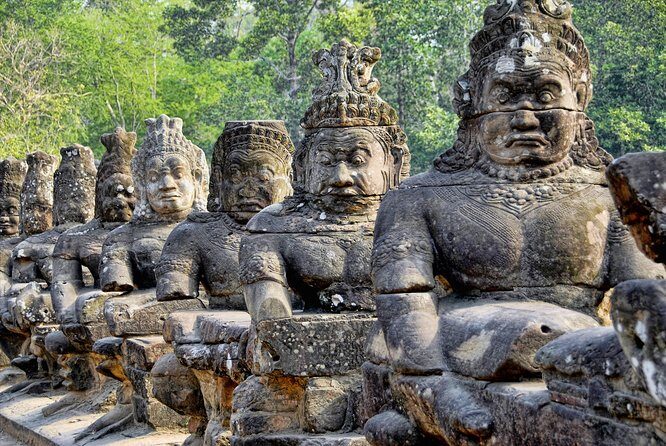
- Angkor Thom: Elephant Terrace, Leper King Terrace, and the Bayon faces
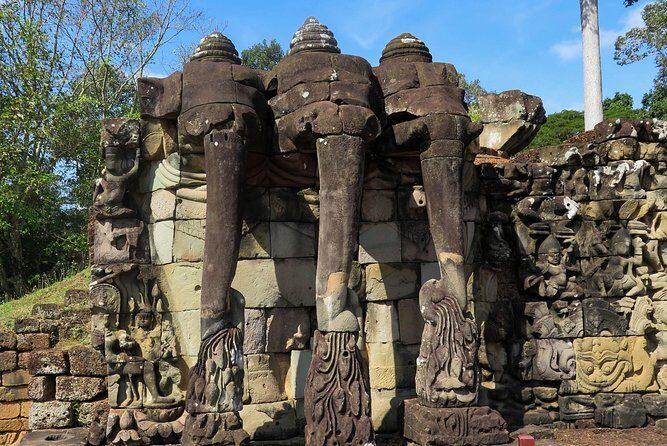
- Elephant Terrace: the grand entry vibe
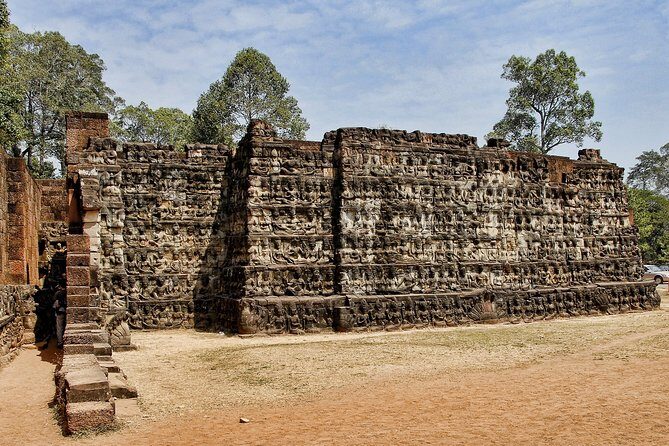
- Terrace of the Leper King: a title you’ll never forget
- Bayon: 200+ smiling faces (and reconstruction limits)
- How long you’ll spend here
- Ta Prohm: the temple the jungle kept (and why it matters)
- What you’re actually seeing
- Angkor Wat: west-facing symmetry and the sunset plan
- West-facing design (and flag symbolism you might miss)
- Sunset from outside
- Tickets, dress code, and walking: the practical stuff that decides your mood
- Dress code rules you should respect early
- Walking is part of the deal
- Reconstruction at Bayon
- Weather and your electronics
- Sun protection isn’t optional
- Transportation in an air-conditioned vehicle (and what’s included)
- Price and value: what $141.44 per person really buys
- What the standout guides do differently
- Should you book this Angkor Wat day tour?
- FAQ
- Is pickup from my Siem Reap hotel included?
- What time does the tour start?
- How long is the full tour?
- Does the price include the Angkor Archaeological site entrance pass?
- Will I be able to see the top levels of the Bayon?
- What dress code should I follow?
- Do I need to speak another language besides English?
- What should I bring for temple visits in Cambodia?
- Can I cancel for a full refund?
Key highlights worth your attention
- Angkor Thom in depth with stops at the Elephant Terrace, the Terrace of the Leper King, and the Bayon’s many smiling faces
- Ta Prohm left in the jungle—it was cleared but deliberately preserved so you can see how it was found
- Angkor Wat with sunset timing planned so you can enjoy light from outside before heading back
- West-facing Angkor Wat + flag symbolism (its design echoes the modern Cambodian flag)
- Hotel pickup/drop-off within Siem Reap by air-conditioned vehicle
- Guides can elevate the whole day (Pitt and Mr. Pising are mentioned for standout service)
A private Angkor Wat day that keeps your energy (mostly) intact
Angkor is big. The hard part isn’t finding the temples—it’s finding time and context without turning your day into a hurried stamp-collecting exercise. This tour solves that by running a structured route: you start early, you get guided time where it matters, then you still have the late-day atmosphere at Angkor Wat.
Because it’s a private tour, you’re not stuck with a loud pack steering your pace. It’s just your group with an English-speaking guide, plus a driver who handles the constant back-and-forth on the road from Siem Reap. In practice, that means you spend less time figuring out logistics and more time looking up.
The day runs roughly 9.5 hours (about 8:00am start, returning around 5:30pm). It’s a long stretch, but the temple sequence is chosen well: Angkor Thom first (morning energy), Ta Prohm next (classic jungle feel), and Angkor Wat last (light and mood).
You can also read our reviews of more tours and experiences in Siem Reap.

Who this format suits best
This works well if you:
- Want the “big names” (Angkor Thom, Ta Prohm, Angkor Wat) without spending days switching tours
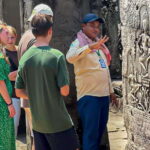
- Prefer a guide who can explain what you’re seeing as you walk
- Like structure but still want a bit of freedom inside the temples
If you hate walking, or you’re hoping for a slow, lounge-by-the-pool kind of day, this probably won’t feel relaxing. The company notes that some walking is required, even when they route you through the most comfortable paths between entrances.
Angkor Thom: Elephant Terrace, Leper King Terrace, and the Bayon faces
You begin with pickup in Siem Reap at around 8:00am, then head to the ticket area to get the required Angkor pass. That matters because it sets your day up with fewer delays later—once you’re inside, the route flows.
Your first major zone is Angkor Thom, the last capital of the Khmer Empire. This is where the tour earns its keep: Angkor Thom is large, but the key landmarks you’ll see are some of the most recognizable and symbol-heavy pieces in the complex.
Elephant Terrace: the grand entry vibe
The Elephant Terrace gives you that “ceremony” feeling right away. It’s one of the first big stages in Angkor Thom, built for viewing and procession. Even if carvings blur together elsewhere, here you’ll usually notice the scale more than anything—these were meant to impress people arriving at power.
Terrace of the Leper King: a title you’ll never forget
The Terrace of the Leper King is famous by name, and the tone is different from the Elephant Terrace. The tour’s focus keeps you aware of what the terrace is and why it’s placed where it is in the city layout. You’ll be walking through a space that feels like an architectural hinge between political center and ceremonial space.
Bayon: 200+ smiling faces (and reconstruction limits)
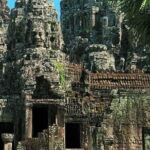
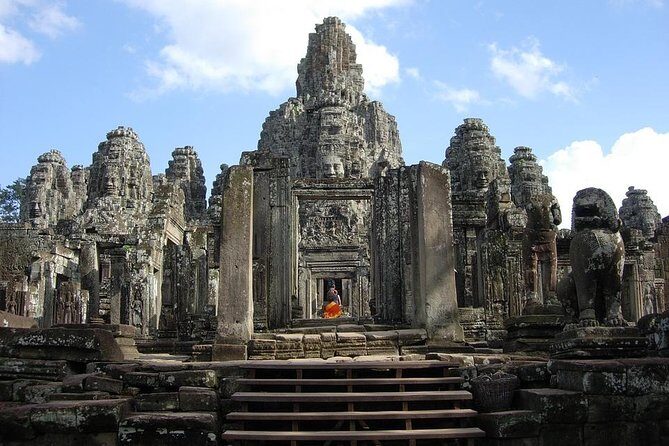
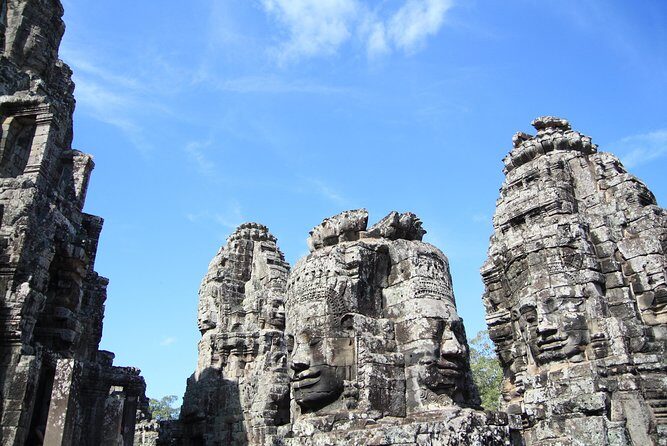
Then comes the star of the show: the Bayon. The description is specific and worth picturing before you go—this 12th-century masterpiece sits at the heart of Angkor Thom, with towers featuring 3 or 4 gently smiling faces. The number given is over 200 faces total, which is exactly why people get goosebumps here. You’re not staring at one image; you’re surrounded by repeating expressions.
There’s also an important reality check: the operator notes that the top two levels of Bayon are under reconstruction, so you’ll only see faces at the first and second level. That doesn’t ruin the experience. It just means don’t build your expectations around a full view from every height—build them around what’s visible and intact.
How long you’ll spend here
You’ll have about 3 hours at Angkor Thom. That’s a good chunk. It’s long enough to take photos, move at a comfortable pace, and still feel like you’re seeing something more than “a quick look and run.”
Ta Prohm: the temple the jungle kept (and why it matters)
Next you head to Ta Prohm, one of the most memorable stops in Siem Reap for a reason that doesn’t feel like marketing. Ta Prohm was built in the late 12th century by Jayavarman VII as a shrine to his mother.
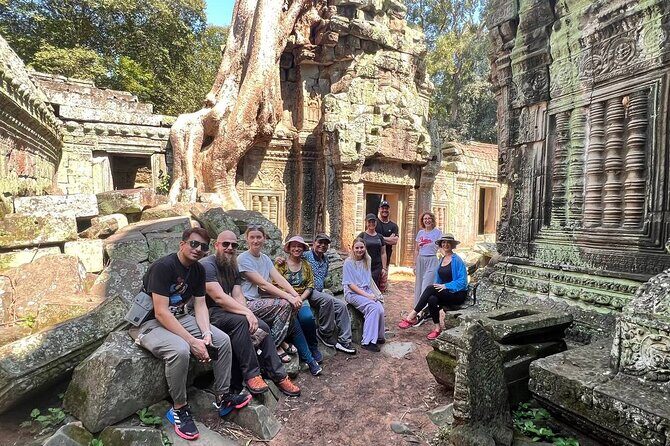
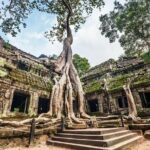
What makes Ta Prohm special isn’t only its architecture—it’s the way it looks when the forest refuses to give back the land. During clearing work, a decision was made to leave the jungle-growth in place so the site would serve as a reminder of how temples were discovered (and what it looked like before everything was controlled).
What you’re actually seeing
At Ta Prohm, you’re not just looking at “ruins with trees.” You’re looking at a conservation storytelling tool: the overlap between human design and natural takeover. If you enjoy visual contrasts—stone geometry versus vines, rooflines versus roots—this stop will likely be one of your favorites.
The tour time here is about 1 hour 30 minutes. That’s typically enough to slow down, find a few angles where the temple framing is obvious, and still keep the day moving.
Angkor Wat: west-facing symmetry and the sunset plan
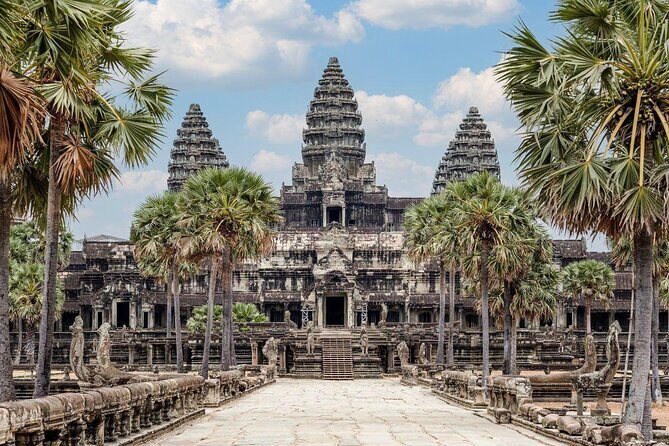
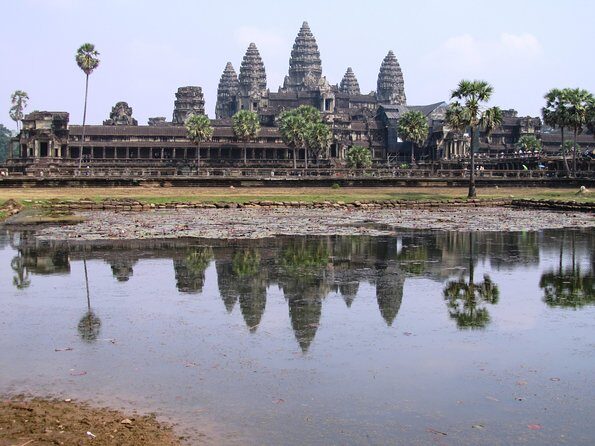
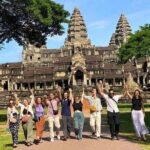
Then it’s on to Angkor Wat for the late afternoon. This is the one you came for, even if you think you didn’t. The size alone is part of the emotional impact: it’s described as the largest religious building in the world, with a stone volume equalling that of the Cheops pyramid in Egypt. That’s a big claim, but the real takeaway is simple—you’ll feel how monumental it is the moment you approach the main area.
West-facing design (and flag symbolism you might miss)
Most Khmer temples you’ll see are oriented differently, but Angkor Wat faces west. The tour also highlights a detail that’s easy to overlook on your first visit: the stylized towers echo the modern Cambodian flag. It’s one of those moments where design history clicks into contemporary national identity.
Sunset from outside
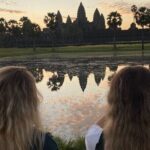
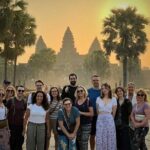
You’ll get time to admire sunset from outside the temple before you’re brought back to your hotel around 5:30pm. That outside viewing step is smart. Angkor Wat gets its own kind of crowded at peak times, and being positioned for late light without rushing inside helps you enjoy the change in color and contrast.
You’ll spend about 2 hours 30 minutes at Angkor Wat, which is a comfortable window for photos, walking the key approaches, and taking your time at at least a few viewpoints.
Tickets, dress code, and walking: the practical stuff that decides your mood
This tour includes the guide and air-conditioned transport, plus pickup and drop-off in Siem Reap, but the Angkor Archaeological site entrance pass is not included. You’ll buy it at the ticket counter after pickup, around the start of the day.
That means you should treat your morning like a “get organized first” block. Once you have the pass, you won’t lose time later trying to sort it out.
Dress code rules you should respect early
Angkor sites can enforce strict dress expectations. The guidance here is clear: your clothing must cover shoulders and fall below the knees. Shirts with obscene or disrespectful prints can lead to refusal. Bright, overly casual clothing can also be a problem.
This is one of those rules where it’s better to be boring than sorry. If you’re coming from a beachy trip, bring a light cover-up or pack clothing that fits the standard.
Walking is part of the deal
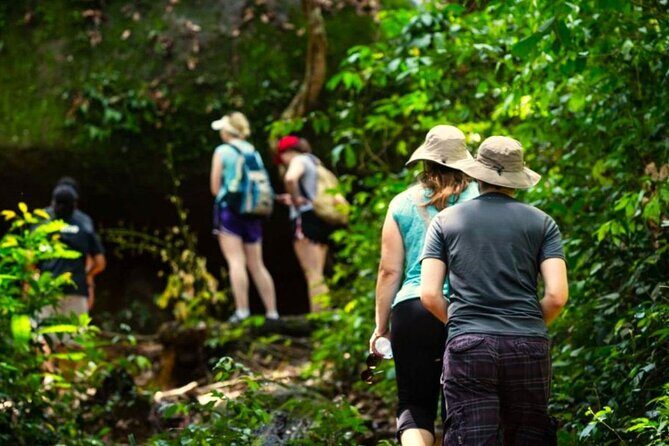
The operator notes that some walking is required. Even with comfortable routes between entrances, temple stone and uneven surfaces are unavoidable. Wear shoes you trust. Your feet will thank you at Ta Prohm, where you’re often pausing to look up and around.
Reconstruction at Bayon
Remember the Bayon limitation: top levels are under maintenance, so you’ll see faces on the first and second level only. It’s still worth it—just calibrate your expectations so you don’t feel like you paid for something you didn’t get.
Weather and your electronics
The tour info includes a very practical warning: natural elements can damage electronics, so you should wrap and protect cameras, phones, and other devices. It’s a polite reminder that Cambodia weather can be unpredictable, and temple days often come with humidity, dust, and sudden showers.
Sun protection isn’t optional
Bring sunglasses, a hat/cap, and high-SPF sunscreen. Even when it’s cloudy, the sun rays still have strength. This is especially useful if your plan includes lots of outdoor time at Angkor Thom and Angkor Wat.
Transportation in an air-conditioned vehicle (and what’s included)
One of the most tangible values here is the simplicity of getting from your hotel to the temples without negotiating the roads yourself. This includes:
- Hotel pickup and drop-off
- Air-conditioned vehicle with a professional driver
- A professional English-speaking guide
The return transfer is included only if you’re staying in and inside Siem Reap. If you’re staying farther out—examples given include Tonle Sap, Koh Ker, Banteay Srei, and Siem Reap International Airport—transfers aren’t covered and supplements apply.
Price and value: what $141.44 per person really buys
At $141.44 per person, the price isn’t just “a seat on a bus.” You’re paying for a full-day guided circuit, private in practice (only your group), plus door-to-door transport within Siem Reap.
Here’s the balance check:
- Included: professional guide, air-conditioned vehicle, pickup/drop-off
- Not included: Angkor site pass, meals/drinks, tips/gratuities, and personal expenses
So your real budget is the tour price plus the Angkor Archaeological site entrance pass and whatever you spend on food. That still often feels like good value if you want to cover the big sites without wasting a day on planning, maps, and repeated rides.
If you can’t face the idea of tracking a day’s tickets and route yourself, this format earns its keep.
What the standout guides do differently
A guide isn’t just someone who points at stone. A good one helps you understand the “why” behind the “wow,” like how the Bayon’s face towers anchor Angkor Thom’s central identity, or why Ta Prohm’s jungle entanglement is part of the site’s story.
In the experience’s orbit, the names Pitt and Mr. Pising have been highlighted as attentive and informative, with Pitt described as especially impressive. That lines up with what you want on a long day: clear explanations, smart pacing, and a sense of what to focus on at each stop.
Even if you don’t get those exact guides, this tour’s structure is built for people who care about understanding what they’re seeing—not only photographing it.
Should you book this Angkor Wat day tour?
If you want a one-day Angkor hit that covers Angkor Thom, Ta Prohm, and Angkor Wat with hotel transport and a guide who keeps the story straight, I think this is a solid choice. The private setup helps you move at a sensible pace, and the sunset-from-outside plan is a nice touch if you like seeing temples in changing light.
Book it if:
- You’re short on time in Siem Reap and still want the major highlights
- You want guided context rather than wandering with a map
- You prefer the comfort of air-conditioned transport
Consider something else if:
- You’re very sensitive to walking and uneven surfaces
- You were hoping for a fully uninterrupted Bayon experience at every level (top levels are under reconstruction)
- You’re looking for everything to be included, since the site entrance pass isn’t included
FAQ
Is pickup from my Siem Reap hotel included?
Yes, pickup and drop-off are included for customers staying in and inside Siem Reap. If your accommodation is outside that area (examples given include Tonle Sap, Koh Ker, Banteay Srei, and Siem Reap International Airport), transfers aren’t included and supplements apply.
What time does the tour start?
The start time is 8:00am. The exact pick-up time is meant to be confirmed upon reservation, and if it cannot be confirmed in advance, you’ll be informed the day before.
How long is the full tour?
The duration is approximately 9 hours 30 minutes.
Does the price include the Angkor Archaeological site entrance pass?
No. The tour includes the guide and transportation, but the entrance pass to the Angkor Archaeological site is not included. You buy the pass at the ticket counter early in the day.
Will I be able to see the top levels of the Bayon?
No. The top two levels of Bayon’s towers are under reconstruction, so visitors may only see the faces on the first and second level.
What dress code should I follow?
You need to wear clothes that cover your shoulders and fall below the knees. The operator also warns that inappropriate shirts and brightly colored clothing may lead to refusal of entry.
Do I need to speak another language besides English?
This is operated with an English-speaking guide. Other languages may be possible on request, subject to availability and supplementary charges.
What should I bring for temple visits in Cambodia?
Bring sunglasses, a hat/cap, and high-SPF sunscreen, since the sun can be strong even when it’s cloudy. The operator also advises protecting electronics from natural elements.
Can I cancel for a full refund?
Yes. There is free cancellation up to 24 hours before the experience start time for a full refund. If you cancel less than 24 hours before, the amount paid isn’t refunded.