REVIEW · SIEM REAP
Four-day tour Angkor Wat, Banteay Srey, Beng Melea and Siem Reap discovery
Book on Viator →Operated by Angkor Wat Travel Tour · Bookable on Viator
Angkor is never just a photo stop. This 4-day private circuit strings together the big names and quieter countryside, steered by an English-speaking guide (people often mention Praim Hear and Sa) and planned around the right sunlight timing and crowd management. One catch: entrance tickets and meals aren’t included, so you’ll want to budget for those before you go.
I like how the day-to-day comfort is built in: you get pickup, an air-conditioned vehicle, and cold water with a cold towel. It’s also truly private, so your pace doesn’t have to match a random tour bus schedule, though that can mean the overall days feel full when you add up early starts and long temple walks.
In This Review
- Key Highlights at a Glance
- Price and What Actually Drives the Value
- The Crowd Plan: Why Timing Matters More Than You Think
- Day 1: Angkor Thom, Ta Prohm, Banteay Kdei, and the Big Finish at Angkor Wat
- Bayon Temple and the South Gate of Angkor Thom
- Ta Prohm: The Jungle-Temple Effect
- Banteay Kdei: Jayavarman VII’s Late-12th-Century Complex
- Angkor Wat: Vishnu Temple, 12th-Century Scale, and Sunset Light
- Day 2: Kbal Spean Carvings, Banteay Srei’s Pink Stone, and the Baray Temples
- Kbal Spean and the River of 1,000 Lingas
- Banteay Srei: The Pink-Sandstone Art Museum
- Eastern Mebon: Temple-Mountain Scale
- Neak Pean: A Temple on an Island Inside a Reservoir
- Preah Khan: A Monastic Complex You Can Explore
- Day 3: Beng Mealea and the Roluos Temples for a More Adventurous Feel
- Prasat Beng Mealea: The Lost Temple Mood
- Roluos Temples: Bakong, Lolei, and Preah Ko
- Day 4: Kompong Phluk on Tonle Sap, the Angkor National Museum, and Artisans Angkor
- Kompong Phluk: Floating Village Life on Tonle Sap
- Angkor National Museum: Buddha Relics and Context
- Artisans Angkor: Learn a Craft and Make Your Own Stone Carving
- Your Guide Experience: Why Sa and Praim Hear Come Up So Often
- Practical Tips for a 4-Day Temple and Countryside Stretch
- Who This Tour Fits Best
- Should You Book This 4-Day Angkor Wat Travel Tour?
- FAQ
- Is pickup included?
- What time does the tour start?
- Are entrance tickets included?
- Are meals included in the price?
- Is this tour private?
- Do I need an entrance ticket in advance or at the site?
- Is free cancellation available?
Key Highlights at a Glance
- Sunrise/sunset light around Angkor Wat: the schedule is set so you can enjoy the temples when the light is most forgiving.
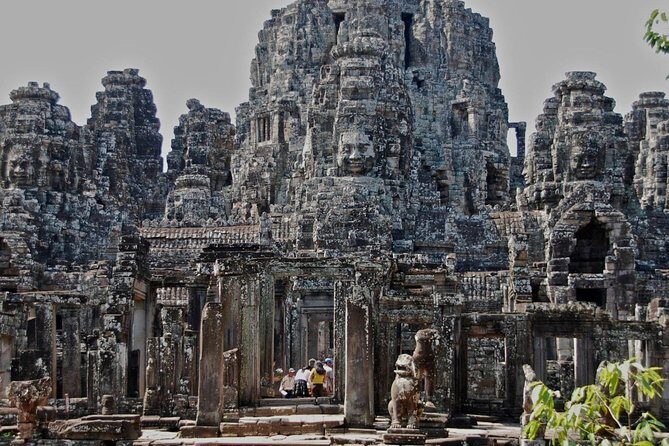
- Angkor Thom faces at Bayon: you’ll see the scale of those 54 towers and 216 carved faces up close.
- Ta Prohm’s tree roots: the famous jungle-temple vibe is dramatic, but the timing helps you see it without wall-to-wall crowds.
- Banteay Srei’s pink sandstone: expect fine carving and a different texture than the heavier stones around Angkor Wat.
- Beng Mealea’s lost-temple feel: it’s rougher, wilder, and more about exploring than ticking boxes.
- Real Tonle Sap life at Kompong Phluk: a break from stonework into daily Cambodian routines on the water.
Price and What Actually Drives the Value
At $202.57 per person for roughly four days, this tour’s value comes from what it bundles: an English guide, air-conditioned transport, and the time you save by moving efficiently between sites. The route also includes a mix that most first-timers need: the headline temples, a few lower-traffic stops, and one day focused on modern life around Siem Reap.
But you should also plan around what’s not included. Entrance tickets are extra, and meals aren’t provided. That means the sticker price isn’t the full trip cost—your total depends on ticket choices and where you stop to eat.
The biggest “value lever” here is the guide and routing. Several past guests specifically praised Sa for strong English and for connecting what you see to Khmer story, Hindu and Buddhist symbolism, and everyday life. In Angkor, that turns the experience from scenery into understanding.
You can also read our reviews of more tours and experiences in Siem Reap.
The Crowd Plan: Why Timing Matters More Than You Think
Angkor can feel crowded in a way that’s hard to solve on your own. This tour aims to avoid crowds as much as possible by arranging the day’s order and pacing. You’re also using a private format, so you’re not stuck waiting for a whole bus group before moving on.
That said, temple visits still mean heat, sun, and walking. Even with a smart plan, you’ll likely spend hours outdoors. Bring the basics seriously: water, sun protection, and shoes you trust for uneven stone.
Day 1: Angkor Thom, Ta Prohm, Banteay Kdei, and the Big Finish at Angkor Wat
Your first day moves through the heart of classic Angkor scenery. It’s a concentrated hit, so it works best if you start the day rested and hydrated.
Bayon Temple and the South Gate of Angkor Thom
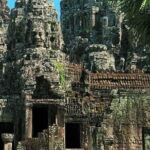
You begin at the South Gate of Angkor Thom and then step into Bayon Temple. Bayon is known for its 54 towers and 216 faces of Avalokitesvara. What’s striking isn’t just the number—it’s how the faces seem to follow you as you move through the stone corridors.
This stop is also a good orientation. Once you understand how Angkor Thom is laid out and why Bayon sits at the center of the experience, the rest of the complex makes more sense.
Ta Prohm: The Jungle-Temple Effect
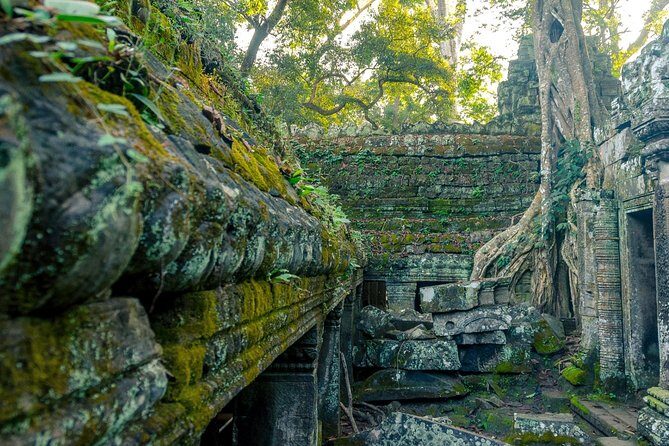
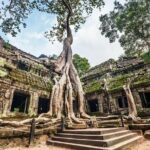
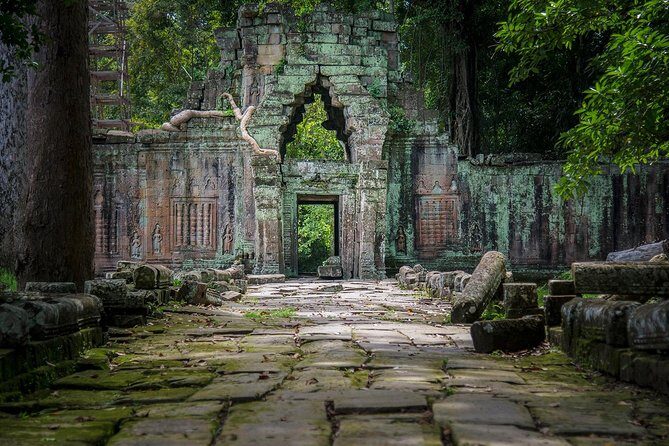
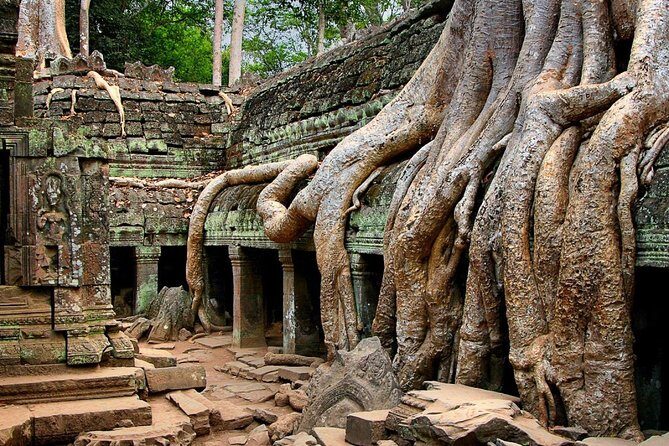
Next is Ta Prohm, famous as the jungle temple or tree temple. The ruins sit right inside a web of giant roots that grab hold of stonework and create a look that feels part temple, part forest.
Practical tip: Ta Prohm is famous for a reason, so plan your photos quickly and leave space for walking slowly. The best views often come from small angles and by letting the light hit the stone in different ways.
Banteay Kdei: Jayavarman VII’s Late-12th-Century Complex
Banteay Kdei is a calmer breather than the flashiest stops. Built under King Jayavarman VII in the late 12th century, it keeps the Angkor Thom style while feeling less like a single landmark and more like a working temple environment. You get a different kind of temple rhythm here: long walls, quiet corners, and a bit more room to think.
Angkor Wat: Vishnu Temple, 12th-Century Scale, and Sunset Light
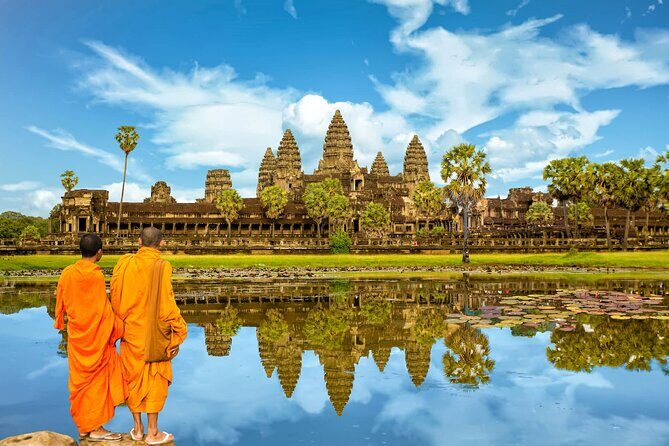
You finish with Angkor Wat, built in the early 12th century during the reign of King Suryavarman II and dedicated to the Hindu god Vishnu. It’s one of South-east Asia’s most important archaeological sites, and it shows in every axis and carved edge.
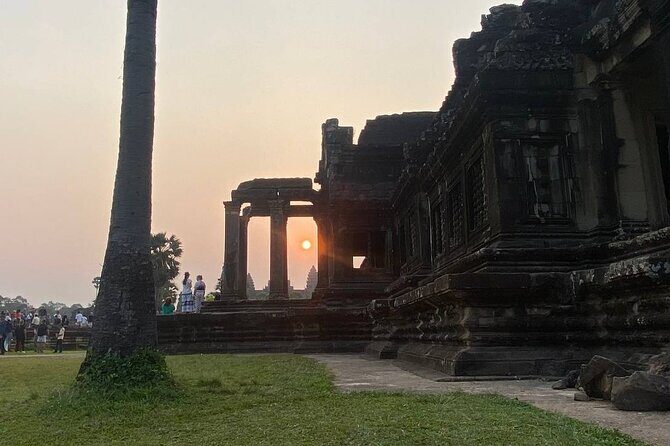
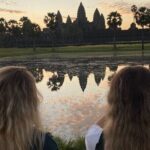
Also, this tour is designed so you can enjoy sunset light around Angkor Wat and surrounding temples. That matters because the stone goes from hard white to warmer tones. Even if you’ve seen photos before, you’ll notice the depth changes as the day turns.
Day 2: Kbal Spean Carvings, Banteay Srei’s Pink Stone, and the Baray Temples
Day two brings you a different side of Khmer spirituality: temples that connect to water, myth, and sacred landscapes. It also has a strong “variety” factor—water stop, fine carving, then temple-mountain forms and reservoir-related sites.
Kbal Spean and the River of 1,000 Lingas
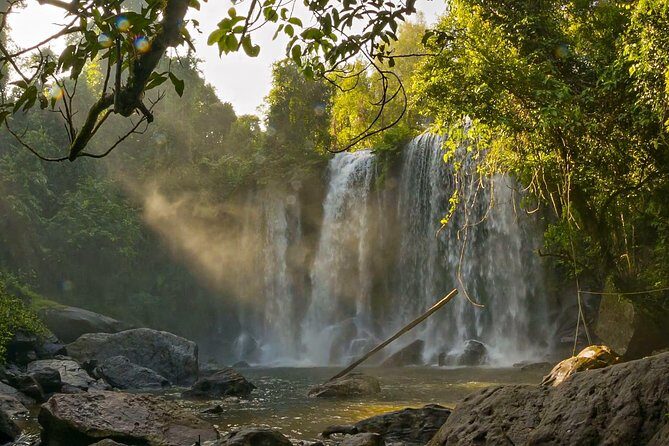
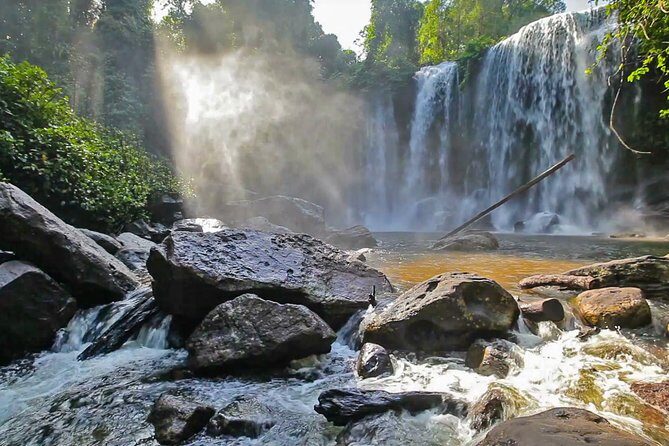
You head to Kbal Spean Waterfall and the river of 1,000 lingas. Under the water, you’ll find carvings associated with Vishnu and Brahma gods. This is one of those stops where your imagination helps, because the symbolism comes from what’s carved and where it sits.
You’ll want to wear footwear that handles wet rock surfaces, since this is about river access and carved stones you see as part of the water flow. Even when the day is hot, the experience can feel cool and misty up close.
Banteay Srei: The Pink-Sandstone Art Museum
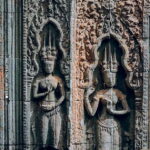
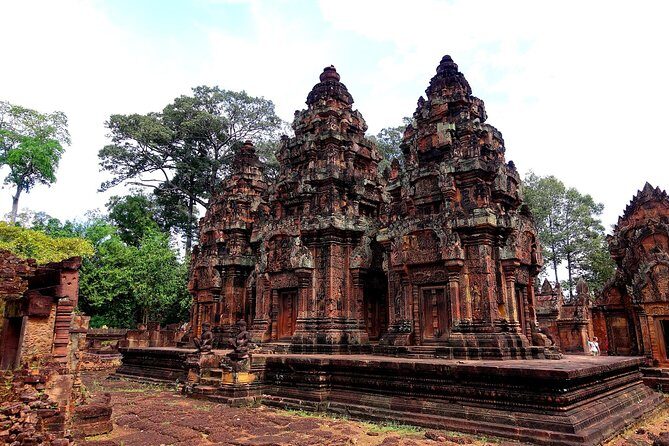
Then it’s on to Banteay Srei, about an hour drive from Siem Reap. It’s often described as the “jewel in the crown” of Angkorian art, and you can see why: the temple is carved in a pinkish-hued stone and focuses on intricate detail.
This is also a good stop for patient looking. Instead of only admiring the big shape, you’ll get to appreciate the finer carving that doesn’t dominate every photo.
Eastern Mebon: Temple-Mountain Scale
Back toward the main Angkor Wat area, you visit Eastern Mebon. It’s a large temple-mountain form, which helps you understand how Khmer temple design worked as both architecture and worldview. You get grandeur here, even if the details are not as delicate as Banteay Srei.
Neak Pean: A Temple on an Island Inside a Reservoir
Neak Pean stands on an artificial island in the middle of the last Baray (an ancient water reservoir). It rises in three levels and is crowned by five brick towers. The design connects temple worship with water symbolism, and Neak Pean is one of those stops where the setting helps explain the meaning.
If you like “why was this built here?” questions, this is a good temple to ask them out loud to your guide.
Preah Khan: A Monastic Complex You Can Explore
You end day two at Preah Khan, meaning sacred sword. It’s described as a huge, highly explorative monastic complex. This stop tends to feel different from temples that are more centered on one viewpoint. You can move through and around the structures and get a sense of how big and lived-in the place was.
Day 3: Beng Mealea and the Roluos Temples for a More Adventurous Feel
Day three shifts the tone. Instead of staying glued to the busiest Angkor circuit, you go toward places that feel more open and more “out there.” It’s the day for people who like ruins that look unfinished or wilder.
Prasat Beng Mealea: The Lost Temple Mood
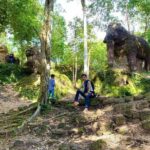
Beng Mealea sits about 70 kilometers north-east of Siem Reap and is often called the lost temple of Angkor. The key feeling is seclusion. The site is named for that sense of discovery, with ruins that are harder, rougher, and more about exploring than polished sightseeing.
A drawback? It can be dusty, uneven, and less orderly than the most famous temples. If you hate uneven ground or want strict pathways only, you might feel less comfortable here than at Bayon or Angkor Wat.
Roluos Temples: Bakong, Lolei, and Preah Ko
After that, you hit the Roluos group: Bakong, Lolei, and Preah Ko, roughly 11 kilometers southeast of the Siem Reap market. Because they sit close together, this is a smart way to see multiple monuments without spending your whole day in transit.
This stop is useful because it shows earlier Angkor styles and helps you spot how architecture evolved over time. It’s also a good day for your guide to connect the dots between Hindu and Buddhist influences and the timeline of Khmer rulers.
Day 4: Kompong Phluk on Tonle Sap, the Angkor National Museum, and Artisans Angkor
Day four is where the tour stops being only about stones. You get modern Cambodian life, then you slow down for museum context, then you finish with hands-on craft.
Kompong Phluk: Floating Village Life on Tonle Sap
You visit Kompong Phluk on the Tonle Sap lake, described as the biggest fresh-water lake in South-east Asia. The drive from Siem Reap is about 45 minutes.
What you’re looking for here is real daily life: how people work around the water, how communities function, and how the lake shapes routines. This stop pairs well with temple days because it adds perspective. The Khmer world you studied in stone isn’t just ancient—it influenced the way people built society, and the legacy shows up in culture today.
Angkor National Museum: Buddha Relics and Context
Next is the Angkor National Museum, focused on a large collection of Buddha statues and relics in one gallery. Even when you’ve already seen the temples, a museum can tighten your understanding. You start connecting stone carvings to religious shifts, styles, and symbolism you might not have noticed on-site.
If you like to go home with a clearer mental map, this kind of museum stop is worth it.
Artisans Angkor: Learn a Craft and Make Your Own Stone Carving
Finally, you visit Artisan D’Angkor, a local NGO that supports disadvantaged Cambodians from rural areas. You’ll visit a workshop and can be conveyed to craft your own stone carving.
This is the end point that turns the whole trip into something you carry home. Even if you aren’t great at crafts, the activity is memorable because it’s human-scale and practical compared to the monumental temples.
Your Guide Experience: Why Sa and Praim Hear Come Up So Often
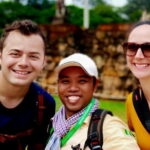
The stand-out theme in the feedback is the guide’s storytelling. People frequently mention Sa’s strong English and his in-depth knowledge of temple history, plus explanations of both Buddhist and Hindu mythology. That kind of interpretation matters because Angkor is layered. Without context, you can end up staring at structures that blur together.
Other named guide Praim Hear also gets credit for connecting Khmer history to what you see, while keeping the mood friendly and understandable. One thing that shows up across praise: guides don’t just recite dates. They add anecdotes and folk tales, and they talk about daily life in Cambodia, including family structures.
You’ll get the best value if you treat your guide like your secret weapon. Ask quick questions as you walk—what to watch for on the next tower face, why this temple is placed here, or what this carving usually meant.
Practical Tips for a 4-Day Temple and Countryside Stretch
- Start early in your head, even when you feel like sleeping. The tour start is listed as 8:30 am, and long temple days reward an early mindset.
- Pack for heat and shade. You’ll be outside for long stretches, and you’ll appreciate cold water and cold towels when they’re offered.
- Comfortable shoes matter more than you’d think. Angkor sites include uneven stone, and Beng Mealea in particular is rougher underfoot than the more curated areas.
- Bring cash and plan meals. Because meals aren’t included, you’ll need to manage lunch breaks and snacks yourself as the day moves along.
- If you’re doing lots of photos, set expectations. Great images take a few minutes of walking and waiting for the light, not just a ten-second stop at the sign.
Who This Tour Fits Best
This tour fits best if you want a private, structured experience with a guide who can explain what you’re seeing. It’s also ideal if you like variety: temple architecture plus a real-life look at Tonle Sap and an art/craft finish.
It may not be the best fit if you want total freedom and you hate group pacing at all. While this is private to your group, the schedule still moves from site to site and can feel intense if you don’t like early starts.
Should You Book This 4-Day Angkor Wat Travel Tour?
I think this is a smart book if you value interpretation, comfort, and smart routing. You’re paying for more than transport—you’re buying time, an English-speaking guide, and a plan that aims to reduce the crowd crunch while still hitting the major highlights like Bayon and Angkor Wat.
Skip or rethink it only if you’re trying to travel ultra-budget, since entrance tickets and meals are extra. Also consider your comfort with rougher ground at Beng Mealea. If you’re okay with that tradeoff, the mix of temples and Cambodian daily life makes the four days feel full in a good way.
FAQ
Is pickup included?
Yes. The tour offers pickup, and the inclusions list an air-conditioned vehicle.
What time does the tour start?
The start time is listed as 8:30 am.
Are entrance tickets included?
No. Entrance ticket fees are not included.
Are meals included in the price?
No. Breakfast, lunch, and dinner are not included.
Is this tour private?
Yes. It’s described as a private tour/activity, and only your group participates.
Do I need an entrance ticket in advance or at the site?
The tour features include a mobile ticket, but entrance ticket fees are still not included, so you should expect additional ticket costs for the sites.
Is free cancellation available?
Yes. Free cancellation is available up to 24 hours in advance for a full refund.