REVIEW · SIEM REAP
Half Day Tour- Angkor Wat, Ta Promh, Bayon Temple
Book on Viator →Operated by Bayon Temple Tour · Bookable on Viator
Three temples, one efficient half day.
This half-day Angkor plan is built for people who want the big hits of Angkor without spending a full day on logistics. I especially like the hotel pickup with air-conditioned transport, and I also love the practical touch of mineral water and cool towels during the stops.
One catch to plan for: temple entry is not included. You’ll need the Angkor Pass (and admissions) on your own, so budget extra and expect a little time spent handling tickets before you can fully enjoy the ruins.
In This Review
- Key Highlights You’ll Actually Feel
- Why This Half-Day Angkor Route Works When Time Is Tight
- Pickup, Vehicle Comfort, and the Cooling Details That Matter in Siem Reap
- Bayon Temple at Angkor Thom: The Smiling Faces Stop
- Ta Prohm: Banyan Roots, Ruin Beauty, and Photo Time
- Angkor Wat: How to See the Main Temple Fast (and Not Miss the Best Details)
- Price and Logistics: What You’re Really Getting for $28 Per Group
- What the Best Guides Do for You Here
- Who Should Book This Tour (and Who Might Want Another Plan)
- Should You Book? My Practical Recommendation
- FAQ
- How long is the half-day Angkor Wat, Ta Prohm, and Bayon tour?
- What temples are included in the tour?
- Is pickup from my hotel included?
- Does the price include temple admission and the Angkor Pass?
- Is an English-speaking guide included?
- What comfort items are provided during the tour?
- Is this tour private?
- Can I cancel for a full refund?
- Is a mobile ticket used?
Key Highlights You’ll Actually Feel

- Private transportation with a driver and direct hotel pickup/drop-off, so you spend less time figuring things out.
- Tight, sensible routing through Bayon, Ta Prohm, and Angkor Wat so you see more with fewer backtracks.
- Cooling perks on the move: mineral water plus cool towels, and umbrellas to manage harsh sun.
- Bayon first at Angkor Thom with the famous smiling stone faces concentrated and easy to understand.
- Ta Prohm’s tree-root “ruin-as-nature” look in a timed window that keeps the morning moving.
- Angkor Wat time block long enough to slow down for details like the Apsara carvings.
Why This Half-Day Angkor Route Works When Time Is Tight
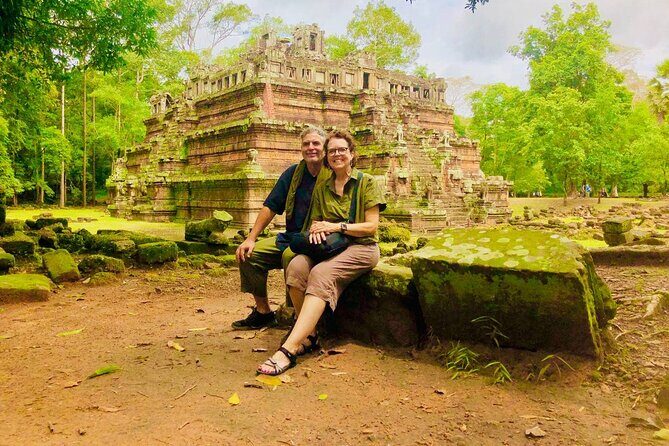
Angkor can eat your whole day fast—distance, ticketing, and heat all add up. This tour keeps things focused: about 5 hours total, with a route that hits Bayon, Ta Prohm, and Angkor Wat in sequence. The best part is that you’re not left to negotiate transit on your own. You’re picked up, driven between temples, and dropped back at your start point.
You also get flexibility. There are morning and afternoon departures, which matters because the light and crowd levels can shift a lot during the day. Your guide’s job is to keep the plan flowing so you’re not stuck waiting around at one site while another is open.
The “half-day” format is ideal if you’re doing other Siem Reap activities the same day—dinner plans, a cultural show, or even just a slower wander through town afterward. If your goal is to check the main temples off your list and still stay sane, this works.
You can also read our reviews of more tours and experiences in Siem Reap.


Pickup, Vehicle Comfort, and the Cooling Details That Matter in Siem Reap
Most temple days aren’t won by sightseeing alone. They’re won by hydration and shade.
This tour includes hotel pickup and drop-off and uses an air-conditioned vehicle, which is a big deal in Cambodia heat. You also get mineral water and a cool towel, so you can cool down right when you need it—before you feel wiped out. In past experiences with this service, umbrellas showed up for sun protection during temple visits, which is exactly the kind of small help that makes a difference once you’re standing in open courtyards.
Because the tour is priced per group (up to 3) and run privately, you’re not sharing the day with a swarm of strangers. That often means fewer delays and more control over your pace—especially helpful when you want photos, a restroom stop, or time to study carvings.
Bayon Temple at Angkor Thom: The Smiling Faces Stop

Bayon is the emotional anchor of the Angkor Thom circuit. The tour typically starts here, around South Gate & Central Angkor Thom, and it’s timed for a focused visit—about 1 hour.
What you’ll notice right away is the dense concentration of the serene smiling stone faces on multiple towers. Your guide should help you connect what you’re seeing to the layout of the complex, so it doesn’t feel like random stonework. Even if you only have an hour, Bayon is one of those temples where context helps you get more out of every step.
The practical upside of putting Bayon early is simple: it’s a strong visual start. You’ll likely feel more confident moving through the rest of the day because Bayon “teaches” you what to look for—faces, towers, and how stone surfaces are arranged to guide attention.
The main drawback with Bayon (and any big temple stop) is the pace. One hour is enough for highlights, but not for deep study of every terrace corner. If you tend to linger at each detail, you’ll want to plan on standing your ground briefly and using your guide to point out the best spots fast.
Ta Prohm: Banyan Roots, Ruin Beauty, and Photo Time

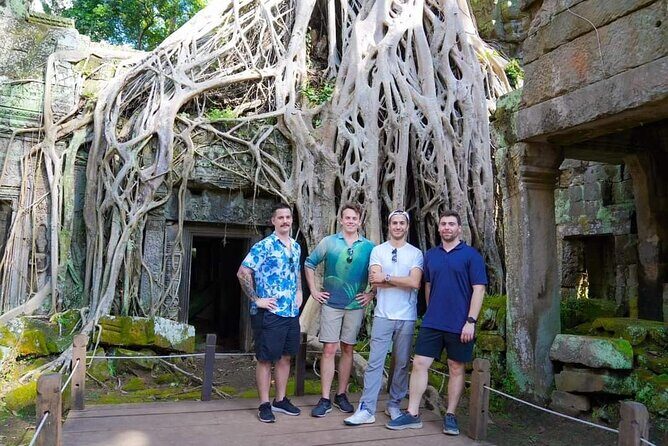
Then you move to Ta Prohm, the temple famous for its ruined structures being swallowed by banyan and kapok trees. The visit is also about 1 hour.
This is where Angkor feels cinematic. Tree trunks twist among stone pillars, roots probe walls and terraces, and branches form a kind of open roof. The result is a temple that looks alive and broken at the same time—ruin as beauty, not ruin as failure. If you’ve seen Ta Prohm in films or photos, this is the moment where the real thing finally makes sense.
The practical reason Ta Prohm fits a half-day tour is that it’s a “look from multiple angles” temple. You don’t need to spend the full day to understand its magic. Walk a circuit with your guide, hit the key viewpoints, and let the trees do the storytelling.
One heads-up: the same features that make Ta Prohm so photogenic also mean fewer shaded spots. If you’re going during hotter months, plan to lean on the tour’s cooling support and keep moving. You’ll still get great photos, but you’ll want to balance camera time with comfort.
Angkor Wat: How to See the Main Temple Fast (and Not Miss the Best Details)

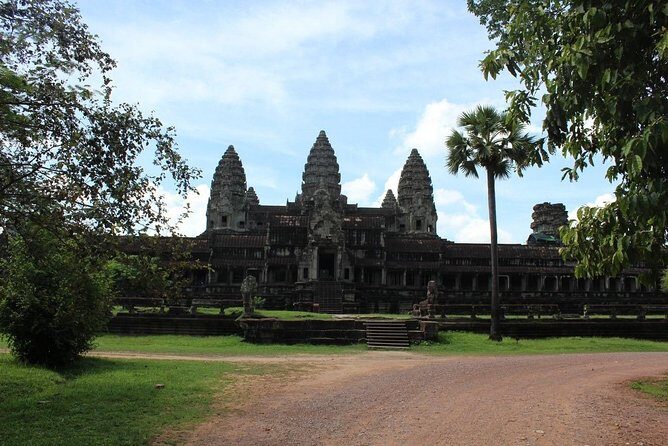
Finally: Angkor Wat. You get the longest time here—about 3 hours—and that’s the right call because this is the biggest stop, visually and emotionally. Angkor Wat is described as the largest religious monument on earth, and once you’re inside, the scale can be a bit of a shock.
Your guide should point you toward the most compelling sections and help you understand the art on the walls. One specific detail worth looking for: nearly 2,000 Apsara carvings. Those figures aren’t just decoration. They’re part of the temple’s artistic language, and when someone shows you where they cluster and how they’re framed, you’ll see far more than you would on your own.
The real value of having a driver and a guide on the last stop is pacing. Angkor Wat rewards people who move with purpose. With a set route and a timeline, you’re less likely to get stuck in the wrong courtyard at the wrong moment. And since the lighting changes quickly through the day, having someone who knows where to stand helps you avoid “sunny everywhere” disappointment.
This is also the stop where you’ll benefit most from short pauses. Even if you’re moving efficiently, take 2–3 minutes at key points to let the details register—especially carvings and the rhythm of columns and terraces. That’s what turns “I saw it” into “I understood it.”



Price and Logistics: What You’re Really Getting for $28 Per Group

At $28 per group (up to 3 people), this is a budget-friendly way to see the core temples without renting a car or stitching together multiple transfers. The price structure makes sense if you’re traveling with friends or family and you want a private setup.
Here’s the value logic:
- You get private transportation in an air-conditioned vehicle.
- You get hotel pickup/drop-off.
- You get mineral water and cool towels.
- You get a structured route connecting the three key temples.
What’s not included is equally important. Admission fees and the Angkor Pass are not included. The tour also lists the professional English-speaking tour guide as not included, but real-world experiences with this service often include English-speaking guidance. In other words, don’t assume the guide is always part of the base price—confirm what’s included when you book, then decide if you want to pay for guided interpretation.
Food and drinks are also not included, so you’ll want to plan either a meal before you go or time after the tour to eat. And because this is temple time, comfortable shoes matter more than fashion.
What the Best Guides Do for You Here

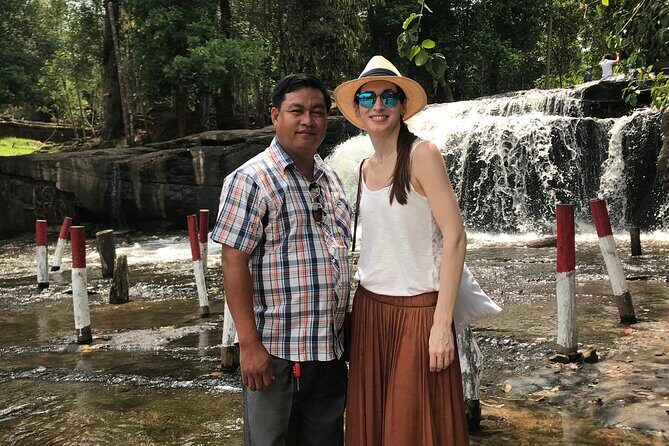
Even though the tour is simple on paper, the experience can swing based on guidance. In past bookings tied to this style of service, guides have been praised for being fluent in English and for answering questions about temple architecture and Cambodia in general.
Names you may see in past experiences include guides like Mr. Kuhn, Thy, Moeun (John), and Vandy, with drivers such as Chet mentioned in particular cases. Some guides also helped with photography—staging shots and even handling iPhone photo moments quickly. That matters because Angkor is busy and lighting changes fast. A guide who knows where to position you helps you get better results without turning your tour into a slow, frustrated search for the “right angle.”
Who Should Book This Tour (and Who Might Want Another Plan)
This tour is a strong fit if:
- You’re on a tight schedule and want the main temples in one go.
- You like having transport handled, especially between temple areas.
- You want cooling support (water, cool towels) built into the day.
- You’re traveling as a small group (up to 3) and want a private setup.
You might consider a different approach if:
- You’re the type who wants to spend long hours inside each temple and read every carving.
- You plan to arrive completely on your own without spending energy on ticketing and admissions.
- You prefer a fully self-guided day with zero structure.
Good news: this service is designed for most participants, and service animals are allowed.
Should You Book? My Practical Recommendation
Yes, I’d book this if your goal is to see Bayon, Ta Prohm, and Angkor Wat without turning your vacation into a logistics project. The route is efficient, the vehicle comfort and cooling touches are exactly what you’ll appreciate in the heat, and the time at Angkor Wat is long enough to do more than just “walk through.”
Just do the smart prep. Budget for the Angkor Pass and admissions, wear comfortable shoes, and bring something to handle sun (a hat helps, and shade breaks matter). If you can align the departure time with the conditions you prefer, you’ll feel like you got a full, satisfying Angkor day even though it’s half-day.
If you’re the kind of visitor who wants stories behind the stone faces and carvings—not just photos—make sure you’re clear on whether you’re getting English guidance with your specific booking and pricing.
FAQ
How long is the half-day Angkor Wat, Ta Prohm, and Bayon tour?
It runs about 5 hours (approximately).
What temples are included in the tour?
The tour visits Bayon Temple, Ta Prohm Temple, and Angkor Wat.
Is pickup from my hotel included?
Yes. Hotel pickup and drop-off are included.
Does the price include temple admission and the Angkor Pass?
No. Admission fees / Angkor Pass are not included.
Is an English-speaking guide included?
The tour data lists a professional English-speaking tour guide as not included, so you’ll want to confirm what’s included at booking.
What comfort items are provided during the tour?
You get mineral water & cool towel, and the vehicle is air-conditioned. Past experiences also mention umbrellas for sun shade.
Is this tour private?
Yes. It’s private, and only your group participates.
Can I cancel for a full refund?
You can cancel up to 24 hours in advance for a full refund.
Is a mobile ticket used?
Yes. The tour includes a mobile ticket.