REVIEW · SIEM REAP
Monk Blessing Ceremony
Book on Viator →Operated by Passion Indochina Travel · Bookable on Viator
A red thread can change your day. This Siem Reap monk blessing is interesting because it happens in a real pagoda setting at Wat Porkrom, with the rhythm of chanting, incense, and ceremony steps explained as you go. I love how the experience ends with a wrist tied with a thin red thread, so it feels personal instead of purely observational.
My other favorite part is the clear, step-by-step guidance from Passion Indochina Travel’s driver/guide—often with Mr. Chhun Bunleng mentioned for being helpful and polite. The one drawback to consider is time: it’s roughly 1 to 2 hours at the site, with extra drive time, so if you’re looking for a long temple day, you’ll want to pair this with something else.
In This Review
- Key Highlights You’ll Want to Know
- Wat Porkrom Monk Blessing: What’s Actually Happening
- Timing, Pickup, and Why “1 to 2 Hours” Can Feel Longer
- Price of $45: Is It Good Value in Siem Reap?
- The Ceremony Flow: Prayers, Chanting, Water Blessing, and Offerings
- The Red Thread Wrist Blessing: Small Token, Big Meaning
- What You’ll Wear and How to Prep Without Stress
- Your Guide Makes or Breaks It: The Role of Explanation
- Spiritual Mood vs. Tourist Comfort: What to Expect Realistically
- Weather, Special Days, and When to Plan Around Timing
- Who Should Book This Monk Blessing Tour?
- Should You Book the Monk Blessing in Siem Reap?
- FAQ
- Where does the monk blessing ceremony take place?
- How long is the monk blessing experience?
- Is hotel pickup and drop-off included?
- What is included in the $45 price?
- What’s not included?
- What happens if the weather is bad?
Key Highlights You’ll Want to Know
- Wat Porkrom ceremony setting: a focused pagoda experience in Siem Reap rather than a distant stop
- Chanting, singing, and water pouring: you see the full blessing flow, not just the aftermath
- Red thread wrist blessing for everyone: a simple takeaway that marks the moment
- Sarong and towel provided: you can dress appropriately without scrambling last minute
- English-speaking driver/guide plus pickup: you’re not left to figure out the ceremony alone
- A more meaningful contribution: the provider is described as sharing part of proceeds with the monks
Wat Porkrom Monk Blessing: What’s Actually Happening
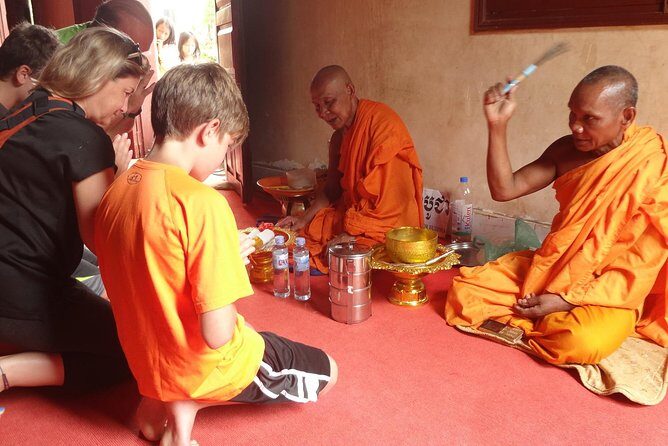
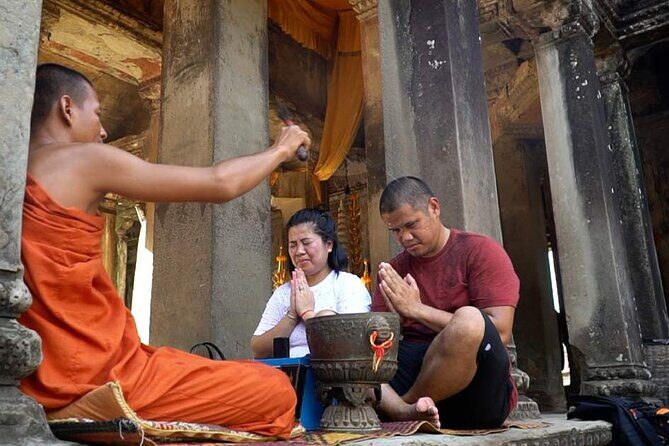
This isn’t a lecture or a performance. It’s a Buddhist blessing ceremony set inside one of Siem Reap’s pagodas, where monks chant and perform ritual gestures that are meant to support participants spiritually. The atmosphere is part of the point: burning incense, flower offerings, and the steady cadence of prayer create a setting that feels calm and ceremonial rather than touristy.
You start by meeting your English-speaking driver/guide, who helps you understand what you’re about to see. That matters, because Buddhist ritual can look confusing if no one explains the sequence. The ceremony itself includes prayers and chanting, and you’ll also notice the monks pouring water as part of the blessing process.
The practical twist is that you’re not just standing there. The tour is designed so you participate in a simple way and receive a tangible symbol at the end. For many people, that’s what makes it feel real: you leave with a red thread tied around your wrist, which represents prosperity and good fortune.
You can also read our reviews of more tours and experiences in Siem Reap.

Timing, Pickup, and Why “1 to 2 Hours” Can Feel Longer
The listed duration is about 1 to 2 hours. In real life, your total day commitment can stretch, because you’ll have round-trip transportation from your hotel and time to travel to the pagoda. One person described it as around 3 hours total when drive time was included, which is a good mental model.
The nice part of the timing is that it works as a break from Siem Reap’s faster pace. You don’t need a full-day plan. If you’ve spent the morning doing temples, this kind of ceremony can feel like a reset button.
Also, the tour runs close to public transportation, which can help you if you’re staying near transit lines. Still, the bigger convenience is the pickup. You can focus on the experience instead of negotiating rides and timing on your own.
Price of $45: Is It Good Value in Siem Reap?
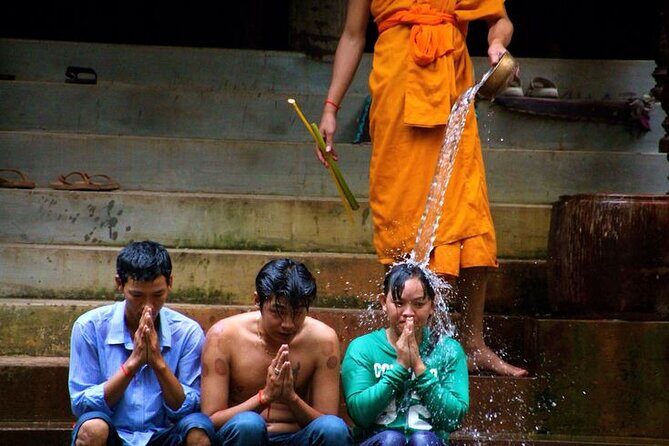
At $45, you’re paying for several things that add up fast in Cambodia: an English-speaking guide/driver, round-trip transport, and the ceremony experience itself. You’re also not expected to bring extra items, because the tour includes a sarong and towel, plus a monk offering.
So what’s the real value? It’s the combination of access and context. You get to attend a monk blessing ceremony in a specific pagoda setting, and your guide helps you understand what you’re doing and why it matters. That’s usually where short cultural tours earn their price. Without guidance, ceremonies can turn into a blur of incense and hand gestures. With guidance, it becomes something you can actually follow.
You should also note the tour offers group discounts. Even without seeing group size details, that usually means the operator has a way to keep costs reasonable when multiple people book the same time slot.
The Ceremony Flow: Prayers, Chanting, Water Blessing, and Offerings
Here’s the sequence you can expect, in plain language.
First, you arrive at the pagoda and get oriented by your guide. You’ll be in a respectful setting with monks leading the ritual. Incense is part of the atmosphere, and you may see flower offerings arranged around the ceremony area.
Next comes the chanting and praying. The tour description highlights that the monks chant and sing, and your guide explains the significance of the blessings. The idea is that these prayers are meant to cleanse karma, foster joy, and attract good fortune. Whether you interpret that spiritually, culturally, or both, it gives the ceremony structure.
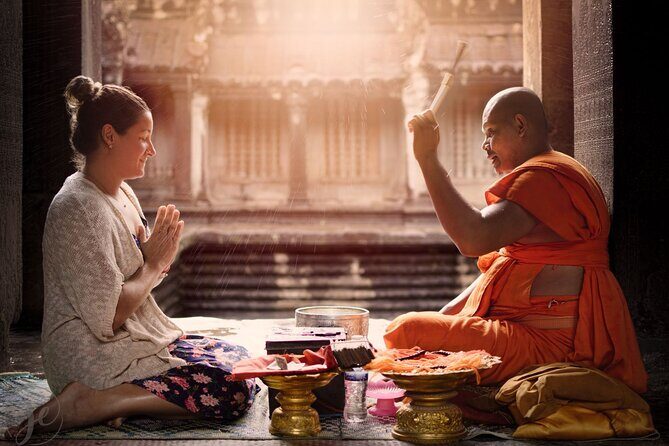
Then the water blessing happens. The guide helps you understand what the water part symbolizes and what you should be doing during the steps. Watching monks pour water is one of those details you can’t fully appreciate from a distance. Up close, it’s slower and more intentional.
Finally, you reach the moment that most people remember most clearly: the closing blessing where everyone receives the red thread tied around their wrist.
The Red Thread Wrist Blessing: Small Token, Big Meaning
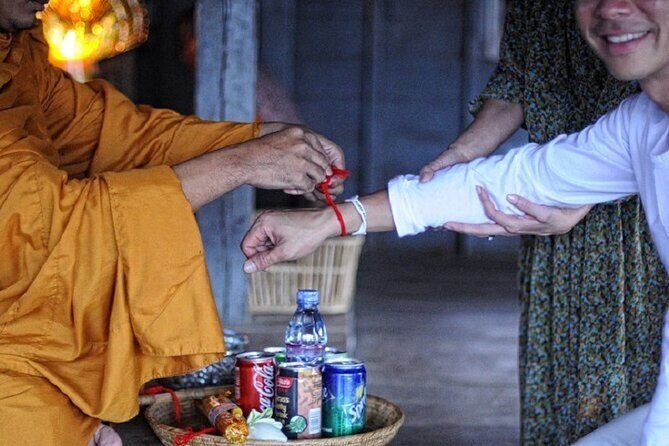
The red thread is a thin strip tied around your wrist. It’s given to all participants at the end of the ceremony and represents prosperity and good fortune.
The value here is partly symbolic, and partly emotional. A wrist thread is hard to forget because it stays with you. It’s not like a postcard or a photo you scroll past. It becomes a physical reminder of the moment you were part of the ritual, even if you only participated briefly.
If you’re traveling with kids, this part often lands well. One family visit was described as educational and enjoyable for a 13-year-old, and that makes sense. The ritual has a clear “before and after” moment: you’re in the ceremony, and then the thread is tied on.
One practical thing to keep in mind: treat the thread like it’s sacred. You’ll feel silly if you smudge it or remove it right away out of curiosity. Let it do its job.
What You’ll Wear and How to Prep Without Stress
You don’t have to plan a special outfit. The tour includes a sarong and towel, which helps you dress appropriately for the pagoda space.
That said, you’ll still want to arrive comfortable. Pagoda ceremonies can involve standing, moving slightly around the ceremony area, and waiting for the monks’ timing. Wear something you can move in easily, and bring a calm attitude. This is one of those experiences where being relaxed is part of respecting the moment.
If you tend to run late, don’t assume you’re out of luck. The operator is described as being supportive and flexible in case someone arrived late due to another commitment. That kind of flexibility is valuable in Siem Reap, where temple timing and tuk-tuk logistics can be chaotic.
Your Guide Makes or Breaks It: The Role of Explanation
This tour’s biggest success factor is interpretation. The experience gives you a guide so you’re not just watching without context. Your driver/guide is English-speaking and should explain the ritual, what the offerings mean, and what’s happening during chanting and the water blessing.
Names matter here because they often reflect consistency and effort. Mr. Chhun Bunleng is specifically mentioned for being knowledgeable, polite, and very willing to help people understand what to do next. Even if your guide isn’t him, the tour is set up to include clear guidance.
I also like that the ceremony doesn’t feel like a hard sell. The guide’s job seems to be helping you participate properly, not forcing you into extra purchases. That keeps the focus where it should be: the monks, the chants, and the blessing steps.
Spiritual Mood vs. Tourist Comfort: What to Expect Realistically
Let’s keep it balanced. This is a spiritual ceremony, but it’s also a guided tour product. That means you should expect an organized flow: you arrive, you follow cues, you participate briefly, and you receive the red thread.
The upside is that everything is structured for visitors. Even if you don’t know Buddhism, the guide helps you understand what you’re seeing. The chanting and ritual actions are beautiful on their own, but they become more meaningful when someone explains the symbolism.
The possible downside is the same structure. Because it’s short, you won’t get hours of free roaming or a long, unhurried temple day. Think of it as a concentrated blessing experience, not a full temple immersion.
If you want a longer day, add a temple visit before or after. But as a standalone experience, the monk blessing is focused and soothing.
Weather, Special Days, and When to Plan Around Timing
This tour depends on good weather. If conditions are poor, the experience may be canceled and you’ll be offered a different date or a full refund. That’s a normal reality for outdoor or partially open ceremony spaces, and it’s better to be mentally flexible.
Also, some dates can carry extra meaning. One person described receiving their blessing during a full-moon style timing on January 1st. While you shouldn’t assume your date will match that, it’s a clue that certain calendar moments can create a more dramatic atmosphere.
If you’re schedule-flexible, you’ll usually have an easier time choosing a time that lines up with your energy level. If you’re exhausted from temple heat or a long drive day, you may enjoy the ceremony more when you’re rested.
Who Should Book This Monk Blessing Tour?
This tour is a good fit if you want a respectful cultural experience in a short time window. You’ll like it if you:
- Want something more reflective than temple sightseeing
- Appreciate rituals with clear meaning and a simple way to participate
- Prefer guided context over trying to decode everything alone
- Travel with family and want an educational, calm activity
It’s also a nice option if you’re staying near the center of Siem Reap and want a convenient pickup. The ceremony is described as accessible for most travelers, which matters if you’re unsure how much involvement you’ll have.
On the other hand, it may not be the right choice if you’re looking for a long temple tour with lots of architecture stops. The strength here is the ceremony itself, not a marathon sightseeing route.
Should You Book the Monk Blessing in Siem Reap?
My take: yes, if you want a meaningful, well-guided pause in your Siem Reap trip. The value comes from the full package: ceremony access at Wat Porkrom, pickup with an English-speaking guide/driver, and the included essentials like sarong and towel. Add the red thread wrist blessing at the end, and you get a souvenir with actual significance.
Skip it only if you’re mainly chasing photography, or if you already have enough temple time and need something more hands-on like classes, workshops, or full-day tours. For most people, though, this is a “soft landing” experience. You’ll go in curious, and you’ll probably leave calmer, with a small red reminder on your wrist that you did something real, right there in the pagoda.
FAQ
Where does the monk blessing ceremony take place?
The ceremony is held at Wat Porkrom in Siem Reap.
How long is the monk blessing experience?
It’s listed as about 1 to 2 hours (approx.). Including travel time, some people describe it as around 3 hours total.
Is hotel pickup and drop-off included?
Yes. The tour provides round-trip transportation from your hotel.
What is included in the $45 price?
Included are an English-speaking driver/guide, the Monk Blessing Ceremony, sarong & towel, and a monk offering.
What’s not included?
Travel insurance is not included.
What happens if the weather is bad?
The experience requires good weather. If it’s canceled due to poor weather, you’ll be offered a different date or a full refund.