REVIEW · SIEM REAP
Siem Reap Cambodian Buddhist Water Blessing and Local Market
Book on GetYourGuide →Operated by Cambo Tours Services · Bookable on GetYourGuide
A splash of holy water can change your day. This Siem Reap outing takes you from Krong Siem Reap’s streets to a countryside Buddhist monastery just south of town, where monks bless you during a traditional water ceremony. I like the fact that you can choose between two water blessing styles, depending on how you want to take part, and I also appreciate the added local market visit that turns the trip into more than just a single ritual.
I love how personal the whole moment feels: you’re not just watching. You learn about the monks’ daily life and Buddhist beliefs, then you leave with a visible reminder of the blessing on your wrist. One thing to consider: the longer option involves water being poured over your head, so you’ll want to feel comfortable with getting wet, even if you’re given a sarong to keep your clothes protected.
In This Review
- Key Things You’ll Notice on This Siem Reap Blessing Tour
- Tuk-Tuk Pickup and the Ride South of Siem Reap
- Two Water Blessing Rituals: Light Sprinkling or Head Pouring
- Option 1: Chanting and Light Water Sprinkling
- Option 2: Longer Chanting and Blessed Water Poured Over Your Head
- The shared ending: a red wrist tie
- What the Monks Teach You Before the Chanting Starts
- The Local Market Stop: A Real Break in the Middle
- Price and Value: Is $39 Worth a Pagoda Blessing Tour?
- Etiquette, Comfort, and the Water-You-Will-Get Part
- Should You Book This Siem Reap Buddhist Water Blessing Tour?
- FAQ
- How long is the Siem Reap Buddhist water blessing experience?
- What are the two water blessing options?
- What’s included in the $39 per person price?
- What languages are available for the live tour guide?
- Are alcohol or drugs allowed during the tour?
- What’s the cancellation policy and can I pay later?
Key Things You’ll Notice on This Siem Reap Blessing Tour
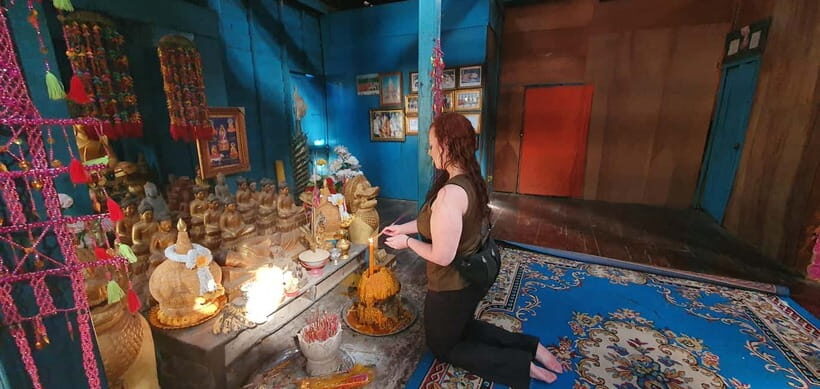
- Two blessing options: light sprinkling with chanting, or a longer ritual with blessed water poured over your head
- Monks lead the ceremony: harmonized chanting and a real look at life in the pagoda
- Sarong included: you change into one for the longer ritual to help keep your clothing dry
- Red wrist ties after: a clear sign the blessing was performed
- Tuk-tuk transfers: two short tuk-tuk rides down to the pagoda area and back
- Local market stop: time to browse as part of the same $39 experience
Tuk-Tuk Pickup and the Ride South of Siem Reap
The experience starts in Krong Siem Reap, with hotel pickup arranged about 30 minutes before departure. That early timing matters because it gives you time to find your guide, settle in, and avoid a rushed start. The tour then uses tuk-tuk transport, including two segments listed as 15 minutes each, before you reach the countryside pagoda area.
Those rides are more than just transit. They’re your buffer between the loud, modern city streets and the quieter setting where monks live and practice. If you’re coming to Siem Reap mostly for Angkor, this is a good counterweight. You trade stone temples for something more everyday and human: chanting, ritual pacing, and the calm rhythm of a monastery setting.
A practical note from how the trip is set up: it’s a short total outing (listed as 2 hours). That means the schedule moves along at a steady pace, so you’ll want to be ready on time for pickup and have your questions ready for the guide once you’re underway. Also, the tour is offered with a live guide in English and Chinese, so if you’re not comfortable in those languages, you may rely on the guide and any translation help from the group situation.
Finally, the vibe here is respectfully structured. The tour information also states that alcohol and drugs aren’t allowed, which helps keep the ceremony focused and appropriate.
You can also read our reviews of more shopping tours in Siem Reap

Two Water Blessing Rituals: Light Sprinkling or Head Pouring
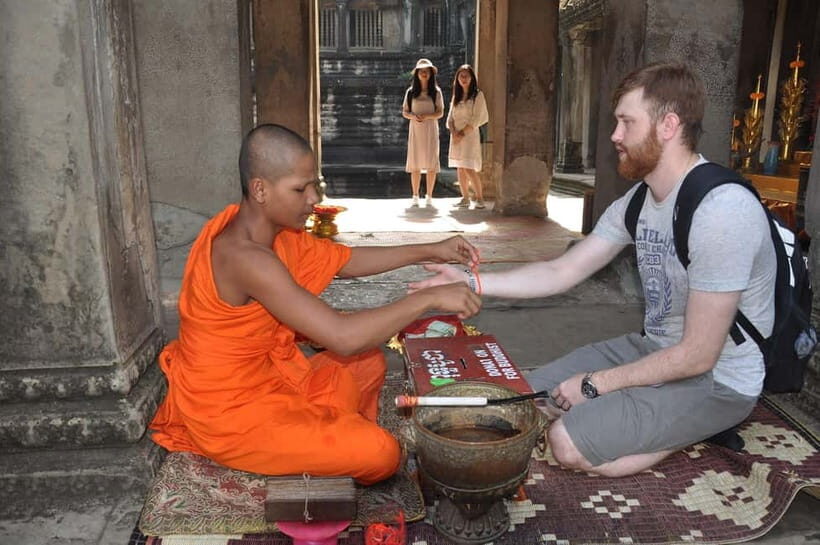
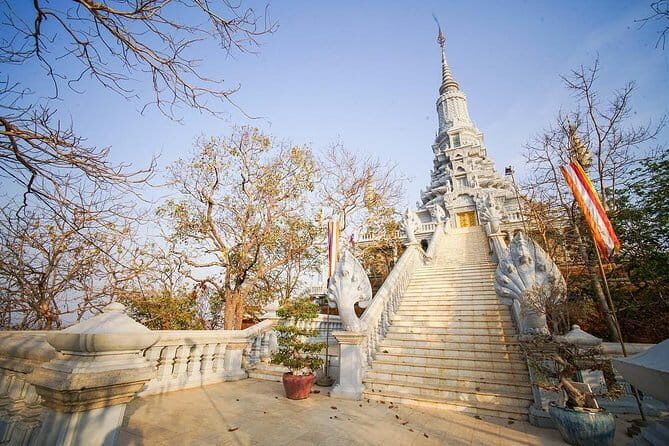
The heart of the tour is the 1-hour Buddhist water blessing at an ancient pagoda in the countryside (just south of Siem Reap). This is where the tradition ties back to Cambodia’s deep Buddhist practice—chanting, blessing gestures, and the idea that good wishes can be offered in a concrete, personal way.
You’re given a choice of two forms of blessings from the monks:
Option 1: Chanting and Light Water Sprinkling
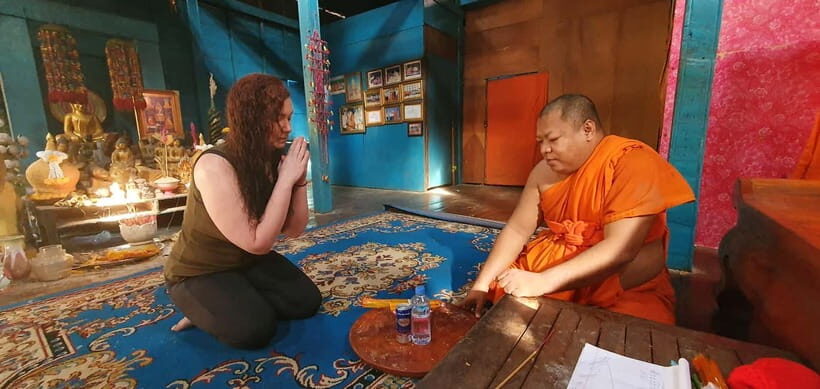
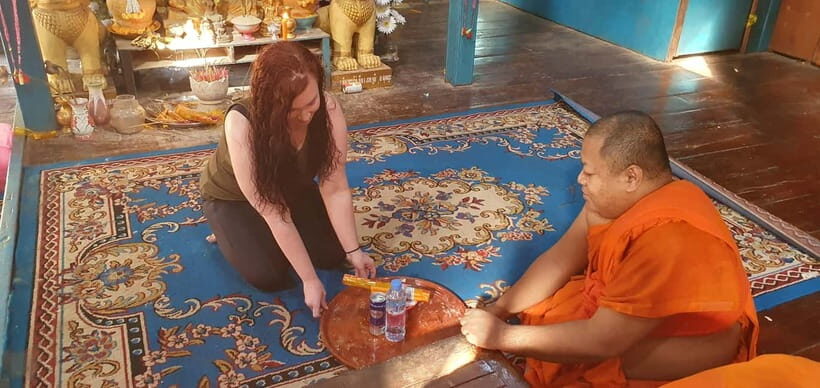
In the shorter ritual, the monks chant harmoniously while they wish you things like good luck, safe travel, and a long life. During this part, there’s a light sprinkling of water. If you want something that feels meaningful but not overly intense, this option can fit well. You’ll still be fully part of the ceremony rather than observing from a distance.
Option 2: Longer Chanting and Blessed Water Poured Over Your Head
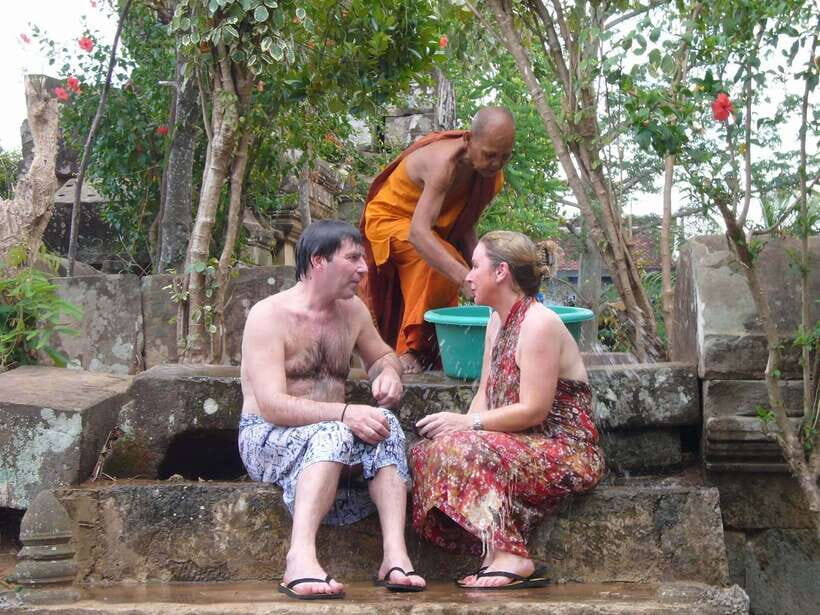
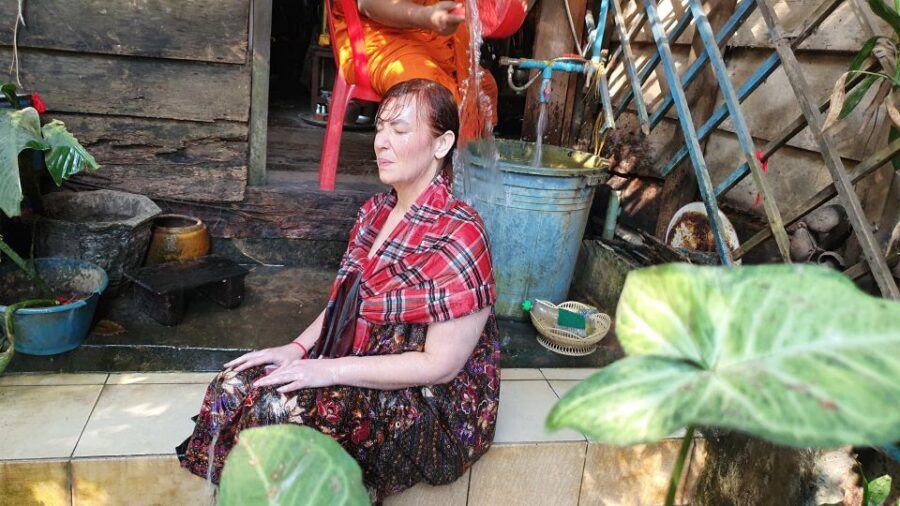
The second option is longer and more theatrical—water vessels of blessed water are poured over your head while monks chant. If you choose this one, you’ll be provided a sarong to change into so your clothing stays dry. That detail is practical and worth noting: it’s not just a ceremonial moment; it’s also managed to keep you comfortable during the water portion.
The shared ending: a red wrist tie
After either blessing, your wrist is adorned with special red ties. This is one of those small details that makes the ceremony feel real and complete. It’s not a souvenir you bought in a market booth—it’s a signal that you received the blessing as part of the ritual.
If you’re trying to decide between the two options, think about what you want your body to remember. Do you want a light, symbolic touch? Or do you want the more immersive, water-on-your-head version where the ritual is impossible to forget?
A few more Siem Reap tours and experiences worth a look


What the Monks Teach You Before the Chanting Starts
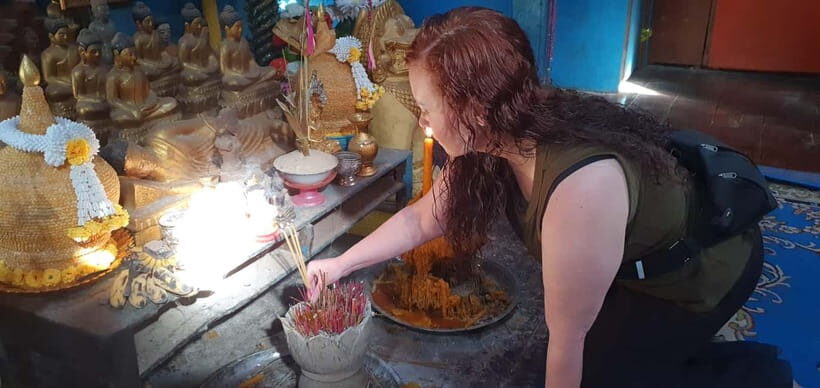
This tour isn’t framed as a quick photo stop. It includes time to learn about Buddhist beliefs and to understand the lives of the resident monks at the pagoda. That matters because the ceremony isn’t just water and chanting—it’s tied to values and daily practice.
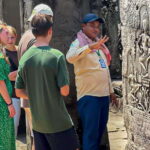
In practice, your guide helps translate what’s happening as the monks lead the ritual. The reviews attached to this experience highlight a guide named Dara, praised for making the experience peaceful and special. That’s a useful clue for how the tour is delivered: clear explanations can turn unfamiliar ritual movements into something you can actually follow. When you understand what the monks are doing and why, you’re more likely to feel present instead of just standing there politely.
Even if you’re not Buddhist, this is the kind of cultural moment where you can learn quickly. You’re given a structured ceremony with cues—chanting, water gestures, and the final red wrist ties—so it’s easier to follow than a free-form temple visit.
The also-good part: the ceremony happens in a monastery setting, not a staged environment. The tour focuses on the monks’ own community and the blessing tradition they perform. That’s what makes it feel more grounded than a scripted cultural show.
One more practical thought: because the guide is offering interpretation in English and Chinese, your listening experience will depend on how much you’re able to follow in those languages. If your group doesn’t share the same language, the reviews mention cases where the driver used translation help to keep things understandable. That can be a comfort if you worry about communication.
The Local Market Stop: A Real Break in the Middle
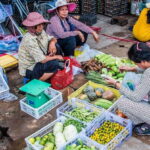
This experience includes a market visit as part of the tour, and that’s a smart move. Without it, the day could feel like a single religious ceremony followed by a quick return ride. With the market stop, you get a little extra context for everyday life around Siem Reap—what people buy, what’s sold, and how the area functions beyond the monastery.
You won’t want to treat the market as a shopping mission. Instead, think of it as a short sensory break that keeps the tour from becoming too one-note. You can browse casually, observe the flow of the place, and pick up small items if that’s your style.
Just remember the ceremony itself is scheduled and time-bound (the water blessing portion is listed as a 1-hour activity within a 2-hour total tour). So the market time is likely practical and efficient. Go in with a calm plan: browse, enjoy, and keep an eye on the time so you don’t feel rushed when it’s time to return.
Price and Value: Is $39 Worth a Pagoda Blessing Tour?
At $39 per person, this isn’t an expensive add-on in a Siem Reap trip budget, especially because the price includes the stuff that usually costs time and hassle:
- A tour guide (English or Chinese)
- Tuk-tuk transfers from your pickup point and back
- Sarong for the longer water ritual
- A donation to the pagoda
- A market visit
You’re basically paying for a full half-day style experience that’s compressed into 2 hours, without you needing to figure out transport to a countryside pagoda on your own. The sarong and donation being included also matters. It reduces uncertainty about what to bring or how to handle the ceremonial aspects.
Where value can vary is personal. If you’re looking for a serious, spiritual-feeling ritual with a visible blessing outcome (the red wrist ties), this price can feel fair. If you’re hoping for a long, museum-style explanation or a fully private ceremony, this will feel short and group-paced by design.
Still, for many people, this hits a sweet spot: meaningful culture, built-in logistics, and a practical schedule that fits into a tight Siem Reap itinerary.
Etiquette, Comfort, and the Water-You-Will-Get Part
Let’s talk comfort honestly, because this is a water ceremony and the body matters.
If you choose the longer option, water is poured over your head. The tour provides a sarong so your clothing stays dry, but you should still expect a wet sensation. If you hate getting your hair wet, you’ll probably prefer the lighter sprinkling option.
Also pay attention to the fact that the ceremony is led in a respectful religious setting. That means you should follow the guide’s cues closely—where to stand, when to move, and how to behave during chanting. The tour’s rules that alcohol and drugs aren’t allowed help set the tone, but your best contribution is simple: be calm, be respectful, and don’t turn the ritual into a performance.
On logistics and movement, the tour is listed as wheelchair accessible, which is a positive data point if mobility is a concern. The total time is only 2 hours, so it’s easier to plan around than longer countryside excursions.
One more consideration: the guide pickup is scheduled 30 minutes before departure, and you’ll be using tuk-tuk transport. That means the tour works best when you’re ready for a quick, efficient day—not when you’re hoping for a slow, wandering schedule.
Should You Book This Siem Reap Buddhist Water Blessing Tour?
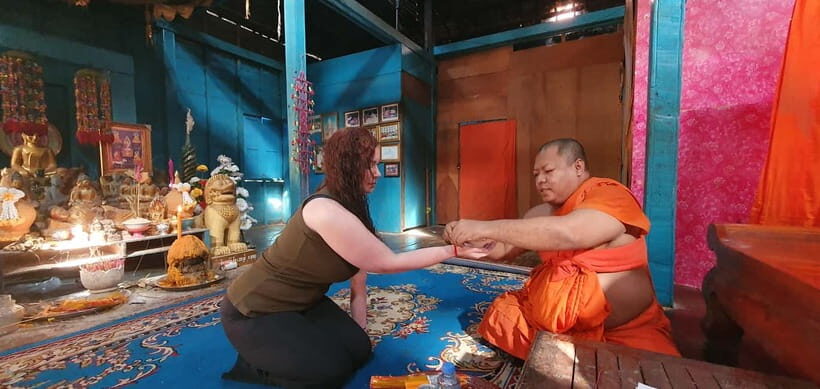
You should book if you want a Siem Reap experience that goes beyond temples on postcards. This is a personal ritual—monks chant, you receive a blessing, and you leave with a red wrist tie that marks the moment. If you enjoy cultural traditions where meaning is explained and the ceremony has structure, this is a strong fit.
It’s also a good choice if you like practical tours that solve logistics. The tuk-tuk transfers, included sarong, guide interpretation, and included donation reduce the guesswork.
Don’t book if water rituals make you uncomfortable, especially the option with water poured over your head. And if you’re looking for a long, slow, self-guided day with lots of free time, the 2-hour format may feel too tight.
If you do decide to go, I’d pick the ritual option that matches your comfort level—not what sounds most dramatic. The monks are offering a blessing either way. You’ll get more from it when you can fully participate without fighting the process.
FAQ
How long is the Siem Reap Buddhist water blessing experience?
The total tour duration is listed as 2 hours. The water blessing itself is described as a 1-hour experience.
What are the two water blessing options?
You can choose between two forms of blessings from the monks: one begins with chanting and a light sprinkling of water, and the second is a longer ritual where blessed water is poured over your head while monks chant.
What’s included in the $39 per person price?
Included are the tour guide, tuk-tuk transfer, sarong, donation to the pagoda, and a market visit.
What languages are available for the live tour guide?
The live tour guide is available in English and Chinese.
Are alcohol or drugs allowed during the tour?
No. Alcohol and drugs are not allowed.
What’s the cancellation policy and can I pay later?
The tour offers free cancellation up to 24 hours in advance for a full refund, and it also offers reserve now & pay later (book your spot and pay nothing today).