REVIEW · SIEM REAP
Ultimate Angkor Wat Sunrise, Bayon, Ta Prohm Temple
Book on Viator →Operated by Angkor Pro Travel · Bookable on Viator
Angkor wakes up early. This sunrise-focused route packs Angkor Wat, Bayon, and Ta Prohm into one smooth morning-to-day plan, so you’re not bouncing around the park trying to piece together your own timing. You’ll get a professional English guide, plus air-conditioned transport, which matters fast when you start at 4:20 am and you still have temple walking ahead.
Two things I really like: first, the sequence hits the big three you came for—Angkor Wat sunrise, then Bayon in Angkor Thom, and finally Ta Prohm with those giant tree roots. Second, the setup is practical: hotel pickup and drop-off, a guide with English, and private transportation means less hassle and more time looking (not negotiating).
One possible drawback: this tour price is low, but the Angkor Pass is not included. Plan on adding the pass cost per person, plus you’ll pay for breakfast at your own account near Srah Srang.
In This Review
- Key Points to Know Before You Go
- How This Tour Works: From Hotel Pickup to a Full Temple Day
- The 4:20 am Angkor Wat Sunrise Plan (and Why It’s Worth the Early Start)
- Angkor Wat Tickets: Budgeting for the Angkor Pass You Can’t Skip
- Srah Srang Stop: Breakfast Break at the Royal Bath
- Bayon Temple in Angkor Thom: 200 Smiling Faces and 54 Towers
- Ta Prohm Jungle Temple: Where Roots and Stone Share the Stage
- What the $13 Price Really Buys (and Where the Costs Hit)
- Timing, Comfort, and Group Size: The Real-Day Experience
- Who This Tour Is For (and Who Might Skip It)
- Should You Book Ultimate Angkor Wat Sunrise, Bayon, and Ta Prohm?
- FAQ
- What time does the Angkor Wat sunrise start?
- Is the Angkor Pass included in the tour price?
- What’s included in the $13 per person price?
- Do I pay for breakfast separately?
- How long is the tour?
- Is this a private tour?
- Can I get a refund if I cancel?
Key Points to Know Before You Go

- 4:20 am start for Angkor Wat sunrise timing that feels like the whole point
- Private tour: only your group participates, with hotel pickup and drop-off
- English-speaking guide to help you read what you’re seeing on carvings and faces
- Air-conditioned vehicle between temple stops, which you’ll appreciate later in the day
- Angkor Pass extra (admission fees not included), so budget for that up front
How This Tour Works: From Hotel Pickup to a Full Temple Day

This is built as a one-day circuit in Siem Reap’s Angkor area, starting with a very early sunrise plan and ending back at your meeting point. Expect an itinerary-style flow, not a flexible free-for-all. That’s a good thing here. Angkor is huge, and timing matters—especially when you’re targeting that early light at Angkor Wat.
Transportation is part of the value. You get hotel pickup and drop-off, a professional English tour guide, and an air-conditioned vehicle for moving between major sights. You also get private transportation, which typically means you spend less time waiting around and more time on the temple route itself.
One more practical note: the Angkor sights require the Angkor Pass, and the tour listing indicates admission tickets aren’t included at each stop. So you’re paying twice—once for the tour service, and once for park admission.
A few more Siem Reap tours and experiences worth a look
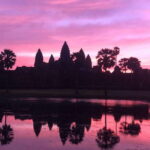

The 4:20 am Angkor Wat Sunrise Plan (and Why It’s Worth the Early Start)
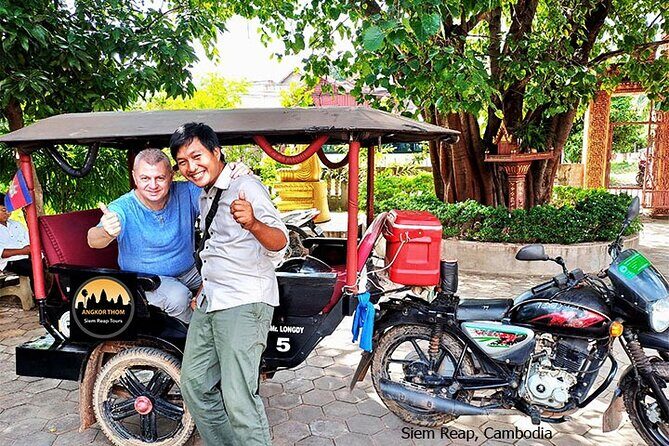
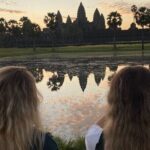
The big headline is sunrise at Angkor Wat, scheduled to start around 4:20 am. That early start is not just dramatic marketing—it’s how you maximize the experience. Morning light makes the stone surfaces look better, shadows help the carvings and towers pop, and the whole site feels calmer compared with the later rush.
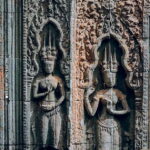
Angkor Wat itself is described as the world’s largest religious monument, built in the early 12th century. That gives you useful context when you’re looking at scale. You’re not just seeing one temple hall. You’re stepping into a massive, planned complex designed to be read in layers—gateways, corridors, then the main structures.
What to watch for with a guide is how they connect the stone details to what you’re standing in front of. A strong English-speaking guide is especially helpful at Angkor Wat because the carvings and layout can feel overwhelming if you’re only scanning for the “pretty” parts. If you want the place to make sense, the guide’s explanations help you slow down mentally while your body is still operating on sunrise-clock energy.
Also, sunrise mornings can be slightly chaotic by nature. In one pickup situation shared from the operator side, the group was met right around pickup time, and once the tuk-tuk driver D arrived, they got moving even though the guide was a few minutes late. That’s exactly the kind of real-world early-morning rhythm you want: the plan doesn’t collapse if someone is late by a few minutes.
Angkor Wat Tickets: Budgeting for the Angkor Pass You Can’t Skip
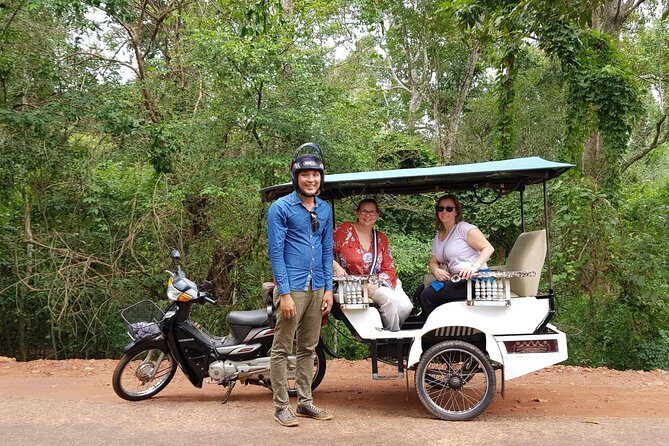
Here’s the main math you’ll want to do before you book: the tour price is $13 per person, but admission fees are not included. The listed requirement is the Angkor Pass at $37.00 per person.
So your day’s baseline cost is basically:
- $13 per person for the tour service
- $37 per person for the Angkor Pass
That brings the total to $50 per person, before food, drinks, or anything else you add.
Why does that matter? Because Angkor Pass cost is the part that doesn’t scale down if you’re just doing one temple. This tour is designed to use that pass efficiently by covering three top sites in one go. You’re paying admission once, but getting multiple major stops out of it—Angkor Wat, Bayon, and Ta Prohm.
Srah Srang Stop: Breakfast Break at the Royal Bath
After sunrise, you’ll move to Srah Srang, where the plan includes time for breakfast near the Royal Bath area. The key detail here is that you’ll enjoy breakfast at a local restaurant, but foods and drinks are not included. So treat breakfast as your own expense.
Why stop here at all? Srah Srang is known as the Royal Bath, and it works as a buffer between the early temple exertion and the next big temple zone. It’s also a chance to reset your energy and get some food into you while the schedule is still sensible.
You’ll also get a break from constant temple walking while you transition to Angkor Thom. The timing includes about 1 hour at this stop, which is enough time to eat without turning the morning into a sit-still museum day.
Bayon Temple in Angkor Thom: 200 Smiling Faces and 54 Towers
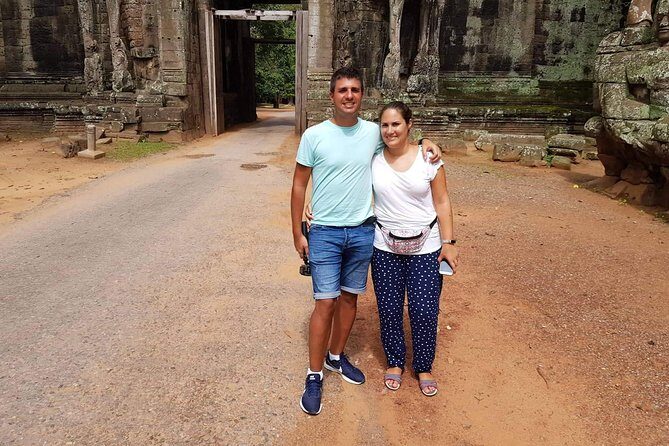
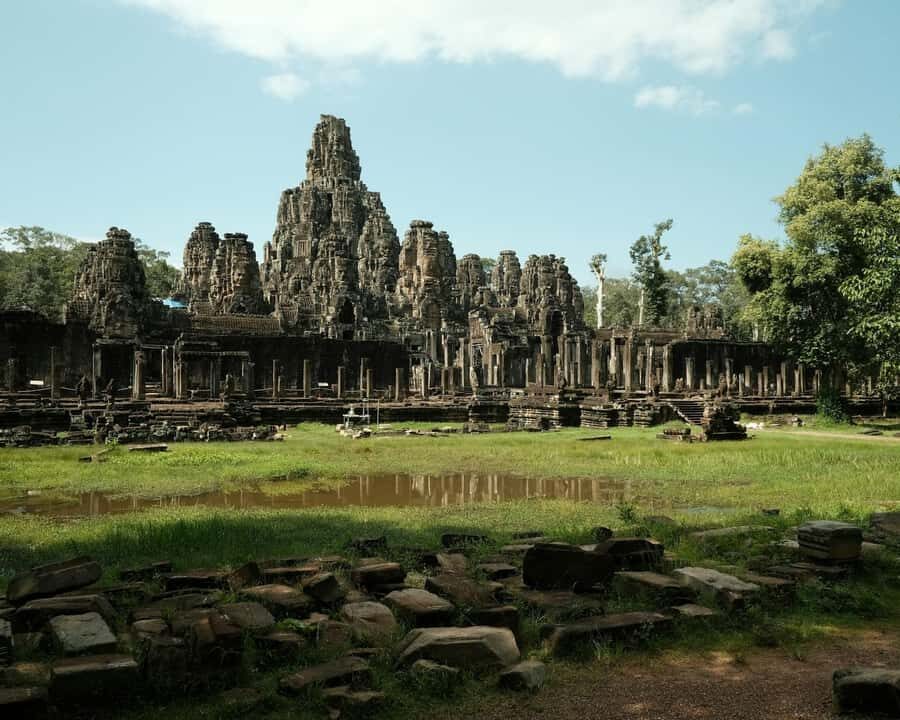
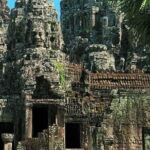
Next up is Bayon Temple, inside Angkor Thom. This is the temple that people remember for the faces: over 200 smiling stone faces connected with King Jayavarman VII. You’ll also hear about the layout: 54 towers that rise above the complex.
This stop feels different from Angkor Wat. Angkor Wat is the large-scale, symmetrical “wow” you notice instantly. Bayon is more intimate in the way your eyes get pulled from face to face while you weave around the towers. The guide’s job here is big: they help you connect what you’re seeing to the story behind it, instead of only pointing out faces as the main feature.
In terms of time, you’re given around 1 hour for Bayon. That can be just right if you’re trying to keep momentum. Too much time and it becomes repetitive in a good-but-similar kind of way. Too little and you miss the chance to notice different angles of the faces—some look more serious, some more serene depending on where you stand.
The practical value of having a guide is that Bayon can feel visually busy. A good route through the space helps you get the “I get it now” feeling rather than just the “I took photos” feeling.



Ta Prohm Jungle Temple: Where Roots and Stone Share the Stage

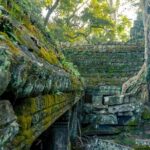
The last named stop is Ta Prohm, famous as the Tomb Raider Temple—because massive tree roots wrap the architecture in a way that looks cinematic even in real life. This is the “nature meeting stone” temple, and it’s one of the reasons people love Angkor beyond the classic grand temples.
Your schedule provides about 1 hour at Ta Prohm. That’s often a smart length of time because Ta Prohm has a lot of visual distractions: roots, cracks in stone, doorways, and photo angles that change as you move. If you have only one hour, your goal becomes choosing a path and seeing the architecture through the roots, not trying to cover every corner perfectly.
What I like about this stop for visitors is that it changes the emotional tone of the day. You start with sunrise majesty at Angkor Wat. Then you go to a dense, face-filled Buddhist masterpiece at Bayon. Ta Prohm adds a third ingredient—wildness. Even if you’re tired, Ta Prohm tends to wake your senses back up.
Practical consideration: Ta Prohm can be damp-looking and slippery in some areas, depending on conditions. Wear solid shoes and keep your steps deliberate. It’s not about fear. It’s about being able to keep your pace without worrying about your footing.
What the $13 Price Really Buys (and Where the Costs Hit)
Let’s talk value in plain terms. $13 per person is the tour service price. It includes:
- Hotel pickup and drop-off
- Professional English tour guide
- Air-conditioned vehicle
- Private transportation
- Mobile ticket (so you’re not scrambling with paperwork)
That is strong value on the “service” side. Guides and transport are often the expensive parts in Cambodia tours. Here, the base cost is low enough that the Angkor Pass becomes the real deciding factor for your total budget.
Where costs hit next:
- Angkor Pass ($37 per person) is not included
- Foods and drinks are not included (you’ll cover breakfast at Srah Srang)
- Travel insurance and personal expenses are also not included
So the best value comes if you’re committed to visiting multiple major temples in one day and you want the structure of a guided circuit. If you mainly want only Angkor Wat and you hate the idea of long temple walks, this may feel like too much. But if you want the “big three” without planning yourself, it’s a solid way to spend your limited days in Siem Reap.
Timing, Comfort, and Group Size: The Real-Day Experience
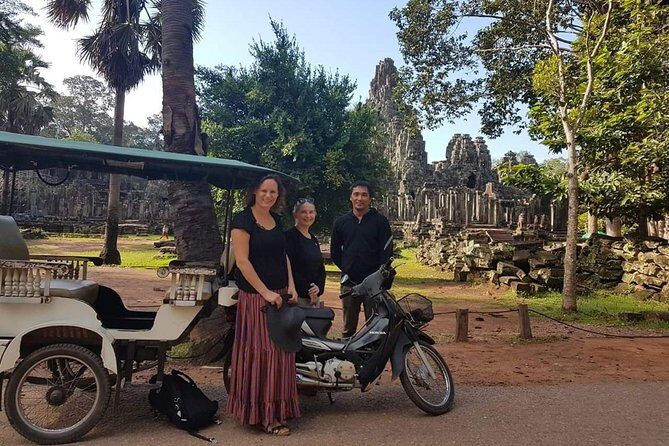
This is a private tour/activity, and the listing states only your group participates. That changes the feel. You’re less likely to get pulled into a one-size-fits-all pace with strangers. It also helps early morning smoothness because you’re not constantly waiting for different people to catch up.
You also get air-conditioned transportation, which is a big deal in Siem Reap weather later in the day. Even if you start cool at sunrise, the heat can build as the morning goes on. The AC isn’t a luxury detail—it’s part of why the day stays tolerable.
Total duration is listed as about 7 hours. For a circuit that includes three major sites, that’s a reasonable length. It gives you enough time at each stop to see the highlights without turning the day into an all-day marathon where your brain shuts down mid-visit.
One small thing to keep in mind: early mornings can run a bit uneven. The review experience shared that the operator met the group even if the guide arrived a few minutes late, and then they were off once tuk-tuk driver D came in. That’s reassuring. You can still end up on schedule, as long as the operator keeps things moving.
Who This Tour Is For (and Who Might Skip It)
This tour fits best if you want:
- A sunrise Angkor Wat experience with a guided explanation
- A tight, efficient route to Bayon and Ta Prohm in the same day
- Comfort between stops via air-conditioned transport
- A private setup where only your group participates
It might be less ideal if:
- You’re traveling on a super tight budget and the Angkor Pass feels heavy
- You prefer a slower, more self-guided style where you can wander without following a set order
- You struggle with very early starts (the plan starts at 4:20 am)
Should You Book Ultimate Angkor Wat Sunrise, Bayon, and Ta Prohm?
If you’re choosing between piecing temples together on your own and taking a structured guided day, I’d lean toward booking this—especially because it targets the exact sights most visitors want and starts early for sunrise. You also get real value in the service package: English guidance, hotel pickup, AC transport, and private movement through the sites.
The main decision point is your budget once the Angkor Pass is added. If you’re already planning to buy the pass anyway, this tour uses it efficiently across multiple iconic temples. If you’re not sure you want Bayon and Ta Prohm, then you may want a different tour that matches your priorities.
FAQ
What time does the Angkor Wat sunrise start?
The tour is scheduled to start at 4:20 am for Angkor Wat sunrise.
Is the Angkor Pass included in the tour price?
No. The Angkor Pass costs $37.00 per person and is not included.
What’s included in the $13 per person price?
The price includes hotel pickup and drop-off, a professional English tour guide, an air-conditioned vehicle, and private transportation, plus a mobile ticket.
Do I pay for breakfast separately?
Yes. Breakfast near Srah Srang is at your own account, since foods and drinks are not included.
How long is the tour?
The duration is listed as about 7 hours.
Is this a private tour?
Yes. It’s described as a private tour/activity, so only your group will participate.
Can I get a refund if I cancel?
No. This experience is non-refundable and cannot be changed for any reason.