Sunrise at Angkor is a whole new level. This private 1-day Angkor Wat sunrise and hidden temples route is built around the big moments: watch the sun come up from Phnom Bakheng with your guide, then later catch the sunset at Angkor Wat. Between those bookends, you get time back for your own plans, while an English-speaking guide keeps the history and photo stops moving.
What I like most is that you’re not just hopping between ruins. You’re getting best-angle help (and solid photo guidance) so you spend your limited time where it counts, instead of guessing in the dark. I also love the practical setup: air-conditioned transfers with cool water and towels, plus local snacks to keep the day from feeling like a long suffer-fest.
One consideration: the Angkor Temple Pass is not included, and most stops require it (Bakong is listed as free). You’ll need to budget for that pass on top of the $99 price.
In This Review
- Why this day works: sunrise, sunset, and a break in the middle
- Quick reasons this tour tends to satisfy people
- Pickup, comfort, and the small logistics wins
- Phnom Bakheng at sunrise: the hilltop view moment
- Angkor Wat sunrise and sunset: reflections, alignment, and timing
- The day’s quieter detour: Beng Mealea jungle temple
- Chau Srei Vibol: a remote stop that feels less crowded
- Roluos temples and the “second capital” feeling: Bakong, Lolei, Preah Ko
- Bakong: the first sandstone temple mountain stop
- Lolei: the northernmost and once-island feel
- Preah Ko: the sacred bull and its family honor
- Why the guide matters more here than you’d expect
- Price check: is $99 good value for an Angkor sunrise + hidden temples day?
- Who should book this sunrise and hidden temples tour
- Should you book it?
- FAQ
- FAQ
- What time does the tour start?
- How long is the tour?
- Does the tour include pickup from my hotel?
- Is the Angkor Temple Pass included in the price?
- What sites are included besides Angkor Wat?
- What’s included in the tour price?
- Is this a private tour?
- Is free cancellation available?
Why this day works: sunrise, sunset, and a break in the middle
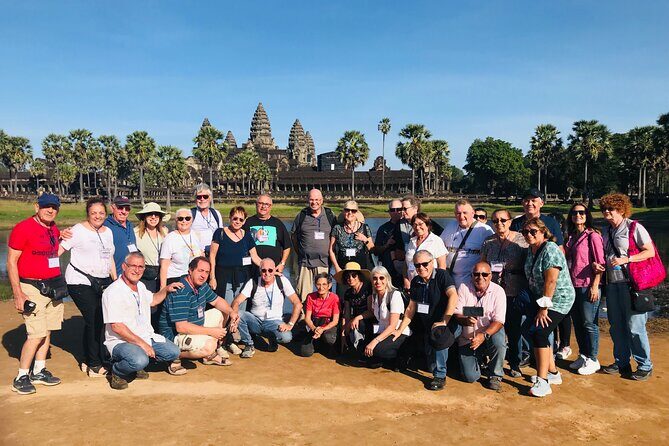
This tour is interesting because it treats Angkor like a time problem, not just a to-do list. The morning is set for the sunrise experience, then you’re returned for breakfast before heading back out again for the sunset at Angkor Wat. That middle gap matters, because it gives you room to reset, eat, and do things at your own pace instead of marching nonstop from one site to the next.
If you’re the type who wants the famous views but also likes a few quieter stops, the itinerary is a smart blend. You get the must-see Angkor Wat moment, then you branch into temples such as Beng Mealea and Chau Srei Vibol, places many people skip when they’re only chasing the headline sites.
Quick reasons this tour tends to satisfy people
- Phnom Bakheng sunrise timing with a guide focused on where to stand for the best views
- Angkor Wat sunset framing so you’re not stuck only doing one dramatic moment
- Air-conditioned hotel transfers with cool water and towels to make the long morning more bearable
- Hidden-temple variety, including Beng Mealea, Chau Srei Vibol, and the Roluos sites
- Guide-led photo help, including guidance noted by guides like Hok and Mr Nivath in customer feedback
A few more Siem Reap tours and experiences worth a look

Pickup, comfort, and the small logistics wins
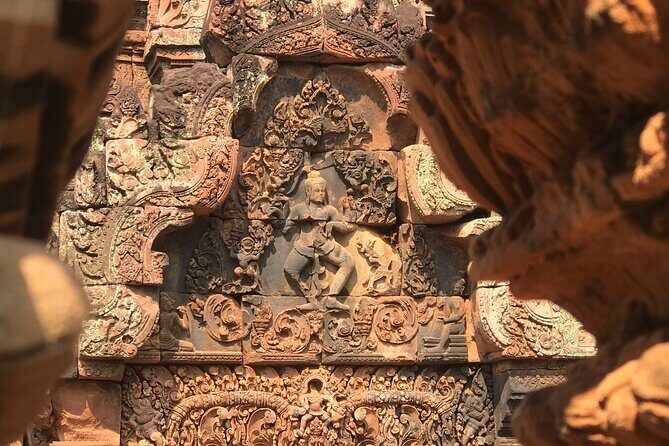
Starting from your hotel is a big deal in Siem Reap. The tour begins with pickup at Raffles Grand Hotel d’AngkorKhum, and it returns you back there at the end, which makes the day easier to manage when you’re up before most of the city is. You also get an air-conditioned vehicle, which is not a luxury thing here—it’s time and energy you can save for the temples.
The included extras are exactly the kind you notice during a long day: cool water, cool towels, and local snacks. When a tour runs 7 to 8 hours, those details help you keep moving without turning the day into a hydration scavenger hunt.
The tour is also private, meaning it’s only your group. That’s useful when you want your guide to set the pace and adjust for your questions, especially with a complex place like Angkor where simple directions can’t capture the full story.
Phnom Bakheng at sunrise: the hilltop view moment
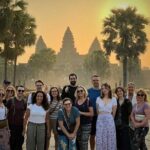
The tour’s first big anchor is Phnom Bakheng for sunrise. This is where the early start pays off, because you’re chasing the view before the crowds swell and the light changes. The timing is built in from the start of the day, with departure at 4:30 AM.
Your guide’s role here isn’t just to bring you to the hilltop. The emphasis is on helping you find the best photo angles and understanding what you’re seeing as the sky brightens. One of the strengths mentioned in feedback is that guides like Hok and Mr Nivath can explain what makes the scene special, plus they’re comfortable giving practical photography help so you can actually get the shot.
Practical thought: sunrise tours reward early positioning. If your goal is photos and calm, treat this as a morning you should be ready for, not a morning you plan to “sleep through a little.” The reward is that famous Angkor morning feeling with a bit less chaos than you’d get later.
Angkor Wat sunrise and sunset: reflections, alignment, and timing
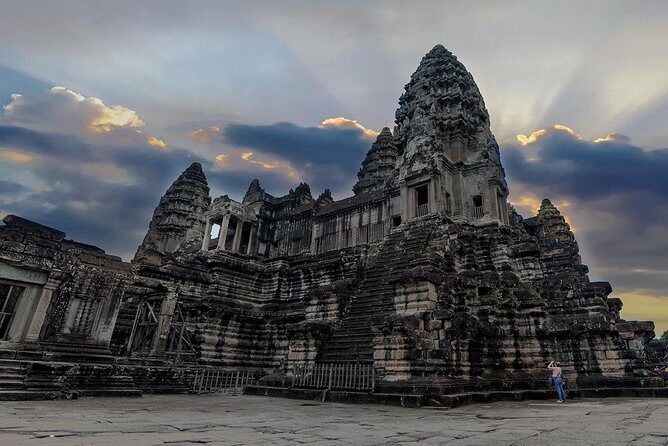
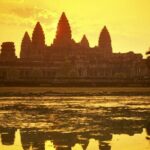
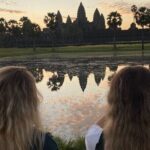
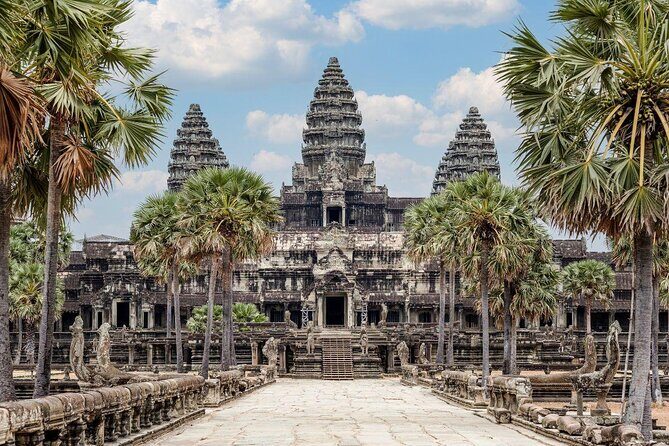
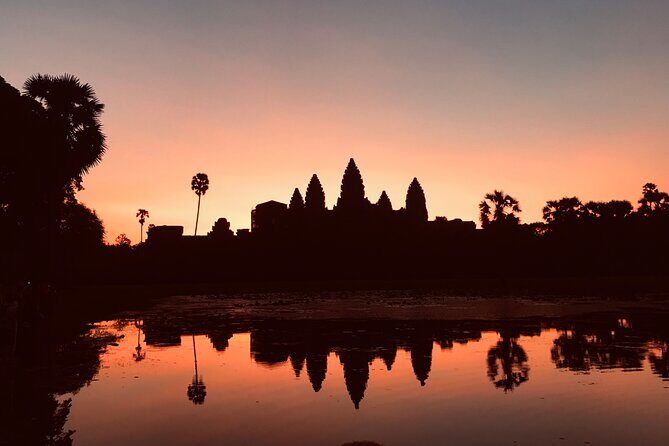
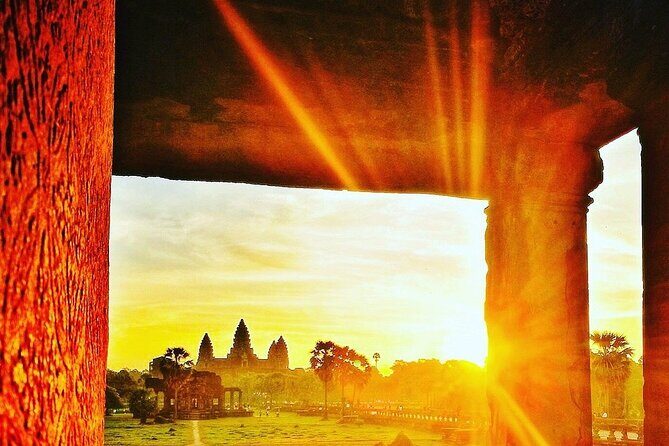
Angkor Wat is the star, and the tour makes sure you see it in more than one dramatic way. You’ll have time set aside for sunrise and later for sunset, which matters because the temple shifts mood as the light changes. One of the itinerary notes highlights equinox alignment, where sunrise appears behind the towers, and the tour plan leans toward positioning yourself in front of the reflection pool for those classic view lines.
Your guide also helps with where to stand for the temple framing at Angkor Wat itself, including the timing around the moment you’re there. That kind of guidance is worth it if you’re trying to take good photos while also understanding the basics—Angkor Wat isn’t just pretty. It’s built with cardinal-point alignment, and it’s an engineering and religious statement rolled into one.
Important detail for your planning: the Angkor Wat stops list the admission ticket as not included. So you’ll want your temple pass sorted before you arrive at the gates or you’ll waste precious minutes.
The day’s quieter detour: Beng Mealea jungle temple
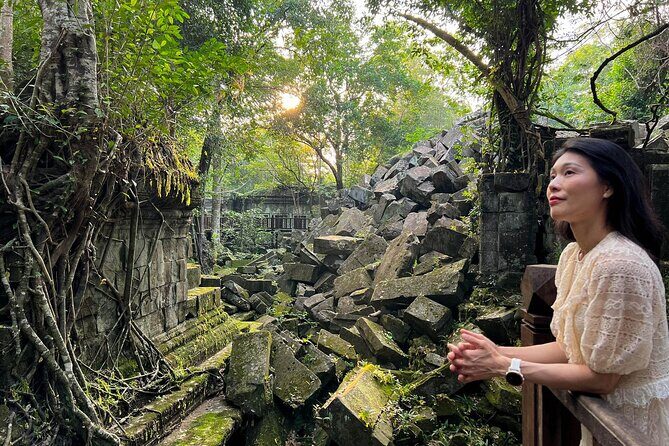
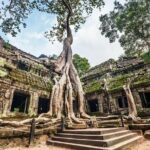
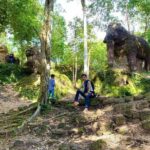
After the morning temple moments and your refreshment, the tour continues to Beng Mealea. This is where the day shifts tone. Instead of perfect stone order, you get a temple that’s swallowed by nature. The stop is described as untouched by restoration, still living inside dense forest, with original ruins that feel raw compared to the curated look at some of the main sites.
There’s also a reason this place hooks film fans. Beng Mealea is tied to the Indiana Jones movie, so if you’ve seen the film, it’s fun to connect the cinematic imagination to the real location. And for photography, the appeal is that you’re working with textured, broken architecture instead of mirror-symmetry views.
Time here is about 1 hour. That’s long enough to walk a good loop and take photos, but short enough that the detour doesn’t hijack your whole day. Ticket admission is listed as not included, so again, budget for the pass.
A few more Siem Reap tours and experiences worth a look


Chau Srei Vibol: a remote stop that feels less crowded
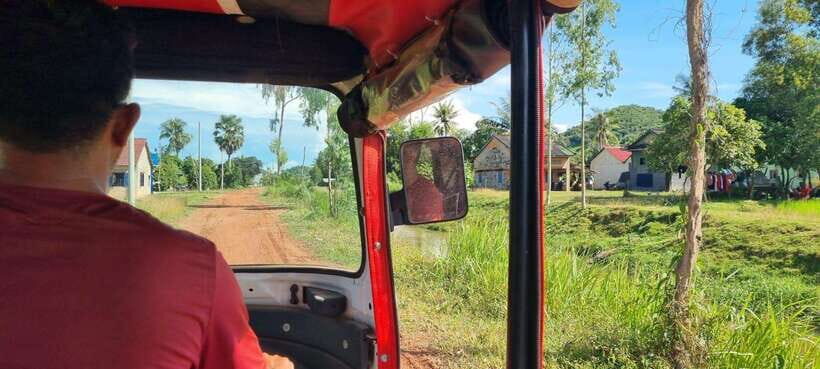
Chau Srei Vibol is a different kind of temple visit. It’s described as remote and located in the main villages of local people, with only a few tourists expected to know about it. If your ideal Angkor day includes at least one place that feels more lived-in and less like a theme park, this stop can deliver.
The temple is listed as a Hindu temple and tied to King Suryavarman II, and it’s described as a sandstone temple with a pool, plus there’s a modern Buddhist temple nearby. It’s an interesting mix of eras in one area, with stories that sound more mysterious than the standard facts.
Plan for a shorter stop—about 45 minutes. That’s enough time to see the key features and take photos without turning it into a rushed checklist.
Roluos temples and the “second capital” feeling: Bakong, Lolei, Preah Ko
Next you move into the Roluos group—often called a rainforest tree name, and tied to a community and older Angkor-era capital life. The itinerary frames Roluos as connected to the Khmer Empire’s second largest capital city era (805 to 905 AD). Even if you don’t care about dates, the value is that these temples feel like a coherent story rather than random stops.
You’ll visit multiple sites in this cluster:
Bakong: the first sandstone temple mountain stop
Bakong is described as the first Khmer temple mountain of sandstone construction at Angkor, originally connected to King Indravarman I. The details in the itinerary include the move toward the capital Hariharalaya and the later dedication of Bakong in 881.
The best practical note here: Bakong’s admission is listed as free on the itinerary. So this can be the most budget-friendly stop in the whole day, as long as the free status applies as described when you’re there.
Lolei: the northernmost and once-island feel
Lolei is the northernmost temple of the Roluos group, dedicated to Shiva and linked to royal family members. The itinerary adds that it was once an island temple in a now-dry baray area. That description matters because island temples tend to feel special when you look at them from different angles—there’s usually a stronger “surrounded” feeling, even if the water is gone.
Time is about 30 minutes. It’s a short stop, so your guide’s angle-finding matters. If you arrive expecting Lolei to be as big as Angkor Wat, you might be underwhelmed; if you arrive as a photographer or ruin-student, it’s a fine use of time.
Preah Ko: the sacred bull and its family honor
Preah Ko is tied to the name The Sacred Bull and is described as the first temple built in Hariharalaya under Indravarman I in 879. The itinerary frames it as honoring members of the king’s family and relating them to the Hindu deity Shiva.
Also about 30 minutes. It’s another “small but meaningful” stop that helps connect the Khmer empire’s shifting centers and religious priorities.
Why the guide matters more here than you’d expect
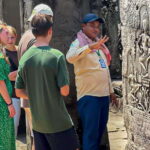
This kind of day can either feel inspiring or chaotic. The difference is usually the guide. In the feedback, English communication and patience come up a lot, along with guides who explain history at each site rather than only pointing out where to stand.
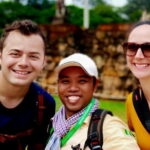
There are also specific mentions of photography help. One review calls out that Mr Nivath is a good photographer and makes special pictures with you and the landscape—exactly what you want when time is tight. Another mentions Hok as friendly and very knowledgeable, with many stories about Angkor and patient answers to questions.
The practical takeaway: when you’re doing sunrise and sunset, your best chance at getting good photos and a meaningful understanding is to follow the person who already knows where the angles are and what to point out while you’re there.
Price check: is $99 good value for an Angkor sunrise + hidden temples day?
At $99 per person, you’re paying for the big infrastructure of the day: private guide, air-conditioned transfers, and the included comfort items (water, towels, local snacks), plus a structured plan that hits both sunrise and sunset.
What you’re not paying for is the main gate expense: the Angkor Temple Pass is at your own expense, and multiple stops are listed as not included. Bakong is the exception in the itinerary where admission is listed as free, but don’t assume the rest will be.
So your value equation looks like this:
- If you’ll buy the pass anyway (you probably will for an Angkor-focused trip), this tour is a cost-effective way to get sunrise + sunset logistics, rather than trying to build the day yourself with multiple timed visits.
- If you were hoping this would be a one-price deal with zero extras, you’ll feel the separate pass cost once you’re there.
The other value point is time. This is a 7 to 8 hour day with an efficient order of sites. You don’t spend hours figuring out transportation between remote stops like Beng Mealea and Chau Srei Vibol.
Who should book this sunrise and hidden temples tour
I’d point you toward this tour if:
- You want both sunrise views from Phnom Bakheng and sunset at Angkor Wat without choosing just one.
- You like a mix of famous Angkor and less-frequented ruins, especially Beng Mealea’s jungle setting.
- You’re a photography person who wants guidance on where to stand and how to frame the temple.
- You prefer a private format where your guide can answer questions and keep the day organized.
If you hate early starts and you’re not interested in paying for the Angkor Temple Pass, you might find the commitment heavy. This tour is built around time-sensitive moments, so it’s not the best fit if your idea of a perfect day is late mornings and slow wandering.
Should you book it?
I’d say book it if you’re traveling to Siem Reap with limited time and you want a day that feels both dramatic and varied. The sunrise + sunset structure is the core reason this works, and the added stops around Roluos and Beng Mealea give you more than the usual Angkor routine.
I’d hesitate if you’re trying to keep costs ultra-tight or you know you won’t enjoy getting started at 4:30 AM. In this case, the separate temple pass and the early timing may feel like friction.
FAQ
FAQ
What time does the tour start?
The start time is 4:30 AM.
How long is the tour?
It runs about 7 to 8 hours.
Does the tour include pickup from my hotel?
Yes. Pickup is offered, and the tour starts at Raffles Grand Hotel d’AngkorKhum.
Is the Angkor Temple Pass included in the price?
No. The Angkor Temple Pass is at your own expense. Admission is listed as not included for most stops, with Bakong listed as free.
What sites are included besides Angkor Wat?
You’ll also visit Beng Mealea, Chau Srei Vibol, and the Roluos temples including Bakong, Lolei, and Preah Ko.
What’s included in the tour price?
Included items are an air-conditioned vehicle, a senior English tour guide, cool water and towels, and local snacks.
Is this a private tour?
Yes. It’s a private tour/activity, and only your group participates.
Is free cancellation available?
Yes. Free cancellation is available if you cancel up to 24 hours in advance of the experience start time for a full refund.