REVIEW · SIEM REAP
2 Day Cambodia Private Guided Tour in Angkor Temples
Book on Viator →Operated by About Cambodia Travel & Tours · Bookable on Viator
Angkor hits different at temple scale, and this private 2-day plan keeps it moving with an English-speaking licensed guide plus air-conditioned hotel pickup. I love that the day is built around big-name moments and also the quieter corners where you can actually look up and take notes without rushing. The sunset at Phnom Bakheng is timed as a true event, not an afterthought.
My second favorite part is the mix of styles: Angkor Wat and Bayon for the iconic architecture, then stops like Banteay Srei with pink sandstone carvings that feel far more intimate. You also get a full two days of temples without the stress of hopping between bus crowds and random tuk-tuk negotiations.
One consideration: the entrance fees are not included, so you’ll want to budget for the Angkor Pass plus your own meals while you’re out. Also, Angkor walks can add up fast, especially in hot weather.
In This Review
- Key Things I’d Highlight Before You Book
- Is This 2-Day Angkor Tour Good Value at $113.05?
- What Makes the Private Format Feel Different in Angkor?
- Day 1: Angkor Thom Core, Ta Prohm, Angkor Wat, and Phnom Bakheng Sunset
- Angkor Thom South Gate (about 30 minutes)
- Bayon Temple (about 1 hour)
- Angkor Thom (listed stop around 30 minutes)
- Baphuon Temple (about 40 minutes)
- Phimeanakas (about 30 minutes)
- Terrace of the Elephants (about 30 minutes)
- Terrace of the Leper King (about 30 minutes)
- Ta Nei Temple (about 40 minutes)
- Ta Prohm Temple (about 1 hour)
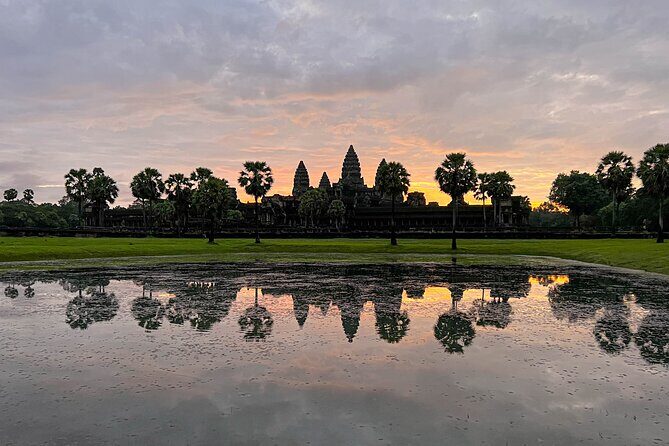
- Angkor Wat (about 2 hours)
- Phnom Bakheng sunset (about 1 hour)
- Day 2: Banteay Srei Pink Carvings and the Quieter Temple Stops
- Banteay Srei (about 2 hours)
- Banteay Samre (about 40 minutes)
- Pre Rup (about 40 minutes)
- Ta Som (about 40 minutes)
- Neak Pean (about 40 minutes)
- Preah Khan (about 1 hour)
- Banteay Prei (about 40 minutes)
- Om Pich (Prashdak Village / market time, about 30 minutes; entry free)
- Tickets, the Angkor Pass, and How to Avoid Time Wasting
- Meals, Heat, and Walking: What You’ll Actually Feel on the Ground
- Who This Tour Fits Best (and Who Should Rethink It)
- Should You Book This 2-Day Angkor Private Guided Tour?
- FAQ
- What does the tour price include?
- What is not included?
- How long is the tour?
- Is this a private tour?
- Does the tour visit Angkor Wat and Phnom Bakheng?
- What temples are visited over the two days?
- Can I cancel if plans change?
Key Things I’d Highlight Before You Book
- Private hotel pickup and drop-off from Siem Reap so you start temple time sooner
- Licensed guide in English who can explain what you’re seeing, not just point at it
- Air-conditioned private vehicle with cool drinks and fresh tissue during the day
- Day 1 blend of Angkor Thom + Ta Prohm + Angkor Wat, capped by Phnom Bakheng sunset
- Day 2 “pink sandstone” stop at Banteay Srei plus a cluster of less-visited temples
- 11-plus temples across two days, with time set aside at each site
Is This 2-Day Angkor Tour Good Value at $113.05?
At $113.05 per person, this is priced like a serious sightseeing day—not the bargain end of the market. You’re paying for a private guide and a private air-conditioned vehicle, and that matters at Angkor where logistics can eat hours if you DIY it.
What you do get is practical: hotel pickup and return, a licensed English-speaking guide, and basic in-day comfort items (cool drinks and fresh tissue). Entrance fees are not included, but your guide can help you buy the Angkor Pass before you start touring that day, which is exactly how you want it when you’re trying to avoid ticket-line chaos.
The other value angle is how the schedule is set up for photos and pacing. You’re not just zooming through. You have time blocks at each stop—ranging from quick looks around 30–40 minutes to longer temple moments—so you can actually slow down.
You can also read our reviews of more guided tours in Siem Reap
What Makes the Private Format Feel Different in Angkor?
Angkor is not a theme park. It’s a huge archaeology site with uneven ground, heat, and crowd flow that changes hour by hour. A private tour helps you manage all three.
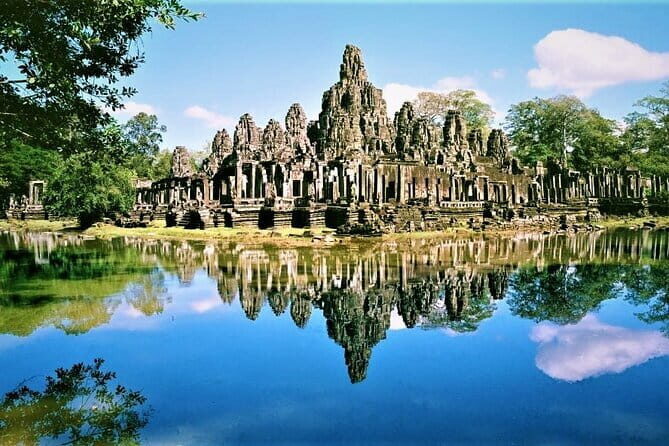
First, you can set a comfortable rhythm. If you want more time at Bayon’s stone faces or you want to linger inside Angkor Wat’s main spaces, you’re not stuck with someone else’s pace. Second, your guide’s job isn’t just reciting dates. With a licensed guide, you get context that makes the bas-reliefs and layout feel understandable instead of random.
I also like that the tour is designed as a single-group experience. One of the standout patterns from real tour experiences is how guides like Lorn Leap and Sara were described as friendly, professional, and energetic, and that your driver (people mentioned Sophal and Ry) stays on top of the timing. That’s important because Angkor isn’t forgiving—if you miss the sunset window, you don’t get it back.
Day 1: Angkor Thom Core, Ta Prohm, Angkor Wat, and Phnom Bakheng Sunset
Day 1 is packed, but it’s packed with structure: you start at the grand entrance of the royal city, then move through Jayavarman VII-era power centers, then head into the most famous temple in the park. Finally, you finish with the panoramic finale at Phnom Bakheng.
Angkor Thom South Gate (about 30 minutes)
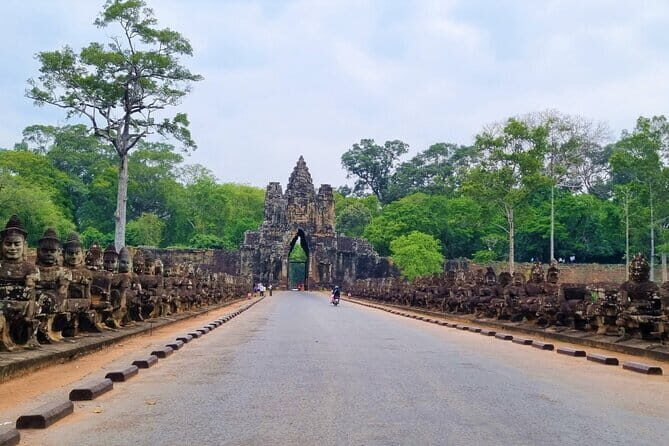
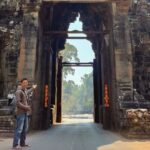
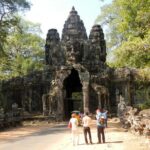
This is the restored southern gateway into Angkor Thom. It’s a strong start because it frames the scale of the city you’re about to enter. You’ll see lots of stone heads and restored elements—great for orientation.
Drawback to note: this entrance area can be busy, so your best move is to use the guide to point out what’s restored versus older fabric. That makes your first 30 minutes feel like more than just a photo stop.
Bayon Temple (about 1 hour)
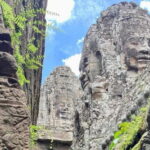
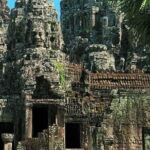
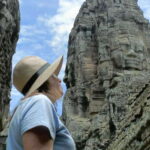
Bayon is famous for a reason: the stone faces feel like they’re watching you from almost every angle. You’ll get a look at the temple as the story of Jayavarman VII’s reign plays out through layout and iconography.
Tip: if your feet are starting to feel it, plan to take breaks here. Bayon is worth time, but it’s also easy to burn energy walking in the wrong pattern if you don’t have guidance.
You can also read our reviews of more private tours in Siem Reap
Angkor Thom (listed stop around 30 minutes)
You’ll spend a short block in the broader Angkor Thom area. Even though it’s not one single building, it helps connect the dots—how the city’s temples relate to each other within the walls.
This is one of those parts where a good guide pays off. Instead of treating it as a set of random ruins, you’ll understand why certain spaces are placed the way they are.
Baphuon Temple (about 40 minutes)
Baphuon has a temple-mountain feel with a rectangular sandstone base and multiple levels. It’s a different mood from the face-focused Bayon, so it helps break up the day emotionally.
Consideration: if you’re expecting a fully polished showpiece, Baphuon can feel more about form and structure than crisp details at every turn. That’s still part of the interest.
Phimeanakas (about 30 minutes)
This one sits near the center of the palace area. It’s a compact stop, but it’s a good one for imagining the royal core. You’ll get a feel for how the temple fits into the larger palace enclosure.
If you like understanding spatial design—where power sits inside a city—this is time well spent.
Terrace of the Elephants (about 30 minutes)
This terrace is built for drama. The big-carved scene theme makes it feel like a royal stage rather than just a viewing platform. You’ll likely spend time scanning the reliefs and the rhythm of the carved figures.
Practical note: reliefs are easier to enjoy when you have shade breaks. If the day is hot, pause and rest here.
Terrace of the Leper King (about 30 minutes)
This terrace is also about grandeur, but with darker or at least more intense storytelling through carvings. It’s one of the stops that makes your guide’s commentary especially valuable.
If you care about interpretation, ask your guide what you’re seeing and why. The terraces become far more meaningful when you’re not just counting faces and animals.
Ta Nei Temple (about 40 minutes)
Ta Nei is dedicated to the Buddha and tied to the East Baray area. It’s quieter than the headline temples, so you’ll get a calmer moment in the middle of the day.
This is a nice palate cleanser before Ta Prohm.
Ta Prohm Temple (about 1 hour)
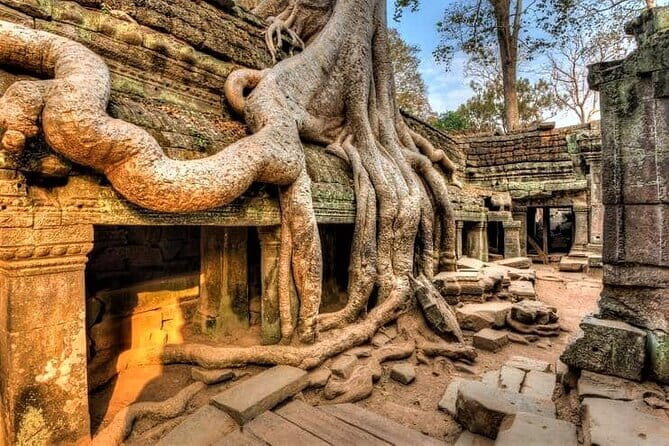
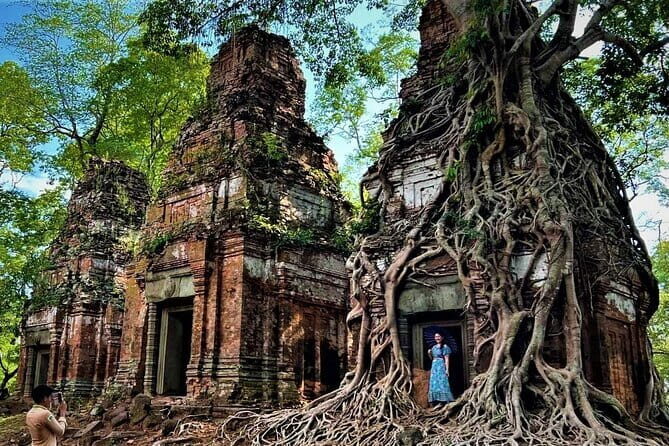
Ta Prohm is the famous jungle-covered temple with that Tomb Raider association. You’ll get that cinematic feel here, but the real win is understanding how the jungle and stone interact and how the site has been treated over time.
Heads up: plan for uneven footing and lots of walking under trees. It’s beautiful, but not always comfortable.
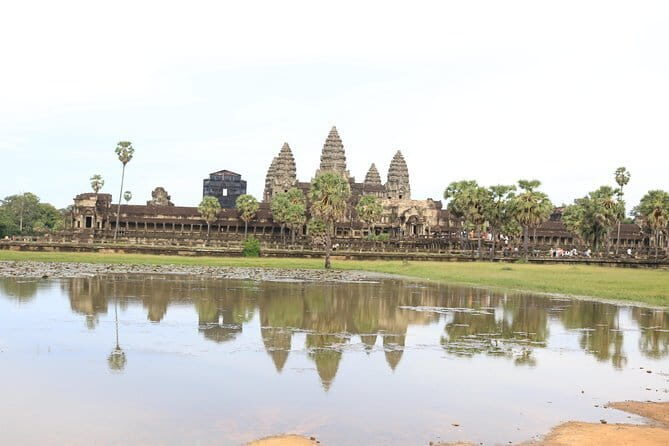
Angkor Wat (about 2 hours)
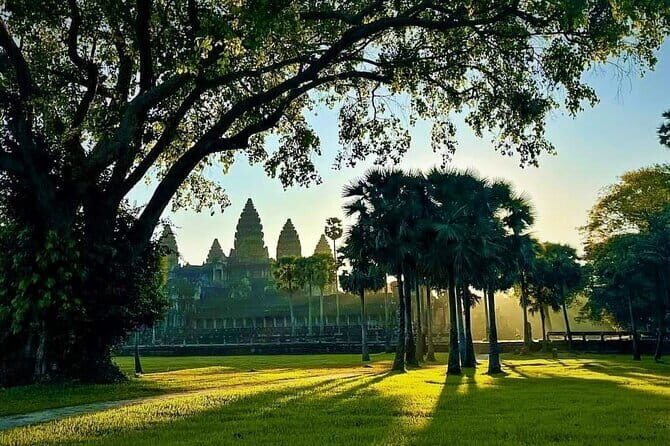
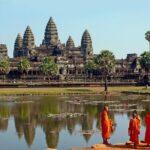
This is the big one: Angkor Wat is the largest, best preserved, and a masterclass in composition. Your time here (two hours) gives you room to see more than one angle and to step back to understand the layout.
What I like about having it on Day 1 is that you’re not exhausted from the whole park yet. Angkor Wat rewards a clearer mind.
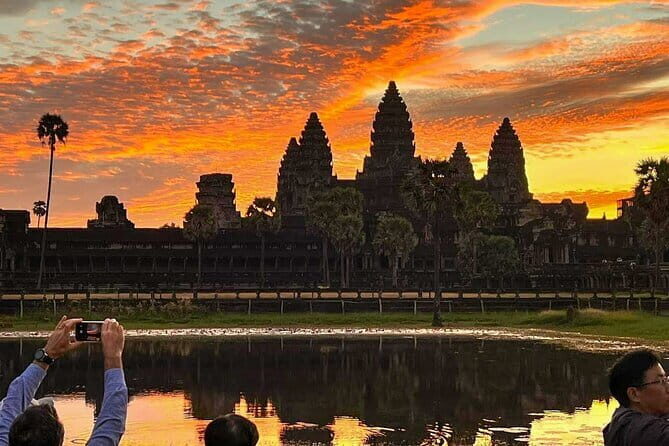
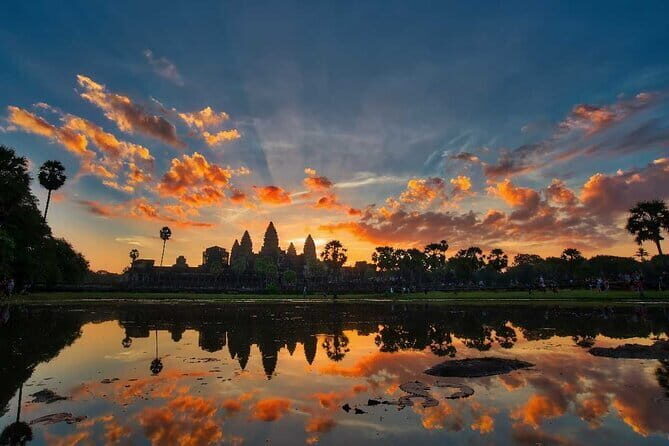
Phnom Bakheng sunset (about 1 hour)
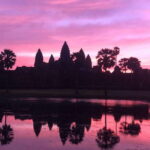
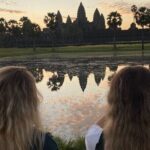
This is your payoff. Phnom Bakheng sits at the high point for panoramic views over the Angkor area as the sky changes. Even when clouds show up, the temple mountain silhouette still hits hard.
Consideration: you should expect stairs and crowded viewpoints depending on conditions. Go in with sensible pacing. Your guide can help you find a good viewing spot within your allotted time.
Day 2: Banteay Srei Pink Carvings and the Quieter Temple Stops
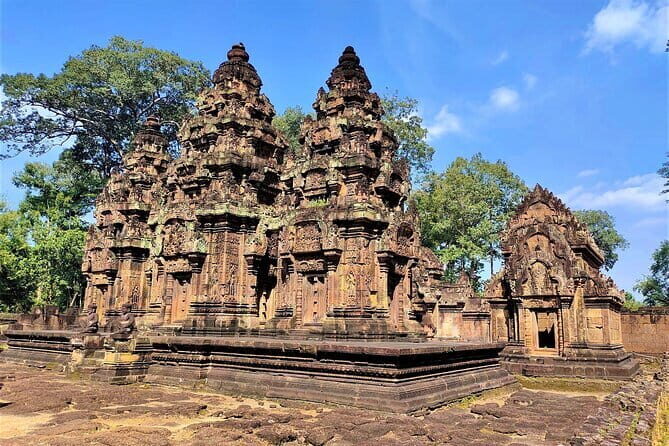
Day 2 leans a bit more “art and atmosphere” than Day 1. You start with the famous pink sandstone carvings, then you move through several temples that are less of a main-stage crowd magnet and more about structure, proportion, and detail.
Banteay Srei (about 2 hours)
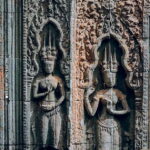
Banteay Srei is the star of Day 2 for many people. It’s often described as a precious gem of Khmer art because the carvings are the main event. You get time to actually study designs instead of just walking past them.
This is also a great day-2 stop because two hours is enough to shift your attention from scale to craftsmanship.
Banteay Samre (about 40 minutes)
Banteay Samre is noted for restoration using anastylosis, which is a method that gives you a clearer picture of what’s being reconstructed and how the original stone elements relate. It’s a good stop if you care about how restoration shapes your experience.
Potential drawback: you might wish you had more time if you’re the kind of traveler who reads carvings slowly. Still, 40 minutes can be enough if your guide points out the most important sections.
Pre Rup (about 40 minutes)
Pre Rup is admired for bold architectural design and a strong sense of balance and proportion. Even in a shorter visit, you can feel the temple’s geometry.
This is a good “structure appreciation” temple, especially after the carving-heavy time at Banteay Srei.
Ta Som (about 40 minutes)
Ta Som is smaller and described as not restored, so it’s quieter. That makes it a good option when you want fewer crowds and more calm exploration.
This stop is best if you like raw temple presence. If you only want highly restored, clean surfaces, you might feel less wowed here.
Neak Pean (about 40 minutes)
Neak Pean is built around a large square man-made pond with steps and four surrounding smaller elements. It feels different from the rest of the list because the space is almost geometric meditation.
In practical terms, it’s also a good reset stop. You can look around the site without constant climbing.
Preah Khan (about 1 hour)
Preah Khan sits on the Grand Circuit area and is dedicated to Dhruva (as part of the site’s story). You get a full hour here, which is helpful because bigger complexes need time to make sense.
If you like walking through temple networks, this is one to savor.
Banteay Prei (about 40 minutes)
Banteay Prei is described as rarely visited. It’s near Prasat Prei, and it’s framed as a more in-depth option for people who want to go beyond the biggest names.
This is a “if you’re temple-minded” stop. If you’re mainly after the headline moments, you may find it less intense—but it can be a satisfying change of pace.
Om Pich (Prashdak Village / market time, about 30 minutes; entry free)
This is a chance to stretch your legs and pick up souvenirs. It’s placed at the end of Day 2, which makes sense: you’re done with temples and ready for something lighter.
Note: since it’s a market area, expect bargaining culture. If you’re not into shopping, you can treat this as a brief cultural stop rather than a shopping mission.
Tickets, the Angkor Pass, and How to Avoid Time Wasting
Entrance fees aren’t included, but the tour is set up so your guide helps with the Angkor Pass at the entrance of the park before starting the circuit. That’s the right approach for most people because it prevents you from arriving at the park and figuring it out on the spot.
Here’s the practical angle: without the pass, you’re stuck outside. With the pass handled early, you can focus on the monuments. It’s one less logistical step that can ruin a good day.
Also, check that you understand what the pass covers and keep it accessible. Your day includes multiple high-importance sites, and you don’t want to spend energy digging for tickets when you should be stepping into the next temple zone.
Meals, Heat, and Walking: What You’ll Actually Feel on the Ground
Your guide includes cool drinks and fresh tissue, which is a big deal in Siem Reap heat. That kind of small comfort helps you keep moving when you’re on your feet for hours.
Still, lunches are on your own expense. The typical range mentioned is about $3–$10 per dish at local restaurants. I like this setup because it gives you options: vegetarian or non-vegetarian meals are available, and you can pick based on what your body wants that day.
Walking is the real variable. Day 1 moves through multiple major and mid-major temples, and Day 2 adds more. If you’re the type who gets tired late in the day, plan for slower pacing and water breaks—your guide can help you decide where to spend extra time and where to move efficiently.
If you’re visiting in hotter months, wear sun protection, use comfortable shoes, and keep a light backpack with essentials. The sites are beautiful, but you’re in open sun more often than you’d expect.
Who This Tour Fits Best (and Who Should Rethink It)
This is a strong choice if you want:
- A private, guided Angkor experience with clear explanations in English
- A schedule built for both big icons and less-visited temples
- Comfortable day structure via hotel pickup, private vehicle, and basic in-day cooling
It may be less ideal if you:
- Want a do-it-yourself approach where you can roam totally freely without guidance
- Have a strict budget that can’t stretch for the Angkor Pass plus meals
- Prefer a lighter day with fewer temple stops and more downtime
If you like history, architecture, and carvings—and you want a guide who can connect them—you’ll likely enjoy this format. People who love learning tend to get a lot out of how guides like Lorn Leap or Sara described their storytelling and explanations during past tours.
Should You Book This 2-Day Angkor Private Guided Tour?
I’d book it if you value time and want someone to handle the hard parts—transport, sequencing, and interpretation—while you focus on the temples. The included comforts (private vehicle, guide, cool drinks, fresh tissue) help keep the day from turning into a slog, especially when you’re moving from Angkor Thom to Ta Prohm to Angkor Wat and then up to Phnom Bakheng.
I would only hesitate if entrance fees and meals are a deal-breaker for your budget, or if you’re looking for a slower, fewer-stop experience. In that case, you might compare other tour styles.
If you want a practical, high-coverage Angkor plan that still feels personal, this one is a solid pick.
FAQ
What does the tour price include?
It includes hotel pickup and drop-off in Siem Reap, an official licensed English-speaking tour guide, private air-conditioned transfers, and cool drinks plus fresh tissue during the tour.
What is not included?
Entrance fees are not included, including the Angkor Pass. Tips for the guide and driver are also not included. Meals during the tour are your own expense.
How long is the tour?
It runs for about 2 days. The stops on each day include time blocks ranging from about 30 minutes to around 2 hours.
Is this a private tour?
Yes. It’s listed as a private activity, meaning only your group participates.
Does the tour visit Angkor Wat and Phnom Bakheng?
Yes. Angkor Wat is scheduled for Day 1, and Phnom Bakheng for sunset is also on Day 1.
What temples are visited over the two days?
Day 1 includes Angkor Thom South Gate, Bayon, Baphuon, Phimeanakas, Terrace of the Elephants, Terrace of the Leper King, Ta Nei, Ta Prohm, Angkor Wat, and Phnom Bakheng. Day 2 includes Banteay Srei, Banteay Samre, Pre Rup, Ta Som, Neak Pean, Preah Khan, Banteay Prei, and a market time at Om Pich / Prashdak Village.
Can I cancel if plans change?
You can cancel for a full refund if you cancel at least 24 hours before the experience start time.