REVIEW · SIEM REAP
2 Days Major Angkor Temples, Banteay Srei and Sunrise/Sunset
Book on Viator →Operated by Siem Reap Transport Private Day Tours · Bookable on Viator
Angkor works best when you plan for light and timing, not just temples. This private 2-day Angkor route is built around the big moments: sunrise at Angkor Wat and sunset from Phnom Bakheng, with well-organized temple flow across Day 1 and Day 2. I especially like how the schedule mixes iconic highlights (Bayon and Ta Prohm) with the detailed outskirt stop at Banteay Srei. One thing to consider: you’ll do plenty of walking and climbing, including viewpoints like Pre Rup and Phnom Bakheng, so bring shoes and go in with a moderate fitness mindset.
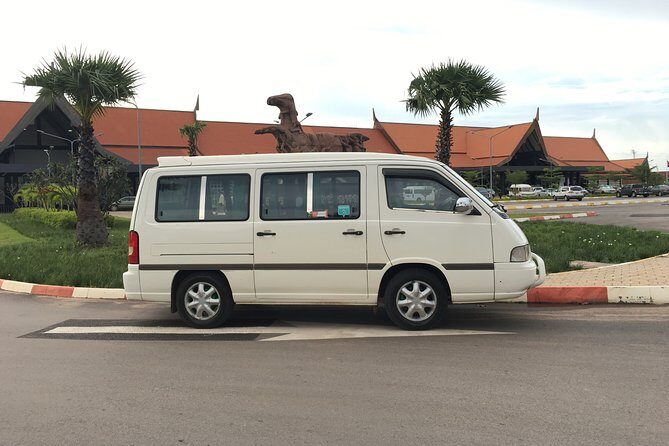
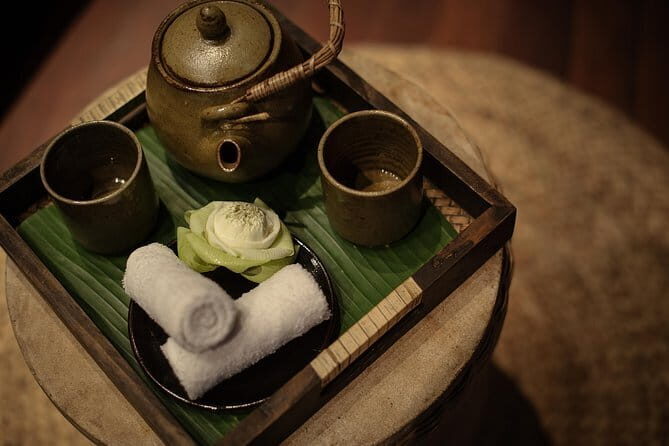
Here’s what makes this experience practical for real people: you get pickup in Siem Reap, a private air-conditioned vehicle with cold water and cold towels, and a guide who can translate what you’re seeing into something you can actually understand while you’re there. It’s not a “sit and watch” kind of tour, which is good—just know you’ll be out early and moving most of the day.
In This Review
- Key Things That Make This 2 Days at Angkor Worth It
- How a Sunrise-to-Sunset Plan Changes Everything at Angkor
- Price and Value for a Private Group Up to 8
- Day 1: Angkor Wat Sunrise, Bayon Faces at Angkor Thom, and Ta Prohm in the Jungle
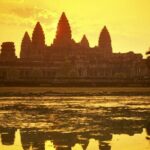
- Angkor Wat at Sunrise: the big opening act
- Bayon at Angkor Thom: over 200 Buddha faces
- Ta Prohm: banyan roots and movie-famous ruins
- Day 1 reality check
- Day 2: Pre Rup and Eastern Mebon Views, Banteay Srei Carvings, Then the Quiet Jungle Temples to Phnom Bakheng Sunset
- Pre Rup: Shiva temple with a climb for views
- Eastern Mebon: clay brick, island temple vibes, and elephant statues
- Banteay Srei: the most detailed stop for many first-timers
- Ta Som: smaller towers, but a nice bridge to the quieter sites
- Neak Pean: an island temple tied to healthcare stories
- Preah Khan: massive, overgrown, and more untouched in feel
- Phnom Bakheng: the sunset climb that caps the trip
- What the Private Guide and Driver Setup Really Does for You
- Admission Tickets, Heat, and Climbing: Practical Tips You Should Plan For
- Who This Tour Fits Best (and Who Might Want a Different Pace)
- Should You Book This 2-Day Major Angkor Temples Tour?
- FAQ
- What is included in the tour price?
- Are temple admission tickets included?
- Do you offer hotel pickup in Siem Reap?
- What are the key start times?
- How many people can be in the group?
- Is the vehicle air-conditioned?
- How does cancellation work?
Key Things That Make This 2 Days at Angkor Worth It
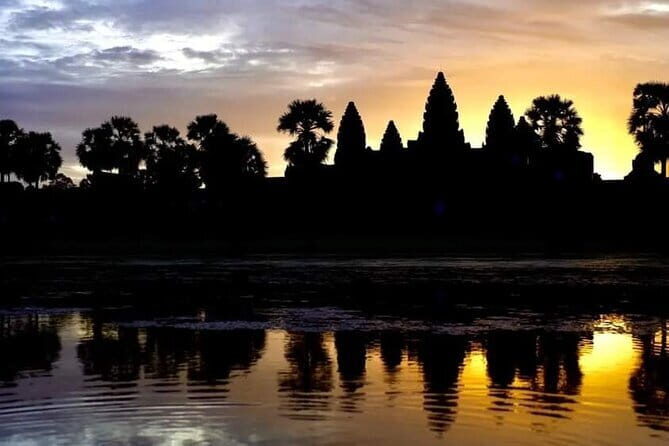
- Sunrise-first Day 1 at Angkor Wat so the temple doesn’t just become another crowded stop
- Bayon’s Buddha faces and Angkor Thom south gate statues for a strong contrast after Angkor Wat
- Ta Prohm’s jungle setting with the famous banyan-tree look people come for
- Banteay Srei’s rosy sandstone carvings for a more delicate, quieter kind of Angkor
- Phnom Bakheng sunset viewpoint for the classic bird’s-eye style finale over the area
- AC car plus chilled water and cold towels to keep the heat from turning the day into a slog
How a Sunrise-to-Sunset Plan Changes Everything at Angkor
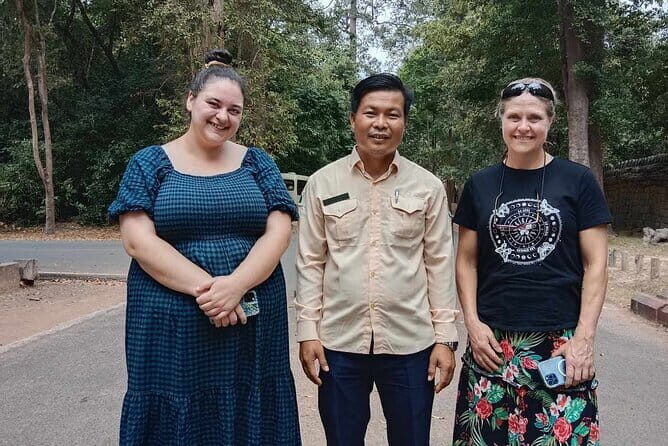
Angkor is huge, and the temples feel different depending on the time of day. That’s why this kind of plan matters: you’re not relying on luck for the light or the crowds. Sunrise at Angkor Wat gives you softer views when the stone still looks almost magical, and sunset at Phnom Bakheng lets you end the trip with a wide, dramatic look over the reservoir area.
The second thing I like is the mix of temple “moods.” You’ll see the grand Hindu epic carving style at Angkor Wat, then the calmer Buddhist focus with Bayon’s faces, then the jungle “how did this survive” look at Ta Prohm. By Day 2, you shift again into smaller, more detailed sites like Banteay Srei, before returning to skyline drama at Phnom Bakheng.
The one real drawback is intensity. This is a major-temples route over 2 days, which means early starts, heat, and repeated walking. If you prefer a slow museum pace, this may feel like a lot. If you want to see the essential places in a smart order, it’s a strong fit.
You can also read our reviews of more evening experiences in Siem Reap

Price and Value for a Private Group Up to 8
The tour price is $240 per group (up to 8 people) for 2 days. On its face, that sounds like a “group deal.” In practice, it can be good value because you’re paying for private logistics: pickup, an air-conditioned car/minivan, parking, and a professional guide-driver team for both days.
Here’s how the math often works out for your budget:
- If you fill the group (8 people), the service portion is about $30 per person for two days.
- Then you still need to buy temple admissions separately: $37 per person for Day 1 admission (sunrise timing at Angkor temples) and $25 per person for Day 2 admission (Banteay Srei until sunset).
So your typical “all-in Angkor temples” cost for the admissions portion is $62 per person, plus the tour service. Meals and breakfast/lunch/dinner aren’t included, and airport pickup/drop-off also isn’t included.
My take: this price makes sense if you’re traveling with family or friends and want a private vehicle with real-time guiding. If you’re solo or two people, you might still like it for convenience, but you’ll feel the cost more because the private car price is spread across fewer people.
Day 1: Angkor Wat Sunrise, Bayon Faces at Angkor Thom, and Ta Prohm in the Jungle
Angkor Wat at Sunrise: the big opening act
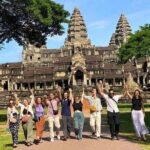
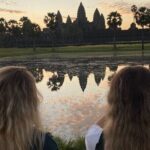
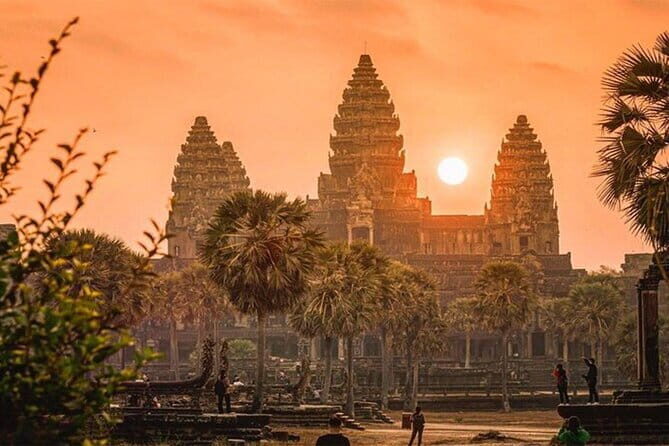
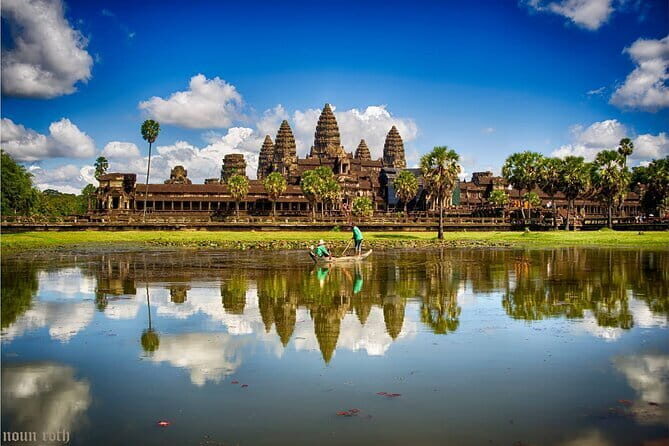
Day 1 starts with pickup from your hotel in Siem Reap and transport to the ticket booth, then you’re set up for sunrise at Angkor Wat. The main value here isn’t just that you’re at Angkor Wat—it’s that you see it while the light is at its best and the day isn’t fully started yet.
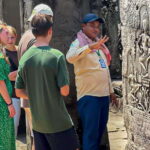
After sunrise, you explore the temple and its carved storytelling. The tour focuses on the Hindu epic carvings on the walls. That’s important: without context, you can end up staring at stone without really knowing what you’re looking at. A good guide helps you connect the carvings to what each panel is trying to say, so your photos match what you learned, not just what you happened to spot.
Admission for Day 1 isn’t included (listed at $37 per person for sunrise timing).
Bayon at Angkor Thom: over 200 Buddha faces
Next comes Bayon Temple, reached via the ancient south gate of Angkor Thom with dramatic statue scenes along the way (the classic tug-of-war style figures). Bayon is where the trip turns from grand temple scale to human-faced expression.
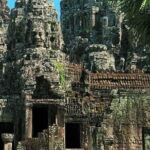
The key detail is the sheer number of faces—200+ Buddha faces across the spires. It’s a temple that makes you feel watched, even if you’re just a normal person holding a phone or camera. You’ll also notice the shift in religious vibe: Bayon is Buddhist, in contrast to Angkor Wat’s Hindu focus.
This stop is shorter (about 1 hour), which is enough if your guide keeps you moving to the best angles without turning it into a rushed sprint.
A few more Siem Reap tours and experiences worth a look
Ta Prohm: banyan roots and movie-famous ruins
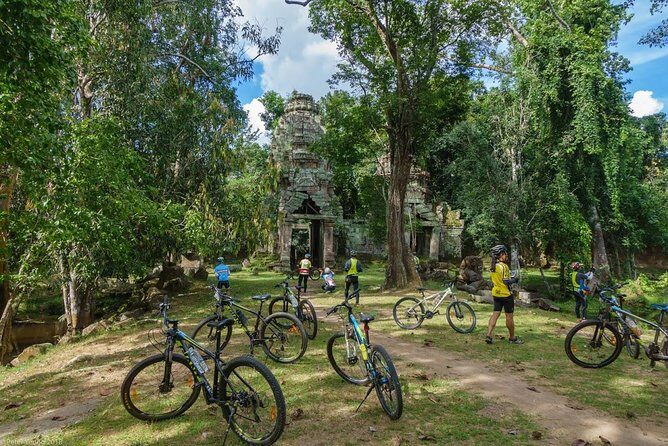
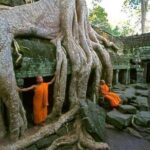
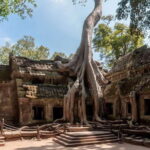
Then you shift into the jungle temple atmosphere at Ta Prohm, the one most people associate with the banyan-tree look. It’s a temple that feels alive, because the roots and surrounding growth are part of the visual story. The tour leans into the photogenic side of the site while you explore what makes Ta Prohm distinct.
There’s a practical reason Ta Prohm belongs on your first day: by the time you reach it, you’ve already seen the big symbolism at Angkor Wat and Bayon, so this stop becomes the contrast break—texture, shade, and the strange beauty of a monument that looks interrupted.
Ta Prohm admission is also not included (since tickets are sold separately per day).
Day 1 reality check
Day 1 is a packed classic route: Angkor Wat sunrise, Bayon faces, Ta Prohm in jungle shade. It’s a great day for photos, but also for stamina. Wear breathable clothes and plan for humidity. This is where your AC ride in between stops makes a real difference.
Day 2: Pre Rup and Eastern Mebon Views, Banteay Srei Carvings, Then the Quiet Jungle Temples to Phnom Bakheng Sunset
Day 2 starts after breakfast with pickup around 8:30 am. That gives you a decent morning start without trying to force another sunrise. You then hit several temples that, in my view, are what separates a “see the highlights” trip from a “you actually learned something” trip.
Pre Rup: Shiva temple with a climb for views
First is Pre Rup, a mid-ten-century Hindu temple dedicated to Shiva, described as built around Kailash mountain. You can climb to the top, and the payoff is the view—forest, rice fields, and mountains in the distance.
If you like landscape photos from temple viewpoints (and you don’t mind climbing), this stop is a highlight of Day 2. If stairs and hot stone make you cranky, still do it—you’ll just want slower pacing.
Eastern Mebon: clay brick, island temple vibes, and elephant statues
Next comes Eastern Mebon, another clay-brick Shiva site and described as a former island temple. It’s now dried up, which changes the feel of the ruins. The site is also known here for statue elephants in multiple directions, so you’ll get something more “sculpture-forward” rather than just tower-and-courtyard views.
This stop is shorter (about 45 minutes), which fits because it’s easier to enjoy and photograph without turning it into a long slog.
Banteay Srei: the most detailed stop for many first-timers
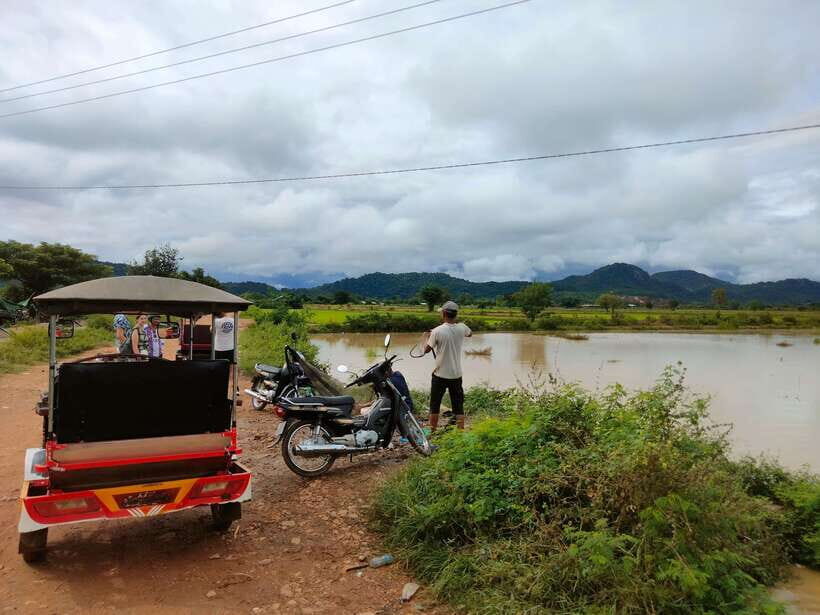
Then you drive to Banteay Srei, the outskirt temple known for delicate carving in rosy sandstone. It’s dedicated to Shiva and his consort, and the tour also frames it as the Citadel of Women. The drive (about 45 minutes) matters because you’re leaving the main Angkor core and seeing countryside and villages along the way.
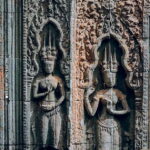
This is one of those temples where your brain needs time. You’ll want to look closely at carvings rather than only taking wide shots. The tour gives you about 2 hours, which is enough to slow down and enjoy the details.
Admission for Day 2 (Banteay Srei until sunset) is listed at $25 per person.
Ta Som: smaller towers, but a nice bridge to the quieter sites
Next is Ta Som, another temple where the back gate is overgrown with large tree growth. It’s smaller than some of the big hitters, with about five main towers remaining as active shrines. This stop is a good reset after Banteay Srei: less time pressure, more time to wander and soak in the shadowed stone.
Neak Pean: an island temple tied to healthcare stories
Then you head to Neak Pean. You’ll ride by car (about 10 minutes) and then walk across a bridge to reach the island temple. The tour connects Neak Pean to a Buddhist king Jayavarman VII and his network of about 102 hospitals, framed as providing free healthcare.
That context makes the site more meaningful than just “a small temple on an island.” Even in a short visit (about 45 minutes), the story helps you look at the layout with intention.
Preah Khan: massive, overgrown, and more untouched in feel
After Neak Pean, you go to Preah Khan, a large Buddhist temple built around 1191 AD dedicated to the king’s father. It’s described as overgrown and more untouched, and the tour also notes it functioned like a university for Buddhist learning.
You’ll feel this as you walk through: it doesn’t feel like a polished, photo-only set. It feels like a working, ancient complex where nature and stone still share the stage.
Phnom Bakheng: the sunset climb that caps the trip
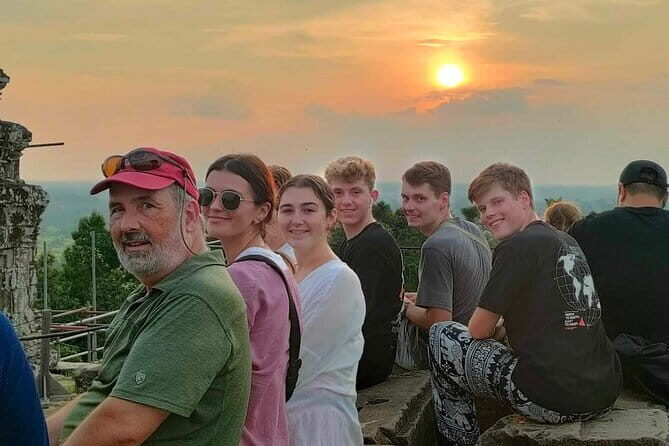
Finally, you climb to Phnom Bakheng, described as a mountain-styled temple and one of the first in the inner Angkor city area. The tour highlights there are 109 towers in total, and the big payoff is sunset.
This is where your moderate fitness matters. You’re climbing to a viewpoint for sunset, then you’re dealing with heat and crowds at peak time. If you handle stairs and you don’t mind waiting for the light to shift, it’s an excellent ending. From up there, you can get a bird’s-eye feel toward Angkor Wat and the west reservoir area.
Phnom Bakheng is an emotional finale: you’ll go from temple carvings and jungle texture into a wide panorama. It’s a good “wrap your brain around the scale” moment.
What the Private Guide and Driver Setup Really Does for You
The biggest practical win here is how smooth it feels between sites. In Angkor, time gets eaten up by road logistics and getting your bearings. With a private air-conditioned vehicle and professional driver-guide team, you’re not stuck negotiating timing, turns, or parking.
The experience also includes chilled water and cold towels, which is not a luxury detail in Cambodia heat—it’s what keeps you functional, especially after sunrise and climbing days. Multiple people also highlight the reliability factor: punctual pickup, calm driving, and clear English communication from guides associated with Lam’s team.
One extra angle from past experiences: when the guide is especially strong at temple spotting and photo positioning, your time at each viewpoint gets more productive. For example, one recommended name is Vibol for help with the best spots while learning the stories behind what you’re photographing. You might not get the exact same pairing every time, but the concept is clear: the right guide helps you take better pictures without losing context.
If you care about getting the most out of each minute, private guiding is worth it here. Angkor rewards structure.
Admission Tickets, Heat, and Climbing: Practical Tips You Should Plan For
First, budget for admissions. They’re clearly listed as not included:
- Day 1 sunrise temple admission: $37 per person
- Day 2 Banteay Srei until sunset: $25 per person
Second, assume it will be hot and humid. Even with AC in the car, you’ll spend time outside at sunrise and at multiple sites. Bring a hat, sunscreen, and water discipline. The tour supplies chilled water and cold towels, but it’s still smart to pace yourself.
Third, plan for stairs and uneven stone. Pre Rup and Phnom Bakheng both involve climbing to viewpoints. Ta Prohm and other temples involve uneven ground and lots of walking. This is fine for most people with moderate fitness, but it’s not a “flat stroll” itinerary.
Finally, wear footwear you trust. Angkor stone can be slippery, and crowds can funnel you into uneven footpaths. Good shoes keep your knees happier too—sunset climbs are not the place to discover you wore the wrong kind of sandals.
For photos: sunrise and sunset are when light and crowd pressure peak. If you’re serious about images, you’ll appreciate arriving early with the schedule built around those times, rather than improvising on the day.
Who This Tour Fits Best (and Who Might Want a Different Pace)
This tour fits you if you want:
- a private experience with pickup in Siem Reap
- both major “timing moments” (sunrise and sunset)
- the big names plus one of the most detailed outskirt temples (Banteay Srei)
- comfortable transport between stops with AC, cold towels, and water
It might not be ideal if you:
- hate early starts and long days
- want minimal walking or zero climbs
- prefer a slower itinerary with lots of free time at each site
If you’re traveling as a family or group up to 8, the group price makes it especially attractive. If you’re solo or a couple, you can still book it for convenience, but you’ll want to be honest about the cost-per-person versus other options.
Should You Book This 2-Day Major Angkor Temples Tour?
I think you should book it if your goal is to see the essential Angkor temples in a structured, time-smart way without having to manage logistics yourself. The combination of sunrise Angkor Wat, Bayon’s faces, jungle Ta Prohm, a detailed carving day at Banteay Srei, and a sunset finale at Phnom Bakheng is exactly the kind of “2 days, big impact” plan that’s hard to reproduce on your own.
If you’re on a tight budget, just know the admissions add up. And if climbing isn’t your thing, you may want to mentally prepare for at least a couple viewpoint climbs.
Overall, this is a practical, high-value way to experience major Angkor highlights while staying comfortable between stops.
FAQ
What is included in the tour price?
You get chilled water and cold towels, petrol and parking, and a private tour in an air-conditioned car or minivan with a professional guide and driver. Mobile ticket is listed as a feature.
Are temple admission tickets included?
No. Day 1 admission for Angkor temples from sunrise is listed at $37 per person, and Day 2 admission for Banteay Srei until sunset is listed at $25 per person.
Do you offer hotel pickup in Siem Reap?
Yes. Pickup is offered from any hotel in Siem Reap for Day 1, and on Day 2 the guide and driver pick you up from your hotel lobby after breakfast.
What are the key start times?
Day 2 pickup is stated as 8:30 am after your breakfast. Day 1 is arranged for sunrise at Angkor Wat, so it starts very early.
How many people can be in the group?
It’s priced per group for up to 8 people, and it’s private—only your group participates.
Is the vehicle air-conditioned?
Yes. The tour includes a private air-conditioned car or minivan.
How does cancellation work?
Free cancellation is available. You can cancel up to 24 hours in advance for a full refund. If you cancel less than 24 hours before the start time, the amount paid is not refunded.