REVIEW · SIEM REAP
Angkor 2-Day Sunset & Sunrise Small-Group Tour
Book on Viator →Operated by Pitt Angkor Tour · Bookable on Viator
Sunrise at Angkor feels like a reset button. This two-day small-group plan is interesting because you’re not just hopping between temples—you’re doing it with an English-speaking licensed guide and air-conditioned pickup, timed for the best light. I especially liked the smooth morning start for sunrise and how the guide helps you connect the carvings to real Khmer life. One real drawback to plan for: temple entrance fees and the Angkor Pass are not included, so you need to budget those plus a tip.
The flow here is built for people who want major hits without turning your vacation into a nonstop checklist. You’ll cover key sites like Preah Khan, Neak Pean, Banteay Srei, and Pre Rup on day 1, then the big names again on day 2 with Angkor Wat and Angkor Thom. Still, the schedule involves very early wake-up, so if you hate mornings, this tour will test your commitment.
If you want Angkor at a civilized pace, this is a practical way to do it. Just go in with the right expectations: you’re buying transport and expert guiding, while you cover admissions separately.
In This Review
- Key Things You’ll Notice on This Tour
- Price and Logistics: The Real Value Is What You Don’t Have to Stress About
- Day 1: A Khmer Temple Day That Starts in Ruins and Ends at Sunset
- Preah Khan: Ruins, Roots, and a Temple That Feels Unfinished
- Neak Pean: A Calm Island Temple in the Middle of a Baray
- Banteay Srei: The Small Temple With the Best Crafting You’ll See
- Pre Rup: A Temple Mountain Built for Evening Light
- Day 2: Angkor Wat Before the Crowds, Then the Capital City Feel of Angkor Thom
- Angkor Wat at Dawn: Eastern Entry, Dark Corridors, Then Bas-Relief Stories
- Breakfast and a Short Reset Outside Angkor Wat
- Angkor Thom: Bayon’s Face Towers and the Capital City Moment
- South Gate and the Terrace Stops: Short Looks That Still Matter
- Ta Prohm: The Tree Roots Stop That Lives Up to the Hype
- What Makes a Small-Group Format Helpful Here
- Tickets, Tips, and the Budget Reality (So You’re Not Surprised Later)
- Who Should Book This Tour
- Should You Book This Angkor 2-Day Sunrise and Sunset Tour?
- FAQ
- What does the tour cost?
- How long is the tour?
- Is pickup included?
- Are entrance fees included?
- Do I need to purchase an Angkor Pass?
- What language is the guide?
- Are cool towels provided?
- What time does sunrise start?
- Is the tour a private group?
- Is there free cancellation?
Key Things You’ll Notice on This Tour
- Pre-dawn sunrise timing from 4.30 to 5.10 am depending on the season
- Air-conditioned private vehicle plus cool towels during touring
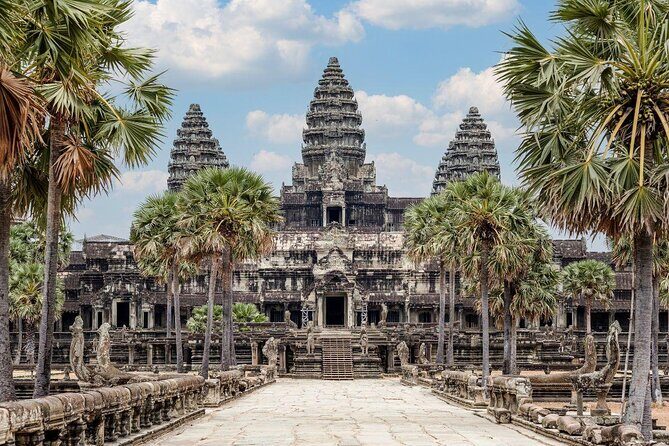
- Angkor Wat approach from the eastern side before it gets busy
- A full Angkor Wat interior visit with story-led bas-relief understanding
- Angkor Thom face towers at Bayon plus gates and terraces
- Sunset location shifts between Pre Rup and Bakheng depending on the time of year
Price and Logistics: The Real Value Is What You Don’t Have to Stress About
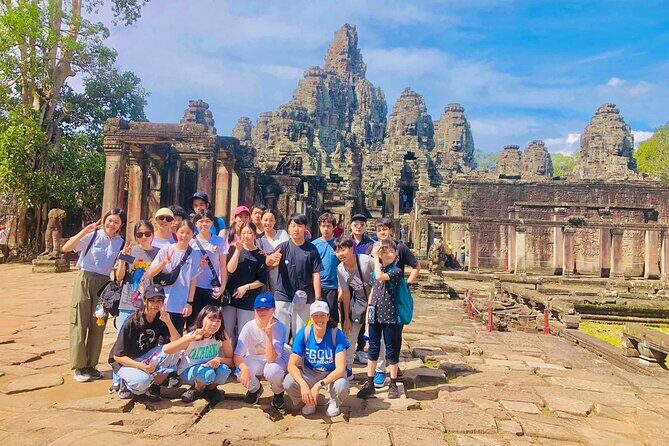
At $55 per person for about two days, this tour can be good value if you factor in what you’re actually getting. You’re paying for transportation in an air-conditioned vehicle, a professional English-speaking guide, and a tour rhythm that doesn’t rely on you figuring out timing or routes on your own. You also get cool towels during the day, which sounds small until you’re dealing with Cambodian heat.
What is not included is the part that can quietly change your total cost: entrance fees and the Angkor Pass. That means you should check your budget before you commit. The tour price is the “tour service” cost; your admissions are extra.
There’s also a “private tour/activity” detail in the setup, which is great for comfort. In practice, that usually means you won’t be shoved into a big crush of strangers. You still move as a group, but the experience tends to feel calmer than the high-volume bus model.
Finally, if anything goes wrong operationally, plan to stay flexible. The tour provider has stated they issued full refunds when they had to cancel during early tourism recovery because their team wasn’t ready to handle operations. That doesn’t remove the stress of a disruption, but it does suggest they understand refunds matter.
You can also read our reviews of more evening experiences in Siem Reap

Day 1: A Khmer Temple Day That Starts in Ruins and Ends at Sunset
Day 1 is a smart blend of “big atmosphere” and “fine detail.” You start with sites where the stones look weathered and alive, then shift toward more carefully preserved carvings, and finish with sunset views.
Preah Khan: Ruins, Roots, and a Temple That Feels Unfinished
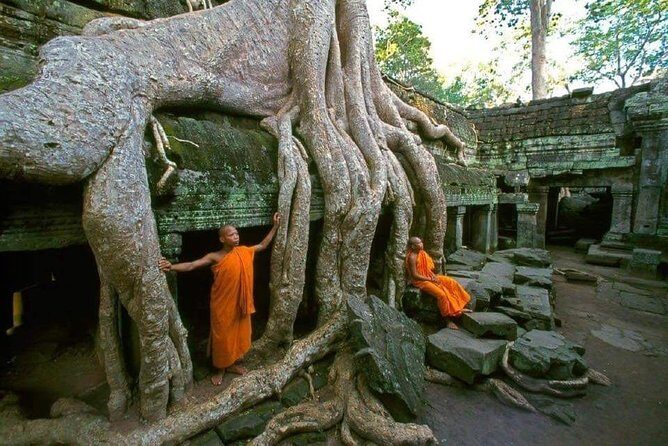
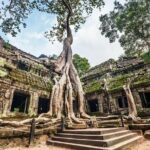
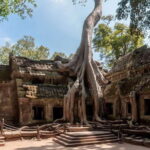
Preah Khan is one of those places where nature and architecture have a long conversation. You’ll spend about an hour at this ruined complex, and it’s easy to see why people love it for mood. Tree roots snag across crumbling stone in a way that makes the temple feel both ancient and instantly present.
The trade-off: ruins are less “photogenic symmetry” and more “textures and story.” If you want perfectly restored scenes, you might find parts of Preah Khan less sharp than the best-preserved carvings elsewhere. But if you like the feeling of discovery, this stop sets the tone for the whole day.
Neak Pean: A Calm Island Temple in the Middle of a Baray
Next is Neak Pean, an artificial island temple set in the Jayatataka Baray. Plan for an hour here. It’s not just a temple stop; it’s a change of pace. The setting helps you slow down and look, rather than just rush through.
This one can be easy to underestimate because it’s shorter and quieter than the headline sites. But that’s exactly why it works. You get a break from crowds and heat while still staying inside the Angkor story.
Banteay Srei: The Small Temple With the Best Crafting You’ll See
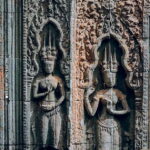
Then you get to Banteay Srei, visited for about an hour. This is the kind of place where scale deceives you at first: it’s not the huge, sprawling mass that Angkor Wat gives you. Instead, it’s known for exceptionally detailed reliefs in sandstone, and it’s often described as some of Cambodia’s finest Khmer-era carving work.
The drawback is mostly practical: when you’re focusing on detail, you can spend more time noticing carvings than taking wide photos. If your goal is only Instagram-wide angles, you might feel slightly underwhelmed. If your goal is to learn and look closely, this stop delivers.
A few more Siem Reap tours and experiences worth a look
Pre Rup: A Temple Mountain Built for Evening Light
You end day 1 at Pre Rup for about an hour. This temple mountain was built as a state temple dedicated in 961 or early 962, mixing brick, laterite, and sandstone. That mix matters when you’re looking at how the structure changes color in late day light.
You’ll enjoy sunset either at Pre Rup or at Bakheng Temple depending on the time of year. That’s good planning because sunset quality and crowds can vary with seasons. The only consideration: you’ll need a little patience at the end of the day, since sunset stops tend to create a natural gathering moment.
Day 2: Angkor Wat Before the Crowds, Then the Capital City Feel of Angkor Thom
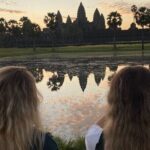
Day 2 is where this tour leans into the most famous images of Angkor. It also follows the smartest timing: pre-dawn departure from about 4.30 to 5.10 am depending on the season.
Angkor Wat at Dawn: Eastern Entry, Dark Corridors, Then Bas-Relief Stories
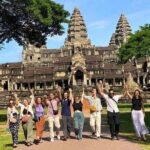
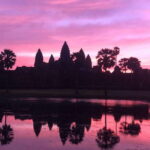
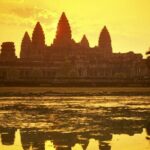
You start in the dark and approach Angkor Wat before the day fully wakes up. The tour includes entering from the eastern side, described as less visited, which can help you feel the temple without immediate crowd pressure.
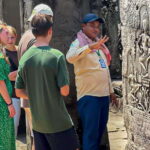
Expect roughly two hours at Angkor Wat. The big point is that you’re not only outside for photos. You’ll walk corridor sections and then explore the interior areas, including central chambers and upper terraces. The guide plays a key role here by explaining what the bas-relief scenes represent and how they reflect life during the Khmer empire’s height.
This is one of the best values of this tour: it turns a temple you already recognize from pictures into a place you understand. Without a guide, many bas-reliefs can look like decorative patterns. With help, they become a timeline.
One consideration: two hours plus early timing means you’ll be awake long before you feel human. Bring patience, water, and comfortable shoes you can trust in low light.
Breakfast and a Short Reset Outside Angkor Wat
After sunrise exploration, you’ll have breakfast outside the temple area (take away from your hotel) and a short rest. This matters more than it sounds. Early mornings push your energy fast, and a small pause helps you stay steady for the rest of the day.
Angkor Thom: Bayon’s Face Towers and the Capital City Moment
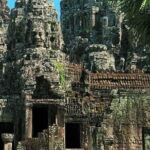
Then you move on to Angkor Thom. You’ll spend about an hour exploring this former Khmer capital city. The highlight is Bayon, where central towers are covered with more than 200 enormous faces. This stop is powerful because it changes the way you view Angkor Thom: it stops being a set of buildings and feels like a place designed for people.
A practical note: the faces can make you want to look straight up constantly. That’s fun, but also tiring. Take breaks by stepping back for wider views so you can catch the layout and not just the individual faces.
South Gate and the Terrace Stops: Short Looks That Still Matter
Next are two quick add-ons within Angkor Thom:
- South Gate (about 20 minutes)
- Terrace of the Leper King and the Terrace of the Elephant, also around 20 minutes each
These terrace stops are short, but they’re classic. Even in limited time, you can get a feel for how Angkor Thom used carved stories and dramatic staging in everyday movement through the city. If you prefer deep, long museum-style reading, 20 minutes might feel tight. But if you’re here to see the major structures and keep a lively pace, these quick hits work well.
Ta Prohm: The Tree Roots Stop That Lives Up to the Hype
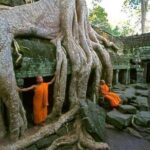
Finally, you get Ta Prohm, about an hour. This is one of the most atmospheric temples in Angkor. It was home to 2,740 monks, and today it looks like it did after it was brought back to European attention in the early 1850s by French explorer Henri Mouhot.
The “tree roots” effect is real, and it’s why people keep returning. This stop is also good for slowing down. Ta Prohm doesn’t just reward photos—it rewards wandering. If you’re tired, you’ll still be able to enjoy it because the scene does half the work for you.
What Makes a Small-Group Format Helpful Here
Angkor can be a lot, even for seasoned travelers. A well-paced small-group day keeps you from getting lost in the chaos of timing. You have a structure: sunrise first, then a sequence that builds from ruins to detail to big-known landmarks.
Another quiet benefit: having a guide who can point out why carvings matter and how buildings were used during Khmer times changes your experience. You don’t just look at stone; you get meaning.
And because the tour includes air-conditioned transport, you save energy for the walking parts. In Siem Reap heat, that difference matters.
Tickets, Tips, and the Budget Reality (So You’re Not Surprised Later)
Here’s the practical math mindset you should use. Your tour price covers the guide and vehicle service, cool towels, and the overall plan. Your budget for the Angkor sites should cover:
- Entrance fees
- Angkor Pass
- Gratuities (a tip to guide and driver is appreciated)
If you’re trying to keep costs predictable, decide in advance what you’ll pay for the pass and how much you’ll tip. Then the $55 feels like the bargain part.
Who Should Book This Tour
This one is a strong fit if you:
- Want sunrise and big-name Angkor highlights without spending a week
- Prefer a guide who explains what you’re seeing
- Like a steady pace with a few shorter terrace stops instead of nonstop marathon ruins-hunting
- Care about comfort basics like pickup and air-conditioned transport
It’s not the best match if you:
- Can’t handle very early departures and long temple days
- Plan to skip entrance fees entirely (because they are not included)
- Want plenty of free time with no schedule pressure
Should You Book This Angkor 2-Day Sunrise and Sunset Tour?
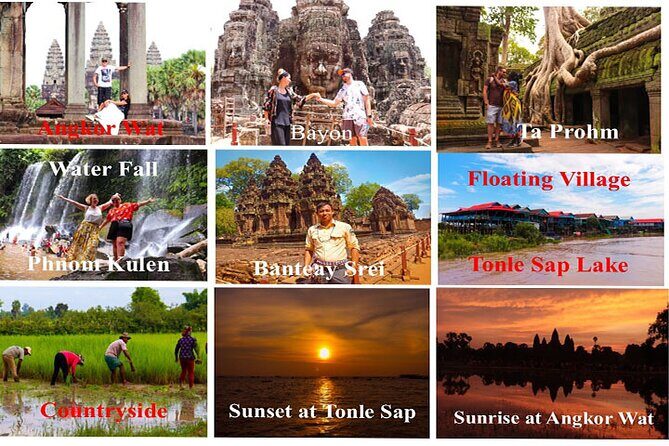
I think it’s worth booking if you want a guided, timed Angkor plan that reduces decision fatigue. The combination of early sunrise, a guide-led Angkor Wat interior visit, and then Angkor Thom and Ta Prohm makes this feel like a “best-of Angkor” route at a manageable pace.
But book it with your full budget in mind. The $55 price is only the foundation; the Angkor Pass and entrance fees are the rest of the equation. If you do that homework, you’ll feel like you bought a real experience, not just transport.
If your top priority is sunrise and you’d rather not gamble on timing, this tour gives you a plan that’s built for the moments when Angkor looks its best.
FAQ
What does the tour cost?
The tour is $55.00 per person.
How long is the tour?
It’s listed as 2 days (approx.).
Is pickup included?
Pickup is offered.
Are entrance fees included?
No. Admission fees and the Angkor Pass are not included.
Do I need to purchase an Angkor Pass?
Yes. The Angkor Pass is not included, so you’ll need it separately.
What language is the guide?
The tour includes a professional English-speaking tour guide.
Are cool towels provided?
Yes. Cool towels are included during touring.
What time does sunrise start?
Departure for sunrise is pre-dawn, about 4.30 to 5.10 am depending on the time of year.
Is the tour a private group?
It’s described as a private tour/activity, with only your group participating.
Is there free cancellation?
Yes. You can cancel up to 24 hours in advance for a full refund.