REVIEW · SIEM REAP
Angkor Jeep Tour with Sunset & Sunrise
Book on Viator →Operated by Bayon Guide · Bookable on Viator
Sunrise at Angkor Wat feels like a secret, and this two-day plan lets you slow down with a private Jeep and a proper sunset at Pre Rup. I love the early-morning calm and the way your guide connects each stop to what you’re actually looking at. One thing to plan for: you’ll still need to buy the Angkor temple pass and you’ll pay for meals separately.
Day one is also smartly paced. You start with Wat Bo Temple and a city orientation so the bigger sites on day two land with context, not confusion.
In This Review
- Key things to know before you go
- Why two days makes Angkor Wat feel less like a race
- The US Army-style Jeep ride: comfort, dust, and off-road fun
- Day 1 in Siem Reap: Wat Bo orientation and sunset at Pre Rup
- Pre Rup at sunset: brick, laterite, and a horizon glow
- Day 2 begins in darkness: sunrise calm at Angkor Wat
- Ta Prohm: roots, ruins, and why it matters as more than a movie scene
- Banteay Srei’s pink sandstone: fine carving you can actually appreciate
- Angkor Thom and Bayon: 49 towers and four divine faces
- Price and temple pass math: what you’re really paying for
- Guides matter: how Long, Mork, Oum, Vitou, and Sambeth raise the bar
- Practical tips for early mornings and dusty jeep roads
- Should you book this sunset and sunrise Jeep tour?
- FAQ
- What’s included in the Angkor Jeep Tour price?
- Do I need to buy an Angkor Temple Pass?
- Are meals included?
- What time does the tour start?
- Is this a private tour?
- Is the Jeep good for off-road routes?
- Can I cancel for a full refund?
- Is a mobile ticket used, and will I get confirmation?
Key things to know before you go
- US Army-style Jeep rides: rugged, built for rough Angkor roads and off-road detours.
- Sunset at Pre Rup, then sunrise at Angkor Wat: two of the most photogenic moments, without compressing everything into one frantic day.
- A guide who puts Khmer history into plain language: names like Long, Mork, Oum, and Vitou show up repeatedly for clear English and strong temple context.
- Wat Bo Temple includes admission while the big Angkor sites require the Angkor Temple Pass.
- Cold tissues and mineral water are included, which helps when your day starts early and ends late.
Why two days makes Angkor Wat feel less like a race
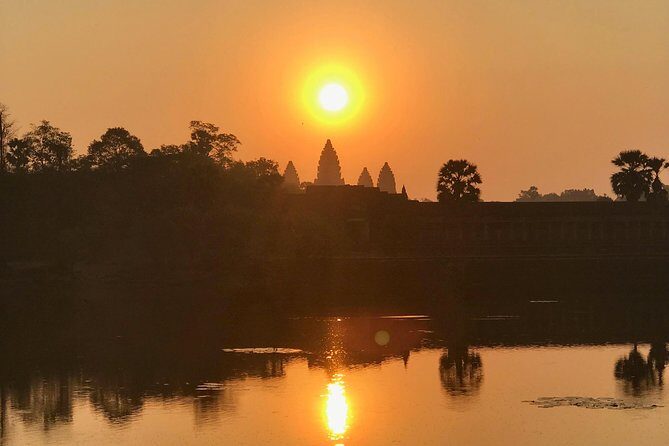
Angkor is famous for crowds, early starts, and feeling like you’re always running to the next photo spot. This is different because the schedule is spread across two days, with both ends of the day handled right. You get a dramatic sunset on day one, then you’re up before most tour groups are even moving.
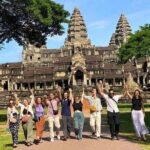
That pacing matters. On day two, the early pickup (around 4:30 AM) means you reach Angkor Wat while it’s still quiet, so you can actually sit with the place instead of only walking through it. I also like that the guide doesn’t treat the sites like checklist items—you’re given stories and architectural clues along the way, which makes the carvings and layout easier to read.
You can also read our reviews of more evening experiences in Siem Reap

The US Army-style Jeep ride: comfort, dust, and off-road fun
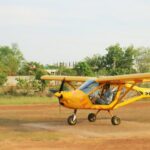
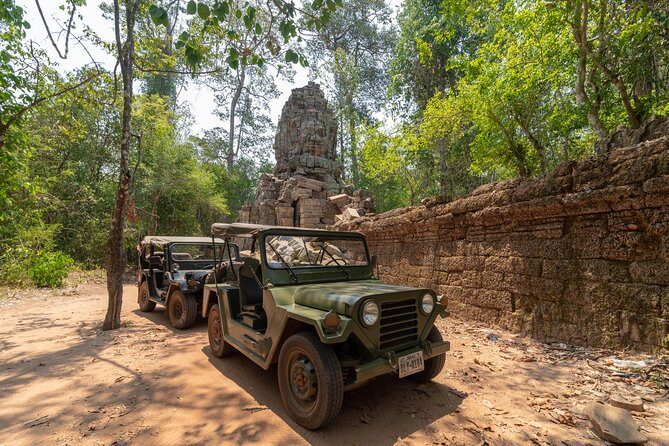
This tour uses a private Jeep that’s built to handle rough terrain. If you’ve been to Siem Reap and seen how many roads are uneven, you already know why that matters: a standard car can feel bumpy; a Jeep ride feels made for it.
There’s also a reality check. One review note specifically called out how dusty the ride can get, so plan for that. Wear shoes you don’t mind getting dusty and consider clothes you can tolerate if they pick up some grit.
What helps: the tour includes mineral water and cold tissues on the route. In practice, that kind of basic comfort changes how you feel at the end of a day of walking and photos—especially when the schedule swings between temple time and early-morning time.
Day 1 in Siem Reap: Wat Bo orientation and sunset at Pre Rup
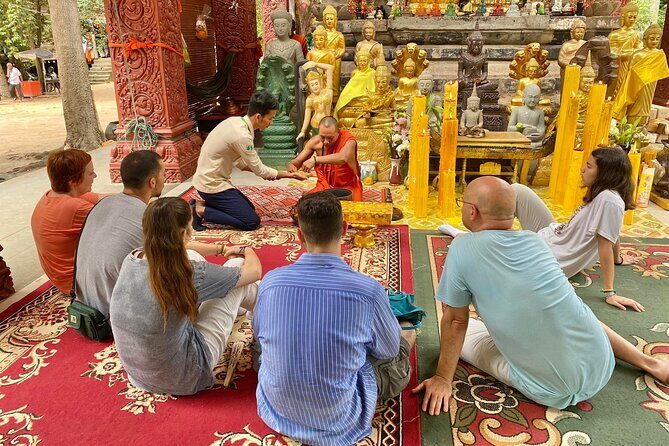
Day one starts in Siem Reap with a hotel lobby pickup and an itinerary briefing. Then you drive into a city orientation that includes the Royal Residence and Wat Bo monastery. The Wat Bo Temple stop runs about 30 minutes, and admission is included there, which is a nice opener after the pickup and briefing.
Think of this part as your mental warm-up. If Angkor Wat is the headline, Wat Bo helps you understand the local setting and religious context before you head toward the larger temple complex on day two. It also gives your guide a chance to set expectations for how you’ll see the temple world—materials, symbolism, and how the Khmer built and reused religious space over time.
Pre Rup at sunset: brick, laterite, and a horizon glow
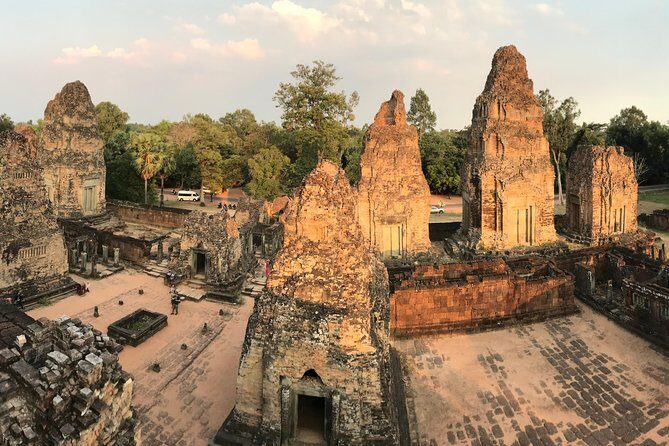
After the orientation, you head toward Pre Rup. There’s a checkpoint stop to purchase the temple ticket for that visit, and Pre Rup’s stop is about two hours with admission not included under the tour price.
Pre Rup is a 10th-century Hindu temple, and the payoff here is the sunset setting. What you’re aiming for isn’t just a pretty sky; it’s a chance to look at Khmer architecture using the materials the guide points out: brick, laterite, and sunstone. Those details matter because they help you see how the structure was built and what weathering has done over centuries.
When the day cools down, you’ll often find it’s easier to stay focused. Temple stones can be exhausting in heat, but sunset light makes the carvings easier to spot and the whole experience feels less like an endurance event.
Day 2 begins in darkness: sunrise calm at Angkor Wat
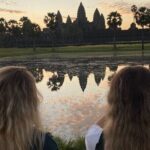
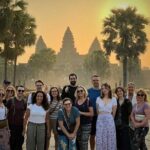
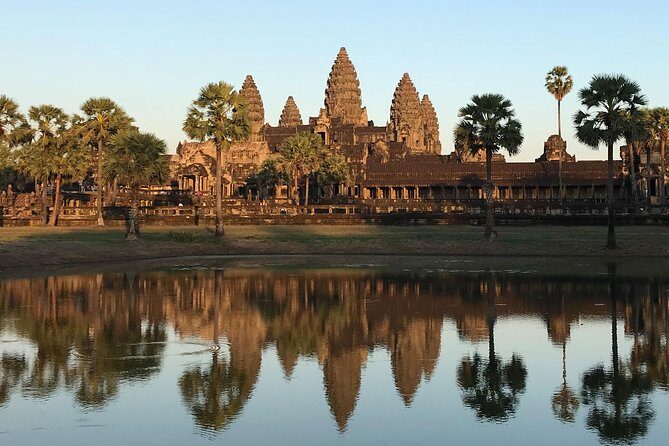
Day two starts with an early pickup—listed at 4:30 AM. You then begin with sunrise at Angkor Wat, and the timing is intentional: the area is peaceful and quiet before the major tour groups arrive.
Angkor Wat means City of Pagoda, and your guide also shares background about how it changed from its earlier name, Parama Vishnuloka. That kind of context is useful because it helps you read the site as a living religious and political statement, not only as a famous set of towers and walls.
Plan for a lot of walking and standing during the sunrise hours. Even if you don’t spend the whole time moving, you’ll want to move just enough to see how the light shifts on the façades. This is one of those moments where you can feel the temple’s geometry become clearer as the sun lifts.
You get about three hours at Angkor Wat on day two. That’s enough time to see the highlights without feeling like you’re getting yanked forward every few minutes.
A few more Siem Reap tours and experiences worth a look

Ta Prohm: roots, ruins, and why it matters as more than a movie scene
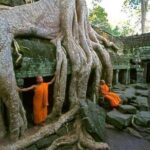
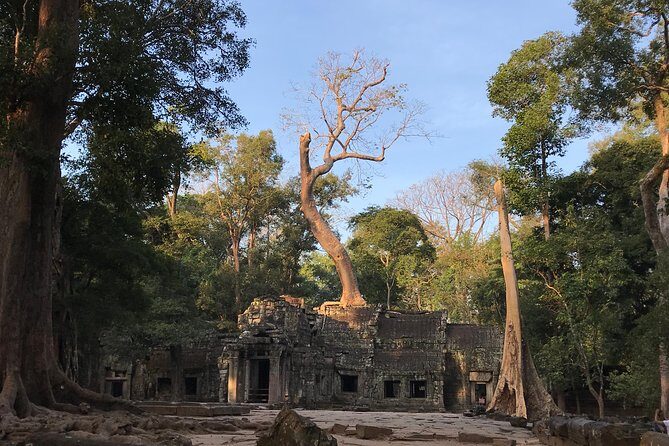
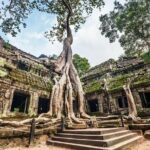
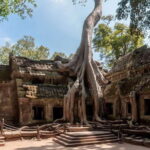
After Angkor Wat, you head to Ta Prohm, where the entrance gives you that immediate wow factor: huge fig tree roots wrapping around stone structures. The stop is about one hour, and it’s a great counterpoint to Angkor Wat’s more symmetrical feel.
Ta Prohm is a Mahayana Buddhist temple dating to 1186 AD, and it also functioned as an ancient university of the Khmer Empire. That’s the kind of fact that changes how you look at a ruin. You start thinking not just about what it looks like, but about how it worked—teachers, students, rituals, and the daily flow of people through the same halls you’re walking.
Yes, Ta Prohm is well known from filming, but you’ll get more out of it when you focus on the temple’s actual layout and the way vegetation has physically shaped access points and views.
Banteay Srei’s pink sandstone: fine carving you can actually appreciate
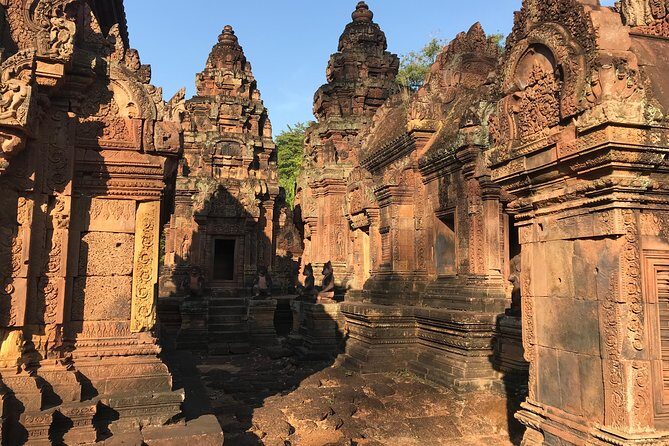
Next up is Banteay Srei, about 45 minutes away by drive. This stop is also about one hour, and it’s often described as the most beautiful intricate carving temple among those in the broader region.
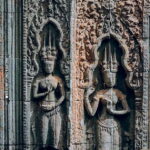
The key detail here is the material: Banteay Srei is known as the pink sandstone temple. It was built in the 10th century and is considered well preserved, which matters because delicate carvings need time and good viewing light. A rushed visit can turn it into “pretty stones.” A slower one helps you notice the motifs, the craftsmanship, and the way the carvings repeat across different faces and columns.
If you like detail work—faces, patterns, and the way Khmer artisans used space—this is likely your favorite stop after Angkor Wat.
Angkor Thom and Bayon: 49 towers and four divine faces
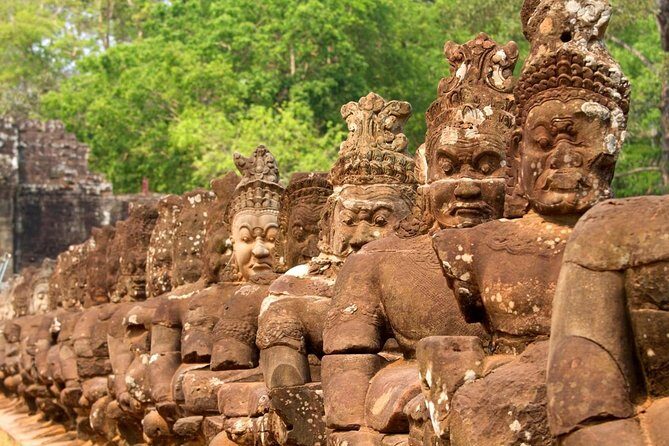
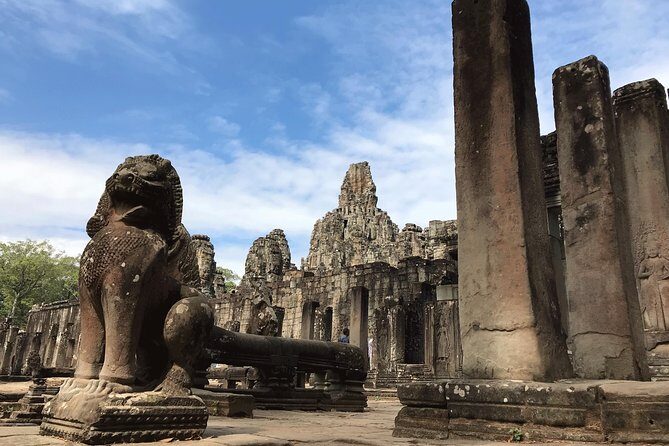
After Banteay Srei, you drive to Angkor Thom and visit Bayon in the heart of the complex. Bayon is tied to King Jayavarman IV as a state temple, and the stop is about two hours, which is just enough time to look up, step around, and catch the carvings you might miss from one angle.
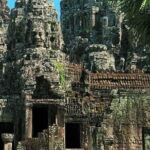
Bayon is famous for its 49 towers and four giant faces on each tower. The guide also connects these faces to the idea of four divine states of mind: Love, Compassion, Sympathy, and Equanimity.
Here’s what to watch for: your brain tends to “read” faces quickly, but the story carvings around the temple’s base can take more time. Spend a few minutes rotating your position, because different angles bring out different scenes.
You’ll also learn how Buddhism and daily Khmer life were carved into stone. That mix is part of why Bayon feels like more than a monument: it hints at what people did there and how belief showed up in ordinary life.
Price and temple pass math: what you’re really paying for
The tour price is $179.49 per person for the two-day experience. That includes private land transport by US Army Jeep, an expert guide, mineral water, and cold tissues.
But the Angkor Temple Pass is not included in the base price. The data notes it’s US$37, with free entry for children below 12 years old. It also states that admission tickets aren’t included for most of the stops, which matches how the checkpoints typically work: you pay for temple access either through your pass or at the needed entry points.
Meals aren’t included either. So if you’re building a realistic budget, plan on adding:
- the temple pass (you choose a duration that fits your plans covering these sites)
- lunches and drinks
- tips and personal expenses (always worth keeping a little extra cash)
Is it good value? For me, yes—if you care about timing and guide quality. One-day Angkor tours can be packed so tight that you barely absorb anything. This schedule gives you real temple time, plus the sunrise and sunset moments that most people end up paying extra for elsewhere.
Guides matter: how Long, Mork, Oum, Vitou, and Sambeth raise the bar
A two-day Angkor itinerary lives and dies by the guide. This tour is private, and the guide role is built into the experience—not added at the end.
Across feedback, names like Long and Mork show up for temple history and strong English. Oum is highlighted for explaining village life and rural Cambodia context, including descriptions of rice culture and routes that feel away from the city center. Vitou also gets praised for deep knowledge around Siem Reap temples and a personal history shared in a way that makes the past feel connected to the present.
There’s also practical care mentioned. One review notes a guide even provided extras like cold water, and the general theme is that the guide watches for comfort on long days. That aligns with what’s included already—mineral water and cold tissues—but the best guides treat those as a baseline, not the whole job.
One more detail: Sambeth is specifically mentioned in a sunrise-at-Angkor-Wat context for organizing the tour quickly via WhatsApp. If you like clear communication before you arrive, that’s a reassuring sign.
Practical tips for early mornings and dusty jeep roads
You’ll wake up early on day two. Sunrise at Angkor Wat starts around 4:30 AM pickup, so plan for sleep earlier than usual. Wear layers: temple mornings can still feel cool, and you’ll be standing around before full sun hits.
Bring footwear that can handle walking on stone and uneven ground. Also, think about dust. At least one review explicitly recommended wearing clothes you don’t mind getting dusty, which fits the reality of Jeep tracks around Siem Reap.
For temples, pace beats speed. The schedule is structured, but you’ll enjoy it more if you slow down at carvings and take a few minutes just to look up and around. Your guide will be pointing things out, but you’ll only truly get it if you’re willing to pause.
And don’t forget the temple pass decision. Since it isn’t included in the base price, treat it like part of the itinerary planning. Choose a duration that actually covers the sites you’ll visit on both days.
Should you book this sunset and sunrise Jeep tour?
Book it if you want Angkor with breathing room. This is for you if you care about timing—sunset at Pre Rup and sunrise at Angkor Wat—without compressing everything into a single long, exhausting day.
It’s also a good fit if you like learning while you look. The guide-centered approach means you’re less likely to feel like you’re just snapping photos and moving on.
Skip or reconsider if you’re not interested in early mornings or if you’d rather manage your own temple access and logistics from scratch. The temple pass isn’t included, meals cost extra, and you’ll spend real time walking around multiple major sites.
If you want Angkor to feel memorable instead of rushed, this two-day Jeep format is a strong choice.
FAQ
What’s included in the Angkor Jeep Tour price?
The price includes private land transportation by US Army Jeep, an expert tour guide, and mineral water plus cold tissues during the tour.
Do I need to buy an Angkor Temple Pass?
Yes. The Angkor Temple Pass is not included. The cost listed is US$37, and children below 12 years old are noted as free.
Are meals included?
No. All meals and beverages are not included, so you’ll want to budget for lunch and drinks.
What time does the tour start?
The listed start time is 3:00 pm. Day two pickup for the sunrise at Angkor Wat is listed at 4:30 AM.
Is this a private tour?
Yes. It’s a private tour/activity, and only your group participates.
Is the Jeep good for off-road routes?
Yes. The Jeep is described as rugged, which is ideal for off-road trails.
Can I cancel for a full refund?
Yes, free cancellation is offered if you cancel at least 24 hours before the experience’s start time for a full refund. If you cancel less than 24 hours before, the amount paid is not refunded.
Is a mobile ticket used, and will I get confirmation?
Yes. It includes a mobile ticket, and confirmation is received at the time of booking.