REVIEW · SIEM REAP
2-Day ‘Angkor & Village’ Tour
Book on Viator →Operated by Asia Voyage Tour · Bookable on Viator
Angkor is best when you don’t have to think. I like the air-conditioned car with hotel pickup and the fact you get a real Angkor Wat sunrise revisit. The big trade-off: this is temple-heavy with stairs and climbing, so you’ll want solid walking comfort before you book.
For $130, it’s a lot of ancient ground in a short time, with an English-speaking guide doing the explaining so you can focus on seeing. It’s also a good value as long as you plan for the temple pass cost and remember meals aren’t included.
You’ll spend day 1 on the main Angkor loop (Angkor Thom highlights and Angkor Wat), then day 2 north and out toward the lake with a boat ride. The itinerary has enough variety that you don’t feel like you’re checking boxes—you get wide views, tight details, and a taste of daily life around Tonle Sap.
In This Review
- Key highlights you’ll feel right away
- Price and value: what $130 really buys you in Siem Reap
- The day’s rhythm: a 8:30 start and why it matters
- Entering the Angkor complex: how you’ll handle passes and pacing
- Angkor Thom classics: Bayon, Baphuon, Ta Prohm, and the Terrace of the Elephants
- Bayon Temple: the faces-and-power moment
- Baphuon: Hindu devotion and a temple-mountain layout
- Ta Prohm: the Bayon-style stop that changes the mood
- Terrace of the Elephants: royal grounds in a short time
- The common theme across these Angkor Thom stops
- Angkor Wat twice: afternoon scale, then sunrise light
- Day 1 afternoon: huge, organized, and time well-used
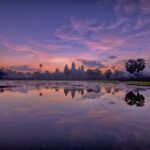
- Day 2 sunrise: why the second visit counts
- Phnom Bakheng: a hilltop that rewards leg work
- Banteay Srei: the ladies temple and why it feels different
- What to look for here (without overhyping)
- Banteay Samre and Pre Rup: temple-mountain variety in one sweep
- Banteay Samre
- Pre Rup
- Kompong Phluk on Tonle Sap: stilt villages and a motorized boat ride
- If you prefer temples over village life
- Guide impact: Mr. Choup and Seng make the explanations stick
- Comfort details that quietly improve the day
- Who should book this Angkor & village plan
- Should you book it? My practical call
- FAQ
- What is included in the $130 tour price?
- Are temple passes included in the tour price?
- What time does the tour start?
- Is sunrise at Angkor Wat part of the schedule?
- Do you visit Kompong Phluk for the village part?
- What are the meal arrangements?
- Is this tour private?
Key highlights you’ll feel right away
- Hotel pickup plus AC transport: You avoid the heat-and-hustle parts of getting around.
- Angkor Wat at sunrise: A second visit helps the light change how the complex feels.
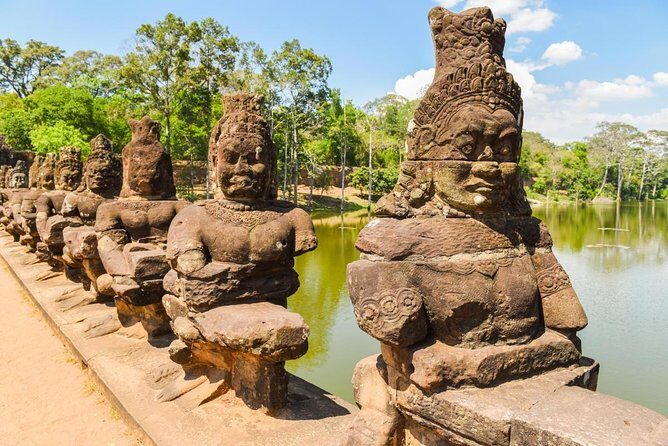
- A focused Angkor Thom day: Bayon, Baphuon, Ta Prohm, and the Terrace of the Elephants come in one plan.
- Banteay Srei and temple-mountain variety: You go beyond the most famous names.
- Kompong Phluk boat on Tonle Sap: Stilt village life plus a motorized boat ride is part of the experience.
- Guides with real explanations: Reviews specifically mention Mr. Choup and Seng making the temples easier to understand.
Price and value: what $130 really buys you in Siem Reap
At $130 for a private 2-day experience, you’re paying for logistics and interpretation, not just temple time. You get hotel pickup and drop-offs, an air-conditioned vehicle, and an English-speaking guide, which matters in Angkor where the distances add up and the heat can drain you fast.
Two things are not included:
- Temple passes (you buy an Angkor pass separately)
- Meals and drinks (soft drinks and alcohol also aren’t included)
The pass cost is where you should budget early. The tour plan calls for at least a 2-day pass, and the listed prices are:
- USD 62 for 3 days
- USD 72 for 7 days
- (It also notes a 2-day option at USD 67 per person)
So think of the total trip cost as roughly the tour price plus the pass for each person, plus your lunch and water/drinks preferences. If you’re staying in Siem Reap only briefly, the “why not do it all now” convenience can be worth it.
Also note: you receive mobile tickets, which usually means less scrambling when you’re near the ticket office.
A few more Siem Reap tours and experiences worth a look

The day’s rhythm: a 8:30 start and why it matters
The tour starts at 8:30 am from your hotel. That early start is not a gimmick. Angkor can feel like you’re walking through a furnace by midday, and you’ll be climbing, descending, and moving between temple zones.
Comfort is built in:
- Bottled water
- Cold towels
- An AC vehicle for travel time
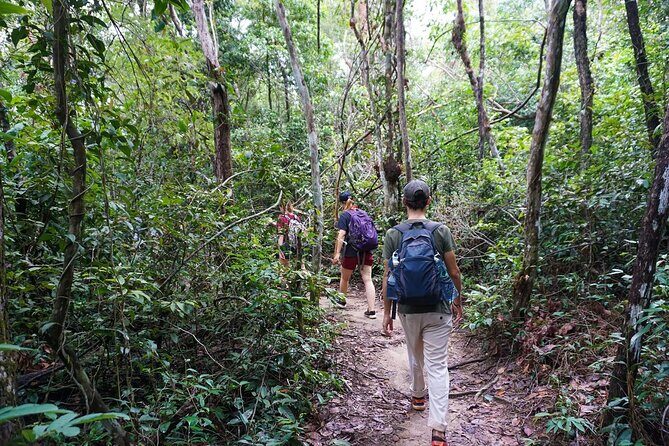
That doesn’t erase the fact you’ll do a lot of walking. The tour information is direct that it’s not suitable if you can’t walk normally, and reviews mention the steps and climbing can be challenging. If you know stairs are a problem for you, this might be a “choose a different day plan” situation.
Entering the Angkor complex: how you’ll handle passes and pacing
Your day 1 begins with admission at the Angkor Enterprise ticket office. The plan states you buy an Angkor pass for at least two days, one pass per person. Since the guide can’t start temple time until that’s sorted, having the correct pass ready reduces stress.
Once you’re in, you’re not just wandering. The order matters:
- You start with big Angkor Thom landmarks.
- You save Angkor Wat for later in the day.
- You wrap with Phnom Bakheng, a hilltop temple that adds variety (and extra walking).
This sequencing is useful because it gives you a natural flow: faces and gateways first, then broader temple scale later, then a hilltop finish.
Angkor Thom classics: Bayon, Baphuon, Ta Prohm, and the Terrace of the Elephants
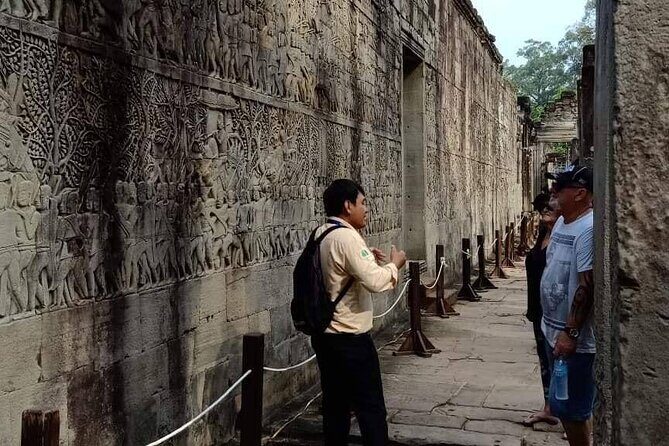
Day 1 is a strong “core Angkor Thom” sweep, and each stop has a different feel.
Bayon Temple: the faces-and-power moment
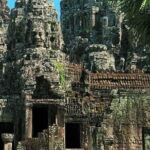
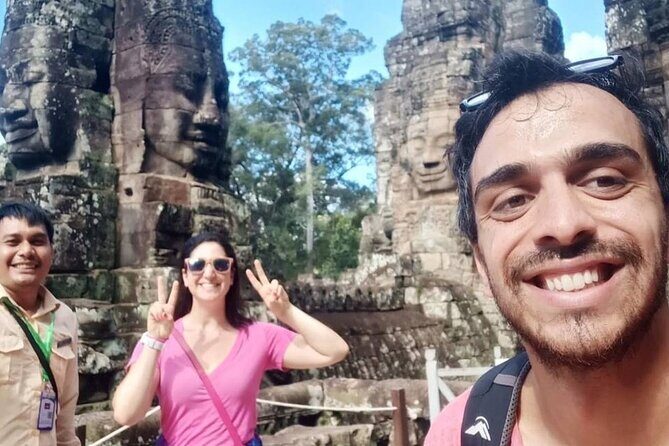
Bayon is described as a richly decorated Khmer temple, the state temple for King Jayavarman VII. The guide-led approach helps here because Bayon is visually intense, and context makes it easier to understand what you’re looking at instead of just snapping photos and moving on.
Baphuon: Hindu devotion and a temple-mountain layout
Baphuon sits in Angkor Thom, northwest of Bayon. It’s a three-tiered temple mountain built as a state temple dedicated to Shiva under Udayadityavarman.
If you like structure, Baphuon is a good change from the more crowded face-focused sites. You’ll get a clearer sense of how these complexes were designed as symbolic “mountains,” not just places to visit.
Ta Prohm: the Bayon-style stop that changes the mood
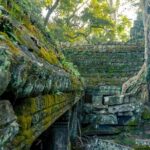
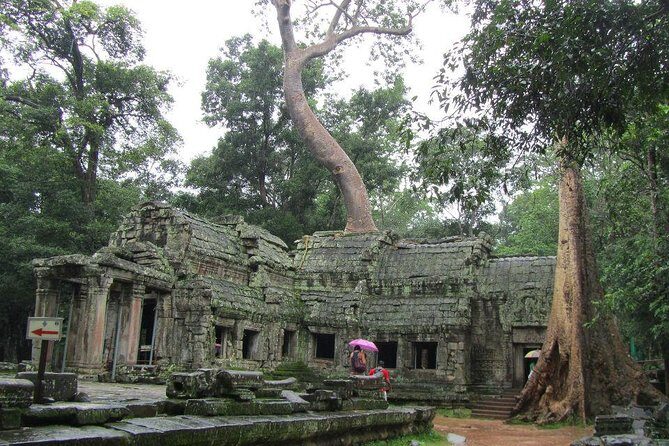
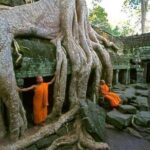
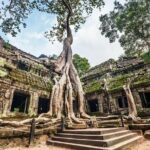
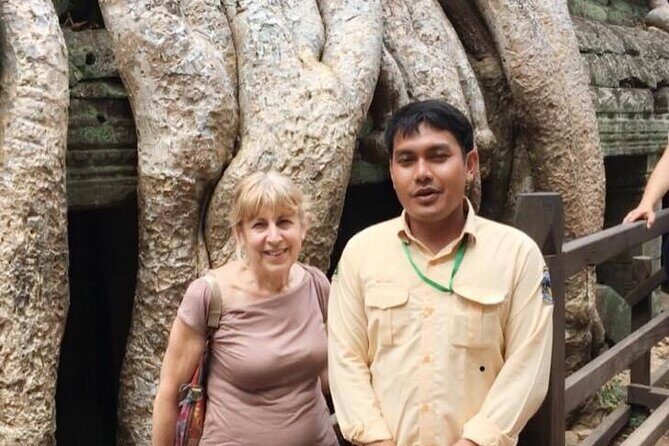
Ta Prohm is given a key identity here: it’s in the Bayon style and originally called Rajavihara. The modern name matters because it signals how later centuries affected the way this temple is remembered.
It’s also one of the stops where walking can feel more tiring, since you’re moving through uneven temple ground and climbing where available.
Terrace of the Elephants: royal grounds in a short time
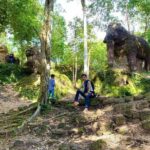
This is a smaller time block, but it’s important. It’s part of the royal terraces that form the eastern boundary of the royal palace grounds and faces the parade grounds.
Even in 30 minutes, this can make the bigger Angkor Thom layout make sense. It’s a “connecting the dots” stop.
The common theme across these Angkor Thom stops
This whole segment works best when you let the guide do the explaining. The best moment is often the second time you see the same style idea (state temple purpose, sacred geometry, how spaces are arranged). The tour’s flow gives you that repetition without boring you.
Angkor Wat twice: afternoon scale, then sunrise light
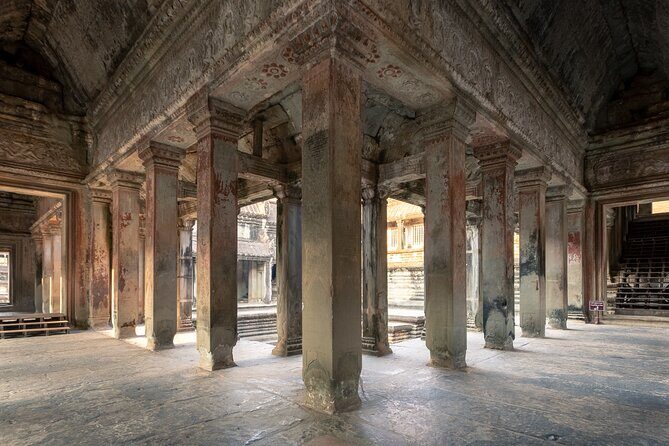
Angkor Wat is the anchor of the itinerary.
Day 1 afternoon: huge, organized, and time well-used
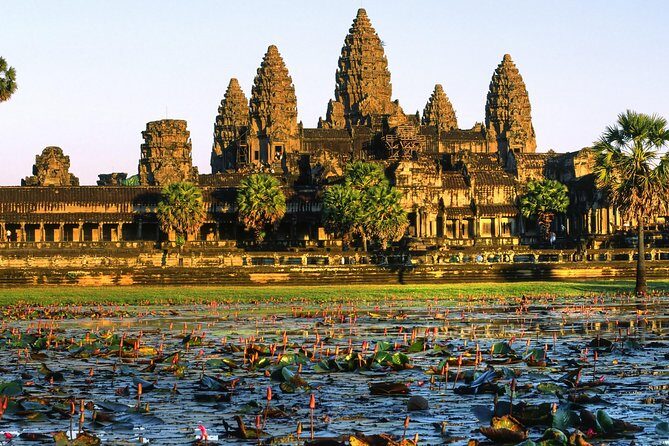
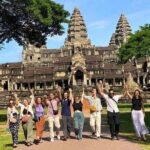
On day 1, you visit Angkor Wat for about 3 hours after lunch. The description notes it’s the largest religious monument in the world, built on a site of 162.6 hectares, originally constructed as a Hindu temple dedicated to a Hindu god.
That size is hard to grasp until you walk it. If you’ve only seen Angkor Wat in photos, the biggest surprise is that the complex feels like a planned city of sacred space, not just one building.
Day 2 sunrise: why the second visit counts
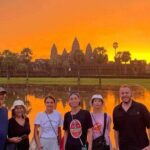
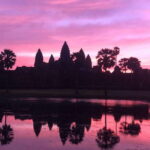
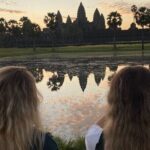
Day 2 revisits Angkor Wat for sunrise, again for about 3 hours. Then you return to your hotel for breakfast.
Sunrise is usually the best time to see the carvings and stonework without the worst heat and crowd crush. More importantly, seeing Angkor Wat after you’ve already toured the surrounding temples gives you a “before and after” feeling. It’s easier to notice similarities and differences in style once you’ve seen Bayon, Baphuon, and Ta Prohm.
Phnom Bakheng: a hilltop that rewards leg work
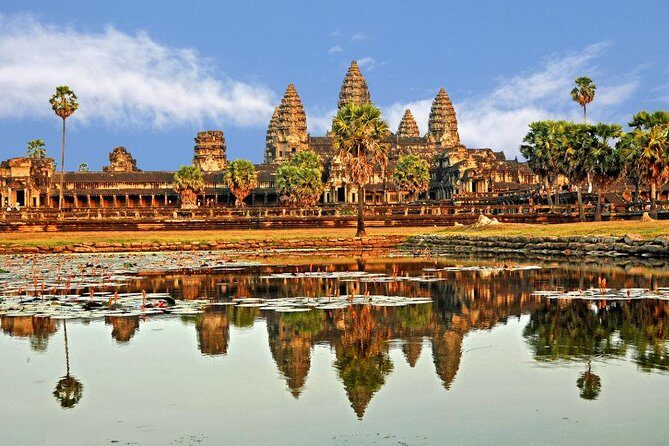
Phnom Bakheng is described as a Hindu and Buddhist temple-mountain dedicated to Shiva, built at the end of the 9th century. The defining factor is simple: it’s top-of-a-hill, and you’ll work for the view.
It’s a popular tourist spot, and that’s usually for a reason—elevations change what you can see around you. Even if you keep expectations realistic, the climb and the final viewpoint feel like a different chapter from the flatter temple grounds.
If your legs feel shaky by this point, slow down. The guide and driver can’t remove the physical part, but you can manage it with pacing and breaks when needed.
Banteay Srei: the ladies temple and why it feels different
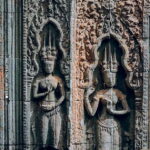
Day 2 shifts away from the main cluster and takes you to Banteay Srei, often called the ladies temple. It’s a 10th-century Cambodian temple dedicated to Shiva, located near Phnom Dei hill, about 25 km northeast of the main group.
That distance is part of what makes it special for your day. You get a break from the packed core zone and spend time with a temple that’s positioned for a different kind of experience—less like a marathon through the main belt, more like a destination.
What to look for here (without overhyping)
The tour info doesn’t promise specific visual features beyond the historical identity, but you can still plan your attention: focus on how the temple’s form and purpose connect back to the Angkor theme—Shiva dedication, temple design, and the “sacred mountain” concept.
Banteay Samre and Pre Rup: temple-mountain variety in one sweep
After Banteay Srei, you continue to two more temple stops that complement each other.
Banteay Samre
Banteay Samré is located about 400 meters east of the East Baray and built in the early 12th century during Suryavarman II and Yasovarman II. It’s described as a Hindu temple in the Angkor Wat style.
So you’re not only stacking temples. You’re also moving through styles and timeframes, with the guide’s explanations helping you track what’s changing.
Pre Rup
Pre Rup is a temple mountain built as the state temple of Khmer king Rajendravarman and dedicated in 961 or early 962. It’s built with brick, laterite, and sandstone.
This one is good if you like seeing construction style in front of you. Material differences can help your brain stay engaged when multiple temples start to blur together.
Kompong Phluk on Tonle Sap: stilt villages and a motorized boat ride
One of the most memorable parts of the tour plan is Kompong Phluk, on Tonle Sap. It’s described as a collection of villages largely built on stilts, and the name means Harbor of the Tusks.
Here’s what makes it more than a quick photo stop:
- The community depends largely on fishing.
- Fishing and village life shift with the wet season, which runs May to October.
You also get the fee for the motorised boat, which is included. That matters because it turns the experience from “standing near water” into “seeing how the village sits on the waterline.”
If you prefer temples over village life
The itinerary also includes an alternative on day 2. If Kompong Phluk isn’t selected, you can visit:
- Preah Khan
- Neak Poan
- Ta Som
- East Mebon
This is useful if you’d rather spend the day in temple zones and keep the lake segment optional.
Guide impact: Mr. Choup and Seng make the explanations stick
A big reason people leave strong ratings is the human part. The tour includes an English-speaking guide, and the named examples from feedback—Mr. Choup and Seng—are praised for being excellent at explaining the temples and helping guests understand what they’re seeing.
That’s what you should care about. Angkor is not just scenery. Without context, it’s easy to feel like you saw a lot of stones. With a good guide, the stories become a map:
- who built what and when
- what the temple was meant for
- how the spaces relate to royal power and sacred design
Even if you’re a casual history fan, you’ll likely feel that shift after the first two or three stops.
Comfort details that quietly improve the day
You’ll travel by air-conditioned vehicle for pickups, drop-offs, and tours. For a place where the outdoors is part of the experience, that comfort adds up.
Small included items make a real difference when you’re moving all day:
- Bottled water
- Cold towels
Also, the tour is set up as a private tour/activity, meaning it’s only your group. That usually means fewer waiting games and more control over your pace, especially when someone needs a short break.
Who should book this Angkor & village plan
This is a strong fit if you:
- Want a private 2-day plan without planning the route yourself
- Like having an English guide explain major Angkor sites
- Want Angkor Wat at sunrise rather than only a daytime visit
- Are interested in at least one look at village life through Kompong Phluk and a boat
This is a weaker fit if you:
- Can’t walk well or struggle with stairs and climbing (the tour notes it isn’t suitable for less-than-average fitness)
- Have very limited time and don’t want to deal with separate temple passes and meal planning
- Travel with very young children, since it’s not available for children under 3 years old
Should you book it? My practical call
Book this tour if you want an efficient, guided Angkor plan with comfort built in, plus a lake-village add-on. The best parts—the AC pickup/drop, the English guidance, and the sunrise revisit to Angkor Wat—are exactly the things that reduce stress and make the experience feel complete.
Hold off if you’re trying to keep costs ultra-low, because the temple pass and your meals will add on top of the $130. Also be honest about your legs: Phnom Bakheng is hilltop, and several Angkor Thom stops involve real movement.
FAQ
What is included in the $130 tour price?
You get hotel pickups and drop-offs, an air-conditioned vehicle for the tour, a professional English-speaking guide, a fee for the motorised boat, bottled water, and cold towels.
Are temple passes included in the tour price?
No. Temple passes are not included. The plan calls for buying an Angkor pass at the ticket office for at least two days.
What time does the tour start?
The tour start time is 8:30 am, and the vehicle departs your hotel at that time.
Is sunrise at Angkor Wat part of the schedule?
Yes. On day 2, you revisit Angkor Wat for sunrise, then return to the hotel for breakfast.
Do you visit Kompong Phluk for the village part?
Yes, Kompong Phluk is part of the plan, with the motorised boat fee included. There is also an alternative temple option if Kompong Phluk is swapped.
What are the meal arrangements?
Meals are not included. Soft drinks and alcohol are also not included.
Is this tour private?
Yes. It’s a private tour/activity, so only your group participates.