REVIEW · SIEM REAP
Angkor Wat Admission Ticket
Book on Viator →Operated by Green Era Travel · Bookable on Viator
Angkor is busy. Your ticket should not be. Booking your Angkor Archaeological Park pass ahead of time turns the usual ticket-office scramble into a calm, timed entry plan—especially if your day starts before sunrise. What I like is the hotel delivery approach, plus the way it’s set up so you can focus on temples like Angkor Wat, Ta Prohm, and Angkor Thom without losing time to lines.
I like the peace of mind factor here: your pass is delivered to your accommodation in your name, it includes a photo, and you get a lanyard that makes repeated entry checks simpler. I also like the schedule flexibility that comes with the pass, because you can visit from sunrise to sunset on your own plan.
One drawback to weigh: you’re paying more than the base ticket price at the official Angkor Enterprise ticket office, and passes are not refundable or transferable (photo ID rules apply, and dates matter).
In This Review
- Key things to know before you buy
- Hotel Delivery Beats the Sunrise Ticket Chaos
- 1-, 3-, or 7-Day Pass: Choosing What Fits Your Real Days
- Price and Value: What You’re Really Paying For
- The Temple Route You Can Build: From Angkor Wat to the Outer Hills
- Angkor Wat (about 2 hours)
- Angkor Thom (about 1 hour 20 minutes)
- Ta Prohm (about 1 hour)
- Banteay Srei (about 1 hour)
- Preah Khan (about 1 hour 20 minutes)
- Bakong (about 1 hour)
- Bayon Temple (about 1 hour)
- Neak Pean (about 1 hour)
- Baksei Chamkrong (about 30 minutes)
- Banteay Samre (about 40 minutes)
- Kbal Spean (about 3 to 4 hours, depending on the way you schedule it)
- Pre Rup (about 30 minutes)
- Ta Keo (about 40 minutes)
- Prasat Kravan (about 30 minutes)
- Ta Som (about 40 minutes)
- Srah Srang (about 20 minutes)
- Lolei (about 25 minutes)
- Prasat Phnom Krom (about 2 hours 20 minutes)
- Phnom Bok (about 2 hours)
- Preah Ko (about 30 minutes)
- Beng Mealea (about 2 hours, marked free in the plan)
- Practical Details That Actually Affect Your Day
- Who This Admission Service Is Best For
- Should You Book This? My Straight Advice
- FAQ
- What is included with the Angkor Archaeological Park pass?
- Do you deliver the ticket to my hotel?
- How many days can I choose for the pass?
- Is transportation to the temples included?
- Do I get a tour guide with this ticket?
- Are Phnom Kulen and Koh Ker included with the pass?
- What if I don’t send passport photos after booking?
- Do children need a ticket?
- Are drones allowed at Angkor?
Key things to know before you buy
- Your pass is delivered to your hotel in advance, typically around 6 pm the evening before your temple day
- Choose 1, 3, or 7 days so the pass matches how many days you actually have in Siem Reap
- Sunrise planning is easier because you’re not guessing whether you’ll stand in line in time
- A lanyard helps because you’ll show the ticket repeatedly at temple gates
- Passport photos are required after booking, or you won’t receive the pass
- Some sites need separate tickets (Phnom Kulen and Koh Ker)
Hotel Delivery Beats the Sunrise Ticket Chaos
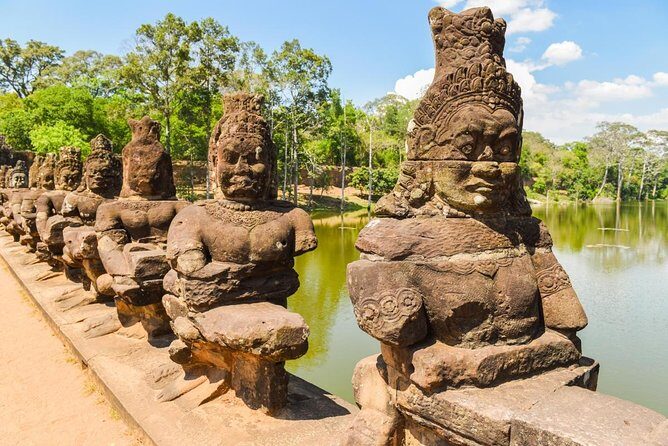
Angkor mornings can be frantic, and the ticket office line is one of the things that can steal your best light. This service solves that by delivering the Angkor National Park pass to your hotel front desk under your name, typically in the evening (about 6 pm) for visits the next day. That means your start time stays about temples, not paperwork.
The pass also travels with you in a way that’s practical. You’re told to keep the ticket and show it to the ticket controller when requested, and in real use this is made easier by the included lanyard. If your plan includes multiple temple checkpoints, that little detail matters more than it sounds.
I’d also take note of the human touch behind the process. Multiple guide and delivery experiences point to clear communication and follow-through. Names that came up include Mr Ho for early morning temple starts and Sok Piseth for delivery and reminders to send portrait photos. Another name you may hear in the Angkor world is Bunthang Lim (often recommended when you want someone to help you read what you’re seeing). Even if you don’t hire a guide, good logistics still set your day up to run smoothly.
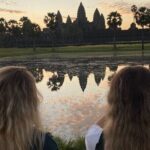
One practical suggestion: if you’re doing sunrise, treat the early hours like an appointment. Wear comfortable shoes in advance and plan to arrive at Angkor Wat when you’re still fresh, not after a rushed ticket search.
A few more Siem Reap tours and experiences worth a look

1-, 3-, or 7-Day Pass: Choosing What Fits Your Real Days
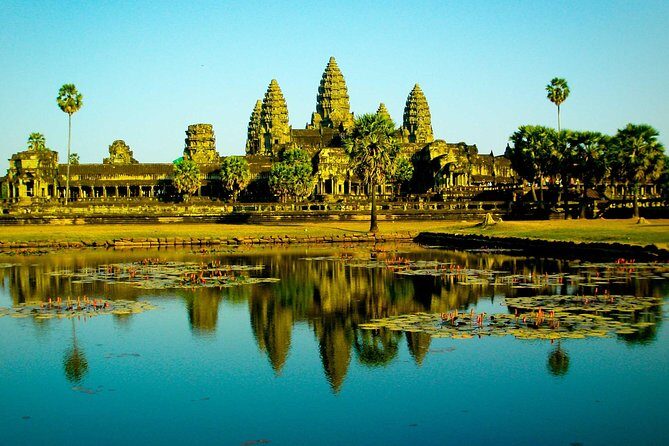
This pass is the Angkor Archaeological Park ticket, available as 1-Day, 3-Day, or 7-Day options. The big value isn’t just entry. It’s that the pass is designed for day-planning freedom: you can visit from sunrise to sunset on your own arrangement.
So how do you choose the right length?
- If you have one full day, a 1-day option can work, but it’s usually best when you pick one or two priorities and accept that you won’t see everything. One of the practical hints from real-world experience: stack too many stops and you’ll feel it. I’d plan for a long walking day—some people report doing about eight hours or more when they pack in several temples.
- If you have 3 days, you’re in the sweet spot for most schedules. You can cover the main Angkor highlights without feeling like you’re sprinting across the grounds. This is the most balanced option when you’re also trying to squeeze in outer sites.
- If you have 7 days, you can spread things out. That’s ideal if you want time for slower stops, repeats, or a second pass at your favorite temple areas.
Also keep the rules in mind: the pass contains a photo of you and is not transferable. It also isn’t valid after the printed validity dates. So if your schedule is fragile, the timing matters.
Price and Value: What You’re Really Paying For
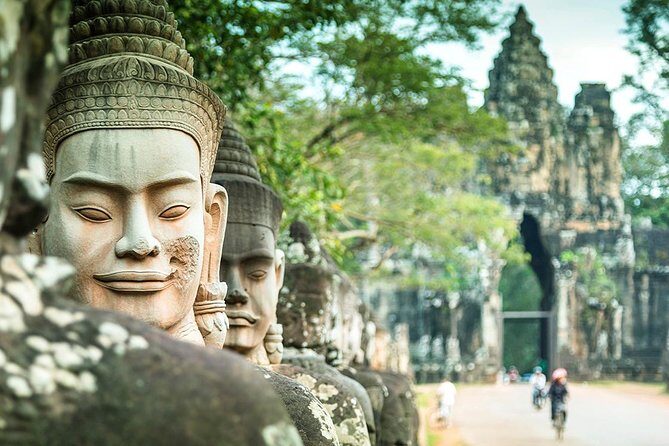
The typical price you may see is $59.00 per person, with the service framed around convenience (advance purchase + hotel delivery) rather than a guided tour package. And yes, you should expect the “service” part to be noticeable.
Here’s the key pricing context provided:
- 1-Day ticket base is listed at $37 + service fees and additional information/promote charges
- 3-Day ticket base is $62 + service fees
- 7-Day ticket is $72 + service fees
So what is the value of paying more than the base ticket office price? For many people, it’s not about saving money. It’s about saving time, reducing risk, and preventing a sunrise-day problem.
If you arrive late or want the next morning to be stress-free, this delivery-based approach can be worth it. One practical example from real use: people used the service around a day before their temple plan specifically because the official site was reported as not working for them at the time. Even when ticket lines are shorter than expected, having the pass ready in your hotel still beats making guesses.
There is also a trade-off: one clear criticism you may see is about the surcharge itself. If you’re the type who likes to handle tickets on your own and you’re okay with the chance of lining up, then you might feel differently. But if your plan hinges on sunrise or you hate queue time, convenience is the whole point here.
The Temple Route You Can Build: From Angkor Wat to the Outer Hills
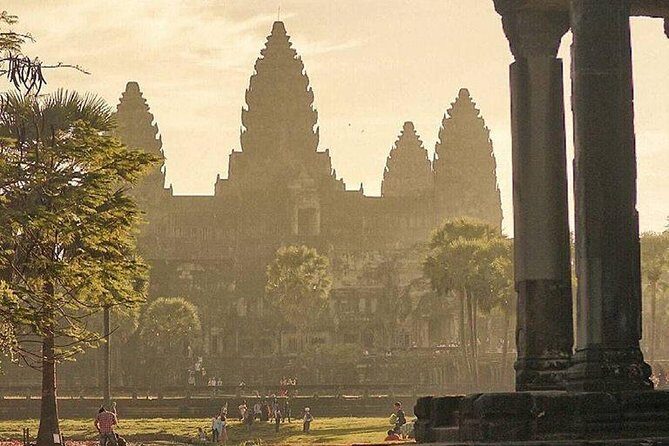
The pass is for Angkor Archaeological Park sites, and the plan you can follow includes major temples plus several outer stops. Your exact route should depend on which pass you bought. Still, it helps to know what the day could look like.
Below is how I’d think about the stops, in the order you can use when building your route.
Angkor Wat (about 2 hours)
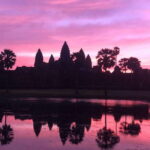
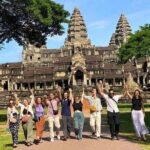
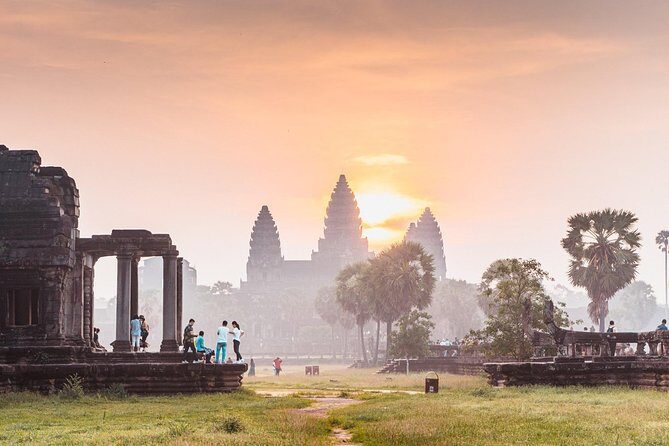
This is the headline temple complex: the largest religious monument in the world, on a site measuring 162.6 hectares, originally constructed as a Hindu temple dedicated to Vishnu. If your schedule is built around the idea of sunrise, this is the one you plan first. Trying to fit it in later can make the day feel off, because Angkor Wat sets the tone for what comes after.
Angkor Thom (about 1 hour 20 minutes)
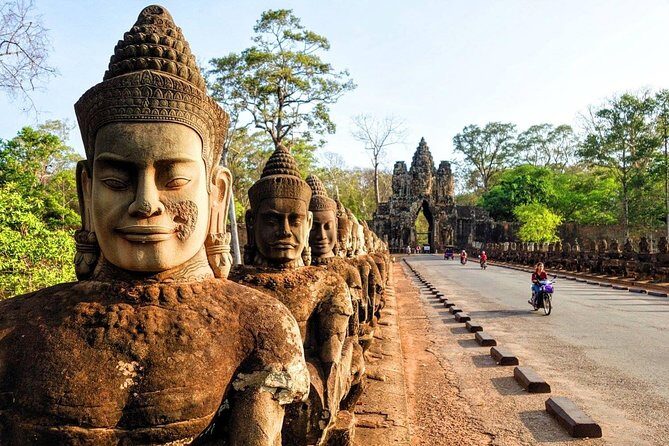
Angkor Thom is described as the last and most enduring capital city of the Khmer empire from the late 12th century, established by King Jayavarman VII. It works well as a mid-morning anchor: you’ll have enough time to move through the area without treating it like a checklist.
Ta Prohm (about 1 hour)
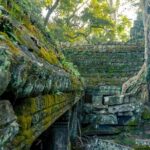
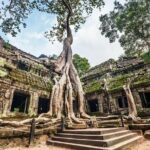
This one is famous, and the plan calls it the Tomb Raider movie temple. Built in the Bayon style in the late 12th and early 13th centuries, it was originally called Rajavihara. If you like temples where trees and stone feel braided together, this stop is usually a highlight—just don’t underestimate walking time inside the complex.
Banteay Srei (about 1 hour)
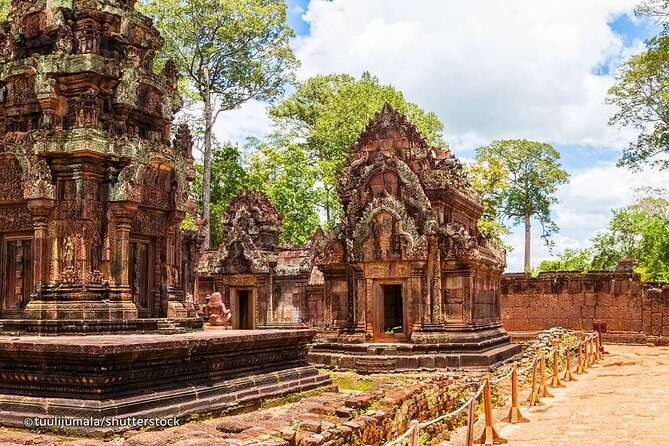
Banteay Srei, the ladies temple, is a 10th-century temple dedicated to Shiva, located near Phnom Dei hill about 25 km northeast of the main Angkor group. This is a great “change of pace” stop because it tends to feel less like the nonstop main-circuit rush. It can also be a good pick if you want a temple that feels more like a detour.
Preah Khan (about 1 hour 20 minutes)
Preah Khan was built in the 12th century for King Jayavarman VII to honor his father. It’s located northeast of Angkor Thom and just west of the Jayatataka baray. This is the kind of stop that rewards you when you’re not rushing. If you’re doing a tight itinerary, you might want to give it the full time instead of skimming.
Bakong (about 1 hour)
Bakong is noted as the first temple mountain made of sandstone by the Khmer rulers in the 9th century, near modern Siem Reap. Because it’s earlier in the story, it can be a grounding stop when you’re switching between “main” temples and “less expected” ones.
Bayon Temple (about 1 hour)
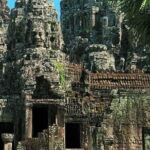
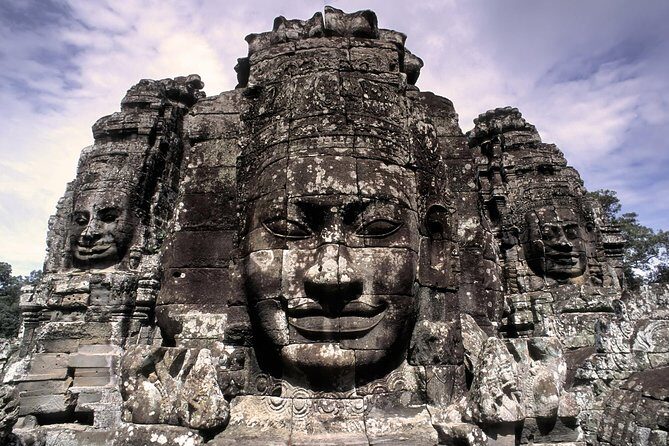
Bayon is richly decorated and described as the state temple of the Mahayana Buddhist King Jayavarman VII, built in the late 12th or early 13th century. Put this on your route when you want something that feels central to the Jayavarman VII era.
Neak Pean (about 1 hour)
Neak Pean is an artificial island with a Buddhist temple on a circular island in Jayatataka Baray. It ties into the Preah Khan area and is part of that larger engineered landscape feel. If you like structure and symmetry, this stop can hit the spot.
Baksei Chamkrong (about 30 minutes)
This is a smaller Hindu temple dedicated to Shiva, next to Phnom Bakheng Hill, and it’s noted as having held a golden image. Because the time is shorter, it’s a good “breather stop” when you’re pacing the day.
Banteay Samre (about 40 minutes)
Banteay Samré is in the early 12th century range, described as a Hindu temple built during the reign of Suryavarman II and Yasovarman II. It sits about 400 meters east of the East Baray. This is a nice stop if you want something in the “main group” orbit without committing to a huge chunk of the day.
Kbal Spean (about 3 to 4 hours, depending on the way you schedule it)
Kbal Spean is described as an Angkorian-era archaeological site on the southwest slopes of the Kulen Hills, along a 150-meter stretch (the plan cuts off details, but the key idea is the hill setting). In your route options, it shows up with long time expectations, so I’d treat it as a half-day or more commitment.
Pre Rup (about 30 minutes)
Pre Rup is a Hindu temple built as the state temple of Khmer king Rajendravarman, dedicated in 961 or early 962. It’s a temple mountain made of brick, laterite, and sandstone. This stop is short, which makes it easy to fit even when your schedule is already packed.
Ta Keo (about 40 minutes)
Ta Keo is a temple-mountain that’s possibly the first built entirely of sandstone by Khmers, in the 11th century, on the small circuit. It’s a useful pick if you want your route to feel varied rather than repeating the same style of complex.
Prasat Kravan (about 30 minutes)
Prasat Kravan is a small 10th-century temple consisting of five reddish brick towers on a common terrace, south of Srah Srang. This is the sort of stop where you can appreciate details without spending hours.
Ta Som (about 40 minutes)
Ta Som is a small temple built at the end of the 12th century for King Jayavarman VII. It sits north east of Angkor Thom and east of Neak Pean. If you’re already in that area, it makes sense as a link stop rather than a separate outing.
Srah Srang (about 20 minutes)
Srah Srang is a reservoir (baray) called Royal Bath, located south of the East Baray and east of Banteay Kdei. It’s the kind of stop that’s quick, but it helps you understand the wider water-engineering theme you keep seeing across Angkor.
Lolei (about 25 minutes)
Lolei is described as the northernmost temple of the Roluos group (along with Preah Ko and Bakong), built in the late 9th century. It’s about 15 km east of Siem Reap. It’s often best paired with other “outer” pieces because it’s not the first thing most people plan for.
Prasat Phnom Krom (about 2 hours 20 minutes)
This is a hill about 12 km southwest of Siem Reap with a 9th-century temple called Prasat Phnom Krom. The plan notes it’s the best spot to something, but the details are cut off. Treat the long time as a hint that you should allow more than a quick look.
Phnom Bok (about 2 hours)
Phnom Bok is a hill in the northeast of Eastern Baray with a prasat on it. It’s described as one of the trilogies of mountains, where each mountain has a temple with a similar layout. Longer time makes sense if you want to walk the area calmly and compare the layout style.
Preah Ko (about 30 minutes)
Preah Ko is located at Roluos between Bakong and the road, and it’s described with an entry/exit from the east. This is another “short and meaningful” stop when you’re pacing the outer sites.
Beng Mealea (about 2 hours, marked free in the plan)
Beng Mealea (Bung Mealea) is described as an Angkor Wat period temple from 118–119, about 40 km east of the main group on an ancient royal highway (text cut off after that). In your schedule, it’s marked with admission ticket free. That’s a good example of why you might want a multi-day approach: these outer sites can feel far apart, so having a pass that supports you on multiple days is useful.
Practical Details That Actually Affect Your Day
A ticket is only useful if it works at the gate. Here are the parts I think matter most.
You must send portrait photos after booking. The information states that you should email passport photos for all travelers, and if you don’t, you won’t get issued a ticket. This is one of those things you want to do right away after you book, not the day you leave.
Keep the ticket with you. It has to be shown to ticket controllers when requested. The lanyard helps, and repeated checks are part of how the system works.
Plan for long walking and bring real shoes. One review tip was blunt: safe, comfortable shoes. If you’re stacking temples in one day, don’t assume you’ll only stroll.
Dress for respect. The Angkor Visitor Code includes covering shoulders and knees. That matters in temples, and it’s easy to fix—just pack something light but not revealing.
Don’t touch carvings. The code also says not to touch carvings, don’t litter, and don’t smoke. If you’re used to photo-hunting, this is a good reminder that Angkor is still sacred space.
Drones and professional commercial gear need permits. Flying drones and commercial filming with professional equipment require a permit from the APSARA National Authority.
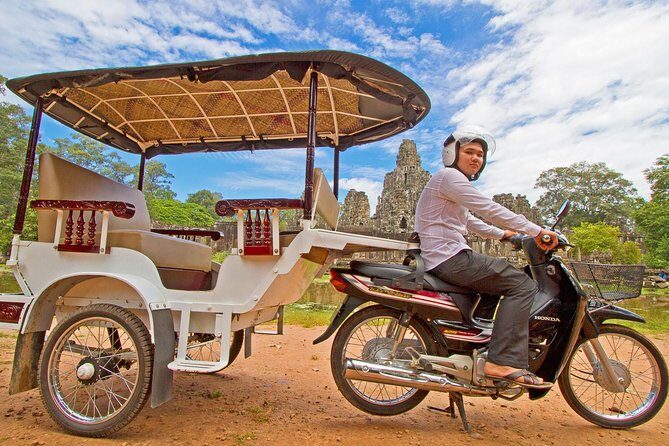
You’ll still need a plan for transportation. Transport to the sites isn’t included. Tuk tuk, car, minivan, or bus are on you. If pickup is offered in your booking, confirm exactly what it covers before you rely on it.
Some places require separate tickets. Phnom Kulen and Koh Ker Temples require separate tickets, so don’t build your whole schedule around assuming your Angkor pass covers everything.
Who This Admission Service Is Best For
This works best if you:
- have sunrise Angkor on your agenda
- hate wasting the first hours of the day in a queue
- want the pass delivered to your hotel front desk under your name
- want an easier ticket process when official systems feel unreliable
- are traveling with a small group and prefer the private setup noted for the activity
If you already know you’ll arrive early enough to handle ticket lines and you don’t care about morning stress, then you might question whether the added fee is worth it. But if your travel style is “start early, see a lot, and keep stress low,” this type of ticket delivery is a sensible way to do Angkor.
Should You Book This? My Straight Advice
Yes, I’d book this if your Angkor plan depends on time. A pass delivered before your visit is one of the simplest ways to protect your morning and keep your itinerary moving. The lanyard, the photo-on-pass rule, and the emphasis on sunrise-ready access all point to one goal: fewer surprises at the gate.
I’d hesitate if you’re trying to save every dollar and you’re comfortable handling tickets yourself, since this service is more expensive than the base ticket office price. Also, because passes are not refundable and are not transferable, only buy if your dates are solid.
If you want Angkor to feel like temples and not admin, this is the ticket helper to choose.
FAQ
What is included with the Angkor Archaeological Park pass?
Your pass includes admission ticket access for the Angkor National Park (1-Day, 2-Day, 3-Day or 7-Day options are listed) and allows visits from sunrise to sunset on your own arrangement. Delivery to your hotel front desk under your name is included.
Do you deliver the ticket to my hotel?
Yes. The ticket is delivered to your hotel front desk under your name, typically in the evening (around 6 pm) for your next day visit.
How many days can I choose for the pass?
You can choose a 1-, 3-, or 7-day option (the information also references different day options for the Angkor National Park ticket in the inclusions).
Is transportation to the temples included?
No. Transportation to the sites is not included (tuk tuk, car, minivan, bus would be on your own arrangement).
Do I get a tour guide with this ticket?
No tour guide is included. A tour guide is available to hire in most languages, but it’s not part of what’s included.
Are Phnom Kulen and Koh Ker included with the pass?
No. Visits to Phnom Kulen and Koh Ker Temples require a separate ticket.
What if I don’t send passport photos after booking?
You need to email the passport photos of all travelers after booking. If the photos are not received, the ticket will not be issued.
Do children need a ticket?
Children below 12 don’t need a ticket to the national park, but they need to show a passport to prove age.
Are drones allowed at Angkor?
Drones and filming with professional equipment for commercial purposes require a permit from the APSARA National Authority.