REVIEW · SIEM REAP
Angkor Wat Bike Tour with Lunch Included
Book on Viator →Operated by Siem Reap Bike Tour · Bookable on Viator
Angkor is the kind of place that can feel overwhelming on foot. This bike tour adds structure and gives you a better rhythm for seeing Angkor Wat and Angkor Thom without spending the whole day stuck in slow tourist traffic.
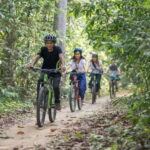
I like the small group setup (usually 2 to 7 people, with a stated max of 10), because it keeps things calm and lets the guide keep the day moving. I also like that the price includes the practical stuff—hotel pickup/drop-off, a modern giant bike, lunch, and bottled water—so you can plan your budget fast.
One thing to consider: the temple pass is not included, so you’ll want to factor in time to buy it before you start visiting. Also, the tour depends on good weather.
In This Review
- Key highlights
- Entering Angkor Wat smoothly from your hotel
- Price and logistics: what you pay for, and what you’ll still need
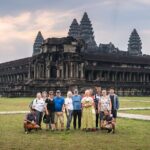
- Angkor Wat: 2 hours that are built for seeing the main sights
- Bayon Temple at Angkor Thom: faces, gateways, and Jayavarman VII
- Ta Nei: a calmer break in the jungle route
- Ta Prohm: kapok trees and temple framing by roots
- Lunch and pace: why the midday break is part of the value
- Group size and the guide experience: small is better in Angkor
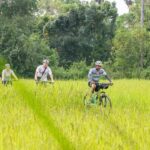
- What to expect on a modern giant bike day
- Who this Angkor bike tour is best for
- Should you book? My practical take
- FAQ
- What is the price of the Angkor Wat Bike Tour with Lunch Included?
- How long is the tour?
- What does the tour include?
- What is not included in the price?
- What time does the tour start, and is pickup included?
- How many people are in a group?
- What is the cancellation policy and what if weather is poor?
Key highlights
- Small-group pace: 2–7 riders typically, with an overall max of 10 for the activity
- Bike + pickup bundle: modern giant bicycle plus hotel pickup/drop-off
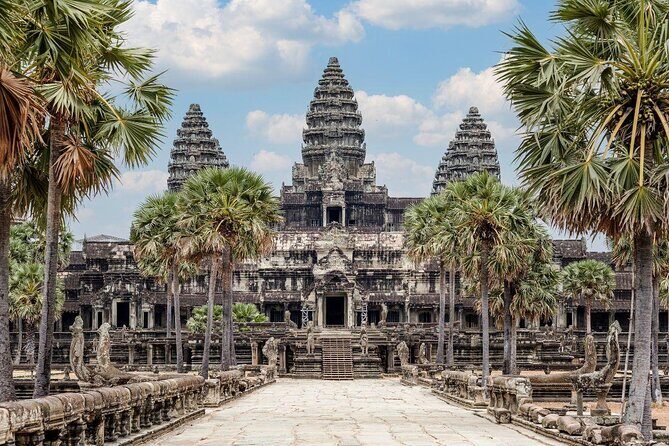
- Smart temple routing: Angkor Wat, then Angkor Thom highlights, finishing with Ta Prohm
- Lunch included: you stop for local food midday
- Good-weather requirement: plan to keep flexibility in your schedule
Entering Angkor Wat smoothly from your hotel
The day starts early, with pickup roughly around 7:30 am so you’re not scrambling at dawn. The tour activity lists a start time of 8:30 am, which lines up with a typical flow: collect everyone, get on the road, and handle tickets before you settle into the first major temple stop.
What makes this format work is simple. By the time you reach Angkor Wat, you’re ready to focus. Instead of burning the morning on transport logistics, you’re spending your energy where it counts: looking, learning, and moving at a steady pace.
And because you’ll be on a bicycle with a guide, the route feels like a guided day rather than a stressful temple checklist. You get to connect the different zones of Angkor—wat, city, and jungle ruins—into one coherent morning-to-afternoon trip.
You can also read our reviews of more cycling tours in Siem Reap

Price and logistics: what you pay for, and what you’ll still need
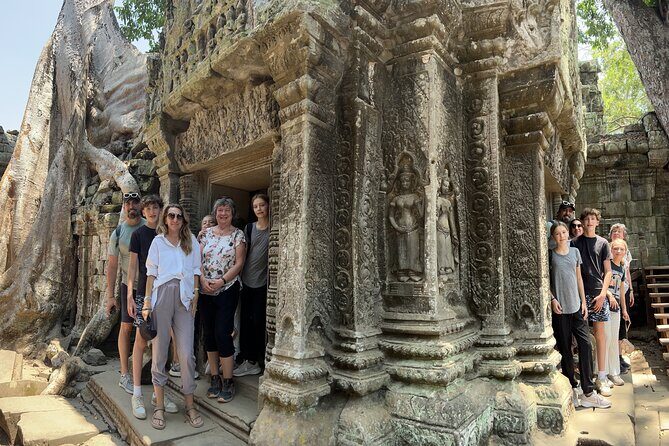
At $40 per person for an 8-hour day, the value is strong because the tour bundles several things that often cost extra when you book temples separately. You’re getting:
- English-speaking tour guide
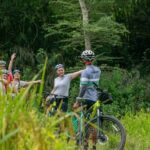
- Modern giant bike
- Hotel pickup and drop-off
- Transportation
- Bottle water
- Lunch
You’ll still need to handle temple admission tickets on your own. The tour clearly notes that the temple pass is not included. Plan on buying the ticket at the booth before you enter Angkor Wat. Your guide will direct you, but you’ll still want to arrive prepared—this is one reason the early start matters.
Also, you’re not walking the whole day. Still, you’re cycling and visiting temples, which means you should be comfortable with heat, uneven temple grounds, and short periods of standing and exploring.
Angkor Wat: 2 hours that are built for seeing the main sights
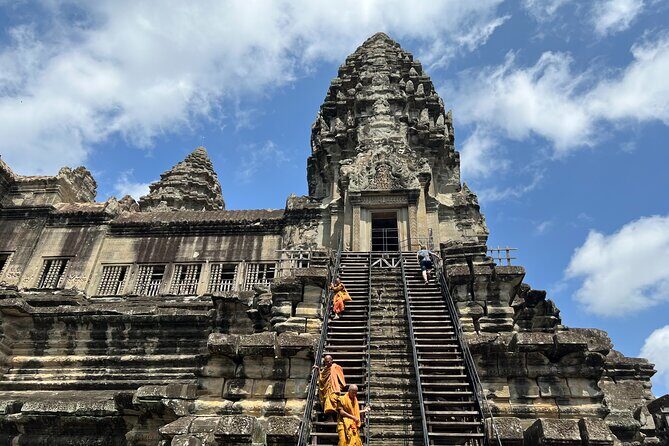
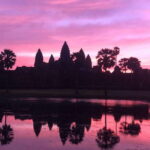
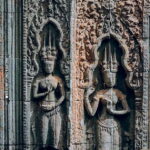
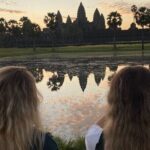
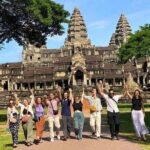
Angkor Wat is the big opening act, and you get a dedicated block of time—about 2 hours—for the main temple visit. Starting here makes sense. Angkor Wat is massive, and if you leave it until late in the day, your energy can get used up before your eyes adjust.
On a bike tour, the advantage is that you can move between viewpoints without losing momentum. You’re not only covering ground—you’re also keeping your day’s flow. That helps you take in the big visual patterns: the entry points, the temple layout, and the feeling of scale that makes Angkor Wat so famous.
One practical note: because admission tickets aren’t included, your “first time in” experience hinges on having your pass ready. The tour indicates you’ll be going to the ticket booth in the morning. If you’re the type who hates last-minute lines, get mentally ready for that first step.
Bayon Temple at Angkor Thom: faces, gateways, and Jayavarman VII
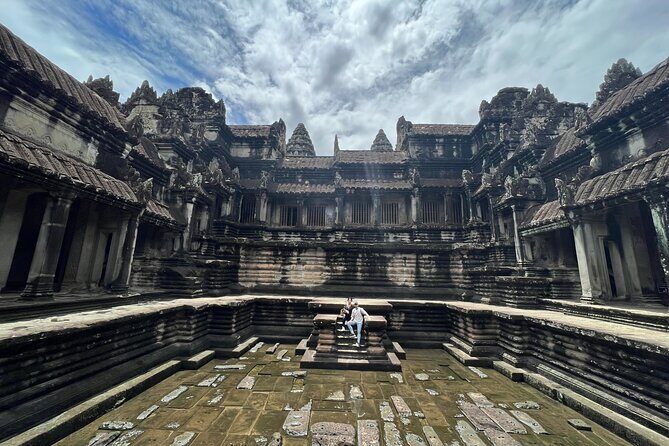
After Angkor Wat, the route shifts to Angkor Thom, and the next stop is Bayon Temple. You’ll head toward the south gate of Angkor Thom, then visit Bayon. This part of the day is about switching gears—from the symmetry and grandeur of Angkor Wat to the stone-faced intensity of Bayon.
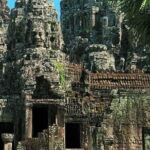
Bayon Temple is famous for its stone faces, and the tour frames it in a meaningful way: the faces are linked to Avalokiteshvara. It’s also described as the state temple tied to Mahayana Buddhist King Jayavarman VII. That context matters because it keeps you from treating Bayon as just a photo stop. You’ll likely find yourself looking longer, trying to connect the carvings and the temple’s role in the Khmer capital.
The time on Bayon is about 1.5 hours. That’s long enough to slow down, step back, and walk through the space with some understanding of what you’re seeing. It’s also short enough that you don’t feel trapped inside one stop while the rest of the day slips away.
Ta Nei: a calmer break in the jungle route
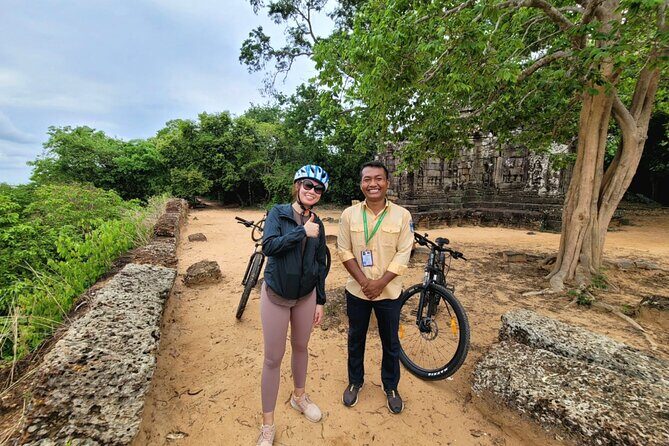
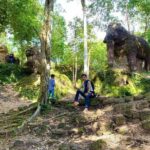
Then you move to Ta Nei, described as a more tucked-away stop on the route—one that many visitors don’t always see. The tour gives you about 1 hour here, and the pacing is refreshingly different from the bigger, more obvious temple sites.
This is where your brain gets a break. Instead of trying to take in everything at Angkor Thom’s biggest highlights, you get to focus on the temple you can see in the middle distance: the ruined structures and the way the environment starts to feel more alive around the stones.
The tour also notes you’ll have time to relax and enjoy local fresh fruits. Even if you’re a fast walker, that small pause is the kind of detail that makes the day feel human instead of exhausting.
If you get sweaty early (totally normal in Siem Reap mornings), Ta Nei is a good time to slow your pace, take a few photos, and hydrate before the final major temple stop.
A few more Siem Reap tours and experiences worth a look
Ta Prohm: kapok trees and temple framing by roots
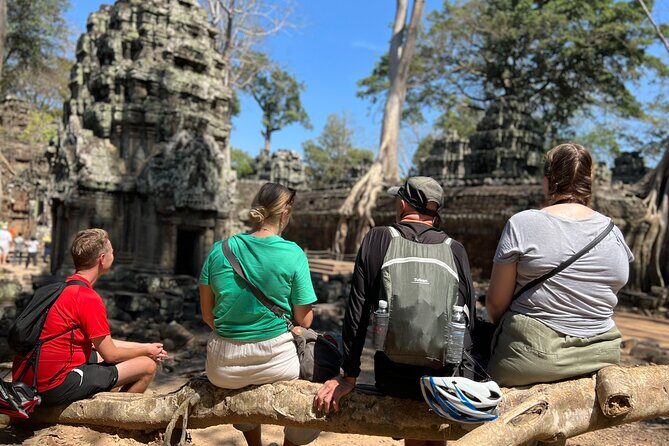
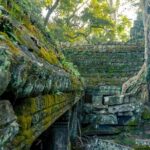
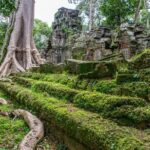
Next is Ta Prohm, famous for the way kapok trees clasp the sanctuaries with their mighty roots. The tour allots about 1 hour at Ta Prohm, which is a practical choice. Ta Prohm can pull you into a “just one more look” loop because the visuals are so unique—roots, stone, and the structure’s aged edges.
A bike tour helps here too, because Ta Prohm is often where people feel worn down. With a guided format, you’re less likely to lose time trying to figure out where to go next. You can focus on the key viewpoints and the temple framing the trees create.
This stop also balances the day nicely. If Angkor Wat and Bayon feel more like monumental architecture, Ta Prohm feels like architecture with nature wrapped around it. It’s a different sensory experience, and it’s one of the reasons this tour route works so well as a full-day Angkor snapshot.
Lunch and pace: why the midday break is part of the value

Lunch is included, and it’s served at local restaurants. You’ll find this matters more than you might think, because temple days have a way of turning “I’ll grab something later” into a headache.
Having lunch scheduled into the day means you’re less likely to:
- miss a key temple time window
- end up spending more than expected on snacks and drinks
- feel hungry enough to make photos harder and explanations less enjoyable
The guide plus bike format also supports a steady pace. You’re not bouncing between temples with long gaps or turning your day into transport-only time. That’s why this costs $40 in the first place: it’s designed to combine access, movement, and guidance.
Group size and the guide experience: small is better in Angkor
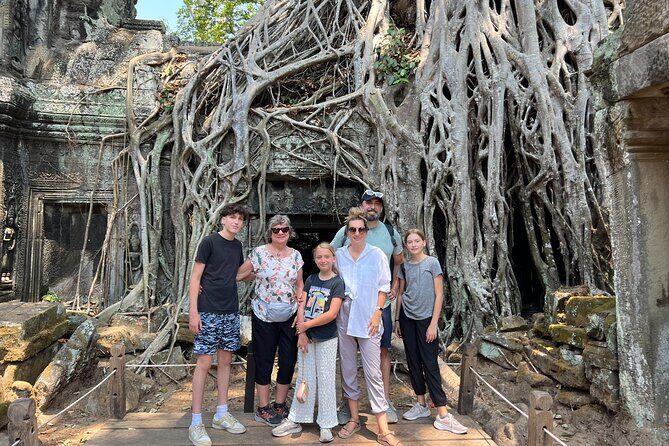
The tour keeps group sizes small—typically 2 to 7. That’s a sweet spot for Angkor. Too small, and you may feel like you’re always waiting for decisions. Too big, and you get the herd effect: stop, photo, shuffle, repeat.
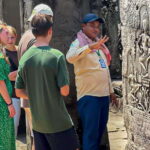
A smaller group also helps you get more out of the English-speaking guide. Even when each temple is a major attraction, explanation changes the experience. The tour’s descriptions point to specific stories you can carry into each stop: Avalokiteshvara at Bayon, Jayavarman VII’s connection, and Ta Prohm’s nature-meets-stone look.
There’s also an option for private tours with custom itineraries for groups of 4 or more. If you’re traveling with friends and want to steer the day toward certain structures or a different rhythm, that can be a smarter fit than joining a standard group.
What to expect on a modern giant bike day
You’ll ride a modern giant bike, with transportation provided as well. Practically, that means you’re not dealing with odd bike sizes or sketchy equipment. The tour is built around comfortable movement between temple zones.
Still, biking through an ancient city means you’ll want to be ready for the real-world factors of Siem Reap:
- traffic and changing road surfaces
- sun exposure during morning and midday
- bumpy temple approaches
If you want the most comfortable experience, wear breathable clothing, use sunscreen, and plan for a water-and-sweat day. The tour includes bottled water, which helps, but heat management is still on you.
Who this Angkor bike tour is best for
This is a great match if you want an organized Angkor day that isn’t exhausting and isn’t purely self-guided.
It’s especially good for:
- first-timers to Angkor who want the highlights with context
- couples and small groups who like a calmer pace
- travelers who don’t want to spend the entire day solving transport and ticket logistics
Most travelers can participate, but it’s still a temple-and-bike day. If you know you struggle with heat, uneven ground, or longer periods of standing, you might want to compare with a slower walking-focused tour.
Should you book? My practical take
I think you should book this tour if your priority is getting to major Angkor sites in a single day without turning your schedule into a puzzle. For $40, the included bike, guide, pickup/drop-off, lunch, and water make it easier to justify than piecing everything together yourself.
I’d hesitate only if you strongly dislike buying temple passes on arrival or you need a very flexible, low-effort day with no weather dependency. The tour does require good weather, and if it’s canceled due to poor conditions, you’ll need to adjust to a new date or get a refund.
If you want a smart route, a small-group feel, and a midday meal planned for you, this is a solid way to do Angkor Wat and Angkor Thom.
FAQ
What is the price of the Angkor Wat Bike Tour with Lunch Included?
The price is $40.00 per person.
How long is the tour?
The duration is approximately 8 hours.
What does the tour include?
It includes an English-speaking guide, bottled water, a modern giant bike, hotel pickup and drop-off, transportation, and lunch.
What is not included in the price?
Temple pass, breakfast, personal expenses, and tips are not included.
What time does the tour start, and is pickup included?
Pickup is offered around 7:30 am, and the tour start time is listed as 8:30 am. Hotel pickup and drop-off are included.
How many people are in a group?
The group is described as nice small, with a minimum of 2 and a maximum of 7. The activity also lists a maximum of 10 travelers.
What is the cancellation policy and what if weather is poor?
You can cancel for a full refund up to 24 hours in advance. The tour requires good weather; if canceled due to poor weather, you’ll be offered a different date or a full refund.