REVIEW · SIEM REAP
Best Temples Day Tour in Siem Reap with Sunset
Book on Viator →Operated by Journey Cambodia · Bookable on Viator
Angkor at sunset is magic, but only if the logistics behave. This small-group day tour lines up the major Angkor sights and ends with Pre Rup at sunset, with hotel pickup and comfort built in. I like that you get a clear route through the UNESCO complex instead of spending your day figuring out what to see next.
Two things I especially like: the air-conditioned minivan plus cold water and a cool towel keep you moving even when it’s hot, and the guide work is geared toward making temple visits easier and more meaningful. You’ll also have time for photography at the key stops without feeling rushed every minute.
One watch-out: temple entrance fees are not included, and the sunset part depends on timing and your guide’s pace. If you’re hoping for a perfectly long linger at the viewpoint, go with flexible expectations and plan to arrive ready with your camera setup.
In This Review
- Key highlights worth knowing
- Why Pre Rup at sunset is the smartest way to end your Angkor day
- Hotel pickup, air-conditioned comfort, and how the small-group format helps
- Angkor Wat: the world-famous first stop, done without the setup headaches
- Angkor Thom South Gate and Bayon faces: the part that rewards time
- Terrace of the Leper King and Elephant: quick passing stops that still matter
- Srah Srang lunch break: a real pause, even if lunch is on you
- Ta Prohm jungle ruins: where you’ll want patience and shaded breaks
- Pre Rup at sunset: photos, timing, and the Shiva connection
- Price and value: what you pay versus what you’re actually buying
- Who should book this Angkor sunset day tour (and who might skip it)
- Practical tips you’ll thank yourself for on the day
- Should you book this Best Temples Day Tour with Sunset?
- FAQ
- What time does the tour start?
- How long is the tour?
- Is hotel pickup and drop-off included?
- Are temple entrance fees included in the tour price?
- Is lunch included?
- What comfort items are included for the day?
- What are the dress requirements?
- Is there an age limit for this tour?
- What is the maximum group size?
Key highlights worth knowing
- Pre Rup sunset timing is the headline, with about two hours there to get photos and soak up the mood
- Hotel pickup and return mean no central drop-off and less time hauling bags around town
- Small group (max 15) keeps the day from turning into a crowded shuffle
- Comfort in the heat includes an air-conditioned vehicle, bottled water, and cool towels
- Big-name Angkor stops are included, from Angkor Wat to Ta Prohm, plus Angkor Thom and Bayon
- Temple pass is separate (paid on site), so budget for the full cost up front
Why Pre Rup at sunset is the smartest way to end your Angkor day
Most first-timers arrive at Angkor with the same plan: see as many temples as possible and chase photos wherever the crowds are. This tour is built to finish on a stronger note. Pre Rup at sunset tends to give you that slower, atmospheric feel you don’t always get during mid-day temple visits.
Also, a “guided route” matters more than people think. Angkor is huge. Even with a map, you can lose time crossing between the right areas. Here, you’re handed the order of stops, so your day stays functional. You also get a clear photo rhythm: wide iconic structures earlier, then the sunset payoff at the end.
You can also read our reviews of more evening experiences in Siem Reap

Hotel pickup, air-conditioned comfort, and how the small-group format helps
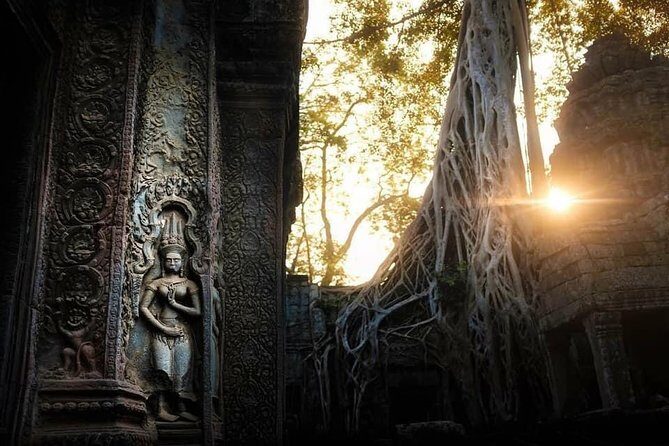
Start time is 8:00 am, and you’re picked up from your hotel, then returned there after the tour. That “door-to-door” setup is a big deal in Siem Reap, because you’re not paying tuk-tuk time to and from the main temple circuit.
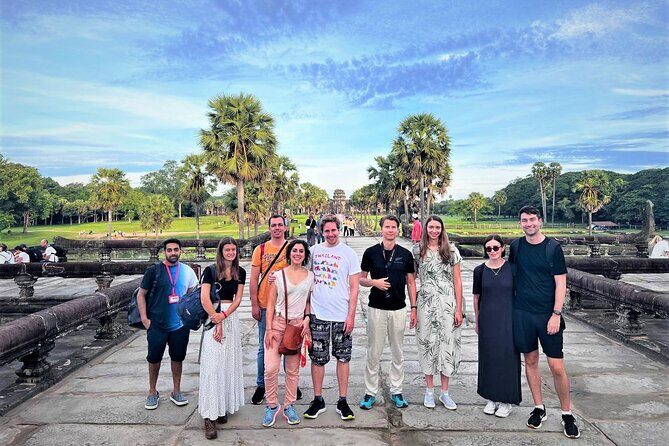
The ride is in an air-conditioned minivan. You also get complimentary bottled water and a cool towel during the day, which helps a lot when your feet are walking on hot stone. The tour caps at 15 travelers, so you’re not trapped in the kind of group logistics where everyone waits for everyone else.
Another practical detail: it’s a mobile ticket experience, and you typically confirm at booking. If you’re the kind of person who likes to travel light, that matters.
Angkor Wat: the world-famous first stop, done without the setup headaches
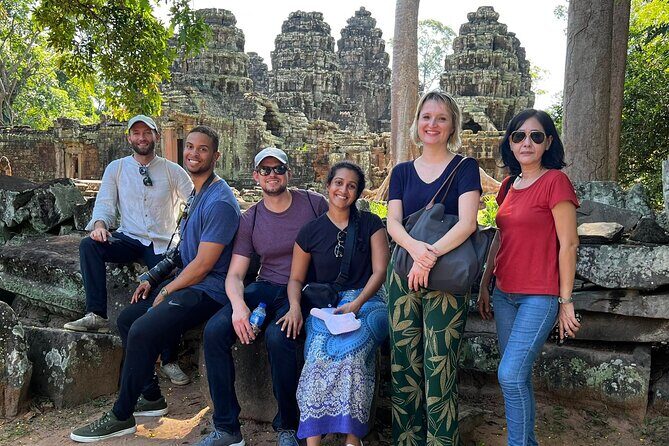
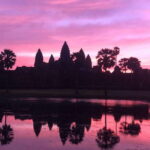
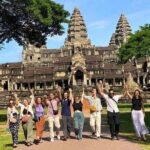
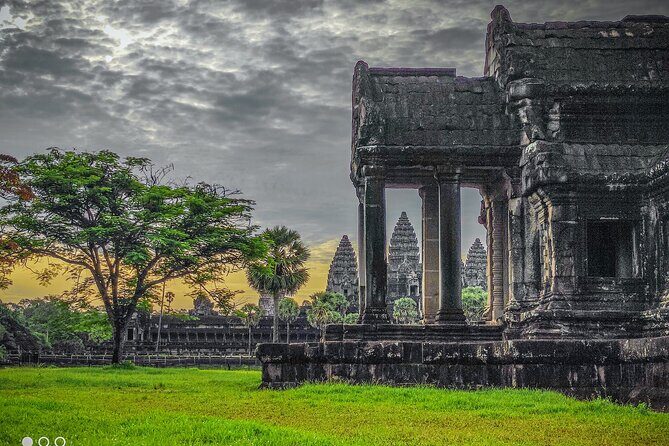
You’ll visit Angkor Wat first, with about two hours there. This is the big one: the world’s largest religious monument, and one of the most photographed temple complexes on Earth.
What I like about starting here is that you’re not yet tired. You can walk with a plan: linger around the most famous angles, then gradually explore side areas while the light is still workable. Even though the tour is not explicitly a sunrise visit, two hours gives you enough space to get the classic shots and still wander.
The main drawback is also simple: admission is not included. You’ll need to pay the temple pass directly at the site. The good news is that visa cards are accepted, and the pass is available on the day.
Angkor Thom South Gate and Bayon faces: the part that rewards time
After Angkor Wat, you head to Angkor Thom South Gate (about 30 minutes). This is the ceremonial entrance to what served as the Khmer Empire’s capital city area. Even in a short stop, it gives you context fast: you’re not just looking at random ruins. You’re entering a former power center.
Next is Bayon Temple, with about 1 hour 30 minutes. Bayon is famous for its central towers covered in more than 200 enormous faces. This is one of those temple experiences where the “standing and staring” helps. If you rush, you miss the way the carvings align from different angles.
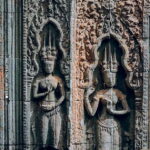
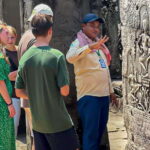
If you care about photos, Bayon is a good place to slow down. Try stepping to different sides instead of shooting from only one spot. With a guided group, you can also ask your guide where to stand for the best view, especially around the face towers.
Terrace of the Leper King and Elephant: quick passing stops that still matter
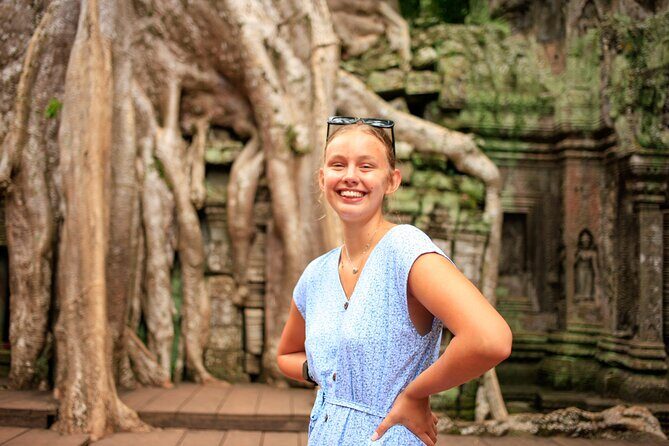
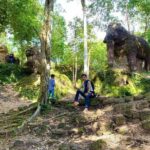
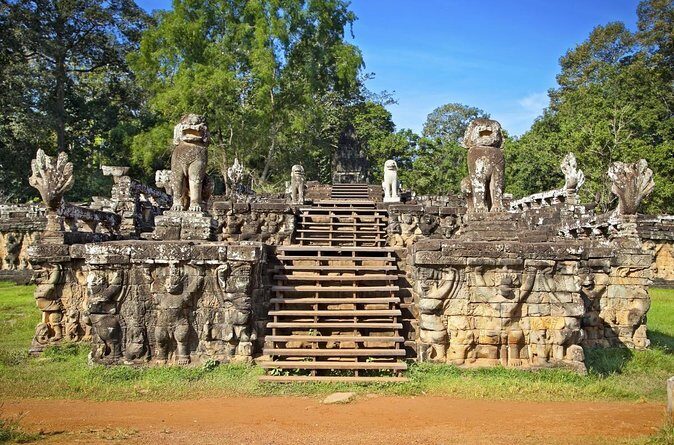
On the way through Bayon area, you’ll pass by the Terrace of the Leper King and the Terrace of Elephant. These are famous names, and even a short pass can help your brain connect the dots between structures and carvings.
The only trade-off is time. If you want long, sit-down studying of every detail, you may wish you had more than a quick look. But as part of a full-day route that’s timed for multiple “must-see” sites, a pass-by makes sense.

Srah Srang lunch break: a real pause, even if lunch is on you
You stop at Srah Srang and get about an hour to rest and enjoy lunch nearby (lunch is not included). This is a smart place to take a break. You’re moving between dense clusters of stone and shade, and you’ll likely appreciate having a calmer hour to regroup.
Since meals are on your own, the best move is to keep expectations practical: pick something simple, eat what’s convenient, then get back out. The heat can catch up after hours of walking, so even a quick meal helps you stay steady for Ta Prohm and the Pre Rup sunset.
Ta Prohm jungle ruins: where you’ll want patience and shaded breaks
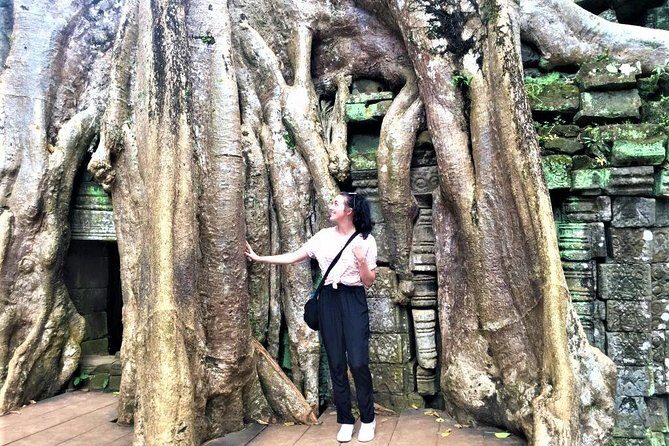
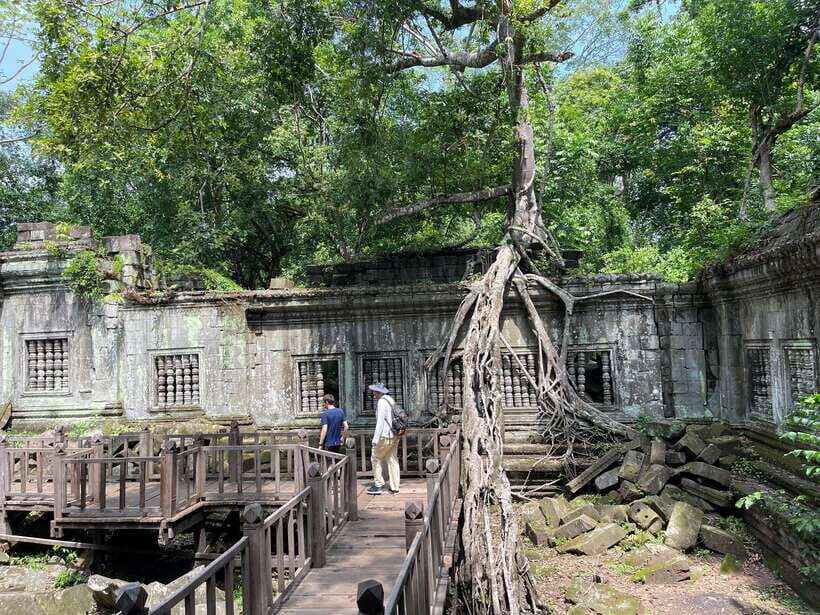
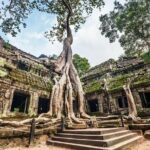
Ta Prohm is next, with about 1 hour 30 minutes. This is the jungle-temple that many people picture instantly: ruins threaded through with big fig trees. The trees don’t just sit nearby—they grow into the structure, and that mix of architecture and nature is exactly why this stop feels different from the more open temples.
This is also a great spot to notice textures. Watch how the stone edges and roots intersect, and don’t just take photos from one corner. If you’re traveling with kids, this is often the temple that turns “walk time” into “story time,” because the setting feels like a living puzzle.
A practical note: you’ll still be in the sun at times. Plan on short shaded pauses when you can, and use the cool towel and water when your guide suggests it.
Pre Rup at sunset: photos, timing, and the Shiva connection
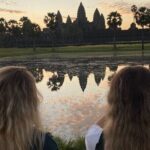
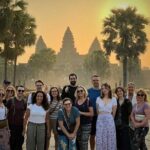
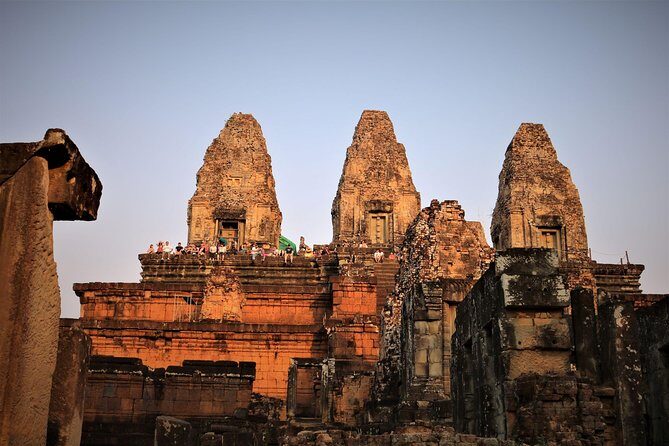
The final major stop is Pre Rup, with about two hours and the big moment: sunset. Pre Rup is dedicated to Shiva, which helps explain the temple’s spiritual framing. Even if you don’t know every term, a guide’s explanation can make the carvings and layout feel less like random stone.
This is where the day’s value really shows. You’re not ending with a rushed stop. You’re ending with a reason to slow down: the changing light, the viewpoint energy, and the chance to step back from the constant walking.
Two considerations to keep in mind:
- Your experience depends on your guide’s pacing. If the guide speaks quietly, ask questions closer to them so you don’t miss details.
- Sunset timing is weather and seasonal dependent. If you’re the type who needs a long, uninterrupted viewing window, keep your schedule flexible and arrive ready with your photo setup.
Price and value: what you pay versus what you’re actually buying
The tour price is $22 per person, and that sounds like a steal—until you add the temple pass. Temple entrance fees are at your expense, listed as $37.00 per person paid directly to the site.
So your realistic “all-in” baseline is around $59 per person before meals. In return, you’re getting:
- Hotel pickup and return (less friction than DIY)
- Air-conditioned transport
- A guide who helps you understand what you’re seeing and how to move through the complex
- Bottled water and cool towel support
- A full Angkor route that hits the major crowd-pleasers plus the sunset finale
This is the kind of value that works best for people who want a guided structure but don’t want to pay premium “private driver only” costs. It’s also good for families because the group format keeps things organized.
Who should book this Angkor sunset day tour (and who might skip it)
This tour is a good match if:
- It’s your first time in Angkor and you want the big hits in a sensible order
- You’d rather pay for guidance than spend your time mapping routes
- You care about comfort in the heat (air-conditioning, water, cool towel)
- You want a sunset ending that feels like a finish, not a last-minute scramble
It may be less ideal if:
- You prefer total independence and want to set your own pace at each temple for hours
- You’re extremely sensitive to guide volume and want a loud, constant narration. In smaller groups, one guide can make the day feel smooth—or make it hard to hear, depending on speaking style
On family travel: the info notes reduced rates for children aged 5 to 11, but it also lists a minimum age of 8 for this small group. If you’re traveling with kids under 8, check with the operator before you book so you don’t get surprised by the age rule.
Practical tips you’ll thank yourself for on the day
A few things will make your day go better right away:
- Dress code: you need respectful coverage—shoulders and knees covered. A scarf for shoulder coverage isn’t allowed, so plan clothing that actually covers.
- Wear comfortable walking shoes. Angkor stone paths can be unforgiving.
- Bring a small layer even when it’s warm. Indoors and shaded ruins can feel cooler than you expect.
- Budget your time for sun and camera breaks, especially during the Ta Prohm and Pre Rup segments.
It also helps to know that the guides leading this tour can vary. Some guides you may run into include names like Sangria, Sin Peng Eang, Saruon, Bun (with Pan noted as well), Yuth, and Chhay. If you get a quieter guide, ask a short question as you move between stops—you’ll usually get clear answers.
Should you book this Best Temples Day Tour with Sunset?
If you want a full Angkor day that feels organized, comfort-focused, and ends with a real sunset payoff, I’d book it. The mix of major temples—Angkor Wat, Angkor Thom, Bayon, Ta Prohm—and the structured stop at Pre Rup is a strong formula for value.
I’d only hesitate if you’re determined to maximize time at each site beyond what a packed day allows, or if you hate the idea of paying a separate temple pass on top of the tour price. If that extra cost fits your budget and you’re okay following a set route, this is one of the simplest ways to see the core of Angkor without turning your trip into logistics homework.
FAQ
What time does the tour start?
The tour start time is 8:00 am.
How long is the tour?
The duration is about 10 hours.
Is hotel pickup and drop-off included?
Yes. You get hotel pickup and drop-off, and you return straight back to your hotel (no central drop-off point).
Are temple entrance fees included in the tour price?
No. The temple pass is not included and must be paid directly at the sites. The price listed is $37.00 per person, and Visa cards are accepted.
Is lunch included?
No. Lunch is available nearby but not included.
What comfort items are included for the day?
You get an air-conditioned minivan, plus complimentary bottled water and a cool towel to help with the heat.
What are the dress requirements?
You need shoulders and knees covered. Shoulders cover with a scarf is not allowed, so plan clothing that covers appropriately.
Is there an age limit for this tour?
The info notes a minimum age of 8 years for this small group tour. It also mentions reduced rates for children aged 5 to 11, so check details with the operator for exact eligibility.
What is the maximum group size?
The tour has a maximum of 15 travelers.