REVIEW · SIEM REAP
From Siem Reap: Banteay Srei and Kulen Waterfall Guided Tour
Book on GetYourGuide →Operated by Angkor Day Trip · Bookable on GetYourGuide
Banteay Srei and the River of 1,000 Lingas make this day feel bigger than its 8-hour schedule, and both are unforgettable in different ways. You also get a rare, up-close look at Khmer religious art in places most people skip, plus a sweet little taste of local life along the way.
The best part is how the day connects themes: sacred water and carvings on Kulen, then Shiva-and-Parvati temple sculpture at Banteay Srei, both with serious age behind them. The main catch is physical effort: there are viewpoints on Kulen’s ridges and a modern staircase added to the Buddha statue, so if you have joint issues or limited mobility, this tour can feel challenging in Cambodia heat.
In This Review
- A Guide Who Keeps the Day Moving
- Key Highlights You’ll Care About
- The Value of This Full-Day Circuit From Siem Reap
- Getting to Phnom Kulen: Peng Takhu / Peng Chrunh Views
- Preah Ang Thom: The Reclining Buddha Reaching Nirvana
- River of 1,000 Lingas: Anlong Pong Phkay in Real Size
- Waterfalls on Kulen: Two Falls, One Weather Story
- Lunch Stop and the Local Rhythm
- Banteay Srei: Pink Stone, Tight Details, Big Meaning
- Preah Dak Village: Palm Cake, Fruit, and Clean-Local Focus
- Logistics That Actually Matter: Comfort, Timing, and Group Size
- Price and Value: What $49 Covers (and What Adds Up)
- Who This Tour Fits Best
- Should You Book This Tour?
- FAQ
- FAQ
- What’s included in the $49 per person price?
- Do I need to pay extra for Kulen Mountain and Banteay Srei?
- Is lunch included?
- How long is the tour, and how much time is spent in Phnom Kulen?
- Is this tour difficult if I have joint issues or limited mobility?
- Do you pick up and drop off from hotels in Siem Reap?
A Guide Who Keeps the Day Moving
I really liked how the day stays organized without feeling rushed. With a small group size, your guide—like Sam, who was calm, communicative, and quick to adjust—can shift the plan to avoid wasted energy when the weather gets hot.
And yes, the driver helps you feel human: cold bottled water and cold towels show up at the right moments. The itinerary still packs a lot in, though, so plan to pace yourself and don’t skip breaks.
Key Highlights You’ll Care About
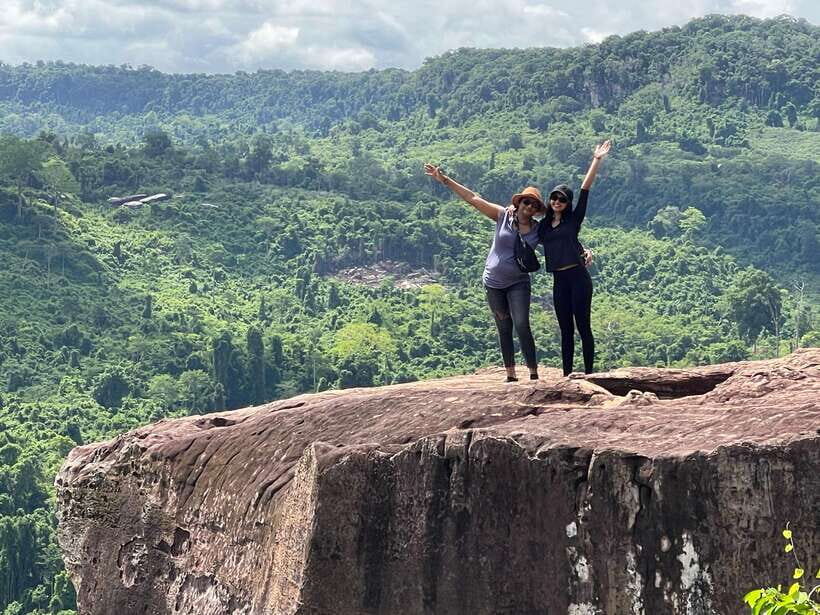
- Peng Takhu / Peng Chrunh cliff viewpoint time for panoramic Kulen views without overcomplicating the logistics
- Preah Ang Thom reclining Buddha—an 8-meter statue carved into a huge sandstone boulder, reached by staircase
- Anlong Pong Phkay (River of 1,000 Lingas) with carved linga, yoni, and a Vishnu figure along a 500-meter stretch
- Two waterfalls on Kulen with sizes that change a lot by season and rainfall
- Banteay Srei temple sculpture in famous pink stone dedicated to Shiva and Parvati
- Preah Dak village visit plus included palm cake and seasonal fruit tasting
You can also read our reviews of more guided tours in Siem Reap
The Value of This Full-Day Circuit From Siem Reap
This is a classic Siem Reap-area “big sights, sensible pace” day. You’re leaving town for Phnom Kulen National Park, then returning for Banteay Srei, one of the most respected Khmer temple experiences outside the main Angkor cluster.
What makes this tour good value isn’t only the ticket-price headline. It’s the fact that you’re covering several very different kinds of sites—cliff viewpoints, sacred carvings in a riverbed, a major Buddha statue, waterfalls, and a highly detailed temple—inside one guided loop with hotel pickup, air-conditioned transport, and included water and towels.
Also, this is one of those days where the guide matters. Khmer art and sacred spaces can feel confusing if you just walk through on your own. A good guide helps you see what you’re looking at without turning it into a classroom.
Getting to Phnom Kulen: Peng Takhu / Peng Chrunh Views
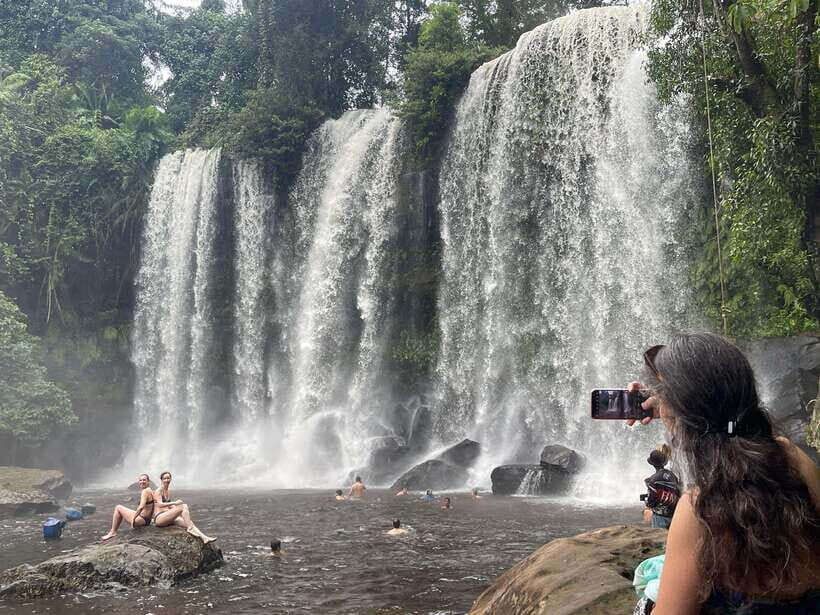
The morning starts with Phnom Kulen National Park, and your first “wow” comes from the Peng Takhu (also shown as Peng Chrunh) area. It’s described as a hidden tourist site on Kulen’s ridge, meaning you’re not just lining up at the loudest Instagram spots.
Expect scenic ridge views and a change of perspective from Siem Reap’s flatter terrain. These viewpoints are also where the day’s rhythm starts: you’ll get a chance to take photos, catch your breath, and settle into the fact that Kulen is a mix of nature and sacred geography.
Practical note: even when you’re not doing long hikes, you are on uneven ground. Wear shoes you trust. If you’re thinking sandals, I’d reconsider.
Preah Ang Thom: The Reclining Buddha Reaching Nirvana
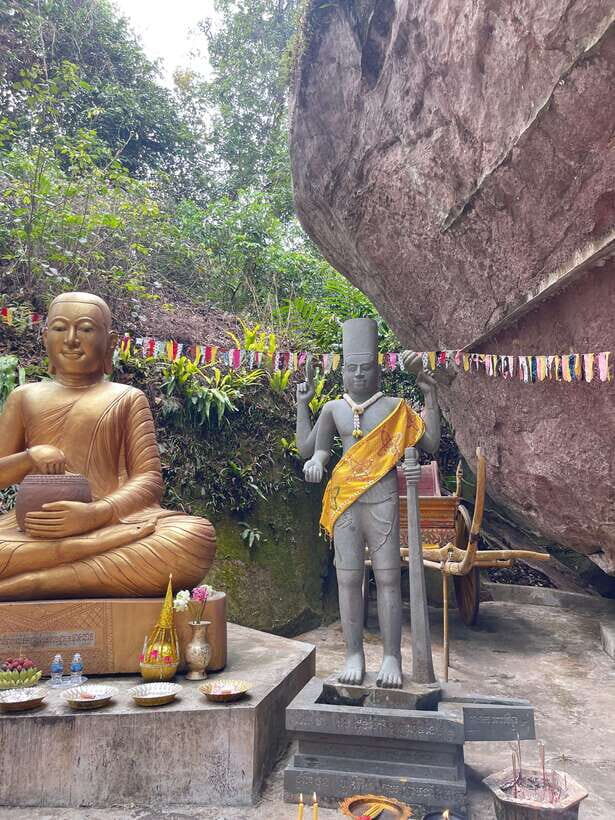
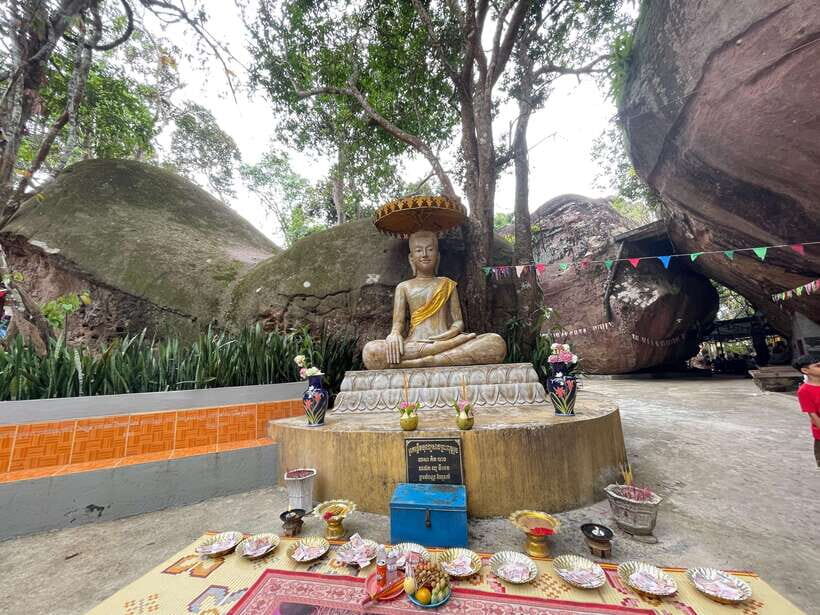
Next up is Preah Ang Thom, also called the Preah Ang Thom Pagoda. This one is specific and striking: an 8-meter (26 ft) tall reclining Buddha reaching nirvana, carved into a huge natural sandstone boulder.
What makes it special is that it’s not just a statue plopped into a temple building. The Buddha sits within the sandstone itself, and there’s a modern staircase plus a shelter over the statue. That shelter matters when the sun is doing its own version of a heatwave.
It’s also a sacred site for Cambodians, so you may find steady foot traffic. That doesn’t make it less impressive; it usually means you’re seeing the statue in the context it was meant for—people coming to pay respect.
If you’re sensitive to crowds or want quieter moments, arrive with patience and let your guide guide the timing.
River of 1,000 Lingas: Anlong Pong Phkay in Real Size
Then you shift from sculpture-in-stone to carving-in-stone. Anlong Pong Phkay is the River of 1,000 Lingas, where along a riverbed stretch of around 500 meters you can see carved linga and yoni, including both big and small pieces.
You’ll also spot a large Vishnu carving, plus smaller carvings on the riverbed walls. Standing there, it helps to remember that these are not “decorations.” They’re part of a long-lived religious landscape where Hindu symbolism and sacred water ideas meet.
Here’s the practical payoff for having a guide: without explanation, it’s easy to see “lots of carvings” and move on. With context, you start noticing patterns—how figures are placed, how the carvings relate to the riverbed surface, and why this spot became an enduring reference point.
Waterfalls on Kulen: Two Falls, One Weather Story
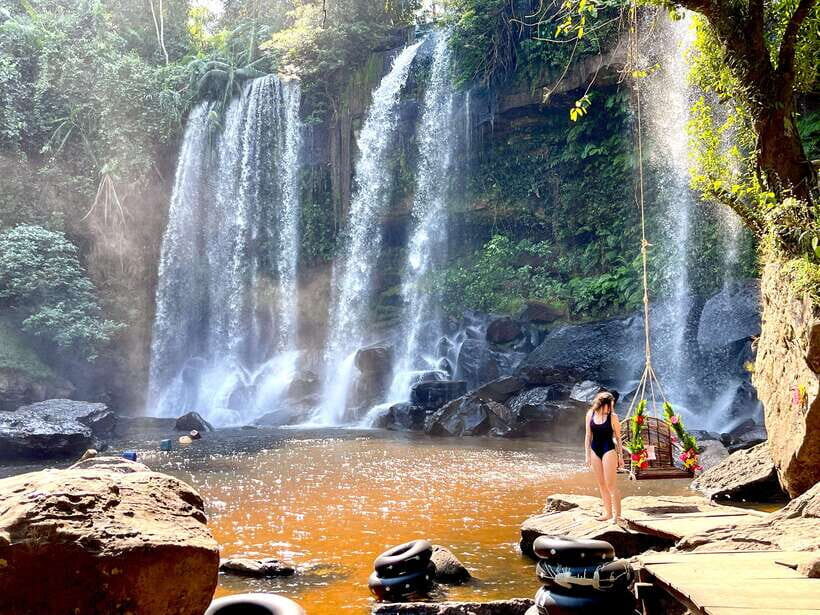
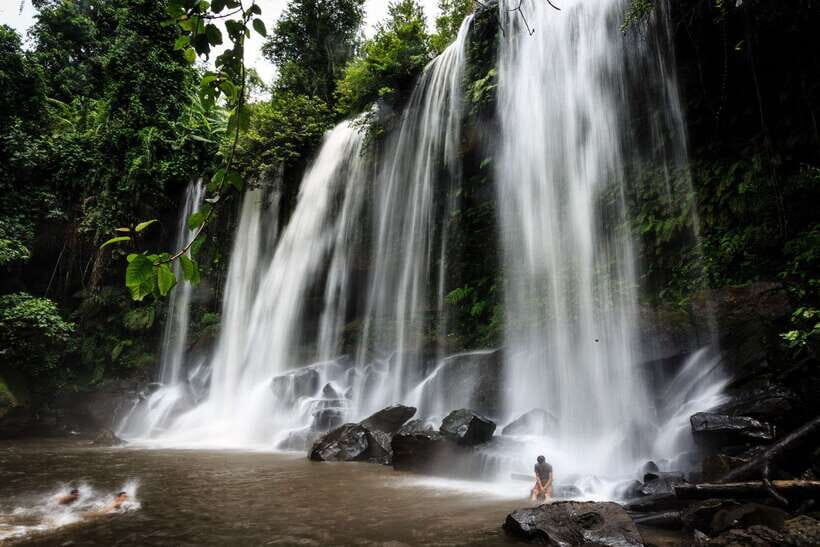
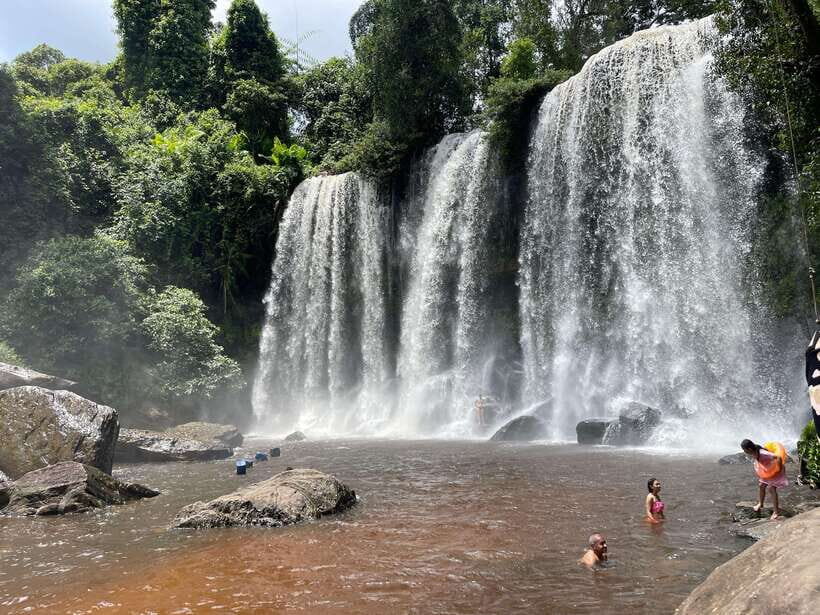
Kulen’s waterfalls are a highlight, but they’re also a lesson in seasonality. The tour explains two main waterfalls, and their sizes change during rainy seasons:
- First waterfall: about 4–5 meters tall and roughly 25 meters wide in the rainy season
- Second waterfall: about 15–20 meters tall and around 15 meters wide in the rainy season
If you’re visiting in a drier stretch, don’t expect the same force. The core idea is simple: rainfall controls scale. That’s why a guided day is helpful—you’re going at a time when conditions may be best, and your guide can point you toward what’s worth seeing even when water volume isn’t at its peak.
If you want the most dramatic photos, think about timing and light, and keep an eye out for slippery rocks. Bring footwear that grips.
Lunch Stop and the Local Rhythm
There’s a local restaurant stop for lunch, but food and drinks aren’t included. Plan to pay for your own meal.
This is one of those “good enough to reset” breaks. It’s not a culinary masterclass stop; it’s a practical pause before the temple side of the day. If you’re hungry, order what looks easiest. If you’re heat-stressed, choose something that won’t slow you down before the next climb.
Banteay Srei: Pink Stone, Tight Details, Big Meaning
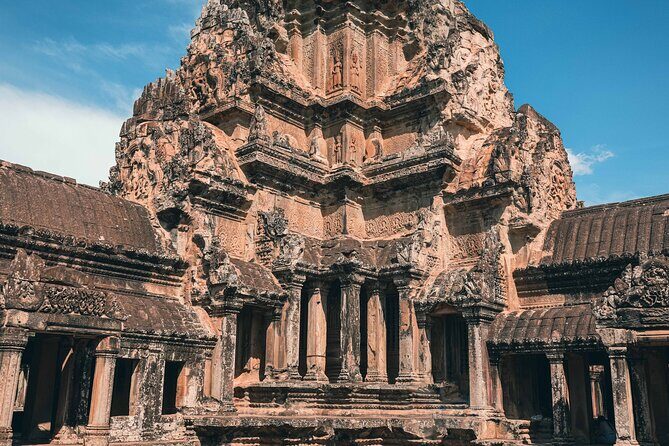
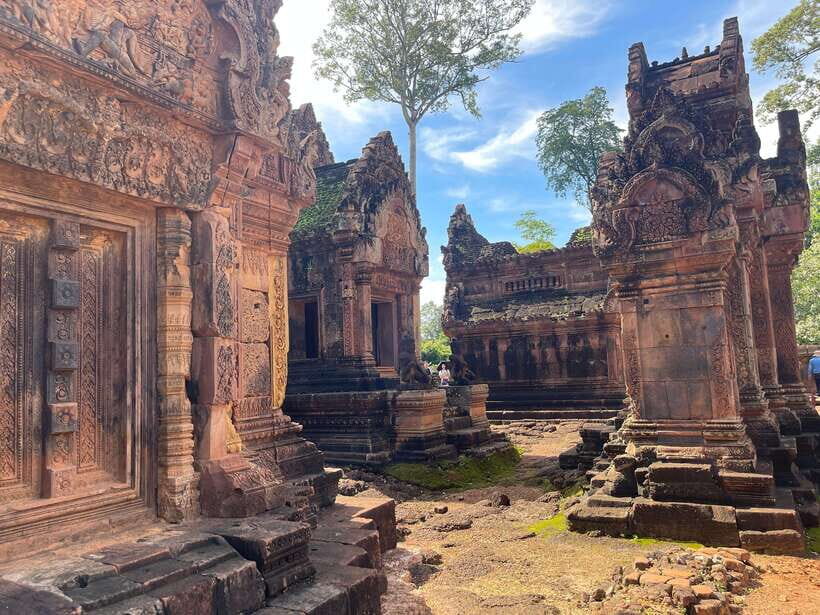
Banteay Srei is the temple finish most people remember. It’s a 10th-century CE Cambodian temple dedicated to Shiva and Parvati, and it’s set near Phnom Dei hill, about 25 km northeast of the main Angkor area.
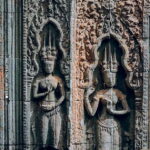
The headline is the pink stone. Up close, it’s not just a color effect—it’s the material that makes the carvings feel precise and delicate. This temple is known for exquisite sculpture, and the art is the point.
A key logistics detail: Banteay Srei requires an Angkor Pass. So if you’re budgeting for your day, this matters. If you don’t already have the pass, you may need to arrange it ahead of time so you don’t lose momentum at the gate.
Expect it to feel calmer than the busiest major Angkor temple areas. That doesn’t mean it’s empty. It just means the focus is more on the temple’s details and less on mass milling.
Preah Dak Village: Palm Cake, Fruit, and Clean-Local Focus
After Banteay Srei, you visit Preah Dak, a village near Siem Reap that’s famous for nom ban chok noodles. It’s also described as a model village through initiatives like the One Village, One Light Bulb solar scheme.
Your stop is short—about 20 minutes—so think of it as a quick check-in on everyday village life rather than a long cultural immersion. The most tangible “local life” part here is included: palm cake tasting and seasonal fruit tasting.
This part of the day works because it breaks the stone-and-stairs rhythm. You get a sensory moment—sweet and seasonal flavors—that also connects to the fact that Cambodia’s heritage isn’t only temples. It’s also how people live around them.
Logistics That Actually Matter: Comfort, Timing, and Group Size
This tour runs about 8 hours. The plan includes roughly 3 hours inside Phnom Kulen National Park, plus time at Banteay Srei and a short village stop.
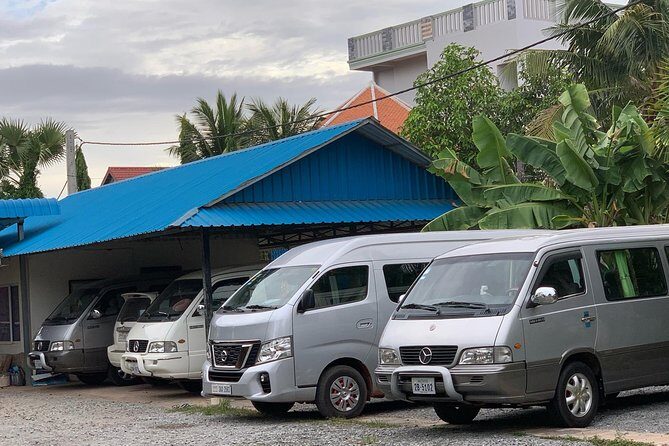
You travel in an air-conditioned vehicle, and your day includes bottled water and towels. Cold water and towels might sound like small stuff until you’re in the heat and you realize how much energy you save by not overheating.
Group size is another real factor. You can do private or small groups, and the day can combine tours. When a guide merges groups, it only works well if they communicate changes clearly and keep the pace manageable—which is exactly the style Sam used when his group of four expanded by combining.
One more practical consideration: this is not a “sit all day” itinerary. Even with a guide and vehicle support, you’re walking on temple paths and doing stairs at the Buddha site.
Price and Value: What $49 Covers (and What Adds Up)
The price is $49 per person for the guided tour with hotel pickup and drop-off in Siem Reap, an English-speaking guide, transportation in an air-conditioned vehicle, and the included tastings of local palm cake and seasonal fruit. Bottled water and a towel are also included.
But you should budget for these extra costs:
- Kulen Mountain National Park entrance fee: $20 per person
- Banteay Srei Temple: Angkor Pass required
- Food and drinks: not included, even though there’s a lunch stop
- Tipping guide and driver: not included
So the real value test is simple: do you want a guide to make sense of the sacred carvings, and do you want transport that keeps you from piecing everything together yourself? If yes, this day is a practical way to see a lot without turning your trip into a logistics project.
Who This Tour Fits Best
This tour is a strong match if you want variety: sacred carvings, a major Buddha statue, waterfalls that depend on weather, and a top-tier temple with famous pink stone.
It’s also a good fit if you like the idea of being guided through meaning, not just moved from point to point. A guide’s explanations help the River of 1,000 Lingas section land in your brain instead of sliding by as random carving.
The main mismatch is mobility. There are stairs at the Buddha, and Kulen sites involve walking and outdoor heat. If your joints complain easily, or if stairs are a big issue, you’ll want to choose carefully.
Should You Book This Tour?
If you’re trying to see the best of Kulen plus Banteay Srei in one day, I think this tour earns its place. The combination makes sense: sacred carvings and Buddha on Kulen, then sculpture-forward Banteay Srei. Add in included water and a guide who can manage timing in heat, and you get a day that feels well-run instead of chaotic.
Book it if:
- You want guided interpretation for Khmer religious sites
- You like variety—views, carvings, temple art, and waterfalls
- You value comfort support like A/C transport, towels, and cold water
Skip or rethink it if:
- Stairs and uneven outdoor ground are hard for you
- You prefer a slower day with fewer stops and more free time
FAQ
FAQ
What’s included in the $49 per person price?
The tour price includes bottled water and a towel, free pickup and drop-off at city hotels in Siem Reap, an English-speaking professional guide, and transportation by air-conditioned vehicle. You also get included palm cake tasting and seasonal fruit tasting, plus sightseeing as described.
Do I need to pay extra for Kulen Mountain and Banteay Srei?
Yes. You’ll need to pay the Kulen Mountain National Park entrance fee of $20 per person. For Banteay Srei, an Angkor Pass is required.
Is lunch included?
Food and drinks are not included. The itinerary includes a lunch stop at a local restaurant, but you should plan to pay for your own meal.
How long is the tour, and how much time is spent in Phnom Kulen?
The total duration is about 8 hours. The schedule includes around 3 hours in Phnom Kulen National Park.
Is this tour difficult if I have joint issues or limited mobility?
It can be. The day includes outdoor walking and a site with a modern staircase at the reclining Buddha. The tour experience may be tough for anyone with joint issues or limited mobility, especially in hot weather.
Do you pick up and drop off from hotels in Siem Reap?
Yes. The tour includes free pickup and drop-off at city hotels in Siem Reap.