REVIEW · SIEM REAP
Kbal Spean, Banteay Srei & Banteay Samre temple
Book on Viator →Operated by Angkor Doors · Bookable on Viator
Three temples, one day, lots to climb. That’s the appeal of this Siem Reap circuit: Kbal Spean hike for the River of 1000 Lingas, then Banteay Srei and Banteay Samre for big Khmer-era carvings and quieter temple time.
I love how the day feels purpose-built for a private group, not a rushed hop-on ride. I also love the practical touches: an English-speaking guide (the name Chen comes up in the feedback) plus AC transport and cold water.
One thing to plan for: this is a hill hike to Kbal Spean, and the temples have a strict dress code (shoulders and thighs covered). If you’re not comfortable with walking uphill, this may feel harder than the other Angkor-area stops.
In This Review
- Key points that make this tour tick
- A countryside day in Siem Reap beyond the usual temple loop
- Price and what $64.11 buys you in the real world
- Morning pickup, private-group comfort, and temple dress rules
- Kbal Spean hike: the River of 1000 Lingas and what to expect
- Banteay Srei: the Citadel of Women and why the details matter
- Banteay Samre: a 12th-century Hindu temple in Angkor Wat style
- Optional Cambodia Landmine Museum: modern history, short and heavy
- Timing, pacing, and the 7 to 8 hour reality
- Guide support makes the difference on temple days
- Should you book this Kbal Spean, Banteay Srei & Banteay Samre tour?
- FAQ
- What time does the tour start in Siem Reap?
- How long is the experience?
- Is pickup included?
- Do I need an Angkor Pass?
- Are temple dress rules enforced?
- Is the Landmine Museum part of the tour?
Key points that make this tour tick
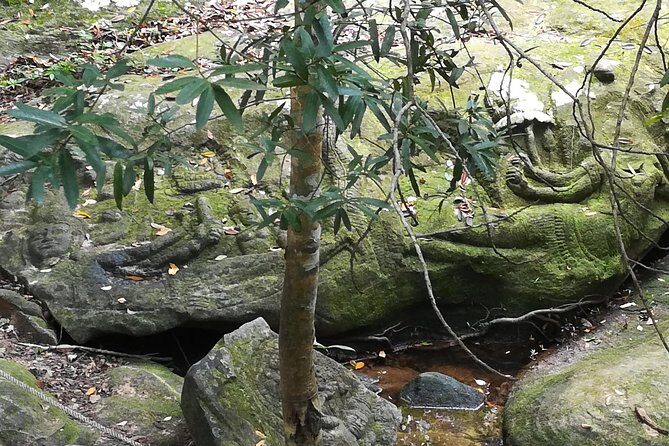
- River of 1000 Lingas at Kbal Spean: the big walking/hiking payoff of the day
- Banteay Srei, the Citadel of Women: stop with ultra-intricate carving focus
- Banteay Samre off the main circuits: a 12th-century Hindu temple in Angkor Wat style
- Optional Cambodia Landmine Museum: short, sobering modern-history perspective
- One-Day Angkor Pass required: factor this into your real total cost
- Private feel: only your group, with pickup and AC transport
A countryside day in Siem Reap beyond the usual temple loop
If your Siem Reap days feel like a checklist, this is a nice reset. Instead of only doing the headline temples, you get a countryside route through the Siem Reap province: Kbal Spean up on the hills, then two temples that are famous for their stonework rather than being just “another big ruin.”
What I like about this format is the pacing. You’re not trying to cram five sites into two hours. The day is built around three main stops—Kbal Spean, Banteay Srei, and Banteay Samre—plus an optional add-on. That means you can actually look at carvings, not just take photos and move on.
And this tour leans into a topic: the Khmer kingdom and temple tradition. You’re given history context as you go, which helps the stones make sense instead of looking like random old blocks.
You can also read our reviews of more tours and experiences in Siem Reap.

Price and what $64.11 buys you in the real world
The listed price is $64.11 per person, and the overall duration is 7 to 8 hours. That sounds like a normal day tour price in Siem Reap, but the real value comes from how it’s structured.
Here’s the part you should mentally price in: the tour does not include entrance fees for the temples, and you’ll need a One-Day Angkor Pass. That pass is listed as $37.00 per person, and it’s required for each visitor. So your all-in temple cost is higher than the base $64.11.
On the plus side, the included basics are exactly what you want for comfort and simplicity:
- English-speaking guide
- AC car/minivan/minibus transport
- bottled cold drinking water
If you’re comparing this to doing everything independently, that Angkor Pass requirement is the same either way. What you’re buying here is the guide’s history context plus a tight, organized route that saves your time and decision fatigue.
Also, the experience is private (only your group), which is a meaningful value upgrade if you’re traveling with family or friends who want control over timing and questions.
Morning pickup, private-group comfort, and temple dress rules
This tour starts at 8:00 am, after breakfast. Pickup is offered, and you’ll travel by AC vehicle (car, minivan, or minibus depending on your group size).
One practical detail that can’t be shrugged off: the temples have strict dress rules. You must cover thighs and shoulders when entering the temple complex, and you can be refused entrance if you show up not dressed right. It’s the kind of rule that doesn’t care if you’re just running late or thought a T-shirt would be fine.
If you want this day to feel smooth, wear temple-appropriate clothes from the start. It’s less stress than trying to fix it on the spot while you’re already on a schedule.
Kbal Spean hike: the River of 1000 Lingas and what to expect
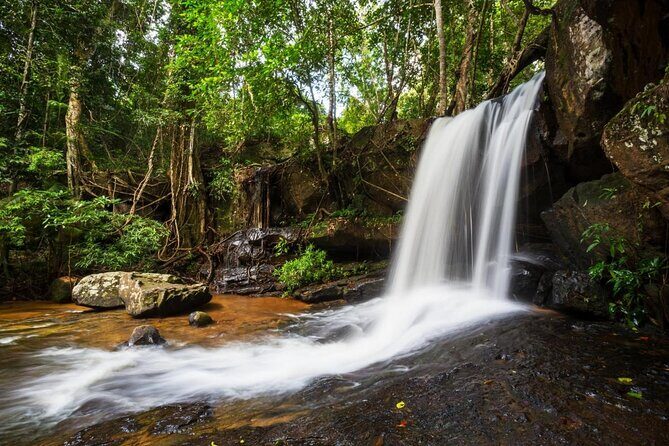
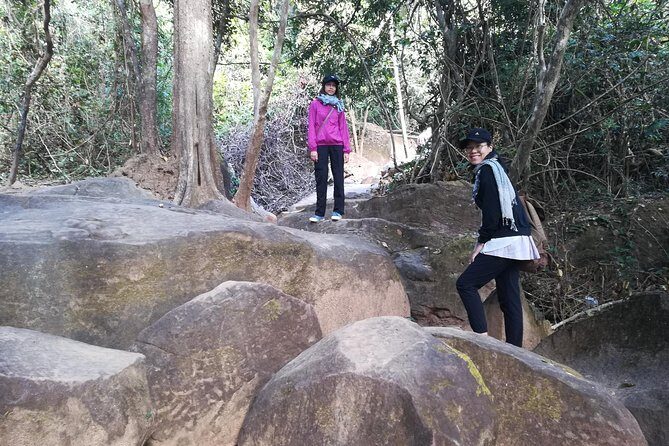
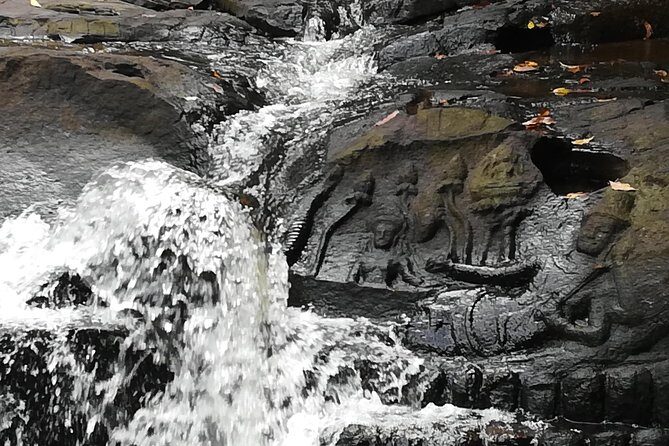
Kbal Spean is about 45 km from Siem Reap city, and it’s the physical heart of the day. You’ll start with Kbal Spean first, with about 2 hours at the site. This portion is described as hill hiking, and it’s recommended for visitors who are fit.
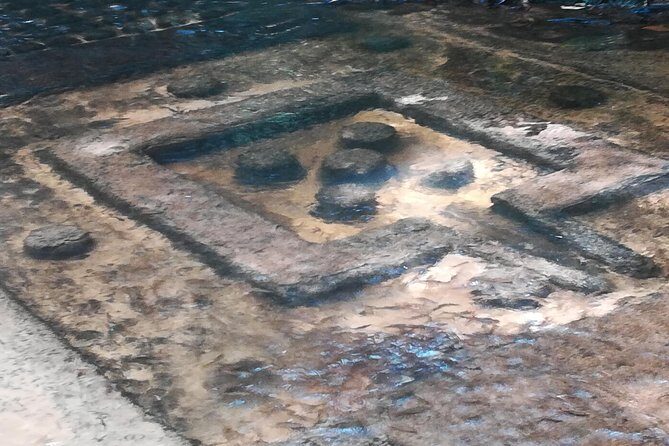
What makes Kbal Spean worth the effort is the payoff. The highlight is the River of 1000 Lingas, a distinctive feature that connects directly to the Hindu tradition used in temple storytelling across the region. Even if you’re not a big “nature + ruins” person, this is one of those places where the walk sets up what you came to see.
A couple of thoughts for your planning:
- Wear good walking shoes. They specifically recommend this for hill hiking.
- If you’re carrying a bag, keep it light. You’ll be doing uphill walking, and you don’t want comfort issues to steal your attention from the view and the carvings.
Also, this is one of those sites where weather matters. Hot morning sun can make the climb feel longer than the clock says, so start early and move at a steady pace.
Banteay Srei: the Citadel of Women and why the details matter
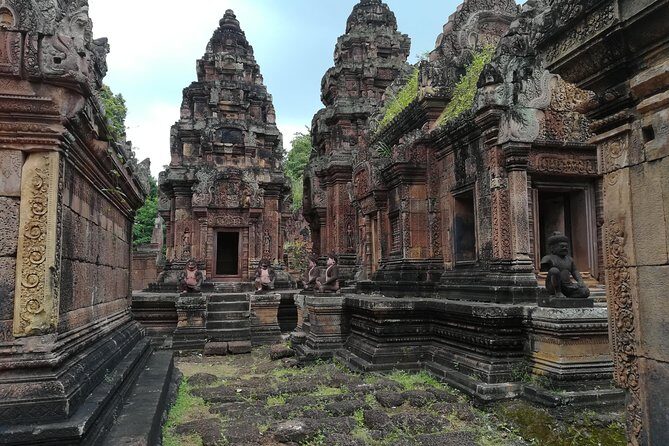
After Kbal Spean, you head to Banteay Srei, often called the Citadel of Women. This nickname comes from the belief that the carvings are so intricate they could only have been done by delicate hands.
Your time here is longer than the other stops—about 3 hours—which is a good sign. It means you’re not just passing through. You get the chance to actually study what’s special: those intricate stone details that reward slower looking.
This is also a temple stop that tends to feel different from the big, main-complex vibe. Here, the focus is on refined carving work and Khmer artistry. If you’re someone who likes to understand how a place was made—not just where it is—Banteay Srei is likely to be a highlight.
The main drawback to keep in mind is that you still have the same temple clothing expectations. Plan your day so you’re comfortable enough to linger and look closely without adjusting clothing every few minutes.
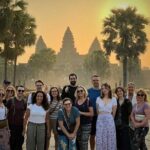

Banteay Samre: a 12th-century Hindu temple in Angkor Wat style
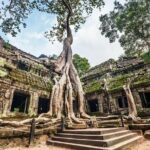
Next up is Banteay Samre, a 12th-century Hindu temple built in the style of Angkor Wat. If you’ve already seen lots of Angkor-area temples, this is a smart choice because it’s described as being off the tourist trail.
That matters more than you might think. When a temple is less crowded, you can spend more time reading the site with your guide, asking questions, and noticing layout details without the constant pressure of walking around strangers.
The tour allots about 2 hours here. That’s enough time to appreciate the temple’s design and listen to the history context without it turning into a pure photo sprint. It’s also a good contrast to Banteay Srei: one stop is known for intricate carvings and the Citadel of Women story; the other connects directly to the Angkor Wat style language and a Hindu temple setting.
If you want a day that feels like you’re learning the region, not just sightseeing it, this is where that learning starts to click.
Optional Cambodia Landmine Museum: modern history, short and heavy
There’s an optional stop at the Cambodia Landmine Museum. It runs about 30 minutes, and there’s an entrance fee listed as $6.00 per person.
This add-on is not about temples or ancient Khmer art. It’s about recent war history in Cambodia from 1970 to 1998, and it gives context for how the country has coped with the aftermath of conflict.
Because it’s only 30 minutes, it can fit without taking over your day. Still, it’s one of those experiences that can weigh on you a bit. If you’re sensitive to difficult topics, treat it like a deliberate stop, not something to rush through while you’re still focused on ruins.
Timing, pacing, and the 7 to 8 hour reality
This is a 7 to 8 hour day, starting at 8:00 am. The stop lengths are roughly:
- Kbal Spean: about 2 hours
- Banteay Srei: about 3 hours
- Banteay Samre: about 2 hours
- Landmine Museum: optional, about 30 minutes
That adds up to a full day, even though the experience can feel manageable because the schedule is built around time you can actually spend at each site. The biggest factor that changes how you feel at the end of the day is Kbal Spean’s hill hiking.
So, if you’re the type of traveler who wants to move steadily but not push hard, this works well. If you’re hoping for a totally easy day with minimal walking, I’d be cautious.
Guide support makes the difference on temple days
This tour includes an English-speaking guide, and that’s important here. Temple sites can become confusing fast if you’re just looking at architecture without any context. The guide helps connect what you’re seeing with the broader history of the Khmer kingdom.
In the feedback tied to this experience, Chen is specifically mentioned as a guide who made the day special. That’s a good indicator that the tour isn’t only about transportation between sites—it’s about making the visits meaningful.
A private group also helps. You can ask questions without competing for attention, and you’re more likely to get answers that match what you’re curious about instead of a one-size-fits-all script.
Should you book this Kbal Spean, Banteay Srei & Banteay Samre tour?
Book it if you want a Siem Reap day that goes beyond Angkor Wat headlines and gives you a true countryside feel. The combination of Kbal Spean’s River of 1000 Lingas hike plus the carving focus at Banteay Srei and the quieter design of Banteay Samre is a strong lineup for anyone who likes Khmer temple detail.
Pass on it (or rethink) if you strongly dislike uphill walking. Kbal Spean is the physical part of the day, and the route is recommended for visitors who are fit. Also, make sure you can follow the temple clothing rules from the start—shoulders and thighs covered—because that’s a dealbreaker for access.
If your goal is a day that feels like real exploration, with a guide and a route designed for less obvious temple stops, this is a solid choice.
FAQ
What time does the tour start in Siem Reap?
The tour starts at 8:00 am, after breakfast.
How long is the experience?
It runs about 7 to 8 hours.
Is pickup included?
Yes, pickup is offered.
Do I need an Angkor Pass?
Yes. A One-Day Angkor Pass is required for each visitor, and it is not included in the tour price.
Are temple dress rules enforced?
Yes. You must cover your thighs and shoulders when entering temple complexes. If you are not dressed correctly, you may be refused entrance.
Is the Landmine Museum part of the tour?
It’s optional. The stop is about 30 minutes, and there is an entrance fee of $6.00 per person.