REVIEW · SIEM REAP
Koh Ker & Preah Vihear
Book on Viator →Operated by Van Express Tours · Bookable on Viator
Koh Ker and Preah Vihear feel like two different worlds. You’ll see the Khmer temples and the quieter rural life around them, with a drive that winds through real countryside and hills instead of flat tourist roads. I like that the day plan is built for people who want more than the usual big-name stops, including the run of ruins and viewpoints tied to the Khmer Empire and later history.
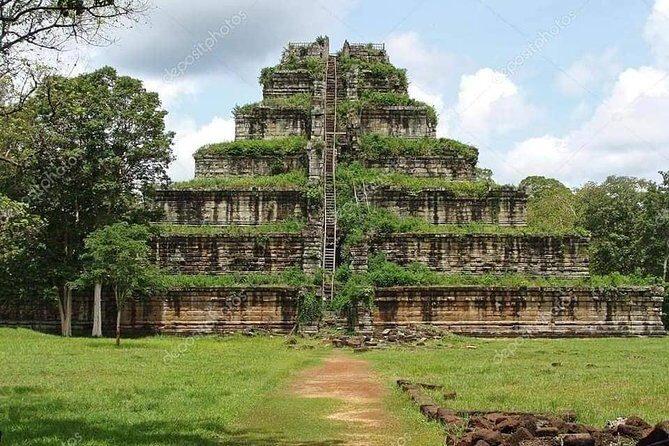
Two things I really like: first, the sights. Koh Ker’s 7-tiered Prang pyramid (built in the 10th century) gives you that I’m-on-a-real-excavation-site feeling, while Beng Mealea adds drama with nature taking over the stone. Second, the human side. The guide Vanra (and the driver Buny mentioned in feedback) come across as punctual, careful, and respectful, with explanations that make the places easier to place in context, not just photograph.
One possible drawback: this is a hilly, physical day in a remote area. If you prefer everything flat and short, you may find the terrain and walking time more tiring than you expected.
In This Review
- Key highlights to look forward to
- Two-day chaos-free sightseeing: what this trip really delivers
- Morning logistics in Siem Reap: timing and comfort
- Day 1: Koh Ker Temple, Beng Mealea, and Kulen’s quiet stop
- Stop 1 — Koh Ker Temple: the Khmer Empire’s big gamble in stone
- Stop 2 — Prasat Beng Mealea: ruins with plants doing their own renovations
- Stop 3 — Peung Kom Nuo: a calmer break on Kulen mountain
- Day 2: Preah Vihear and Ta Mok House
- Stop 1 — Preah Vihear Temple: a Hindu temple placed on the Dongrek ridge
- Stop 2 — Ta Mok House: a brief, sobering historical pause
- Price and value: is $100 per person fair for two days?
- The guides and driver factor: why this tour earns strong marks
- What to pack and how to prepare (without overthinking it)
- Who this tour suits best
- Should you book Koh Ker & Preah Vihear?
- FAQ
- Is pickup included for the Koh Ker & Preah Vihear tour?
- How long is the tour?
- What is included in the price?
- Are entrance fees included for Koh Ker, Beng Mealea, and Preah Vihear?
- Is there a group size limit?
- What level of fitness do I need?
- What is the cancellation window?
Key highlights to look forward to
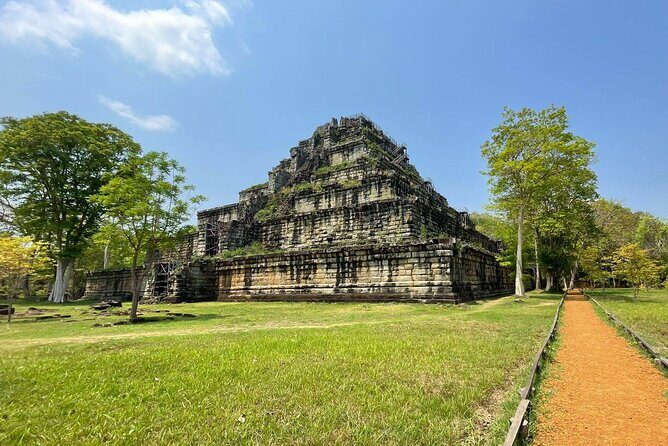
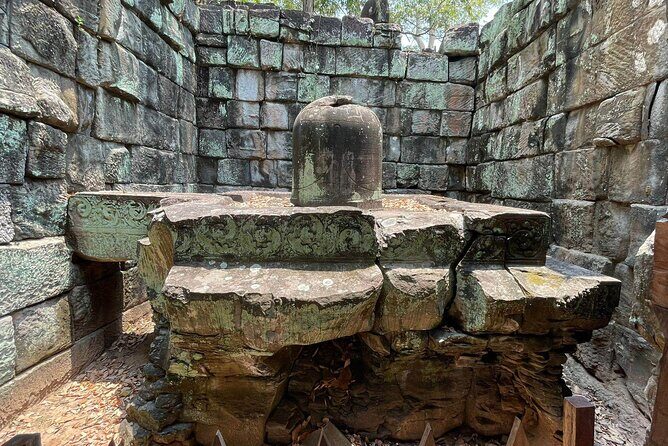
- Koh Ker’s Prang pyramid: a 7-tier stone stack tied to the Khmer Empire, with scale that hits fast
- Beng Mealea’s jungle-meets-stone ruins: early 12th-century ruins associated with Suryavarman II
- Kulen mountain stop (Peung Kom Nuo): a calmer break with views and breathing room
- Preah Vihear’s mountaintop setting: a Hindu temple on the Dongrek range between Cambodia and Thailand
- Ta Mok House: a short stop that links the temples to Cambodia’s 20th-century story
- Small group feel: maximum 2 travelers, plus pickup and cold water included
Two-day chaos-free sightseeing: what this trip really delivers
This tour is built for people who like a little adventure, but not the kind that turns into stress. It’s a straight 2-day plan from Siem Reap that combines major Khmer temple sites with smaller, more offbeat stops. You get transport plus a guide, and that matters here because these are not places you want to “figure out” on your own.
I also like the pace: it’s not one-stop-and-done. Day 1 strings together Koh Ker Temple, Beng Mealea, and Peung Kom Nuo, so you get variety in both scenery and temple style. Day 2 focuses on Preah Vihear for a longer block, then adds Ta Mok House as a short, sobering historical contrast. The result is a tour that feels like a storyline, not a checklist.
You can also read our reviews of more tours and experiences in Siem Reap.
Morning logistics in Siem Reap: timing and comfort
You start at 8:30 am. Pickup is offered, and cold water is included, which is practical in Cambodia heat, especially when you’re out and moving across remote roads. You also get a mobile ticket, so you’re not stuck hunting for paper during the morning handoff.
Group size is kept small (maximum 2 travelers). That tends to mean fewer interruptions and more room to ask questions, like why a temple looks the way it does or how the area around a ruin has changed over time.
And yes, the driver matters. In the feedback for this operator, there’s a clear theme: safe, careful driving and rest breaks at points the guide considers worthwhile. That makes a difference on long days with uneven roads.
Day 1: Koh Ker Temple, Beng Mealea, and Kulen’s quiet stop
Day 1 is where the tour breaks you out of the straight-line Siem Reap comfort zone. The terrain is more hilly than many people expect, and the day has that “modern explorer” vibe because you’re moving across countryside and visiting temples that feel less crowded than the headline sites.
Stop 1 — Koh Ker Temple: the Khmer Empire’s big gamble in stone
Koh Ker Temple is the kind of place that makes you lower your camera and just look. Koh Ker was one of the oldest cities of the Khmer Empire, active between 928 AD and 944 AD, and it’s tied to a city scale big enough to support over 10,000 people. The centerpiece you’ll focus on is the 7-tiered Prang pyramid, a towering, stepped structure that gives strong “designed for power” energy.
What I like here is the feeling of discovery. Even if you know the basics of Khmer architecture, Koh Ker has a different mood than the better-known temple clusters. It’s not just about the monument—it’s the way the structure commands the surrounding space, like it’s still holding the city in place even after everything else changed.
Practical note: admission tickets aren’t included, so budget time to pay at the right point and keep your cash or payment method ready.
Stop 2 — Prasat Beng Mealea: ruins with plants doing their own renovations
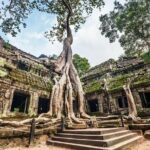
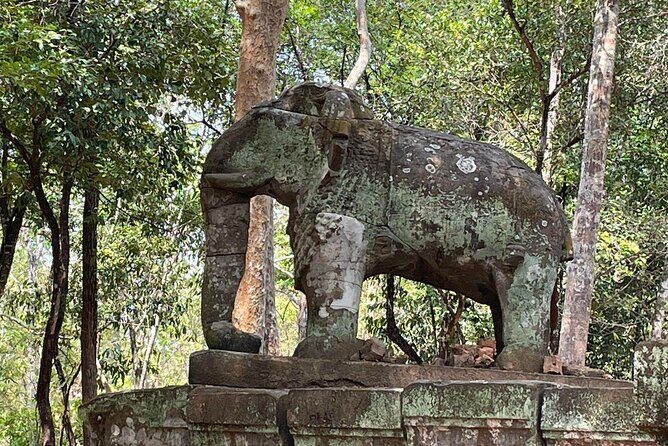
Beng Mealea is the kind of ruin where your brain keeps switching between wonder and why. This is an early 12th-century temple associated with King Suryavarman II, and its fame comes partly from the way plants and growth have wrapped themselves around the stone.
The effect is visual and physical. Instead of clean, restored edges, you get a ruin that feels lived-in by time. Walking around here also changes how you read the architecture because nature has altered lines and entrances. It’s not a museum. It’s a working ruin scene.
Admission tickets are also not included, so plan to pay for both Beng Mealea and Koh Ker separately.
Stop 3 — Peung Kom Nuo: a calmer break on Kulen mountain
Peung Kom Nuo is placed as a shorter stop, about 1 hour. It’s described as a special stop tied to Kulen mountain, and that’s a good way to think about it: it’s there to give you breathing space and a change of pace from the heavy temple viewing.
I like shorter final stops like this on Day 1 because it prevents the last stretch from feeling like forced sightseeing. You can slow down, take photos without rushing, and get ready for the next day.
Day 2: Preah Vihear and Ta Mok House
Day 2 has a heavier, more focused feeling. You get a longer block at Preah Vihear, then a short stop that brings the tour into Cambodia’s 20th-century history.
Stop 1 — Preah Vihear Temple: a Hindu temple placed on the Dongrek ridge
Preah Vihear is an ancient Hindu temple built during the Khmer Empire, sitting on top of the Dongrek mountain range between Cambodia and Thailand. The time at the site is listed as about 3 hours, which is useful because it gives you room to move at a comfortable pace and still take in the setting.
What makes Preah Vihear special isn’t just the temple. It’s how the location works. From a mountaintop ridge, the viewpoint becomes part of the experience, and you understand why this kind of site was meant to project presence.
Admission tickets aren’t included, so again, budget that into your day.
Stop 2 — Ta Mok House: a brief, sobering historical pause
After temple time, the tour includes Ta Mok House for about 30 minutes. Ta Mok was a formal Khmer Rouge leader from 1975 to 1979, and this stop adds a hard edge to the day.
I find it helps to treat this as a short pause, not a full history lesson. It’s brief, but it changes the tone of the trip. You finish thinking about how Cambodia’s story moved from empire-era temple construction to the tragedies of the late 20th century.
Admission tickets aren’t included here either, so factor that into your total budget.
Price and value: is $100 per person fair for two days?
The price is $100 per person, for about 2 days of guided temple touring with transport, a driver, and cold water included. Entrance fees, food, accommodation, tips, and any other expenses are not included.
Is that good value? For this specific route, I’d say yes, mainly because:
- You’re covering remote sites that don’t just “happen” on a casual day trip.
- You get a guide for interpretation, not just transport.
- The max group size of 2 travelers helps keep the experience flexible and personal.
Your main cost risk isn’t the base price. It’s entrances plus meals. If you show up ready to pay for ticketed sites and to buy your own meals, the total experience tends to feel like a solid deal for a full 2-day outing.
The guides and driver factor: why this tour earns strong marks
This tour’s strongest theme in feedback is the human care behind the route.
Vanra is repeatedly described as charming, intelligent, and respectful, and people also point out that explanations match what you see on the ground. There’s also strong praise for driving—Buny is mentioned as the driver, with safe driving habits and the sort of attention you want when roads get rough.
One of the best practical points from that feedback: rest breaks. Good driving is one thing. Rest breaks built into the day are another. It keeps the long day from turning into a grind, especially when you’re dealing with hills and long temple walks.
What to pack and how to prepare (without overthinking it)
Because this is moderately physical and hilly, pack like you’re going out for the day, not like you’re doing a smooth museum circuit. Practical basics:
- Comfortable walking shoes you don’t mind getting dusty
- Light layers for warm mornings and hotter afternoons
- Sun protection (hat/sunglasses/sunscreen)
- A small amount of cash for entrance fees and meals
Also bring patience for the schedule. Remote routes move slower than the map promises. The upside is you get countryside travel and a more authentic rhythm than you’d get from a tightly packed city bus tour.
Who this tour suits best
This trip is a great fit if you:
- Want a deeper Khmer mix than just one or two famous temples
- Like rural scenery and don’t mind hills
- Prefer a small group (max 2 travelers)
- Appreciate a guide who explains more than the obvious
It may feel less ideal if you:
- Want fully flat walking and minimal stops
- Have trouble with longer outdoor temple walking in heat
- Expect entrance fees and meals to be included (they aren’t)
Should you book Koh Ker & Preah Vihear?
If you’re staying in Siem Reap and you want a 2-day plan that feels like it’s taking you into Cambodia’s real geography—temples plus rural life—this is a strong choice. The value makes sense because you’re not just paying for transport. You’re paying for the guide interpretation and the safe, careful driving that keeps the day from feeling chaotic.
Book it if you’re comfortable with hills and you’re willing to budget for entrance tickets and your own meals. Skip it if you’re looking for easy, flat sightseeing only.
If you do book, go in with the right mindset: you’re not touring one perfect postcard. You’re moving through layers of time—Khmer Empire stone, nature taking over, and a modern history stop—all in two tightly planned days.
FAQ
Is pickup included for the Koh Ker & Preah Vihear tour?
Yes. Pickup is offered, and the tour starts at 8:30 am from Siem Reap.
How long is the tour?
The tour runs for 2 days (approx.).
What is included in the price?
Included are transport, a driver, a tour guide, and cold water. Entrance fees, food, accommodation, tips, and other expenses are not included.
Are entrance fees included for Koh Ker, Beng Mealea, and Preah Vihear?
No. Entrance tickets are listed as not included.
Is there a group size limit?
Yes. The tour has a maximum of 2 travelers.
What level of fitness do I need?
The tour info says travelers should have a moderate physical fitness level.
What is the cancellation window?
Free cancellation is available up to 24 hours in advance for a full refund. If you cancel less than 24 hours before the start time, the amount paid won’t be refunded.